-
-
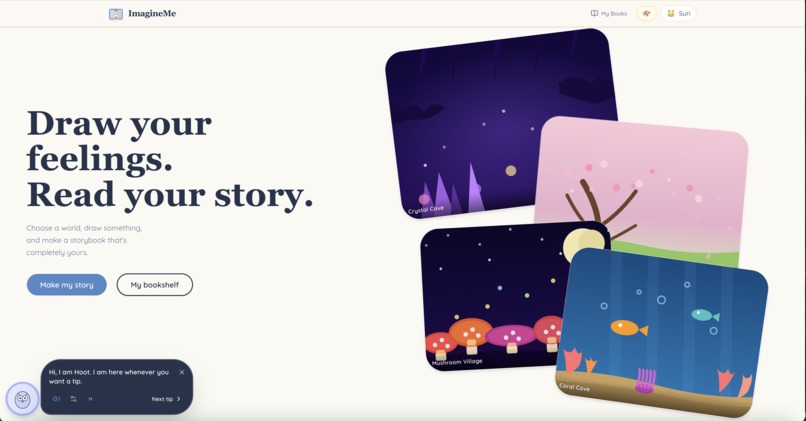
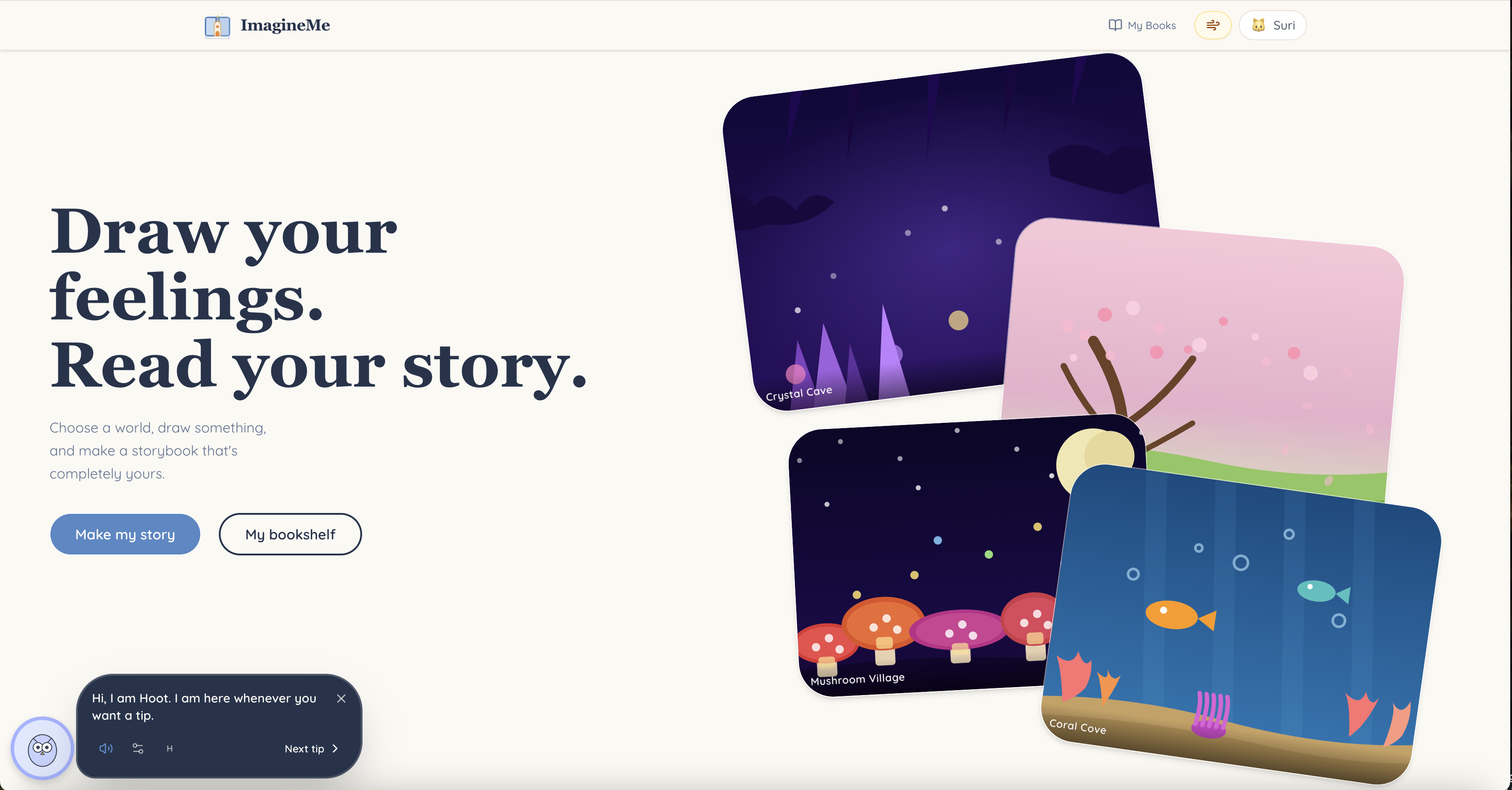
Home screen
-
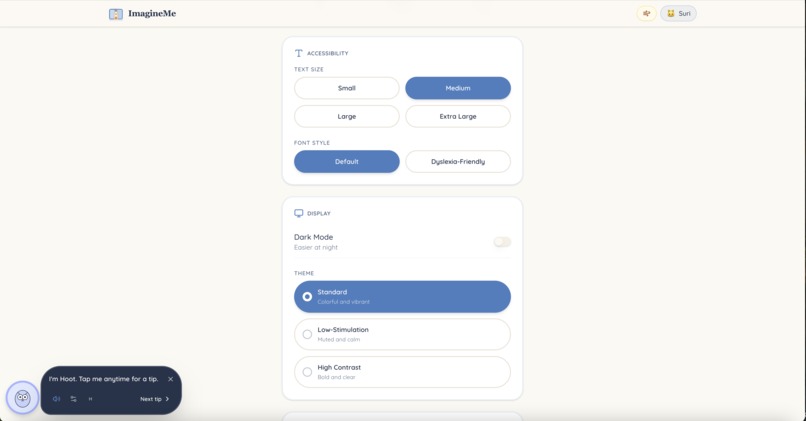
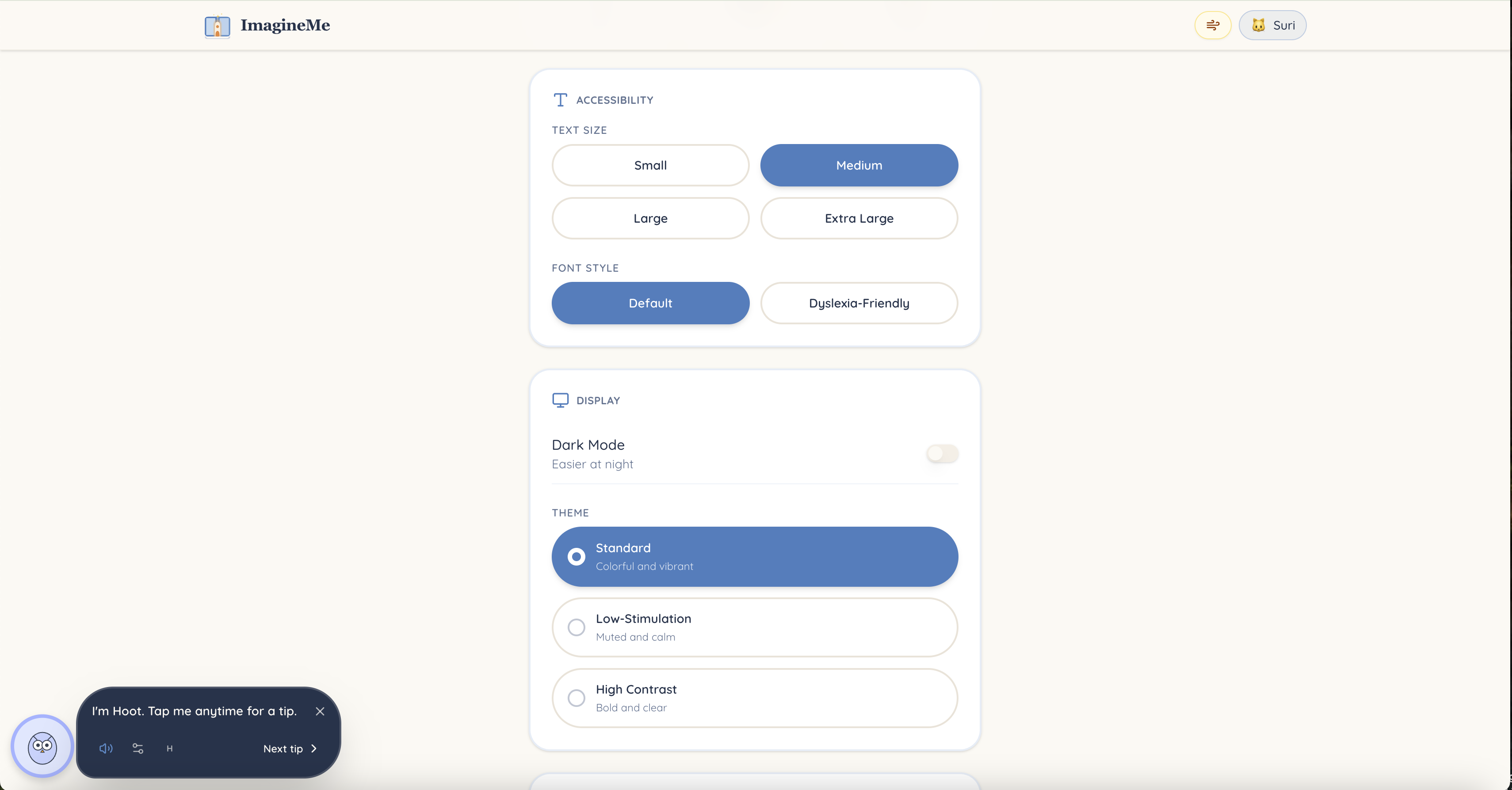
Accessibility settings
-
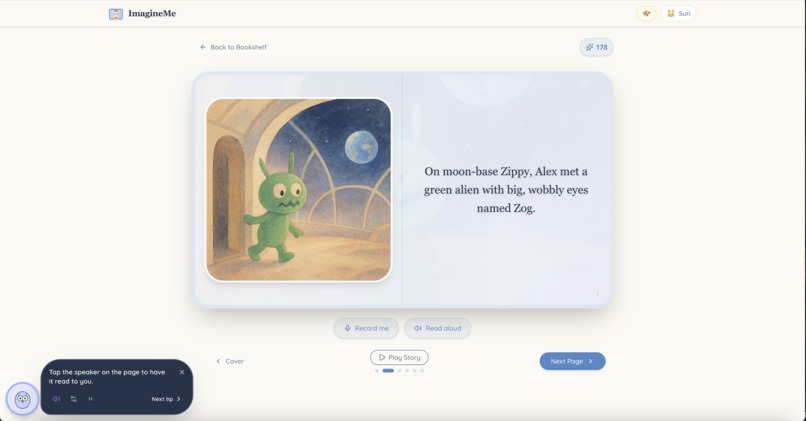
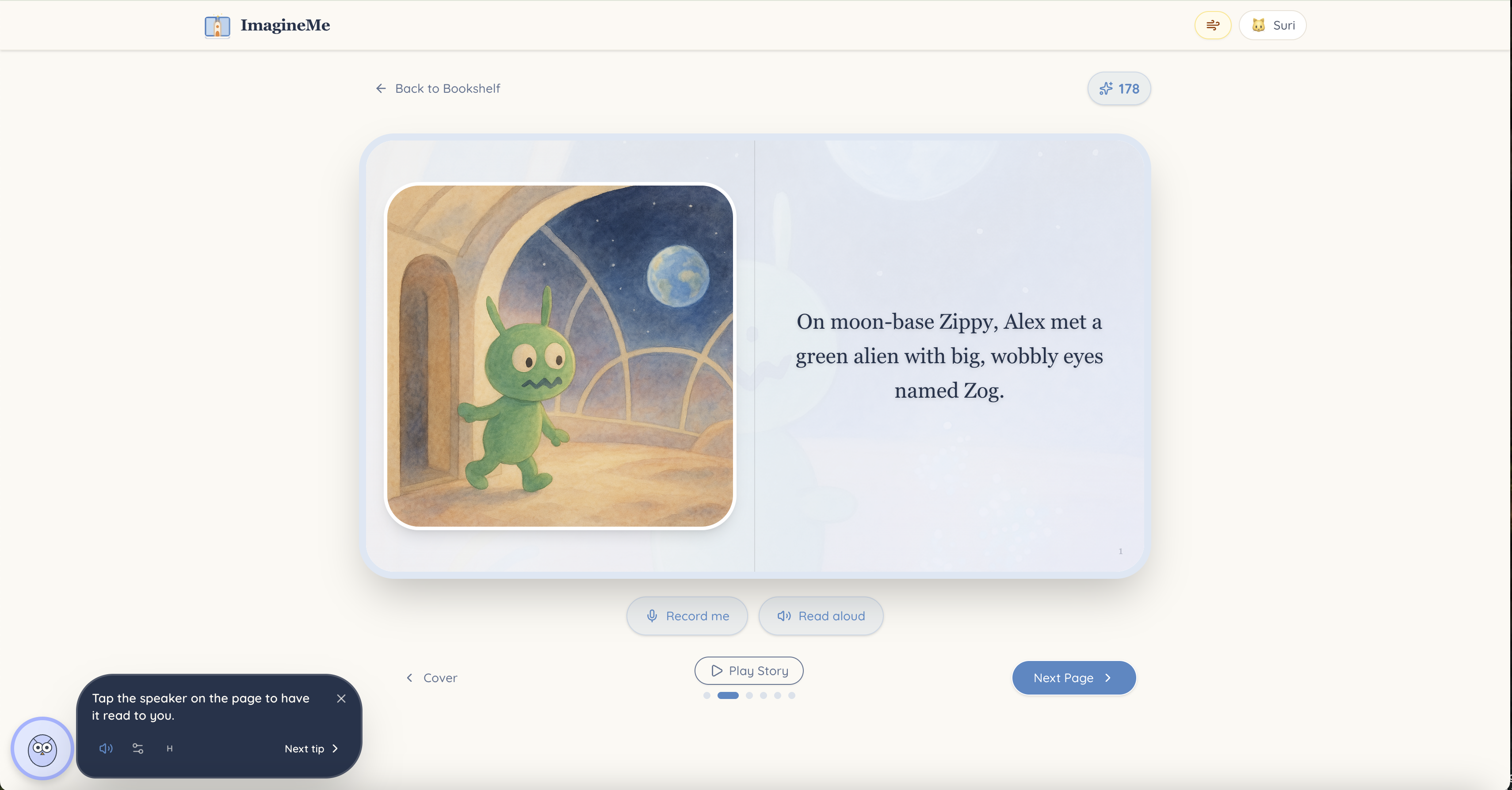
An example of a digital illustrated audiobook
-
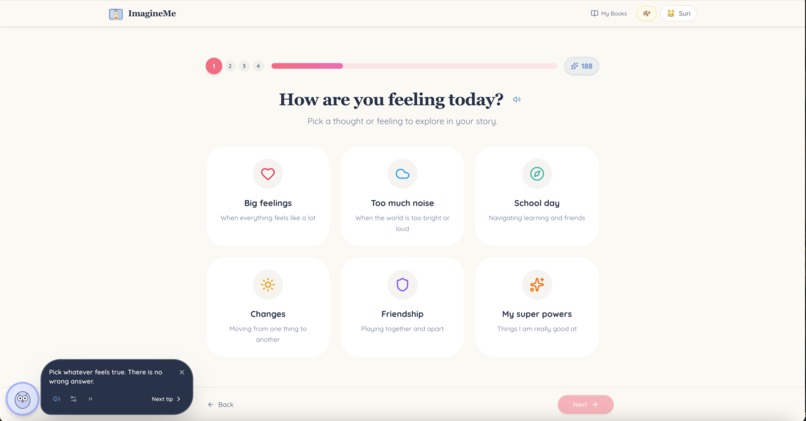
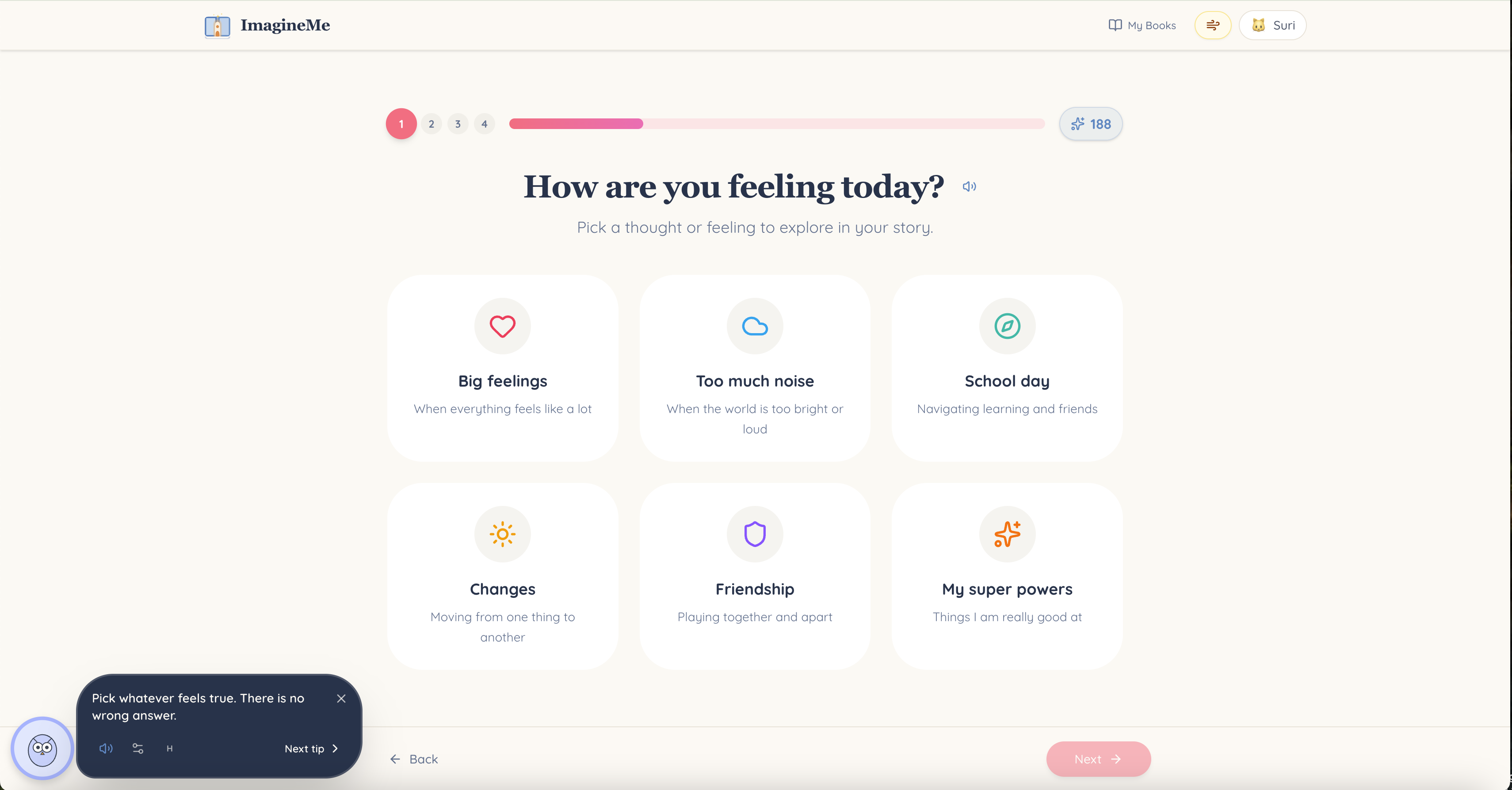
Starting question before creating the book
-
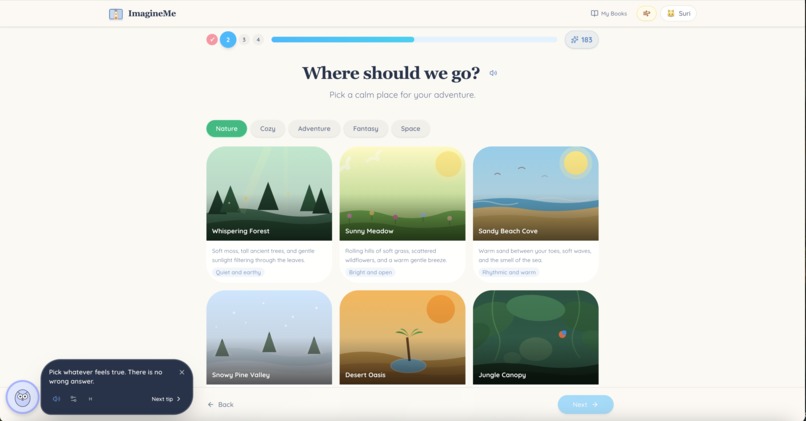
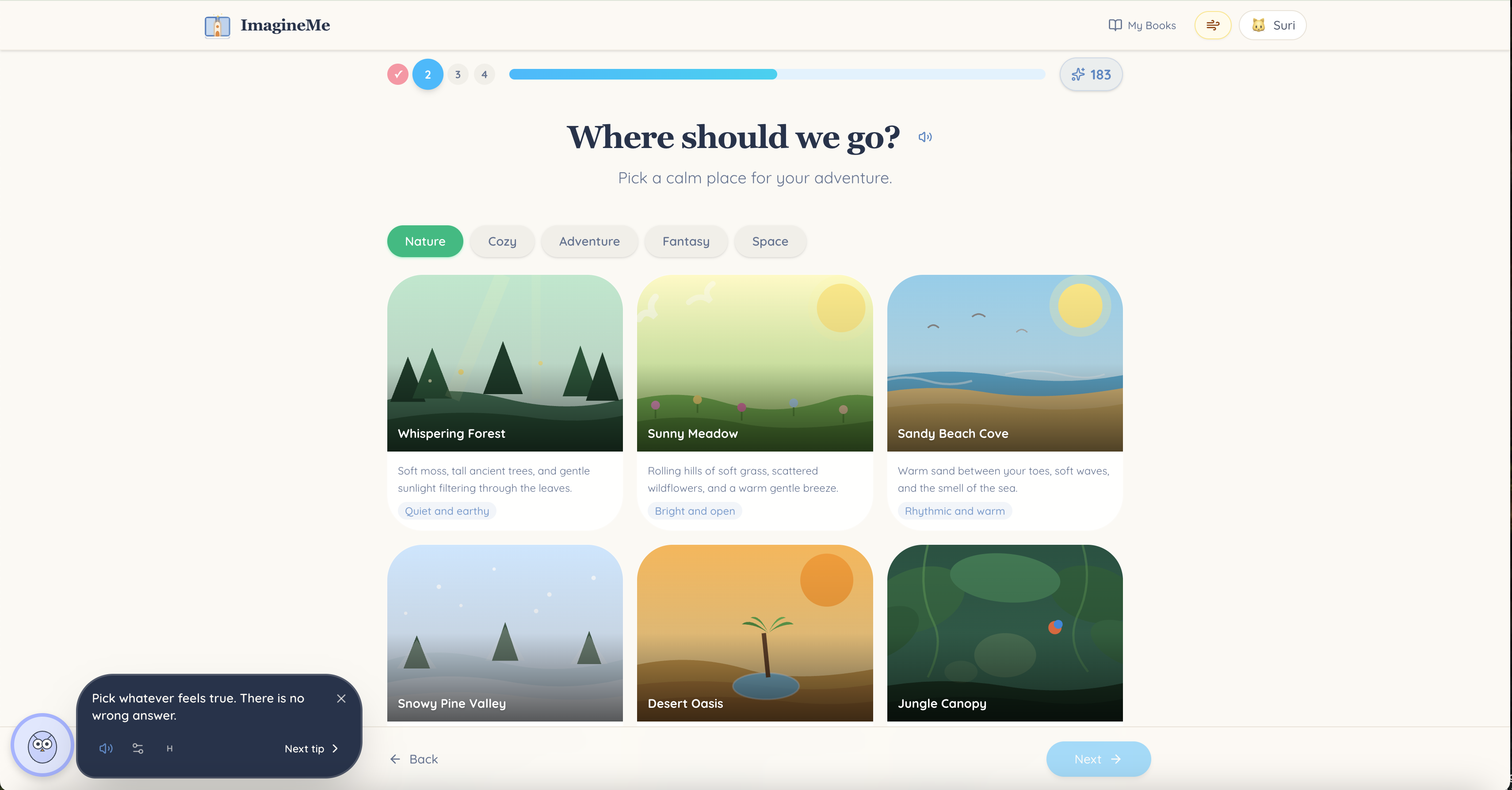
Different worlds for the user to travel to
-
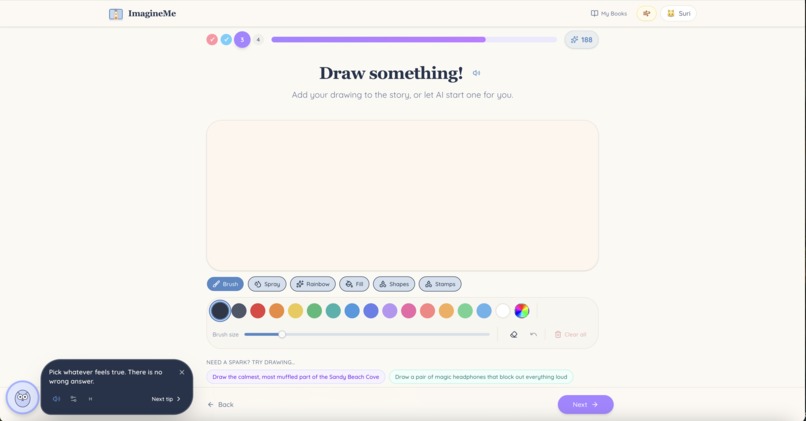
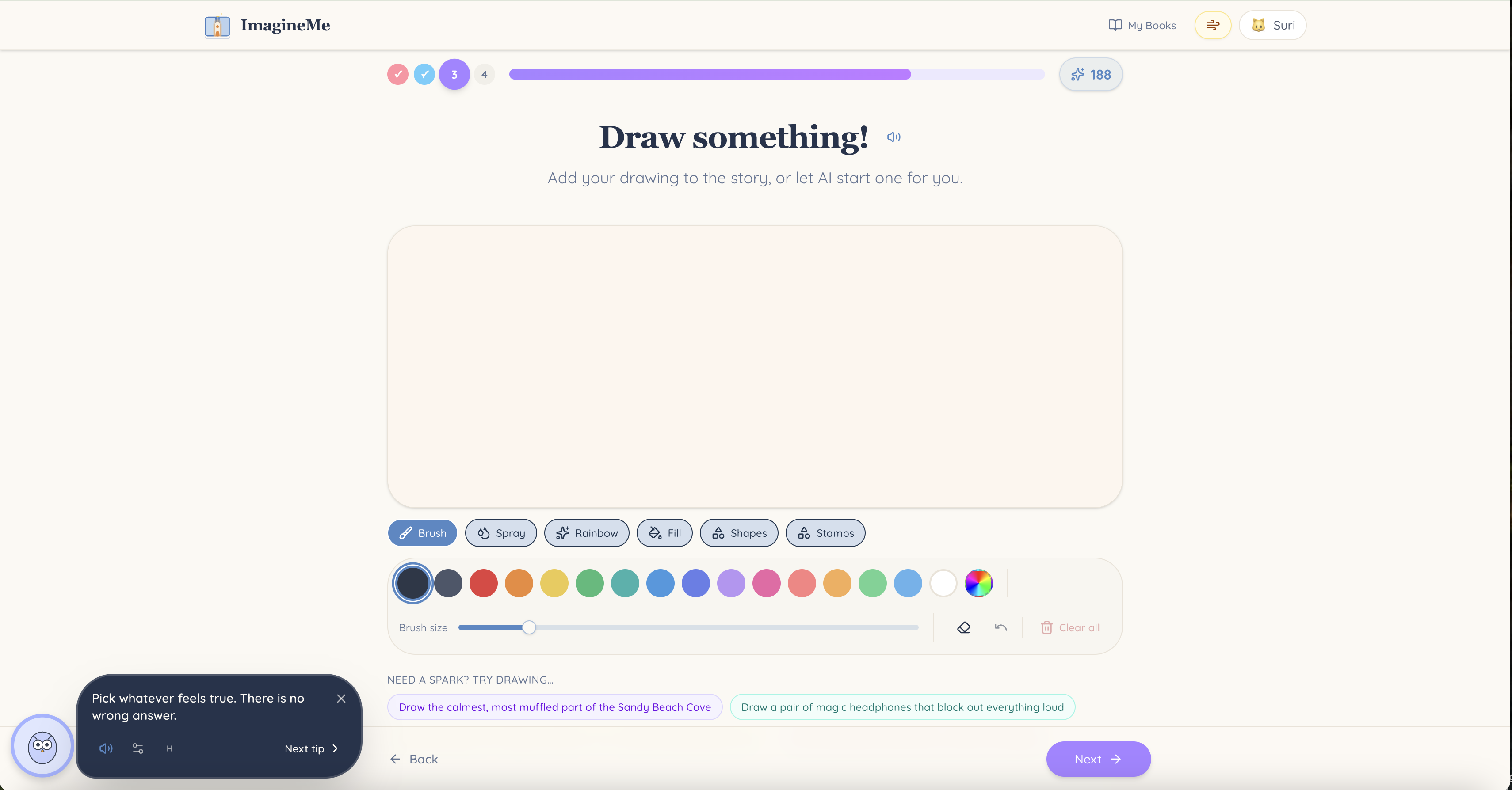
Drawing pad with drag and drop shapes, stamps, etc.
-
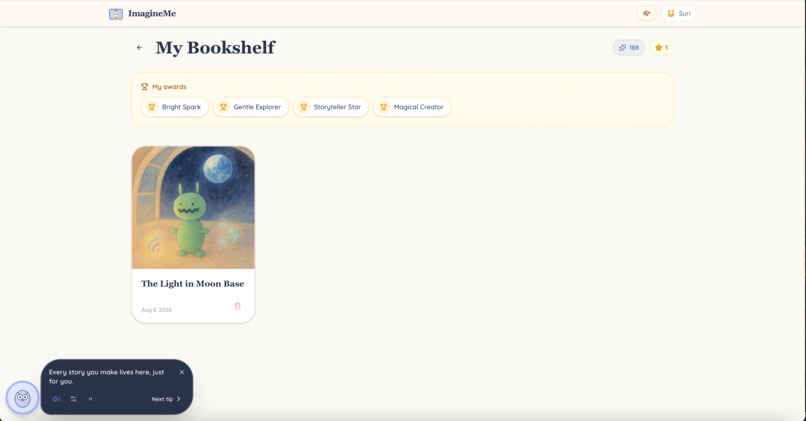
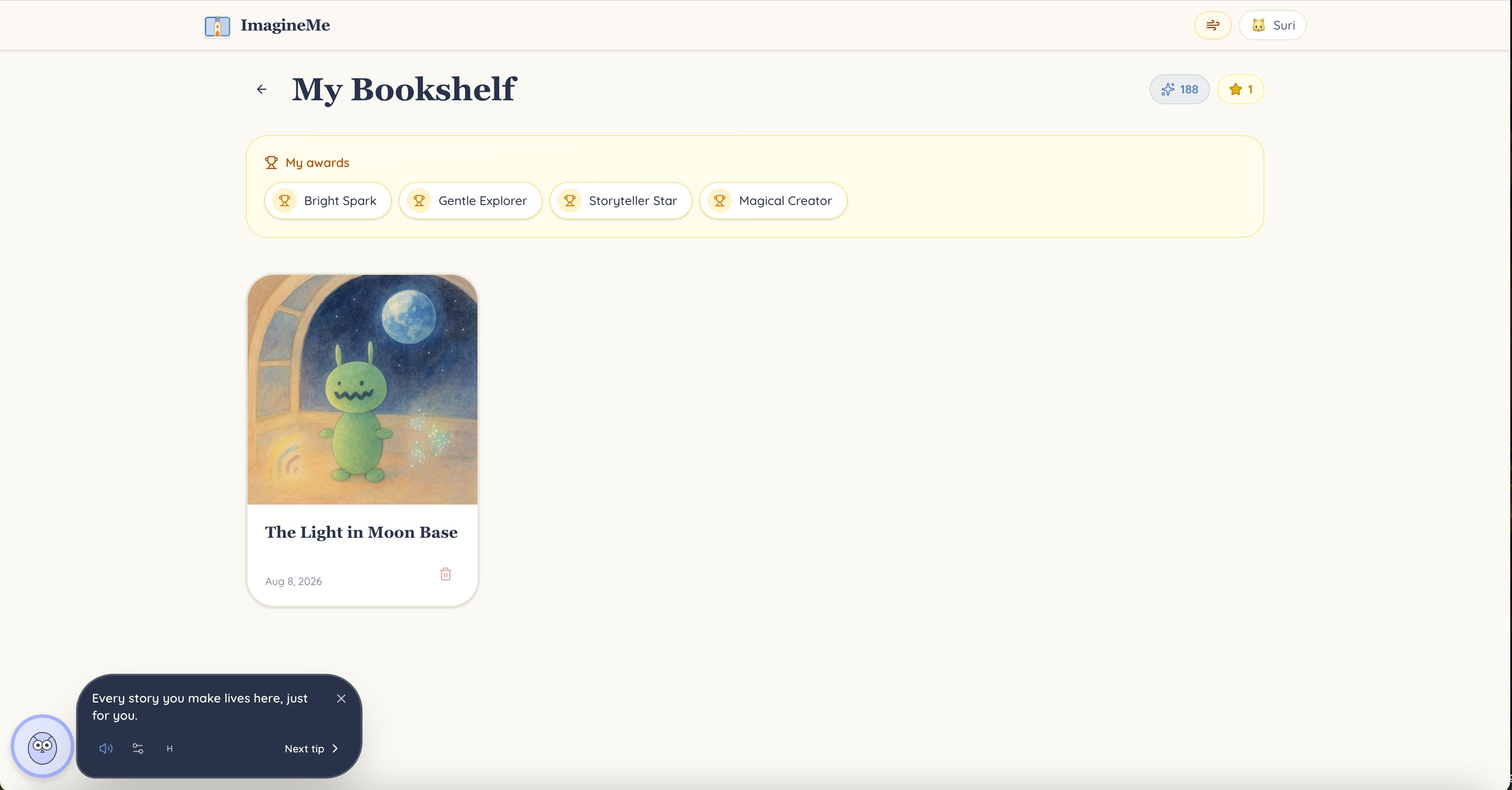
User's bookshelf
-
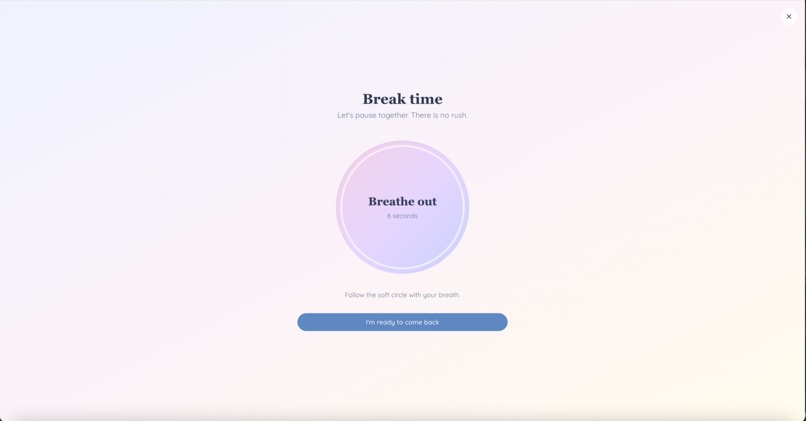
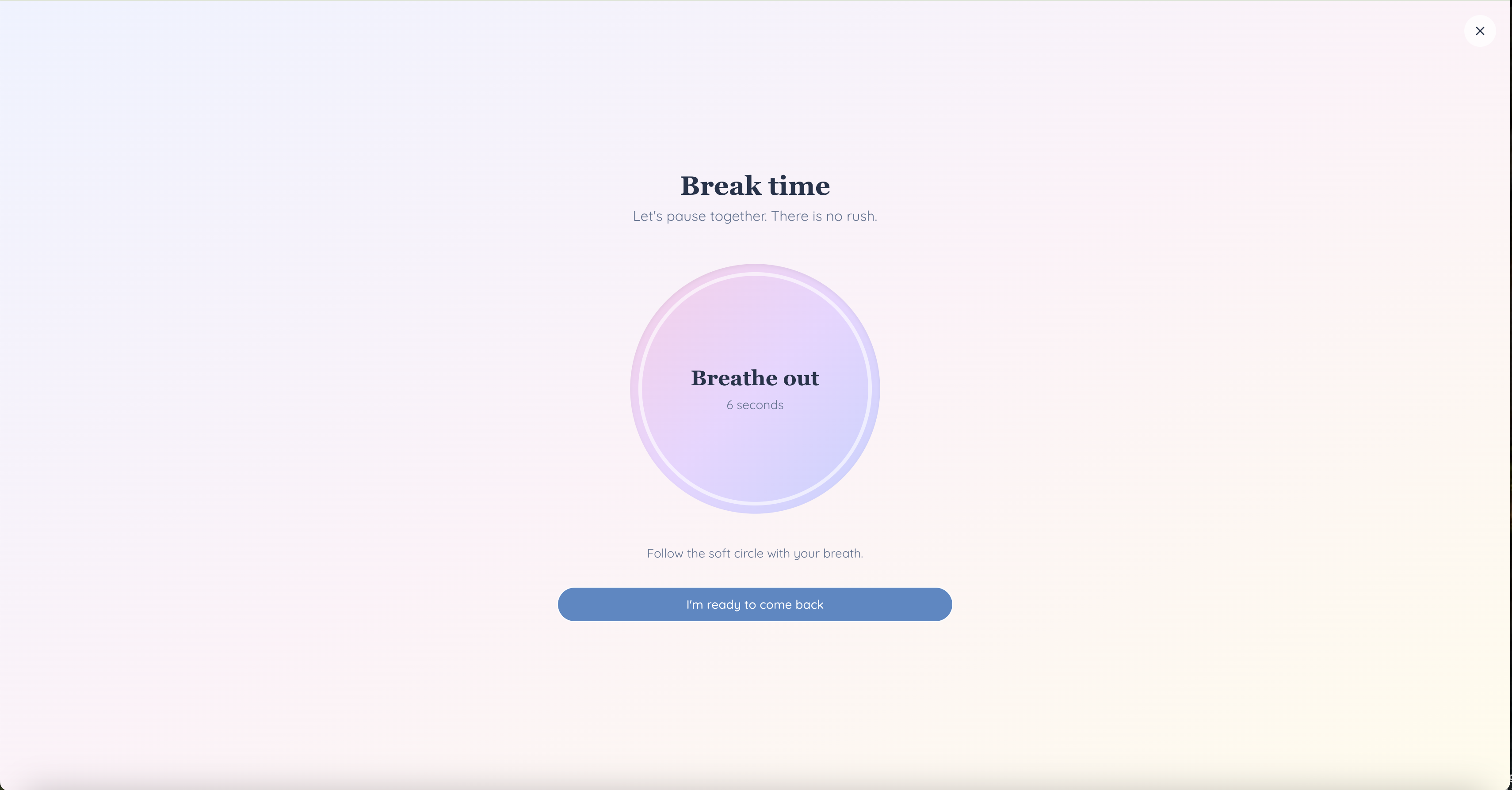
Breathing bubble
Inspiration
At nonprofits like Autism Peer 1-on-1 and Seedling Sun Foundation, I worked with neurodivergent children who loved drawing and storytelling but often struggled to illustrate their ideas independently. Research also suggests that combining visual and audio support can make digital content more accessible for neurodivergent children. In a 2021 study, children with dyslexia using synchronized text and read-aloud audio improved their reading comprehension by 24%. Combined with what I observed firsthand, this showed me that the barrier was that existing creative tools often did not match how they preferred to create and communicate.
I first introduced them to traditional digital art software such as Procreate. Although powerful, the interface required learning brushes, layers, gestures, and drawing techniques. The children frequently became frustrated, needed constant guidance, and often lost interest before finishing even one page.
Watching their creativity limited by the complexity of the tools inspired ImagineMe.
Instead of expecting children to master professional illustration software, ImagineMe uses AI to help them transform their imagination into personalized illustrated audiobooks. Children simply describe a character, adventure, or idea, and AI generates a consistent story, illustrations, and narration while allowing them to remain the creative director.
What it does
ImagineMe is a digital storytelling platform that helps kids create personalized illustrated stories step by step.
Instead of starting with a blank page, users make small choices, like how they are feeling, where they want the story to take place, and what kind of character or adventure they want. ImagineMe then helps turn those choices into a story with illustrations and narration.
The platform also includes comfort settings, larger text, a dyslexia-friendly mode, a breathing-break button, and an on-screen guide that kids can use if they get stuck.
The goal is to make the creative process easier to follow without taking away the child’s own ideas.
How we built it
I built ImagineMe as a web app and focused a lot on making the experience simple and easy to understand.
I created the story flow so that kids move through one decision at a time instead of seeing too many options at once. I also added story generation, illustrations, narration, and different accessibility settings so kids can experience the story in a way that works better for them.
A big part of the process was thinking about what would actually keep a child engaged, not just what would look good on the screen.
Challenges we ran into
One of the hardest parts was finding the right balance between giving users freedom and not overwhelming them.
If there are too many choices, the platform starts to feel complicated. But if there are too few, it can feel limiting. I had to keep adjusting the number of steps, the layout, and how much information appeared at one time.
I also ran into technical challenges with getting the story, images, and narration to work together smoothly.
Accomplishments that we're proud of
I’m most proud that ImagineMe grew from a real experience into something that the kids I worked with could actually use. I was able to bring storytelling, illustration, narration, and accessibility features together while still keeping the experience simple and engaging. More importantly, ImagineMe gives kids a way to turn their own ideas into something they can see, hear, and share, without needing to master complicated digital art tools first.
What we learned
The biggest thing I learned is that accessibility has to be part of the design from the beginning.
I also realized that making something simpler to use does not mean making the ideas simpler. The two kids I worked with had really creative ideas. The challenge was giving them a tool that made it easier to express those ideas without getting stuck on the technical parts.
ImagineMe is my attempt to make that process feel more natural, more independent, and more enjoyable.
What's next for ImagineMe
Next, I want to expand ImagineMe through more user testing with neurodivergent children and use their feedback to refine how stories are created and edited. I plan to add more flexible story controls, such as changing a character, setting, or illustration without regenerating the entire book, while improving character consistency across pages. I also want to develop more personalized accessibility features, including adjustable narration, visual guidance, and interface settings based on each child’s preferences. In the future, ImagineMe could also support collaborative storytelling with friends or family and multiple languages, making creative storytelling more accessible to a wider range of children.
Built With
- api
- css
- drizzle
- express.js
- framer
- motion
- node.js
- openai
- orm
- postgresql
- query
- radix
- react
- tailwind
- tanstack
- typescript
- ui
- vite
- zod


Log in or sign up for Devpost to join the conversation.