IMAGINE — A creative interface for intelligence
Inspiration
Human thought doesn't move in finished prompts. It wanders, questions, changes direction, and builds on itself. A child inventing a world, a teacher chasing a student's curiosity, a team exploring an idea, they're all thinking through something by changing it.
Today's AI can't hold that rhythm. It generates an output, and the intelligence behind the output disappears. Ask for a change and the whole thing regenerates, new pixels, new identity, your previous thought gone.
So we built an interface where the intelligence stays in the scene.
What it does
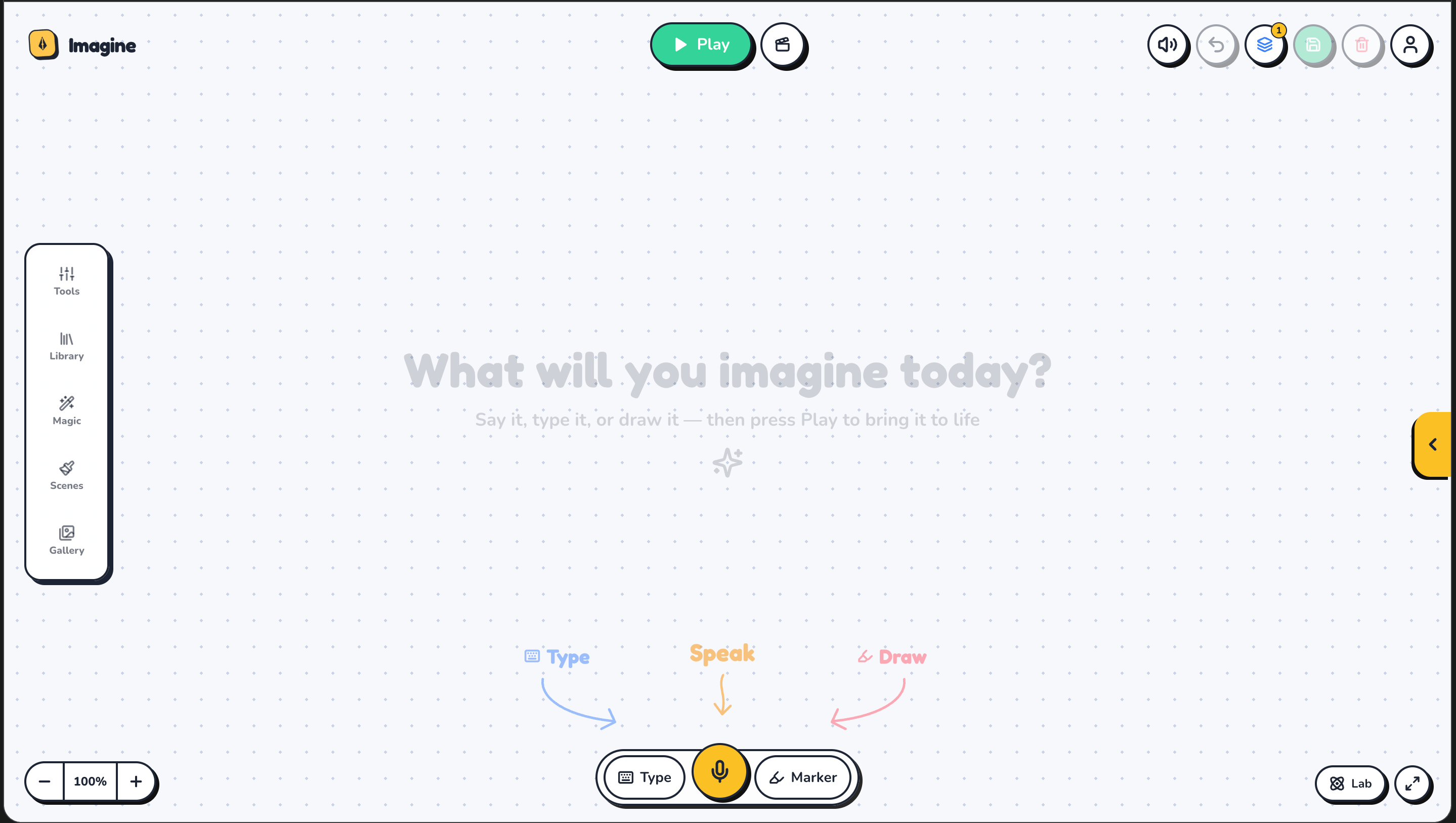
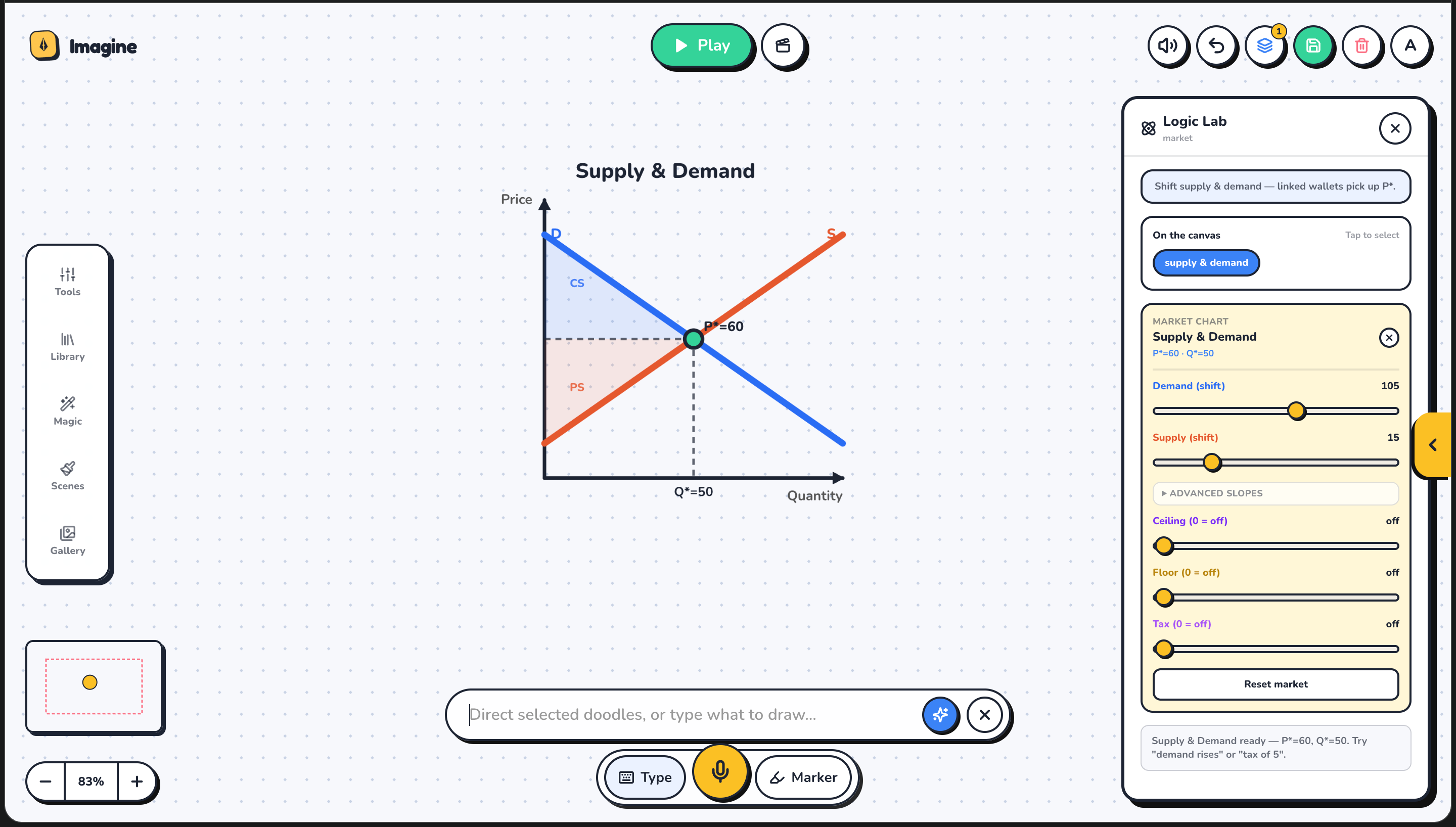
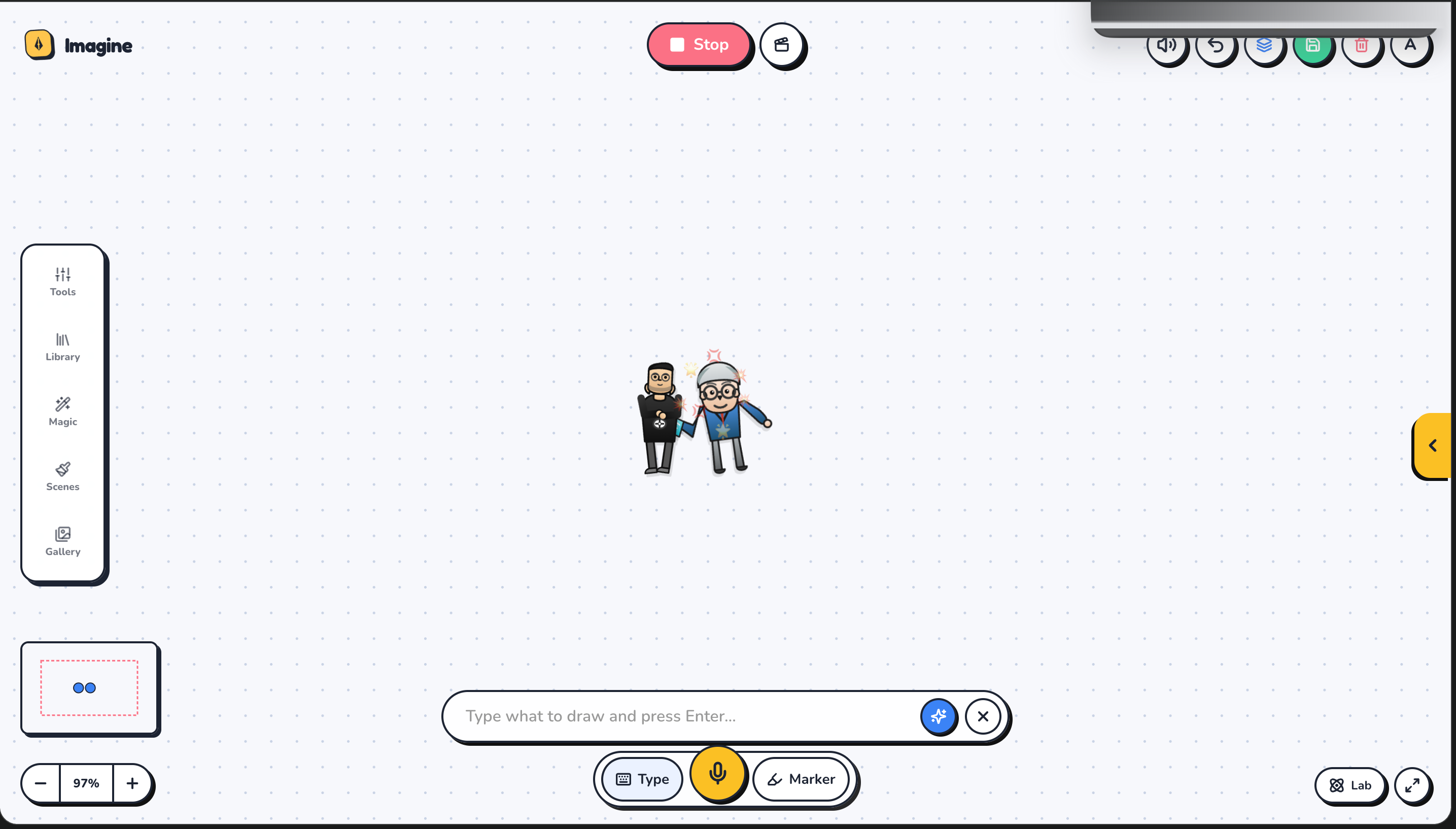
IMAGINE is a real-time creation canvas. You speak or type an idea and it appears as structured, editable objects, not pixels.
The one-minute version:
- "Create the Earth and the Moon." -> Both appear as addressable objects.
- "Make it orbit Earth." -> A relationship becomes behavior.
- "Now show me a solar eclipse." -> The world you built becomes the explanation.
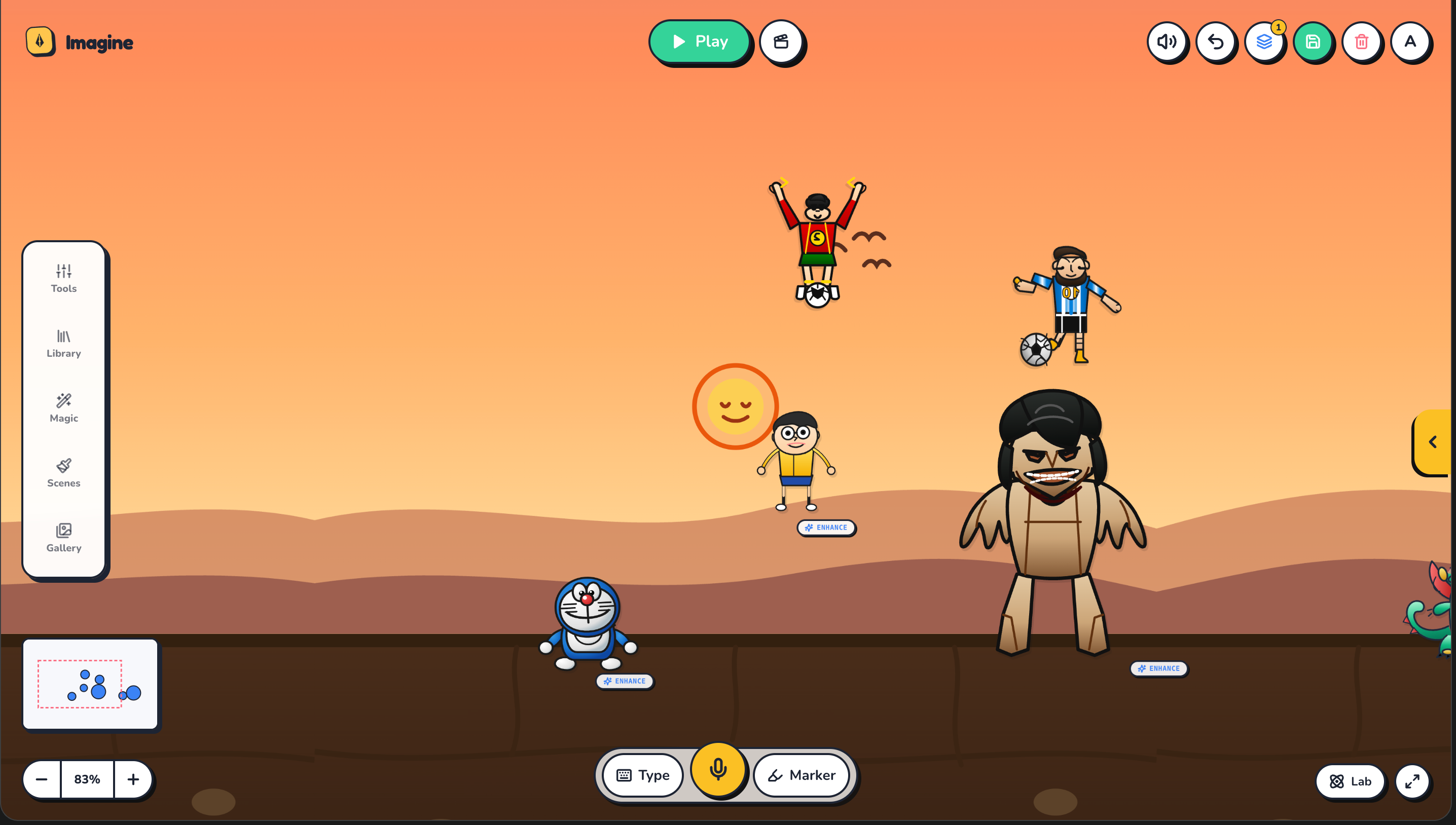
Every creation keeps its identity, position, relationships, behaviors, and edit history. Every new instruction is an edit to existing state, never a regeneration. Objects can be dragged, resized, rotated, combined, and animated. Voice and text both work. Play mode gives objects semantic behaviors, birds fly, fish swim, stars twinkle.
This isn't hypothetical usage: in our alpha, 20+ families have children returning daily, some for sessions up to two hours, and 5+ educators have asked to bring IMAGINE into their classrooms.
How we built it
The core architectural bet: the scene is durable state. Natural language compiles into typed operations (CREATE, MOVE, ATTACH, ANIMATE, EXPLAIN…) against a canonical scene graph, logged append-only so undo and replay are deterministic.
Where GPT-5.6 fits: For Build Week we routed intent parsing and novel-object generation through GPT-5.6 — the two hardest parts of the loop: (1) compiling free-form spoken intent into structured scene operations ("make it orbit" → an ATTACH + ANIMATE operation group with correct parameters), and (2) generating novel SVG objects that stream progressively into the canvas when a concept isn't in our local asset library. Known concepts hit a local fast path; novel ones fall back to GPT-5.6, get cleaned, cached, and become instant next time.
Where Codex accelerated us: Codex shipped the persistence layer that makes continuity real:
- The append-only operation log and deterministic replay for core edits
- Undo/redo wired on top of the operation log
- The model gateway route for GPT-5.6 (streaming, retries, cancellation) powering intent parsing and SVG generation
- Refactoring scene-state


Log in or sign up for Devpost to join the conversation.