The Inspiration
Every parent knows the feeling. It is 7:42 PM. You have read Goodnight Moon for the forty-third time. Your toddler knows every word. The spine is held together by love and tape.
Then your child looks up and says: "Mommy, can we make a story about a penguin who wants to fly?"
That question is pure magic. But turning it into a real, illustrated, narrated storybook — in minutes — has always been impossible. Until now.
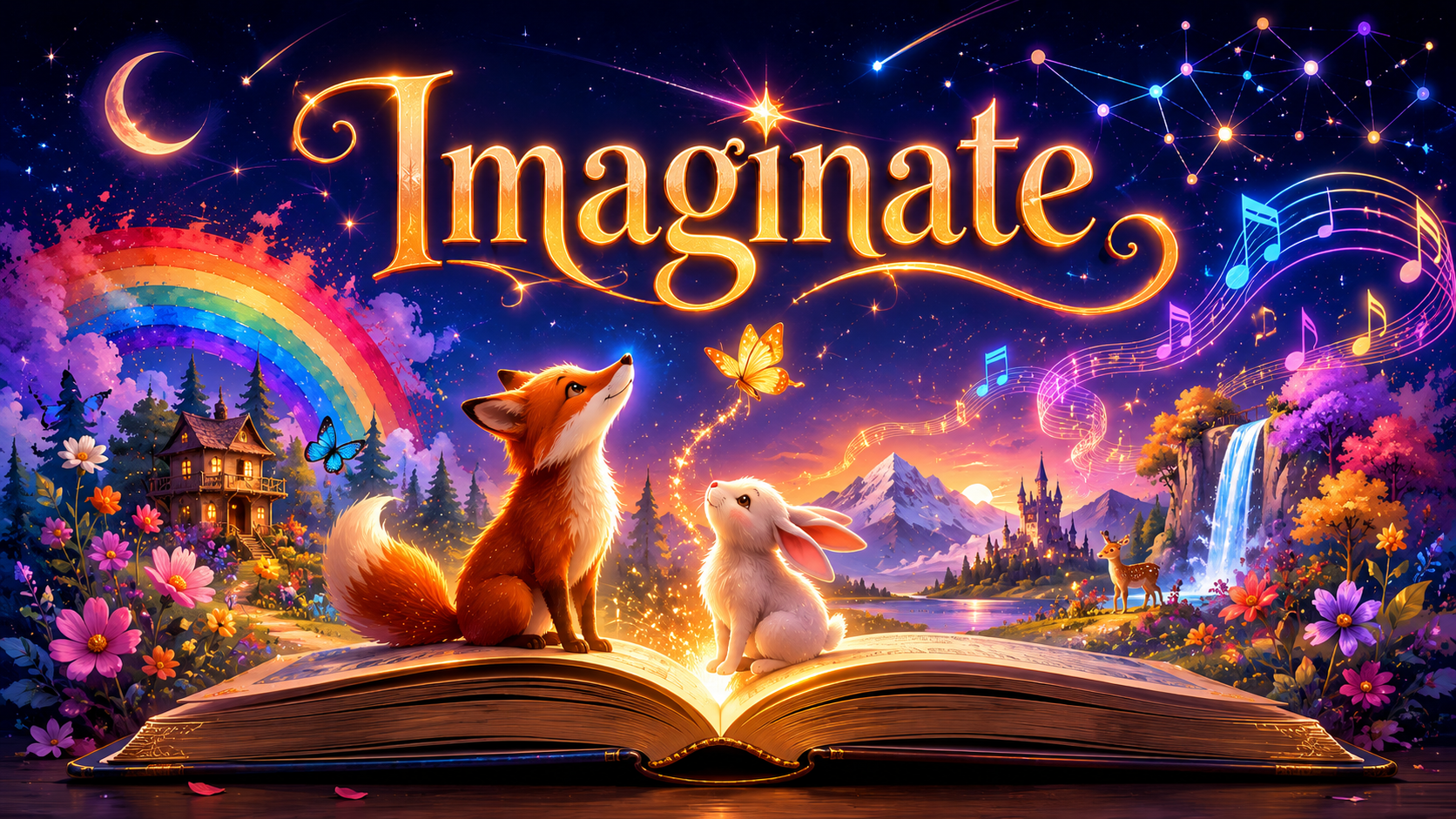
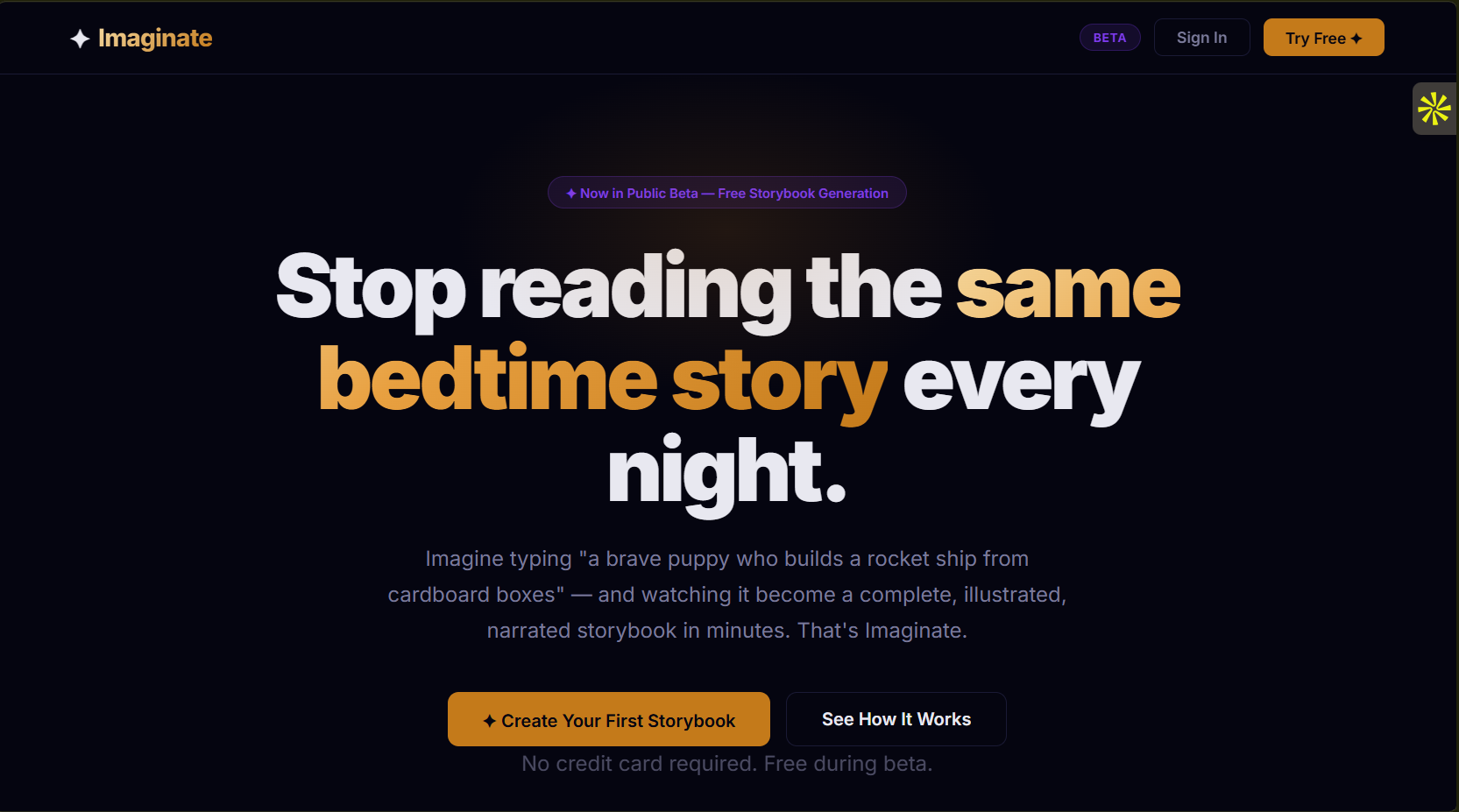
Imaginate exists to answer that question. One prompt. A complete storybook with illustrations, narration, and exports. No design skills. No writing. No recording. Just imagination.
What It Does
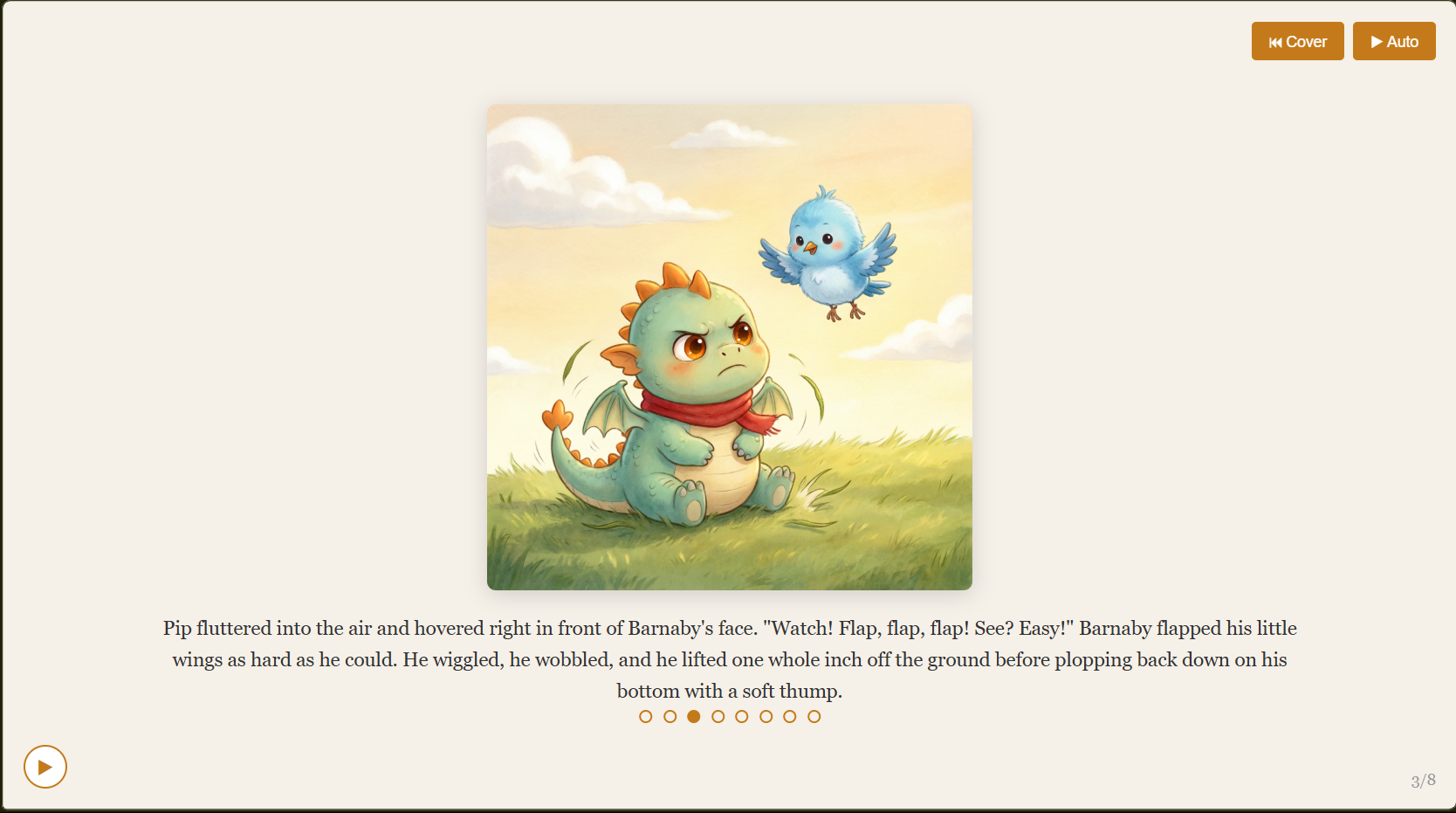
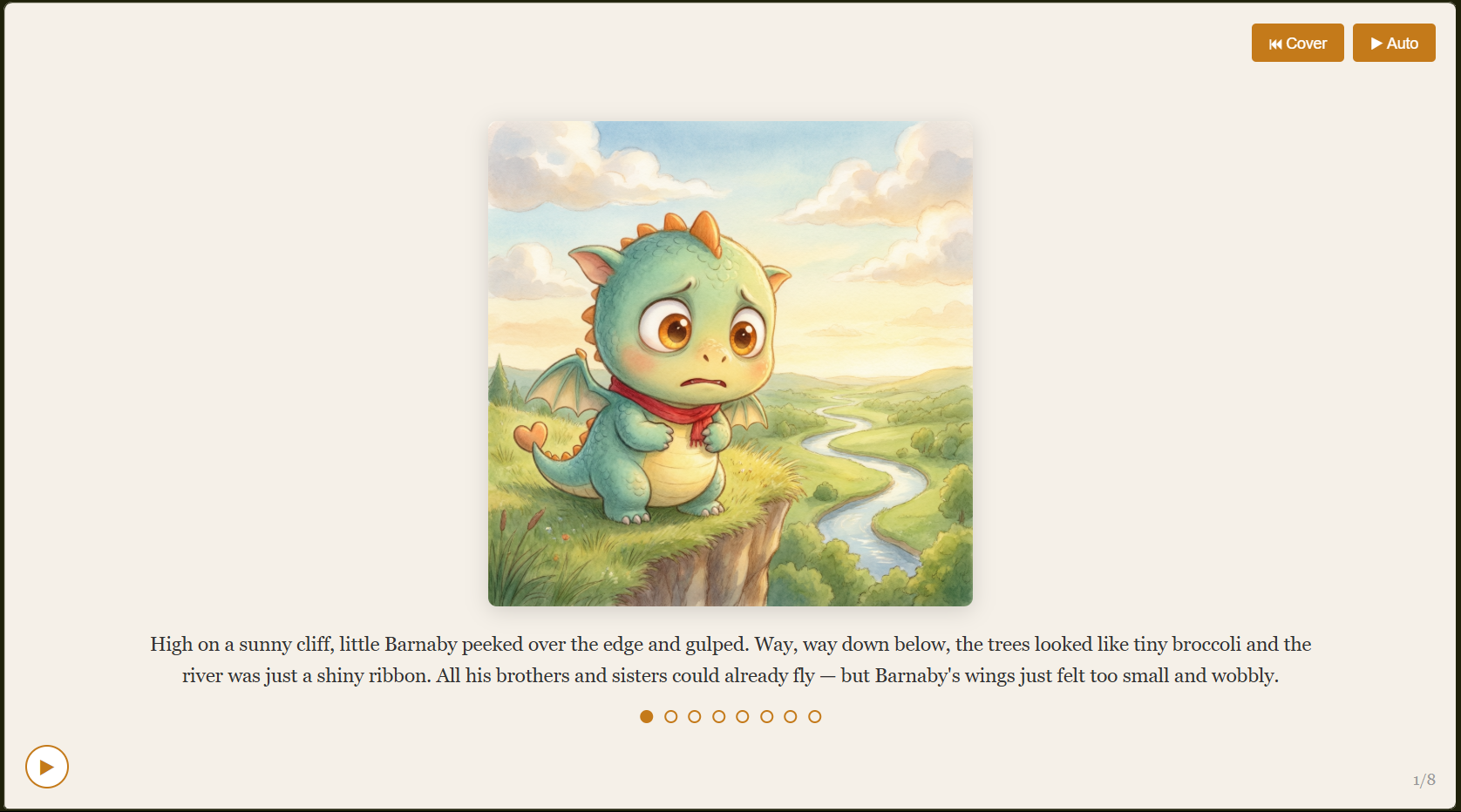
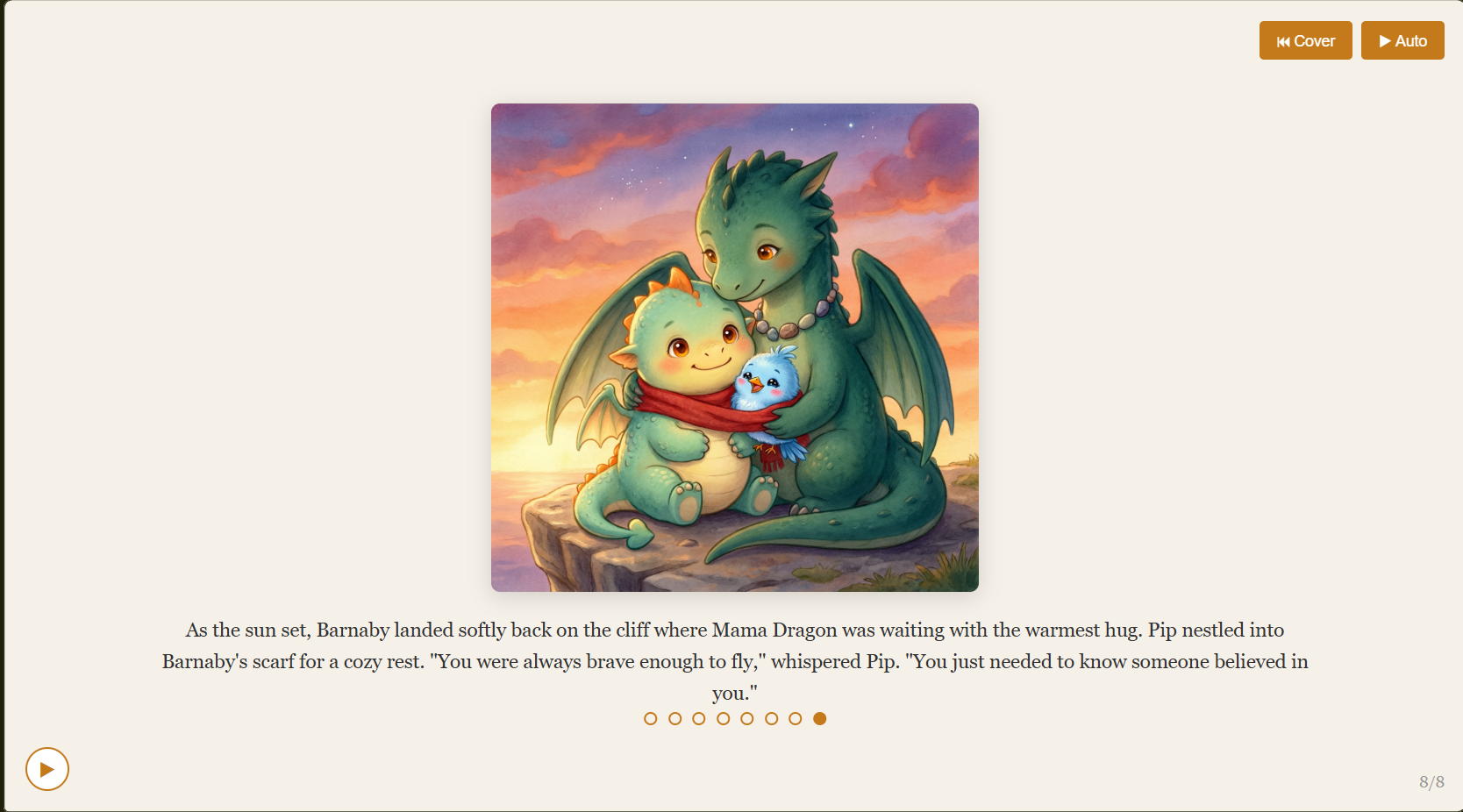
Imaginate turns a single sentence into a complete, professional storybook:
- Script Generation — Qwen3.7-max writes a complete story with 8-10 scenes, character bible, and narrative arc
- Character References — Qwen Image 2.0 Pro generates reference images for each character
- Scene Illustrations — Each scene gets a full-color illustration with character consistency
- Narration — Qwen3-tts-instruct-flash voices every page with natural English narration
- Export — Download as interactive HTML, printable PDF, or Kindle-compatible EPUB
How I Built It
Architecture
The system is a 6-phase sequential pipeline:
User Prompt → Script Generator → Character References → Scene Illustrations → Narration → Export
Each phase writes its output to disk as JSON, so the pipeline can resume from any completed phase.
Tech Stack
| Component | Technology |
|---|---|
| Frontend | Vanilla HTML/CSS/JS |
| Backend | Python 3.12, FastAPI |
| LLM | Qwen3.7-max |
| Image Gen | Qwen Image 2.0 Pro |
| TTS | Qwen3-tts-instruct-flash |
| weasyprint | |
| EPUB | ebooklib |
| Deployment | Alibaba Cloud |
The Challenges
Challenge 1: Image Reference Rejection
The workspace multimodal endpoint rejects reference images alongside text prompts. Every time we tried passing a character reference image, we got HTTP 400.
Fix: Embedded character appearance descriptions from the bible directly into each scene's text prompt. Character consistency is maintained through detailed visual descriptions — no reference images needed.
Challenge 2: Rate Limiting
The Token Plan endpoint throttles at roughly 4 images per minute. With 10 scenes and 3 character references, that is 13 image generations. Without rate limiting, we got constant HTTP 429 errors.
Fix: Added a 15-second mandatory delay between image calls, plus exponential backoff on 429 responses (3x normal backoff). The pipeline takes longer but completes reliably.
Challenge 3: TTS Endpoint Discovery
The CosyVoice v3-plus model required WebSocket access that our account did not support via HTTP. We tried the dashscope-intl endpoint (404), the native API (400), and the OpenAI-compatible audio endpoint (404).
Fix: After listing all available models, we discovered qwen3-tts-instruct-flash works perfectly through the multimodal-generation endpoint — the same one used for images. It returns an audio URL in output.audio.url.
Challenge 4: DNS Intermittency
From our environment, the dashscope-intl domain randomly failed DNS resolution. Python's requests library threw getaddrinfo failed errors even though curl worked fine.
Fix: Added download retries (3 attempts with 5s backoff) to both image and audio download functions. Transient failures now resolve automatically.
What I Learned
- Qwen Cloud's OpenAI-compatible SDK makes migration trivial — just change the base_url
- Character consistency through text is viable with a detailed visual bible
- Rate limiting is your friend on shared API plans — build it in from day one
- Alibaba Cloud's Token Plan gives full model access for a fixed monthly cost
- Build for resume — failed API calls mid-pipeline should not waste prior progress


Log in or sign up for Devpost to join the conversation.