-
-
Storify
-
Imagify
-
Directory page
TellSnap began as an ambitious dream that went through several transformations before becoming what it is today. Our initial vision was to bring fanfiction to life in 3D reality — imagine reading your favorite stories and watching them unfold as immersive 3D experiences. We spent countless hours experimenting with various AI models and generation techniques, but ultimately hit a wall. The technology simply wasn't ready to produce consistent, high-quality 3D scenes from narrative text. Characters would morph between frames, environments would shift unpredictably, and the coherence we needed just wasn't achievable.
Rather than giving up entirely, we pivoted to what felt like a more attainable goal: generating manga panels from story prompts. We thought that 2D illustration would be more manageable than 3D rendering, and for a while, it seemed promising. However, we encountered similar challenges — maintaining character consistency across panels proved incredibly difficult. A protagonist's hair color would change, facial features would drift, and the visual storytelling felt disjointed. These failures, while frustrating, taught us an invaluable lesson: AI image generation, despite its remarkable progress, still has significant limitations when it comes to maintaining visual continuity and narrative coherence. There's still so much room for improvement in this space, and we learned to work within these constraints rather than fight against them.
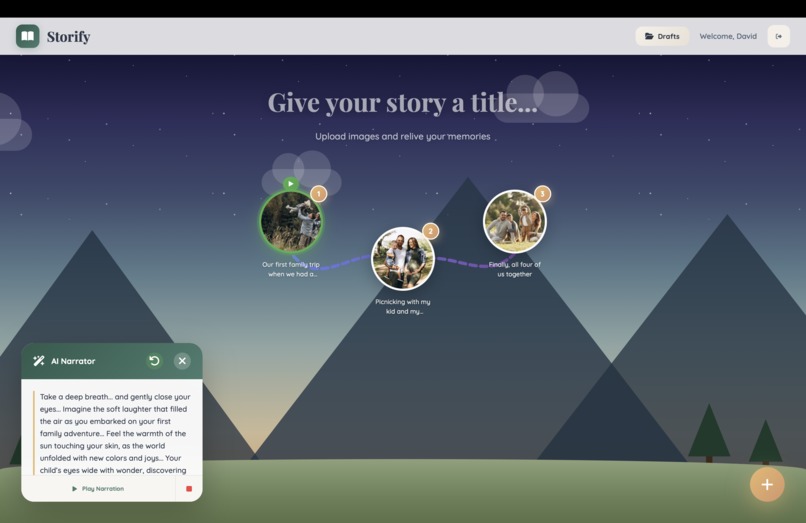
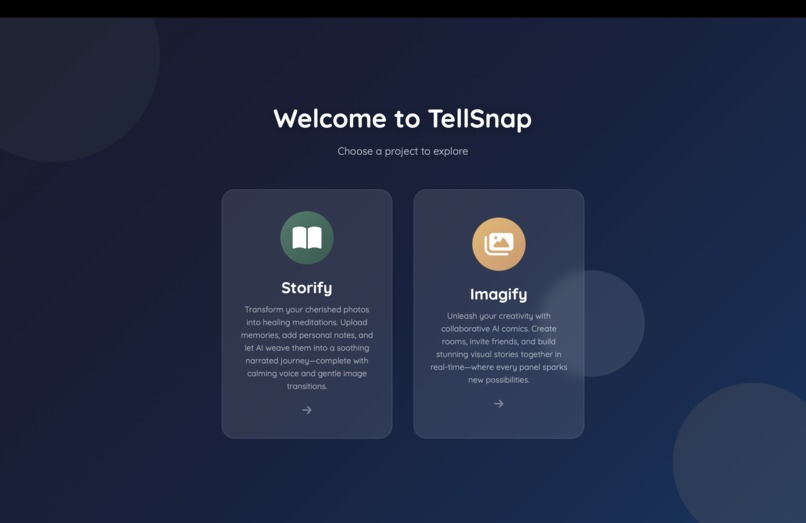
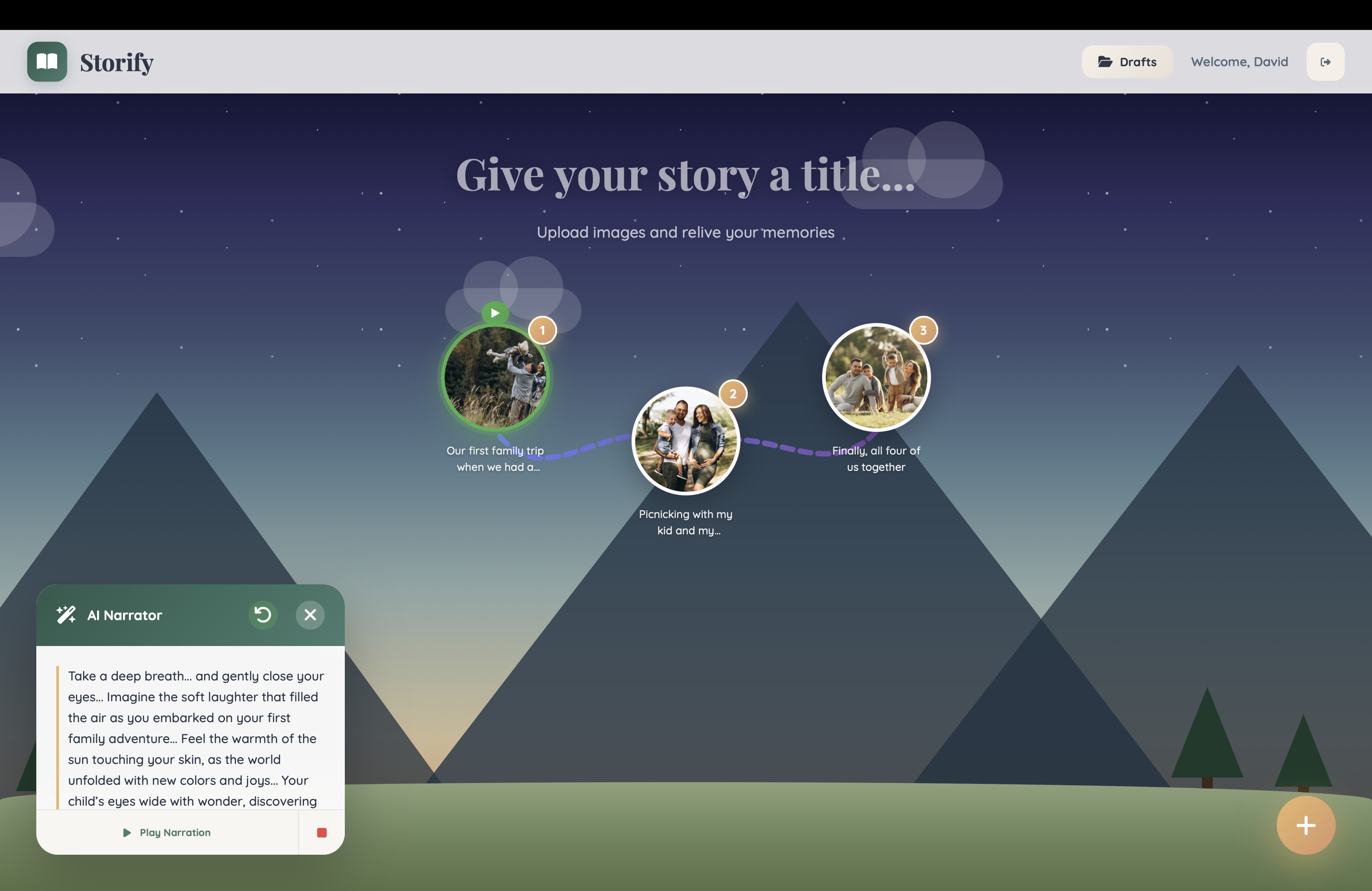
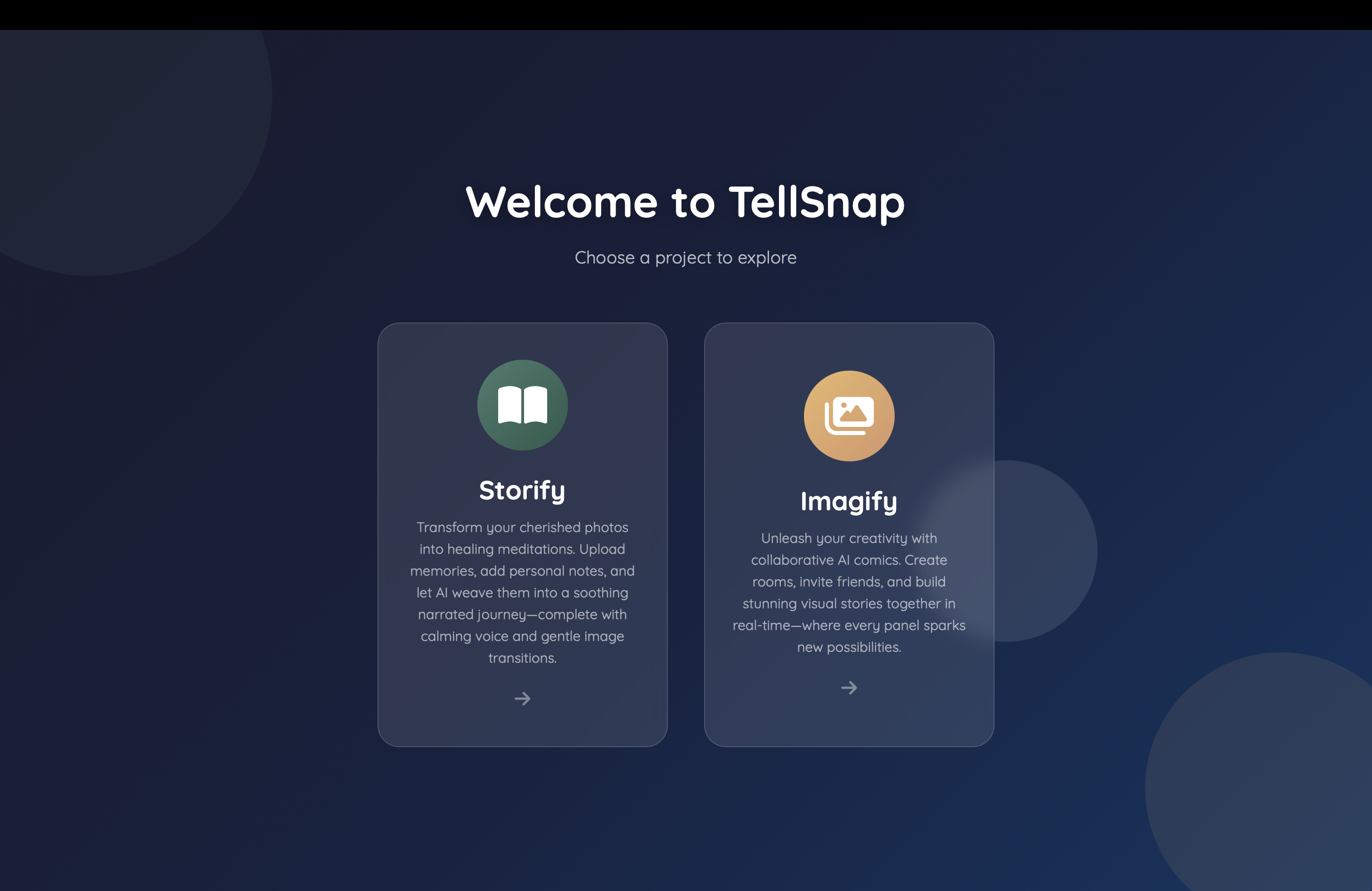
This journey of experimentation led us to TellSnap, which now houses two distinct but complementary applications. Storify emerged from a deeply personal desire to preserve and relive memories. We envisioned it as a digital journal that doesn't just store photos, but actually transports you back to those moments. When someone opens Storify and plays their meditation, the goal is for them to close their eyes and genuinely feel like they're back in that memory — hearing a soothing voice narrate the emotions they felt, seeing their photos transition gently, and experiencing a moment of therapeutic reflection. It's not just about looking at pictures; it's about emotional time travel.
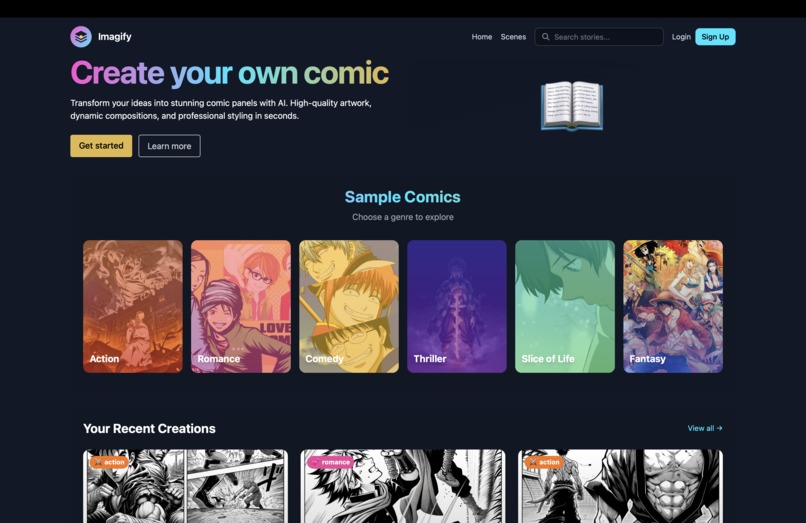
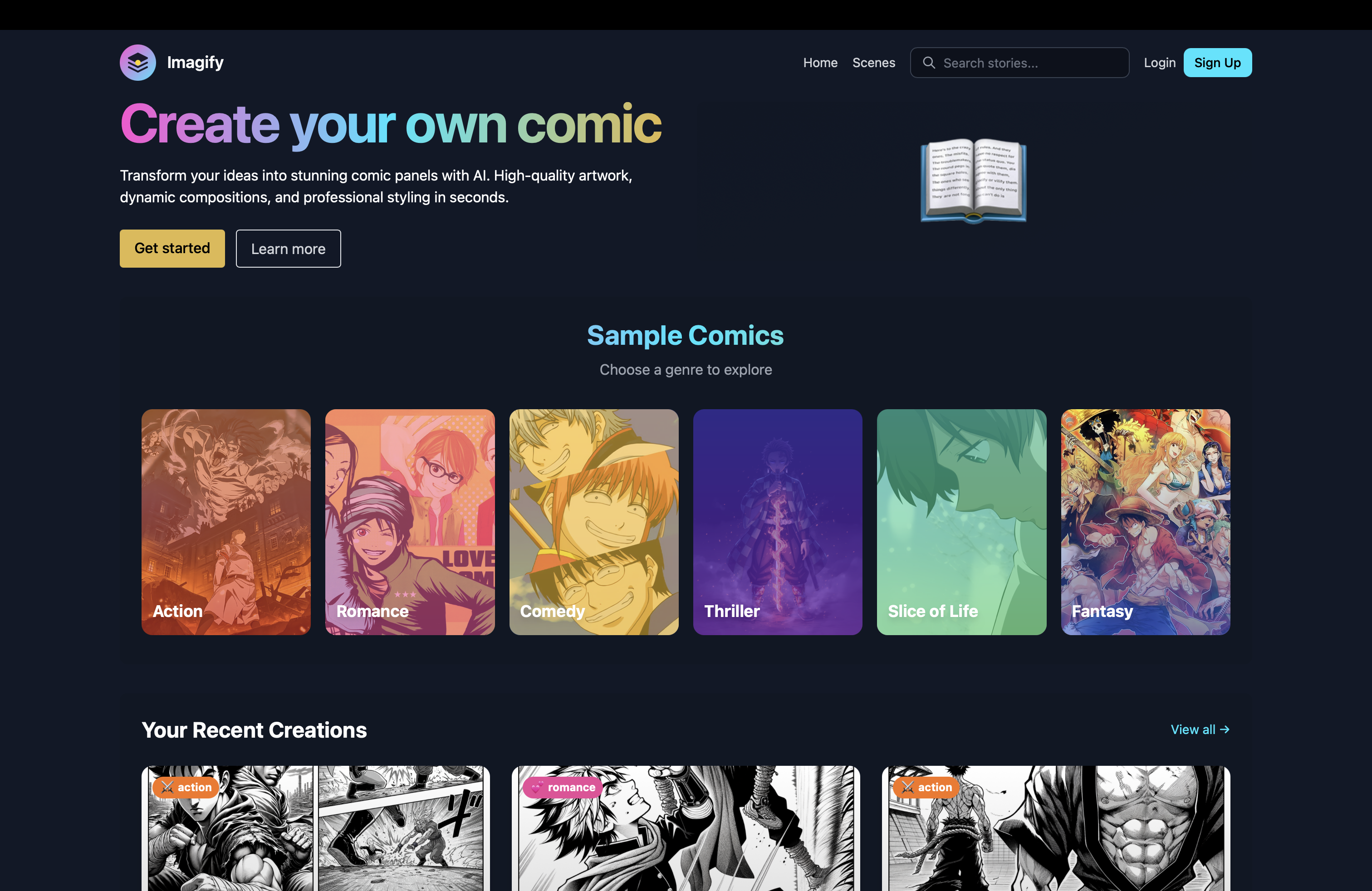
Imagify, on the other hand, channels our original creative ambitions into a collaborative storytelling platform. While we couldn't achieve perfect 3D fanfiction or flawless manga generation, we built a system that embraces AI's current capabilities while implementing clever workarounds like our Scene Bible system for character continuity. Users can create visual stories together, building on each other's scenes and letting AI assist with the heavy lifting of image generation.
Our team brought diverse skills to the table. Shafeen R Rahman and Fahad Akon led the frontend development, crafting the user interfaces and experiences for both applications. From Storify's calming mountain landscapes and animated clouds to Imagify's sleek exploration interface, they ensured every interaction felt intuitive and visually polished. Delger handled the backend architecture, building the robust systems that power user authentication, data storage, job queues, and the complex AI generation pipelines that make these experiences possible.
Both Storify and Imagify contribute to Track 1: Interactive Media, as they fundamentally reimagine how people interact with their own stories and memories. Storify transforms passive photo viewing into an active, immersive meditation experience — users don't just see their memories, they hear them narrated, feel them emotionally, and engage with them therapeutically. Imagify turns storytelling into a collaborative, visual medium where anyone, regardless of artistic ability, can participate in creating comic narratives. Together, these applications push the boundaries of what interactive media can be: personal, emotional, collaborative, and accessible.
Challenges We Faced The biggest challenge we faced was confronting AI's limitations head-on. After investing significant time into our 3D fanfiction and manga panel concepts, watching them fail repeatedly was genuinely frustrating. There were moments when we questioned whether we could build anything meaningful at all. The technology that seemed so powerful in demos and marketing materials revealed its cracks when pushed toward consistency and coherence. We learned that AI is an incredible tool, but it requires human creativity to work around its weaknesses.
Frustration became a recurring theme throughout development. Beyond the AI setbacks, we dealt with browser autoplay policies blocking our meditation audio, API rate limits interrupting our testing, and the complexity of coordinating a monorepo with TypeScript and Python services. There were late nights debugging why character faces kept changing between panels, why audio wouldn't sync properly with image transitions, and why our job queues would occasionally drop tasks. Each obstacle required patience, research, and often completely rethinking our approach.
What TellSnap Helps With Storify addresses the universal human need to preserve and process memories. In a world where we take thousands of photos but rarely revisit them meaningfully, Storify offers a therapeutic way to reconnect with our past. It helps users practice mindfulness through their own memories, potentially aiding with stress relief, gratitude reflection, and emotional processing. For someone who has lost a loved one, it can transform old photos into a healing narrated experience. For someone celebrating a milestone, it preserves not just the images but the emotions of that moment.
Imagify democratizes visual storytelling. Professional comic creation requires years of artistic training, but Imagify lets anyone with an idea bring it to life visually. It helps aspiring storytellers, educators creating visual content, friends collaborating on creative projects, and anyone who has ever wished they could draw their imagination into existence. By handling the artistic execution, Imagify frees users to focus on what matters most: the story itself.
Built With
- bullmq
- claudeopus
- claudeopus4.5
- css3
- elevenlabs
- fastapi
- firebase
- githubcopilot
- googleaiimagen3
- googlecloudplatform
- googlefonts
- html5
- javascript
- jwt
- next.js14
- nextjs10
- openaigpt
- openaigpt-4
- pnpm
- python3.11
- radis
- socket.io
- tailwindcss
- typescript
- vanillajs

Log in or sign up for Devpost to join the conversation.