-
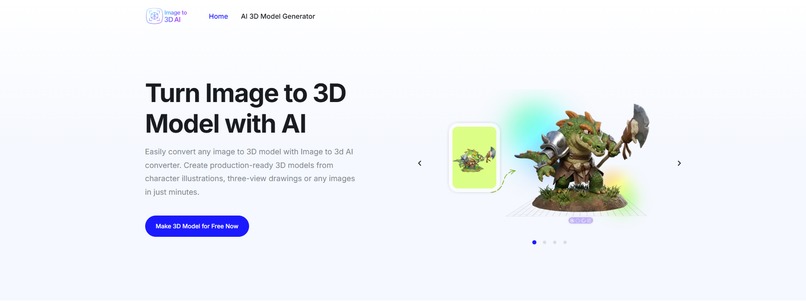
playground
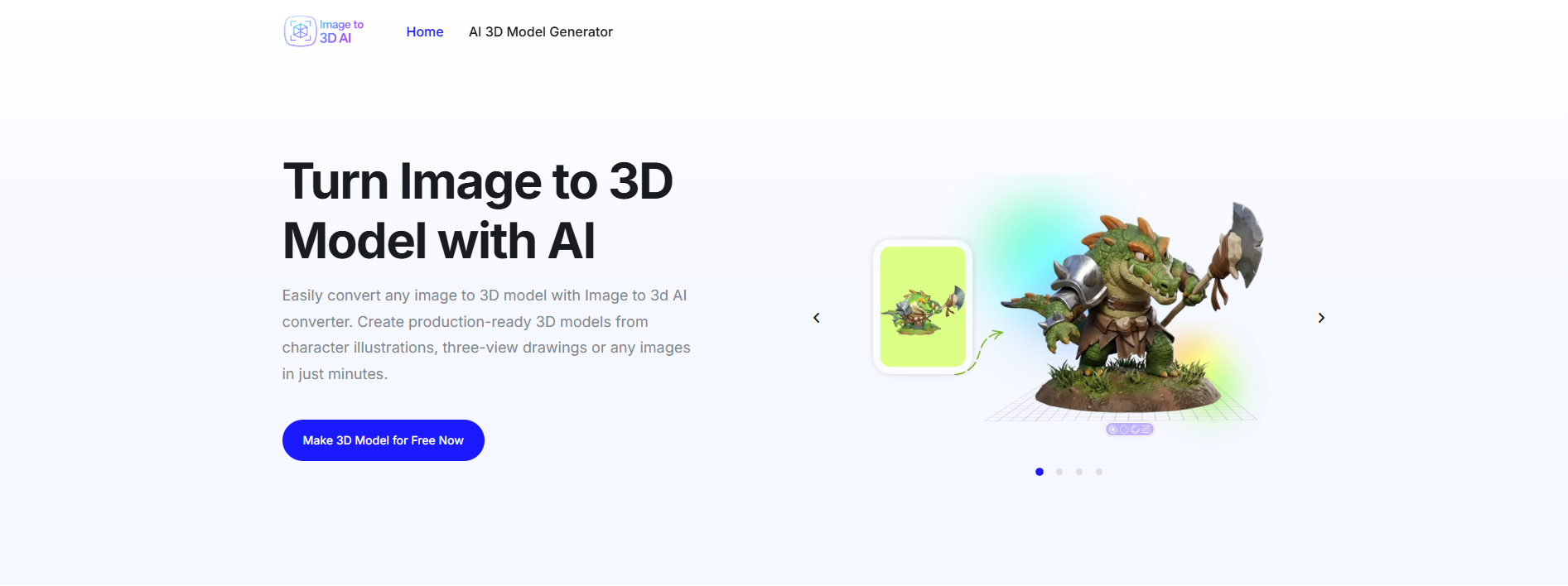
Inspiration
The bottleneck of 3D content creation has always been the steep learning curve of modeling software. I wanted to build a "magic box" that democratizes 3D creation, allowing game devs, architects, and hobbyists to turn a fleeting thought or a simple sketch into a physical-ready digital asset instantly.
What it does
This tool is an AI-powered 3D engine that bridges the gap between 2D concepts and 3D reality. Users can input a text prompt or upload a photo, and the AI reconstructs a fully textured, 360-degree 3D model that can be exported directly into engines like Unity, Unreal, or Blender.
How I built it
● Architecture: Leveraged Large Reconstruction Models (LRM) combined with a Triplane Transformer for lightning-fast inference. ● Pipeline: Used Stable Diffusion for multi-view image synthesis, which then feeds into a sparse-view reconstruction network. ● Frontend: Built with Next.js and Three.js (React Three Fiber) for a seamless, interactive WebGL preview experience. ● Backend: High-performance FastAPI service containerized with Docker and deployed on NVIDIA A100 clusters.
Challenges I ran into
The "Janus Problem" (multi-faced artifacts) was a major hurdle—where the AI would generate multiple faces on a single object. I overcame this by implementing a Multi-view Attention Mechanism and fine-tuning the model on a curated dataset of high-quality 3D scans to ensure spatial consistency.
Accomplishments that I'm proud of
● Speed: Reduced generation time from 10+ minutes (standard NeRF methods) to under 45 seconds. ● Topology: Achieved a "Quad-like" mesh output that is significantly easier for artists to edit than typical messy AI point clouds. ● Material Accuracy: The AI correctly distinguishes between metallic, matte, and glossy surfaces based on the input prompt.
What I learned
I gained deep insights into 3D Variational Score Distillation (VSD) and the complexities of 3D data representation. Beyond the math, I learned that the best AI tools aren't just about the model—they're about creating a workflow that fits into an artist's existing ecosystem.
What's next for Image to 3D AI
● Auto-Rigging: Automatically adding skeletal structures to generated characters for instant animation. ● Scene Generation: Moving from single objects to full 3D environments. ● Plugin Integration: Direct-to-Blender and Direct-to-Roblox plugins for a frictionless "Export & Play" experience.


Log in or sign up for Devpost to join the conversation.