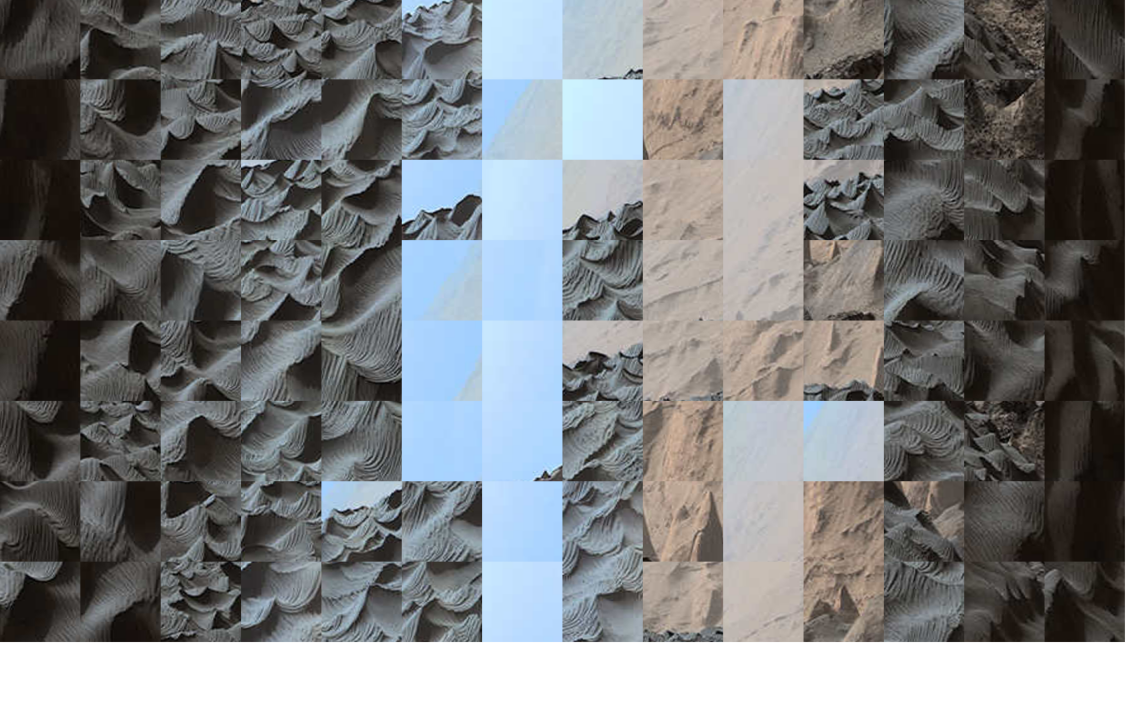
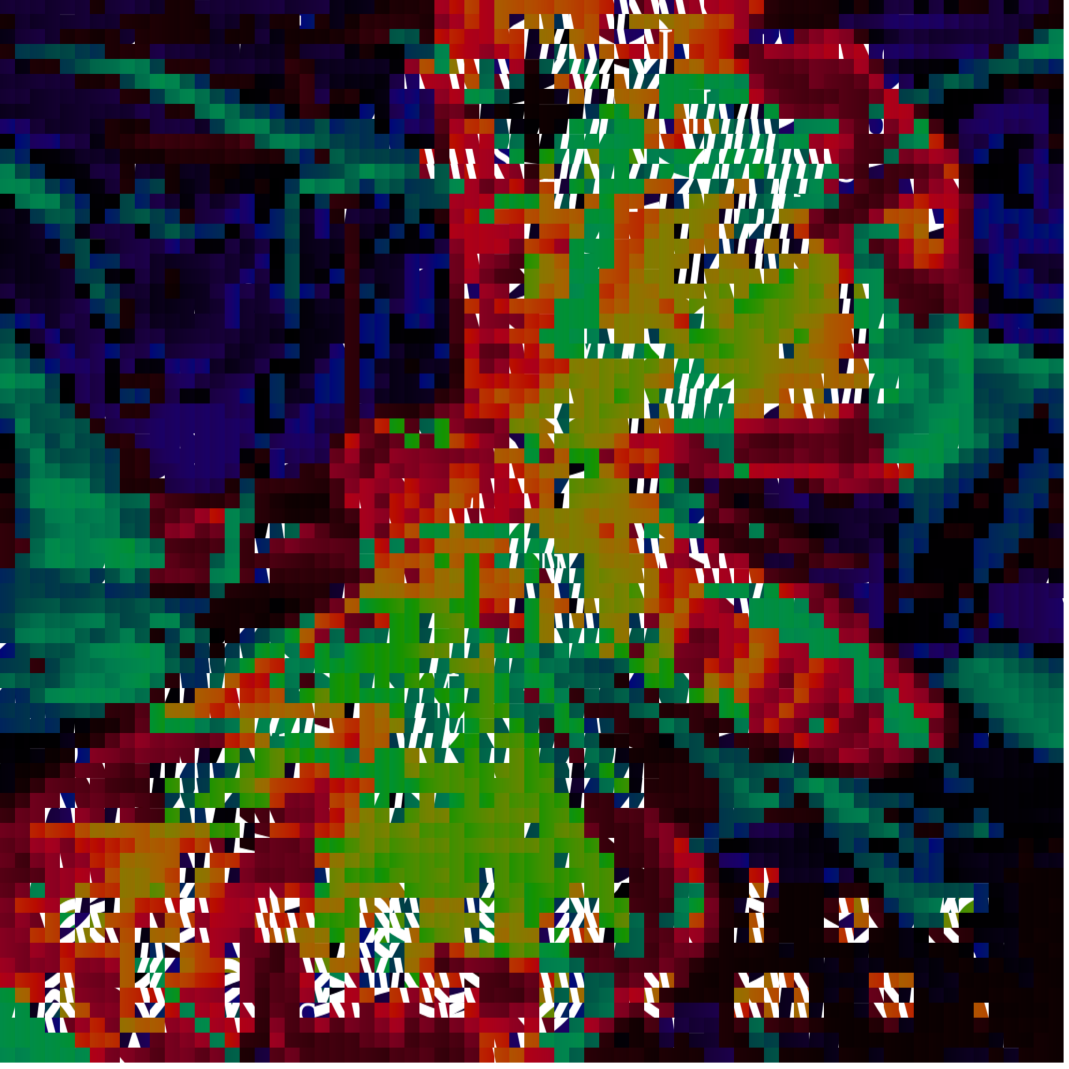
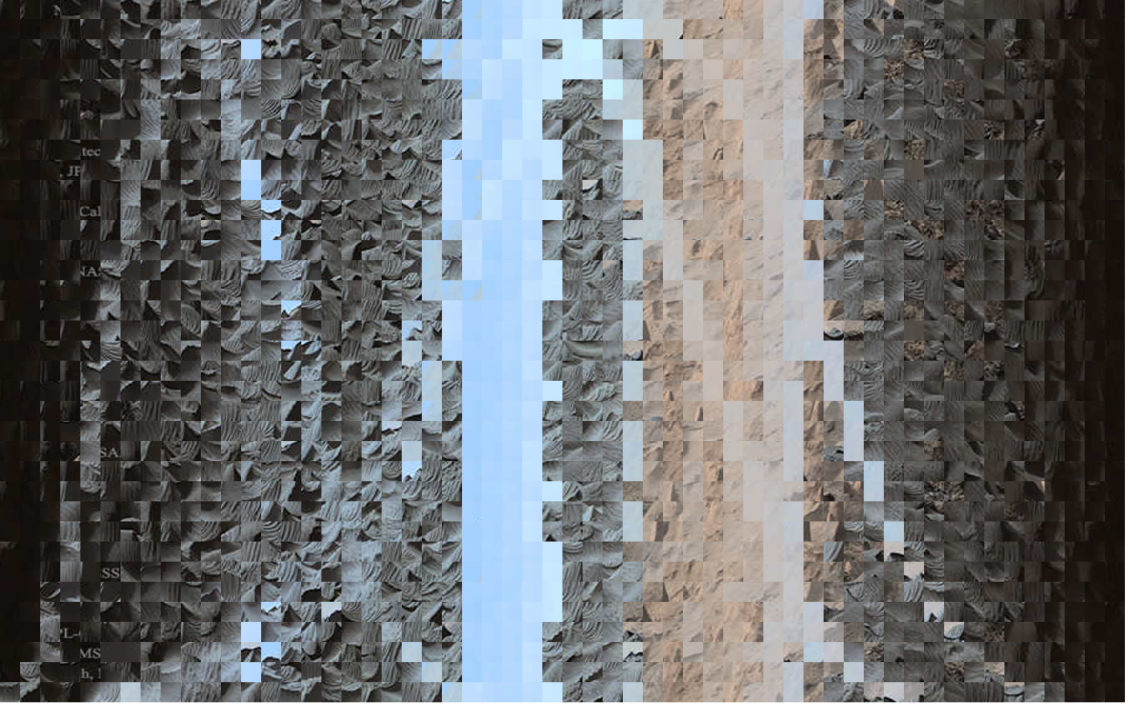
Python file for image mosaicing while preserving all color pixels. Basically, it maps the colors of one image ("color image") to the structure of another image ("form image"),
Most image mosaicing algorithms distort colors to produce a final image. This approach preserves all pixels in the color image.
The output is an image that can still be understood as the form image but it's made out of variable size chunks of the color image. Higher precision increases runtime but uses smaller and smaller chunks, meaning more of the form image is retained. In the extreme case, every single pixel is individually mapped, creating a perfectly intelligible output. In real world usage, the runtime increases exponentially with image resolution and chosen precision. This is inherent to the program. For instance, the hungarian algorithm is used to solve the balanced assignment problem. This is generally the most effective solution for the balanced assignment problem, yet it is still O(n^3). Because of the limitations involved in directly mapping pixels, the app will likely not be able to handle very high resolution images with high precision, even with many code improvements. As such, it serves as more of a cool tool and thought exercise than a scalable app.
Challenges My team hoped to write this in c++ for a linear speed improvement in the nested loops. But, we changed gears and continued working in python because there are many useful libraries, notably the python scipy libary includes optimize.linear_sum_assignment(), which is in fact an implementation of the hungarian algorithm. We don't consider this to be a tragedy, since writing it in c++ would not have changed the fact that the time complexity is exponential.

Log in or sign up for Devpost to join the conversation.