-
-
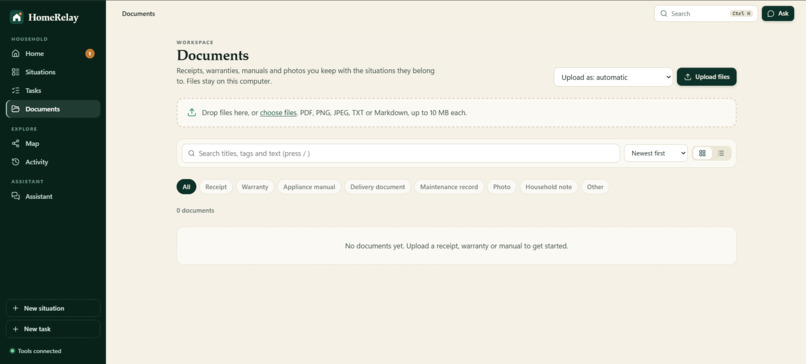
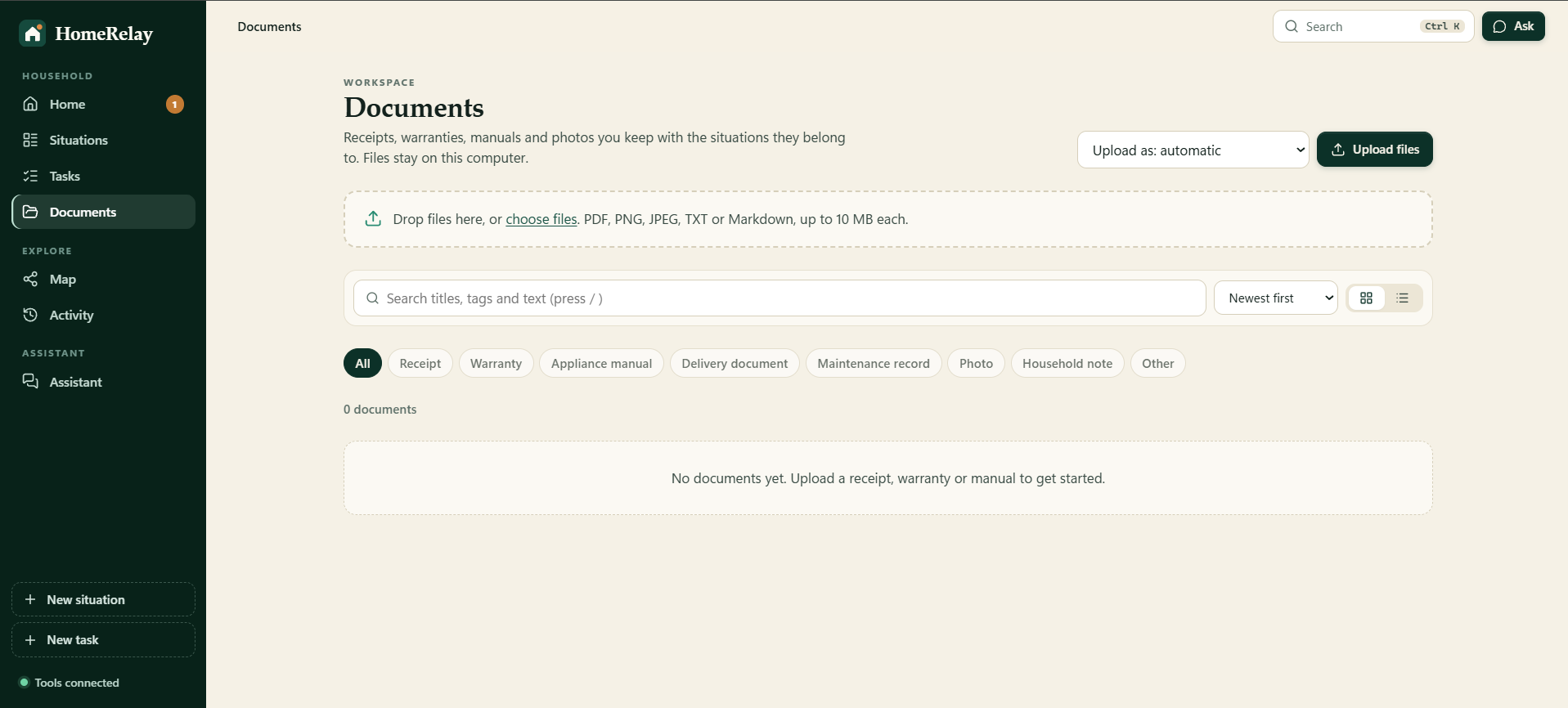
Upload, organize, and search household receipts, warranties, manuals, and records
-
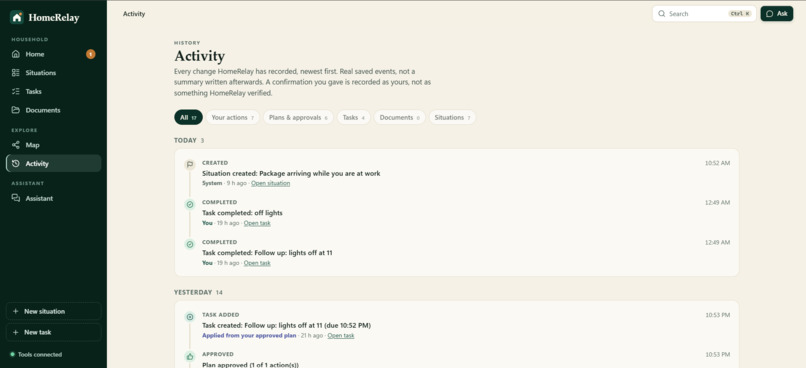
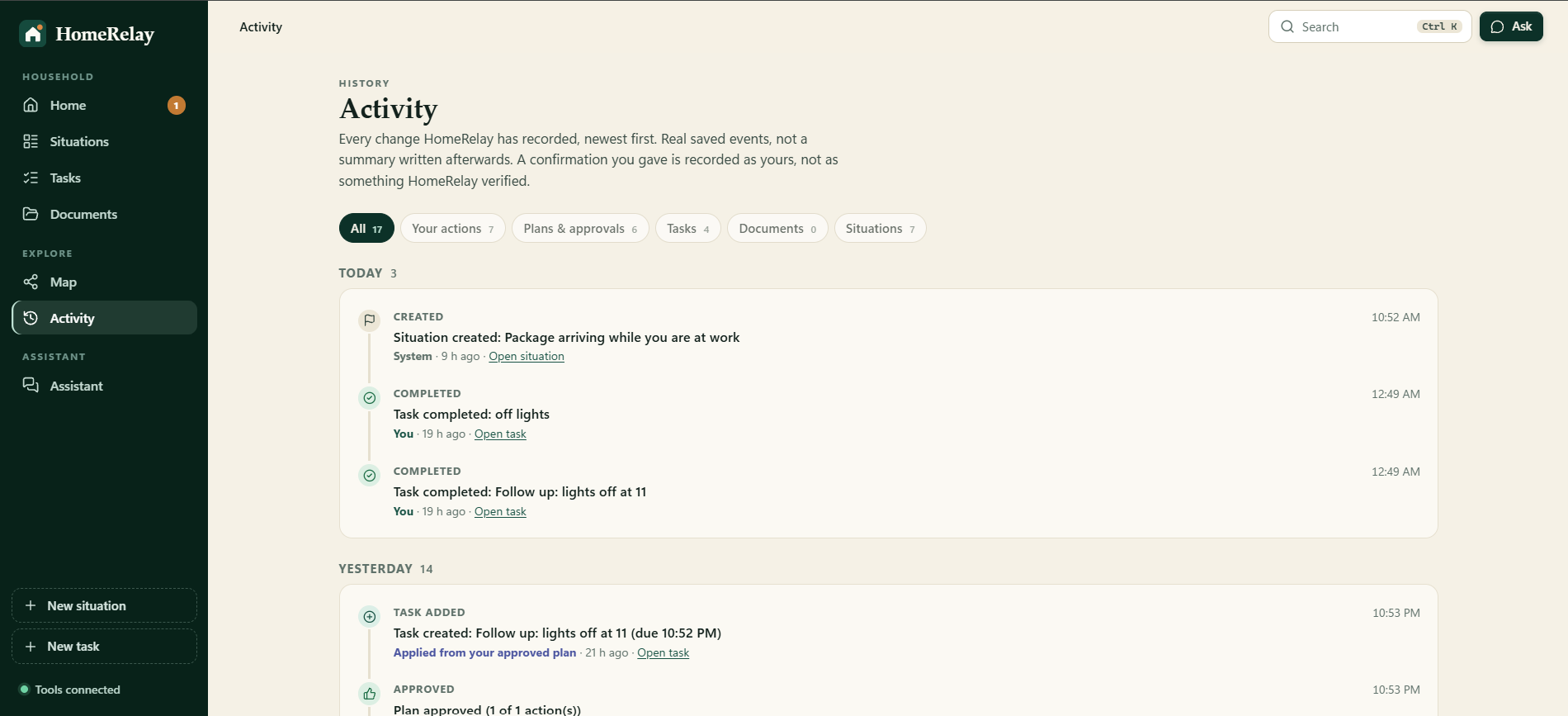
A transparent timeline of household events, task completions, and plan approvals.
-
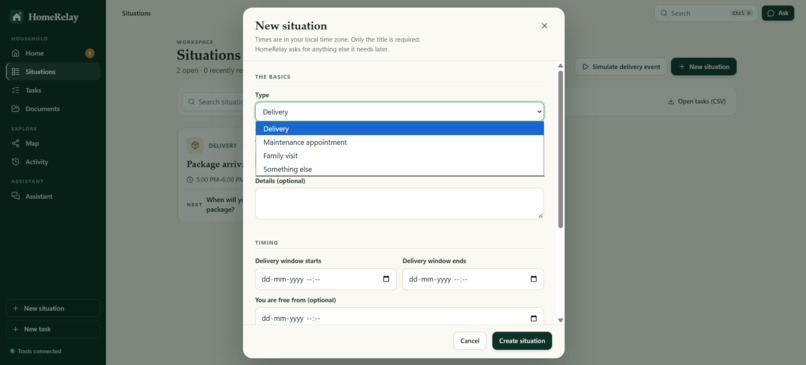
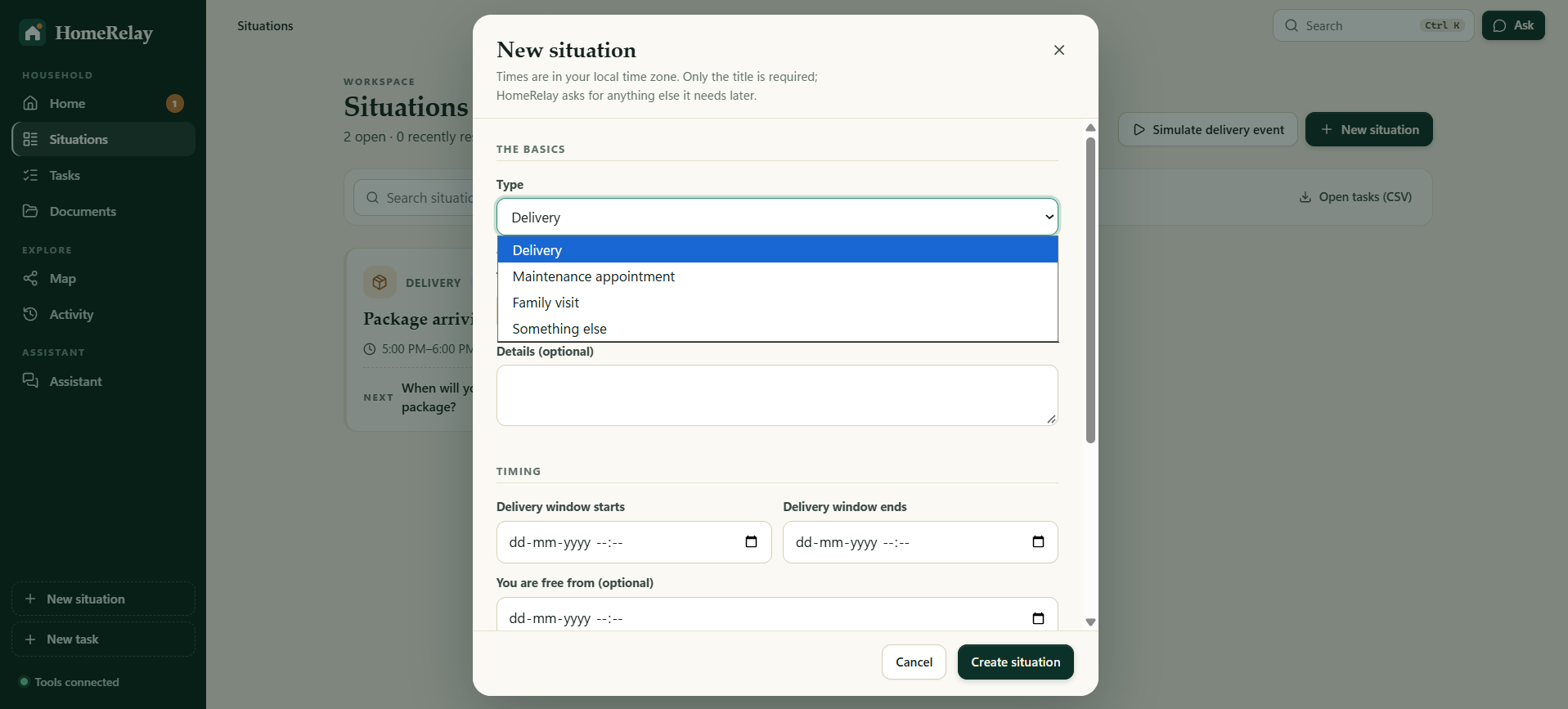
Capture deliveries, appointments, family visits, and scheduling constraints.
-
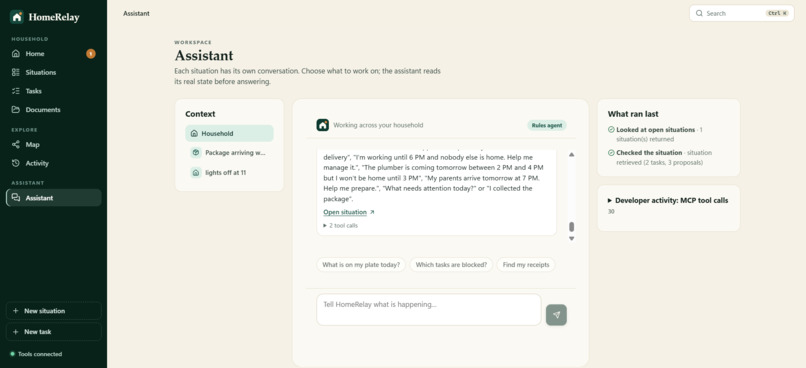
An MCP-powered AI assistant that connects household context and helps plan next steps.
-
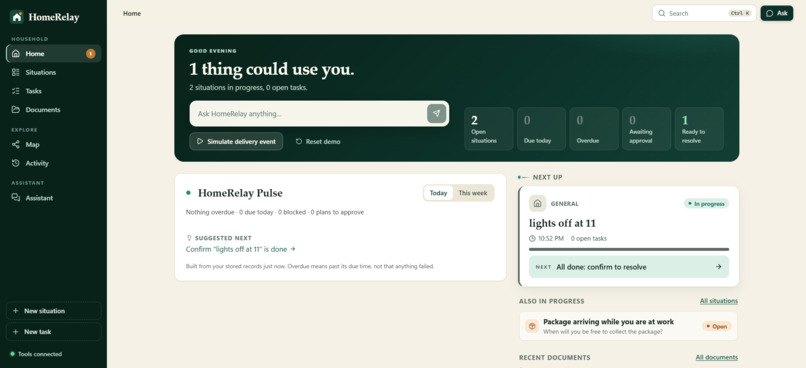
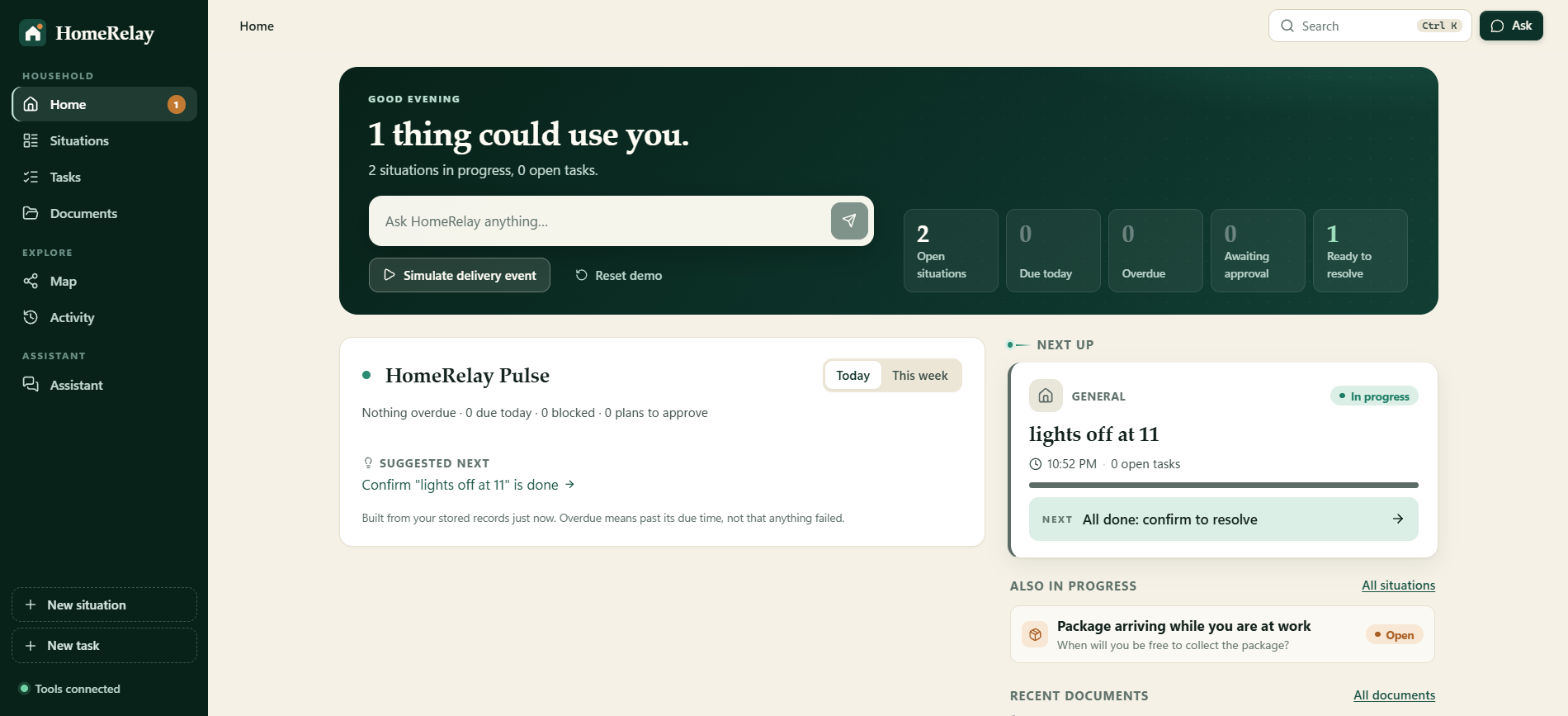
1. HomeRelay Pulse highlights active situations, outstanding tasks, and suggested next actions.
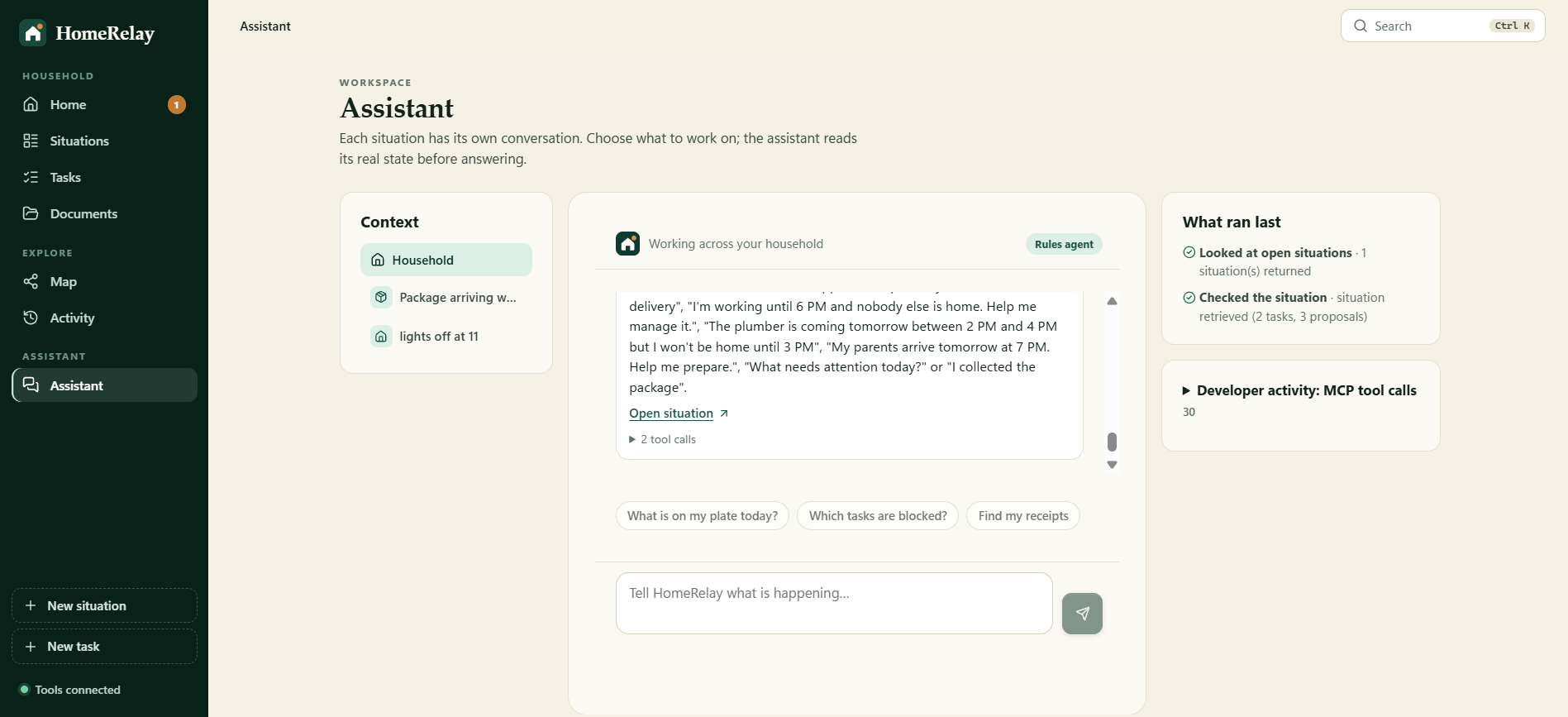
Inspiration
Household responsibilities rarely happen in isolation. A delivery arrives while you're busy, a maintenance appointment conflicts with another commitment, or a small change disrupts the entire day's plan. Tasks, documents, and reminders become scattered, leaving people to coordinate everything manually.
We asked: What if a household assistant could understand what's happening, connect the relevant information, propose the next steps, and adapt when circumstances change — without taking control away from the user?
That idea became HomeRelay, an MCP-powered household coordination agent that turns everyday situations into organized, actionable plans.
What it does
HomeRelay brings household situations, tasks, documents, and their relationships into one persistent workspace.
- Situation-aware planning: Describe a delivery, maintenance appointment, family visit, or everyday event and receive a structured plan.
- Human-approved actions: Review proposed plans before they create operational tasks.
- Adaptive replanning: Update plans when circumstances change, while preventing outdated proposals from creating tasks for resolved situations.
- Task management: Organize due dates, priorities, dependencies, and recurring work.
- Document vault: Upload, search, and associate household documents with relevant tasks and situations.
- Relay Map: Explore connections between situations, tasks, and documents.
- Activity history: Follow recorded decisions and changes, distinguishing simulated events from real-world confirmations.
HomeRelay also includes safeguards for concurrent uploads, document-storage limits, and consistent approval states.
How we built it
HomeRelay uses a modular TypeScript architecture. React and Vite power the frontend, Express coordinates API requests, and a dedicated Model Context Protocol (MCP) server exposes household capabilities through structured tools. SQLite provides persistent storage.
The agent supports both a deterministic, rules-based mode and an optional Anthropic-powered mode, allowing core functionality to remain available without an external LLM API key.
A key architectural decision was to preserve the MCP boundary between the agent and domain logic. Rather than manipulating the database directly, the agent interacts with structured tools. This separation improves modularity, testability, and control over operations.
We strengthened reliability with transactional safeguards for duplicate uploads, protections against approving plans for resolved situations, configurable document-storage quotas, and Content Security Policy and security headers for the production preview. We also corrected benchmark behavior so failed or rate-limited requests cannot be counted as successful performance measurements.
Challenges we faced
The central challenge was making an AI agent reliable when real-world circumstances change. A plan that was valid a moment ago should not automatically remain actionable after its underlying situation has been resolved.
Concurrency created another challenge: simultaneous identical uploads must not produce inconsistent records, confusing errors, or orphaned files. We addressed these risks with transactional validation and regression tests.
We also had to distinguish genuine performance from failed requests and strengthen browser-side security without breaking the application's functionality.
These challenges shifted our focus from simply generating useful responses to building an agent whose proposed actions, persistent state, and failure behavior can be tested.
What we learned
We learned how MCP can connect an AI agent to domain-specific capabilities through structured tools, and why reliable agents need more than language-model quality.
Explicit approval boundaries, transactional state changes, persistent storage, and regression tests are essential when an agent proposes actions that affect everyday workflows. We also learned to treat performance measurements as evidence to validate, not numbers to assume.
What's next
HomeRelay is currently a local, single-user prototype. Our next steps are to complete extended reliability testing, evaluate the optional LLM mode with real credentials, and explore authenticated calendar, notification, and compatible smart-home integrations.
Alexa+ connectivity remains a future integration dependent on Amazon preview access, secure public hosting, authentication configuration, and verification against Amazon's actual systems.
Our goal is to make household coordination less fragmented: an assistant that connects information, proposes practical next steps, adapts as circumstances change, and keeps people in control.
Built With
- anthropic-api
- css
- express.js
- html
- model-context-protocol-(mcp)
- node.js
- react
- sqlite
- typescript
- vite


Log in or sign up for Devpost to join the conversation.