-
-
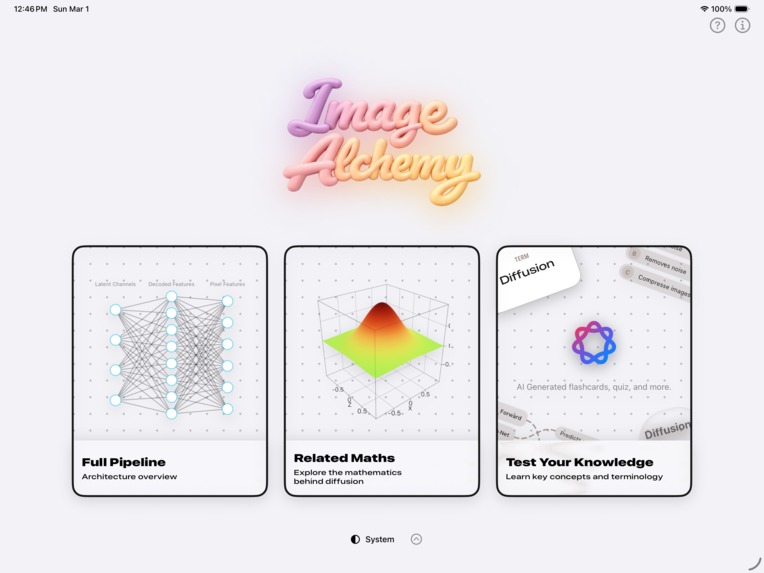
Initial Screen
-
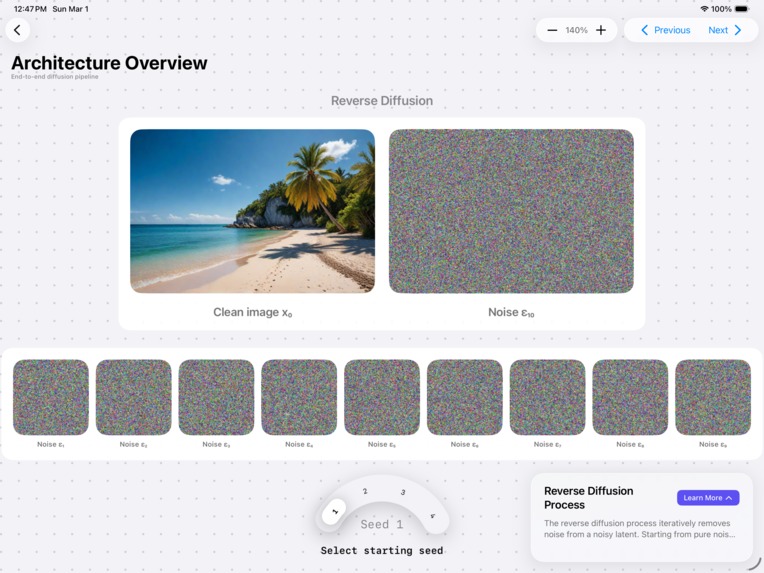
Reverse Diffusion Process Visualization
-
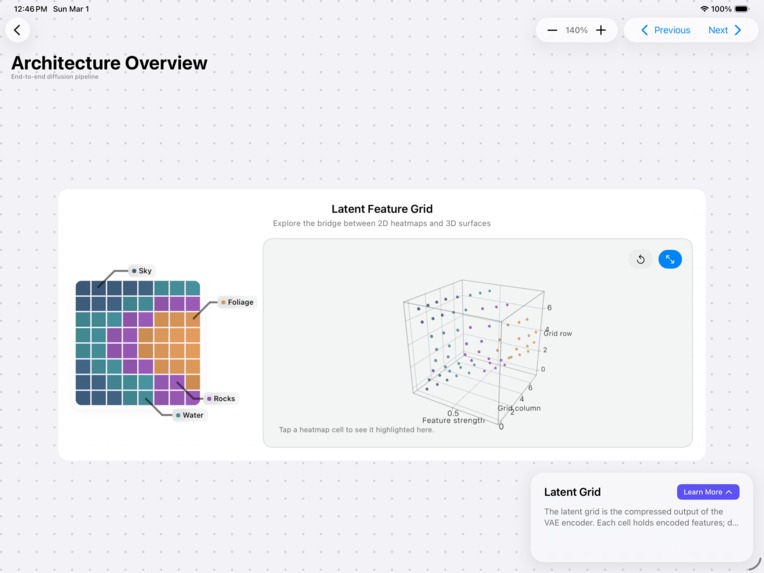
Latent Space Visualization
-
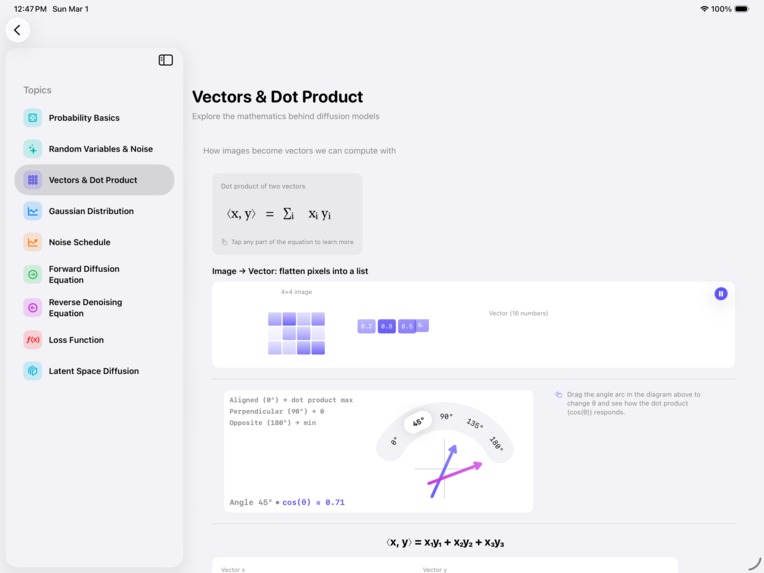
Maths related to concepts used in Diffusion model
-
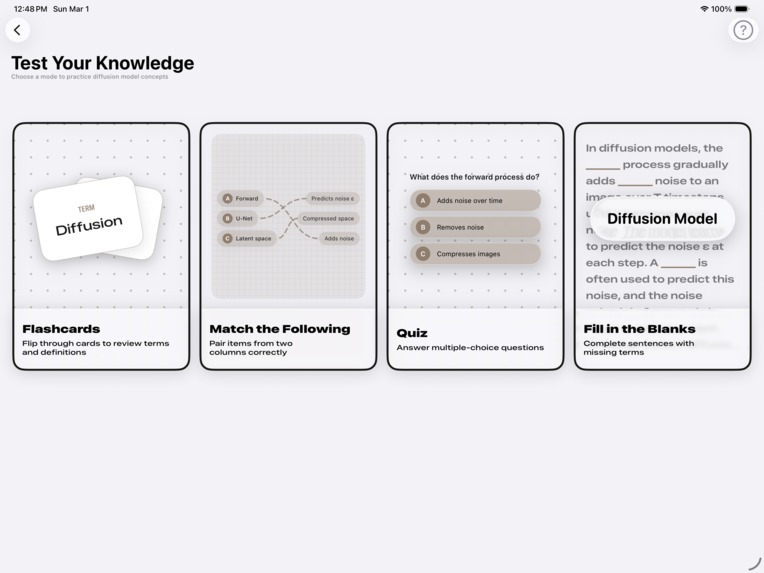
On-Device AI generated Test Your Knowledge
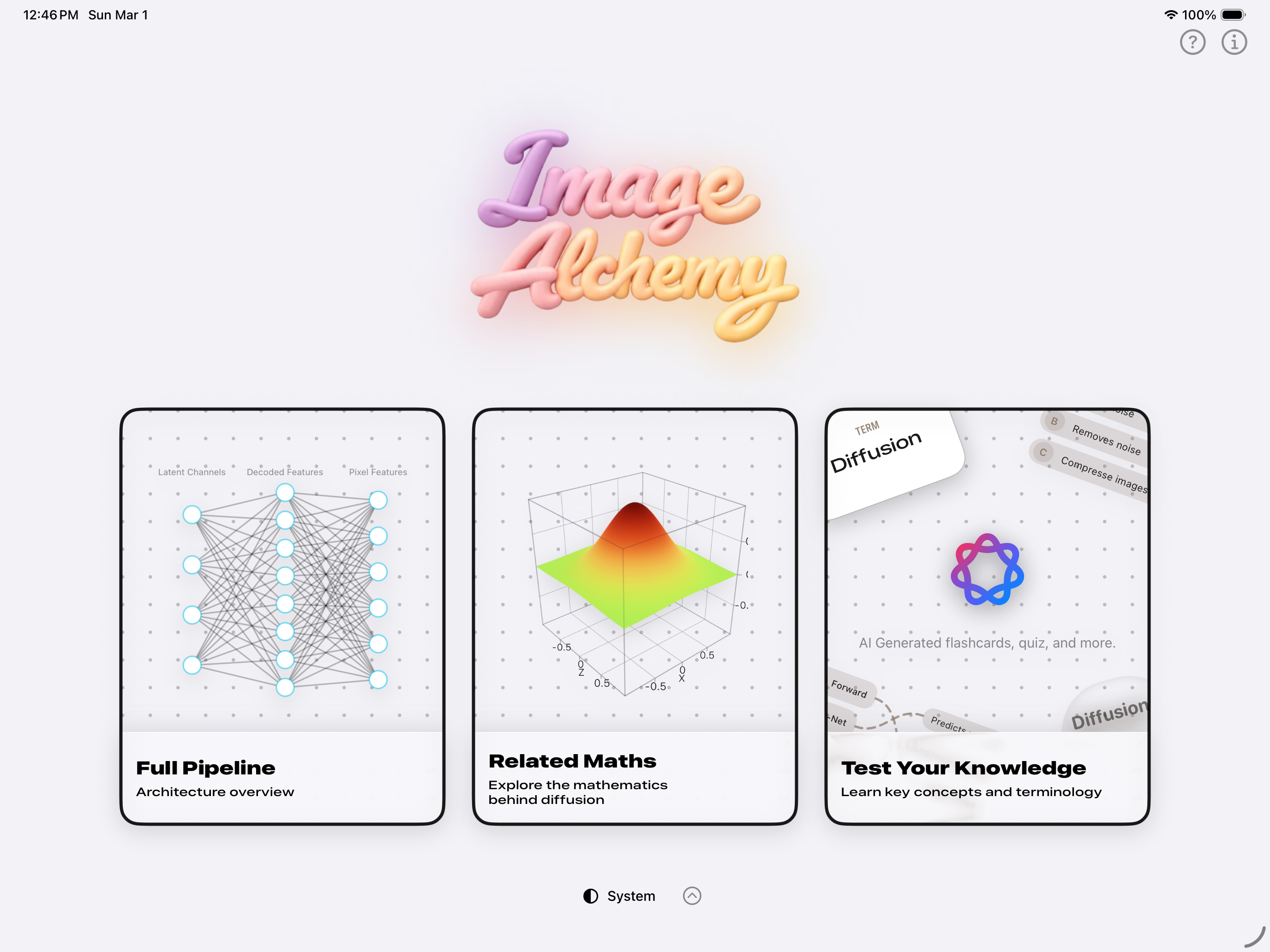
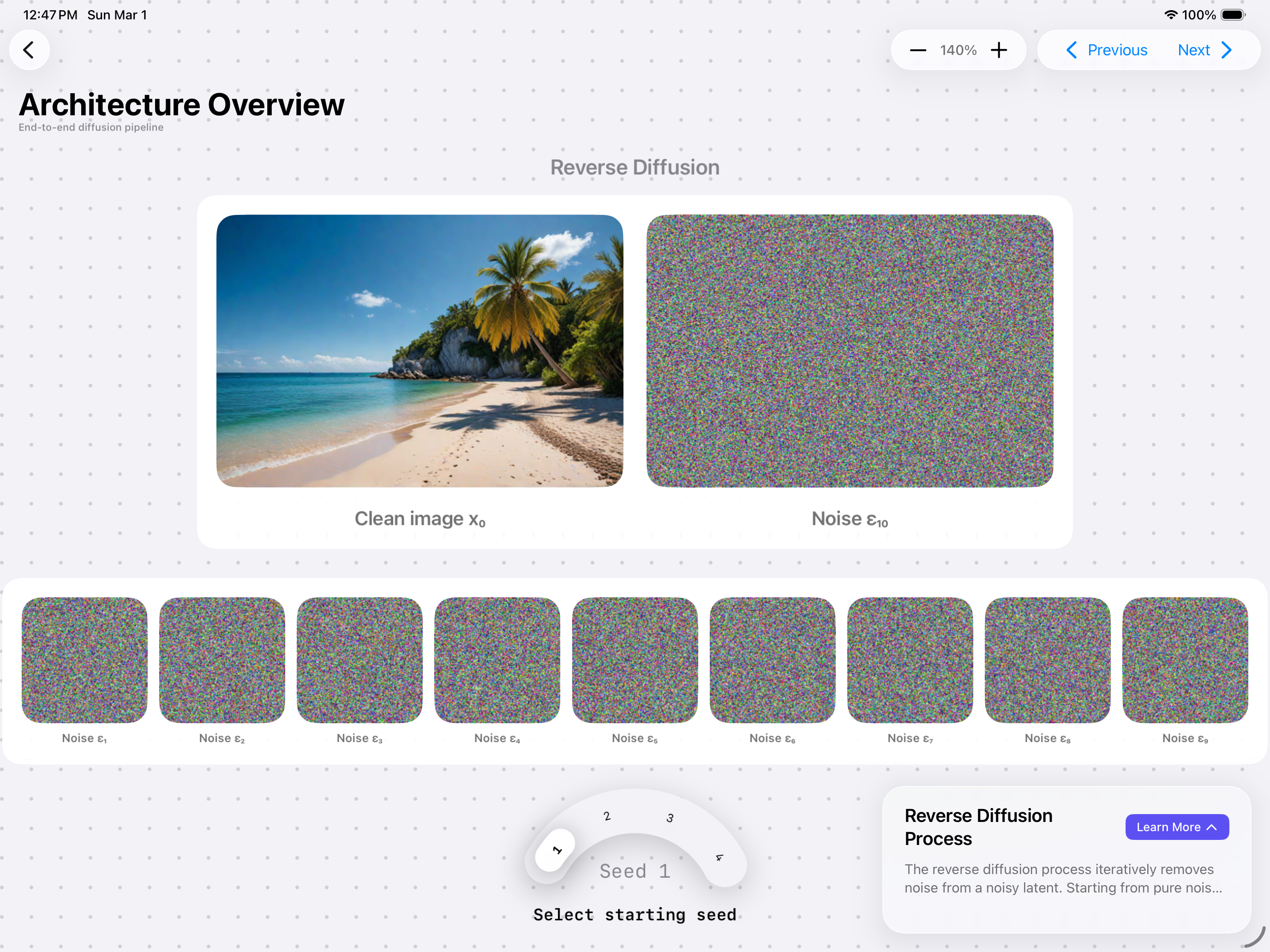
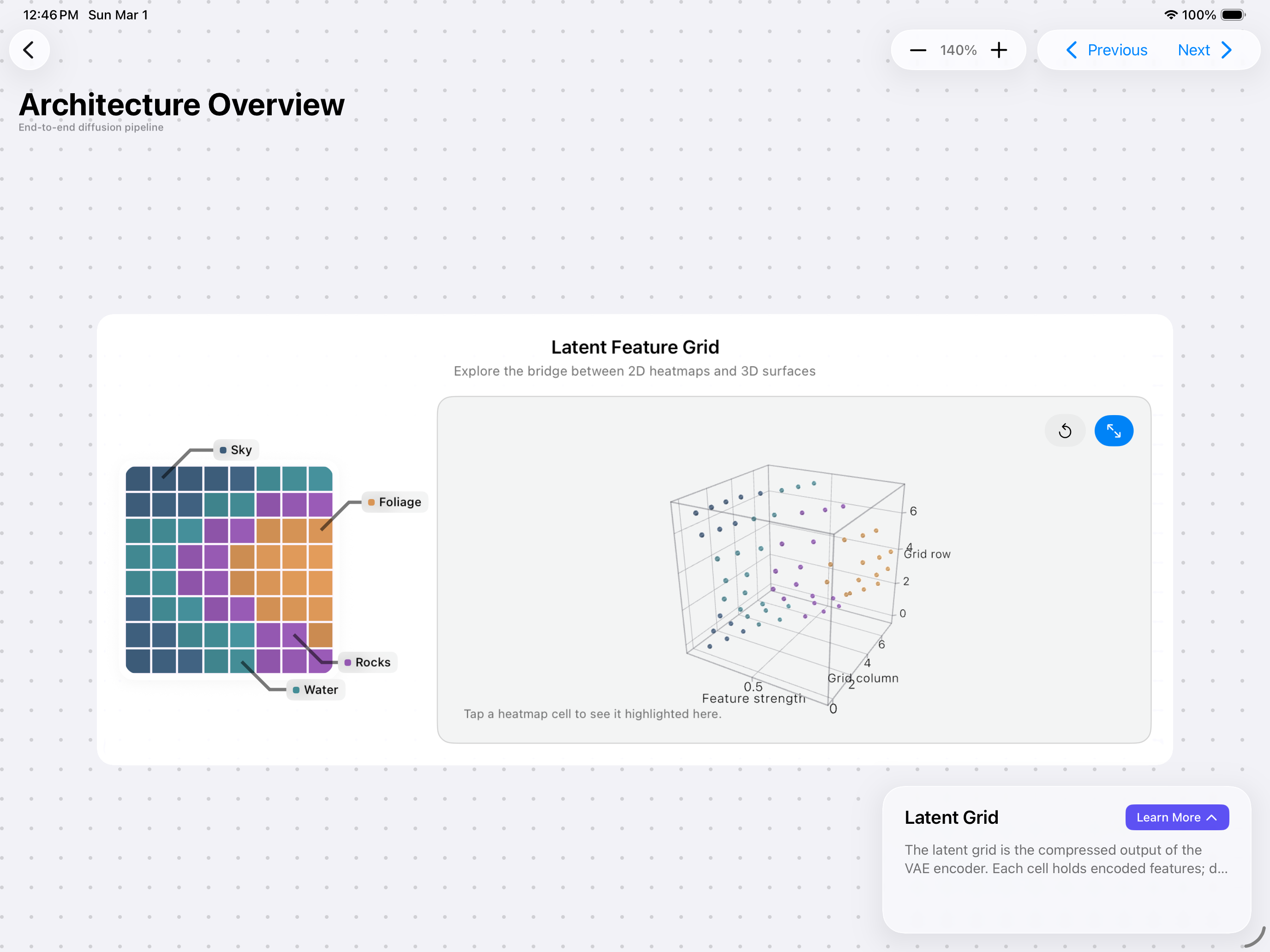
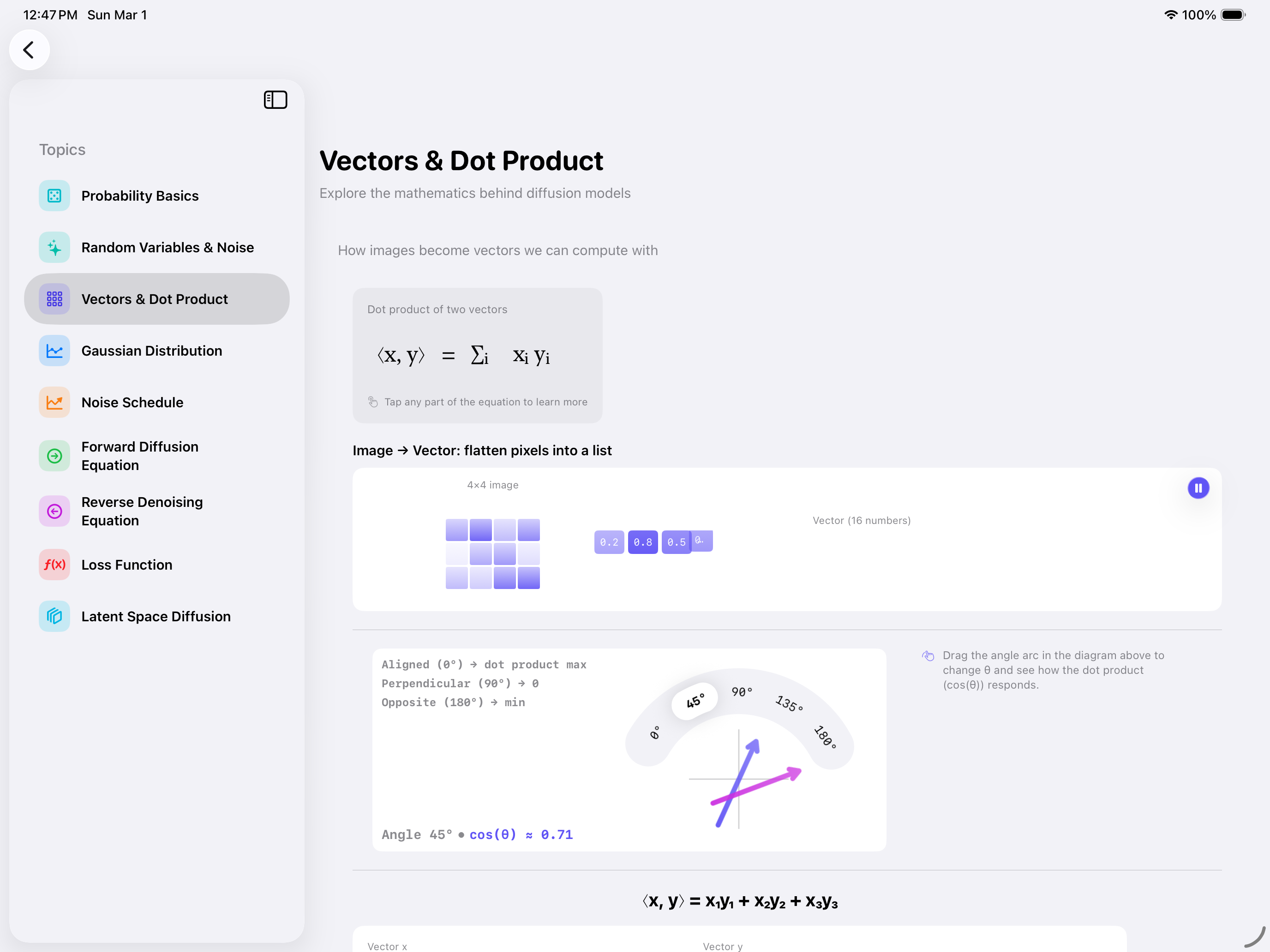
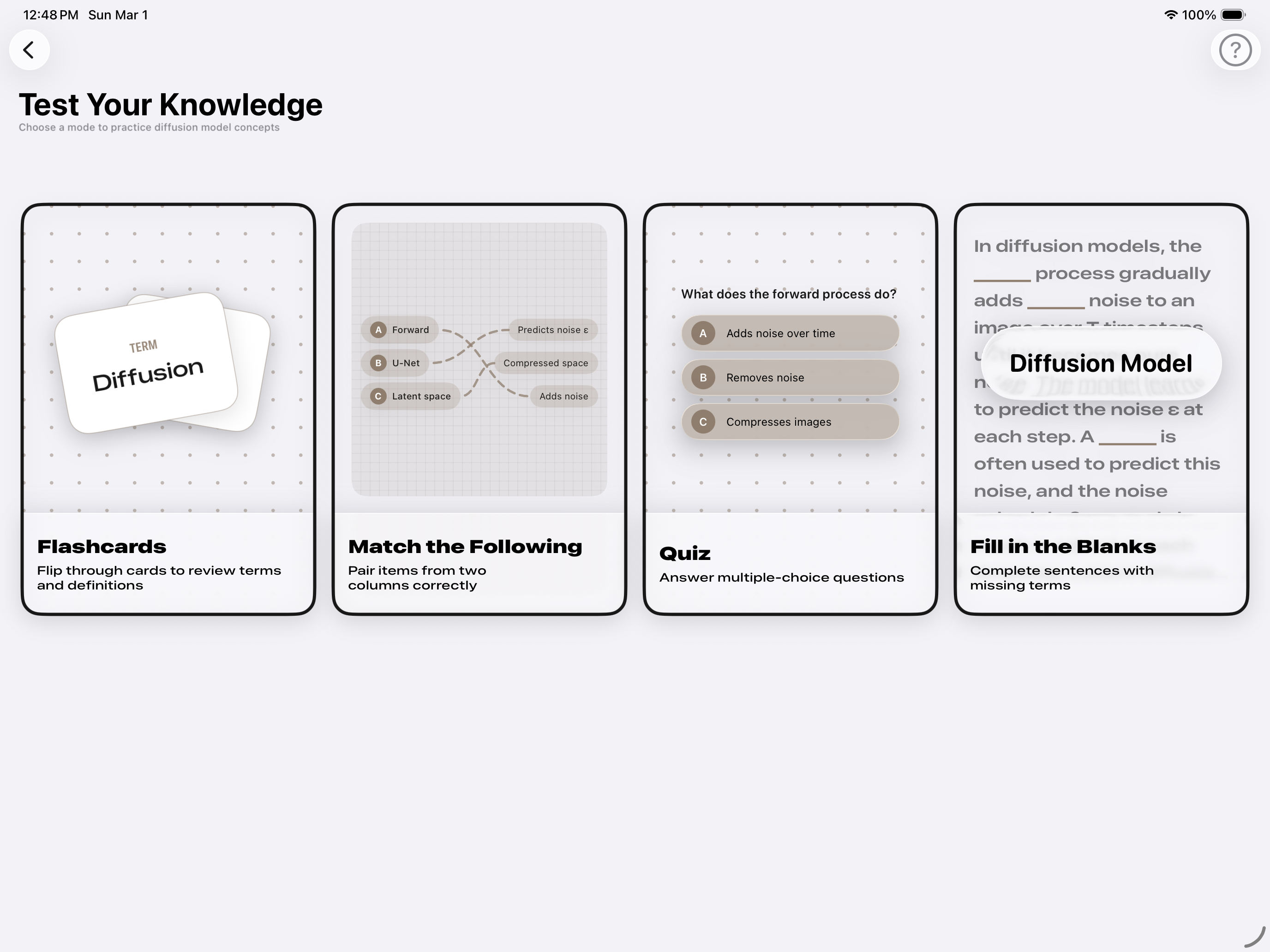
Image Alchemy
Inspiration
When I first started learning about AI image generation, I was fascinated by the results but frustrated by the explanations. Every article seemed to skip straight to the math, every video jumped between equations, and every visualization simplified the process so much that it felt like magic instead of engineering.
As someone who learns best by building and interacting with concepts, I kept asking myself:
"What if I could watch a diffusion model think?"
That question became the foundation of Image Alchemy.
Growing up, I always understood difficult ideas better when I could interact with them. Whether it was simulations, games, or visual puzzles, I learned by experimenting rather than memorizing. As I explored both machine learning and iOS development, I realized I could combine those passions into something educational instead of simply building another AI image generator.
I wanted to create an app that would help others experience the same "aha!" moment I was searching for, the moment when diffusion models stop feeling like magic and start making sense.
What it does
Image Alchemy is an interactive playground for understanding diffusion models.
Instead of treating AI image generation as a mysterious black box, the app lets users explore every stage of the process. Users can:
- Watch images gradually emerge from random noise.
- Experiment with different noise schedules and denoising strategies.
- Visualize how each iteration transforms an image.
- Learn the intuition behind modern diffusion models through interactive animations.
- Test their understanding with AI-generated flashcards and quizzes powered entirely on-device.
Rather than reading about diffusion, users experience it.
How we built it
Image Alchemy was built entirely using Apple's technologies.
- SwiftUI powers the entire user interface.
- Metal shaders render real-time visualizations of diffusion, noise fields, and GPU-accelerated animations.
- Swift Charts helps visualize noise schedules and denoising progress in an intuitive way.
- Foundation Models generates contextual explanations, interactive flashcards, and quizzes completely on-device without requiring an internet connection.
The biggest design challenge wasn't writing code, it was translating complex mathematical concepts into visual experiences that anyone could understand. Every animation, graph, and interaction was carefully designed to teach rather than simply impress.
Challenges we ran into
The hardest challenge was finding the balance between scientific accuracy and simplicity.
Diffusion models involve high-dimensional mathematics, probability distributions, and iterative optimization. Presenting those ideas without overwhelming users required dozens of redesigns.
Many early visualizations looked beautiful but failed as teaching tools. Others were technically accurate but impossible for beginners to understand. I constantly asked myself:
"Does this make someone more curious, or more confused?"
Building GPU-powered Metal visualizations while maintaining smooth performance on mobile devices also pushed me well outside my comfort zone. It forced me to learn graphics programming, optimize rendering pipelines, and rethink how educational interfaces should feel.
Accomplishments that we're proud of
I'm most proud that Image Alchemy doesn't just explain diffusion models, it makes them approachable.
Instead of overwhelming users with equations, it encourages exploration and curiosity.
I'm also proud of combining multiple Apple technologies into a cohesive educational experience, including SwiftUI, Metal, Swift Charts, and Foundation Models, all working together to create something that feels interactive, modern, and entirely on-device.
Most importantly, I built the kind of learning experience I wish I had when I first discovered AI image generation.
What we learned
Building Image Alchemy completely changed how I think about software.
I learned that the best educational experiences aren't the ones with the most information, they're the ones with the least confusion.
Technically, I gained experience with GPU programming, advanced SwiftUI architecture, Apple's Foundation Models framework, and designing interactive visualizations that communicate complex ideas.
More importantly, I learned that great software isn't just functional, it helps people understand, discover, and become curious.
What's next for Image Alchemy
This project is only the beginning.
I want to expand Image Alchemy into a complete interactive AI learning platform by adding support for transformer architectures, attention mechanisms, latent spaces, GANs, and other modern machine learning concepts.
I also plan to introduce guided lessons, interactive experiments, and additional visualizations so students can explore advanced AI topics through direct interaction instead of static diagrams.
My long-term vision is to make Image Alchemy a place where anyone, from complete beginners to aspiring ML engineers, can truly understand how modern AI works by seeing it, touching it, and experimenting with it.

Log in or sign up for Devpost to join the conversation.