-
-
Our Idea
-
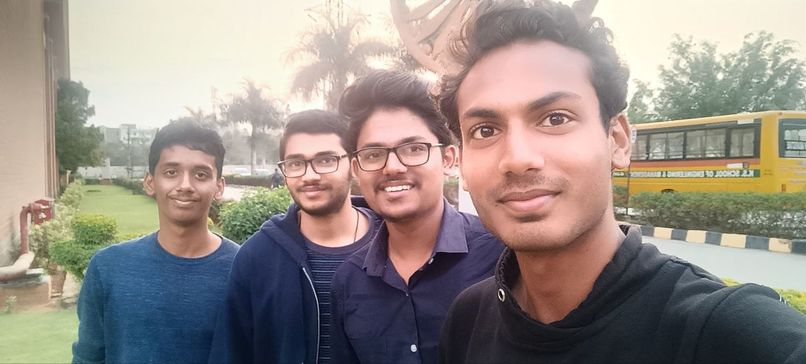
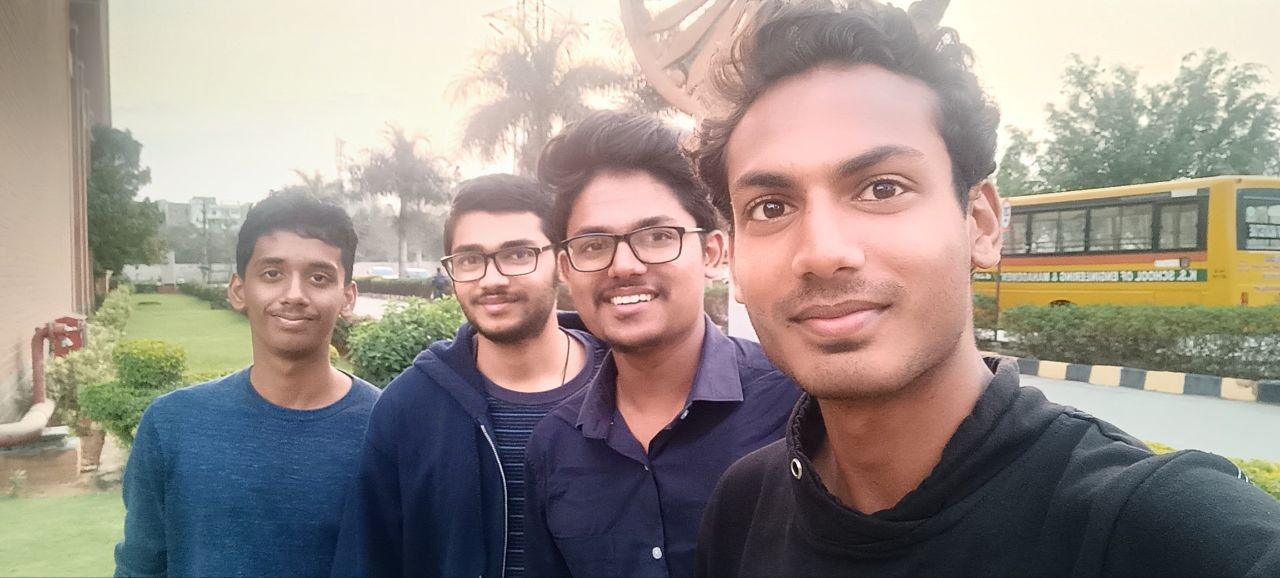
High Five Team
Inspiration
Around 27.5% of Indians Suffer from vision problems. It's a serious issue and will be more common in upcoming days due to excessive screen time in electronic gadgets. Many people lack access to eye care services, especially those who reside in underdeveloped or distant areas. This may be caused by a shortage of qualified eye care specialists, as well as a lack of infrastructure and other means of transportation. Eye care can be expensive, and many people may not be able to afford the cost of treatment or surgery. Some people may feel anxiety or fear about undergoing surgery, which can prevent them from seeking treatment.
What it does
The supplied image can be correctly classified as having one of the eye diseases listed by the ILL EYE IDENTIFIER. This research is capable of predicting an image from one of ten kinds of eye diseases. The research uses deep learning to classify the images.
How we built it
These are the steps we followed to successfully build the ILL EYE IDENTIFIER.
Collecting Data: We decided to use Google images to build our dataset. The dataset consists of 1700+ images, including around 200+ images of 10 different types of eye diseases.
Data cleaning and preparation: We first removed unwanted images and resized them accordingly.
Choosing and Training the Model: We decided to use Convolutional Neural Network (CNN), ResNet, MobileNet, and Yolov3 to build our model and trained it with some sample test images.
Evaluating the Model: The metrics used for evaluating our model were accuracy and loss.
Prediction by a sample of test data was used to test our model and verify its classification.
The model was successfully able to classify most of the diseased eye images correctly.
Challenges we ran into
The selection and collection of the dataset was the biggest problem for us. We put a lot of effort into creating a project that was completely original. We chose to generate our own dataset because gathering data is the most crucial component of any Deep learning model. Furthermore, we had to carefully consider which kind of dataset would be most beneficial and aid in appropriately classifying the fracture type. Due to the abundance of photographs and the good mix of correct and less exact images for each class, we ultimately chose to acquire data from Google Images.
Accomplishments that we're proud of
The idea may not be entirely original, but the way in which it is implemented is. The dataset was successfully used to differentiate eye disease problems, and we are happy that this will be a new step toward solving social-related problems in the future. We welcome the opportunity to tackle eye diseases at an early stage so that people can take wonderful care of their eyes with less cost in the future. Reaching out to needy people in helpful situations is a worthwhile thing to do.
What we learned
How crucial it is to collaborate with others. How crucial data collection is, and what a dataset is worth. Why data preparation and cleaning are crucial. Learning about various deep-learning models is quite useful. For a number of reasons, including lack of access to eye care, high costs, low awareness, stigma, low priority, and fear or anxiety, people may not seek treatment for eye diseases. It is actually an excellent idea to build in accordance with the user's perspective. One should not look for money always but help needy people as much as possible, even it's a small step to take. Technology for good is not only a good initiative, but can be a great one too.
What's next ?
- Improving the model's accuracy.
- The generalization of the model can be aided by increasing the quantity and diversity of data acquired, such as images taken in varied lighting conditions or from different ethnic groups.
- Constructing a user-friendly application with a wide range of capabilities based on this concept.
- Advising dietary changes and essential safety measures that a person can take to prevent the deterioration of their eye disease.
Built With
- computer-vision
- github
- google-colab
- google-drive
- python
- tensorflow
- yolo


Log in or sign up for Devpost to join the conversation.