Inspiration
As we built Ilé to tokenize real estate and open access to property ownership, we hit a wall: trust. Investors wanted to know that the properties they're funding are legit. But verifying land titles, ownership documents, and compliance in emerging markets is slow, opaque, and corruptible.
There was no scalable way to prove that due diligence had actually been done—especially across multiple jurisdictions.
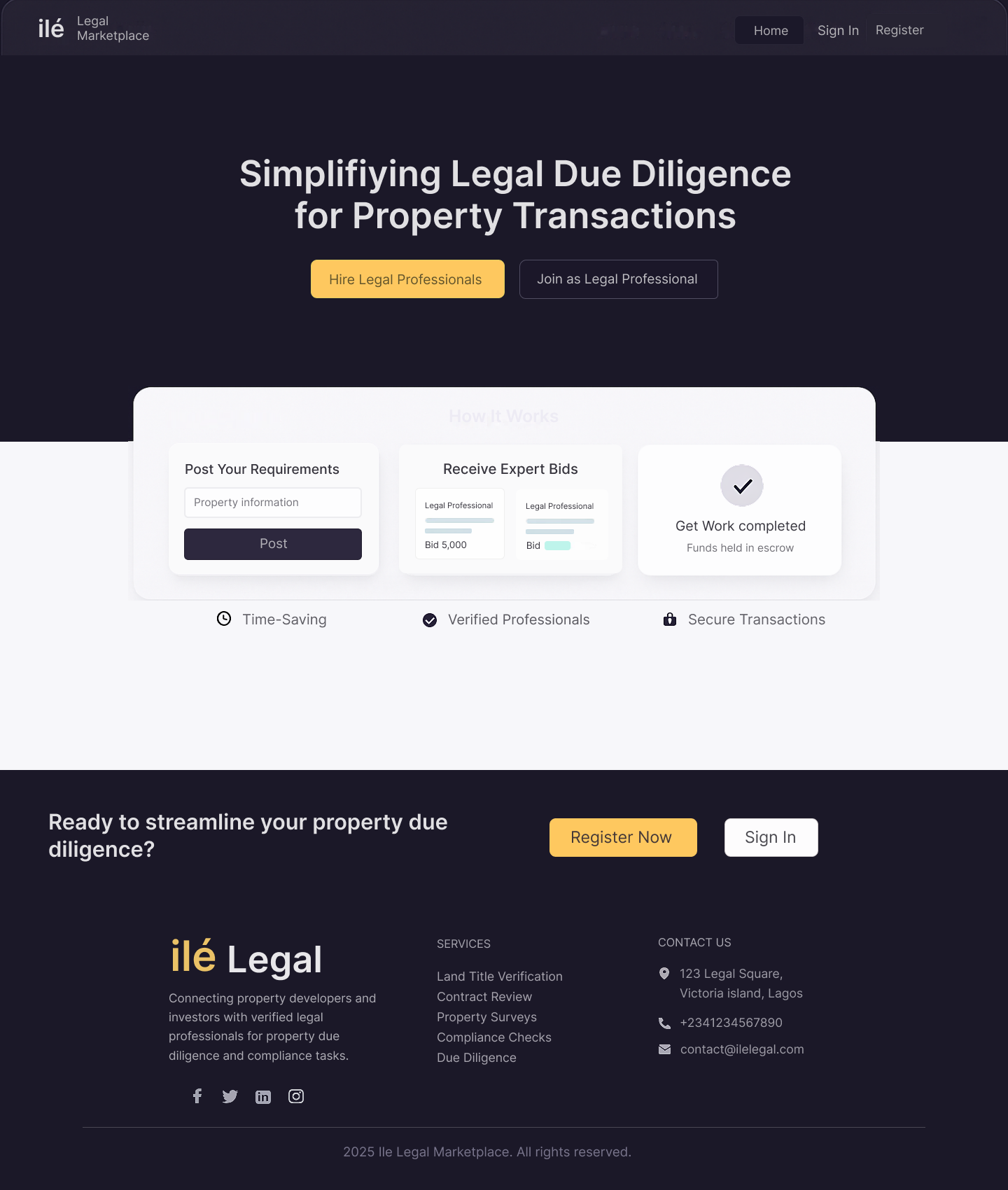
So we built Ilé Legal: a marketplace where verified lawyers compete to run compliance checks on real estate deals, and every verification is hashed on Algorand for proof. Think Upwork meets blockchain, built for real estate trust.
What it does
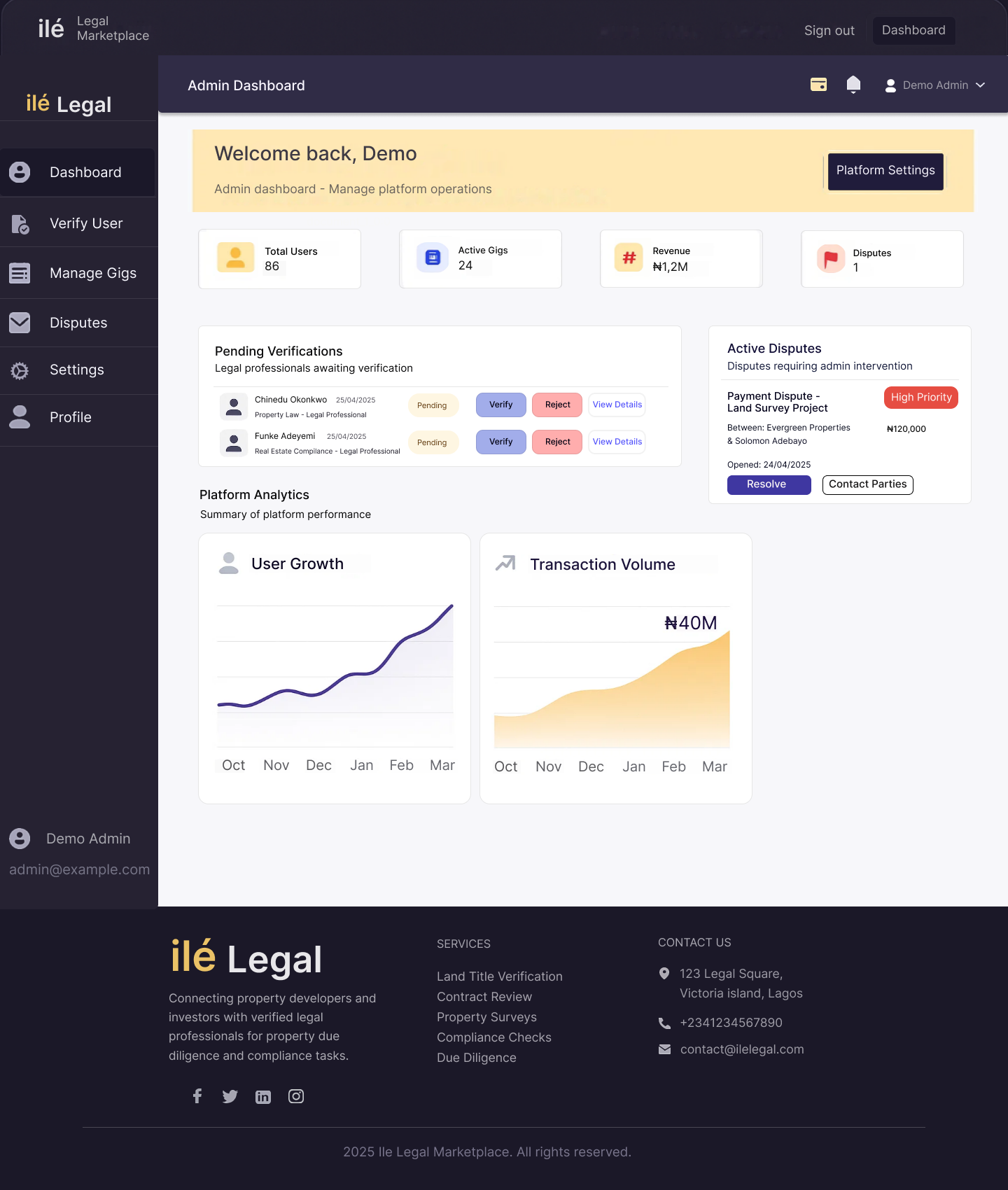
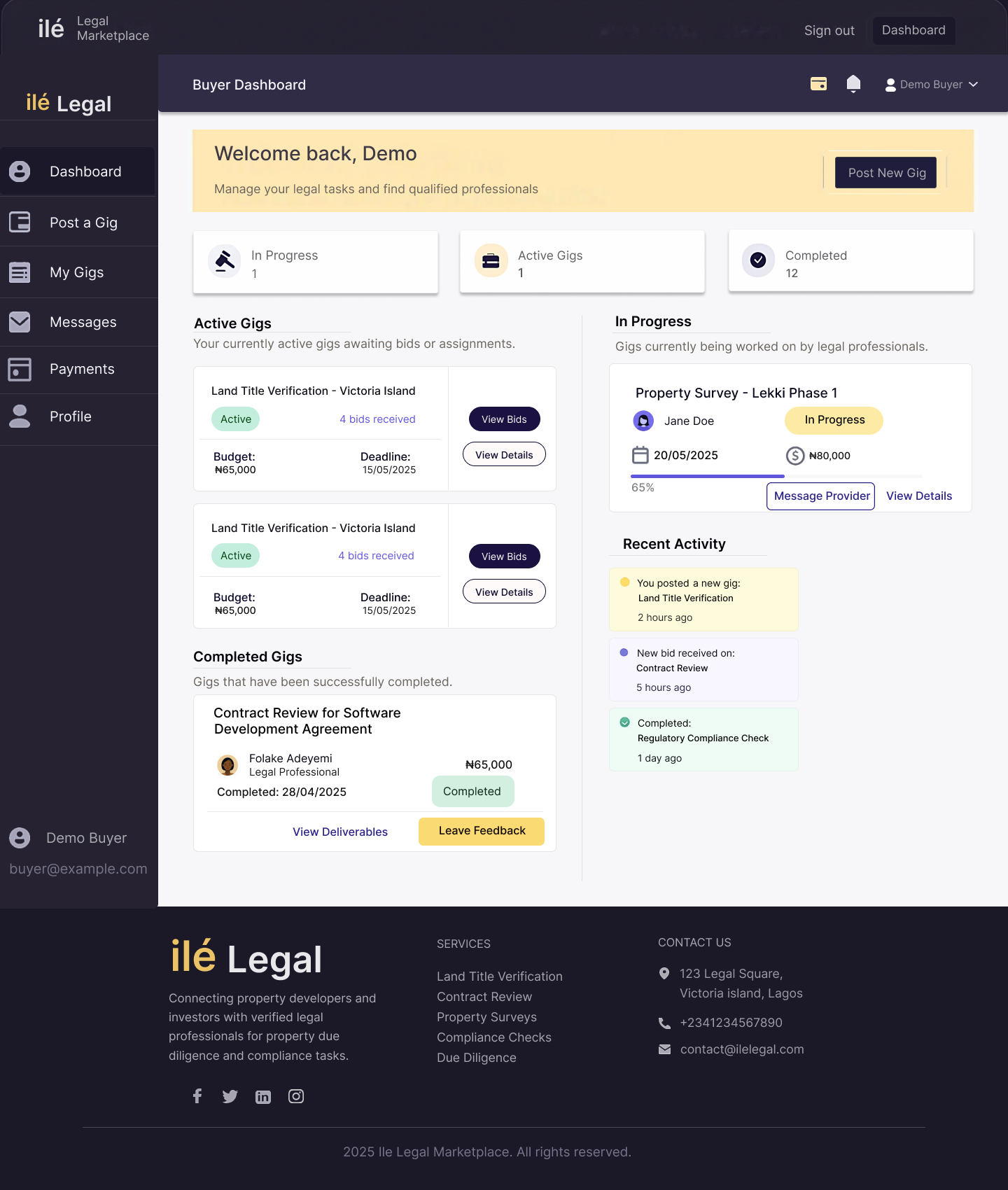
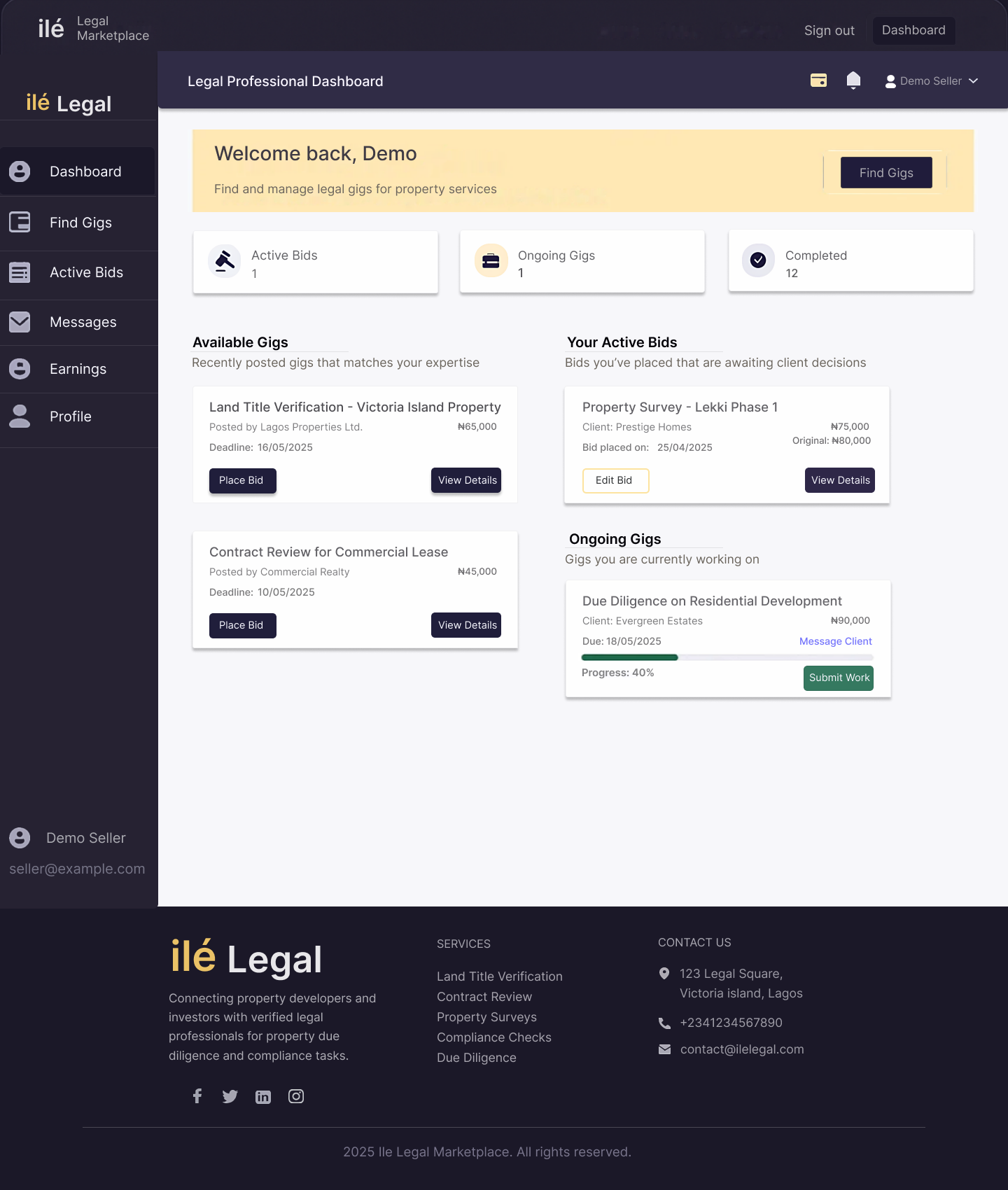
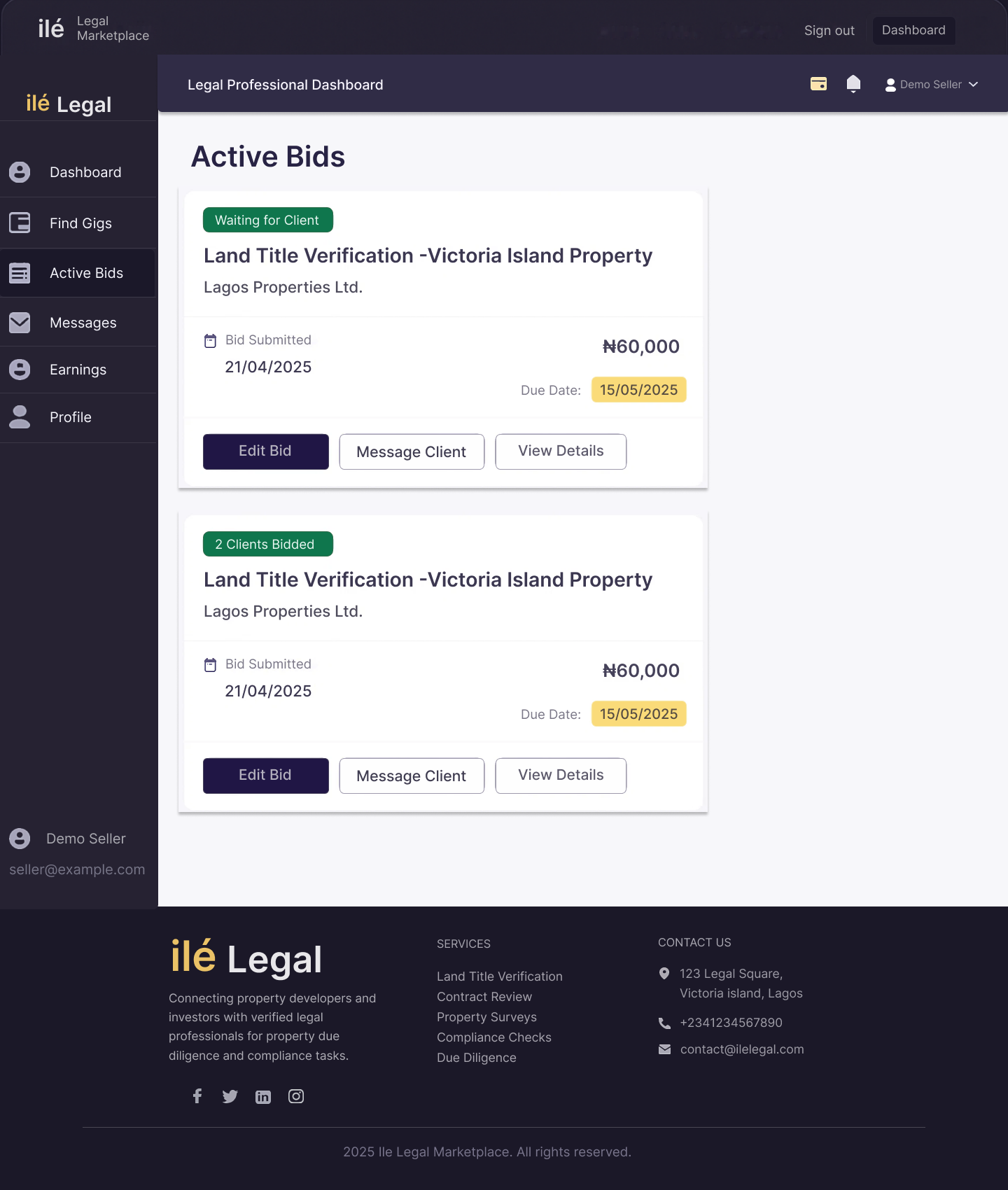
Ilé Legal is a decentralized legal marketplace for real estate due diligence. Property developers submit assets for verification—title docs, surveys, contracts—and verified lawyers bid to complete the checks. Once a gig is completed, it’s reviewed, hashed to Algorand for on-chain proof, and the lawyer is instantly paid via blockchain or Ilé tokens.
This creates a transparent, tamper-proof due diligence layer for tokenized real estate, allowing real estate investors to trust what they're buying—without needing to trust who’s selling.
How we built it
Our stack integrates identity, document validation, and verifiable storage using Filecoin, Algorand, Circle, and MetaMask.
Frontend: React + TailwindCSS + Supabase Auth UI Backend: Node.js, Express, Supabase (PostgreSQL), IPFS integration
Wallets: MetaMask for crypto-native login Circle Modular Wallets SDK for Web2-friendly, custodial wallets via Google login Storage & Verification: Filecoin via web3.storage and w3up to store legal documents and profile credentials Algorand for hashing legal documents as 0-Algo note transactions to anchor provenance
Workflow Highlights
Document Workflow Legal professionals complete gigs (e.g., title verification). Finalized PDFs are uploaded to Filecoin → returns a CID. The SHA-256 hash of the file is written to Algorand via a 0-Algo transaction. The CID + TXID are stored in Supabase and linked to the property listing and legal pro’s profile. We generate a QR code with {cid, txid} for each verification.
Wallet & Login Flow Web3 users sign in via MetaMask; their wallet is auto-logged. Web2 users log in via Google and are provisioned a Circle wallet using the Modular Wallets SDK. User addresses (MetaMask or Circle) are stored in Supabase and used for gig payments.
Challenges we ran into
Integrating both MetaMask and Circle SDKs with a unified user model. Implementing Algorand IPFS Creating a UI that will be appealing to the Traditional audience we are targeting (legal practitioners)
Accomplishments that we're proud of
5 lawyers on the waitlist New Team/co-founders. Launching Live next month. New product in our ecosystem
What we learned
- Combining Filecoin for decentralized storage, Algorand for on-chain provenance, and Circle for wallet onboarding showed us how different chains can complement each other seamlessly.
- We explored how to prove document authenticity without revealing the contents—laying the groundwork for future ZK-based compliance flows.
- Giving users the option to log in with MetaMask or Google (Circle Modular Wallets) helped us rethink onboarding. Web2 users need the same secure tools without crypto complexity.
- Anchoring legal documents on-chain doesn’t require deep smart contracts.
- Public legal profiles backed by cryptographic proofs require new patterns in UI/UX—what we built is only the beginning.
What's next for Ilé
- Integrate Ilé Legal with Core Ilé Platform
- Launch Ilé Legal publicly in July. Start with 10 legal professionals for alpha testing and case validation.
- Launch on Product Hunt to gather feedback from early adopters and the tech community.
- Spend the next 30 days marketing to legal professionals and property platforms to seed adoption and build community trust.
- Formalize operations by registering Ilé in Nigeria, enabling contracts, partnerships, and B2B onboarding.
- Integrate zero-knowledge proofs so anyone can verify legal documents without exposing the files—protecting sensitive data while proving legitimacy.
- Each legal practitioner will have a public, tamper-proof profile with a scannable QR linking to their on-chain verified cases, credentials, and reputation.
- Build smart contracts to enable automated escrow and payouts using USDFC or mock tokens—supporting trustless verification payments.
Built With
- algorand
- github
- javascript
- node.js
- refine
- superbase
- usdc


Log in or sign up for Devpost to join the conversation.