-
-
Ikuzo AI Introduction Slide 1
-
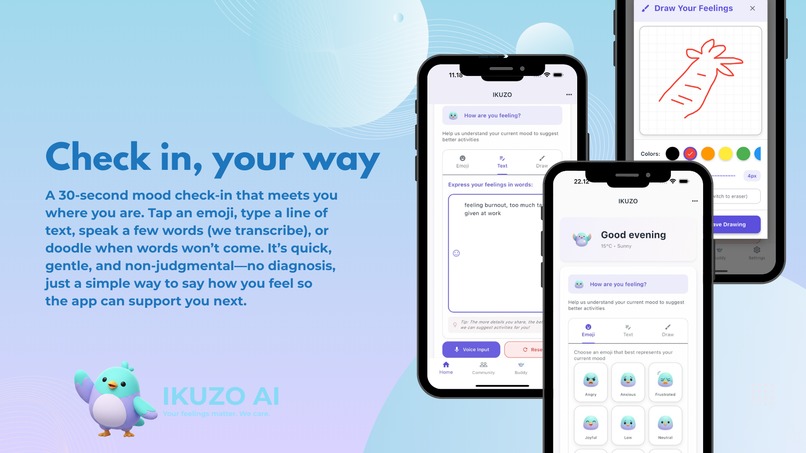
Ikuzo AI Introduction Slide 2
-
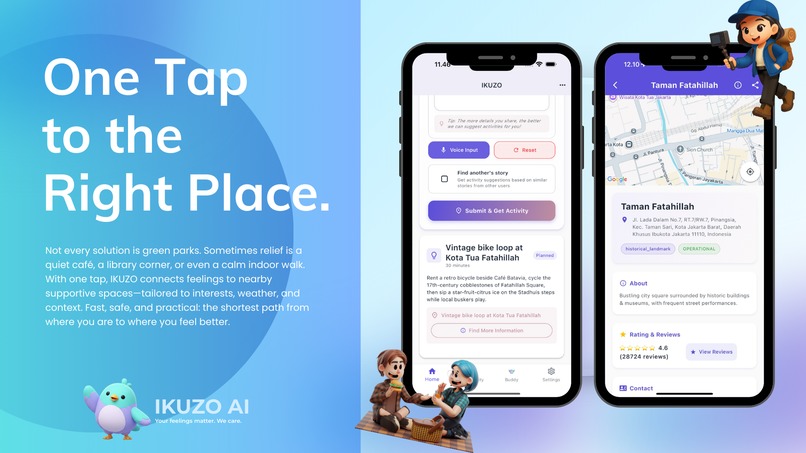
Ikuzo AI Introduction Slide 3
-
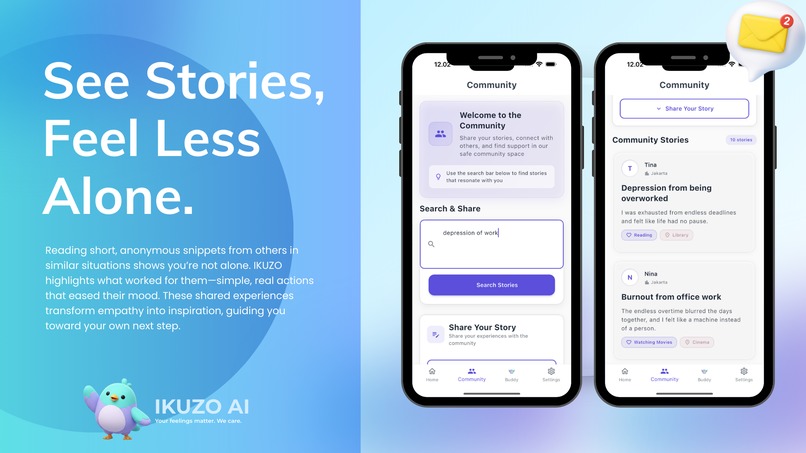
Ikuzo AI Introduction Slide 4
-
Ikuzo AI Introduction Slide 5
Inspiration
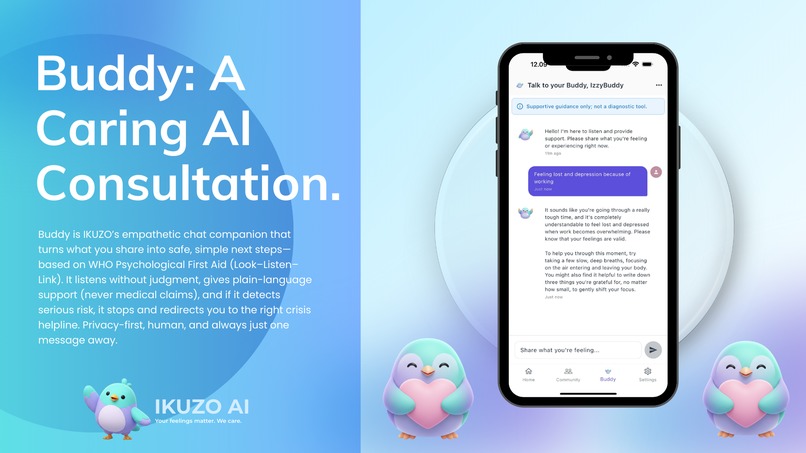
We were inspired by the simple question: “What should I do right now to feel better?” When people feel low, generic wellness tips are rarely helpful. Research in Behavioral Activation and environmental psychology shows that small, purposeful actions such as walking to a quiet café, practicing breathing, or visiting a library can shift mood significantly.
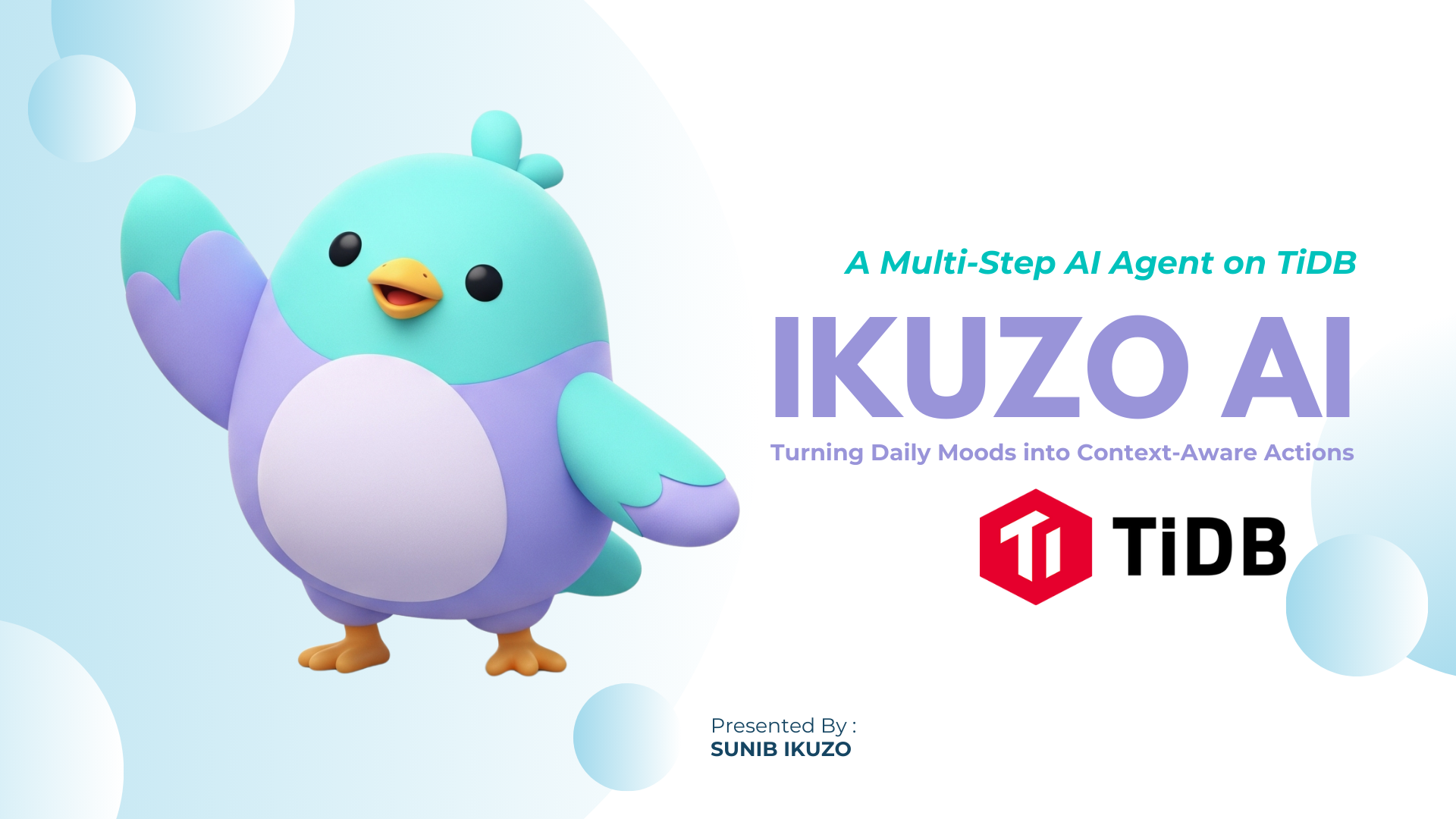
In Japanese, Ikuzo (行くぞ) means “Let’s go.” Our project embodies that spirit: a gentle, context-aware nudge that helps people turn feelings into immediate, supportive actions.
This need is urgent:
- 1 in 8 people live with a mental disorder (2019), with anxiety and depression the most common. (WHO, Mental Disorders Fact Sheet, 2019)
- >720,000 deaths per year: Suicide remains a major public-health crisis and is the 3rd leading cause of death among ages 15–29. (WHO, Suicide Fact Sheet, 2025).
- 12 billion workdays lost / ~US$1 trillion per year: Global productivity lost annually due to depression and anxiety; ~15% of working-age adults have a mental disorder. (WHO, Mental Health at Work, 2024)
- Only ~2% of health budgets: Median government spending on mental health has stalled at ~2%, meaning services remain drastically underfunded. (WHO, Mental Health Policy & Financing, 2024–2025)
These figures highlight why accessible, scalable, and context-sensitive tools like IKUZO AI are needed worldwide.
Look detailed and designed properly proposal here: https://www.canva.com/design/DAGyyz2P5kQ/_Tk8WYkl0fXyniUJdQveWg/view?utm_content=DAGyyz2P5kQ&utm_campaign=designshare&utm_medium=link2&utm_source=uniquelinks&utlId=he901174f7c
What it does
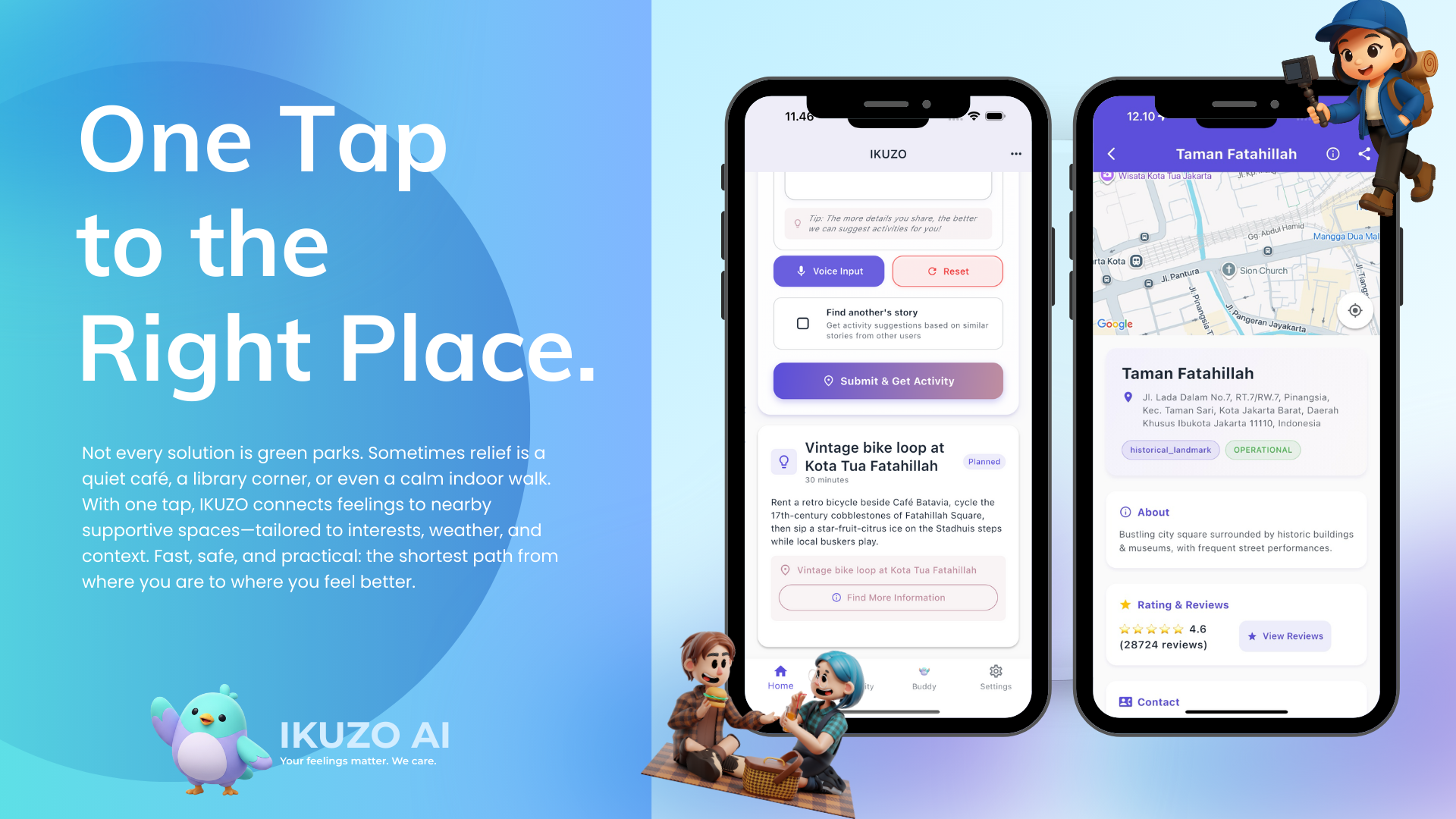
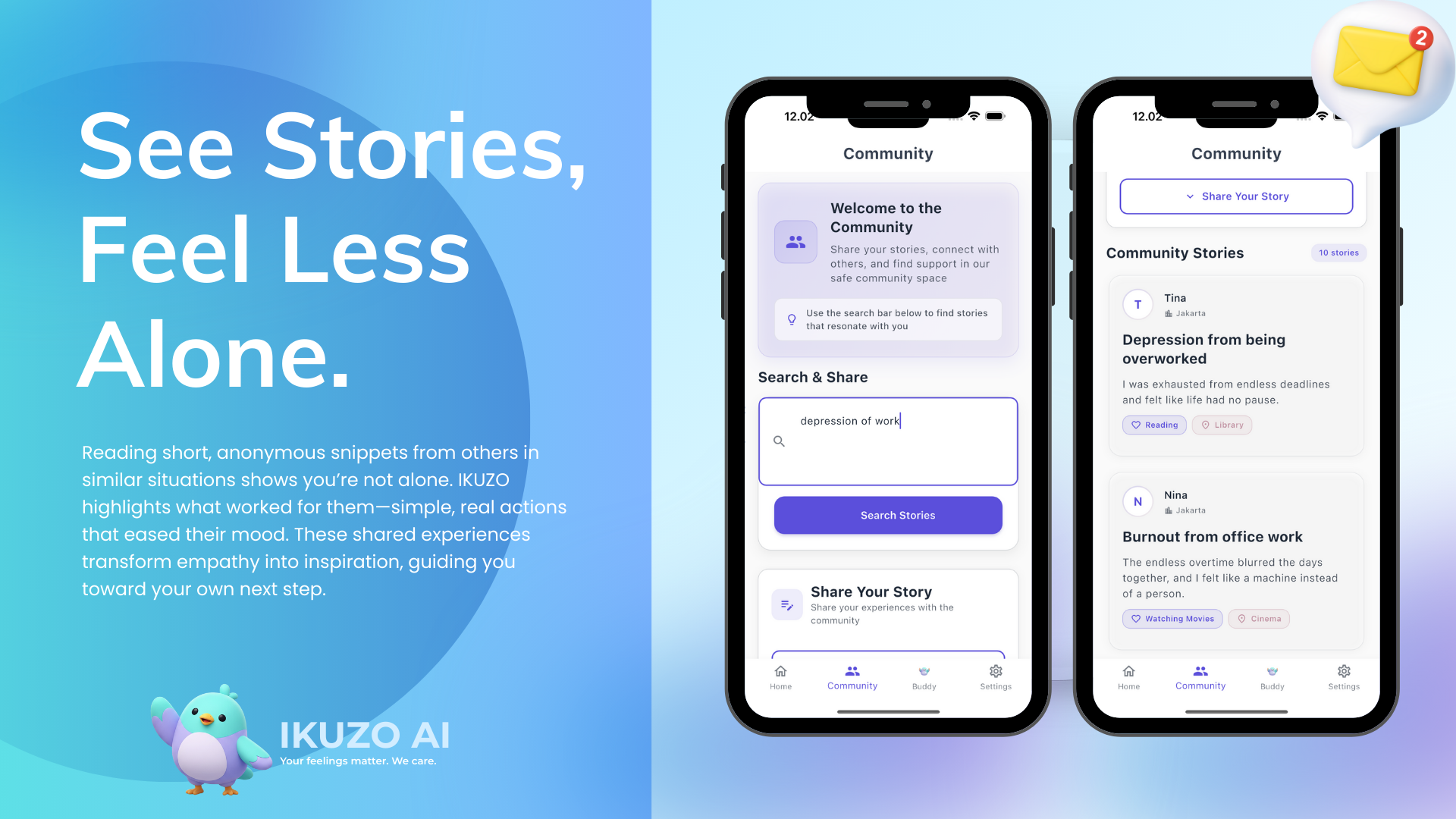
IKUZO converts a user’s daily mood + short story into personalized activity suggestions, such as:
- Visiting a nearby café or gym.
- Taking a short walk (indoor or outdoor, depending on weather).
- Doing a calming ritual at home.
The AI agent pipeline works in multiple steps:
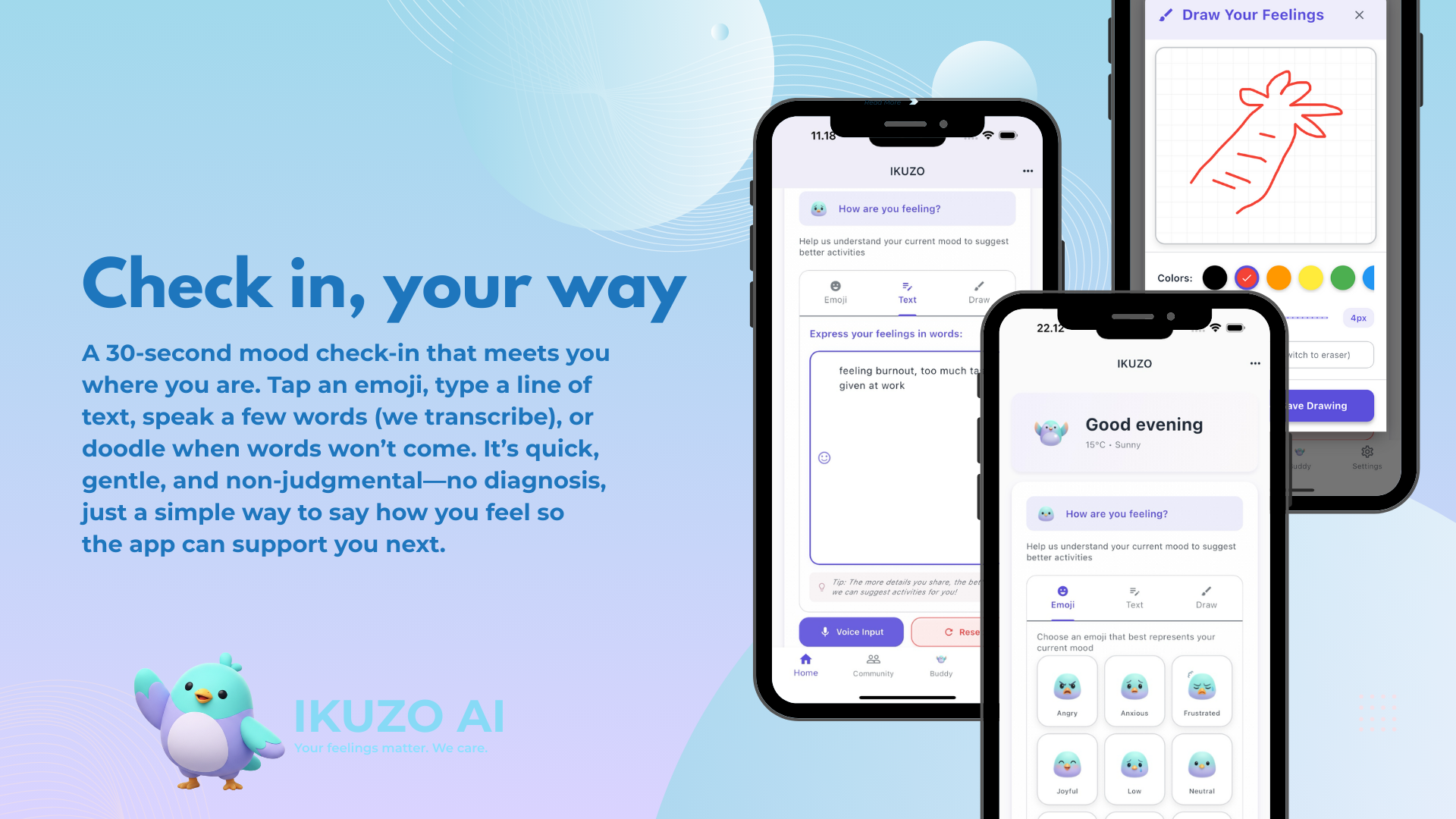
- Capture inputs: emoji, text, voice, or sketches.
- Enrich with context: weather, location, or anonymized community stories.
- Retrieve candidates: from TiDB Serverless using hybrid search that implement Vector Search (HNSW) with semantic matching of emotions and intents and Full-Text Search that precise filters on tags, open hours, and distance.
- Rank results: with real-world signals (weather fit, proximity, user interests).
- Generate structured suggestions: via Kimi AI, including a title, why it fits, and estimated time.
How we built it
- Frontend: Flutter for cross-platform (iOS, Android, Web).
- Backend: Golang API server managing business logic and proxying to the Dify Workflow API.
- AI Orchestration: Dify to manage the multi-step agent workflow.
- Database: TiDB Serverless for relational + vector + full-text hybrid search.
- Reasoning Model: Kimi AI to generate empathetic and structured outputs.
- External APIs: OpenWeather for real-time weather.
Challenges we ran into
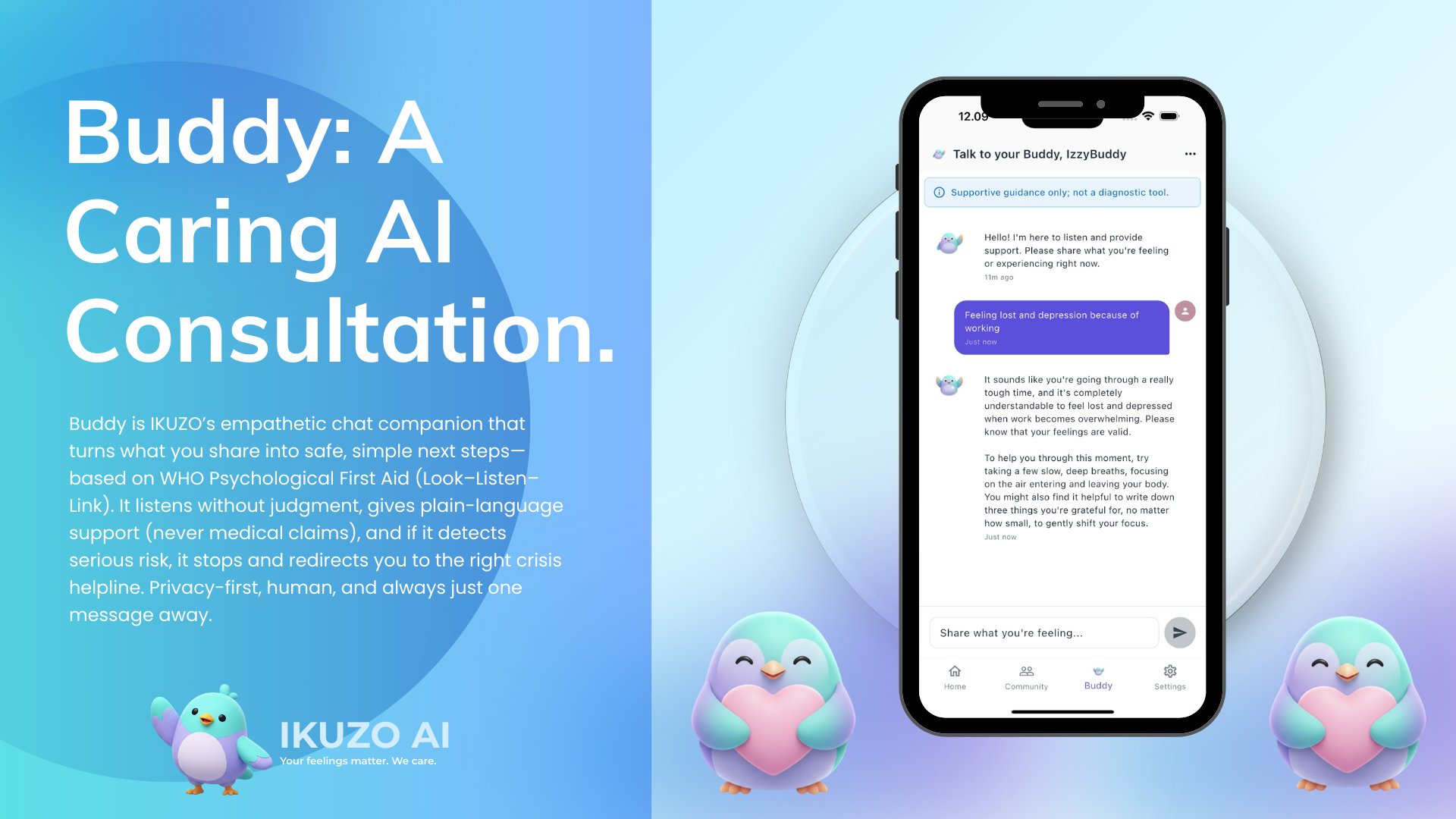
- Empathy vs. clinical tone: Ensuring the app validates users without crossing into medical diagnosis.
- Privacy-first design: Anonymizing stories, stripping EXIF data from photos, and storing only hashes for verification.
- Inclusive inputs: Designing emoji, text, sketch, and voice flows that feel natural without overwhelming users.
Accomplishments that we're proud of
- Built a multi-step AI agent that reasons, retrieves, and guides in real time.
- Successfully operationalized TiDB hybrid search with both vector and FTS indexing.
- Created an inclusive input system (emoji, voice, sketches) to lower the barrier to entry.
What we learned
- How to translate Behavioral Activation theory into AI-driven nudges.
- The strengths of vector embeddings in capturing emotional context.
- How hybrid search improves both recall and precision in recommendations.
What's next for IKUZO AI - Context-based Places to-go recommendation
- Enriching the dataset of supportive places (cafés, gyms, meditation studios, libraries, etc.).
- Personalizing based on long-term mood/activity patterns.
- Adding integrations with wearables (heart rate, sleep, steps).
- Scaling the AI workflow to serve thousands of users concurrently.
- Partnering with mental health and well-being organizations to validate effectiveness.
Built With
- amazon-web-services
- amplify
- dart
- dify
- ec2
- flutter
- gin
- go
- kimi
- openweathermap
- python
- tidb
- typescript


Log in or sign up for Devpost to join the conversation.