Inspiration
In Burundi, accessing fuel is plagued by daily inefficiencies: endless queues, endemic corruption, and unfairly high black-market prices. Citizens are forced to pay unjust amounts just to get the fuel they need.
We recognized an urgent need for a transparent, automated solution to restore fairness to fuel distribution. This led to the creation of Ikimashini Petro.
What it does
Ikimashini Petro is an IoT-powered fuel vending kiosk designed for simplicity and trust. It provides fully automated, traceable fuel dispensing, even where internet connectivity is poor.
The system works seamlessly using SMS payments:
User sends an SMS (e.g., "BUY 2") to the kiosk's number.
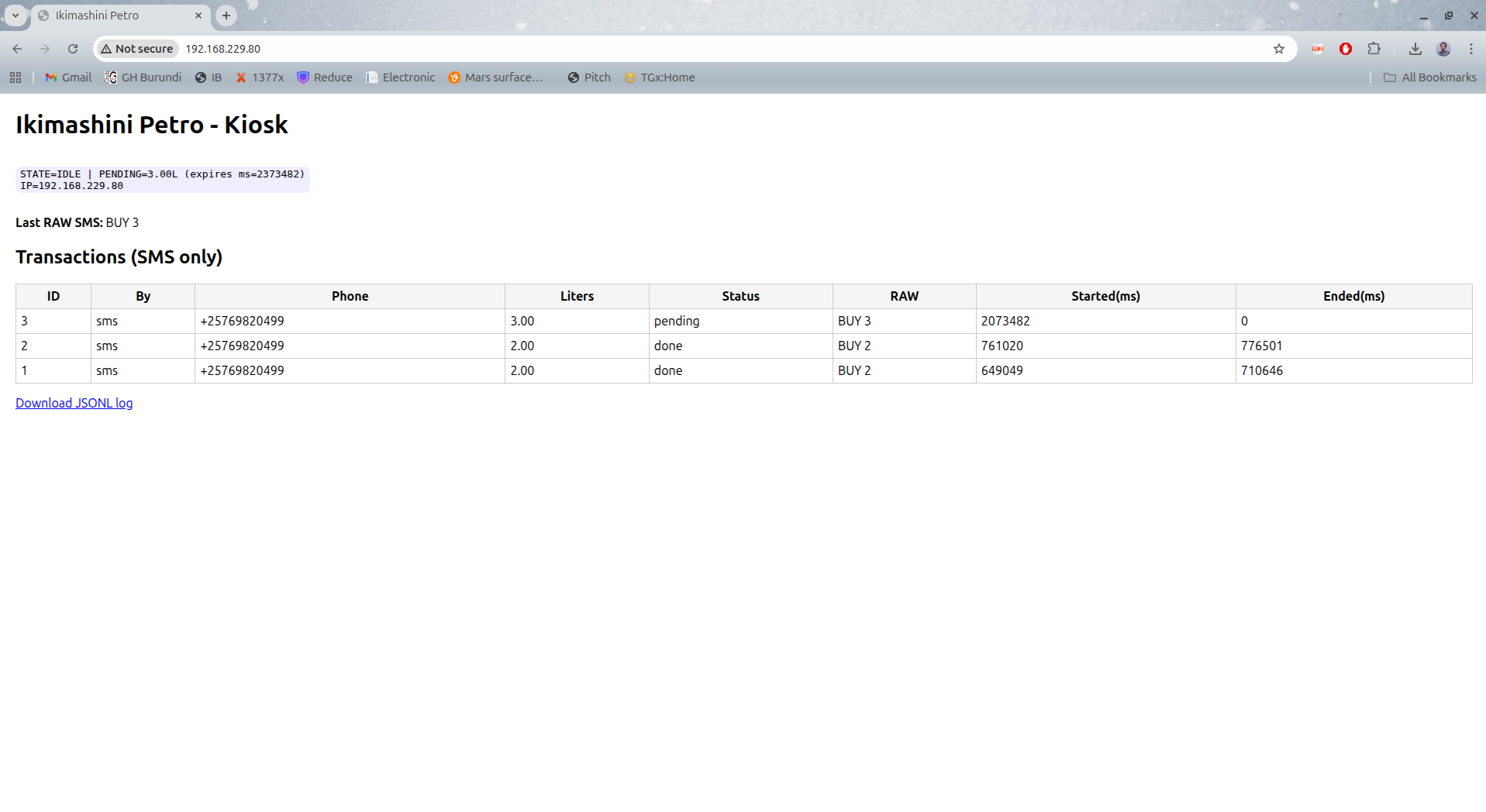
The system verifies the payment and logs the transaction immediately.
The kiosk dispenses the exact amount of fuel requested, displaying the status on an LCD screen.
Every transaction is electronically logged, ensuring it is fair, corruption-free, and fully traceable.
How we built it
We designed the prototype to function reliably and affordably using core off-the-shelf components:
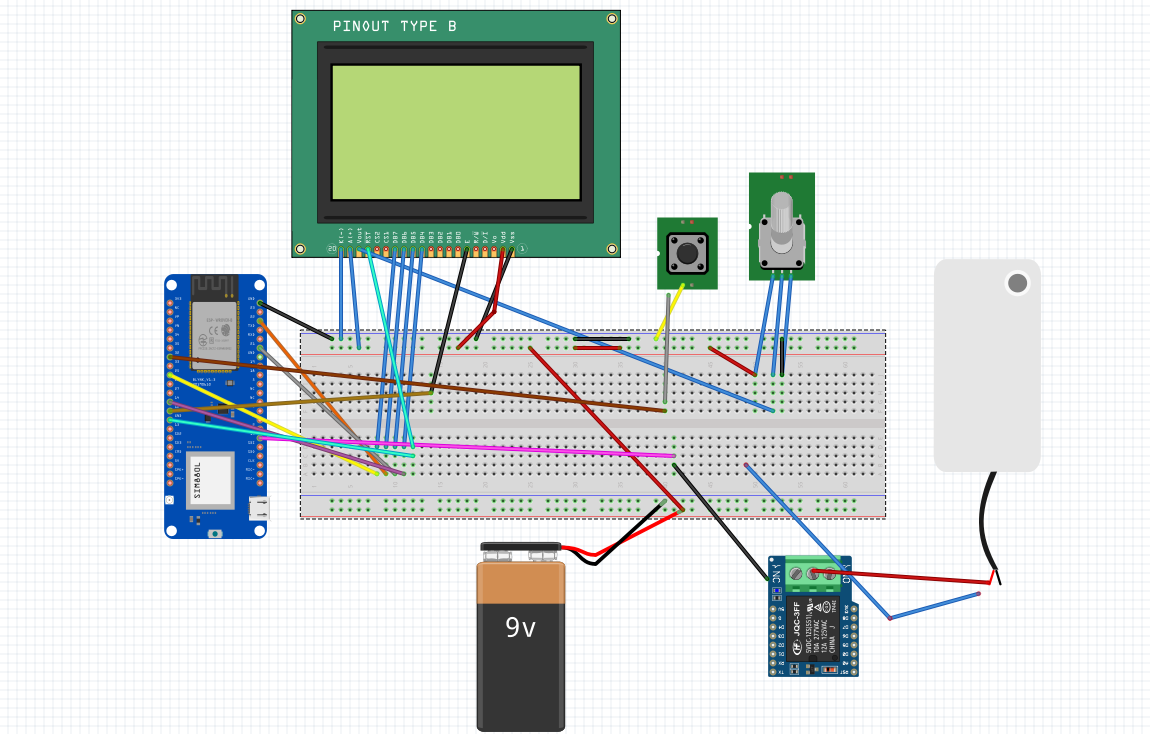
Brain & Connectivity: A LilyGO T-Call ESP32 SIM800L board provides integrated WiFi and GSM, allowing us to manage both online data logging and robust offline SMS payment processing.
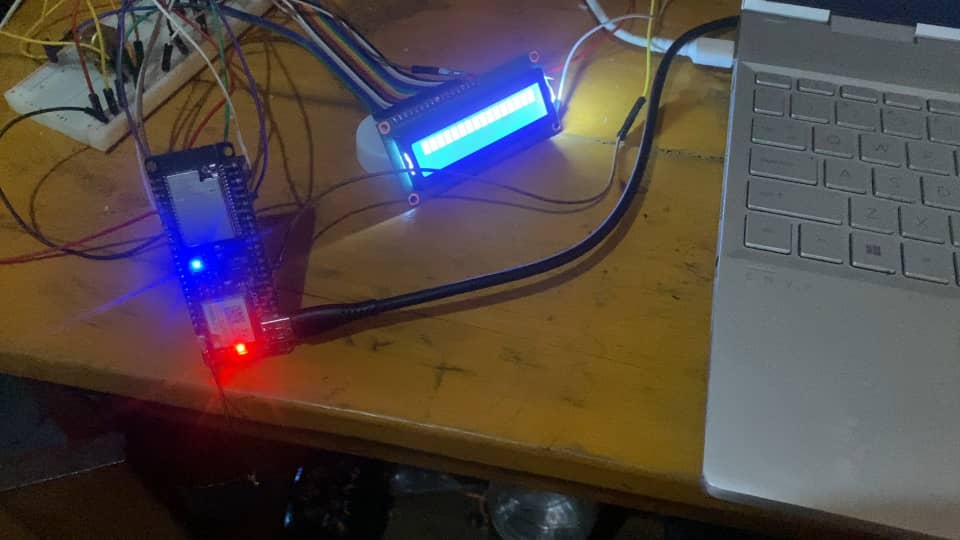
Control & Interface: A relay module controls the physical pump (simulated by an LED in the prototype), while an LCD screen displays real-time messages and status updates. A push button is included for manual dispensing confirmation.
Software: The system logic was programmed in C++ (Arduino IDE), utilizing essential libraries such as TinyGSM.h to handle communication and EEPROM.h for reliable data storage
Challenges we ran into
- Find a buy components (expensive)
Ensuring stable power and voltage for both ESP32 and SIM800L modules.
Managing SMS timing and avoiding duplicate message triggers.
Synchronizing payment confirmation with the dispensing process.
Explaining the project’s social impact within a short hackathon timeframe.
Accomplishments that we're proud of
Built a fully functional prototype that can receive payment (as sms) commands, verify transactions, and control dispensing automatically.
Designed a solution that directly addresses fuel corruption and scarcity in Burundi.
Created a system that works completely offline via SMS, making it accessible even in rural areas.
Demonstrated that civic technology can bring real impact to communities.
What we learned
- How to integrate GSM communication with IoT systems for offline payments.
- Using LCD with an esp without I2C
- The importance of user-centered design in civic innovation.
- That small, local problems can inspire big technological solutions when built with empathy and creativity.
What's next for Ikimashini Petro
- Build a true machine
- Integrate with mobile money APIs (Lumicash, Ecocash) for real-time payments.
- Add a cloud dashboard for government transparency and analytics.
- Build solar-powered standalone kiosks for remote areas.
- Extend the same model to distribute water, gas, and medicine fairly and safely.


Log in or sign up for Devpost to join the conversation.