-
-
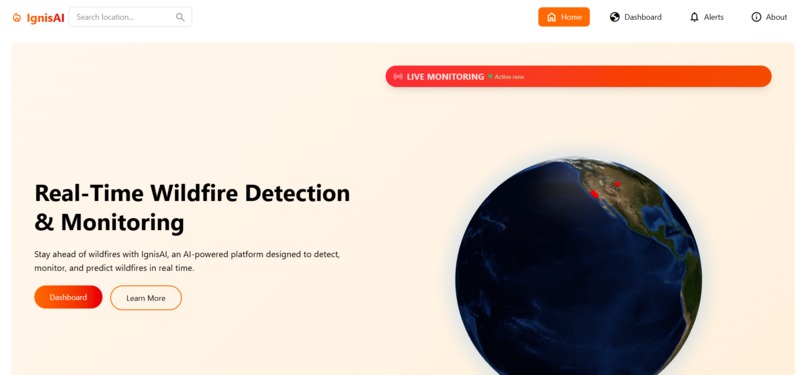
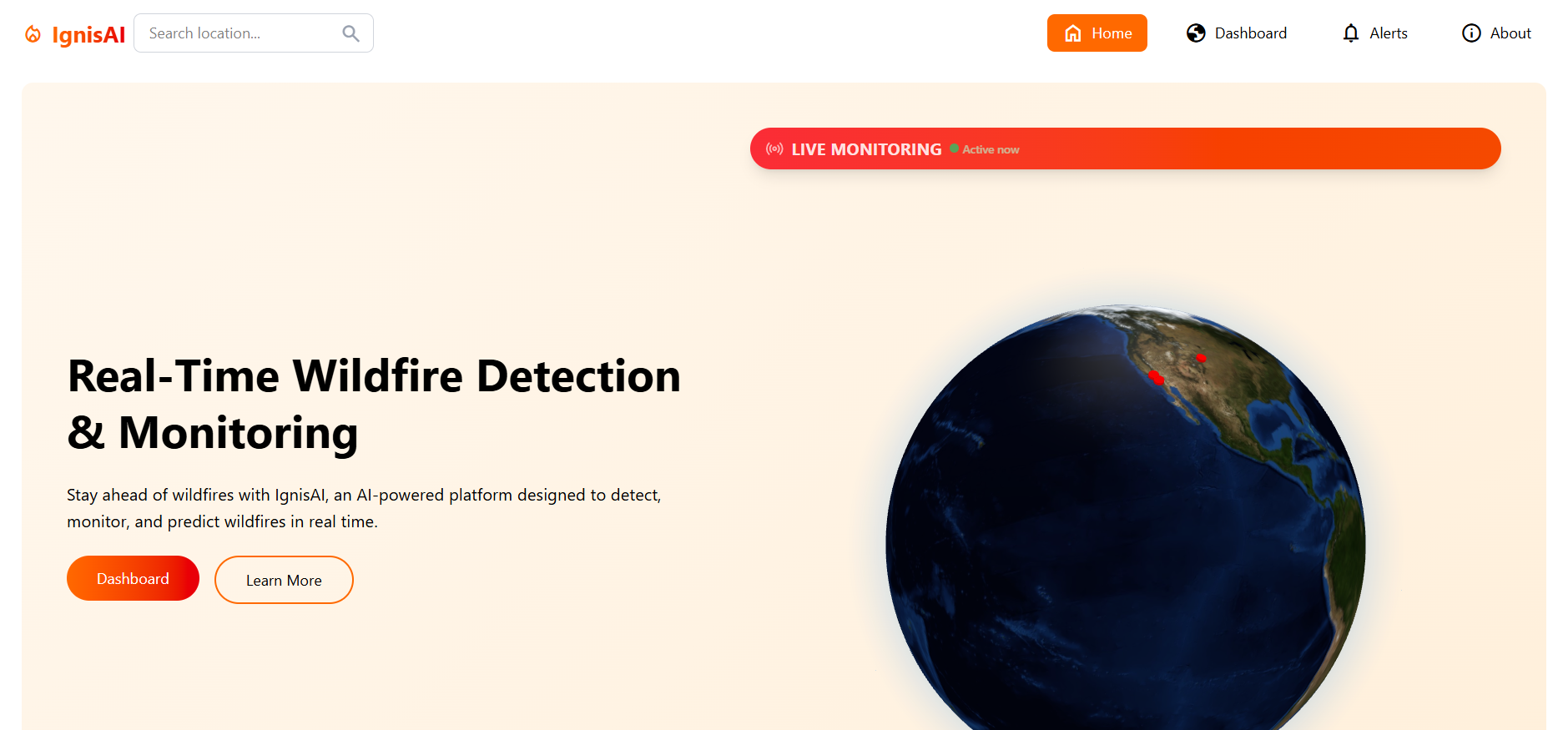
Landing page of IgnisAI featuring globe with live wildfire data.
-
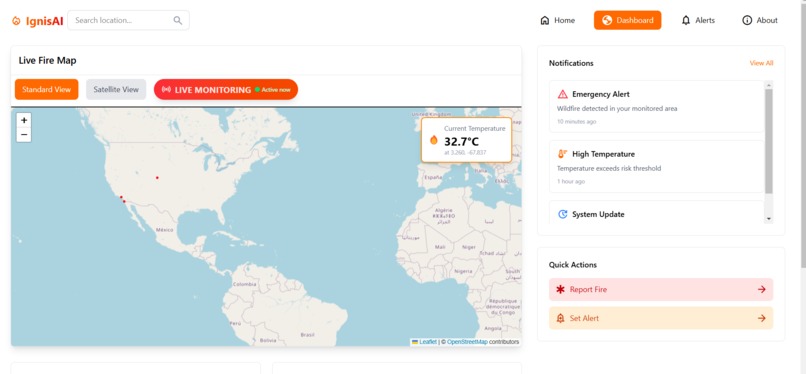
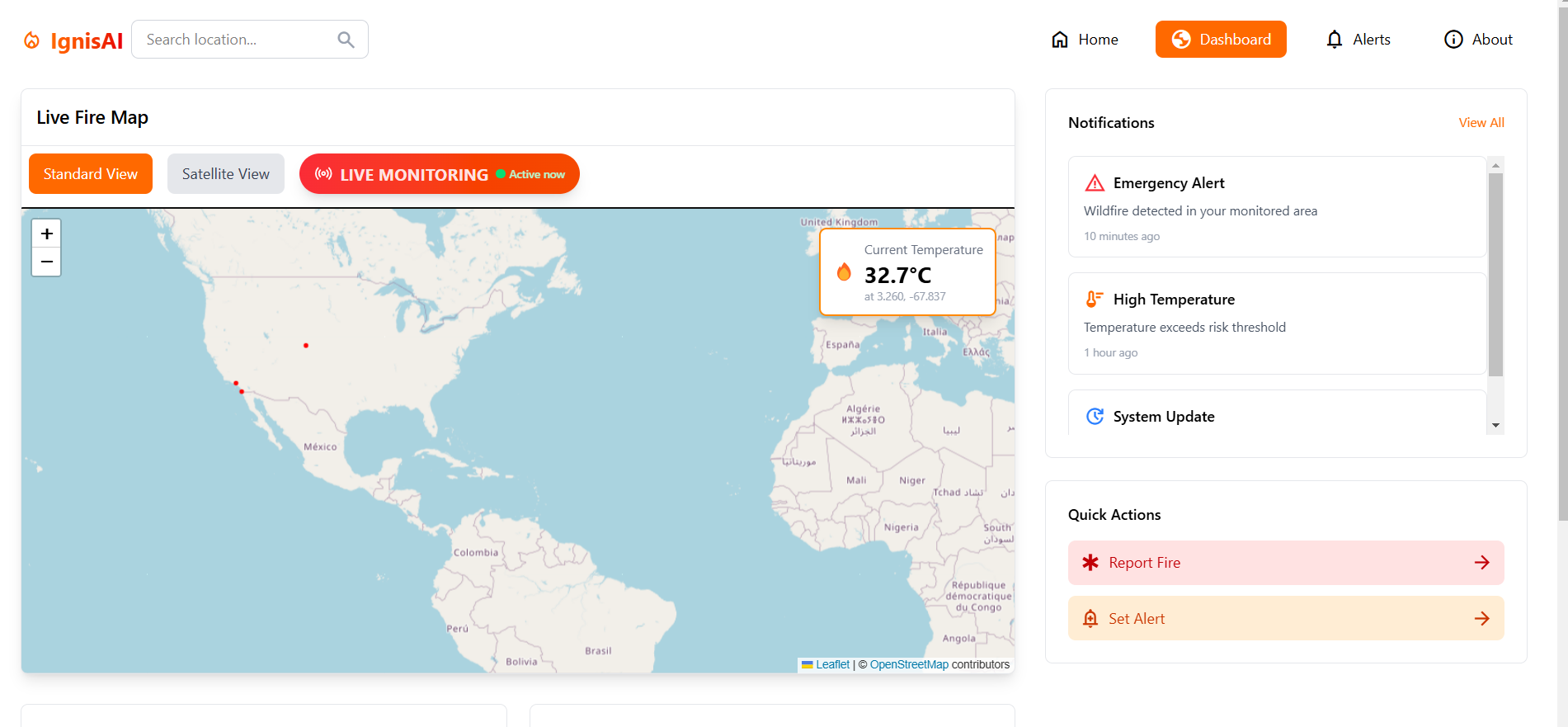
Dashboard featuring live wildfire map and other things.
-
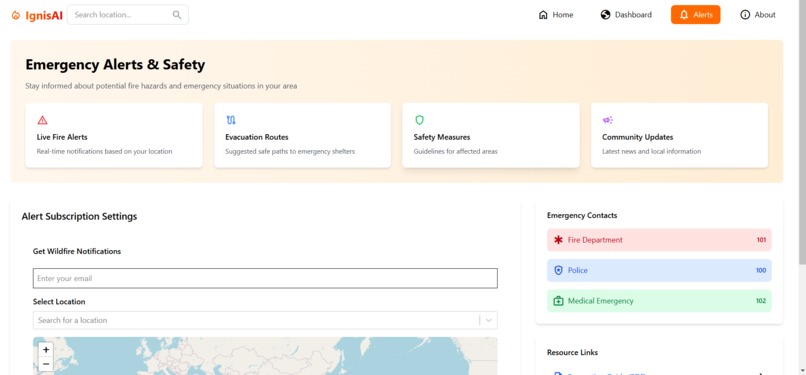
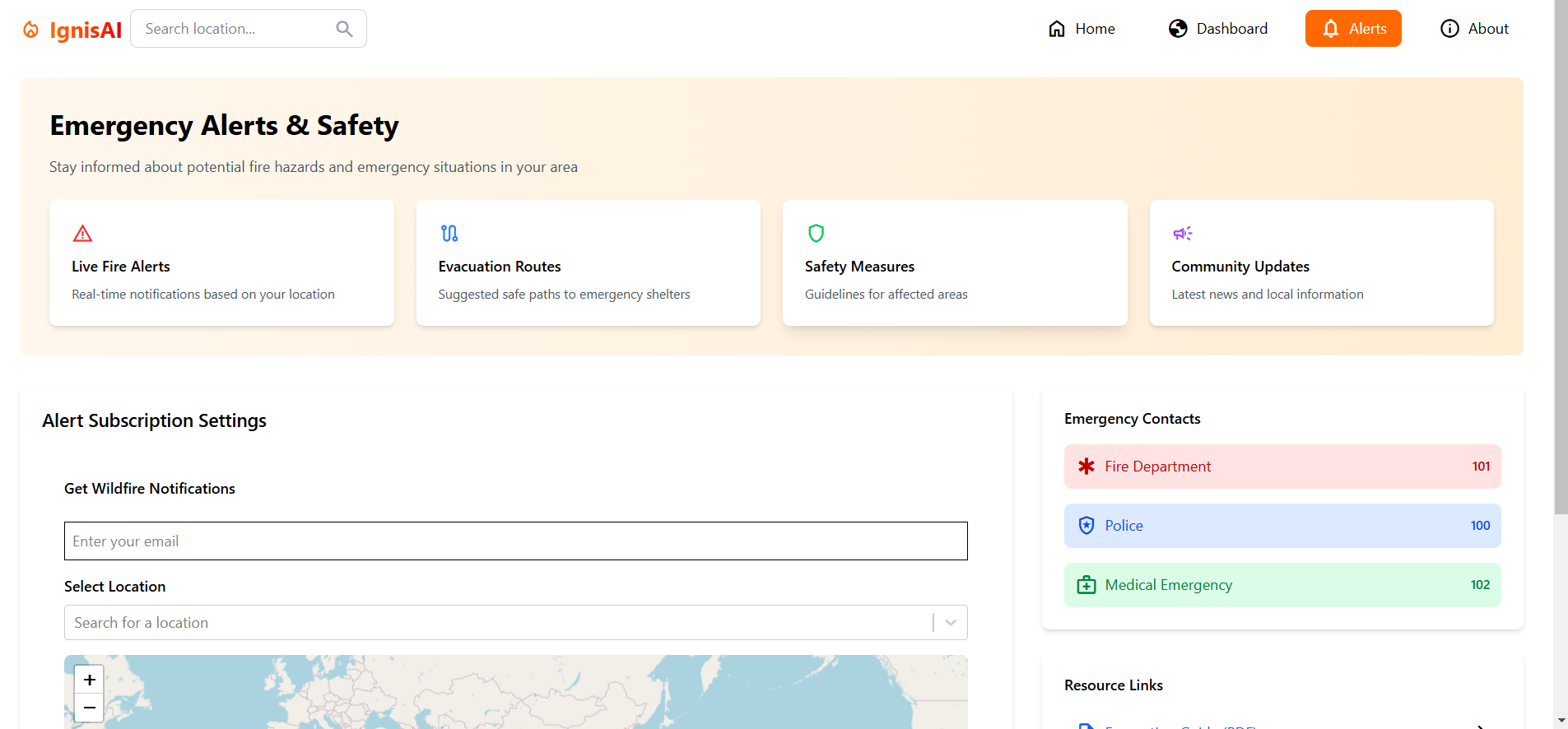
Alert page with different materials and guide.
-
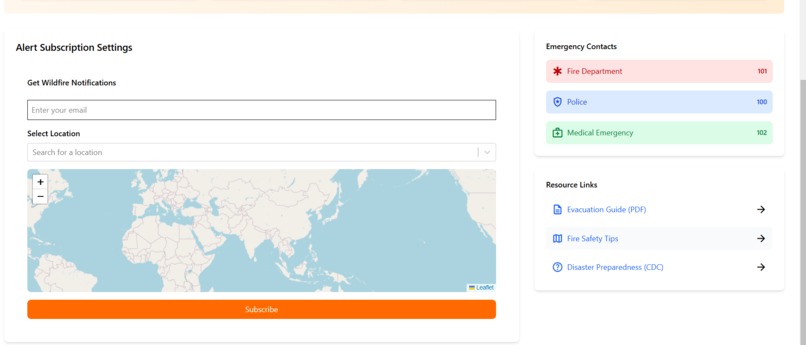
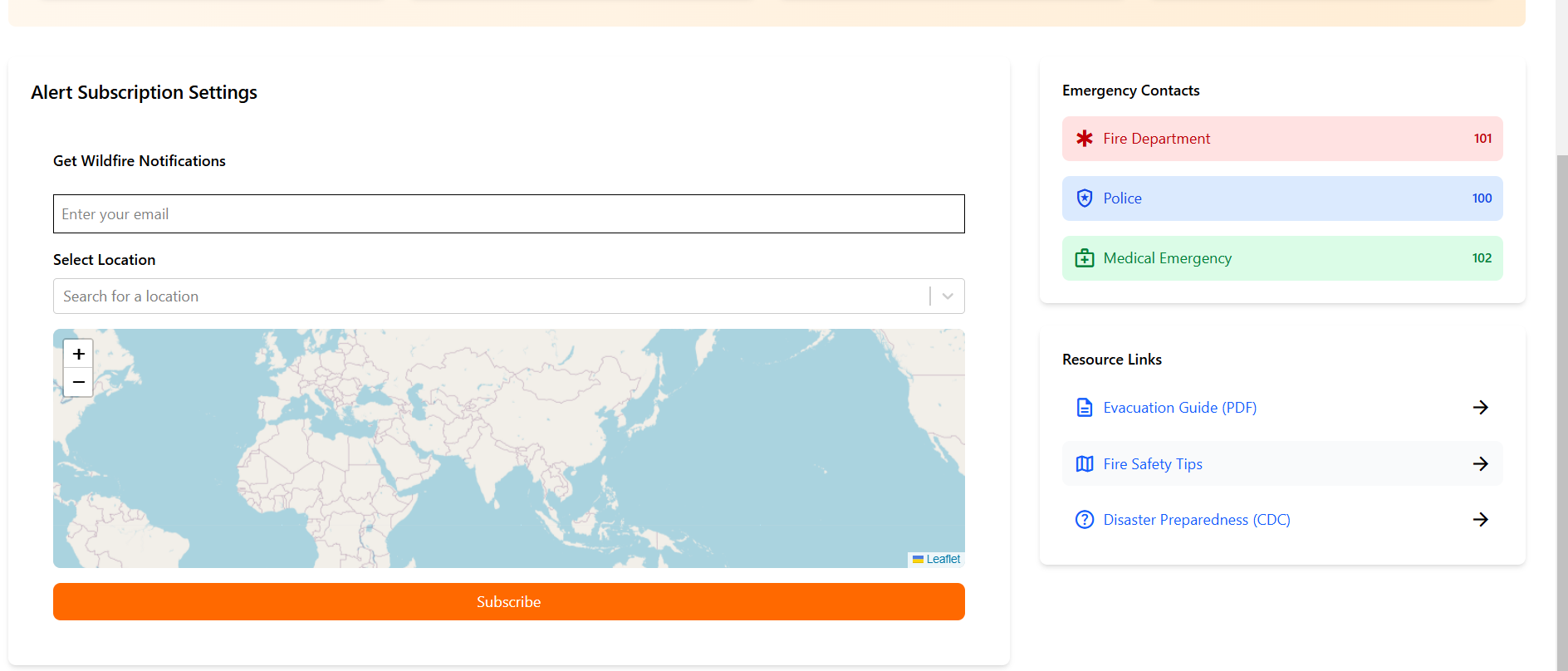
Alert subscription feature.
-
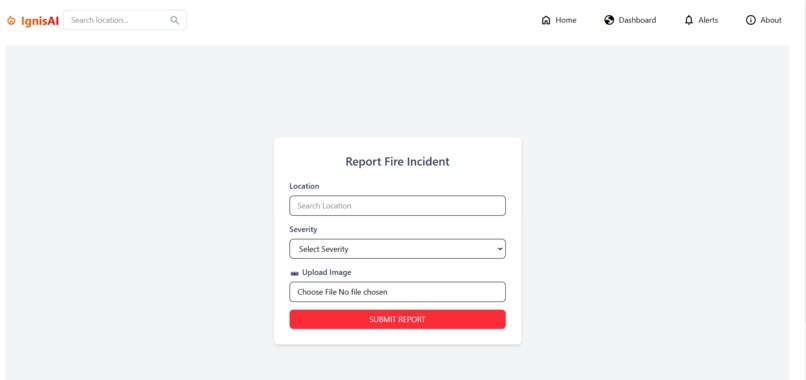
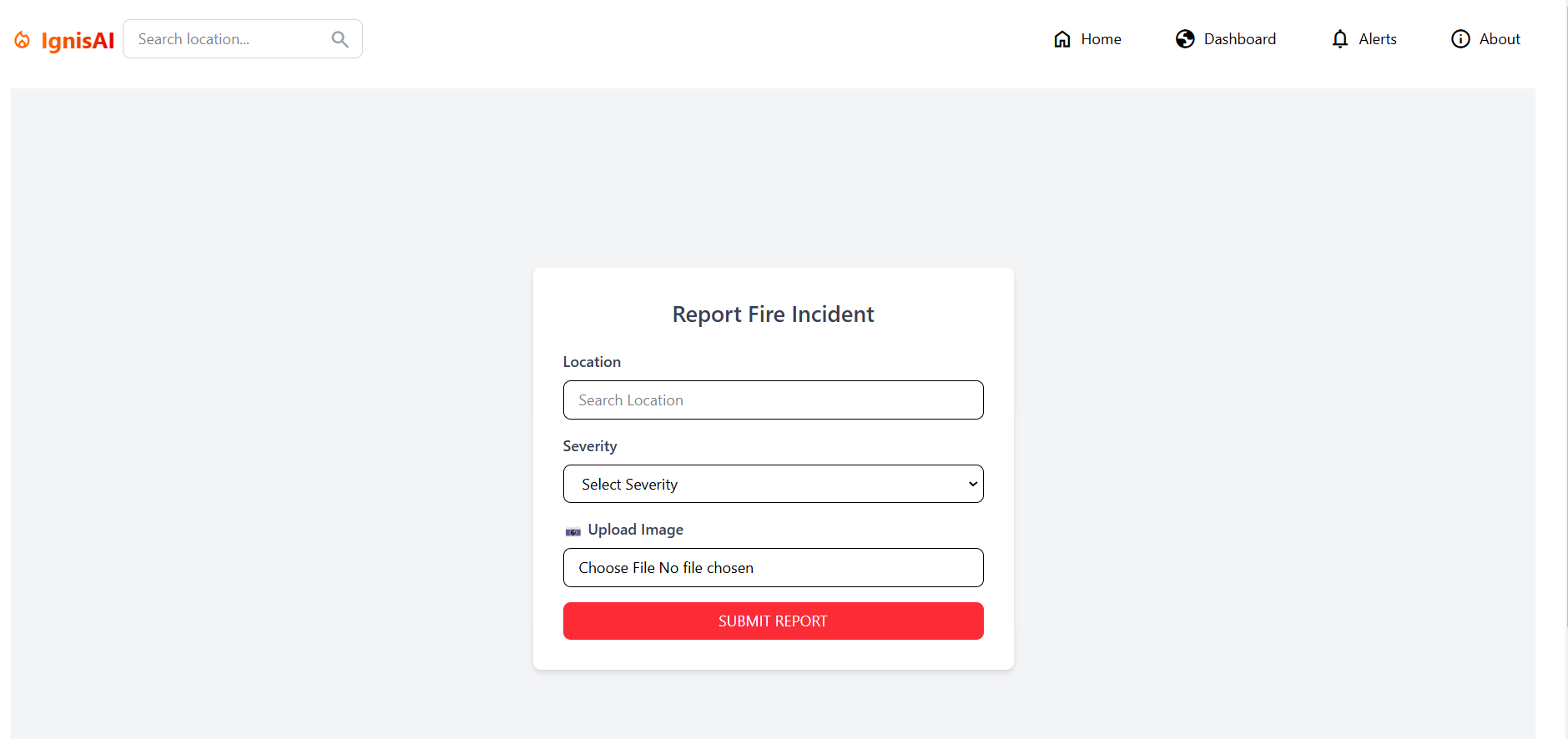
Page for reporting wildfire.
-
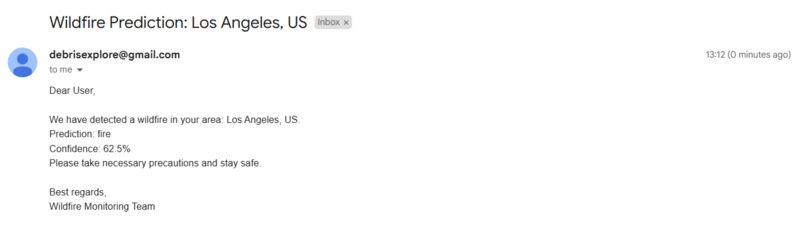
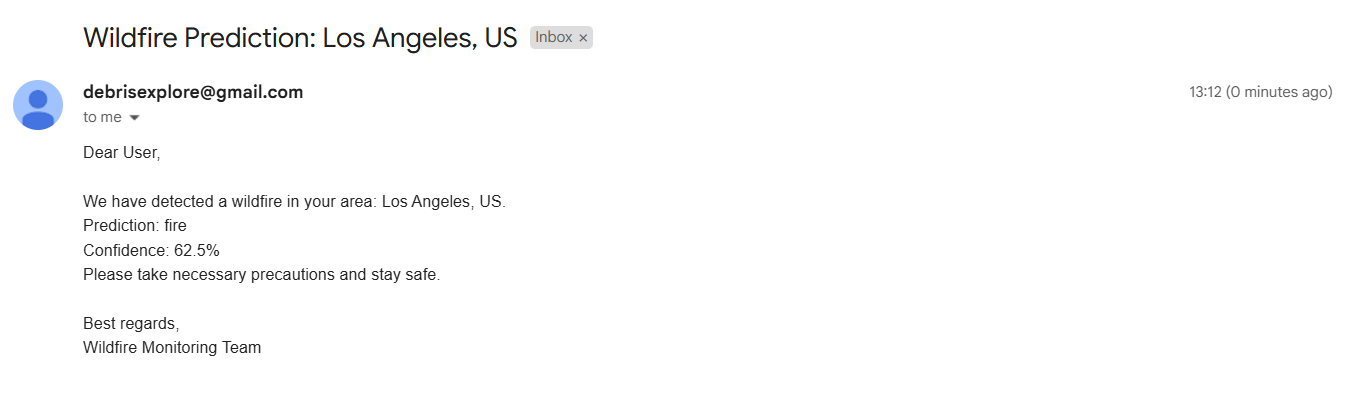
Mail notification alert to user.
-
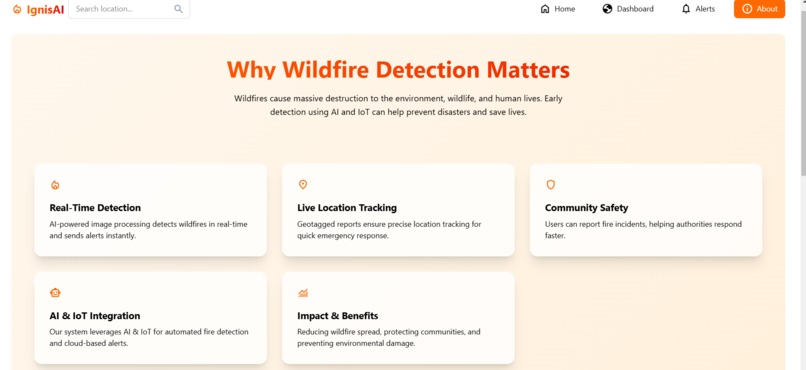
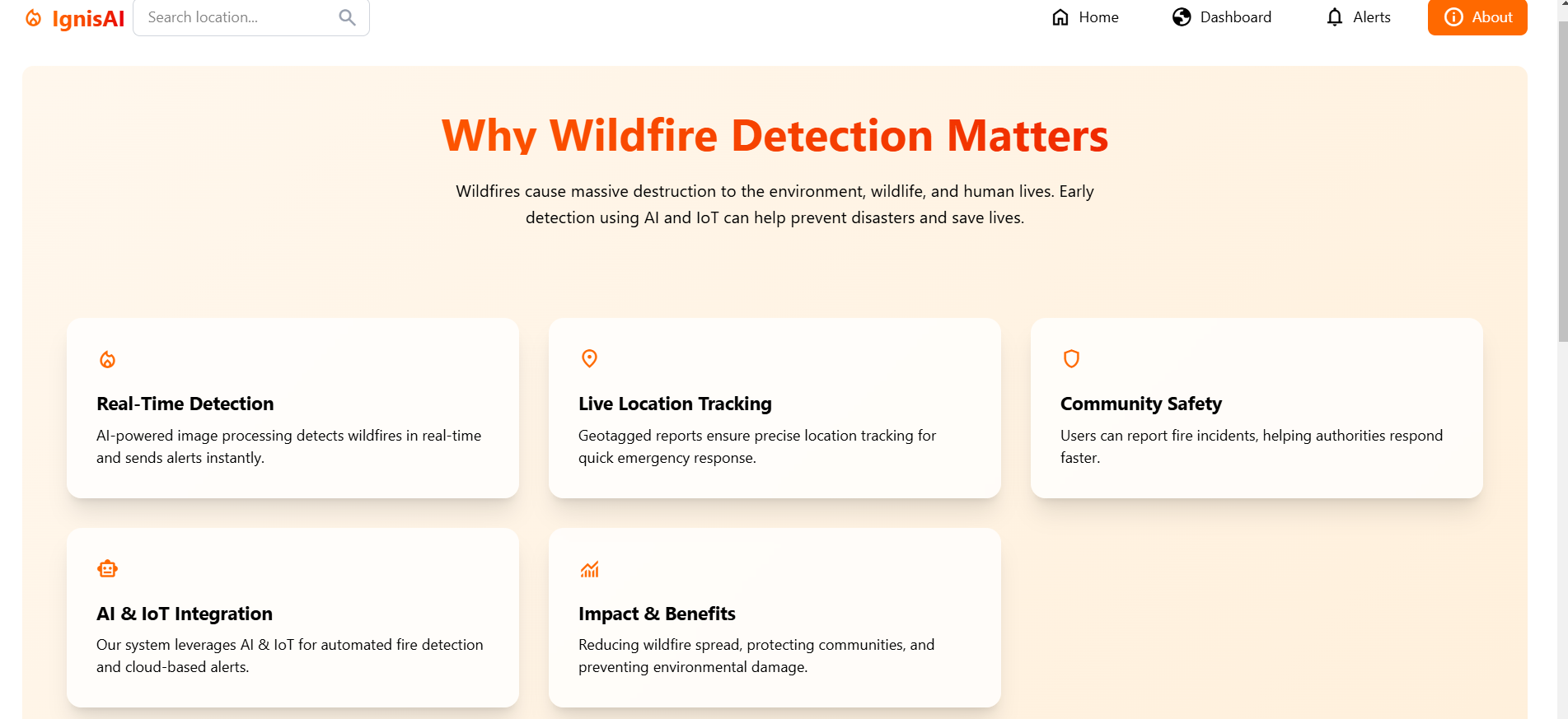
About page of IgnisAI.
-
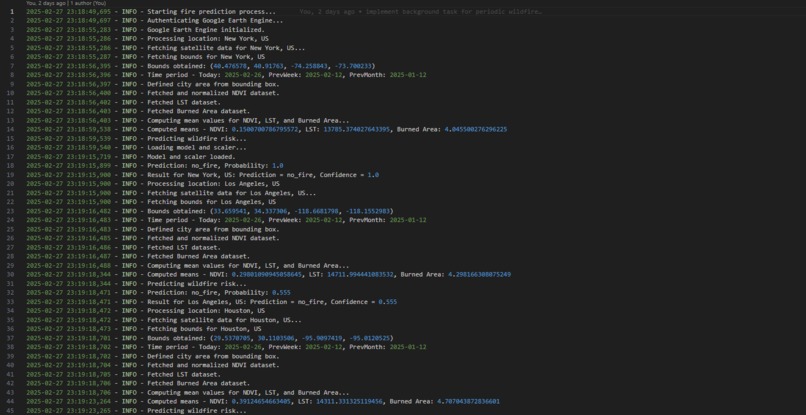
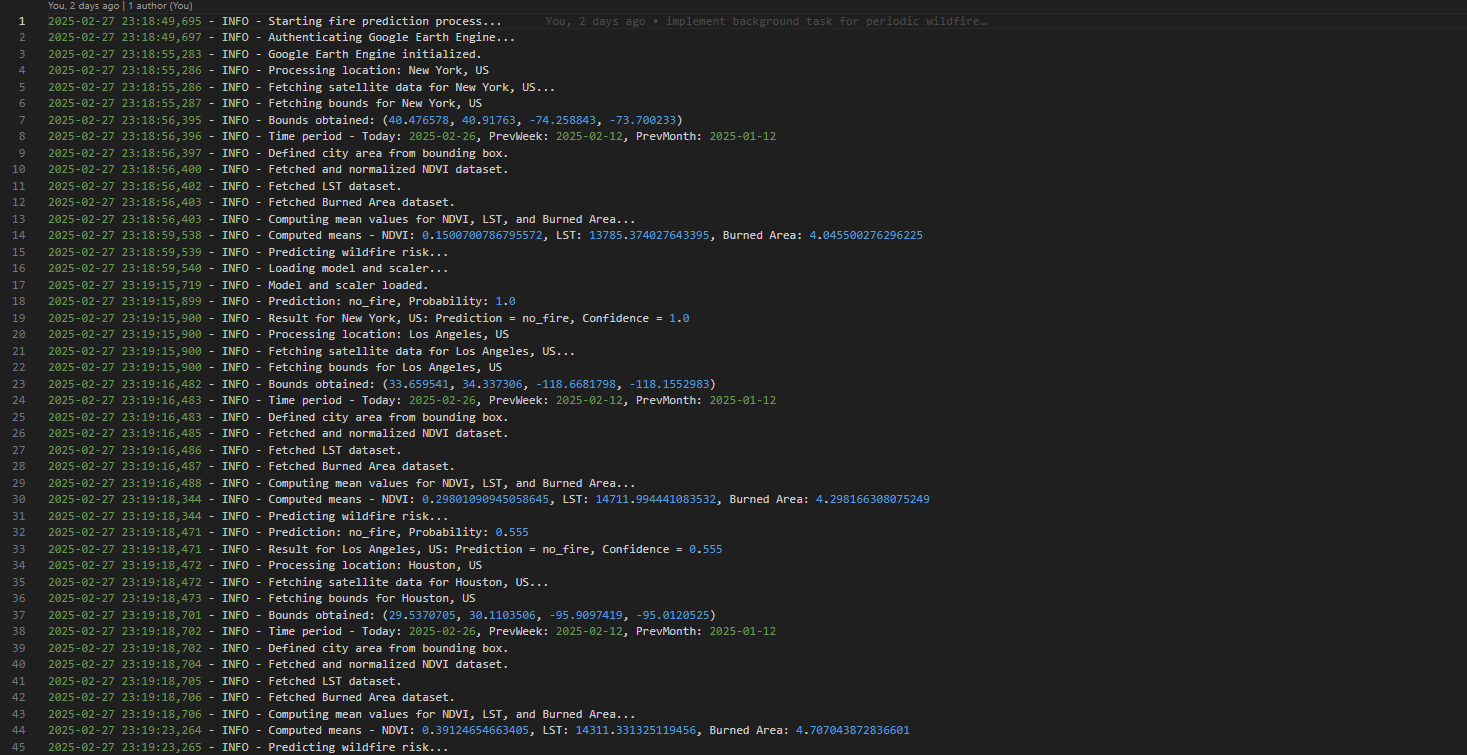
Backend AI Prediction Log.
Inspiration
While brainstorming ideas for our hackathon project, we came across a blog discussing the devastating impact of wildfires. It made us realize how critical fire detection systems are, especially in regions prone to wildfires. We thought, what if we could enhance existing detection systems using AI? That idea sparked the creation of IgnisAI, a real-time wildfire detection and notification system.
Initially, we wanted to work on natural disasters as a whole, but after further research on available datasets and the current wildfire situation in the US, we decided to focus specifically on wildfires. At first, we considered using image detection with CNNs or satellite data. However, due to our limited experience in those areas, we opted for a numerical parameter-based model with plans to integrate more advanced techniques later upon gaining hands on experience in deep learning models.
What it does
IgnisAI is a prototype web app designed to detect wildfires in real-time and provide instant notifications. Our current focus is on US cities, but the system is built with scalability in mind for global deployment.
Key Features
- Real-Time Wildfire Detection: Uses a Random Forest classifier to analyze Google Earth data, including NDVI, LST, and Burned Area.
- Instant Notifications: Sends email alerts upon detecting potential wildfire events (future updates will include SMS alerts).
- Interactive Dashboard: Displays real-time wildfire data and historical trends for better monitoring.
- API Endpoints: Allows integration with IoT devices for enhanced detection capabilities.
- Scalability & Security: Designed for cloud deployment with robust data security measures.
- Backend Logging: Comprehensive logging system to monitor wildfire events, system performance, and errors for debugging and auditing purposes.
How we built it
- Data Collection: We gathered real-time environmental data from Google Earth Engine, focusing on parameters such as NDVI, LST, and Burned Area.
- Model Selection & Optimization: We used a Random Forest Classifier, optimized with GridSearchCV to improve detection accuracy.
- Backend Development: Built with Django and Django REST Framework, ensuring a seamless API integration.
- Frontend Development: Implemented using React, Vite, and TypeScript for a dynamic and responsive user interface.
- Notification System: Integrated Django’s email system for sending alerts (with plans to add SMS notifications).
- Deployment Plan: We structured the system for future cloud deployment to improve scalability and reliability.
Challenges we ran into
- Data Availability & Processing: Finding and cleaning real-time wildfire data was more challenging than expected. We had to preprocess large datasets and calibrate environmental indicators to ensure accuracy.
- Model Selection: Initially, we considered CNNs for image-based detection, but due to limited expertise and time constraints, we pivoted to a numerical parameter-based Random Forest model.
- Notification System: Setting up an instant notification system that minimizes false alerts required careful threshold tuning and validation.
- Frontend-Backend Integration: Ensuring smooth communication between the frontend and backend, especially when dealing with real-time data, was another hurdle we overcame.
Accomplishments that we're proud of
- Successfully built a working prototype capable of detecting wildfires in real time.
- Implemented an optimized Random Forest model for wildfire prediction.
- Designed an interactive dashboard that visualizes wildfire data effectively.
- Created a scalable architecture that can integrate IoT devices in the future.
- Set up an instant alert system that enhances disaster response times.
What we learned
- The importance of real-time data processing and handling large datasets efficiently.
- How to optimize machine learning models for real-world applications.
- The challenges of integrating AI with real-time alert systems and the fine balance between sensitivity and false positives.
- Django-React integration, ensuring smooth communication between the backend and frontend.
- The critical need for wildfire detection systems, especially in wildfire-prone regions like the US.
What's next for IgnisAI
- Global Expansion: Adapt the model to predict wildfires worldwide.
- SMS Notifications: Implement instant SMS alerts for faster communication.
- User Accounts & Customization: Enable users to set custom alert thresholds and notification preferences.
- Enhanced Dashboard: Add trend graphs, historical comparisons, and predictive analytics.
- Integration with IoT Devices: Extend API endpoints for IoT-based real-time monitoring.
- Real-Time Satellite Data: Improve accuracy by integrating satellite-based wildfire detection.
- Advanced AI Models: Explore deep learning techniques to enhance prediction accuracy.
Conclusion
IgnisAI represents a major step forward in wildfire detection and disaster management. By combining real-time data, machine learning, and instant alerts, our system enhances wildfire monitoring and helps mitigate its devastating impact. With future enhancements and expanded capabilities, IgnisAI has the potential to become a global standard for early wildfire detection.
Built With
- axios
- django
- django-rest
- git
- grid-search-cv
- joblib
- leaflet.js
- machine-learning
- numpy
- pandas
- python
- react
- scikit-learn
- sqlite
- typescript


Log in or sign up for Devpost to join the conversation.