Inspiration
When I put on a headset, I could visit space stations, fantasy kingdoms and neon arenas, but I couldn't find a single VR experience where I could sit in an Igbo village square and drum. African rhythm traditions are among the oldest and most influential in the world: they shaped rock, jazz, hip-hop and Afrobeats. Yet in VR they are almost absent. IGBA is my answer - a rhythm game that is also a doorway into a living culture, made by someone from inside it.
What it does
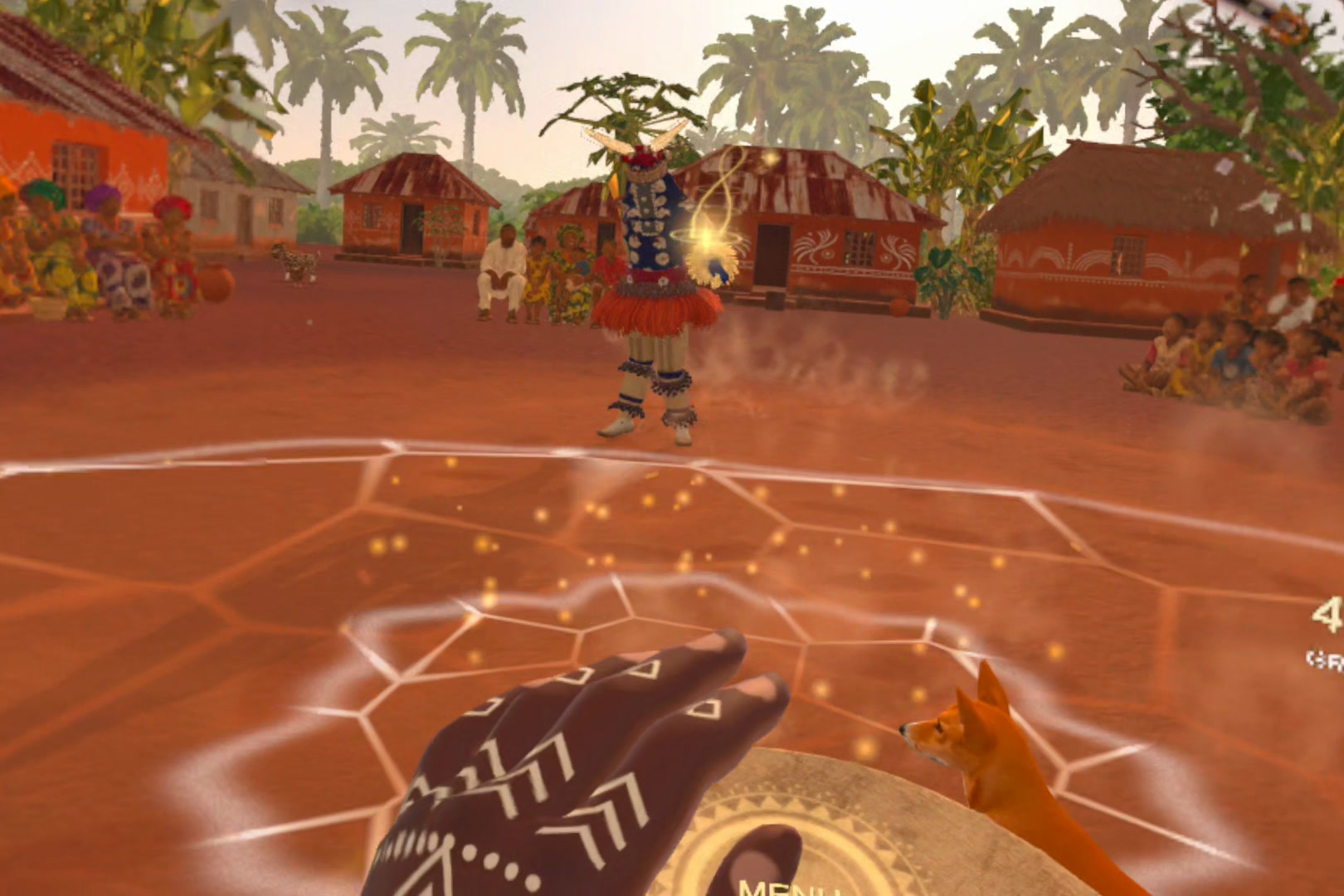
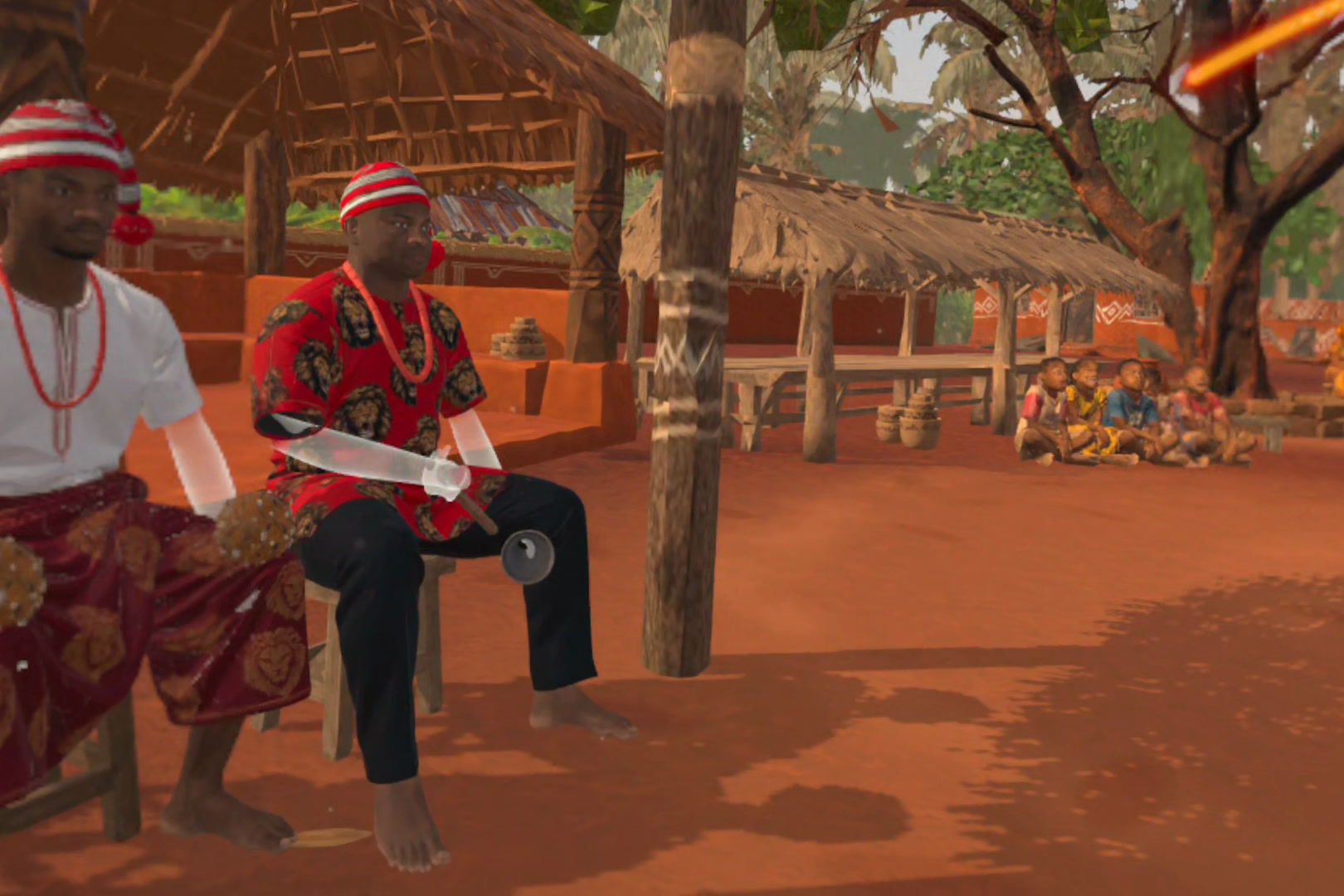
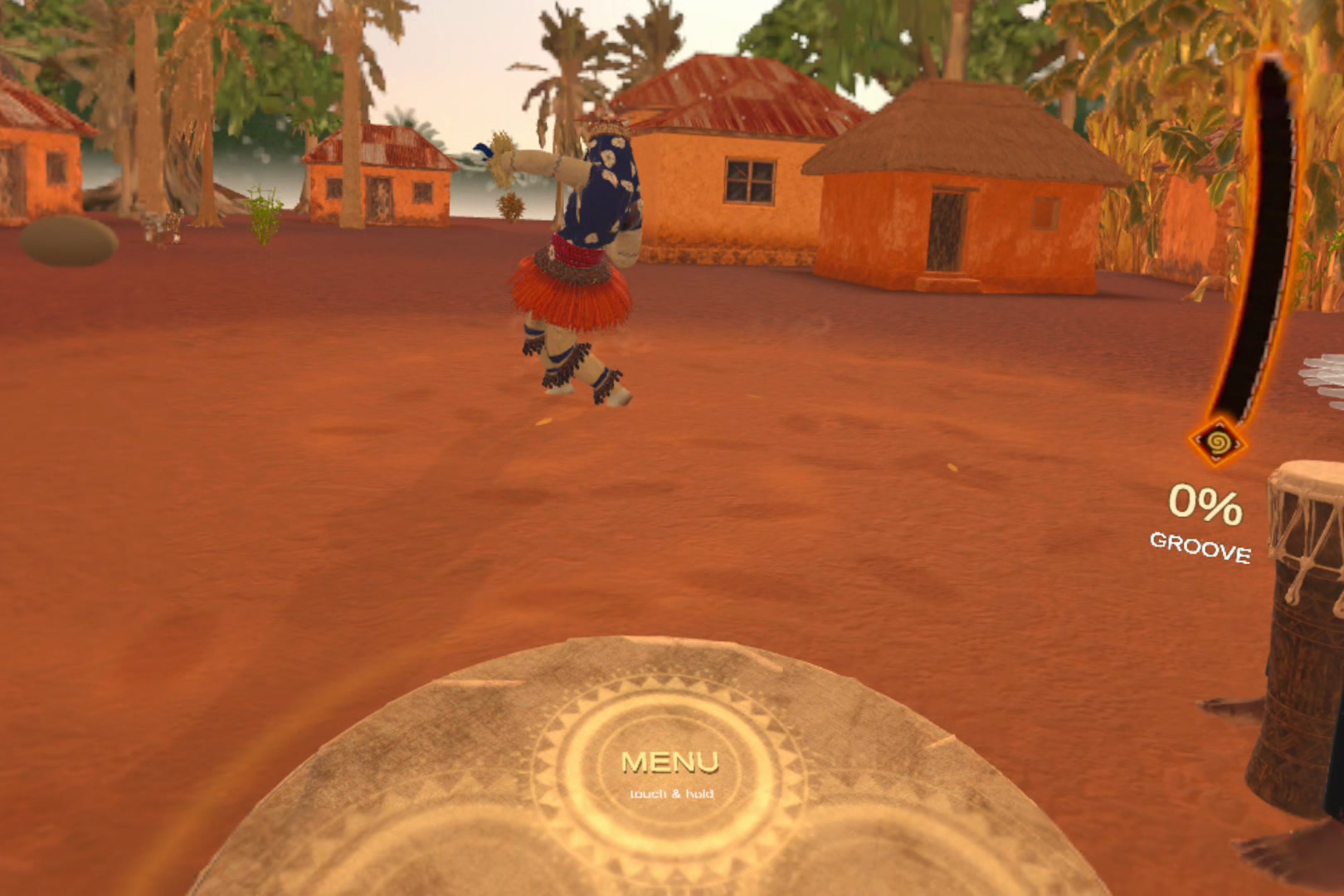
You sit at a carved igba drum in an Igbo village. With your bare hands (no controllers), you play your part in a live ensemble of big and small igba drums, the ogene bell, the ichaka shaker and the oja flute, while a dancer answers every beat.
A story to play for. Obi, the youngest of a once-legendary drumming family, sets out with his dog Ekuke to win back four sacred gloves taken by rival drummers. His grandfather tells the tale on a scroll you unroll with your hands.
Four market days, four arenas. The Igbo week has four days, Eke, Orie, Afọ and Nkwọ, and each is a market and an arena: a mud-house compound, an open square ringed by villagers, an arena behind its entrance gate, a night market around a bonfire. The menu follows the real Igbo calendar, so the village you return to changes day by day.
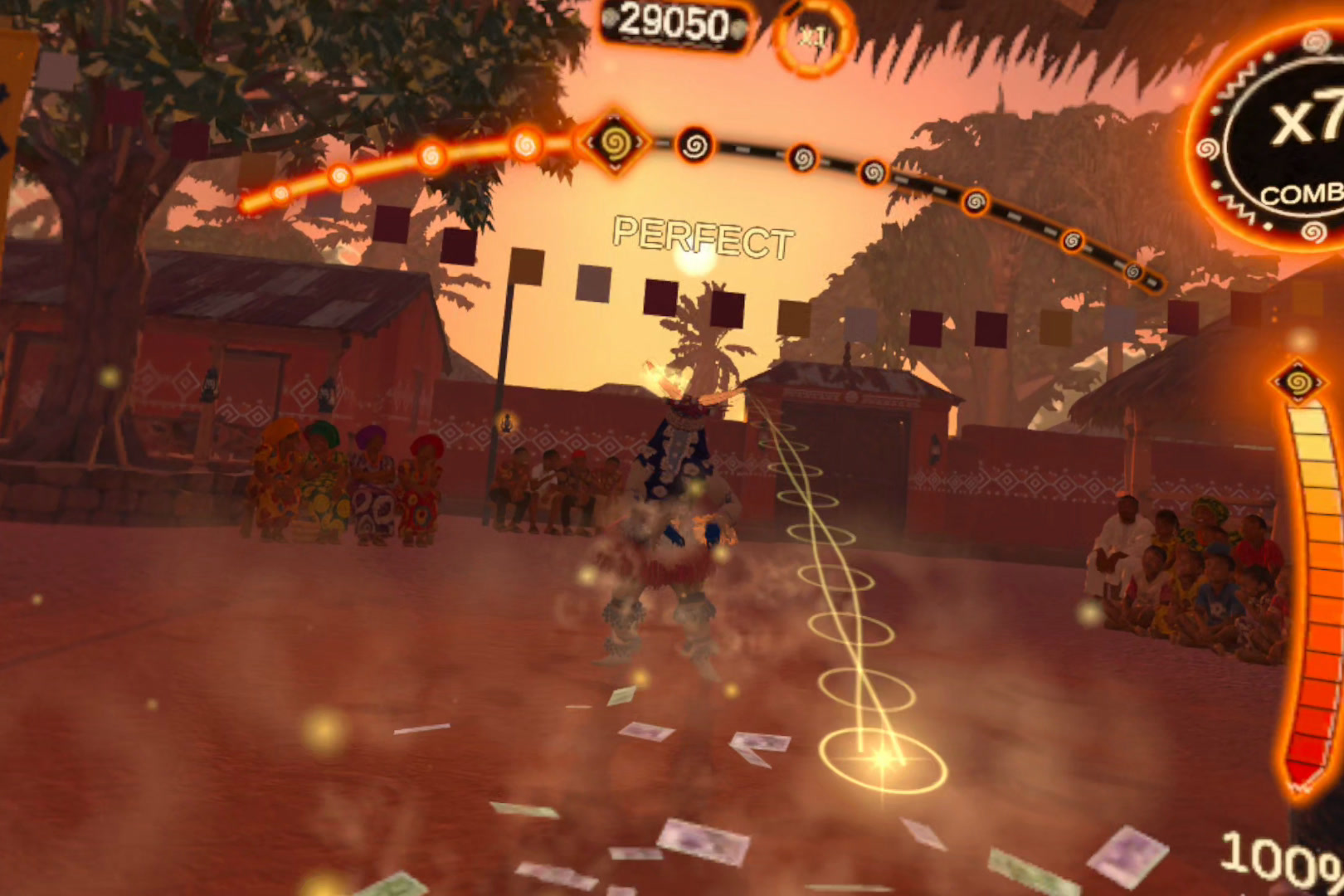
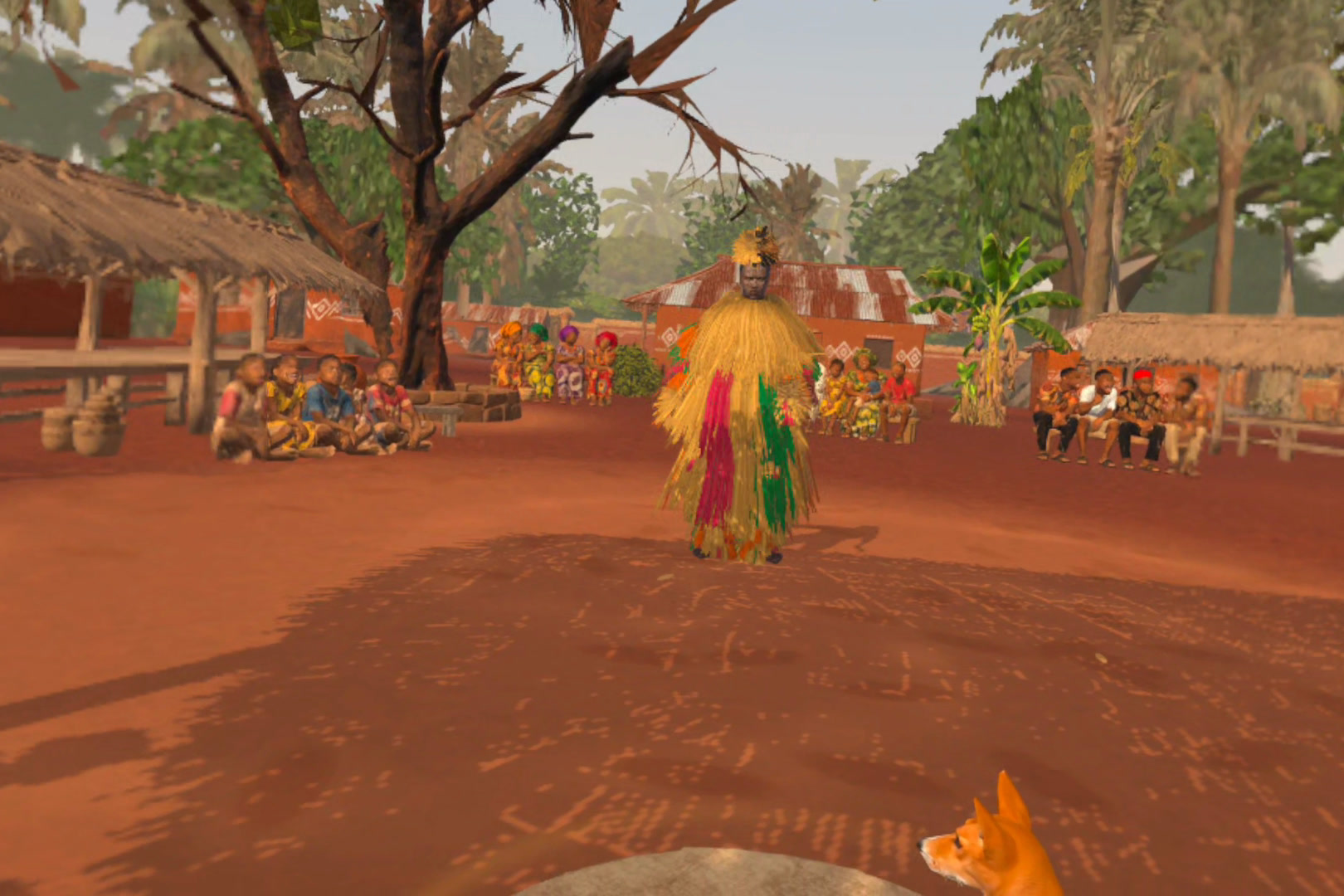
A living arena. Before each song the dancer makes an entrance, then dances Atilogwu, the acrobatic Igbo dance, with seed shakers at his knees and ankles sounding on every step and dust rising from the dry ground. Choose his costume: a full suit of dyed raffia, or the hooded masquerade.
Real music. Every song is built from real stems of an igba performance recorded by my family in our village. Your hits play real drum strokes, so landing the rhythm completes the music rather than just scoring points.
Reasons to come back. Combos earn cowrie money for your bank, each arena has a glove to win, and every song ends with a rank, your accuracy and your best run.
How we built it
- Engine: Unity 6 for Meta Quest 3, Meta XR Core SDK hand tracking, Meta XR Audio SDK spatial sound.
- The music: my uncle's village recordings separated into stems (big igba, small igba, ogene, ichaka, oja), tempo-aligned at 120 BPM and rebuilt into four arena songs with proper endings.
- The cues: rhythm charts made by a computer from the stems felt mechanical. So I filmed my own hands drumming along to each song and built a pipeline that reads the video: it lines the video's sound up with the song, removes the song, finds each strike, and reads which hand struck from the motion just before it. The charts are a human drummer's own part, timed to the beat grid.
- The dancer: a human dancer captured with markerless motion capture, retargeted onto our dancer, with costumes made in Marvelous Designer and Blender, and spring-simulated raffia that swings with his steps.
- The village: each arena laid out from reference images of real Igbo compounds and markets.
Challenges we ran into
- Rhythm that feels natural. Algorithmic charts were technically on the beat but felt wrong to play. Recording a real drummer's hands solved it.
- Making a hit feel instant. Hand tracking adds latency, and a drum that sounds late feels broken. We predict each strike from the hand's downward speed and fire it a few milliseconds before contact, and cut the audio buffer so the drum sounds about 21 ms behind the hand.
- No haptics. With bare hands there's nothing to feel, so feedback comes from sound and light: each strike zone has its own drum voice, the skin ripples where you strike, and painted patterns on your forearms glow with your timing.
- The Quest's graphics budget. Thousands of raffia strands, a full village, a crowd and a dancer all had to hold about 72 fps. We tuned render scale per arena and simplified the costume's shading.
- Silent release builds. Late in development our signed build played no sound: Horizon OS mutes an audio output opened before the app becomes the immersive app. We now reopen the output each time the game comes to the front.
Accomplishments that we're proud of
- Bringing an Igbo village, its music and its dance into VR with the real recordings of my own family.
- A menu you explore with your hands and your gaze - look at the fan, the scroll or the glove chest and it lights up and tells you what to do.
- A drumming game played entirely with bare hands, with no controllers, that adapts to your height and works seated or standing.
- Charts made from a real drummer's hands, not a formula.
What we learned
- Culture travels best through doing. Players learn the ogene's pulse and the shape of an igba phrase by playing them, not by reading about them.
- In VR rhythm games, timing is everything. Every millisecond of latency matters more than any visual effect.
- Authenticity is a feature. The real recordings and real dance carry an energy no synthesized track could.
What's next for IGBA: The Lost Rhythm
- A more reactive dancer
- More arenas and songs from more Igbo communities, and other West African drum traditions.
- A teaching mode that breaks each igba phrase down, so players can learn the real rhythms.
- Multiplayer ensembles: friends taking the big igba, the ogene and the oja together.
- A launch on the Meta Horizon Store.


