-
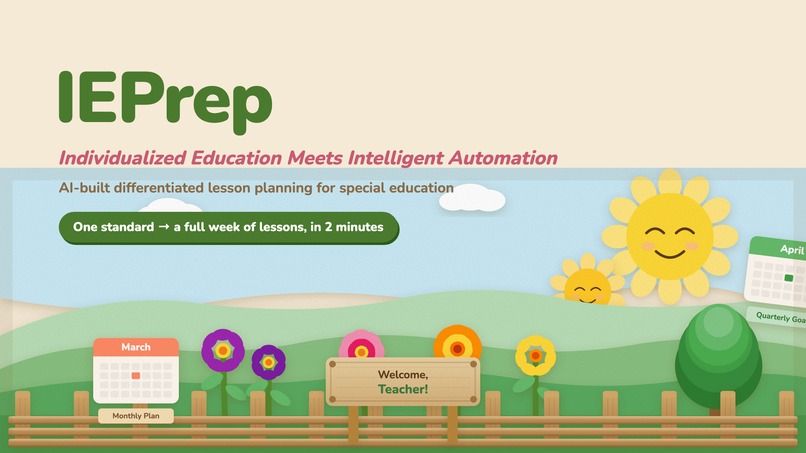
Individualized Education Meets Intelligent Automation
-
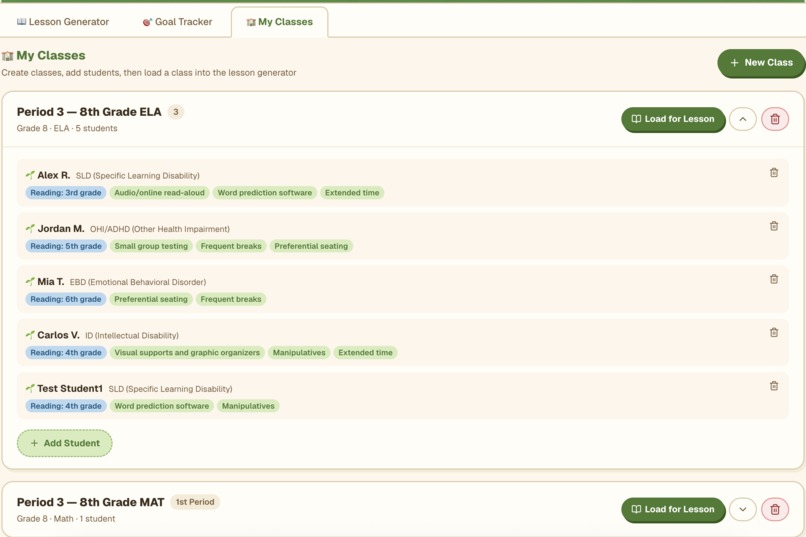
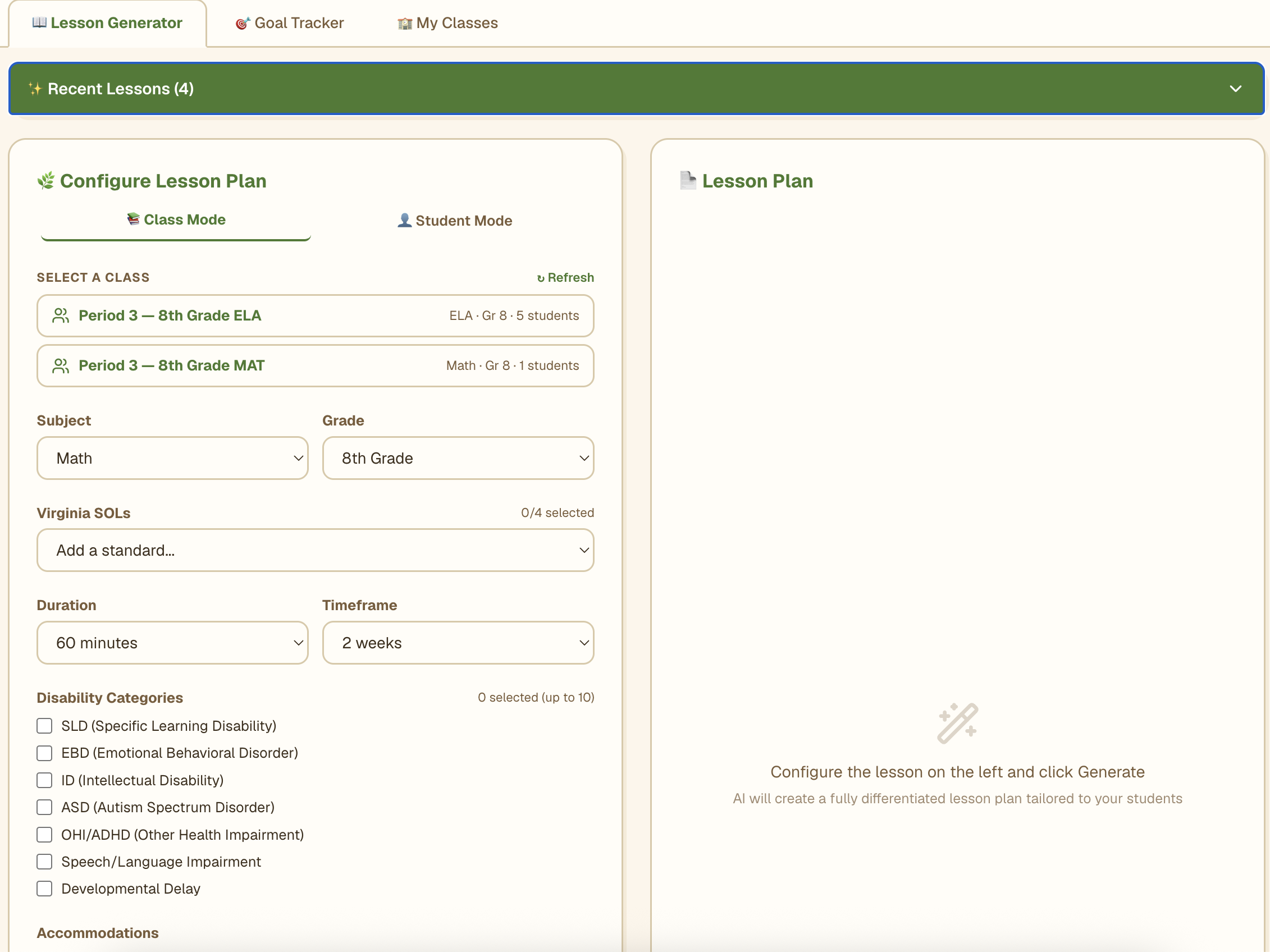
customize your classs and student
-
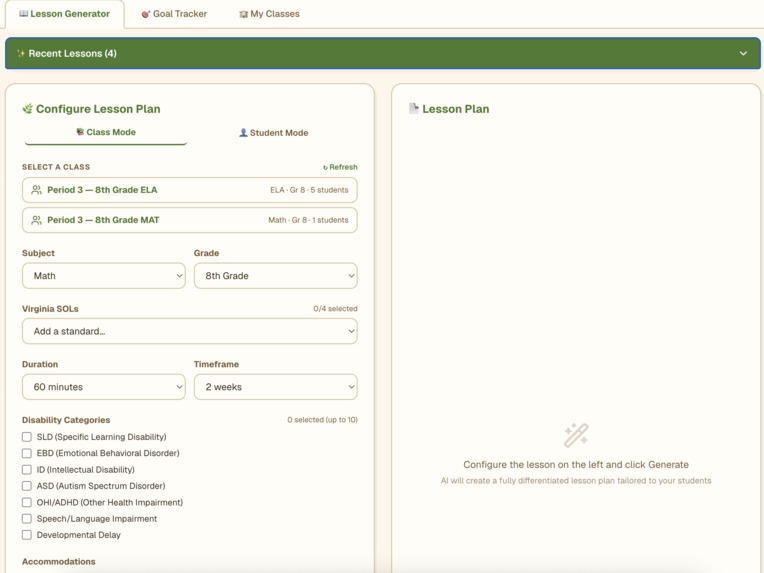
generate the lesson plan
-
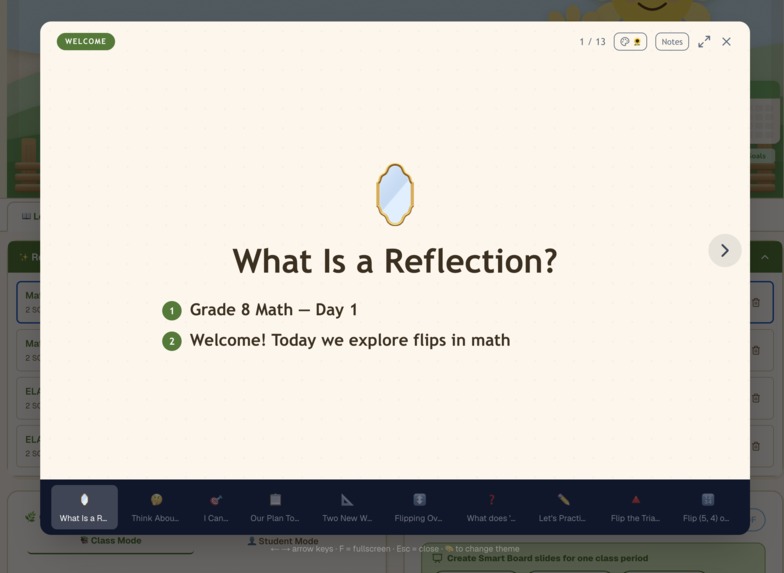
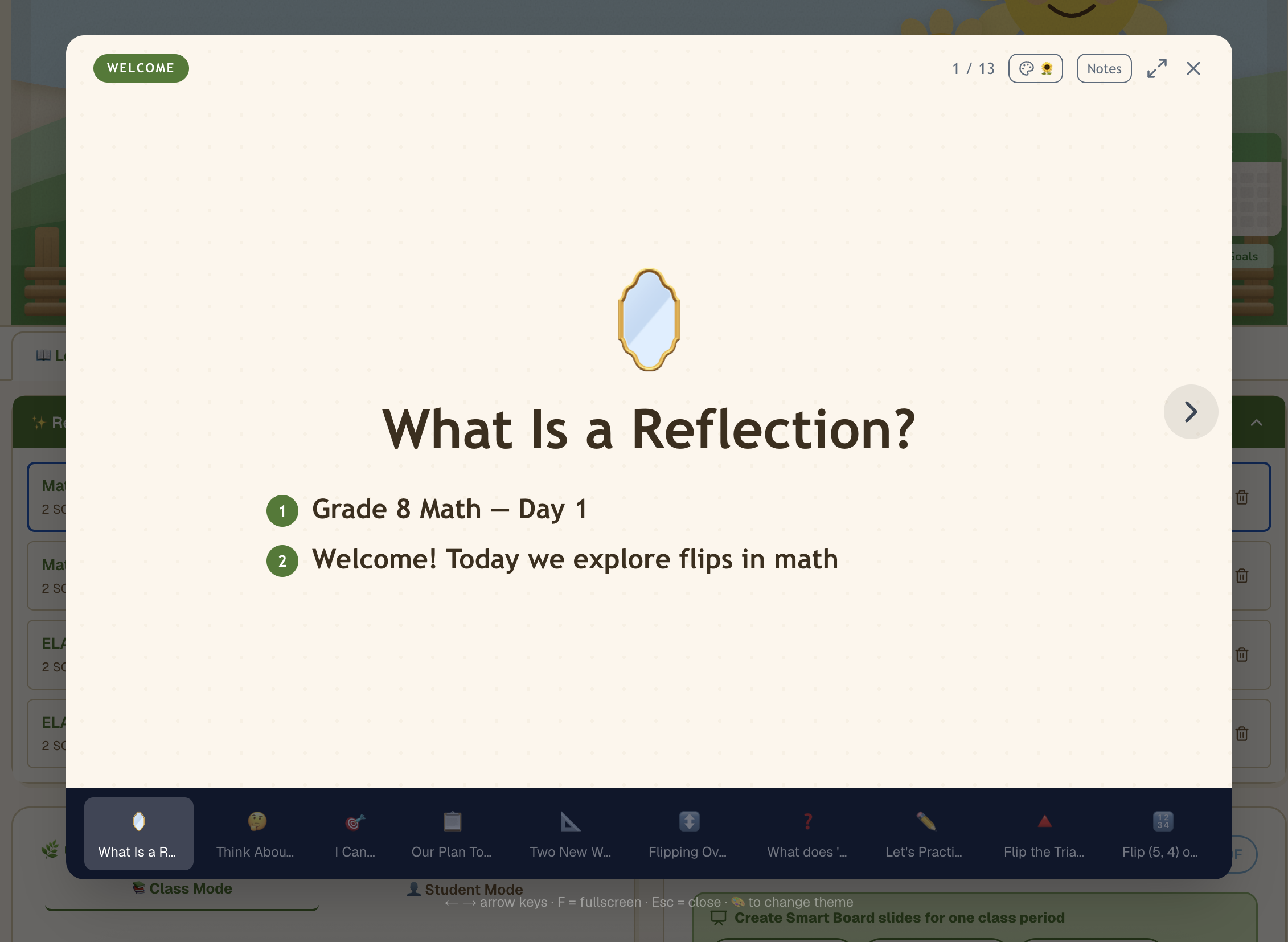
present the AI generated smartboard slide
-
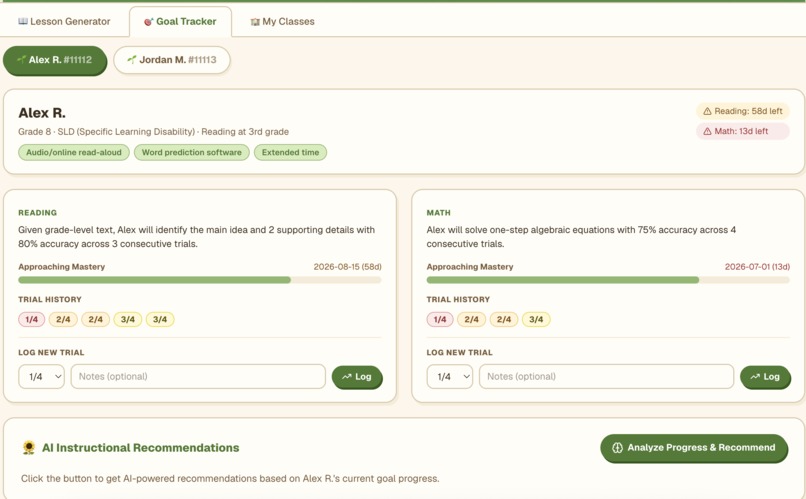
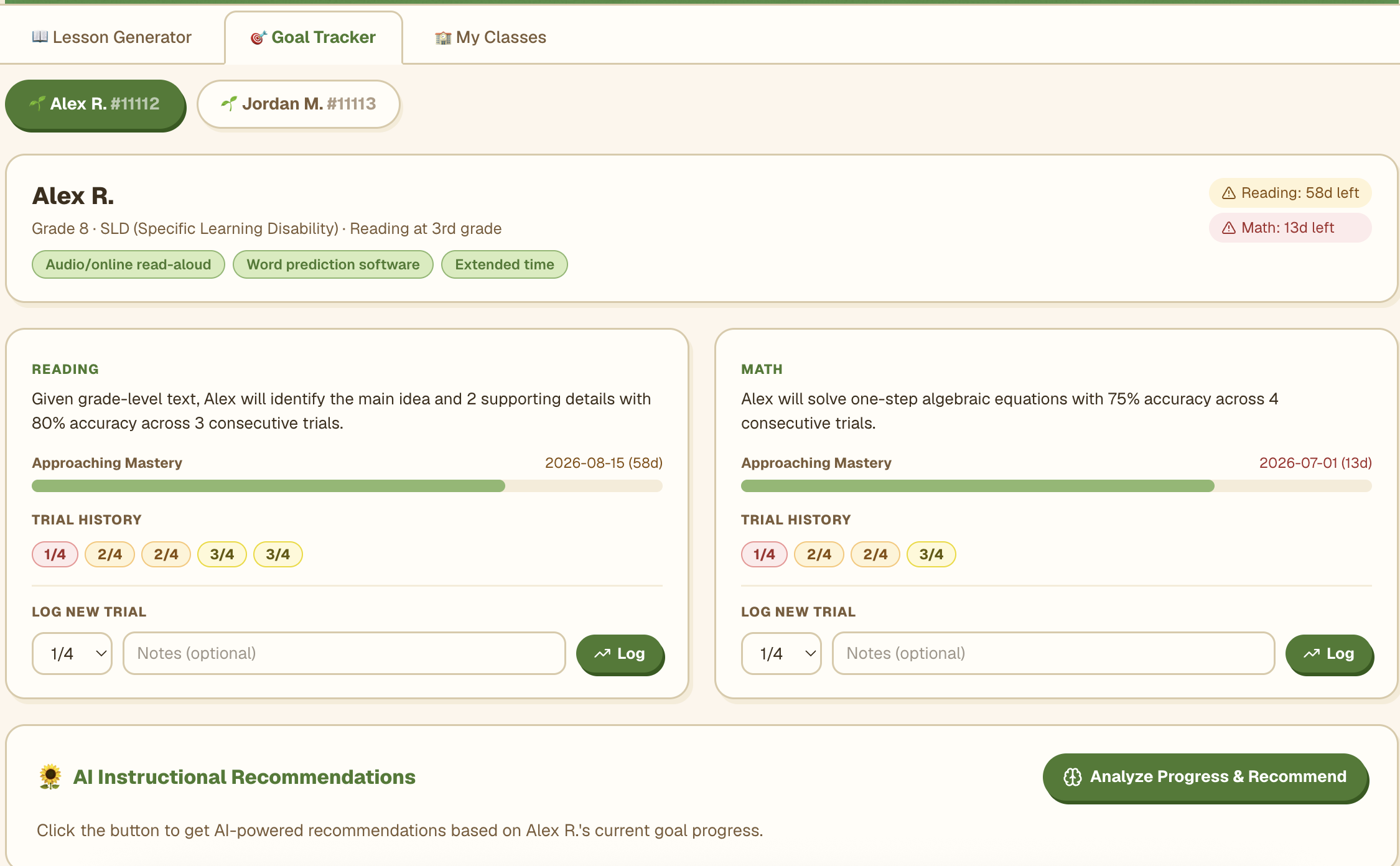
Track your student progress

Inspiration
We all know teachers work far beyond a 40-hour week — and special education teachers carry an even heavier load. Picture one classroom where every student has a unique set of challenges, each needing thoughtful accommodations just to make learning possible. That same teacher owes every child the same standard, taught in a way they can actually reach. Doing it well can cost an extra week of work a month, on nights and weekends that should belong to family. We built IEPrep to give that time back.
What it does
IEPrep helps teachers manage individual student needs alongside the Standards of Learning (SOLs) set by the Department of Education.
A teacher builds their class once — up to 10 student profiles, each with their disabilities and required accommodations. They pick a subject (Math or English), grade level, class length, and the timeframe for the SOL goal, and IEPrep generates a detailed, differentiated lesson plan — saving hundreds of hours a year.
It doesn't stop at the plan. IEPrep also creates Smart Board slides for the actual class period, tracks IEP progress, and loads lessons for the entire class — streamlining planning and documentation in one place.
How we built it
IEPrep was built with Claude Opus 4.8 using adaptive thinking, which handled most of the build and the corrections. We gave Claude the full picture a teacher juggles — standards, disabilities, accommodations, and IEP data — and let it plan lessons, author slides, and recommend next steps. We used Next.js, TypeScript, and Tailwind on the front end, GitHub for source control, and Railway for deployment. Gamma and Figma helped shape the design.
Challenges we ran into
As expected, glitches happened. At first, an entire month of lesson plans collapsed onto a single slide. "Load class" did nothing for a frustrating hour. There were tiny rounding bugs, a menu that wouldn't click, a deployment that kept failing, and the details of a great design translating into an oversimplified version. Each one was a small wall — and getting past them is what made the product real.
Accomplishments that we're proud of
As a special ed teacher, watching IEPrep being created was astonishing at times. We're proud that it can ease the complex, time-consuming, and often daunting task of building lesson plans for the individuals who deserve the most effective, tailored path to learning. It takes about two minutes to accomplish what would normally take a day. IEPrep lets teachers focus on their students instead of planning and tracking — and walk into the classroom with not just a lesson plan, but the slides to teach it.
What we learned
Each of us learned something different. AI is a world to explore — it can create, learn, and teach, and different models work in different ways. We learned that the user has to be very detailed in describing the desired output, and if the result isn't what was asked for, you reword the prompt until it is. You learn as it learns. AI reduces slow, timely tasks to minutes and is a genuine companion for anyone who wants to learn — but the roughly 30% of human input is detailed work that doesn't happen without clear instruction.
What's next for IEPrep
To take IEPrep further, we'd add security and logins, moving from a single user to a multi-tenant model. Right now it addresses one area of a multi-faceted job, so we'd build out richer, more specific student profiles that capture the minutiae. From there, IEPrep could broaden its audience two ways: tailored to different states' SOLs, and configured for general-education teachers — not just special ed.
Built With
- anthropic
- claude
- claude-opus-4.8
- github
- next.js
- node.js
- railway
- react
- svg
- tailwindcss
- typescript


Log in or sign up for Devpost to join the conversation.