Inspiration
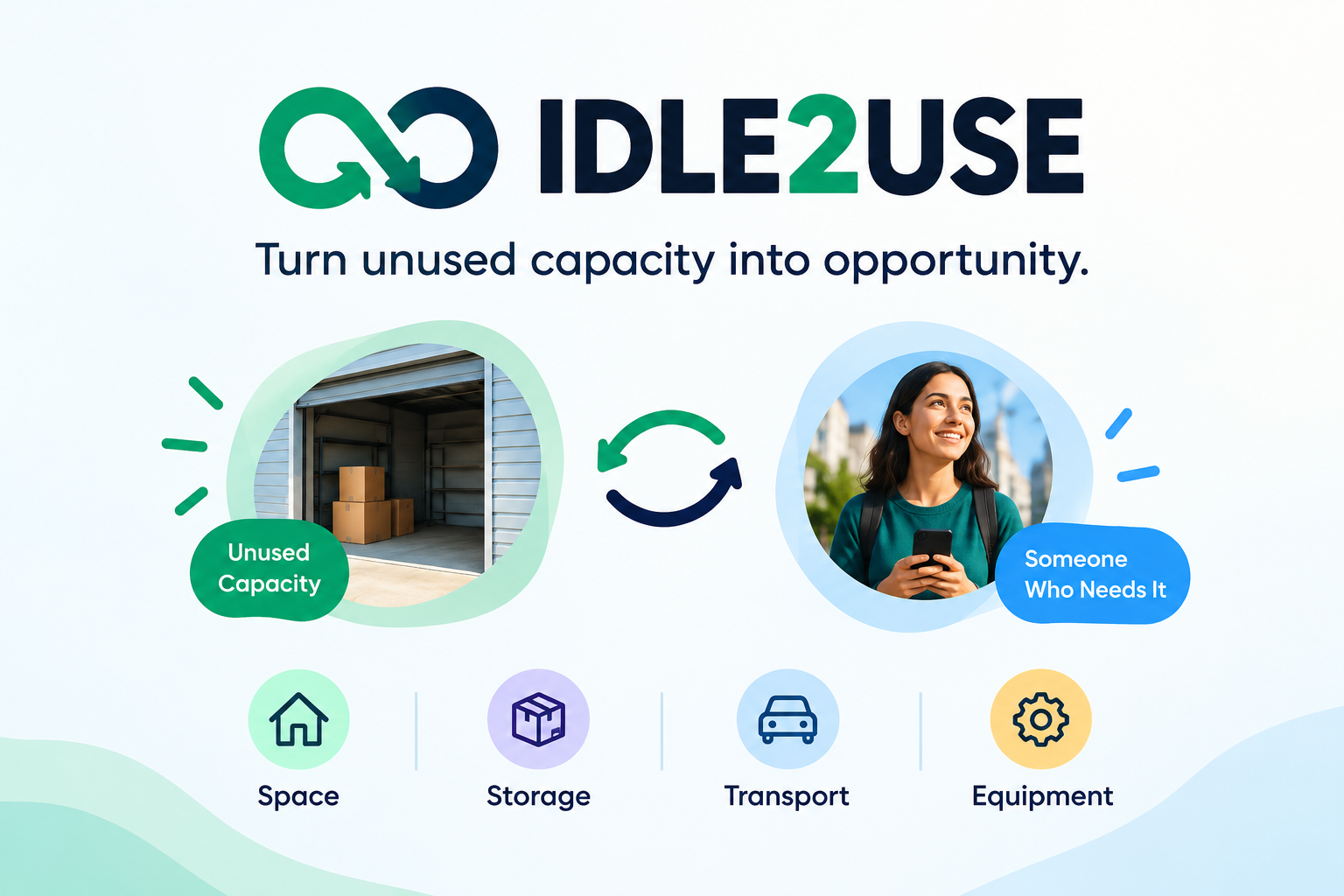
Idle2Use started from a simple observation: a lot of useful capacity sits unused while someone else is actively looking for that same capacity.
An empty classroom, an unused event space, spare storage, an available vehicle seat, or equipment sitting idle can all represent unused value.
I wanted to explore how software could connect these two sides — people who need capacity and people who have capacity available.
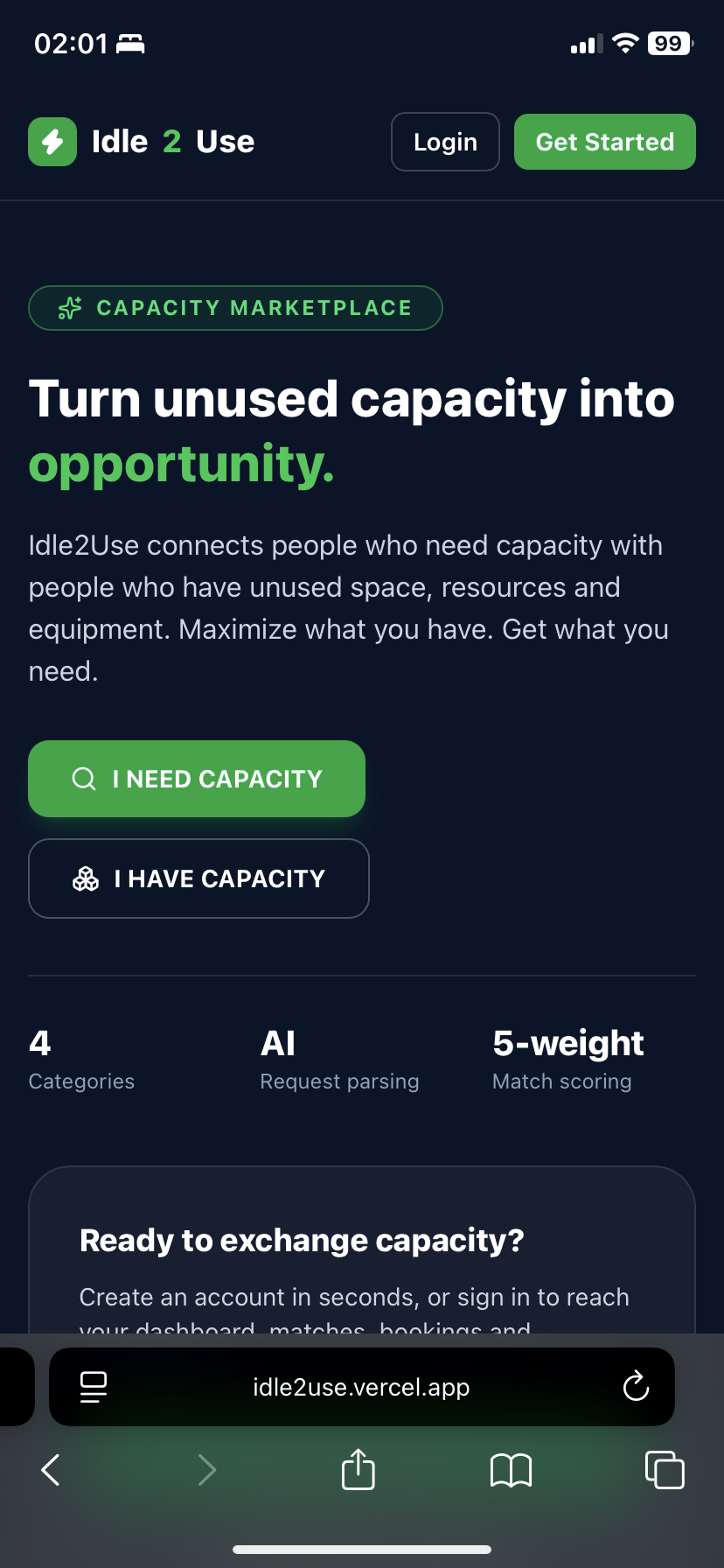
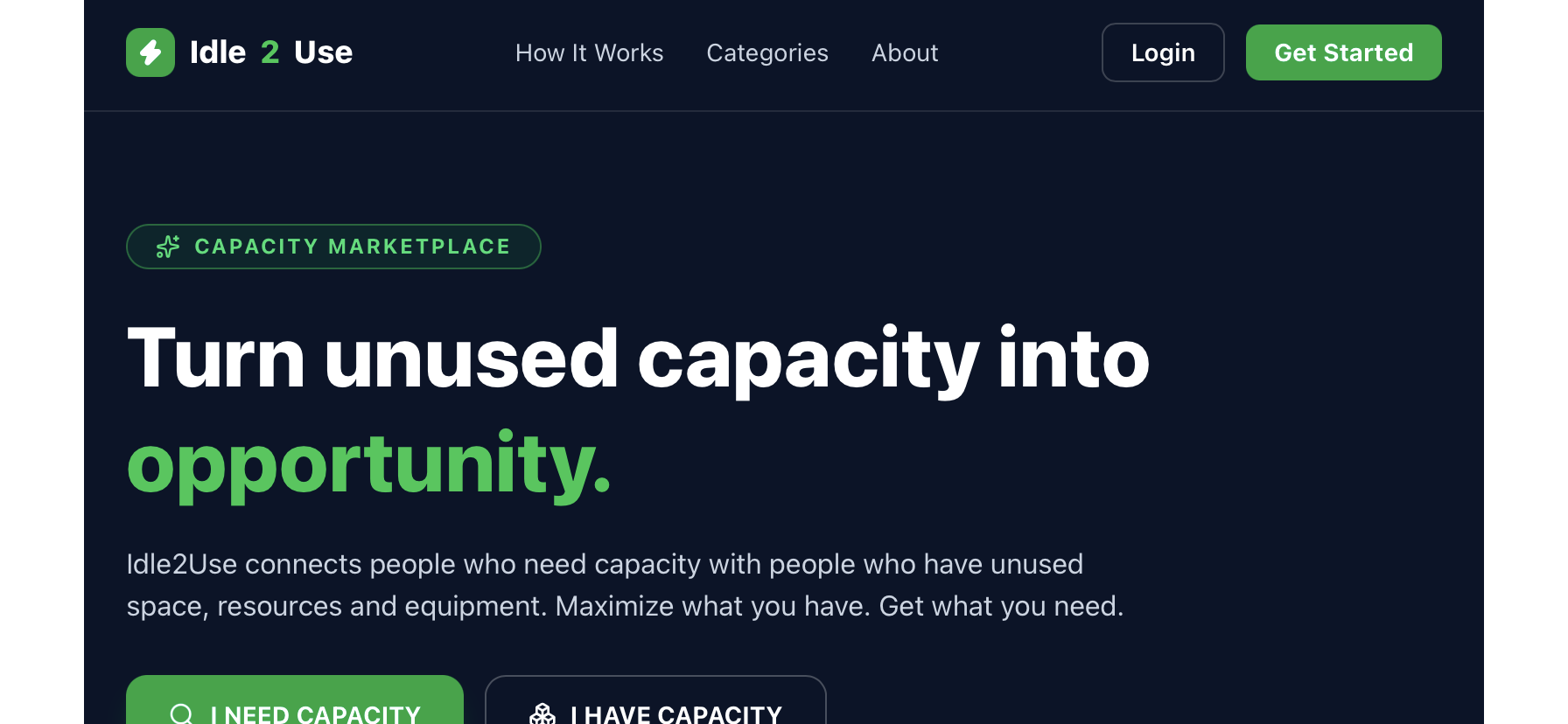
That led to the idea behind Idle2Use: “Turn unused capacity into opportunity.”
What I Built
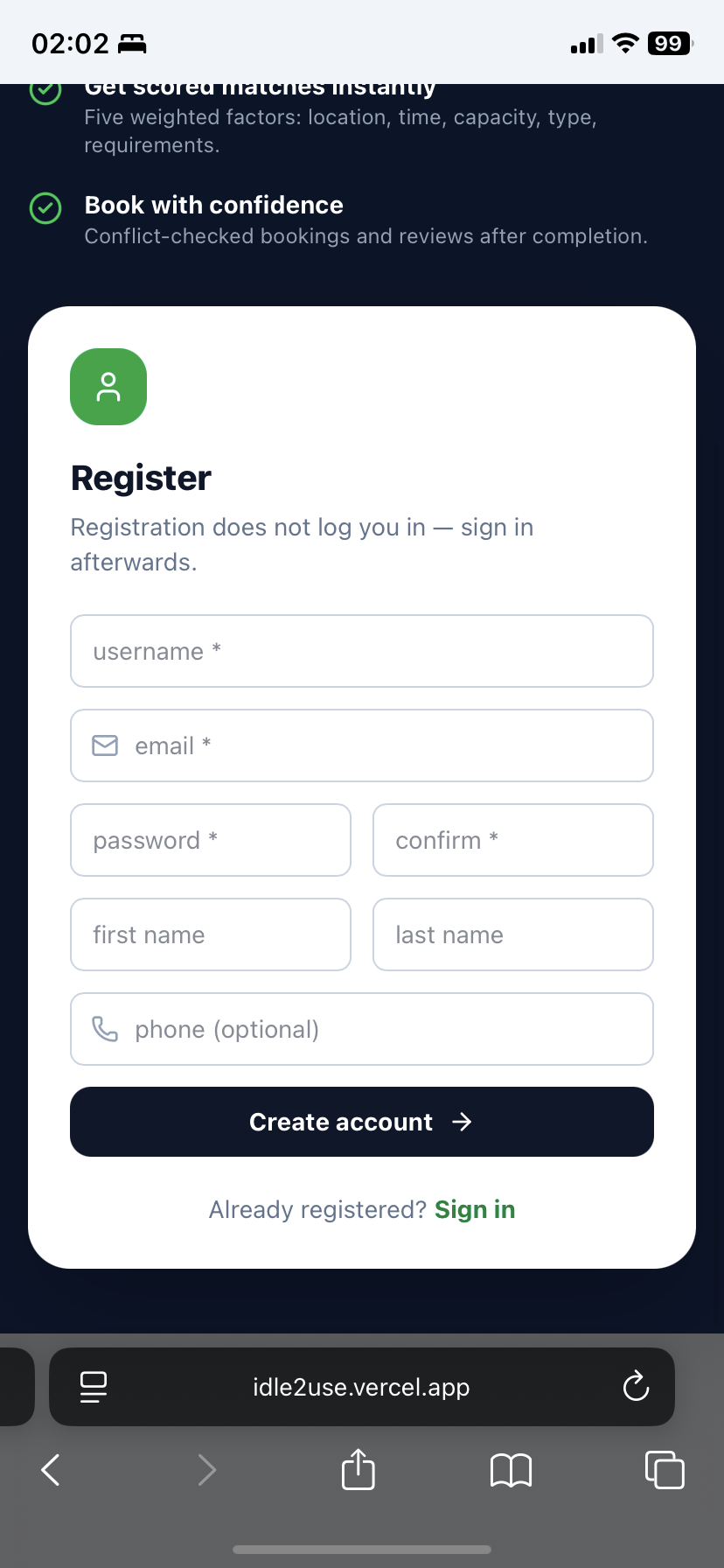
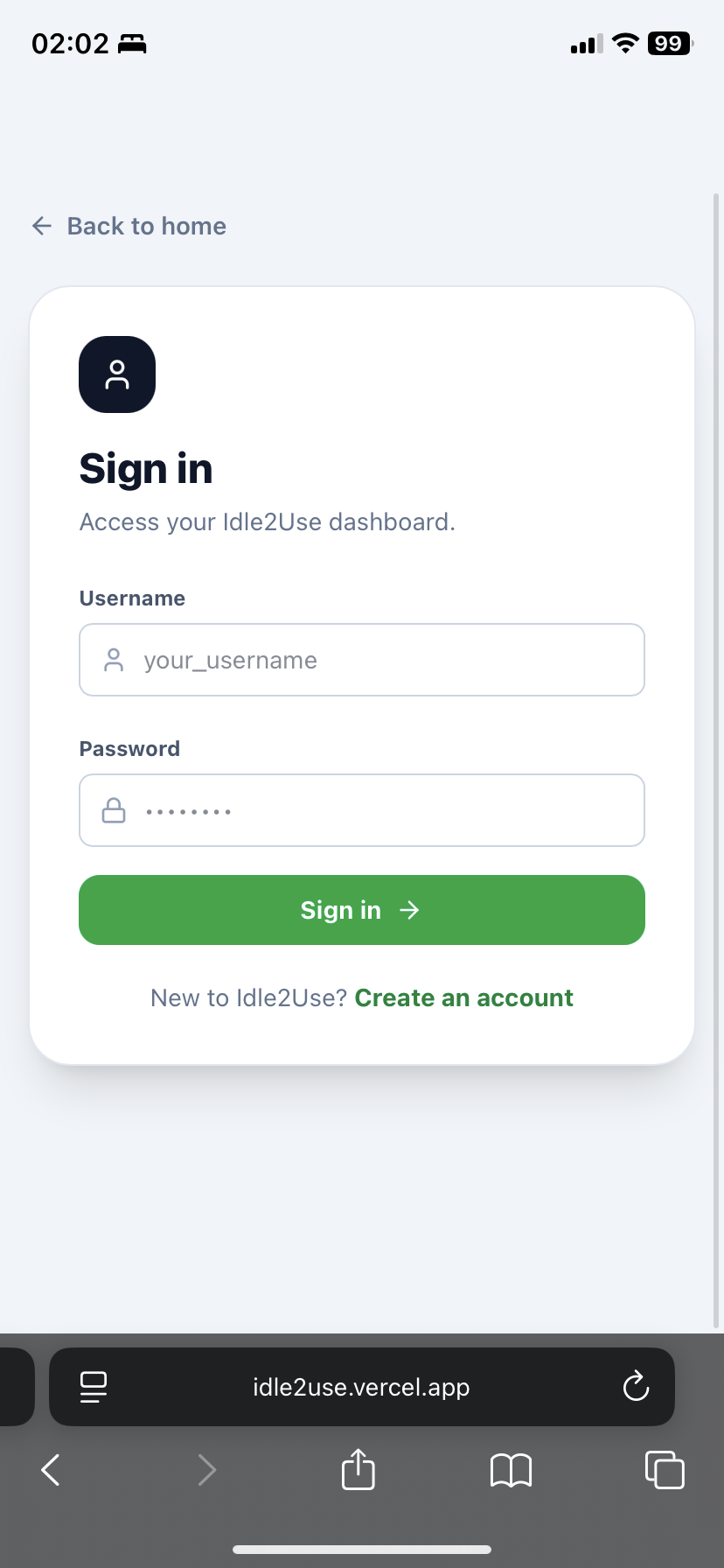
Idle2Use is a resource-sharing platform designed to connect people who need temporary capacity with people who have unused resources.
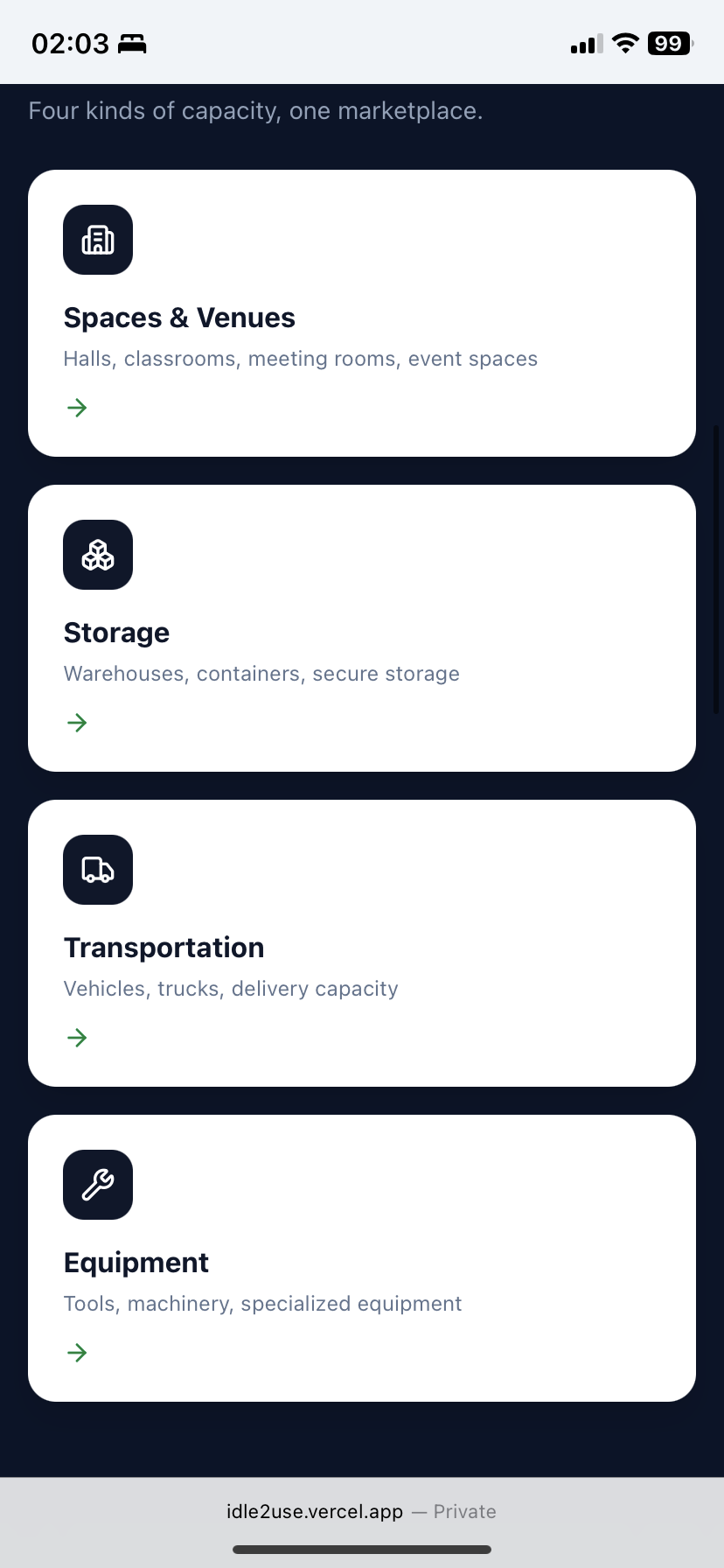
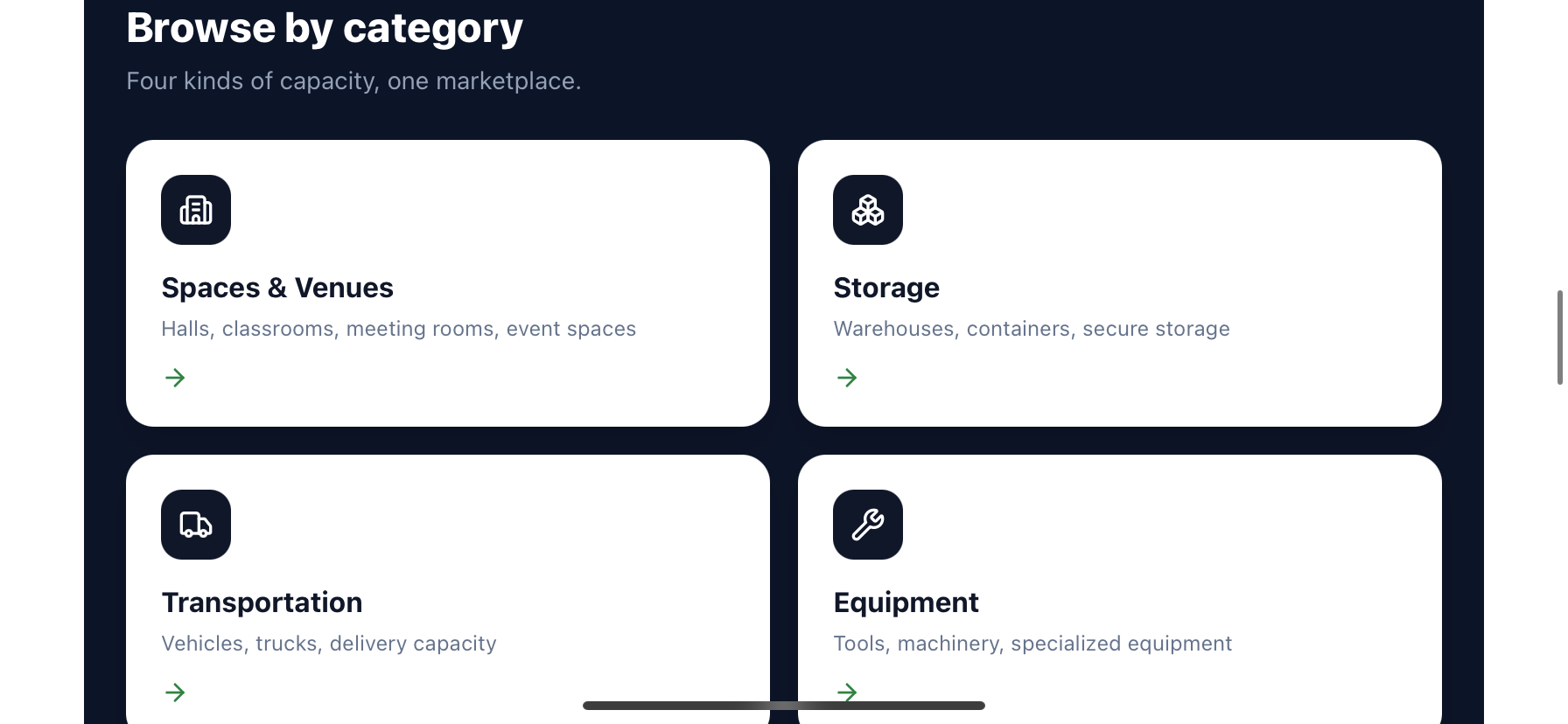
The platform is structured around categories such as:
- 🚗 Transportation
- 📦 Storage
- 🏢 Spaces & Venues
- 🛠️ Equipment
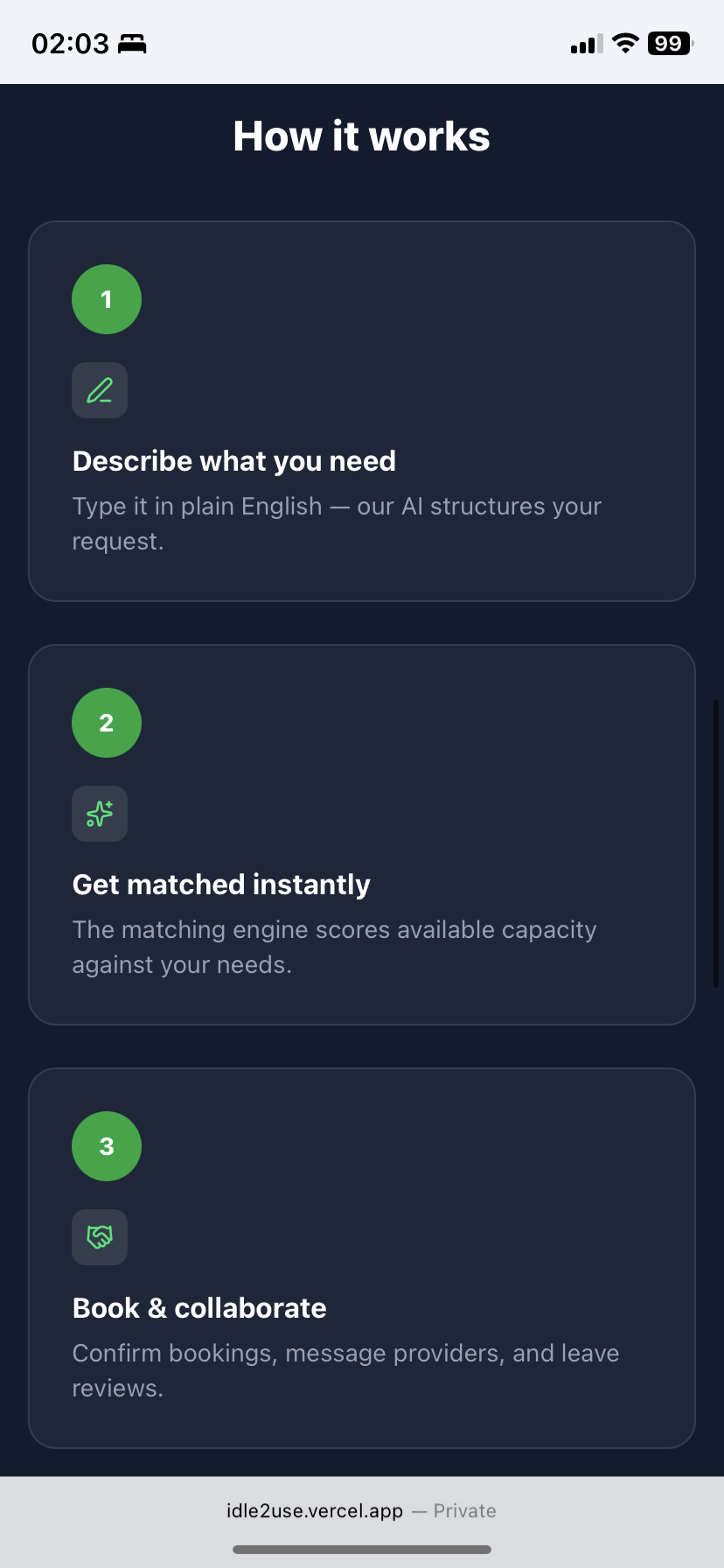
Instead of searching through unrelated listings, a user can describe what they need and eventually receive relevant available resources based on factors such as location, capacity, and availability.
The goal is to make the process feel less like searching through a marketplace and more like matching demand with available capacity.
How I Built It
I built the project with a separated frontend and backend architecture.
Frontend
- React
- TypeScript
- Tailwind CSS
- Vite
Backend
- Django
- Django REST Framework
- PostgreSQL
The frontend communicates with the Django backend through HTTP/JSON APIs.
I also deployed the frontend separately and prepared the backend for production deployment, which gave me practical experience with environment variables, CORS, production security settings, database configuration, and deployment architecture.
What I Learned
One of the biggest things I learned was that building a real application is much more than writing individual features.
I had to think about how the entire system connects:
Frontend → API → Backend → Database
I also learned more about:
- Designing API-driven applications
- Connecting a TypeScript frontend to a Django backend
- Managing environment variables between development and production
- Preparing Django for production
- PostgreSQL database deployment
- CORS and HTTPS configuration
- Git-based deployment workflows
- Structuring a project so that future features can be added without rebuilding the foundation
Challenges
The biggest challenge was turning the idea into a practical system without trying to build everything at once.
There were also technical challenges around production configuration, especially making sure Django's security settings, allowed hosts, CORS configuration, database connection, and frontend API URL work correctly across local development and deployment environments.
Another challenge was designing the product around capacity matching rather than simply creating another listing marketplace. That required thinking carefully about what information is actually important when someone is looking for a resource.
What's Next
Idle2Use is designed to grow beyond the initial MVP.
Future iterations can introduce:
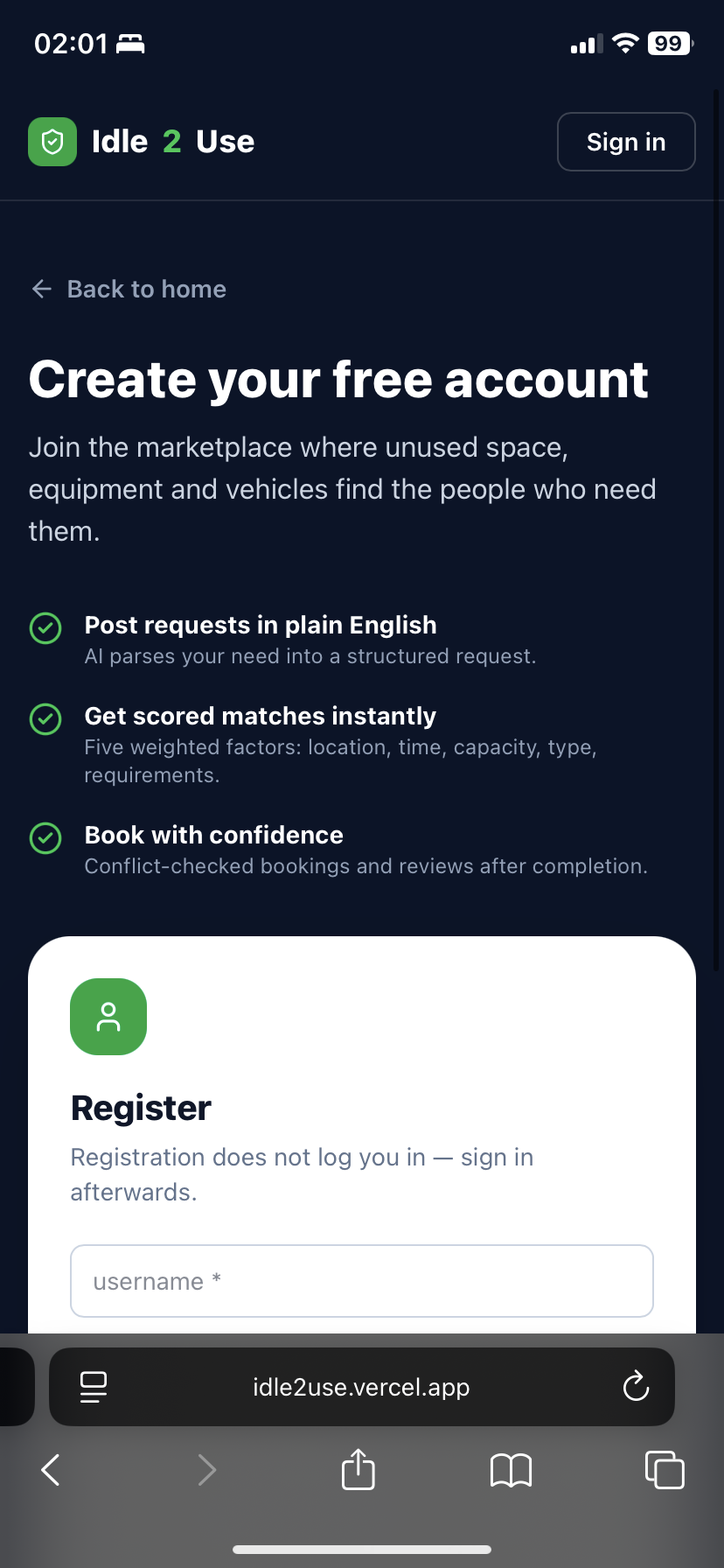
- Natural-language capacity requests
- Smarter matching
- Availability management
- Notifications
- In-app messaging
- Booking and agreements
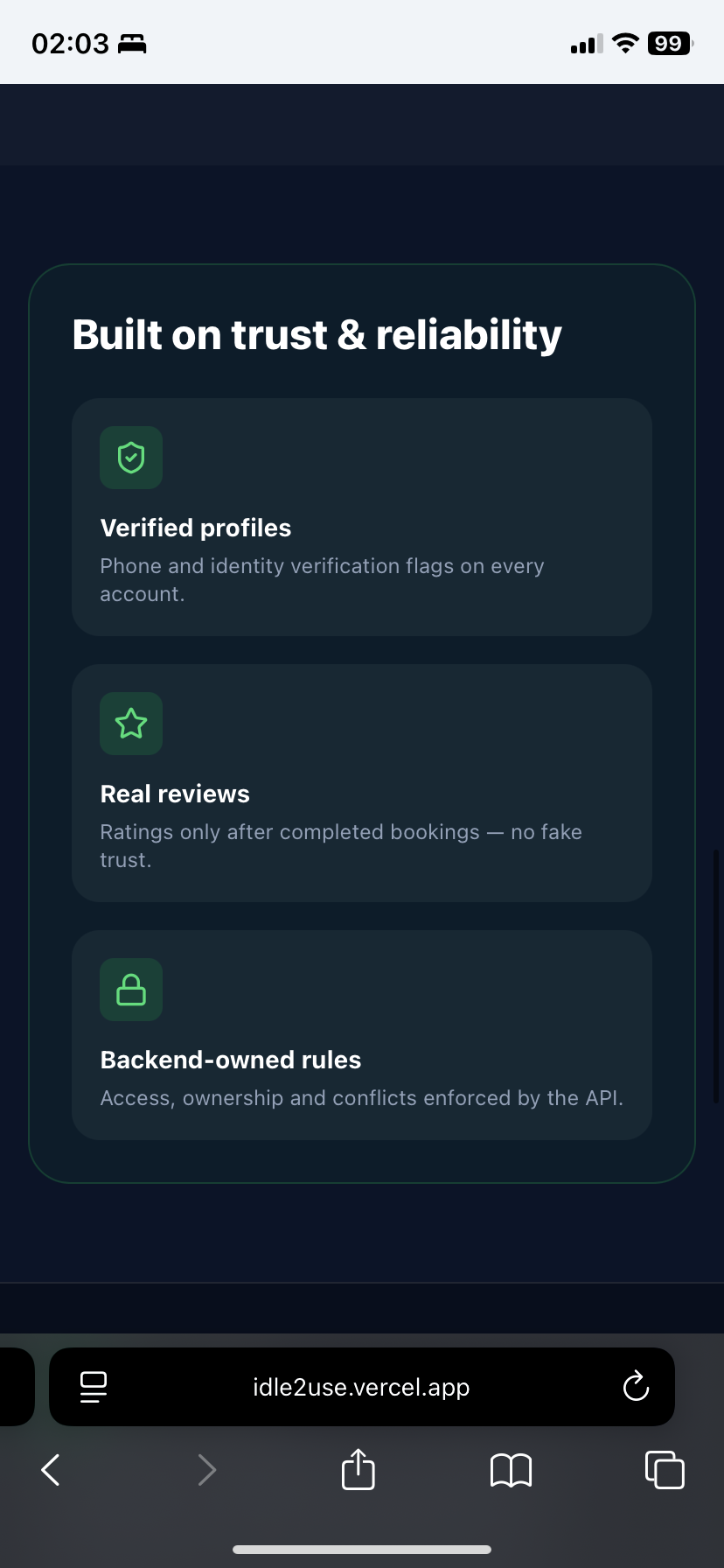
- Reviews and reputation
- Verified providers
The long-term vision is simple:
Make unused capacity easier to discover, easier to trust, and easier to put to use.
Idle2Use is my exploration of what happens when we stop looking at unused resources as wasted capacity and start treating them as opportunities waiting to be connected.
Built With
- api
- css
- django
- framework
- git
- github
- postgresql
- python
- react
- rest
- tailwind
- typescript
- vercel
- vite


Log in or sign up for Devpost to join the conversation.