-
-
Game Logo
-
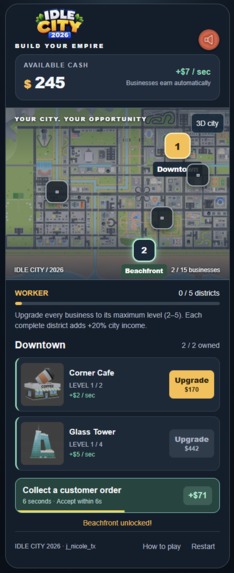
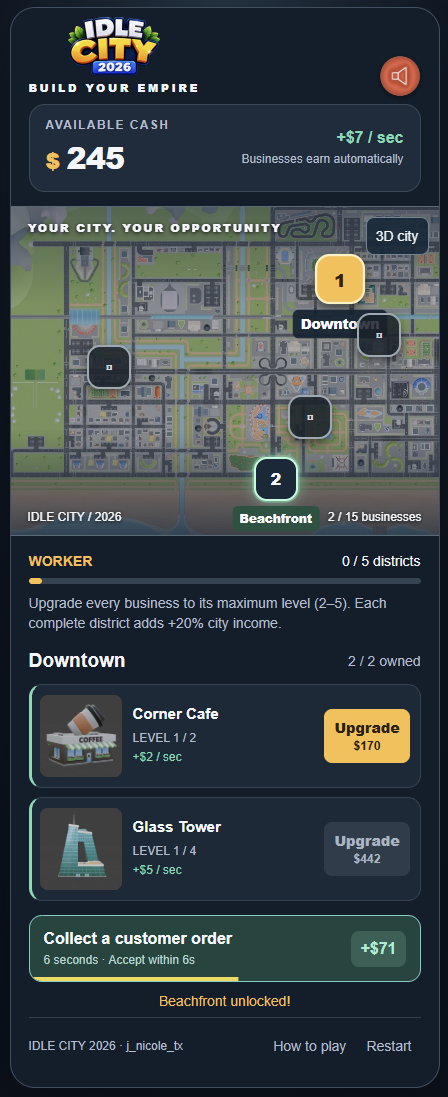
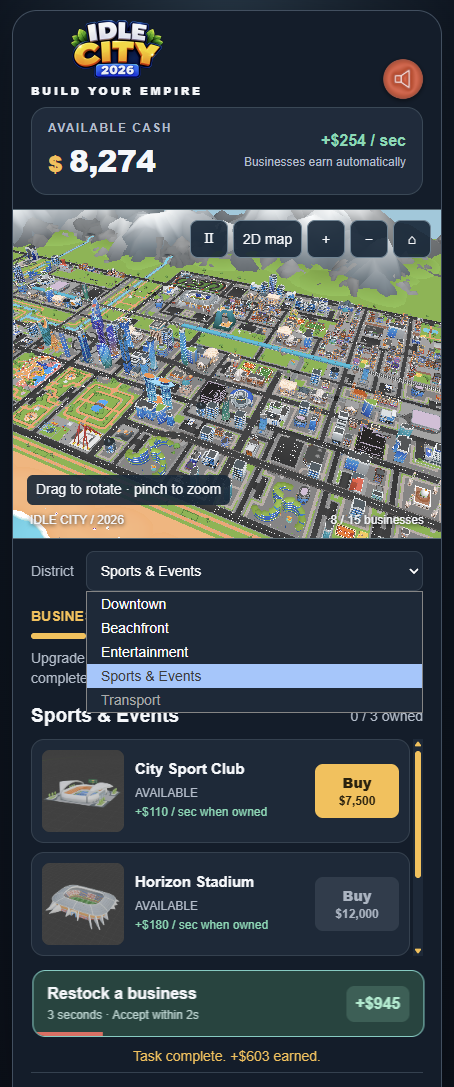
Unlocking new district
-
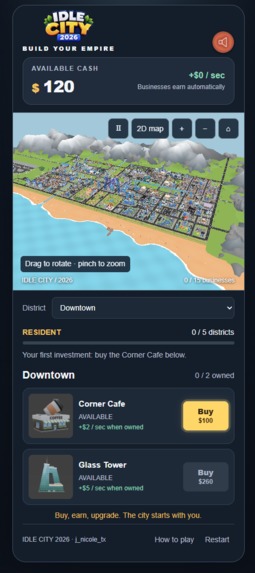
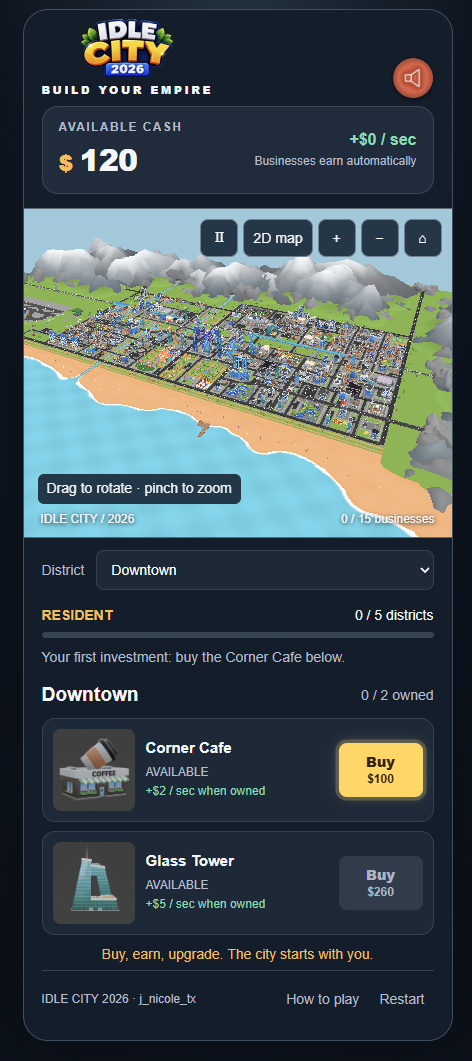
Game Started
-
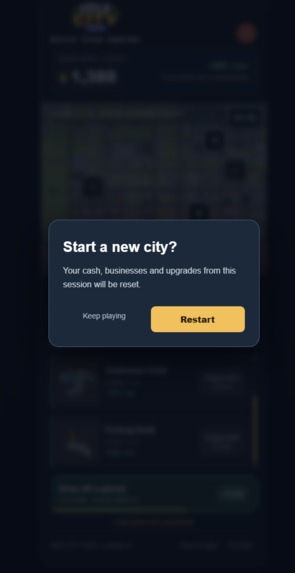
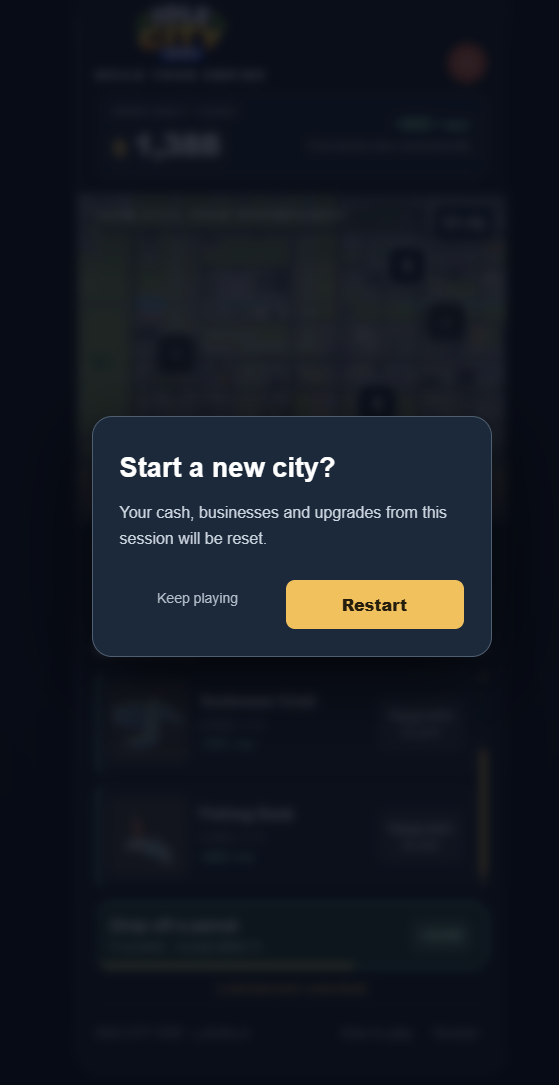
Restart option
-
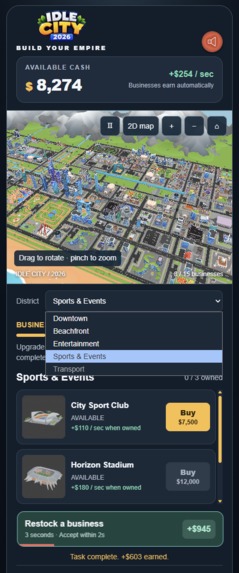
All Districts
-
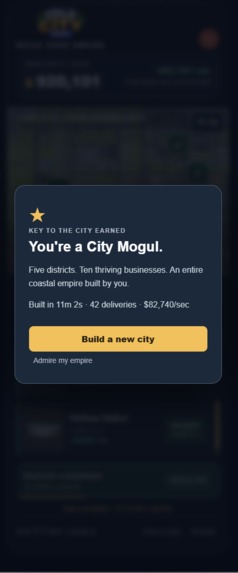
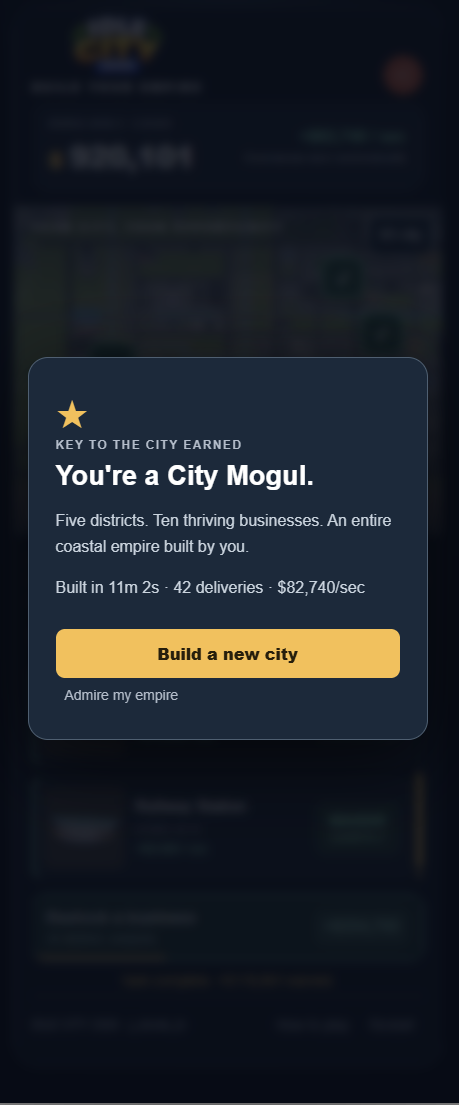
City Mogul
Inspiration
I wanted to capture the satisfaction of starting with very little and gradually building a thriving city. My goal was a mobile game with simple controls, visible progress, and a reason to make one more investment.
What it does
IDLE CITY 2026 is a single-player management prototype where players earn money, buy and upgrade businesses, complete short tasks, and unlock districts. It combines a compact phone layout with a city map, 3D district reveals, and audio feedback.
How I built it
I worked on preparation and development over approximately two weeks, using ChatGPT and Codex with Sites to build the HTML5 and Three.js prototype. I supplied visual and audio assets, directed the design through prompts, and used Claude for additional review and verification.
Challenges I ran into
The main challenges were fitting the interface comfortably on a phone, refining camera movements, coordinating music transitions, and balancing progression. Each revision required checking that the requested changes actually worked in the game.
Accomplishments I’m proud of
I turned the concept into a complete playable experience with a clear beginning, progression, and ending. During my playtest, I completed the full game in approximately seven minutes.
What I learned
Small, specific prompts made development easier to manage. I also learned that testing each change is essential: an AI tool reporting success does not always mean the result works as intended.
What’s next for IDLE CITY 2026
I want to test with new players, improve the pacing, and make investment choices more meaningful while keeping the game approachable and comfortable to play on a phone.
Built With
- chatgpt
- claude
- css3
- html5
- javascript
- openaicodex
- sites
- three.js


Log in or sign up for Devpost to join the conversation.