-
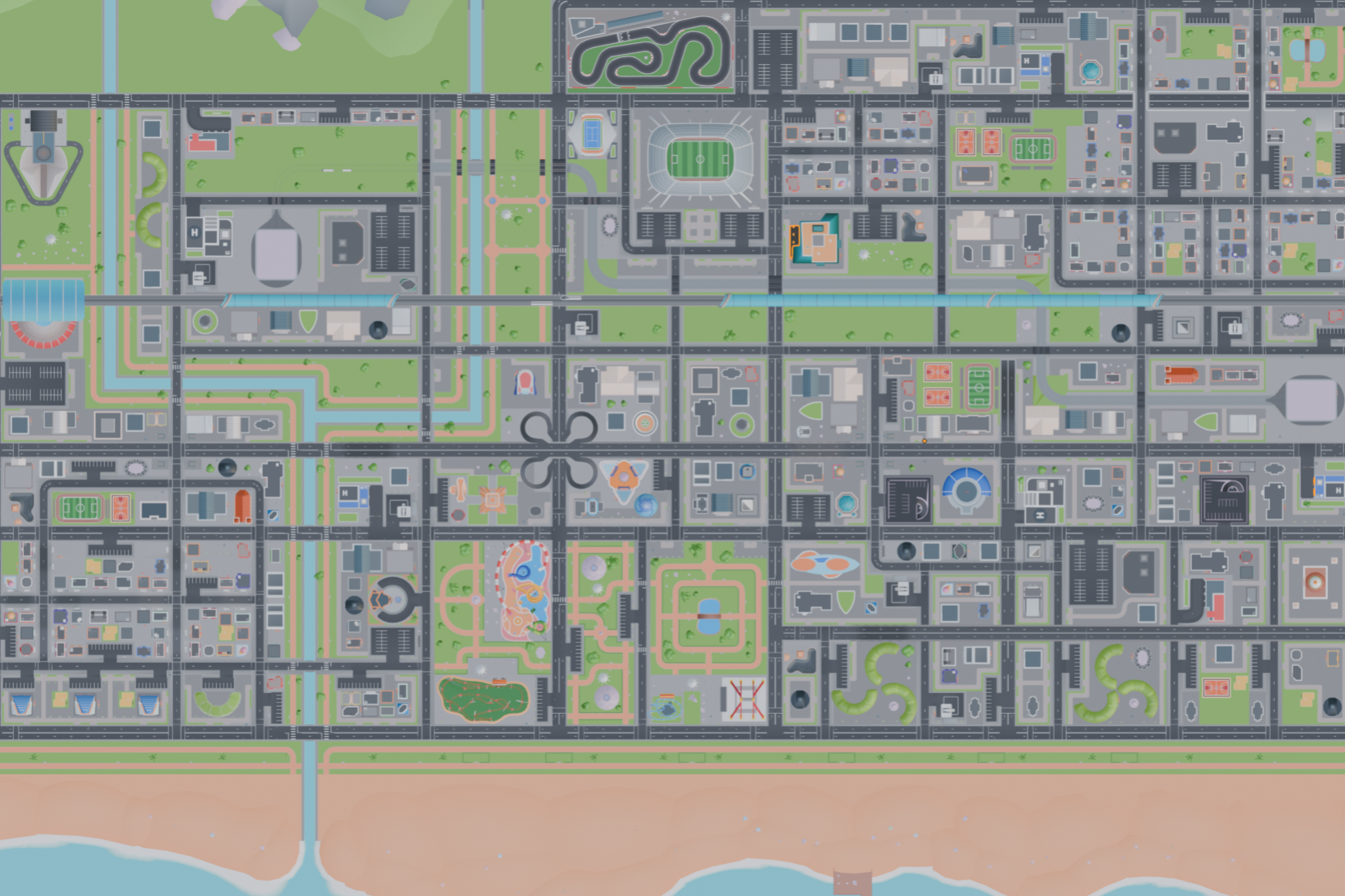
Minimap
-
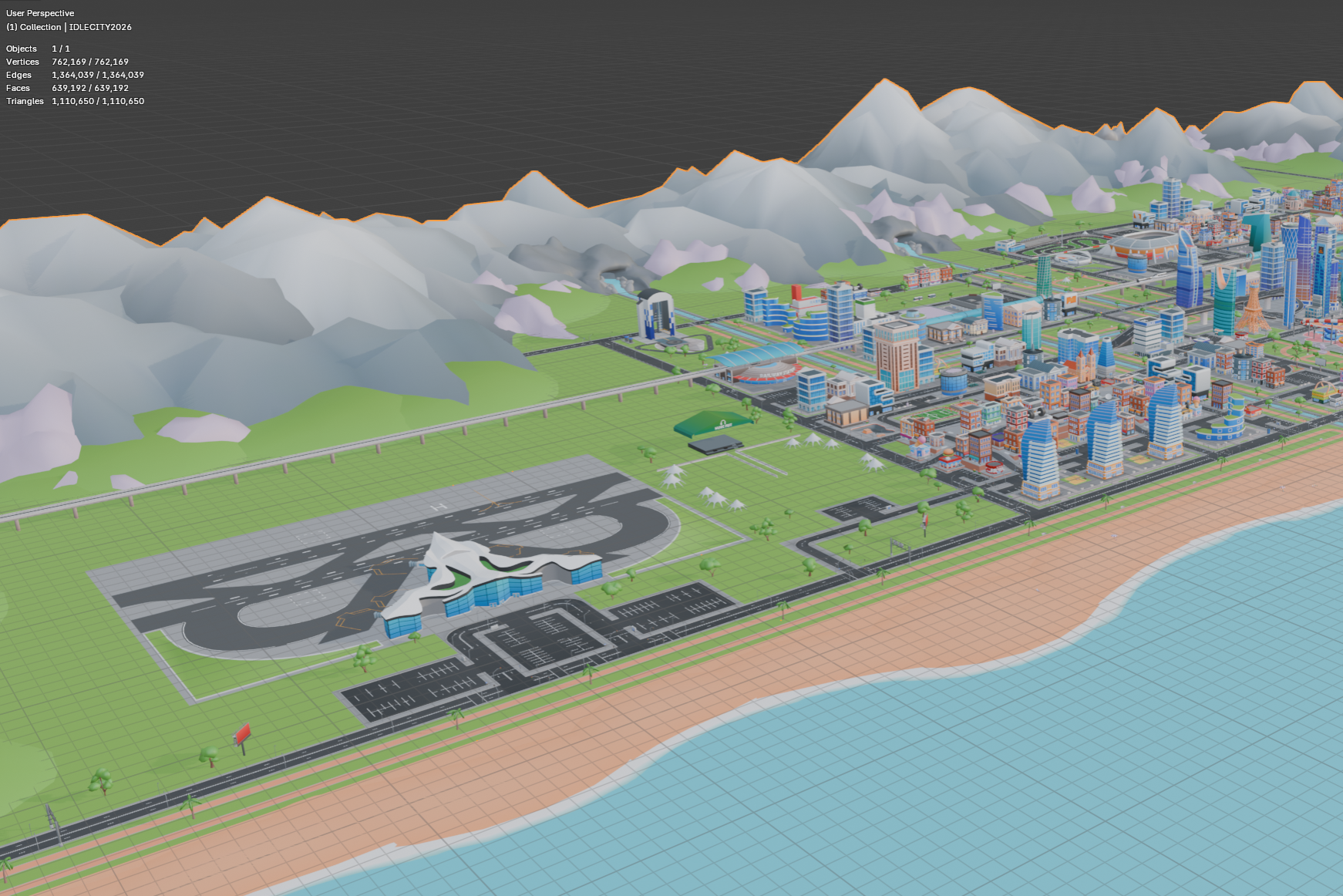
ProjectView
-
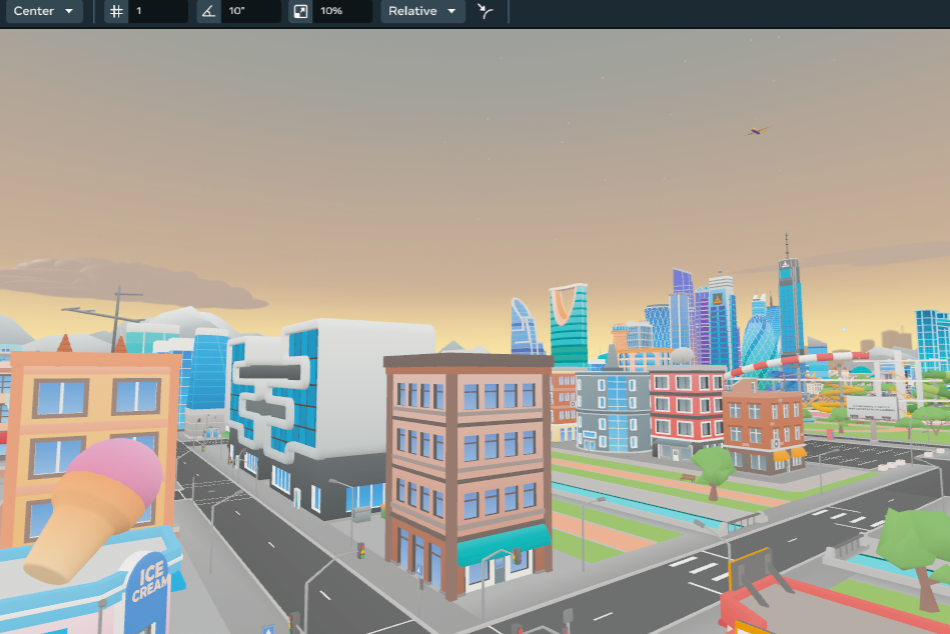
Cityview
-
Delivery
-
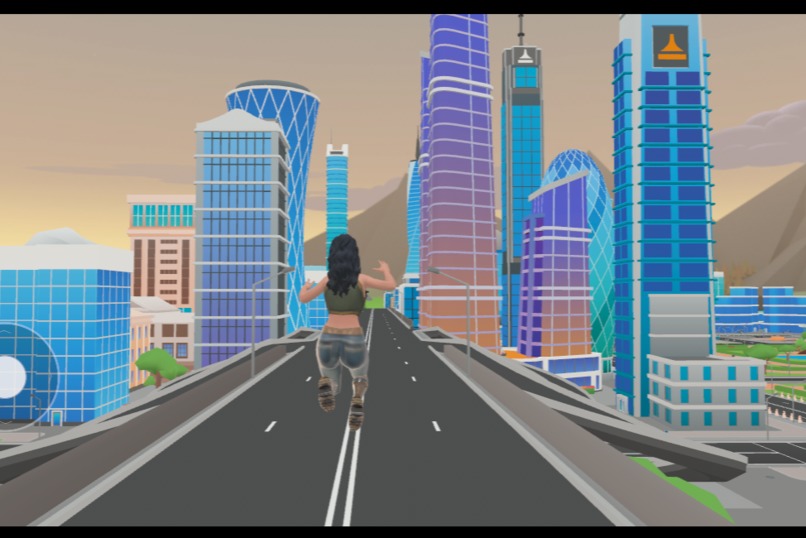
Downtown
Inspiration
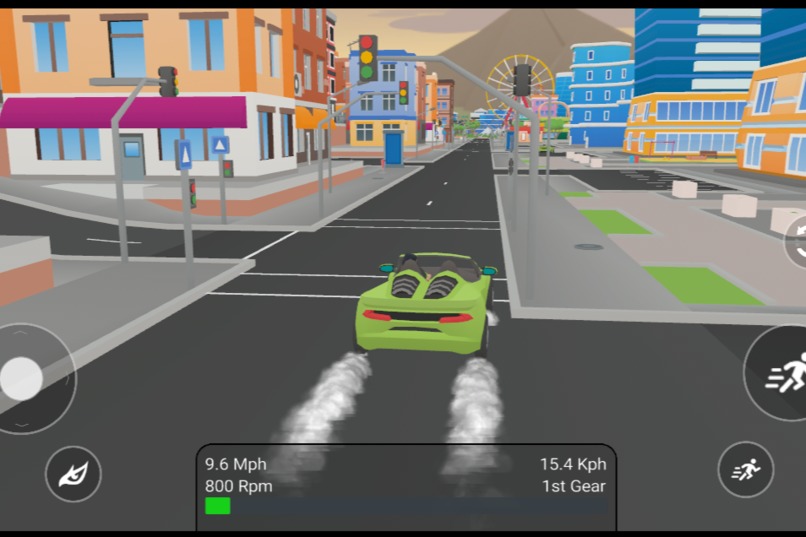
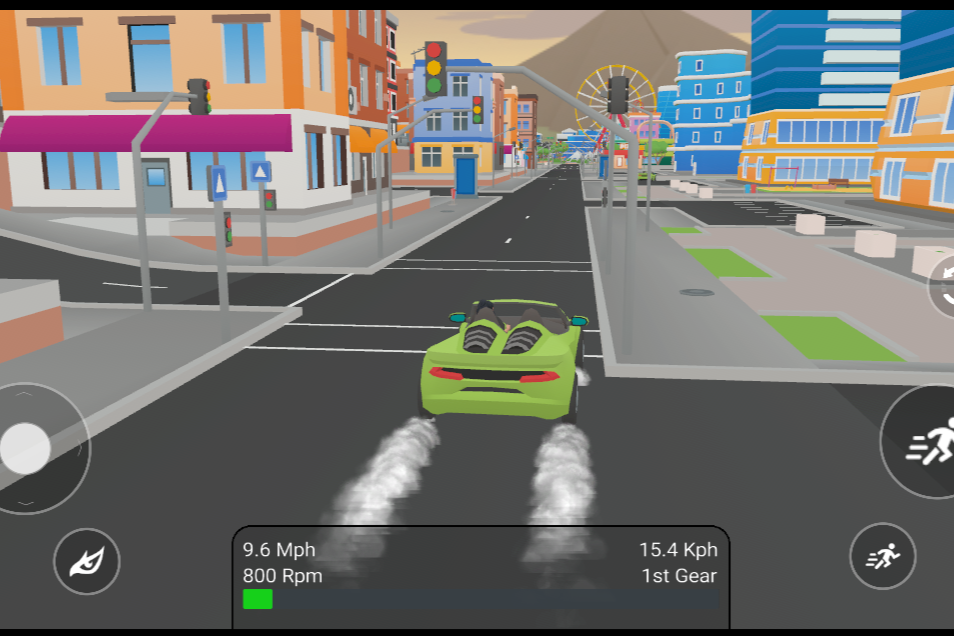
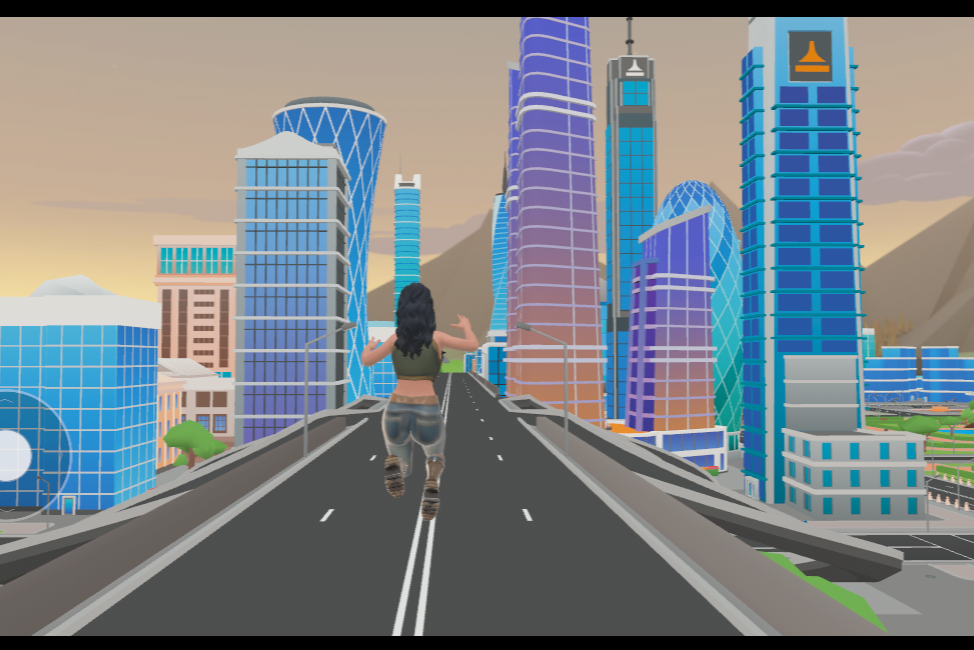
Idle City 2026 was inspired by city-building and business-management games, but I wanted to approach the genre from a different perspective. Instead of controlling a city from above, the player lives inside it, travels through its streets, completes jobs, buys vehicles, purchases properties, and gradually becomes part of the city’s growth.
The main fantasy is progressing from an ordinary Resident to a City Mogul. The city begins as a large place to explore, but over time its buildings, businesses, vehicles, and districts become connected to the player’s personal story.
What I Built
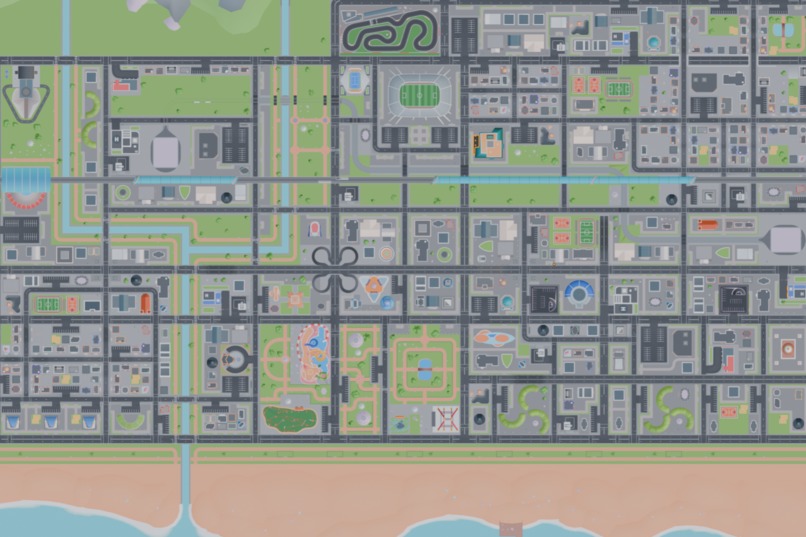
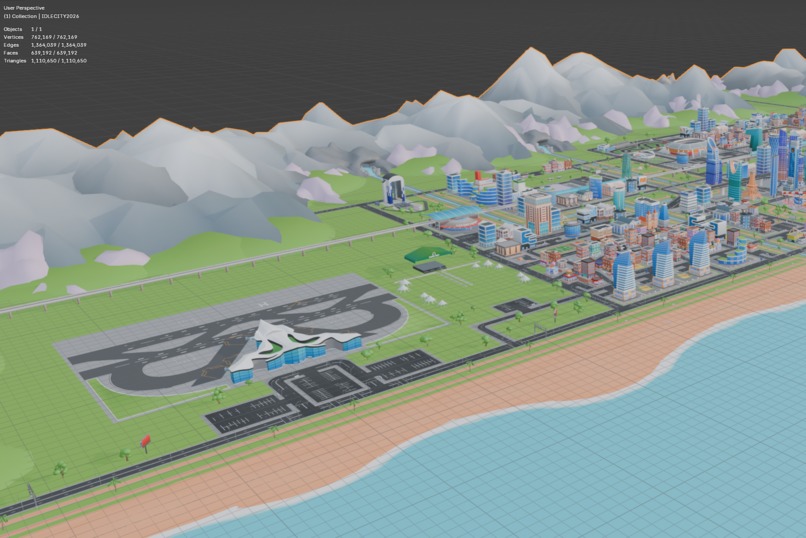
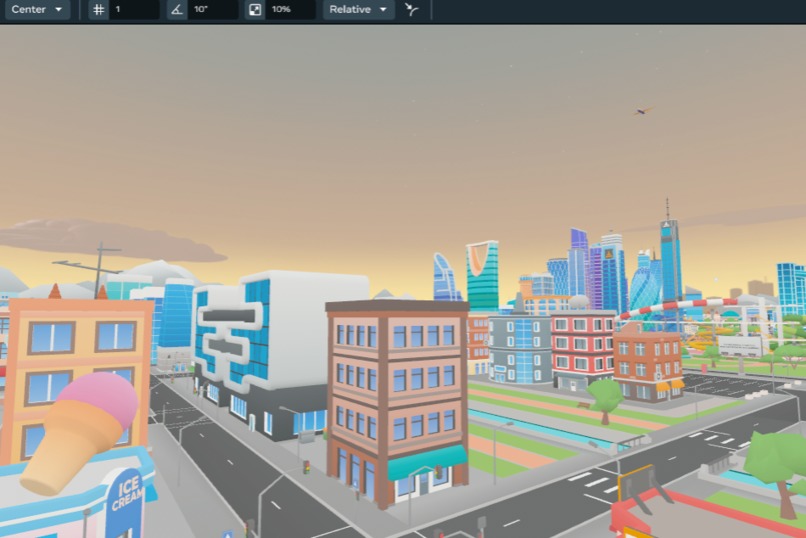
I created the city environment, road network, buildings, landmarks, entertainment areas, airport, stadium, parks, and vehicle collection using Meta Horizon Worlds and Blender.
The proposed complete game includes five economic districts, purchasable properties, property upgrades, passive income, vehicle-based jobs, NPC tasks, player-created contracts, dynamic weather, a day-and-night cycle, daily objectives, leaderboards, and long-term progression.
The core gameplay loop is:
Complete jobs → earn money and XP → purchase vehicles and properties → collect income → upgrade assets → complete districts → become City Mogul.
For the competition, I also created a Game Design Document, Player Journey Map, Visual Concept Package, and Production Plan. Together, these explain the gameplay systems, the first 15 minutes, the visual identity, and how the project could realistically be developed.
What I Learned
One of the biggest lessons was learning how to control the scope of a large idea. Idle City 2026 contains a large environment and many possible systems, but the Production Plan focuses first on one complete district and one polished player journey.
This helped me understand the importance of building a vertical slice before expanding content. The first version should prove that taking a job, earning money, buying a car, purchasing a property, and collecting passive income is enjoyable before the same systems are expanded across the entire city.
I also learned that visual design should support gameplay. District colors, property states, task markers, weather, lighting, and UI should help players understand available opportunities without needing to read long instructions.
Challenges
The biggest challenge was connecting many systems into one clear and understandable experience. Vehicles, businesses, weather, NPCs, social contracts, and progression needed to feel like parts of the same game rather than separate features.
Another challenge was making the project feel social. Player-owned businesses can create contracts for other players, allowing one player’s progress to generate meaningful work and rewards for someone else.
Performance and readability are also important challenges because the world is designed for both mobile and VR. The development plan uses reusable systems, controlled NPC and vehicle limits, optimized assets, and repeated testing before expanding to all five districts.
The Vision
Idle City 2026 is designed to make the city itself feel like the player’s progression system. Every completed task, purchased vehicle, upgraded property, finished collection, and controlled district should create a visible sense of growth.
The final goal is not only to become rich, but to become recognized as the City Mogul and receive the Key to the City, a permanent badge, and lasting recognition inside the world.
Built With
- and
- blender
- codeblock
- horizon-scripting-apis
- horizon-worlds-desktop-editor
- meta-horizon-worlds
- persistent-storage
- studio
- typescript
- visual


Log in or sign up for Devpost to join the conversation.