Inspiration
In class, we discussed the Turing Test—a method for evaluating if a conversational AI can be considered "intelligent." In this test, a human and an AI both converse with a judge, who must determine which is which. If the judge cannot differentiate between them, the AI is deemed intelligent. Turing's concept became a pivotal benchmark for modern AI systems.
We wanted to expand on this idea. TuringSketch takes it one step further by incorporating images into the challenge and turning it into a fun, competitive game!
What it does
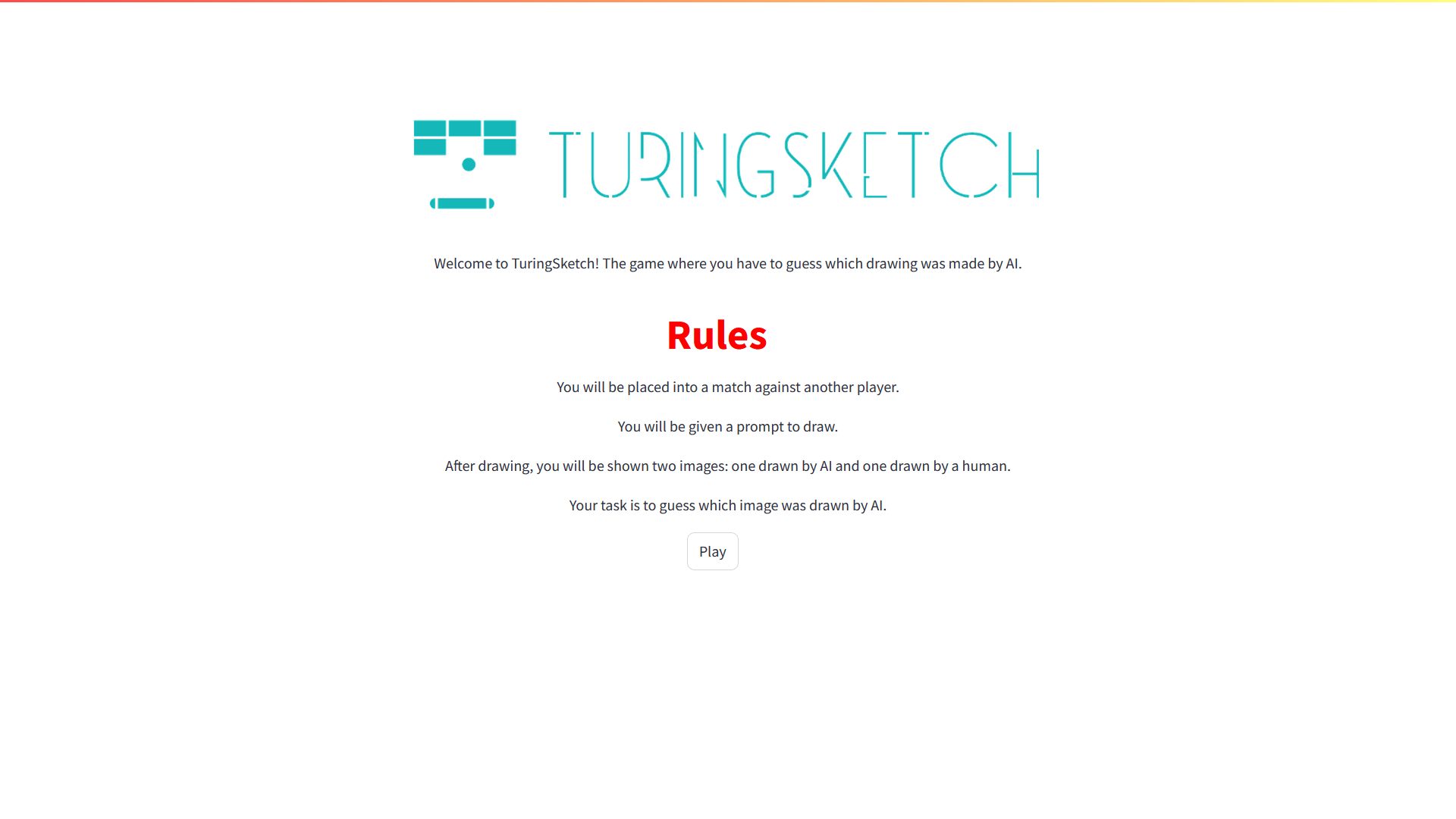
In TuringSketch, players face off in a Turing Test-inspired game with a creative twist, reminiscent of skribbl.io!
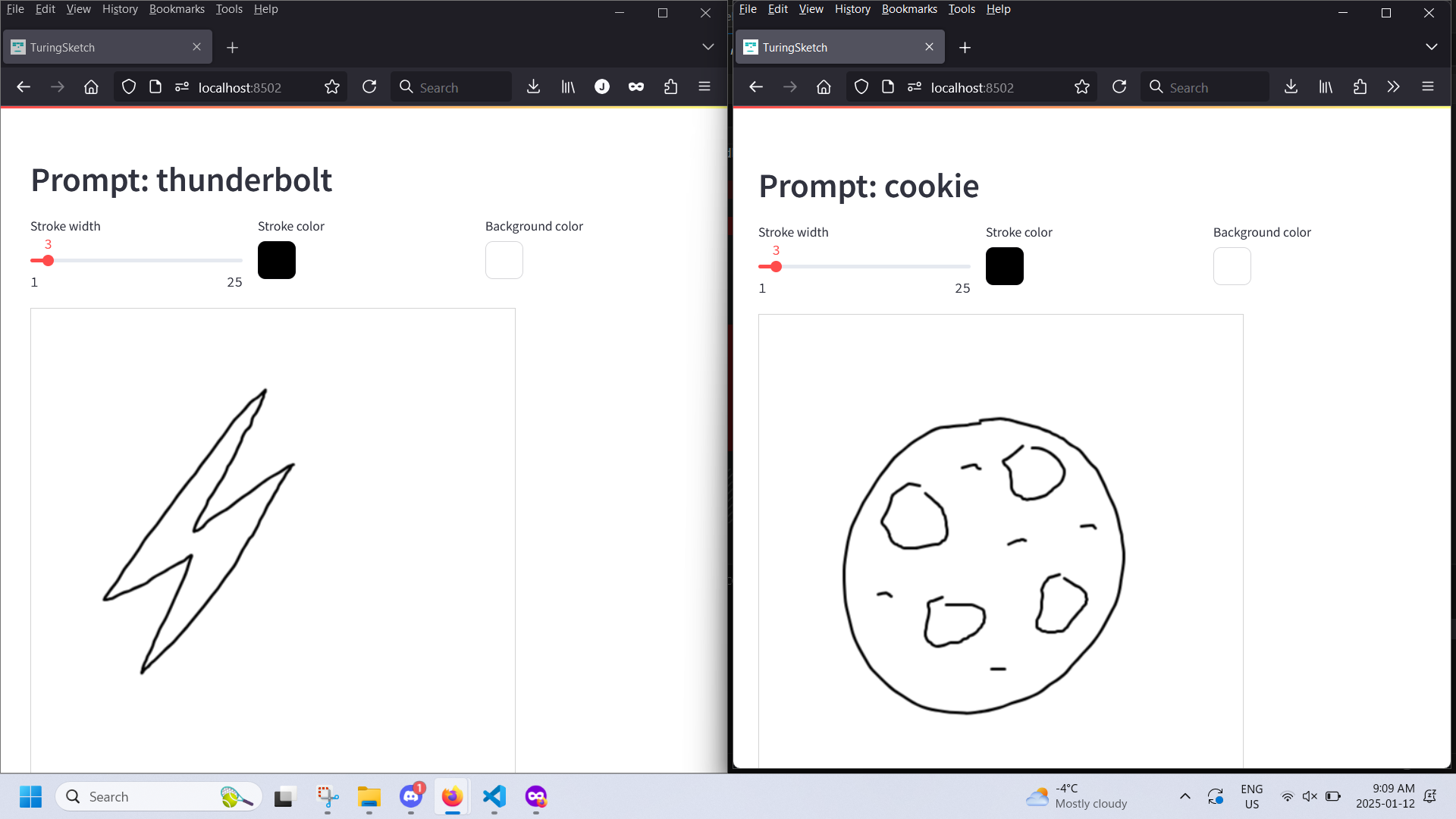
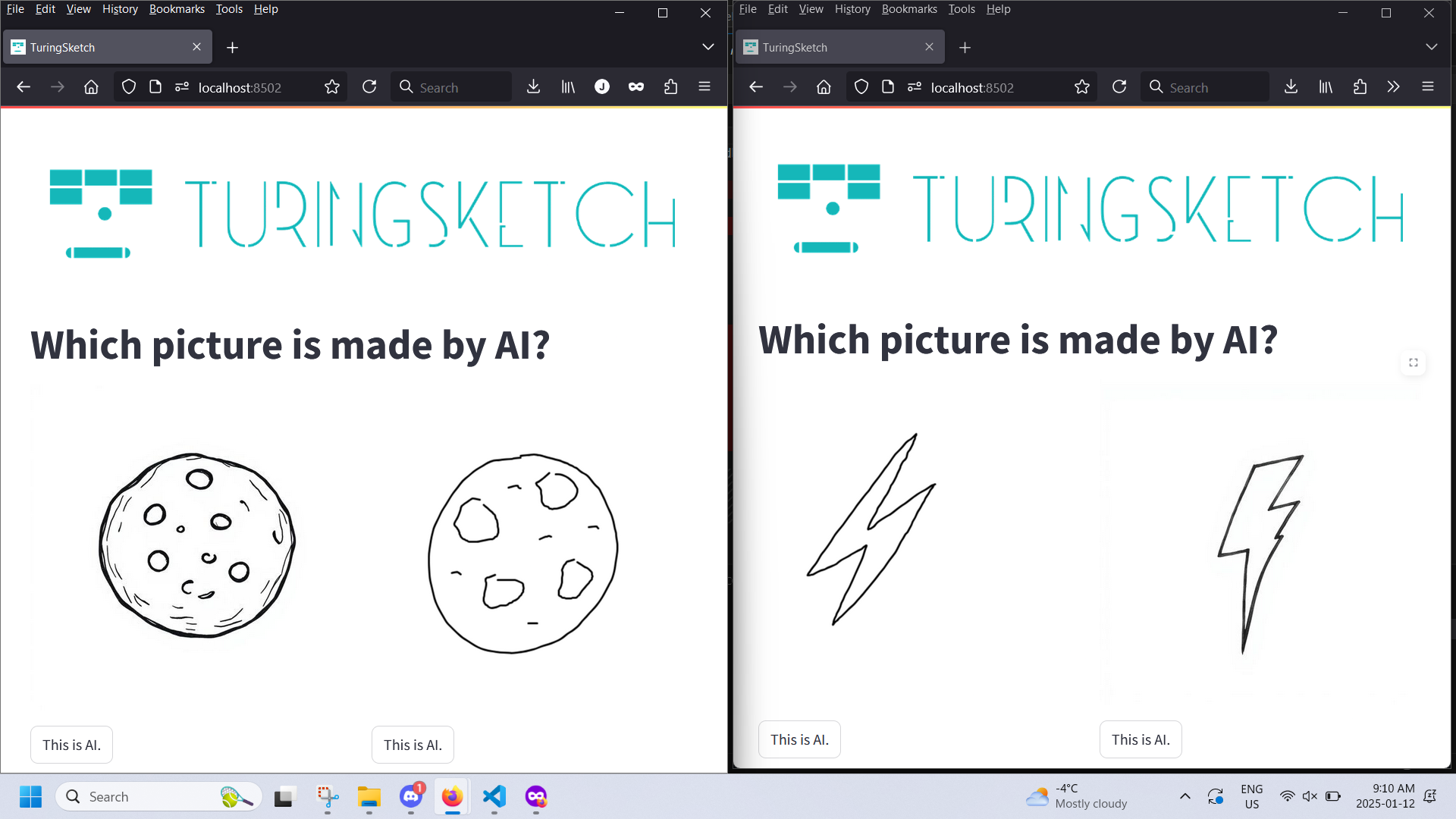
Each player receives a different prompt to draw something within 30 seconds. Meanwhile, an AI creates its own drawings based on the same prompts. When the timer runs out, players are shown the drawing their opponent made along with the AI's corresponding drawing. The challenge? Guess which image was created by the AI and which one was drawn by a human!
How we built it
We used Streamlit and Python for the app's front-end and back-end development. For the database, we used Azure SQL Server to store users' images during games so that we wouldn't need to use Web Sockets.
Challenges we ran into
We spent a long time searching for a free image generation API that could produce "low-quality MS Paint style" images. At the same time, we were fine-tuning prompts to match this style across every API we tried. Combining these two tasks led to double the time spent, and double the frustration!
Accomplishments that we're proud of
We're super proud of successfully integrating image generation into our game, adding a unique twist to the traditional Turing Test. Despite challenges in finding the right tools and APIs, we managed to overcome them and efficiently incorporate image generation and database management into the project.
What We Learned
Throughout this process, we gained valuable hands-on experience working with APIs and image generation models. We also learned how to combine back end and front end logic using streamlit, python, and Azure SQL Server.
What's next for TuringSketch
Currently, TuringSketch supports only two players at a time. Our next steps include expanding to support multiple game sessions, custom rooms, and a friends system for a more dynamic experience. A few other general improvements we considered were adding a timer to limit how long players can draw for, using a more accurate image generating API, and designing a cleaner and more attractive UI.


Log in or sign up for Devpost to join the conversation.