-
-
-
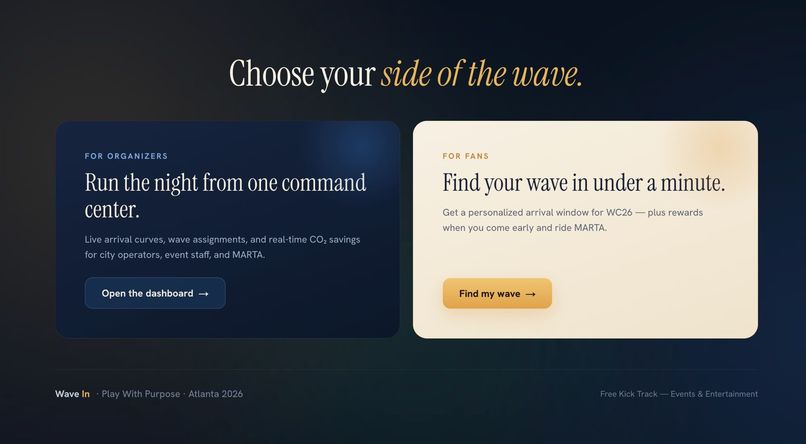
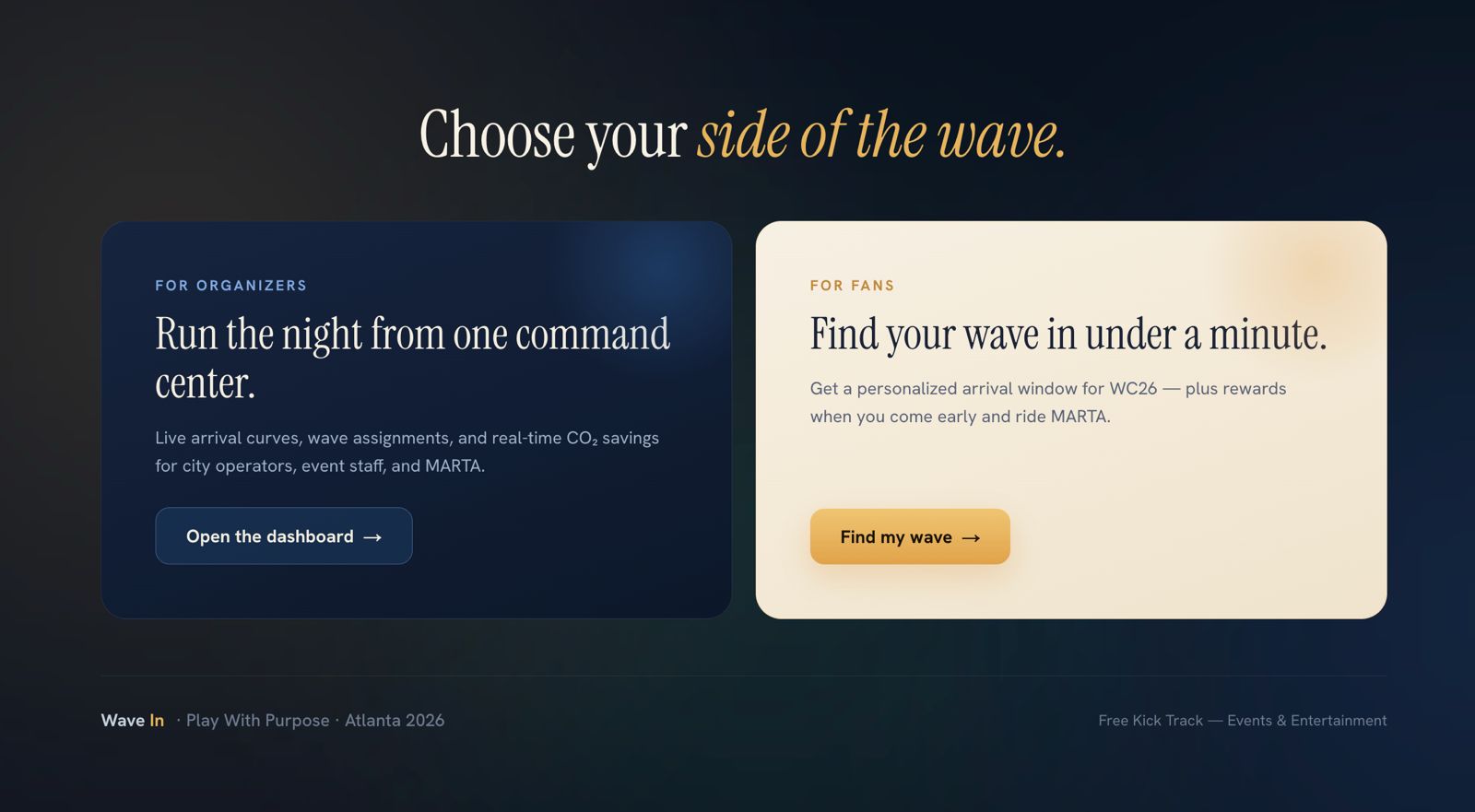
Curated experiences for organizers and fans!
-
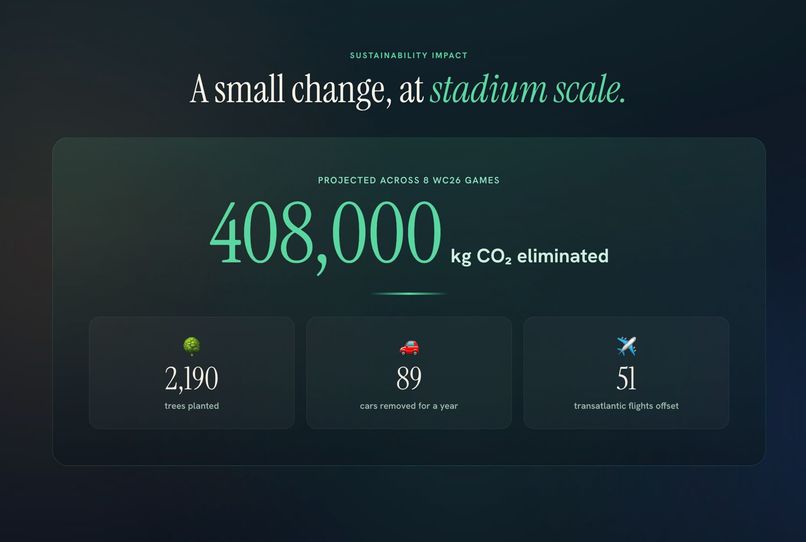
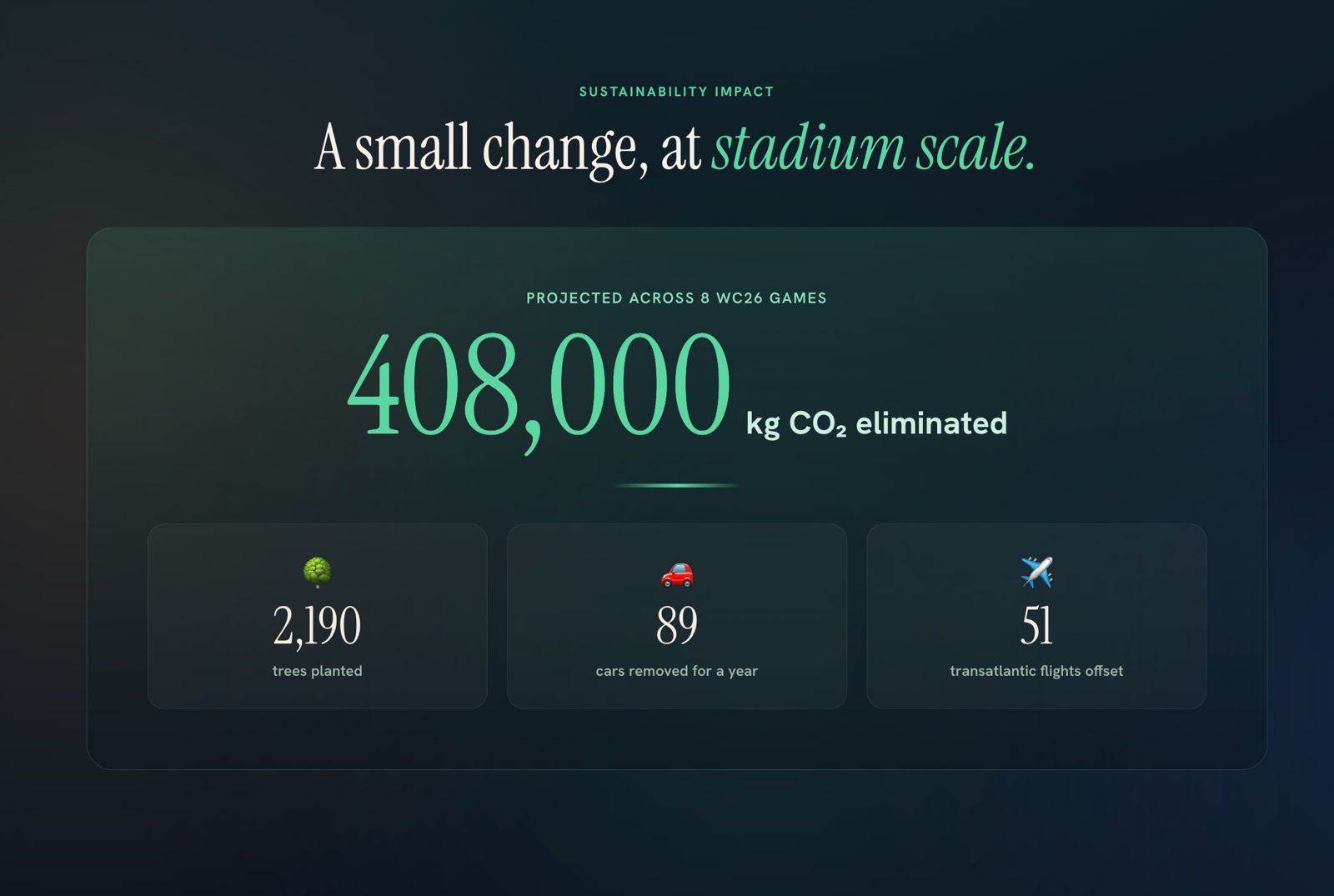
The sustainability numbers are real. Not rounded up, not extrapolated beyond reason. Yes, 408,000 kg CO2 across 8 games.
-
-
-
-
The data exists. The authority exists. The flexibility exists. Nobody connected them. We did.
Inspiration
We live in Atlanta. We know the feeling: It's game day, you leave two hours early, and you still spend 45 minutes not moving on Northside Drive while the clock ticks toward kickoff. It's not bad luck. It's math. When 70,000 fans all target the same moment (kickoff), they all leave at the same time, hit the same roads, flood the same MARTA station, and queue at the same gate simultaneously. The congestion isn't random. It's structurally guaranteed by how ticketing works.
With Atlanta hosting 8 FIFA World Cup 2026 matches here at Mercedes-Benz Stadium, one of the biggest sporting events in human history, we knew this problem was about to get significantly worse and that Atlanta would not be ready for it. And we wanted to fix the root cause, not the symptoms.
What It Does
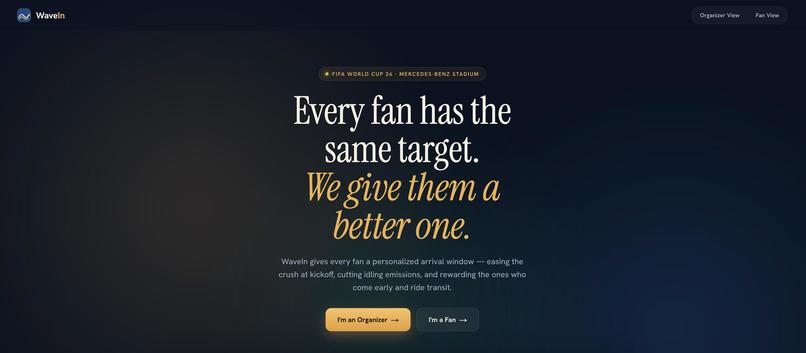
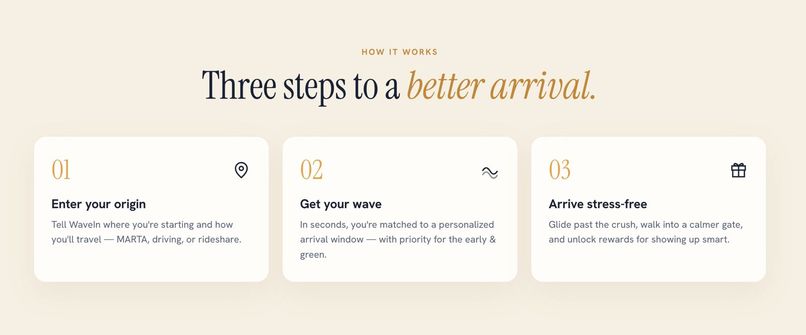
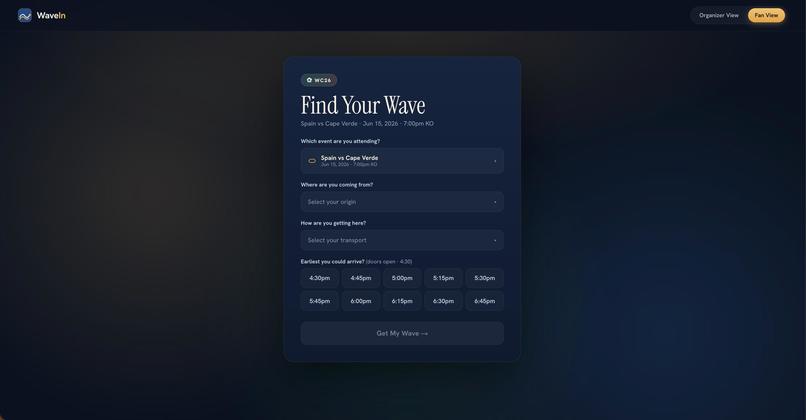
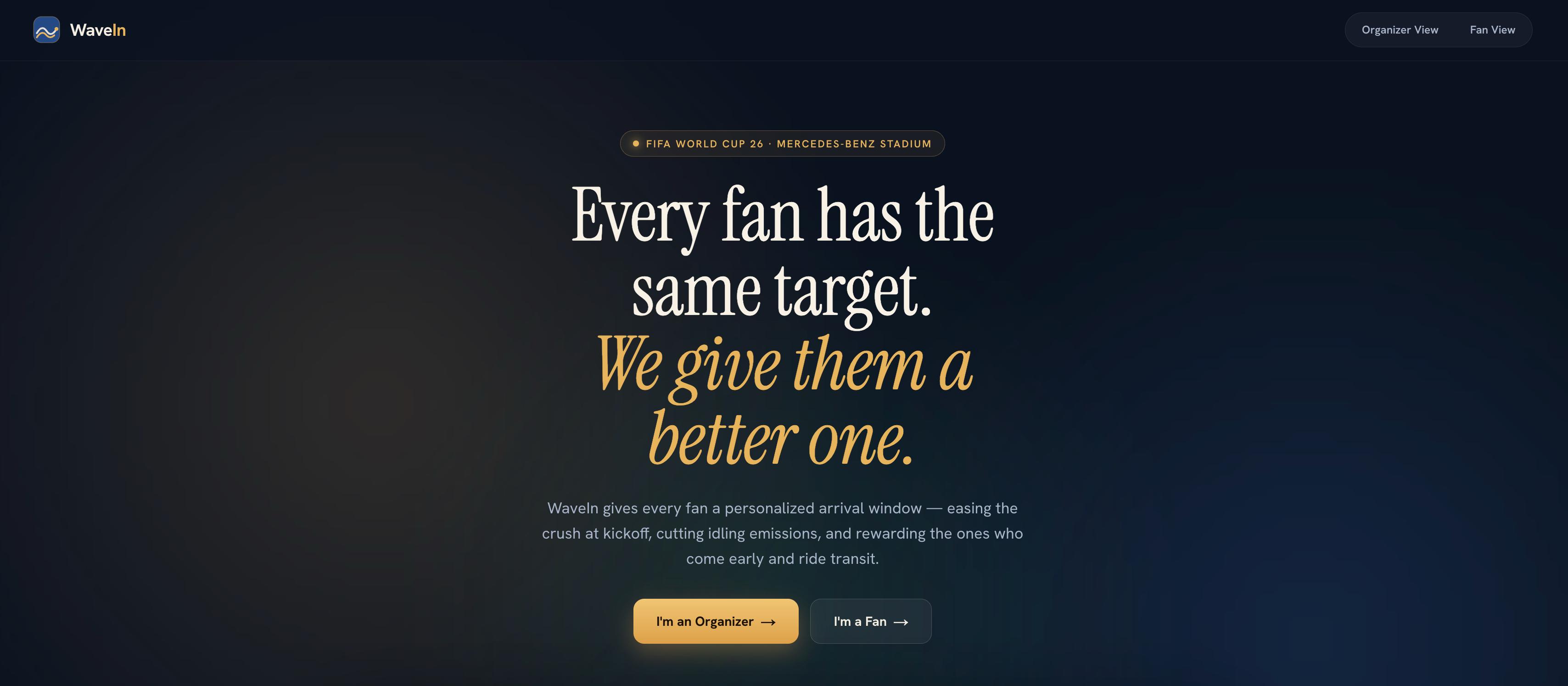
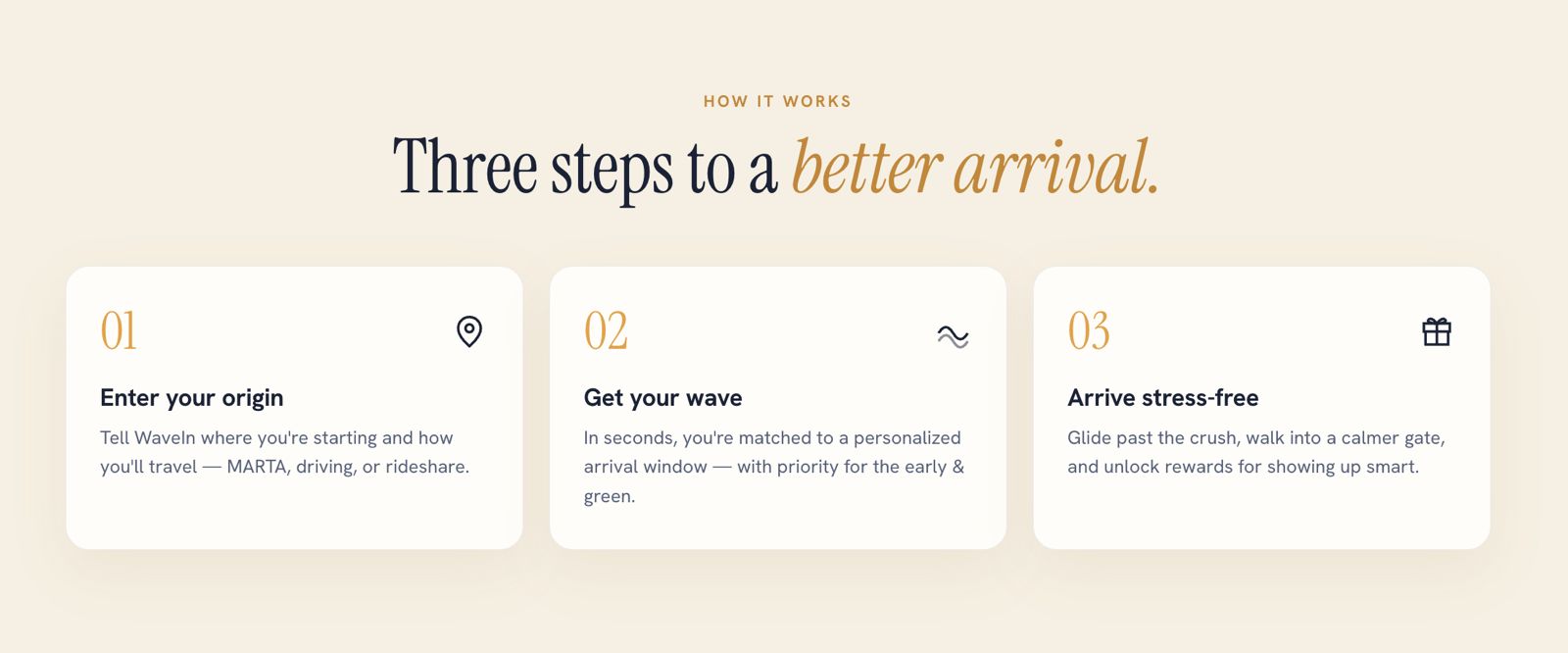
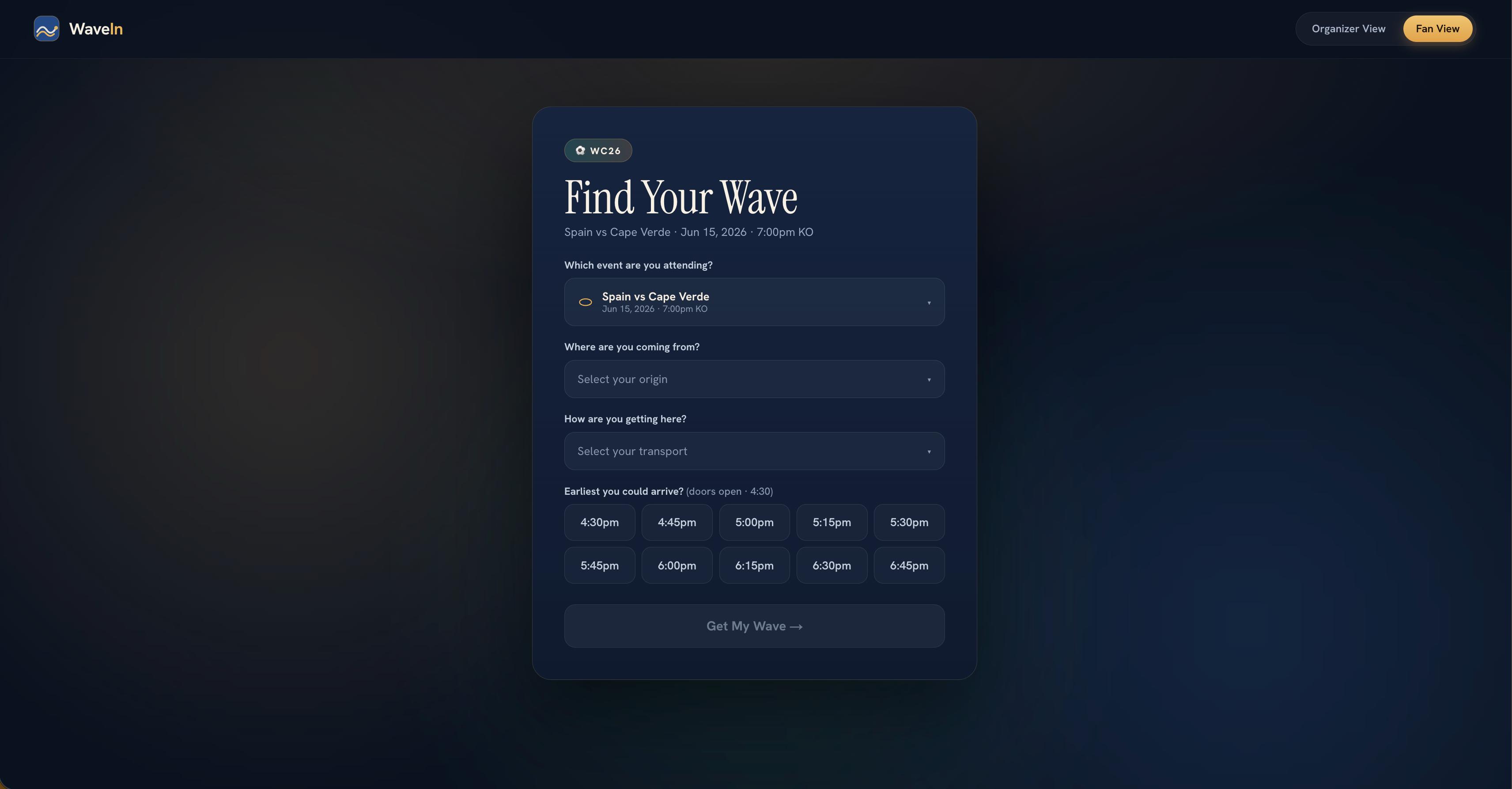
WaveIn is a staggered arrival management system for major events. Instead of every fan targeting kickoff, WaveIn assigns each fan a personalized arrival window based on where they're coming from and how they're getting there.
A fan flying into Hartsfield-Jackson gets Wave 1: Arrive between 4:30 and 5:15pm, beat the crowds, get a free/discounted drink and priority gate entry. A fan driving from the suburbs gets Wave 4: Arrivecloser to kickoff when roads have cleared. People who take MARTA get priority waves and bigger rewards (Only redeemable through vendors with-in the stadium), because every fan shifted from a car to transit eliminates an entire round-trip's worth of emissions.
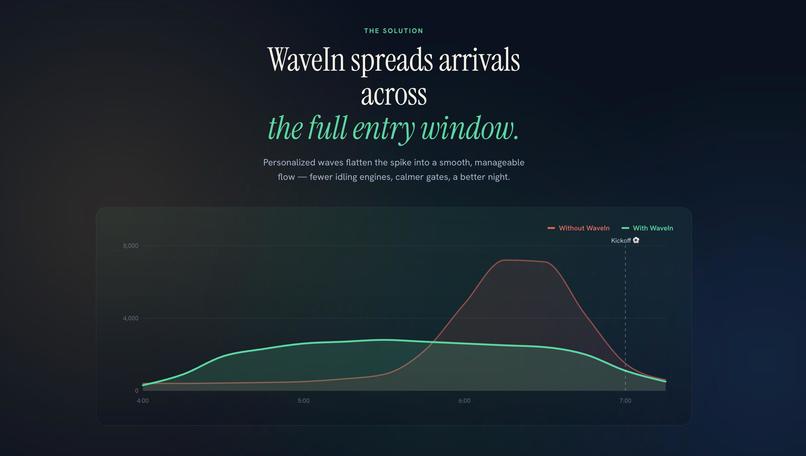
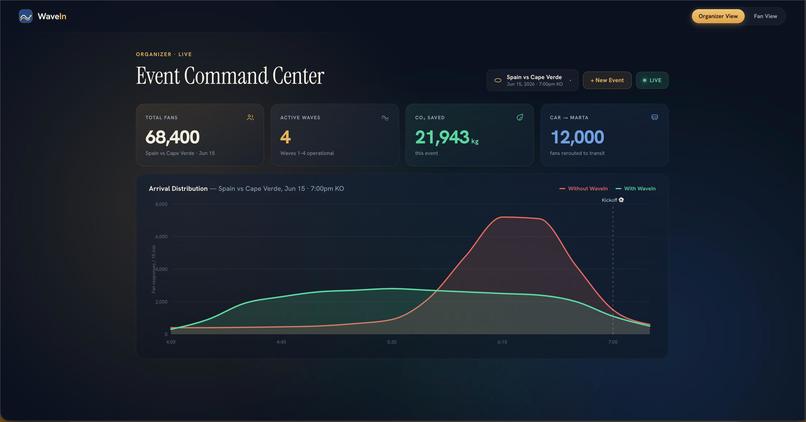
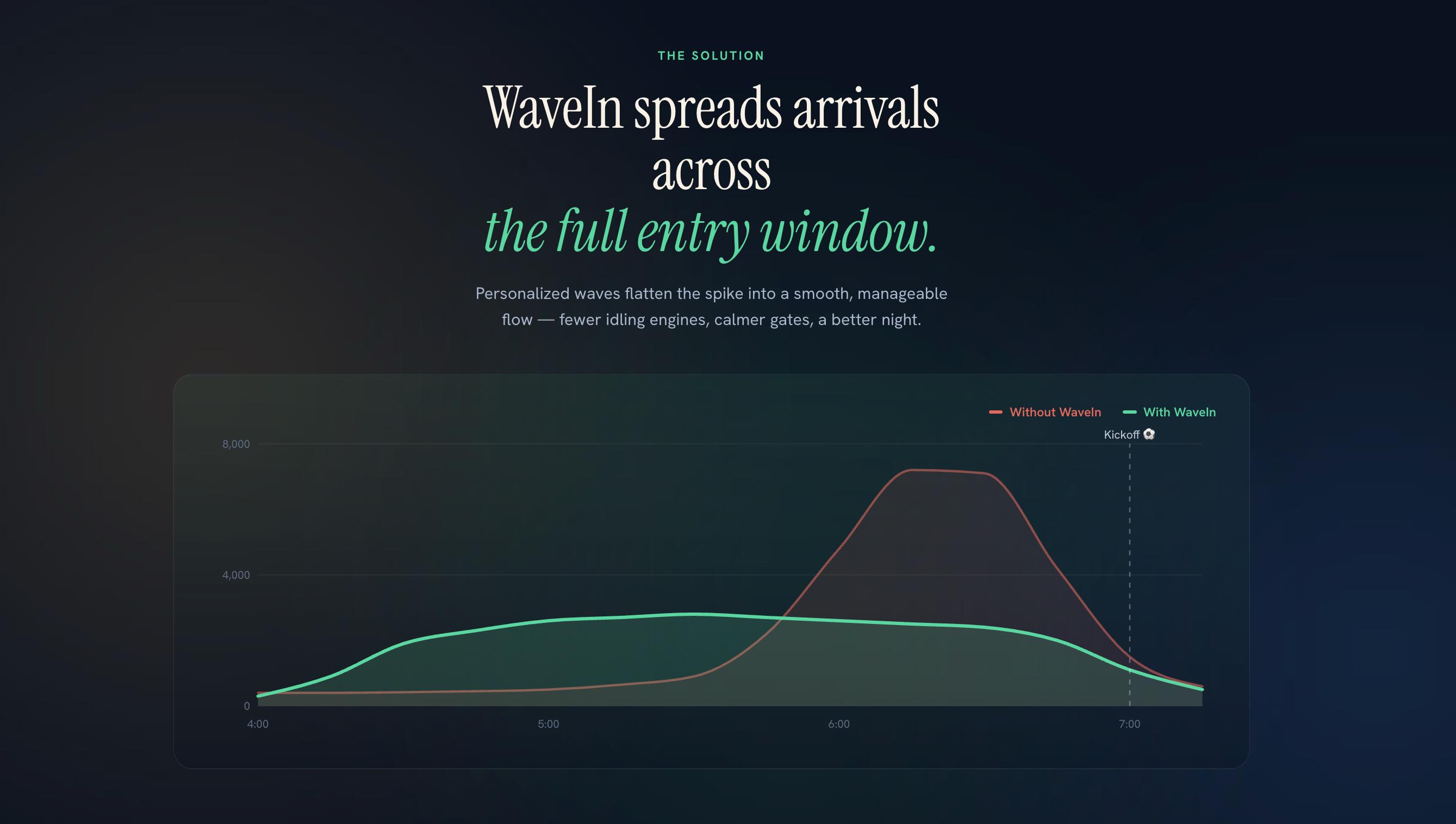
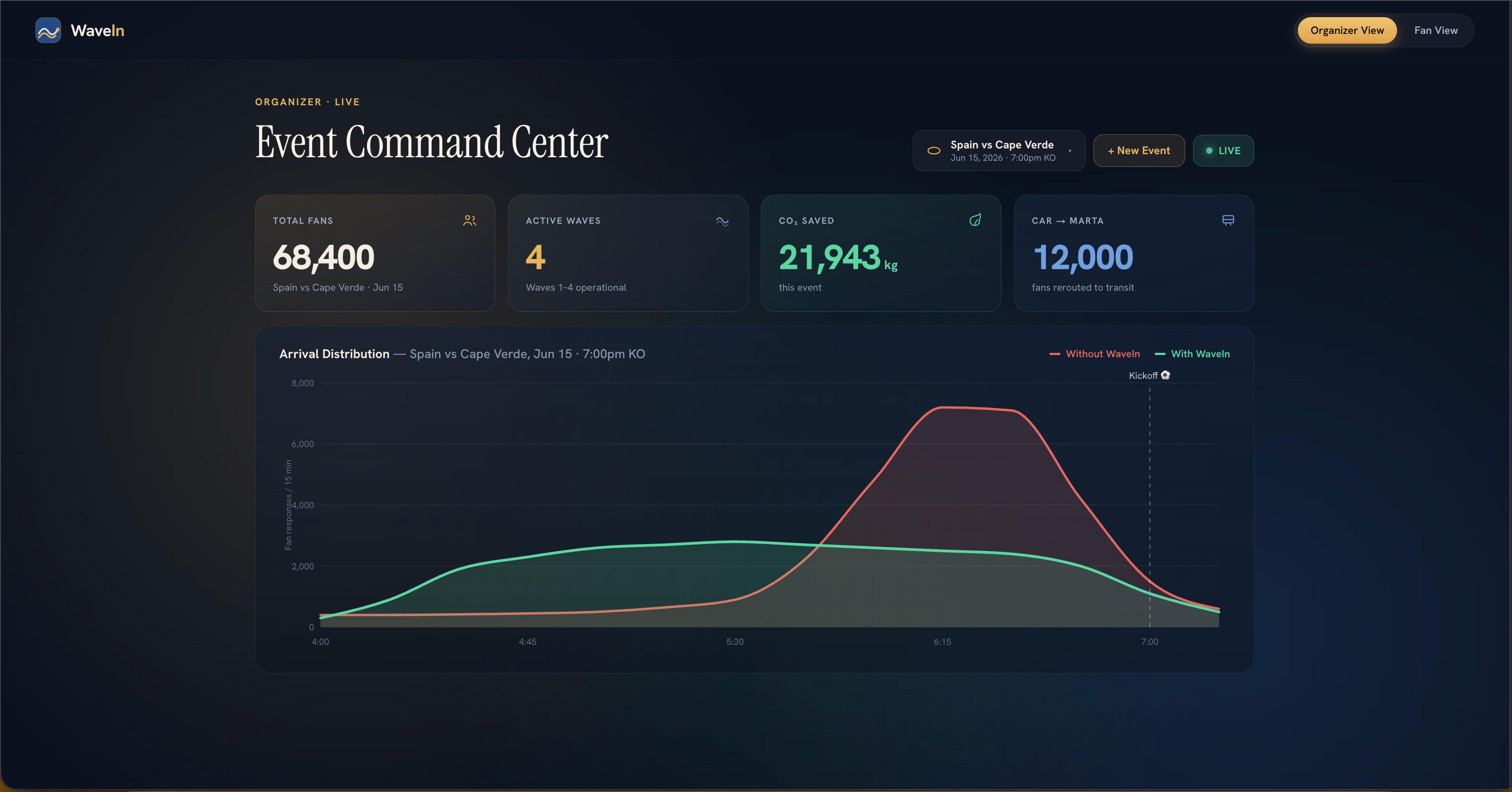
The organizer dashboard shows the before/after in real time: a massive red arrival spike collapsing into a smooth green distribution. The sustainability panel tracks CO2 saved, car-to-MARTA shifts, and projects impact across the full season - 408,000 kg CO2 eliminated across 8 WC26 games. Equivalent to 89 cars removed from the road for a year.
How We Built It
We built WaveIn in under 48 hours as a full-stack web application. The frontend is Next.js with Tailwind CSS and Recharts for the arrival distribution visualization. The wave assignment algorithm is pure logic - it takes your origin zone, transport mode, and earliest possible arrival time and calculates the optimal wave using travel time estimates and event-specific constraints.
The emissions math is grounded in EPA data: average idle fuel burn, CO2 per gallon, and real driving distances from each Atlanta origin zone to Mercedes-Benz Stadium. Every number on screen is defensible.
The design went through a full iteration cycle: we wireframed an interactive prototype with Apple-style scroll reveals, an ambient gradient background, and an editorial serif typographic identity. We implemented scroll animations through IntersectionObserver, chart rendering through Recharts, and built a component architecture that separates the visual layer entirely from the data and logic layer.
Challenges We Ran Into
The hardest part wasn't the technology, it was staying disciplined about scope. We spent the first day exploring ideas across every track, evaluating real-time API integrations, and nearly over-engineered ourselves into something unbuildable in 36 hours. The breakthrough came when we realized the wave assignment algorithm requires zero live APIs. The event schedule is static. The travel times are estimable. The emissions math is arithmetic. The hard problem was coordination, not computation.
We also had to fight the temptation to make the sustainability claim bigger than the math supports. WaveIn reduces peak idling emissions- it doesn't eliminate car trips entirely. We kept the numbers honest and the methodology transparent.
Accomplishments We're Proud Of
The arrival distribution chart is the thing. Two curves, one red spike, one green smooth line, and judges immediately understand the entire problem and solution without a word of explanation. Getting that visual right was the most important design decision we made.
We're also proud that the sustainability numbers are real. Not rounded up, not extrapolated beyond reason. 408,000 kg CO2 across 8 games is a conservative estimate based on EPA idle emissions data and realistic modal shift assumptions. We can defend every number.
What We Learned
Congestion is a coordination failure, not a capacity failure. Atlanta doesn't need more roads or more trains. It needs a mechanism that lets people act on the flexibility they already have. Most fans could arrive earlier but they just don't, because there's no reason to. WaveIn gives them a reason.
We also learned that the best hackathon ideas have a natural demo moment. The red spike disappears. The green line appears. The CO2 counter ticks up. You don't have to explain it. You just show it.
What's Next
WaveIn debuted on WC26 data, but every line of this dashboard works for Super Bowl LXII at Mercedes-Benz Stadium in 2028, the Final Four in 2031, every SEC Championship, every Beyoncé concert. Atlanta hosts 20+ major events per year at MBS alone.
The long-term vision is a city-scale demand coordination platform, licensed to venues for throughput efficiency, to transit authorities for ridership optimization, and to corporate sponsors like Delta and Mercedes-Benz as a verified local carbon offset mechanism. Every fan who takes MARTA generates a traceable, quantifiable emissions reduction. That's a carbon credit with a story.
The data exists. The authority exists. The flexibility exists. Nobody connected them.
We did.
Built With
- clerk
- css
- next.js
- supabase
- tailwind
- typescript

Log in or sign up for Devpost to join the conversation.