-
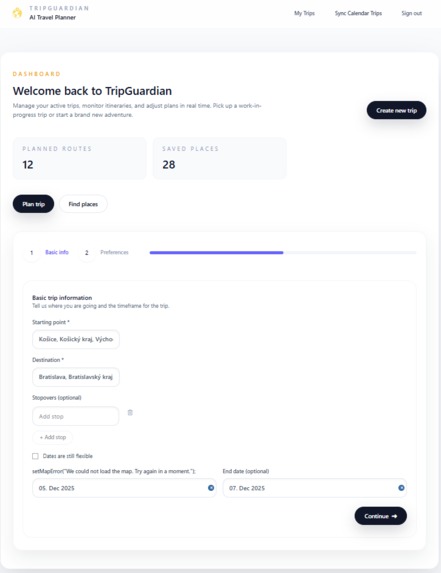
CreateTrip
-
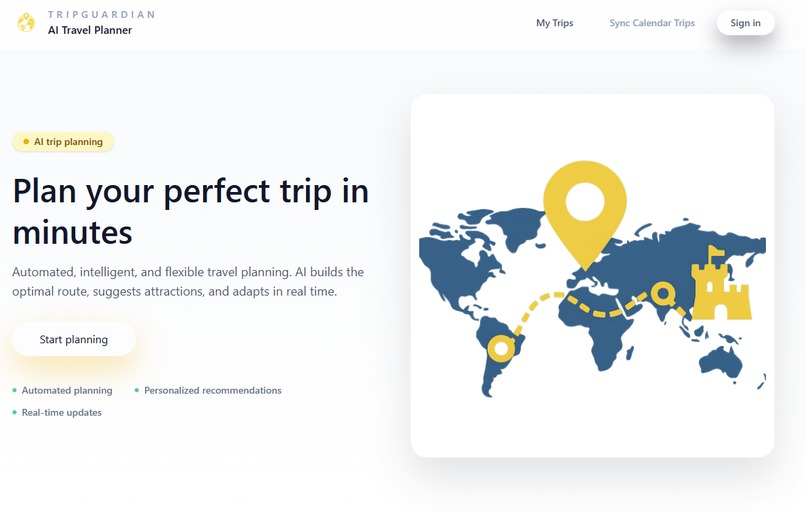
MainPage
-
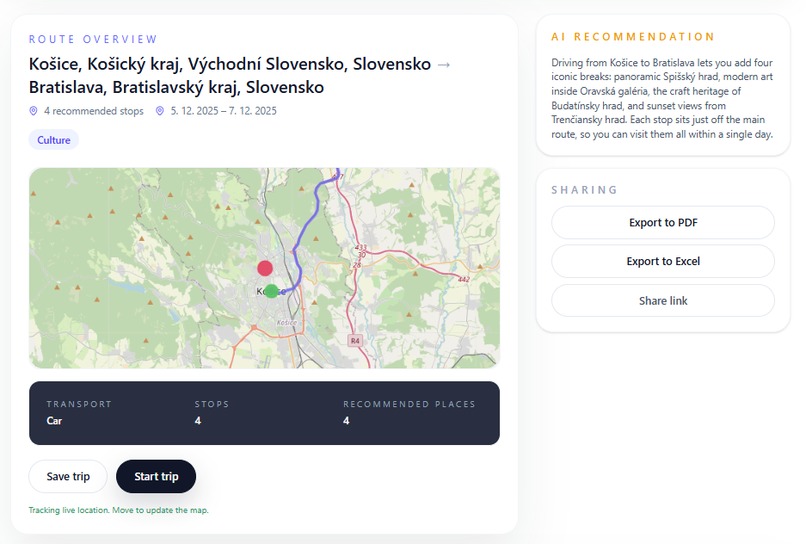
Trip
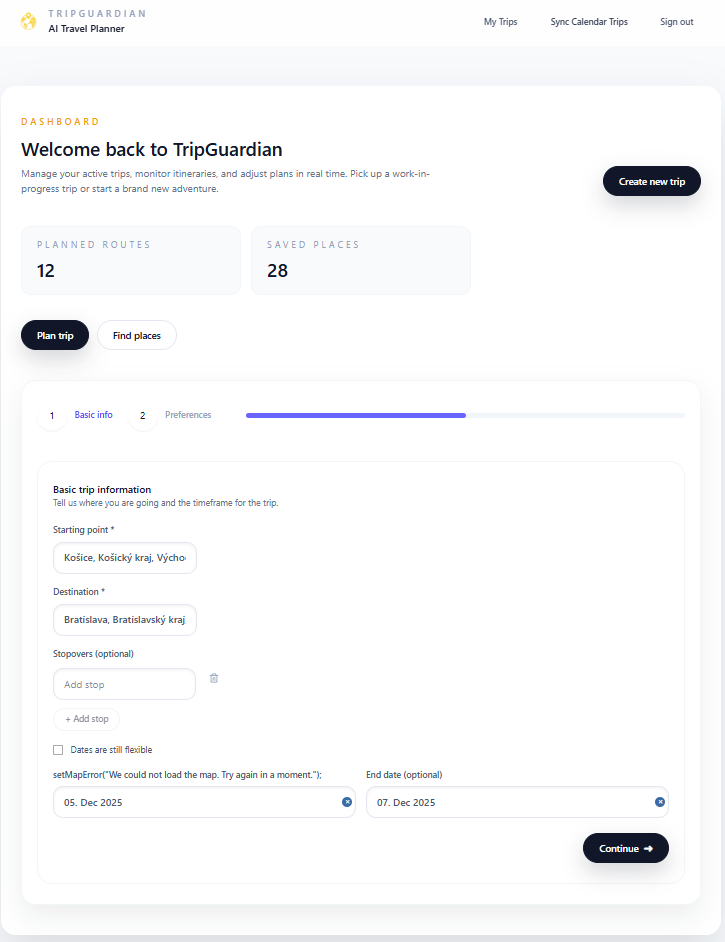
Inspiration
We set out to solve a universal travel problem: routes are static, but real-life conditions constantly change. Weather, delays, and shifting plans can disrupt even the best itinerary, yet navigation apps remain passive. LiveRoute Agent was born from the idea of creating a reactive, intelligent co-driver that adapts your journey as it unfolds.
What it does
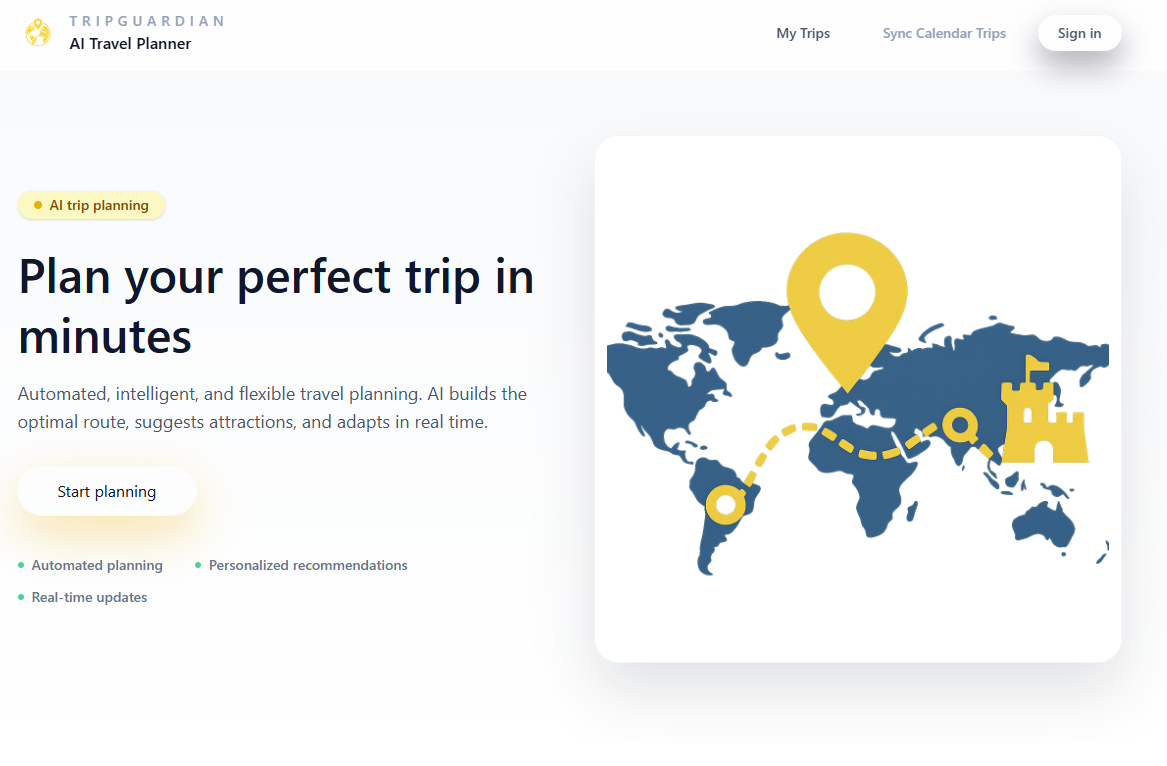
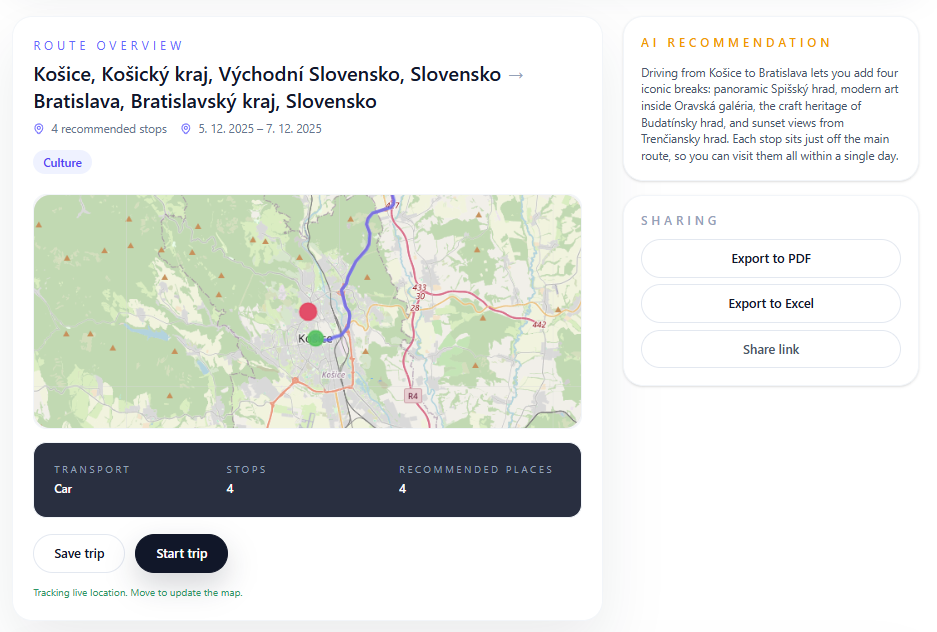
TripGuardian Agent can generate an AI-planned route with suggested points of interest that users can customize and save. When a trip begins, the system is designed to track location and react to changing conditions such as weather and timing, offering adaptive suggestions. Although the MVP is still early and several components are not fully connected yet, it demonstrates the core concept of an adaptive travel assistant.
How we built it
We built the system as a serverless architecture combining React on the frontend with AWS Lambda, API Gateway, and Cognito on the backend. OpenAI powers all reasoning and route generation, while map data and weather information come from external APIs such as Mapbox and OpenWeather. The multi-agent workflow coordinates planning, monitoring, and recommendations in real time.
Challenges we ran into
We encountered issues around synchronizing live location updates with real-time weather checks without overwhelming the APIs. Designing a reliable multi-agent flow that feels autonomous but remains user-controlled required several iterations. Integrating Google Calendar and Cognito authentication also brought unexpected edge cases during testing.
Accomplishments that we're proud of
We were able to build the foundational pieces of a multi-agent travel system, even if they are not fully integrated. Establishing the core logic for planning, monitoring, and adaptive suggestions gives us a clear direction for the next steps. The prototype shows that the concept is achievable, even though much work remains to make it seamless.
What we learned
We learned how powerful autonomous AI workflows can be when agents are designed to think proactively rather than reactively. The project deepened our understanding of serverless architectures, API integrations, and building resilient multi-step pipelines. Most importantly, we discovered how to design AI tools that support users without overwhelming them.
What's next for BlitzDev-03
We plan to expand the autonomous behavior by integrating more live data sources, such as traffic and road conditions. An improved map UI, detailed offline mode, and richer POI database are also on our roadmap. Ultimately, we aim to create a fully intelligent travel companion that can optimize an entire trip end-to-end.


Log in or sign up for Devpost to join the conversation.