-
-
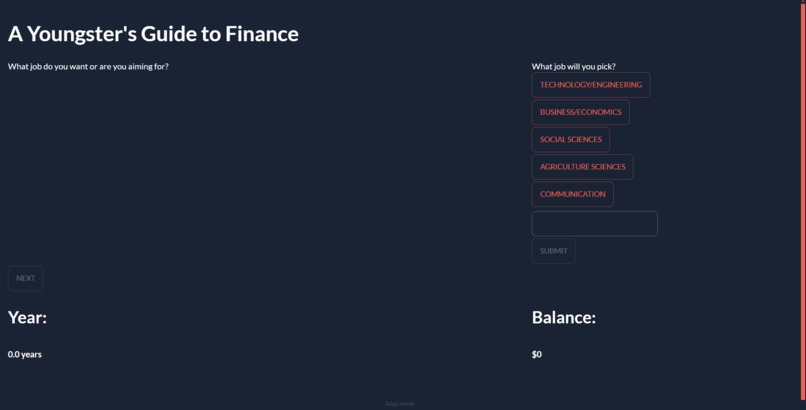
Job Options
-
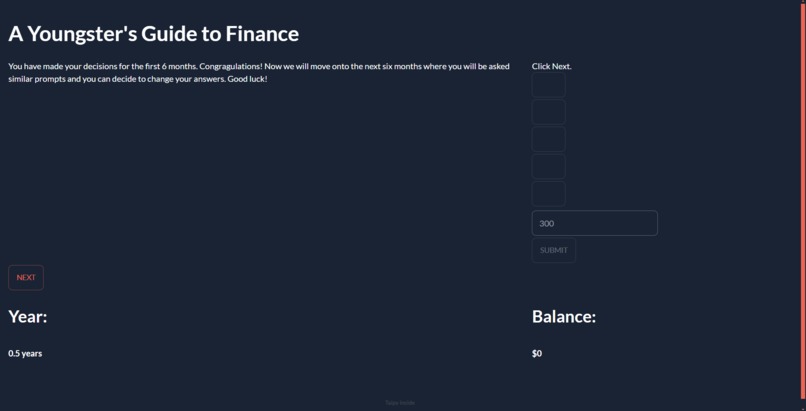
First round done
-
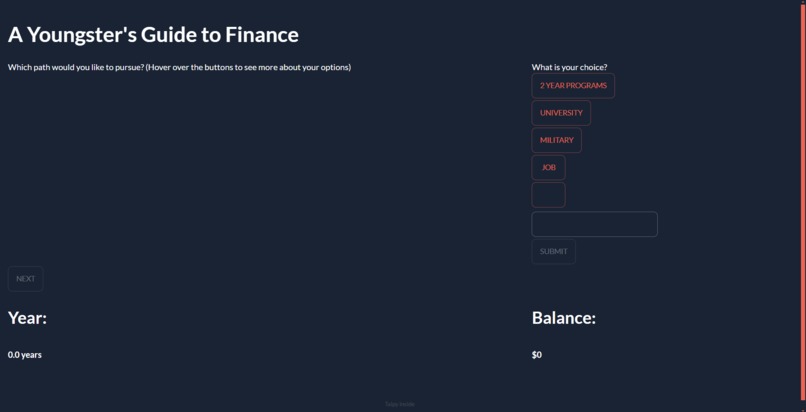
Choose your path
-
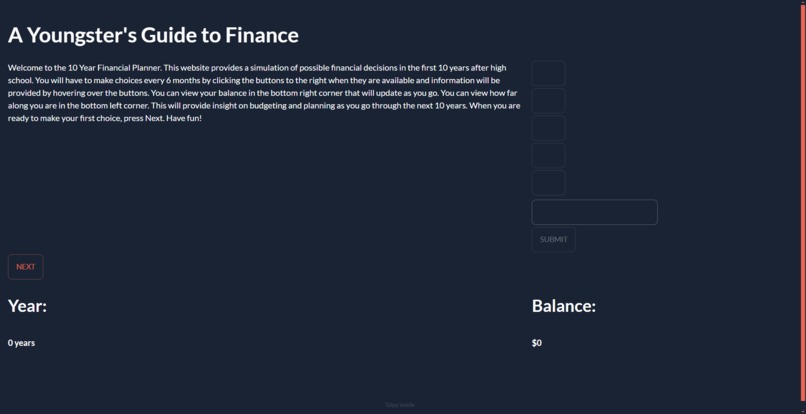
Title Page
-
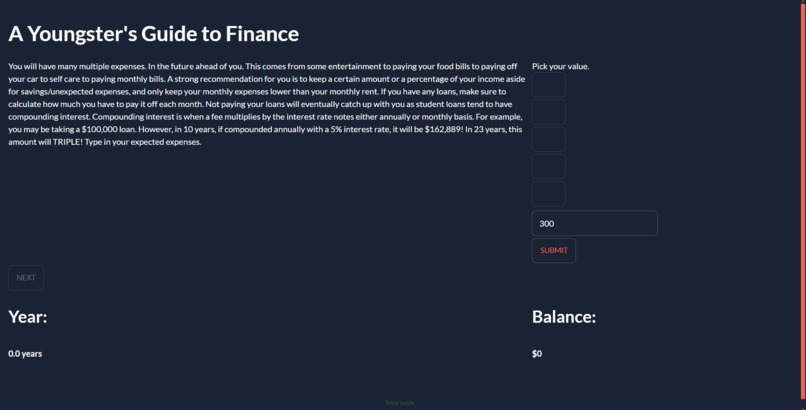
Expenses explained
-
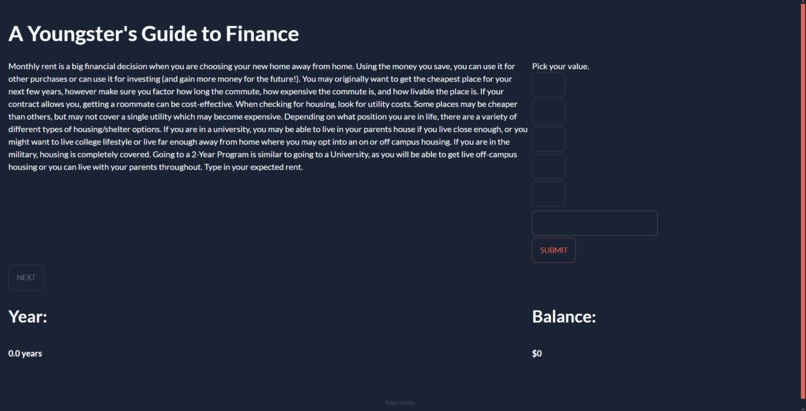
Monthly rent


Inspiration
Our inspiration stemmed from choice-based games like BitLife and Oregon Trail, and finance simulations like SPENT. We wanted to create an experience specifically catered to college students to give them relevant advice and encourage financial literacy awareness.
What it does
Our program provides the user with a series of prompts and provides a prognosis for their financial well-being based on the decisions they make. Because of the program's interactive nature, the experience can be personalized to any user's current situation, on top of acting as a "what-if" tool to explore alternate paths in life.
How we built it
We used Python for all of the code, and Taipy helped bring together the front- and back-end of the program.
Challenges we ran into
Learning how to use Taipy was a steep learning curve since the online docs were vague in their description of collecting user input. We were unable to finish the project in the allocated time due to figuring out Taipy and running into problems.
Accomplishments that we're proud of
Alana learned how to use Taipy during this process, meaning we could complete the entire project using Python instead of splitting between HTML or JavaScript.
What we learned
We learned the importance of planning ahead -- our initial plan was more focused on the fine details rather than the bigger picture, so we occasionally found ourselves at a loss for what to do next. Going forward, it'd be best to draft out the program's entire roadmap before hashing out the details.
What's next for Financial Guide
Potentially adding more depth and variation within post-graduation tracks, as well as more financial advice and facts integrated within the simulation. An extra, for-fun addition would be a "narrator" avatar to walk users through the experience and create a more friendly environment.
Built With
- python
- taipy


Log in or sign up for Devpost to join the conversation.