-
-
-
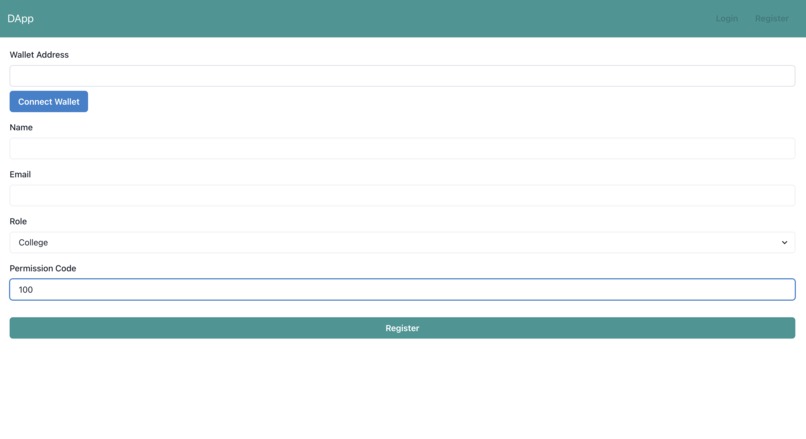
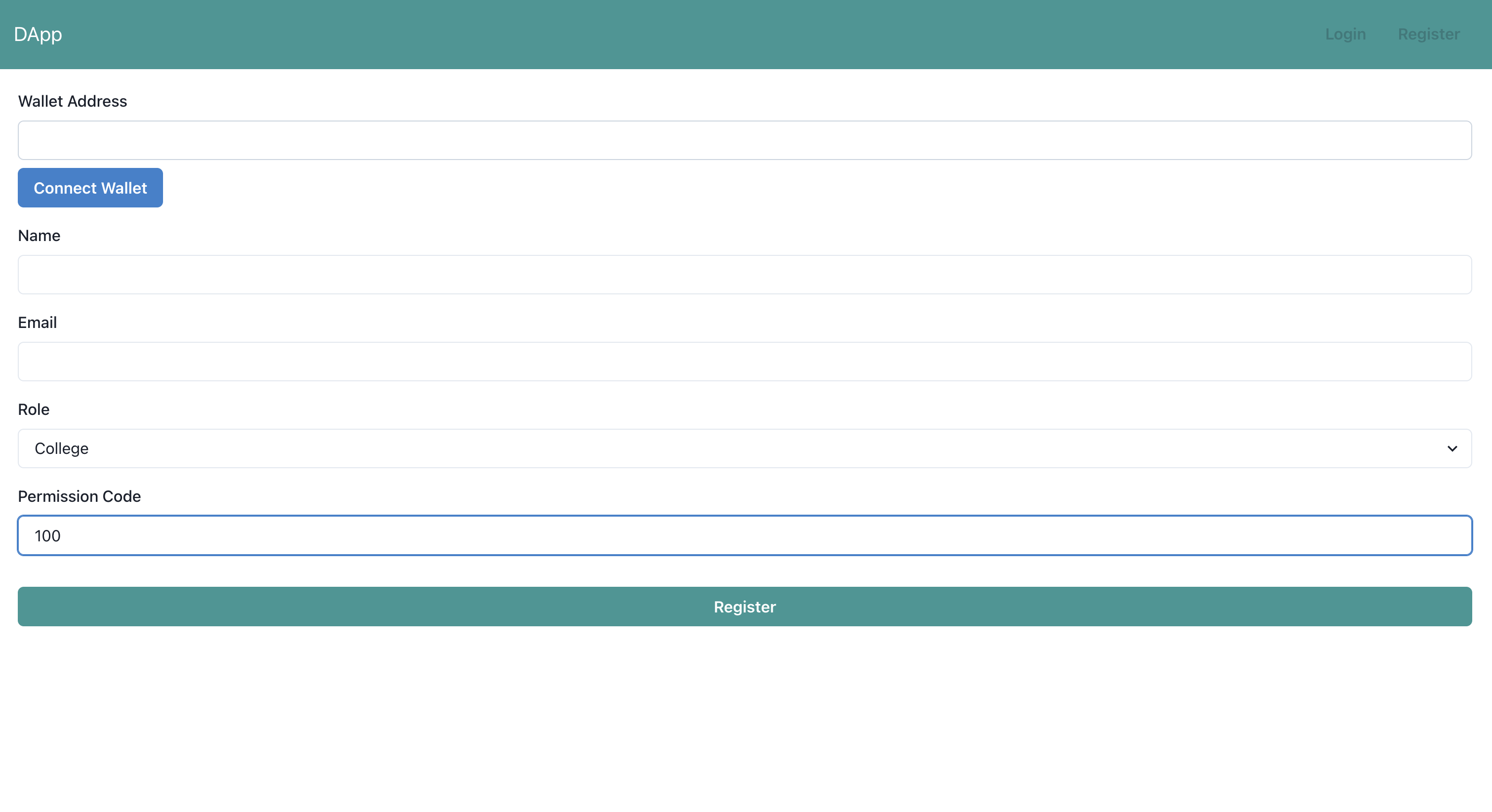
You can try the Dapp by registering as a college. Code = 100
-
-
-
Inspiration
My inspiration came from the hassle of sending my high school diplomas and college transcripts to companies. I had to rely on my college to send these documents, which was inconvenient, time-consuming, and costly. The process was slow, involved fees, and was often frustrating due to limited communication with the institutions.
This experience highlighted the broader issue of verification in the digital age. From visas and licenses to work experience and personal identity, centralized systems are prone to delays, forgery, and theft. The web2 landscape's vulnerabilities stem from having a few entities in control, leading to inefficiencies and risks.
That's why I created Certify. It offers a solution for easily verifiable, tamper-proof, and owner-controlled credentials, starting with education verification. Certify is the first step towards a more secure and efficient identity verification system using the power of blockchain.
What it does
Certify revolutionizes the way diplomas are managed and verified by providing a secure, decentralized solution built on the power of blockchain technology. Our platform leverages two of blockchain’s most transformative tools: Smart Contracts and NFTs (Non-Fungible Tokens).
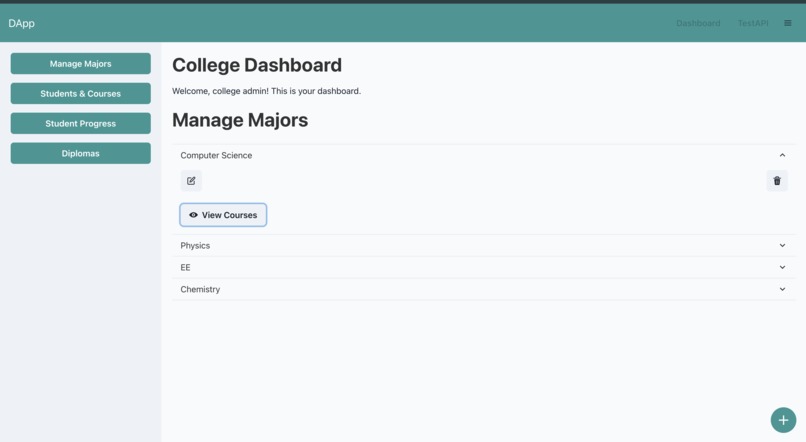
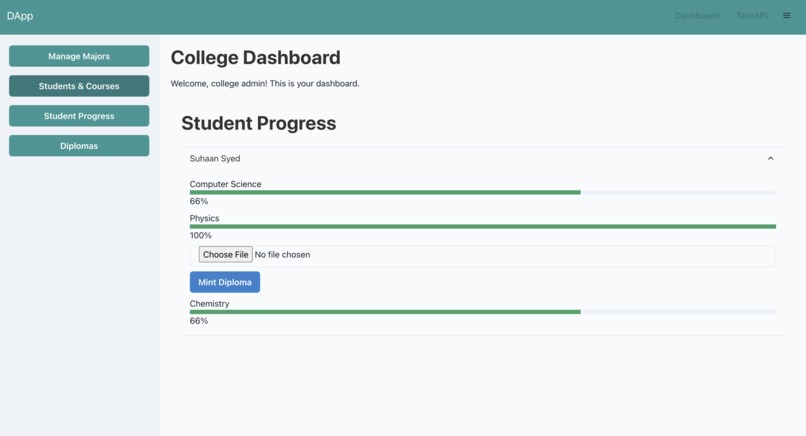
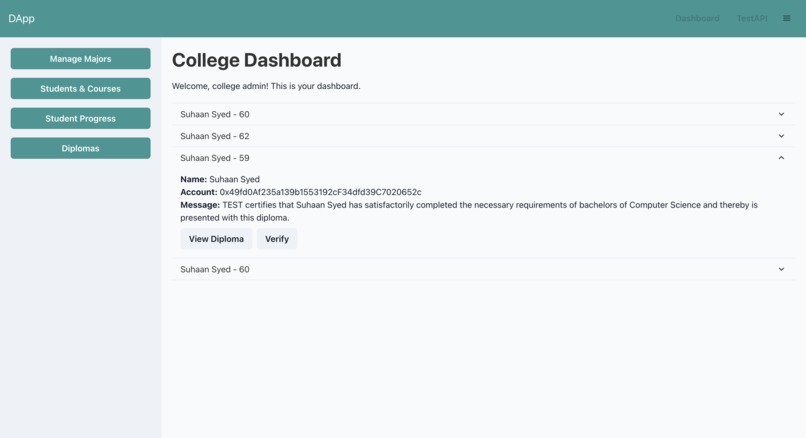
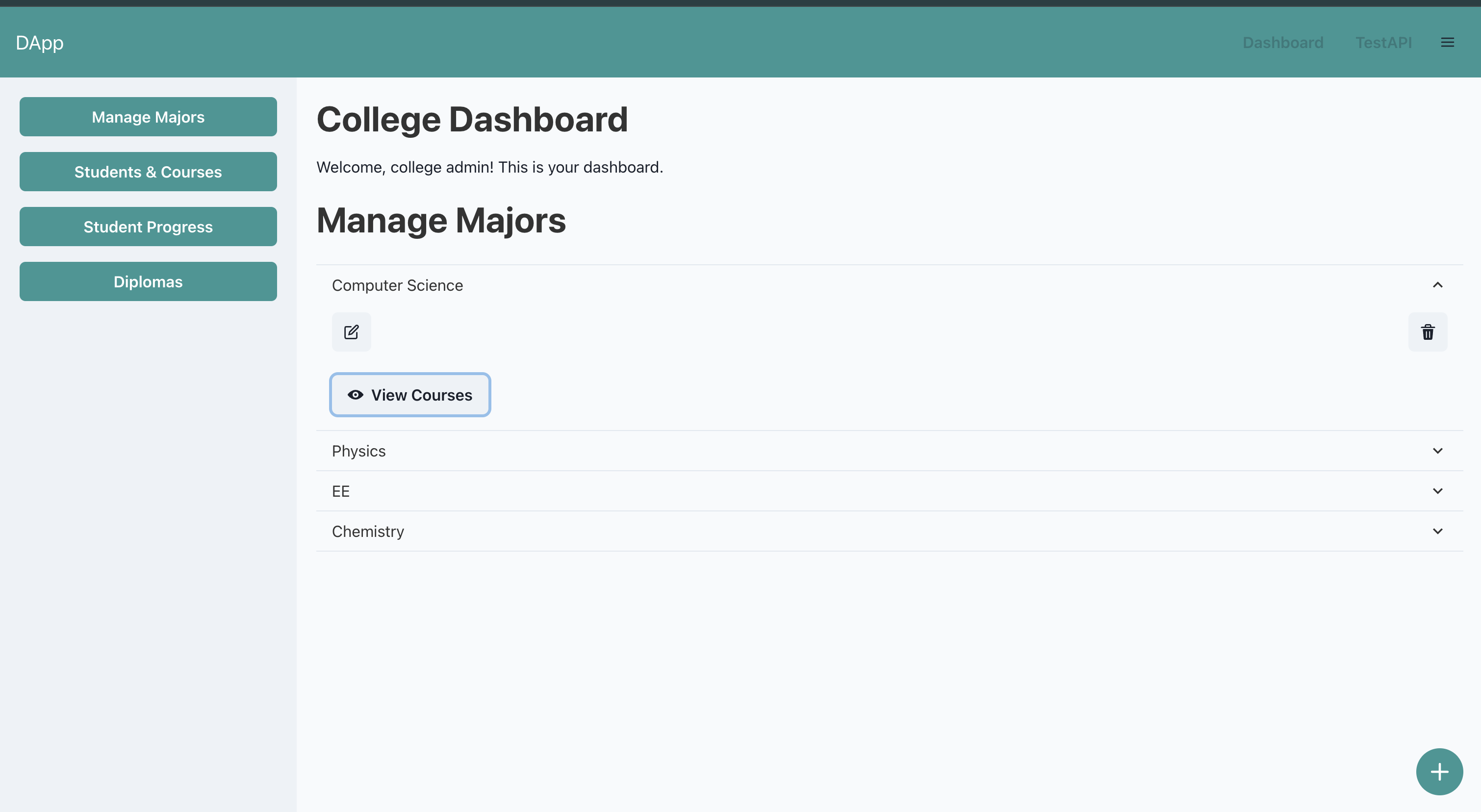
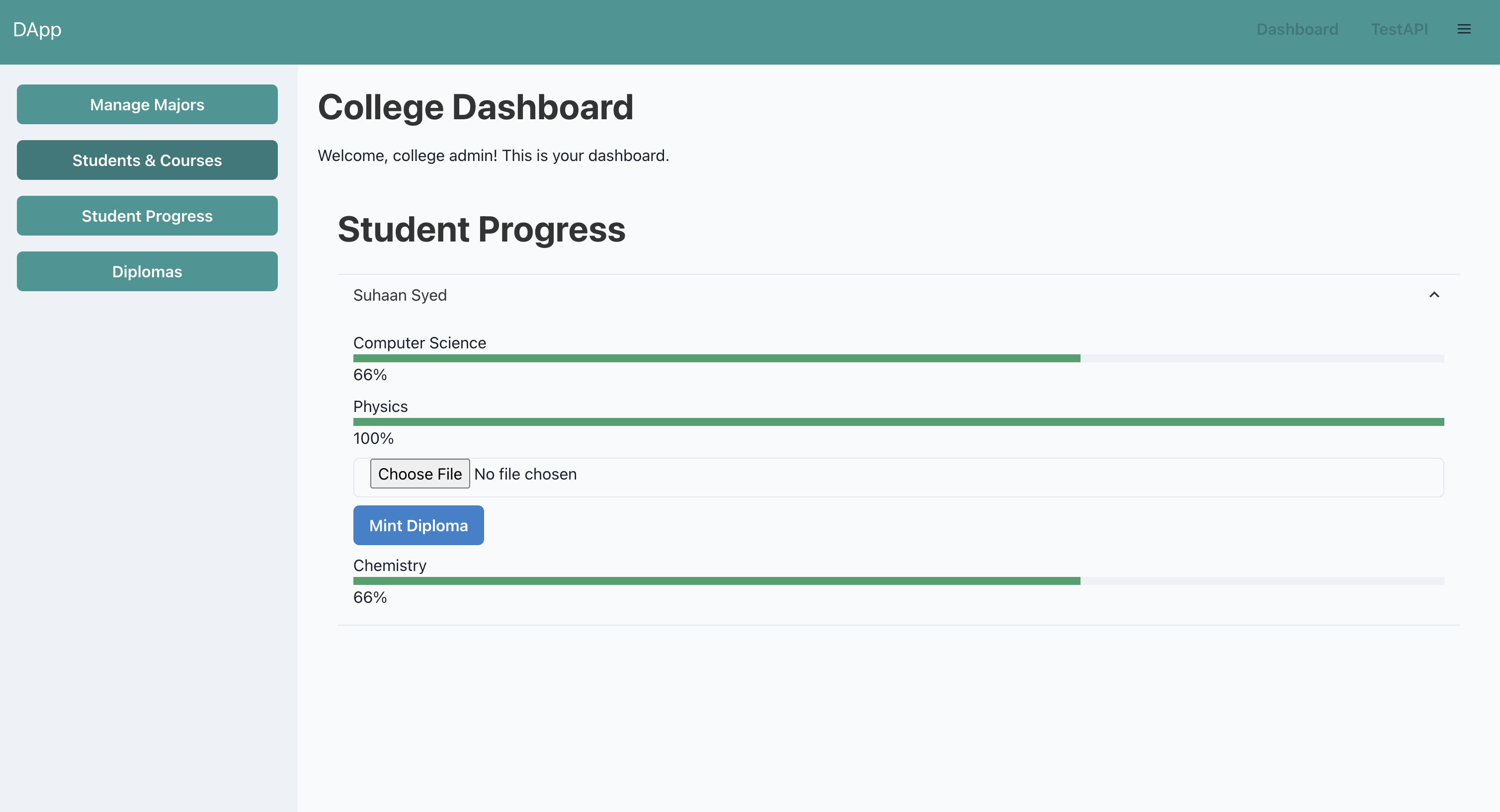
Certify simplifies diploma management by integrating with existing college databases. As students progress through their graduation requirements, Certify automatically mints an NFT representing their diploma. These NFTs are tamper-proof; once issued, they cannot be altered. This immutability ensures that the diploma's integrity is maintained throughout its lifecycle.
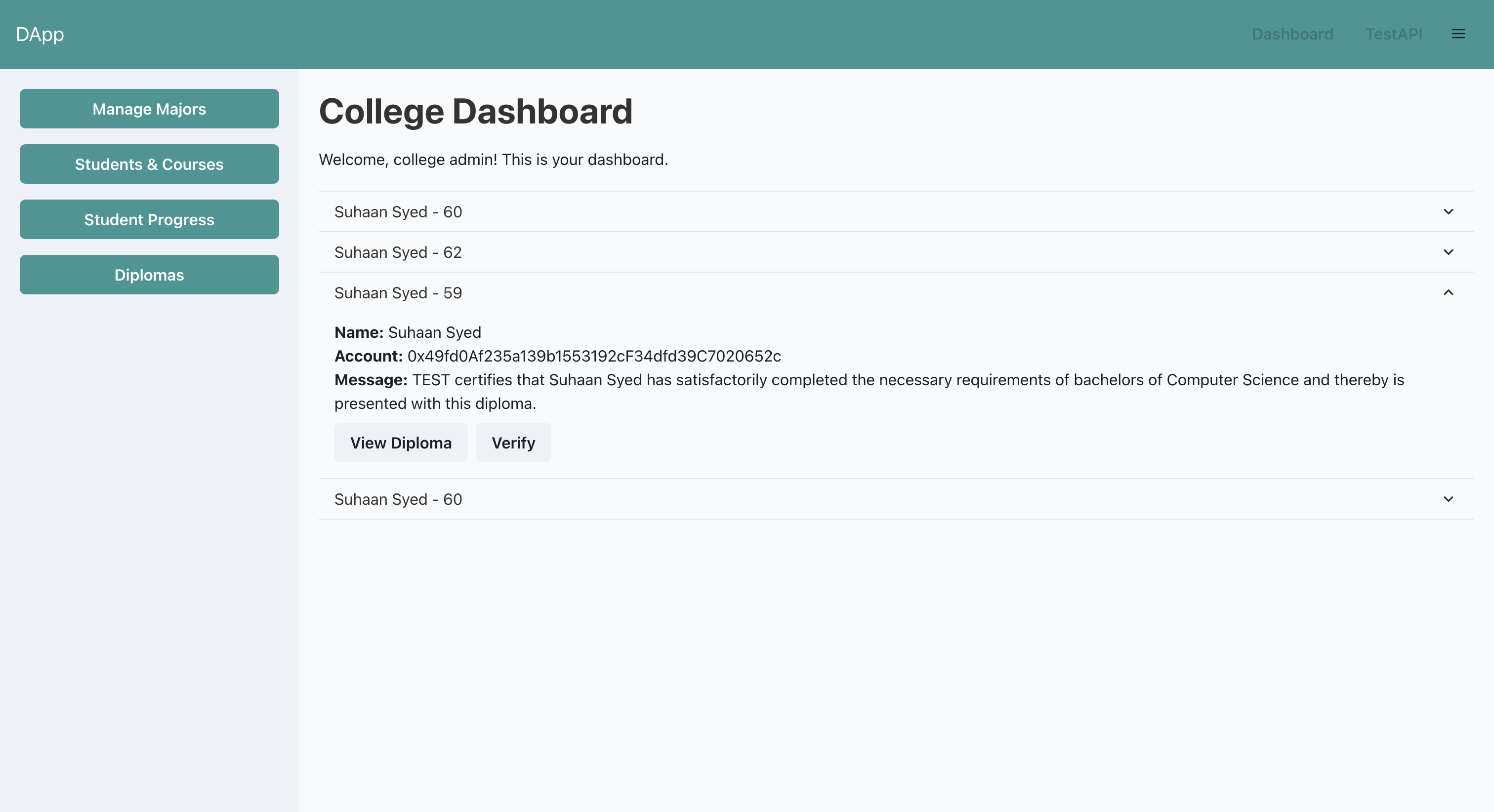
The security and verification of these NFTs are underpinned by advanced cryptographic techniques. Each diploma NFT contains a digital signature created using the college's private key. Our smart contracts utilize elliptic curve hashing algorithms to validate these signatures. This process involves rebuilding the college's public address from the encrypted signature and comparing it with the message. This method ensures that companies and other institutions can easily and securely verify the authenticity of the diploma.
Key highlights of Certify include:
Elliptic Curve Hashing: A robust cryptographic method used to verify the authenticity of the diplomas, ensuring that the signatures are legitimate and the data is unaltered.
Integration with Existing Frameworks: Certify operates on top of the college’s existing student databases. This seamless integration means that colleges do not need to overhaul their systems; instead, Certify enhances their current infrastructure.
Simplified Authentication: Using the Moralis API, Certify provides secure user authentication without the need for separate authentication processes. Moralis handles user signatures and nonce creation, ensuring that interactions with the dApp are secure and authenticated.
Secured Student Data: Student course data remains protected within the college’s databases. Unlike IPFS, which lacks default content encryption, Certify ensures that sensitive information is kept secure and only accessible through authorized channels.
Efficient Verification: Diplomas are stored on IPFS (InterPlanetary File System), a decentralized storage network that allows for easy and efficient verification. This storage solution ensures that diplomas can be quickly accessed and validated, reducing the time and complexity associated with traditional verification methods.
In essence, Certify modernizes diploma management by combining blockchain’s security and transparency with existing educational infrastructure. This approach not only enhances the reliability of diploma verification but also empowers students with control over their credentials, paving the way for a more secure and efficient identity verification system.
How we built it
How We Built It Certify was developed using a combination of powerful technologies and frameworks to ensure a seamless, secure, and efficient diploma verification system. Here's a breakdown of how we built it:
Frameworks and Technologies React Native: We used React Native for the front-end development, allowing us to create a responsive and intuitive user interface that works across multiple devices.
Metamask Wallet: For authentication and managing user NFTs, we integrated Metamask Wallet. This enables users to securely authenticate and interact with the blockchain using their existing Ethereum-based wallets.
Moralis API: To facilitate secure and easily verifiable profiles, we utilized the Moralis API. It helps in creating authenticated profiles for users, allowing them to use Metamask for authentication and securely storing their data on Supabase.
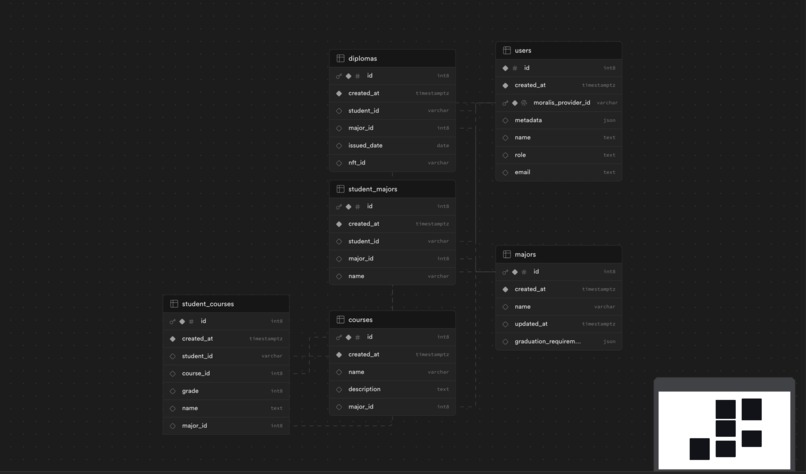
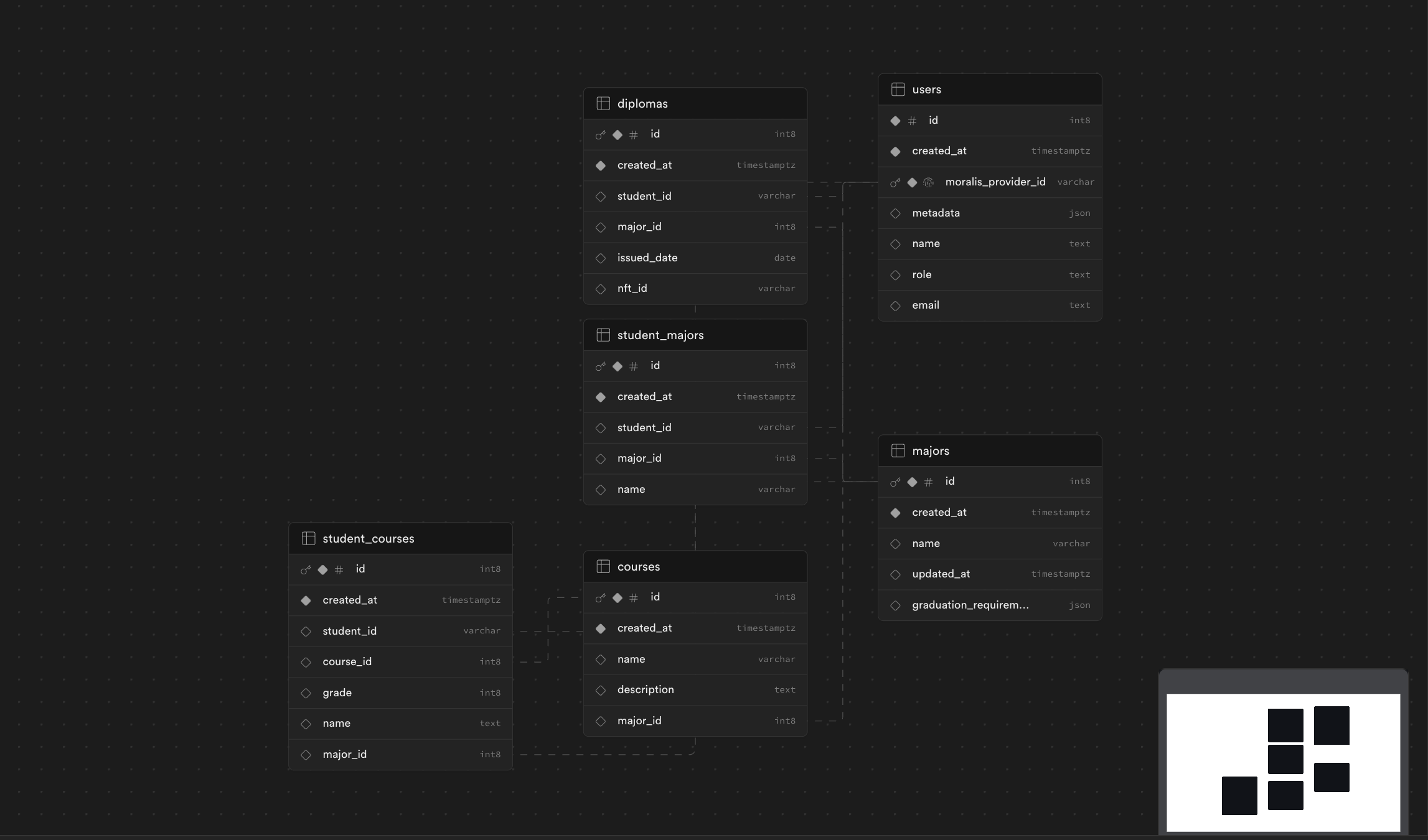
Supabase: Our choice for the database was Supabase, which handles user data storage and authentication. It also includes schemas for college courses, mirroring the structure of existing college databases to ensure compatibility and accuracy.
Chakra UI: For the user interface design, we used Chakra UI. It provides a set of accessible and customizable components that helped us build a clean and user-friendly interface efficiently.
Backend Technologies Node.js: We employed Node.js for backend development to connect with Supabase, handle user routing, and manage data interactions.
Solidity: Smart contracts were developed using Solidity, enabling the automated issuance and verification of diploma NFTs.
Polygon Amoy Testnet: To deploy and test our smart contracts, we used the Polygon Amoy testnet. This environment allowed us to validate functionality and performance without incurring high costs.
Pinata IPFS: For storing diplomas, we utilized Pinata IPFS. This decentralized storage solution ensures that diplomas are securely stored and easily accessible for verification purposes.
Elliptic Curve Hashing: We implemented elliptic curve hashing for secure and efficient verification of digital signatures. This cryptographic technique ensures the integrity and authenticity of the diplomas.
Deployment Front-End Hosting: The front-end application is hosted on Vercel, providing fast and reliable performance for our users.
Back-End Hosting: The backend services are hosted on Render, which offers scalable and efficient hosting solutions for our server-side operations.
Smart Contract Development: For smart contract development, we used Remix, an integrated development environment (IDE) that simplifies the process of coding, testing, and deploying smart contracts.
Challenges we ran into
Learning Curve: Building a complete full-stack application was a significant learning curve, especially since this was my first experience with such a project. Incorporating blockchain concepts added another layer of complexity. Understanding how to integrate and apply these technologies effectively required substantial research and experimentation.
Integrating Web2 with Web3: Bridging the gap between Web2 and Web3 frameworks posed a challenge. Specifically, integrating Metamask for authentication with Supabase, a Web2 database, involved complex configurations and troubleshooting. Ensuring seamless interaction between these different technologies required extensive adjustments and testing.
Smart Contracts and Gas Issues: Developing and deploying smart contracts came with its own set of hurdles. Managing gas fees on the Polygon network was a particular concern, as fluctuating costs impacted the deployment and execution of smart contracts. Finding the right balance between efficiency and cost was crucial.
Testnet Compatibility: We encountered issues with testnets not working seamlessly with all components of our system. Compatibility problems between different testnets and our smart contracts or backend services caused delays and required additional troubleshooting to ensure everything functioned correctly in the test environment.
Accomplishments that we're proud of
Mastering New Technologies: One of our biggest accomplishments is the comprehensive learning journey involved in developing Certify. Diving into full-stack development, blockchain technology, and the integration of Web2 with Web3 frameworks was both challenging and rewarding. Gaining expertise in these areas has been a significant achievement.
Deploying a Working Prototype: Successfully deploying our working prototype was a major milestone. Seeing our vision come to life and functioning as intended was incredibly gratifying. This prototype demonstrated the feasibility and effectiveness of our approach to diploma verification.
Implementing Elliptic Curve Hashing: We are particularly proud of implementing elliptic curve hashing for secure verification. This advanced cryptographic technique ensures the integrity and authenticity of diplomas, showcasing our ability to apply cutting-edge technology to real-world problems.
Seamless Integration of Components: Integrating various components, such as Metamask for authentication, Supabase for data storage, and Pinata IPFS for decentralized storage, into a cohesive system was a significant achievement. This integration allowed us to create a robust and user-friendly platform.
Building on Existing Frameworks: Successfully building on top of existing college databases and leveraging established frameworks while introducing innovative solutions is another accomplishment. This approach ensured compatibility and enhanced the efficiency of our system.
User Experience and Interface Design: Developing an intuitive and aesthetically pleasing user interface using Chakra UI was a key achievement. Providing a seamless user experience while maintaining functional robustness was crucial to our platform's success.
What we learned
Full-Stack Development: Gained hands-on experience in integrating front-end and back-end technologies.
Blockchain and Smart Contracts: Mastered writing, deploying, and managing smart contracts. Web2 and Web3 Integration: Navigated the complexities of connecting traditional frameworks with blockchain tools.
Elliptic Curve Cryptography: Implemented advanced cryptographic techniques for secure verification.
User Authentication: Learned about secure user authentication using Moralis API and Metamask.
Decentralized Storage: Explored benefits and challenges of using IPFS for decentralized data storage.
UI/UX Design: Designed intuitive interfaces with Chakra UI to enhance user experience.
Problem-Solving: Developed skills in troubleshooting and adapting to overcome technical challenges.
What's next for Certify: Identity Verification System for College Diplomas
As we look towards the future of Certify, our goal is to evolve from a focused solution for diploma verification into a robust and comprehensive identity verification system. Here’s a roadmap for the next stages of development:
Expanding User Portals:
Student Portal: We aim to develop a dedicated portal for students, allowing them to manage and share their diplomas, track their academic progress, and access their digital credentials seamlessly. This portal will offer enhanced features and user controls for a more personalized experience.
Company Portal: We plan to introduce a portal for companies to verify diplomas and other credentials effortlessly. This will streamline the verification process, allowing employers to quickly authenticate candidates' educational backgrounds and ensure accuracy. Integrating Work Experience Verification:
NFTs for Work Experience: One of our key future initiatives is to extend Certify into the work experience sector. Many people face challenges with verifying work experience and obtaining authentic recommendations. To address this, we will develop a system where each work experience or project can be minted as an NFT, verified and signed by the respective company.
Portfolio of Verified Experiences: Users will be able to build a portfolio of NFTs representing their work experiences and project achievements. These NFTs will be signed by employers and provide a tamper-proof, easily verifiable record of an individual’s professional history. Comprehensive Identity Verification System:
Unified Platform: Our ultimate goal is to create a unified platform for comprehensive identity verification. This system will not only cover academic credentials but also professional experiences, certifications, and other personal achievements.
Enhanced Security and Verification: We will continue to leverage blockchain technology to ensure that all records are secure, verifiable, and resistant to tampering. Our focus will be on expanding the use of smart contracts and cryptographic techniques to enhance the reliability and security of the entire system.
By advancing Certify into these new areas, we aim to provide individuals with greater control over their personal credentials and simplify the verification processes for institutions and employers. Our vision is to build a trustworthy, decentralized identity system that addresses current vulnerabilities and inefficiencies in credential management.
Register as colleges: Code 100


Log in or sign up for Devpost to join the conversation.