-
-
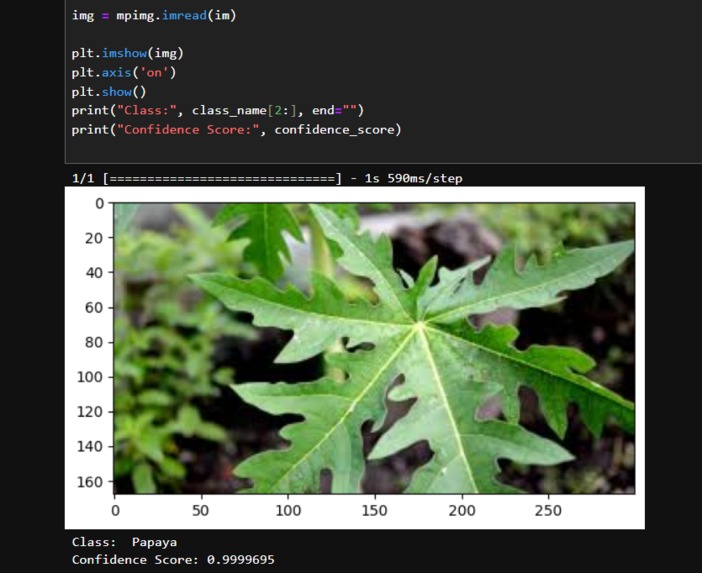
Output of the program
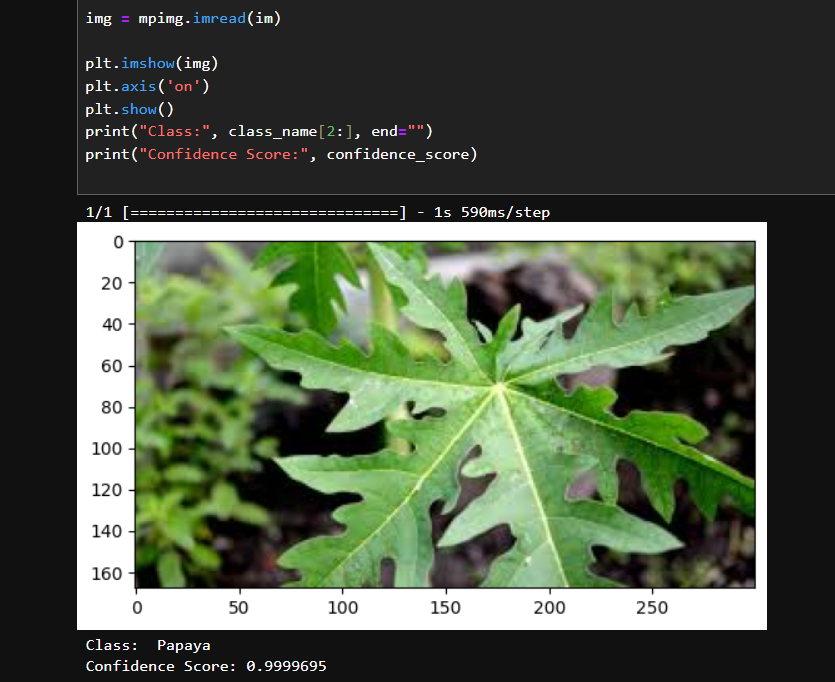
The Medicinal Plant Identification Project
Inspiration
The inspiration for the Medicinal Plant Identification Project emerged from a deep fascination with the natural world and a desire to bridge the gap between traditional knowledge and modern science. This project was driven by a curiosity about the therapeutic potential of plants and the urgency to preserve indigenous wisdom related to herbal remedies.
What I Learned
Throughout the course of this project, I learned several invaluable lessons. Firstly, I discovered the profound connection between various cultures and the plants that have been used for healing for generations. This highlighted the importance of respecting and preserving traditional knowledge.
I also gained a newfound appreciation for the complexity of botanical taxonomy and the significance of precise plant identification. Medicinal plants often have closely related species, and misidentification can lead to dangerous consequences.
Furthermore, I learned about the vital role that technology plays in plant identification. Tools like plant identification apps and websites, along with botany reference books, are indispensable for accurate recognition.
Building the Project
The project began with extensive research into medicinal plants from different parts of the world. I collected data on plant species, their traditional uses, and their distribution. Building a comprehensive database was crucial for the success of the project.
Next, I leveraged image recognition and machine learning technologies to develop a plant identification app. This app allowed users to upload images of leaves, flowers, or other plant parts, and it would provide information about the plant's species and its traditional medicinal uses.
Simultaneously, I collaborated with botanists and herbalists to validate the accuracy of the plant identification results. Their expertise was instrumental in fine-tuning the app's algorithms and ensuring reliable outcomes.
Challenges Faced
The project wasn't without its challenges. One significant hurdle was the variability in plant appearances due to factors like growth stage, environmental conditions, and geographical location. Developing algorithms that could account for these variations was a complex task.
Another challenge was sourcing authentic information on traditional medicinal uses. Some indigenous knowledge is oral and has never been documented, making it challenging to access.
Funding and resources were also a concern, as building and maintaining a robust plant identification app required financial support and technical infrastructure.
In conclusion, the Medicinal Plant Identification Project was a labor of love, driven by a passion for nature and a commitment to preserving cultural heritage. It demonstrated the importance of marrying traditional wisdom with modern technology to unlock the vast potential of medicinal plants and inspire a deeper connection with the natural world.
Built With
- opencv
- tensorflow


Log in or sign up for Devpost to join the conversation.