-
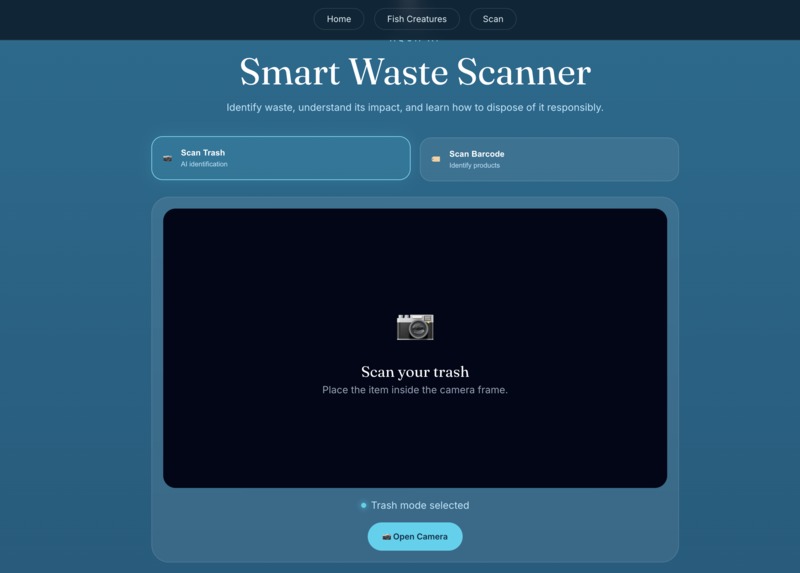
Smart Ai Trach Scanner
-
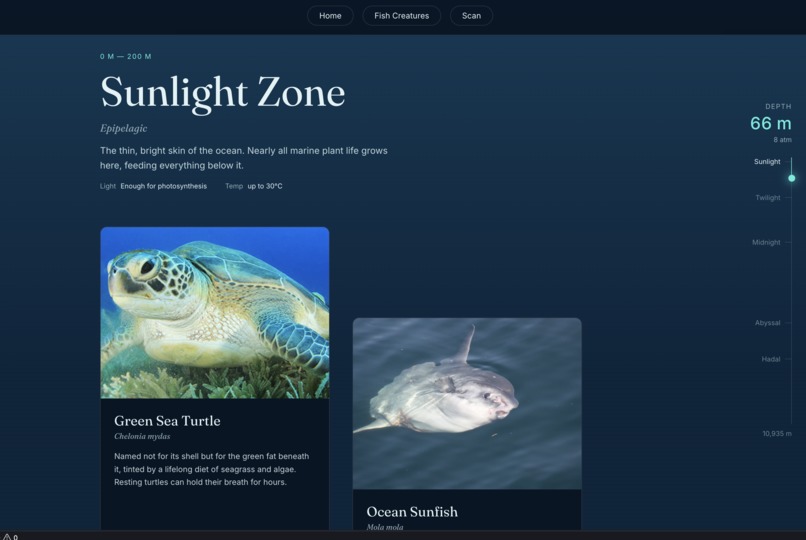
Endangered Deep Sea Creature Exploration
Inspiration
We wanted to make ocean conservation feel more personal and interactive. People see everyday items like plastic packaging and bottles, but they don't always understand where that waste can end up or how it can affect marine ecosystems. We were inspired to create a tool that connects a simple everyday action—throwing something away—to the larger story of ocean health.
What it does
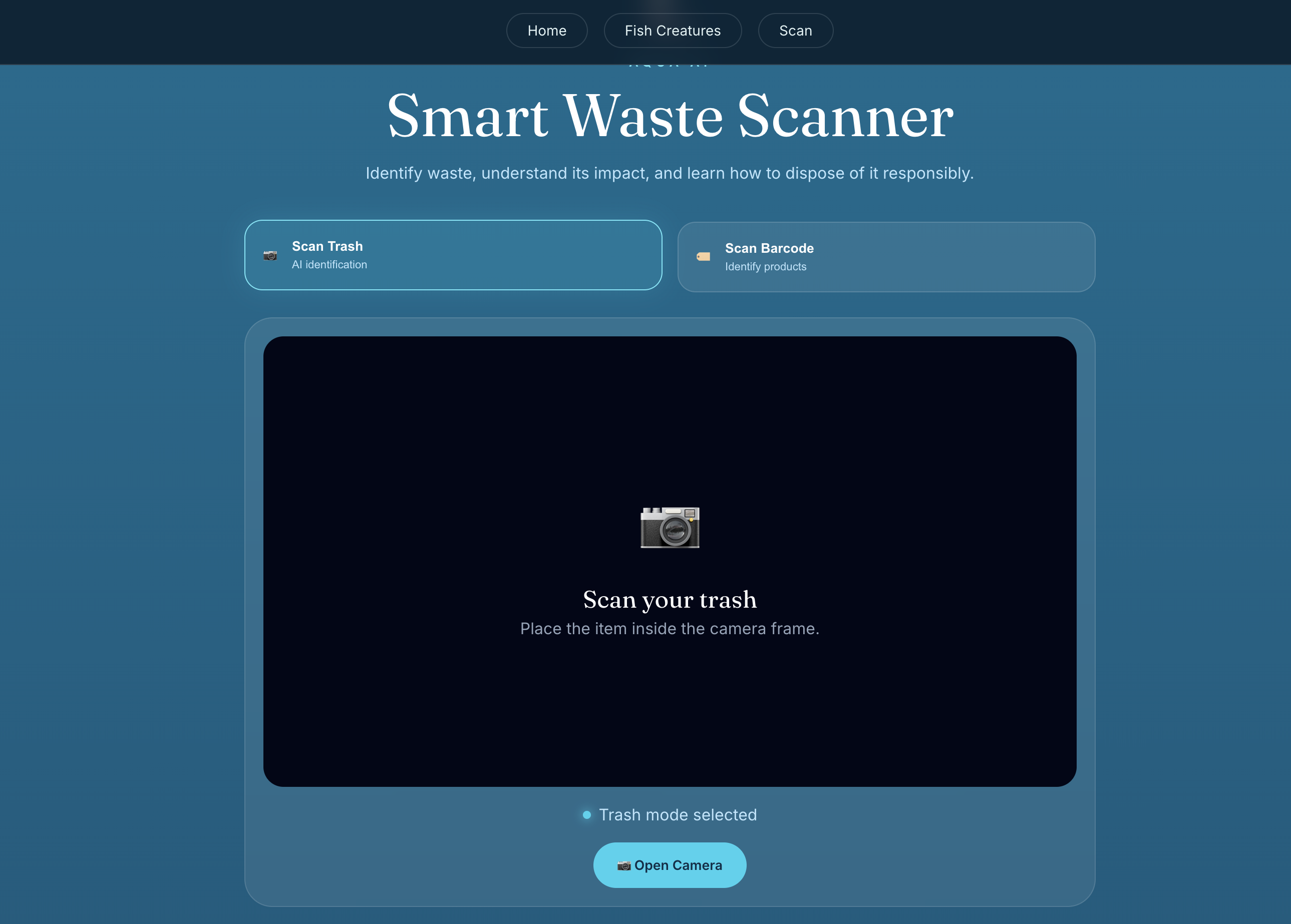
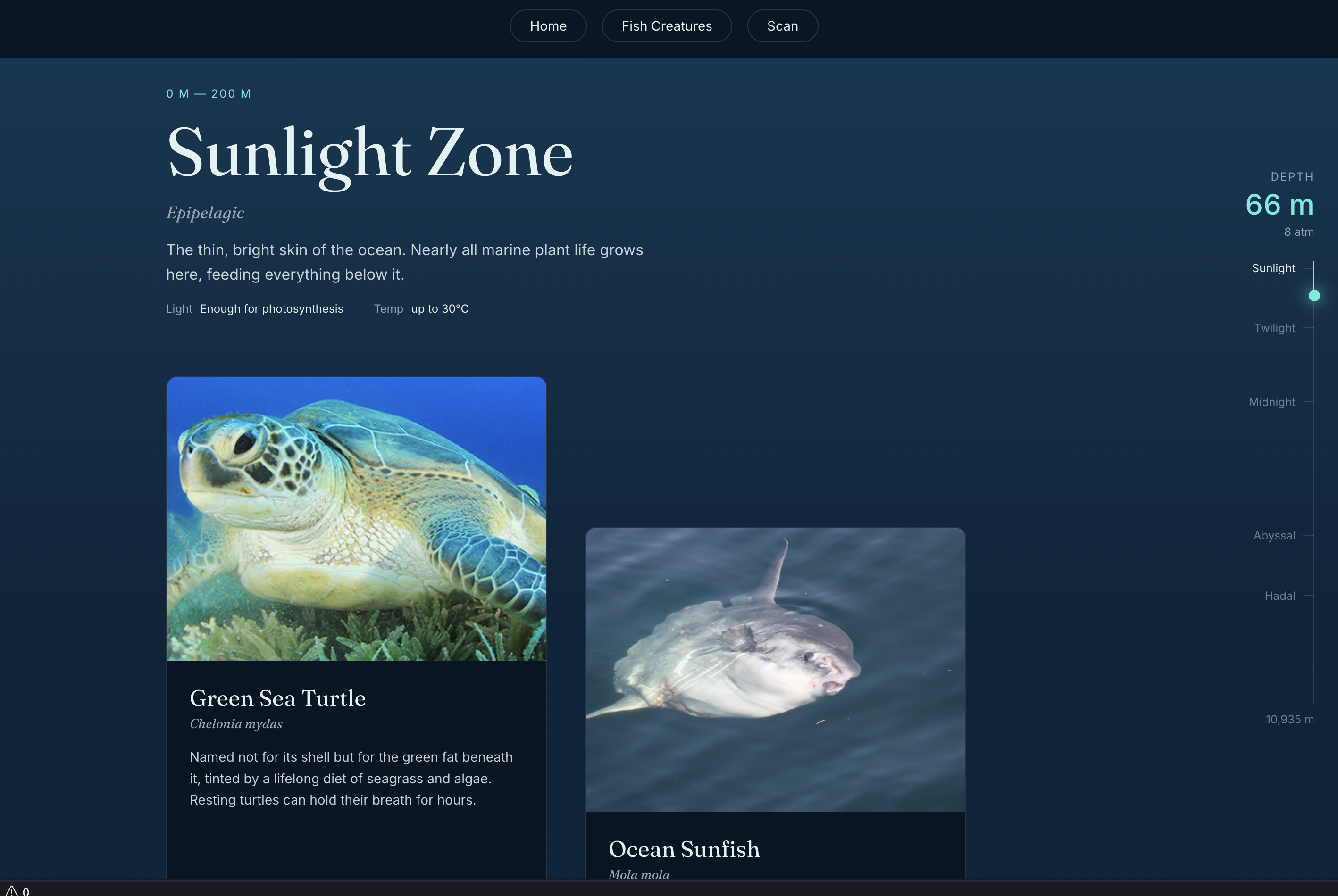
IdentiOcean is an interactive ocean education platform featuring Aqua AI, an AI-powered waste scanner. Users can use their camera to scan an item, and Aqua AI identifies the object, its likely material, waste category, and confidence level. IdentiOcean then connects that item to disposal guidance, environmental impact information, and deep-sea animals that can be affected by pollution. Our goal is to turn waste identification into an educational experience that helps users understand their impact on the ocean.
How we built it
We built IdentiOcean using React and Vite for the frontend and Java with Spring Boot for the backend. The scanner uses the device camera and ZXing for barcode functionality. Images are sent from the React frontend to our Spring Boot API, which sends them to OpenAI's vision model for analysis. We structured the AI response into information about the item's name, material, category, and confidence. We then use curated environmental rules in the application to connect materials and waste categories to disposal guidance and deep-sea ecosystem impacts.
Challenges we ran into
One of our biggest challenges was getting the frontend, Java backend, camera, and AI service to communicate reliably. We also had to handle image uploads and make the AI return structured information instead of unpredictable text. Another challenge was designing the environmental recommendations responsibly—we didn't want the AI inventing disposal rules, since recycling and waste policies can vary by location. We therefore separated AI identification from our curated environmental guidance.
Accomplishments that we're proud of
We're proud that we turned an initial idea into a working end-to-end AI application. Our camera scanner can capture a real object, send it through our backend, analyze it with AI, and return a structured result to the user. We're also proud of combining technology with environmental education rather than creating just another object-recognition tool. The deep-sea animal connections help users understand that everyday waste can have consequences far beyond what they see around them.
What we learned
We learned how much work goes into connecting multiple technologies into one functioning application. We gained experience with React, Vite, Java, Spring Boot, APIs, computer vision, structured AI responses, camera integration, and Git/GitHub workflows. Most importantly, we learned that AI works best when it is paired with carefully designed application logic and curated information rather than being responsible for every decision.
What's next for Identi Ocean
Our next step is to make IdentiOcean more personalized and scalable. We want to expand the waste database, improve barcode/product recognition, and provide location-specific disposal guidance because recycling rules differ between communities. We also want to expand the ocean education experience with more marine species, interactive ocean exploration, and potentially a way for users to track their environmental impact over time.

Log in or sign up for Devpost to join the conversation.