
Inspiration
As developers, founders, and creators, our brains are constantly generating new ideas — for apps, startups, businesses, content, and solutions to everyday problems.
But ideas are fragile.
Some disappear within seconds. Others get quickly thrown into a notes app, buried somewhere between to-do lists, shopping lists, meeting notes, and random thoughts. We tell ourselves, "I'll come back to this later."
Most of the time, we never do.
A potentially brilliant - maybe even billion-dollar - idea can end up forgotten under hundreds of notes.
That made us think: As founders, we love solving other people's problems. Why haven't we solved this problem for ourselves?
That's what inspired Ideary - a dedicated place to quickly capture, organize, and develop ideas before they disappear.
What it does
Ideary is a local-first idea capture app designed to make sure good ideas don't disappear into cluttered notes or get forgotten.
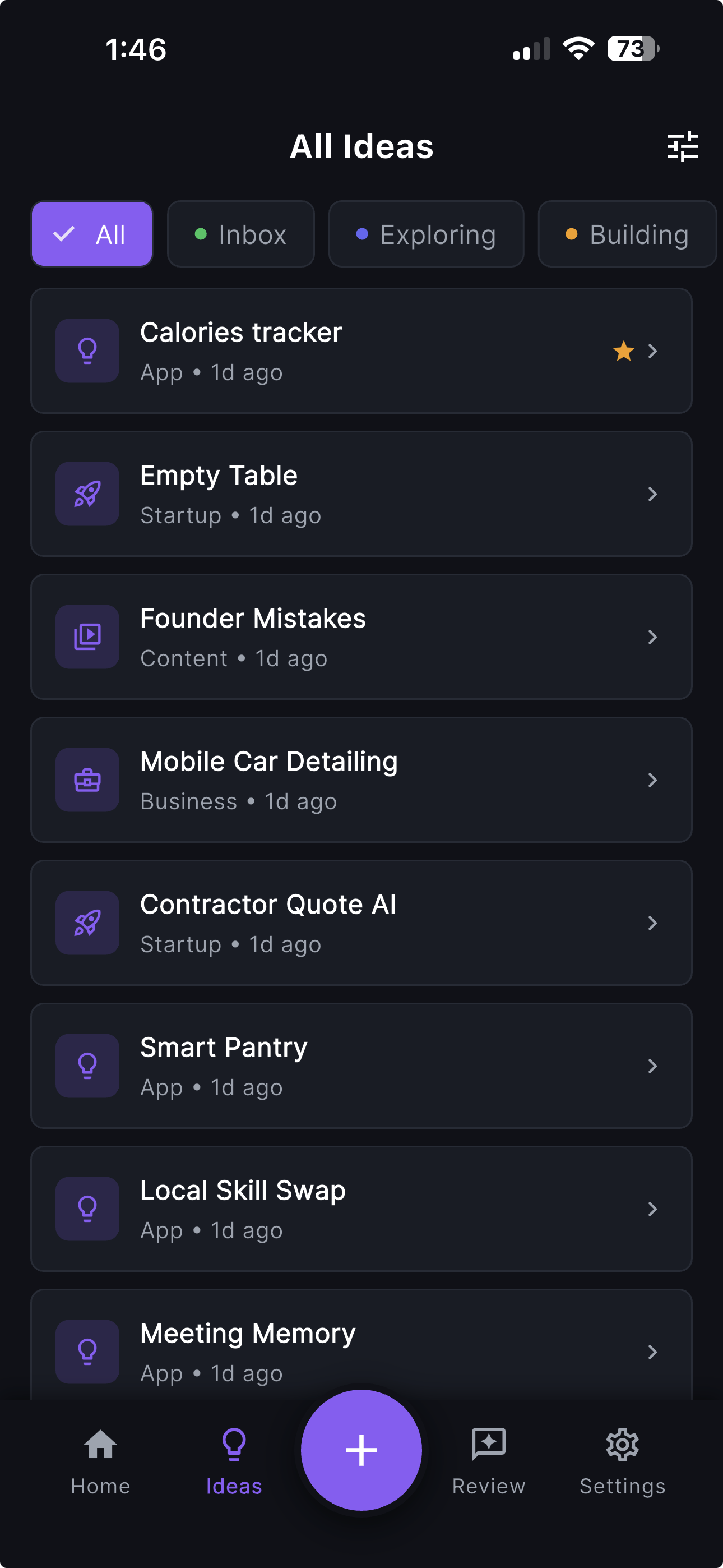
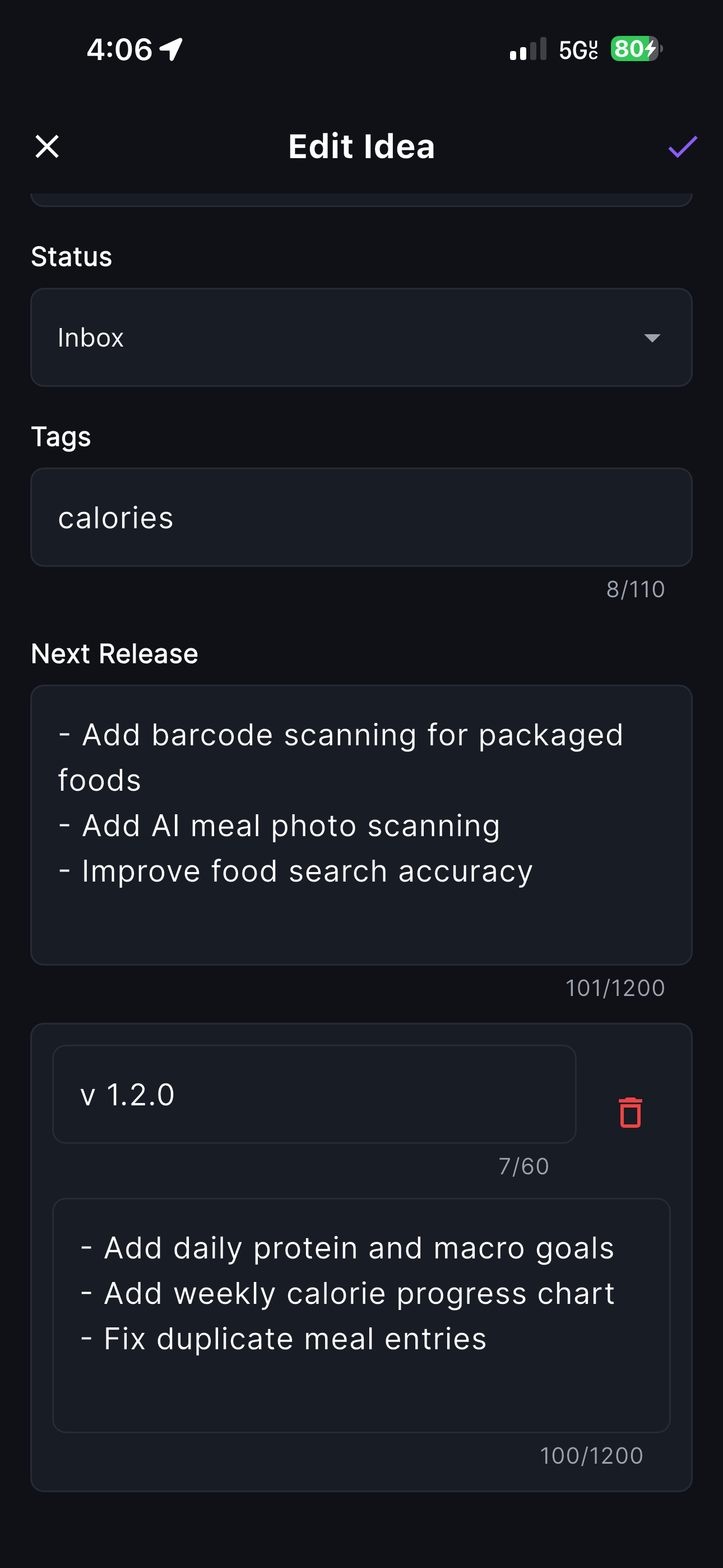
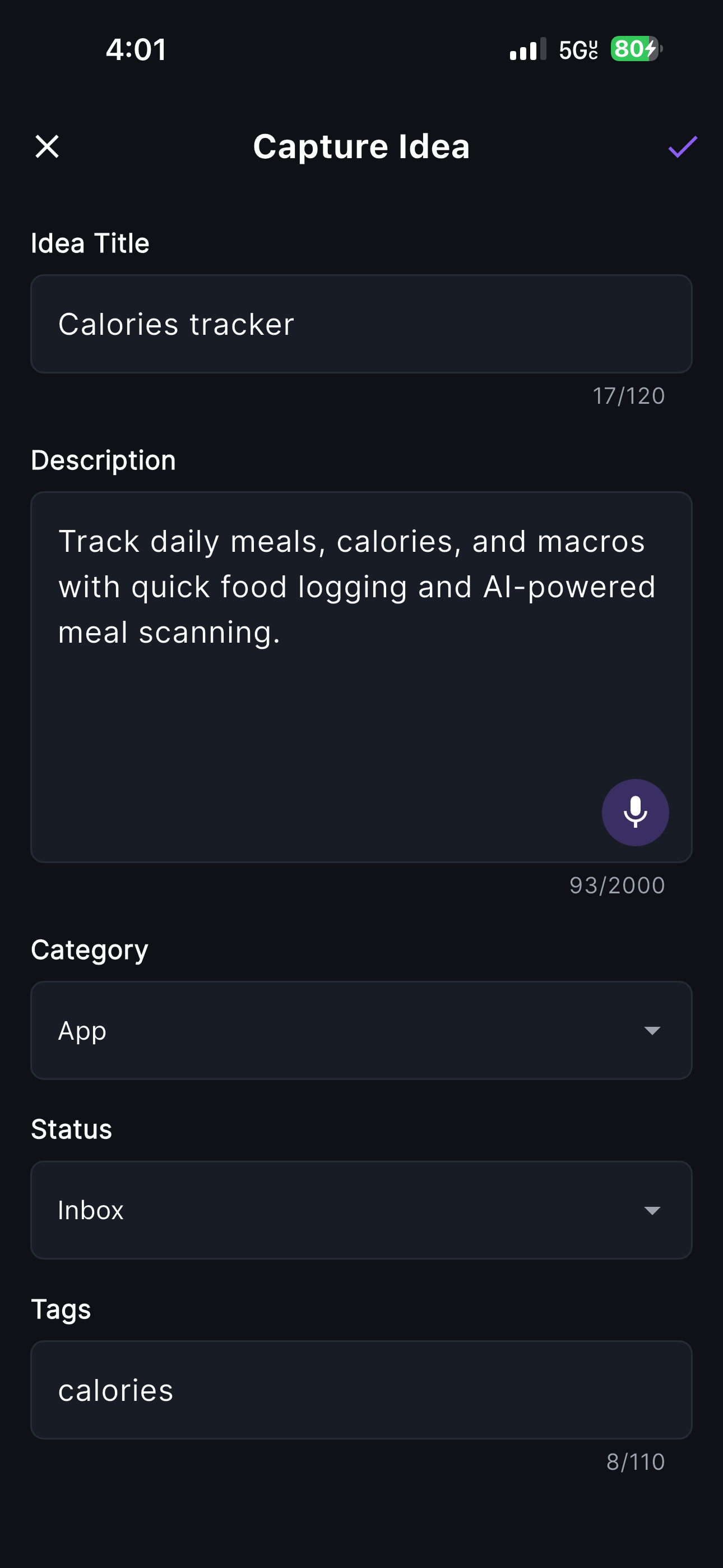
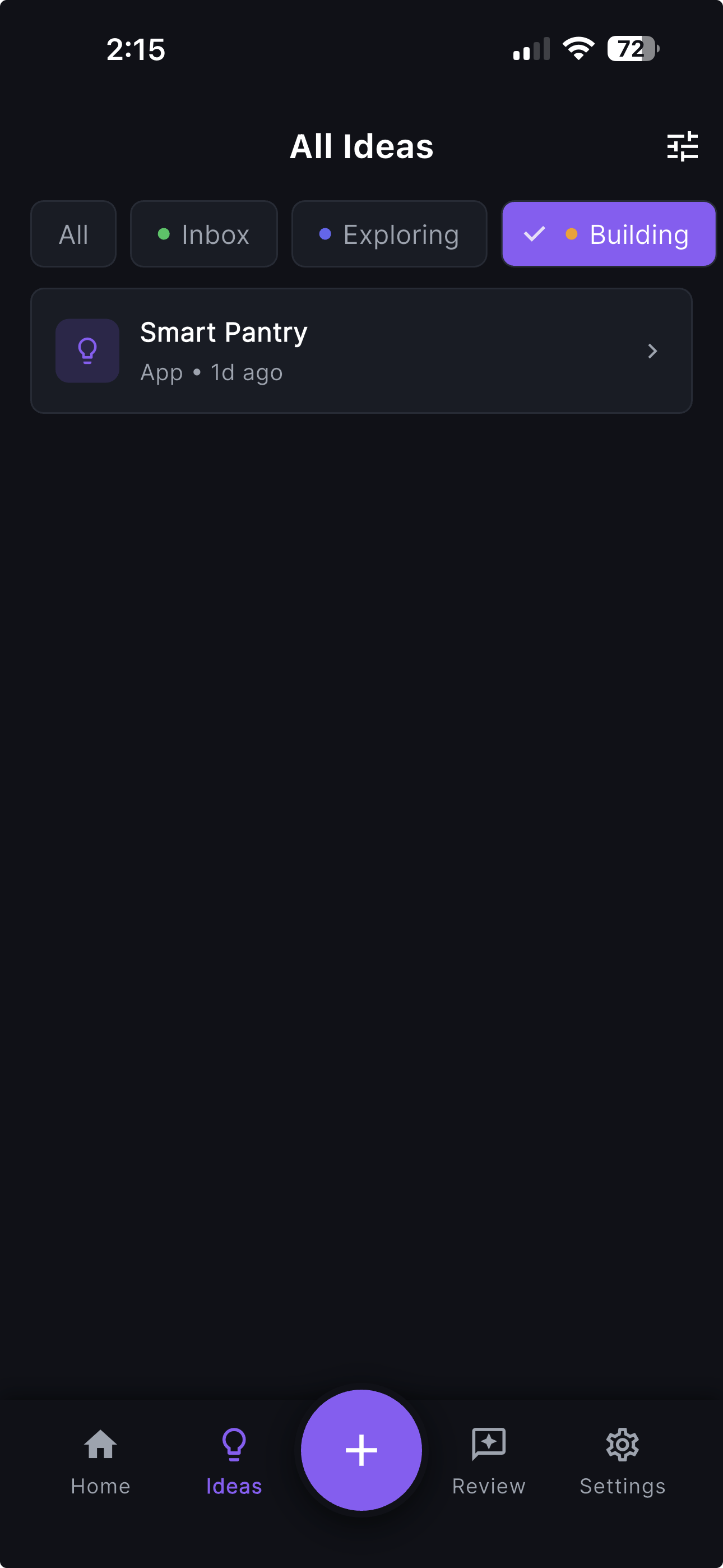
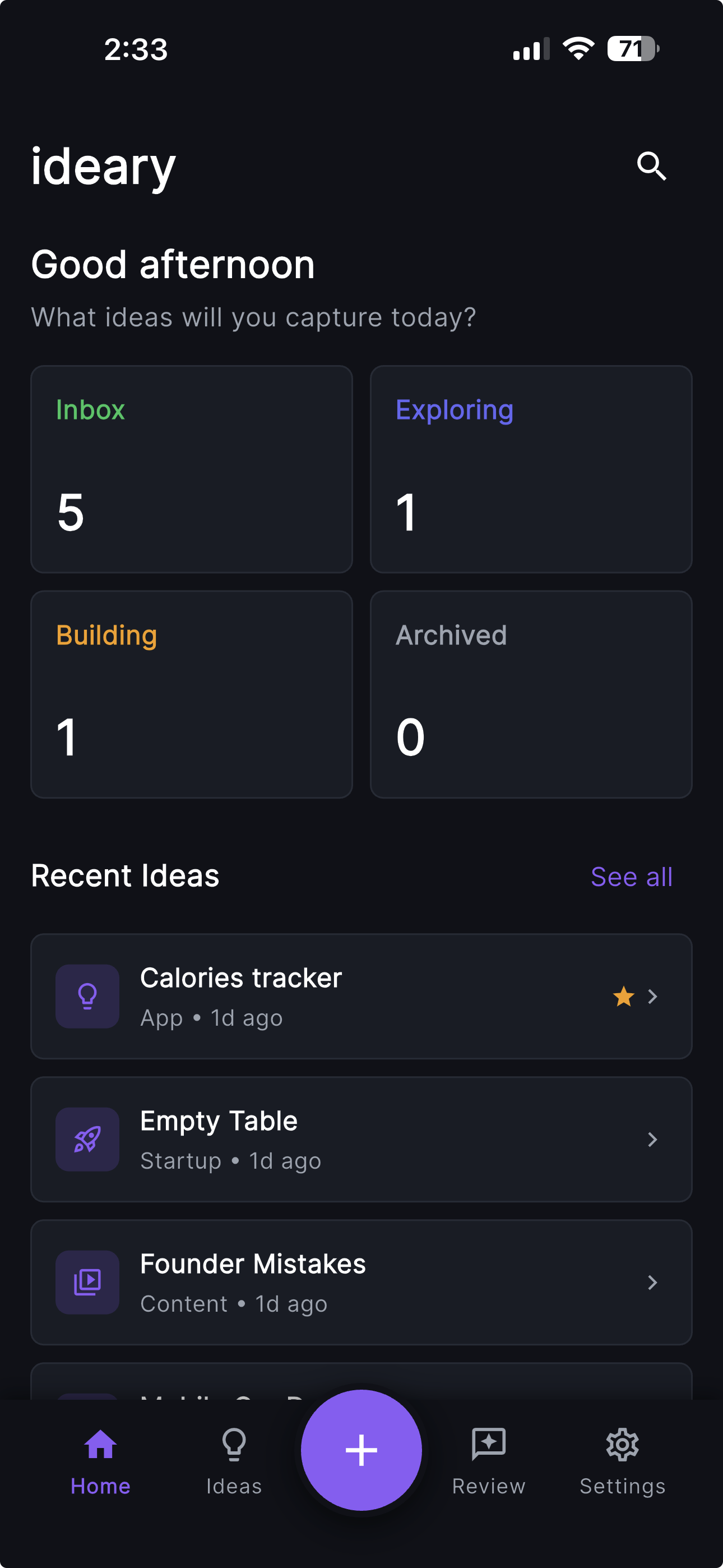
Users can quickly capture an idea with a title and description, organize it by status, add notes about what they want to build or improve next, and revisit their ideas later.
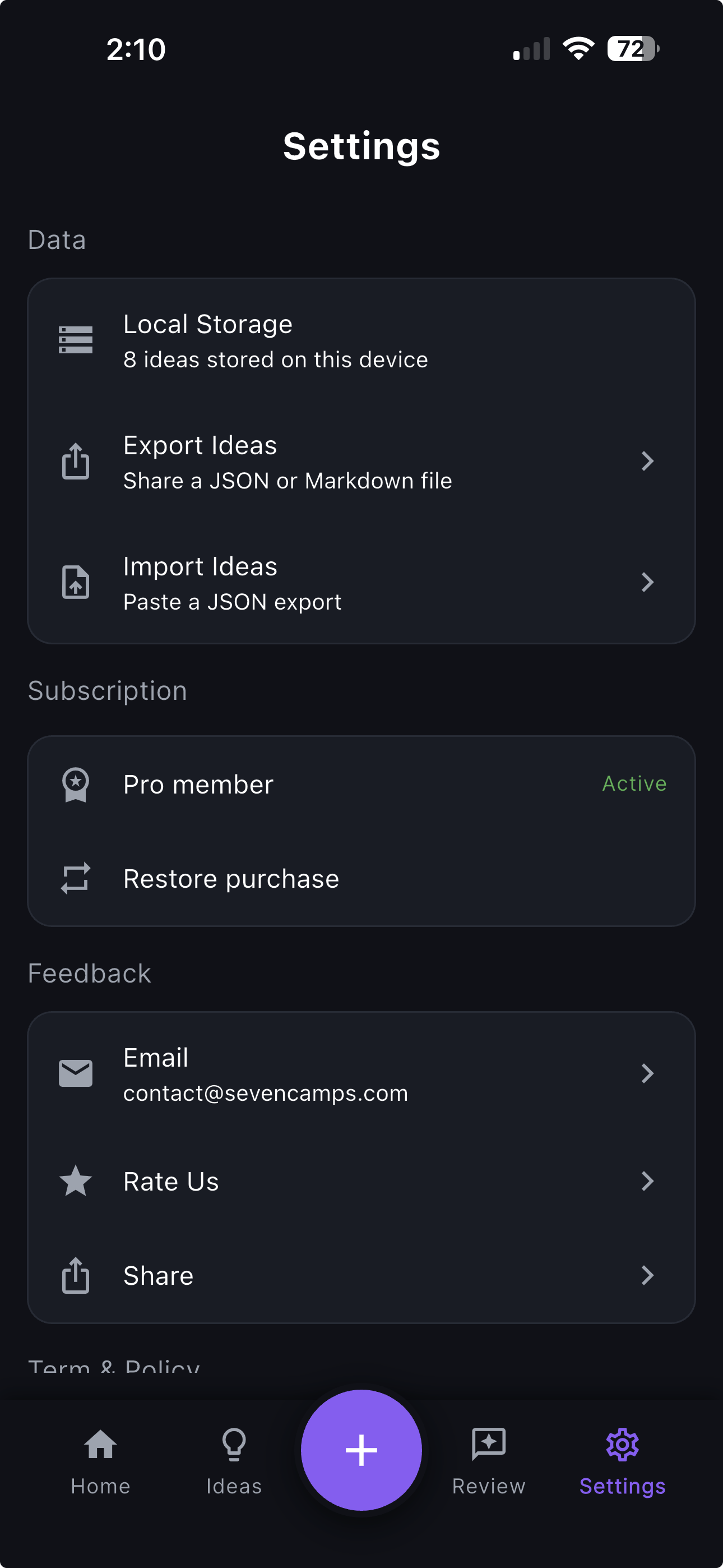
Ideary also supports voice capture for those moments when typing is too slow. Ideas are stored locally on the user's device, giving users control over their data without requiring an account or cloud connection.
The goal is simple: reduce the friction between having an idea and actually saving it.
How we built it
Ideary was built as a mobile-first application with a strong focus on simplicity, speed, and local-first storage.
We designed the experience around a lightweight idea workflow:
Idea → Capture → Organize → Develop → Revisit
Instead of turning Ideary into another complicated project-management tool, we intentionally kept the product focused on capturing and developing ideas.
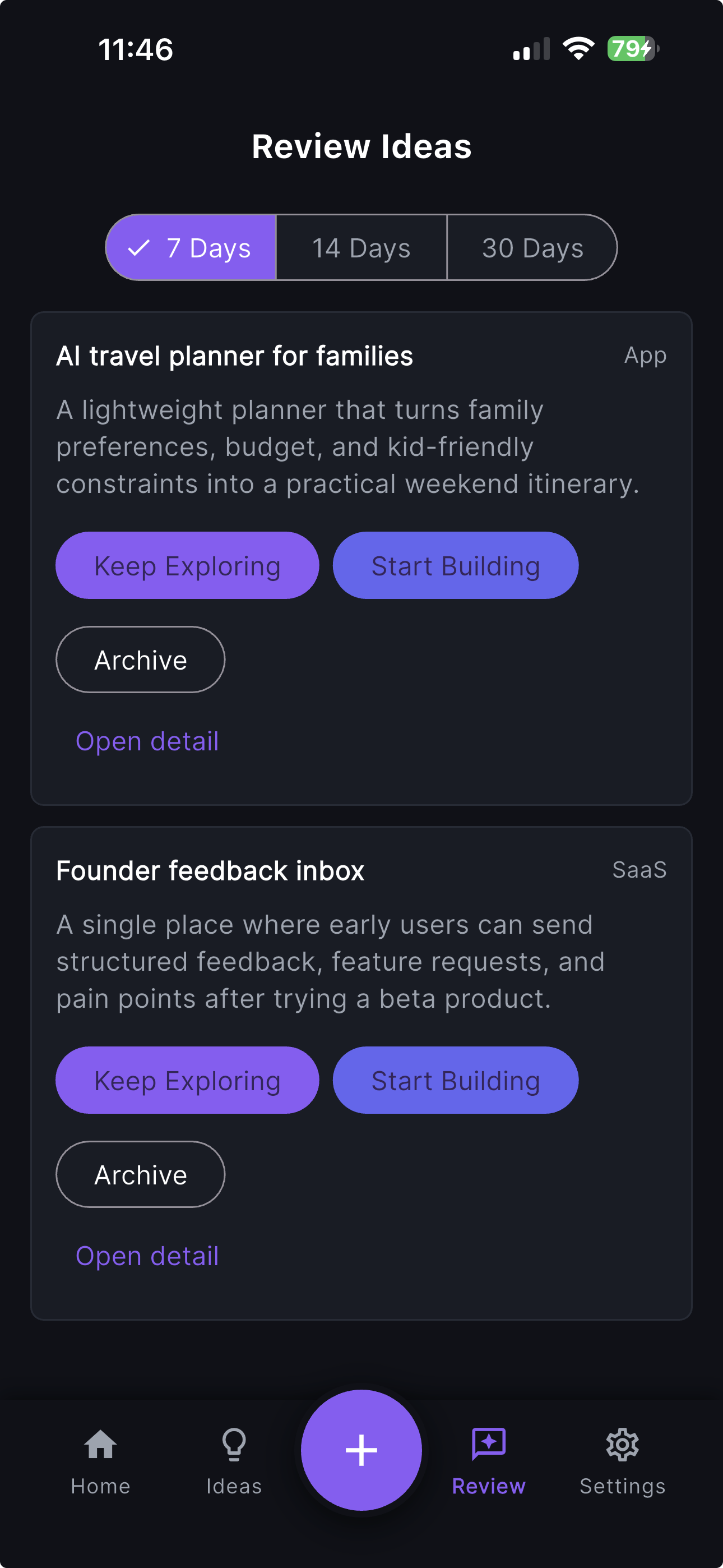
The app includes structured idea storage, status tracking, voice-based capture, search and organization, and import/export functionality so users can back up and move their ideas.
We also designed the architecture so cloud sync can be introduced later without making it a requirement for using the core product.
Challenges we ran into
The biggest challenge was deciding what not to build.
Idea apps can quickly become overloaded with tasks, documents, AI features, collaboration, and project-management tools. We wanted Ideary to solve one problem well: helping people capture ideas before they disappear and giving those ideas enough structure to become something useful.
Another challenge was balancing convenience with privacy. Cloud-first storage would make synchronization easier, but it would also introduce accounts, authentication, infrastructure, and another place where users have to trust their data.
That pushed us toward a local-first approach.
We also had to make voice capture feel faster than simply typing an idea. If capturing an idea requires several screens or configuration steps, the feature defeats its own purpose.
Accomplishments that we're proud of
We're proud that Ideary evolved from a simple idea-vault concept into a focused product without becoming unnecessarily complicated.
Some of the things we're particularly proud of are:
- Building a fast idea-capture experience
- Supporting both text and voice capture
- Keeping ideas stored locally by default
- Creating a structured system for developing ideas beyond a basic notes app
- Adding import/export so users retain control of their data
- Building a clean foundation that can support more advanced features later
Most importantly, we built something we would actually use ourselves rather than adding features simply to make the product look bigger.
What we learned
One of the biggest lessons was that reducing friction is often more important than adding features.
When someone has an idea, they shouldn't have to decide which folder it belongs in, configure a project, create an account, or fill out a long form before saving it.
We also learned that local-first design creates different product decisions. Privacy and offline access improve, but backup, synchronization, and multi-device support become problems that need to be deliberately designed rather than automatically delegated to a cloud database.
Finally, building Ideary reinforced an important product lesson: an MVP becomes stronger when every feature supports the core problem instead of simply increasing the feature count.
What's next for Ideary
The next step is turning Ideary from a place where ideas are captured into a tool that helps users move promising ideas forward.
We're exploring features such as:
- Optional cloud backup and synchronization
- Better idea organization and filtering
- AI-assisted idea development
- Turning rough thoughts into structured concepts
- Finding connections between related ideas
- Helping users identify ideas they haven't revisited
- More flexible voice capture
- Improved backup, import, and export
The long-term vision is for Ideary to become a private workspace where an idea can start as a five-second thought and gradually develop into something worth building.

Log in or sign up for Devpost to join the conversation.