-
-
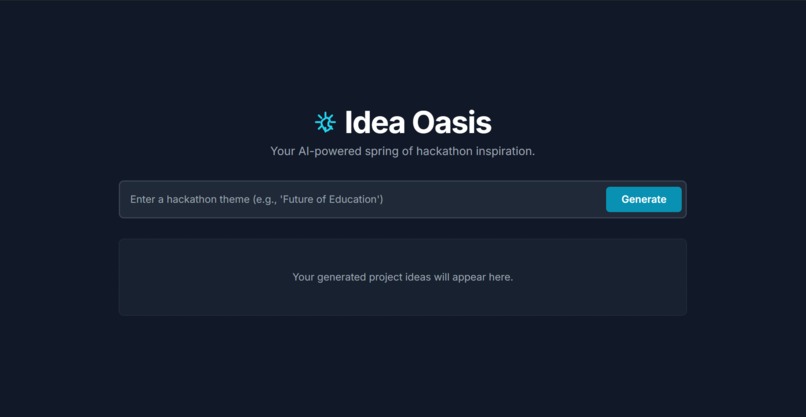
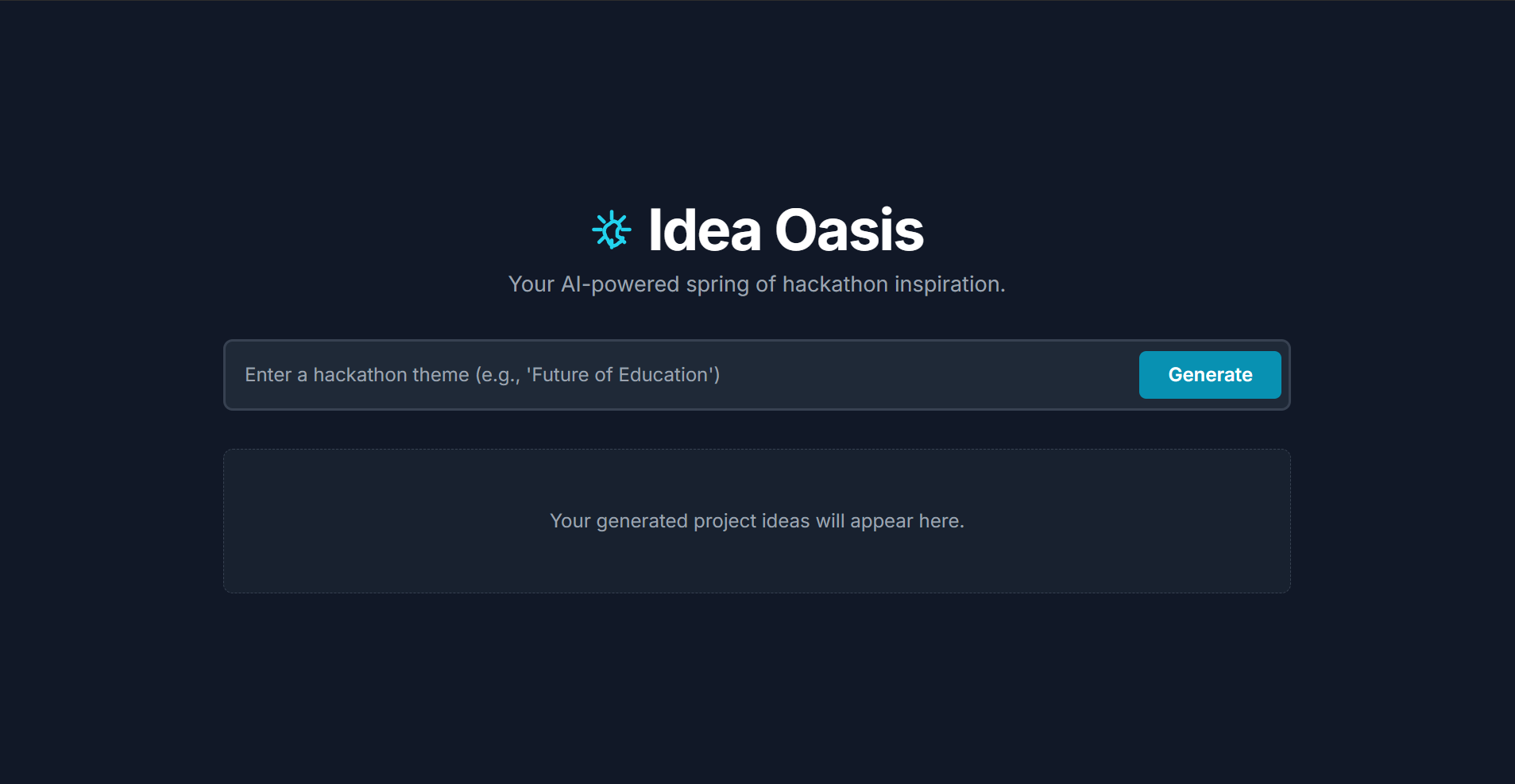
The clean and intuitive user interface of Idea Oasis.Users simply enter a hackathon theme to kickstart the AI-powered brainstorming process.
-
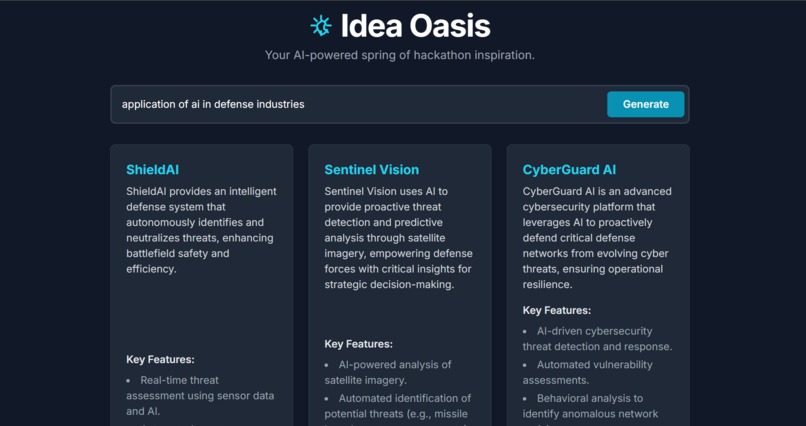
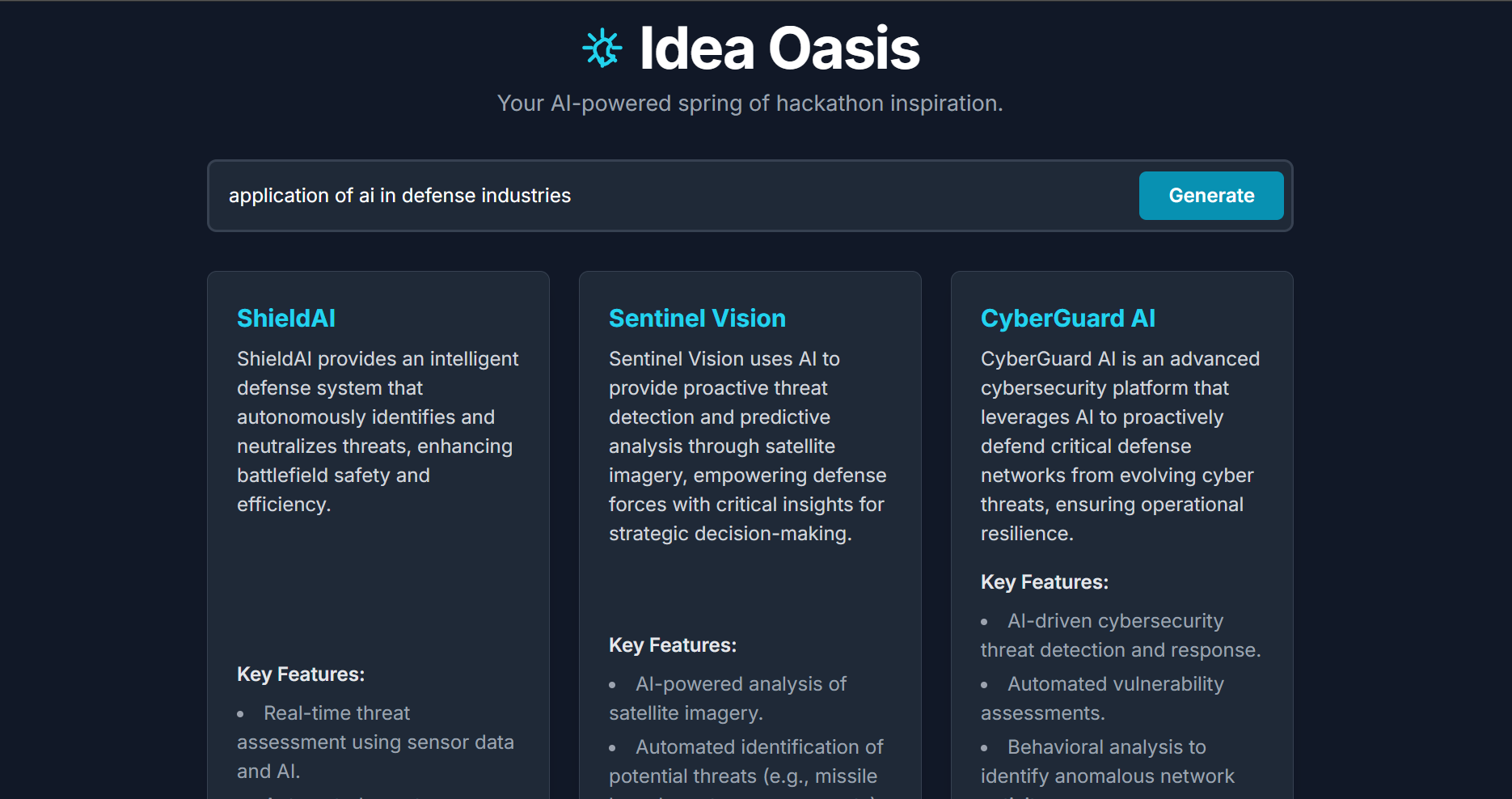
Here, Idea Oasis has generated three distinct, detailed project ideas for the theme 'application of ai in defense industries'.
Inspiration
The inspiration for Idea Oasis came from a shared experience, a universal pain point for every hackathon participant: the dreaded "idea block." We've all been there—staring at a new theme, feeling the pressure mount as the clock ticks down, and watching precious hours get lost in brainstorming sessions that go nowhere. We wanted to build a tool to solve a problem we've personally and repeatedly faced. Our goal was to create a "hack for the hackers," a utility that kickstarts creativity and collaboration right from the very beginning.
What it does
Idea Oasis is a sleek, AI-driven web application that transforms a hackathon theme into a curated list of innovative, well-structured project ideas in seconds. It eliminates brainstorming paralysis by providing users with a project name, a compelling pitch, key features, and a suggested tech stack, allowing teams to jump straight into building.
How we built it
We chose a modern, fast, and scalable stack to bring our vision to life. The frontend is built with React for its powerful component-based architecture, which allowed us to create a modular and maintainable UI. For styling, we used Tailwind CSS to rapidly develop a clean, professional, and fully responsive interface.
The core magic of Idea Oasis is powered by the Google Gemini API. Our key technical decision was to move beyond simple text generation and leverage the model's structured JSON output capability. By defining a specific responseSchema, we could command the AI to return consistently formatted data, effectively treating the LLM like a reliable, predictable API endpoint. The entire application is designed for CI/CD and is deployed seamlessly on Vercel.
Challenges we ran into
Our primary technical hurdle was ensuring data reliability from the Gemini API. Crafting the perfect prompt and a robust responseSchema to consistently get well-formed JSON without errors required significant iteration and fine-tuning. It was a delicate balance between giving the AI creative freedom and enforcing a strict output structure. Another challenge was managing the asynchronous nature of the API call within a React application, ensuring the UI provided clear loading and error states.
Accomplishments that we're proud of
We are incredibly proud of successfully building a fully functional and polished application within the hackathon timeframe. Our biggest accomplishment is the technical implementation of using the Gemini API for structured JSON generation. This moves beyond a simple chatbot and treats the LLM as a predictable, data-driven backend, which is a powerful and modern approach to AI integration. We built a tool that is not just a proof-of-concept but is genuinely useful and ready for hackers to use today.
What we learned
This project was a fantastic deep dive into practical AI integration. Our biggest takeaway was learning how to use LLMs as a structured data source, a powerful paradigm that opens the door for creating truly dynamic applications. We also sharpened our skills in modern React state management, particularly for handling the complete lifecycle of an API request (loading, success, error). Most importantly, we learned how to build a tool that is not just technically impressive but is designed to be genuinely useful for its target audience.
What's next for IdeaOasis
Idea Oasis is a complete and working prototype, but we have a vision for more:
User Accounts & Favorites: Allow users to save their favorite generated ideas.
Team Collaboration: Introduce features to share generated idea lists with team members.
Idea Customization: Allow users to fine-tune generated ideas by specifying desired technologies or complexity.
Direct to GitHub: Add a feature to create a new GitHub repository with a boilerplate structure based on the chosen tech stack.
Built With
- api
- css
- gemini
- javascript
- react
- tailwind
- vercel

Log in or sign up for Devpost to join the conversation.