-
-
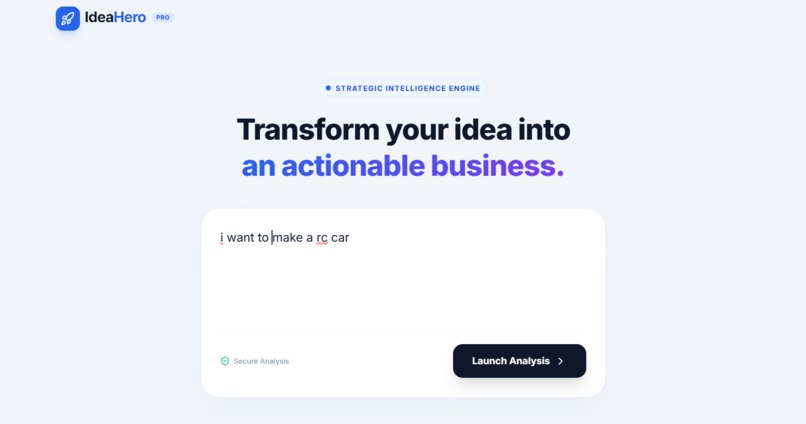
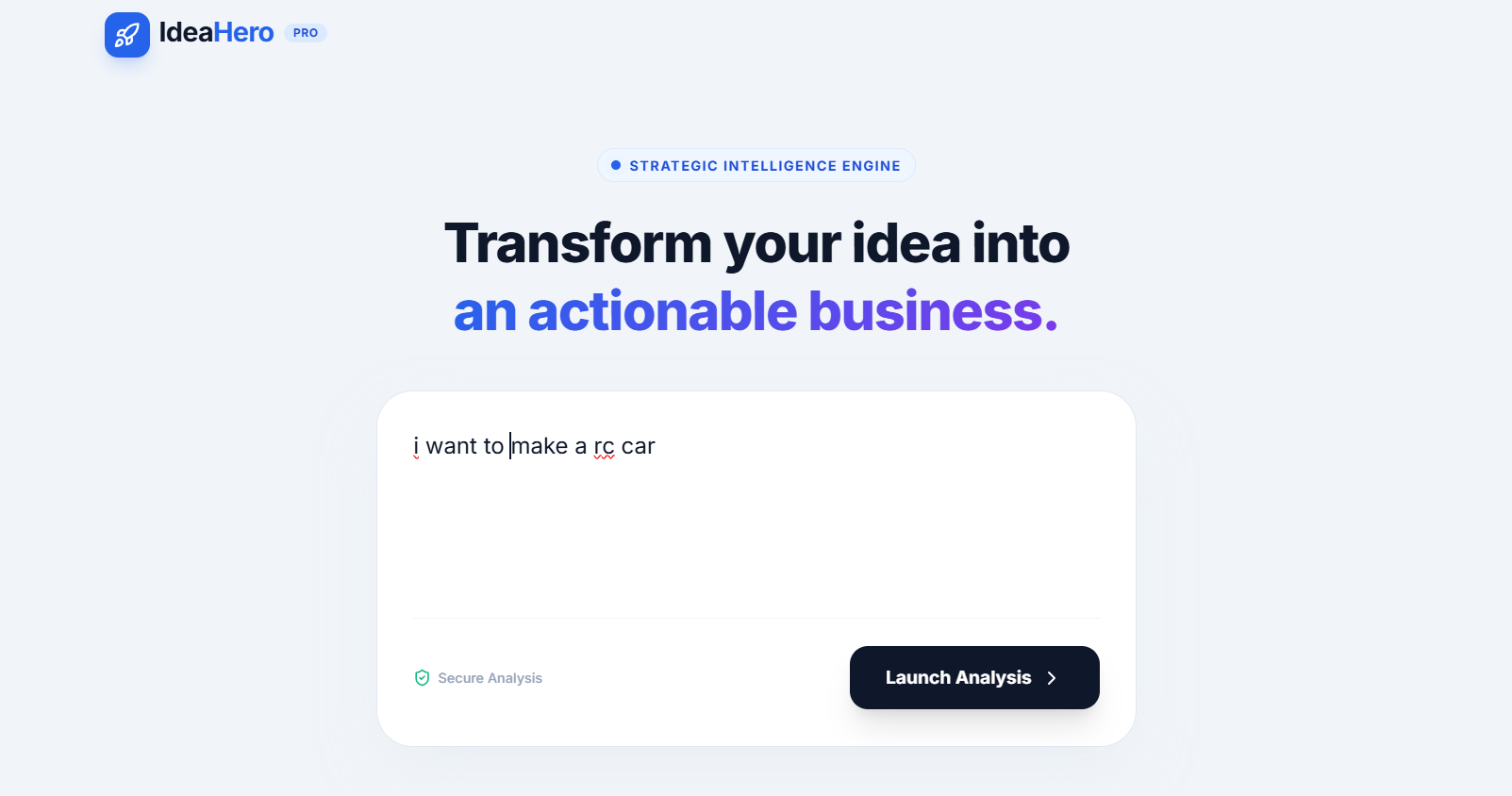
describe your idea
-
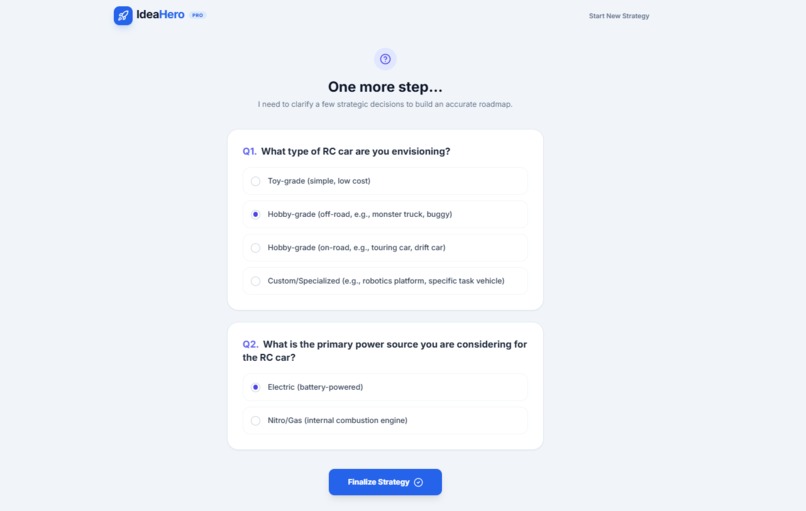
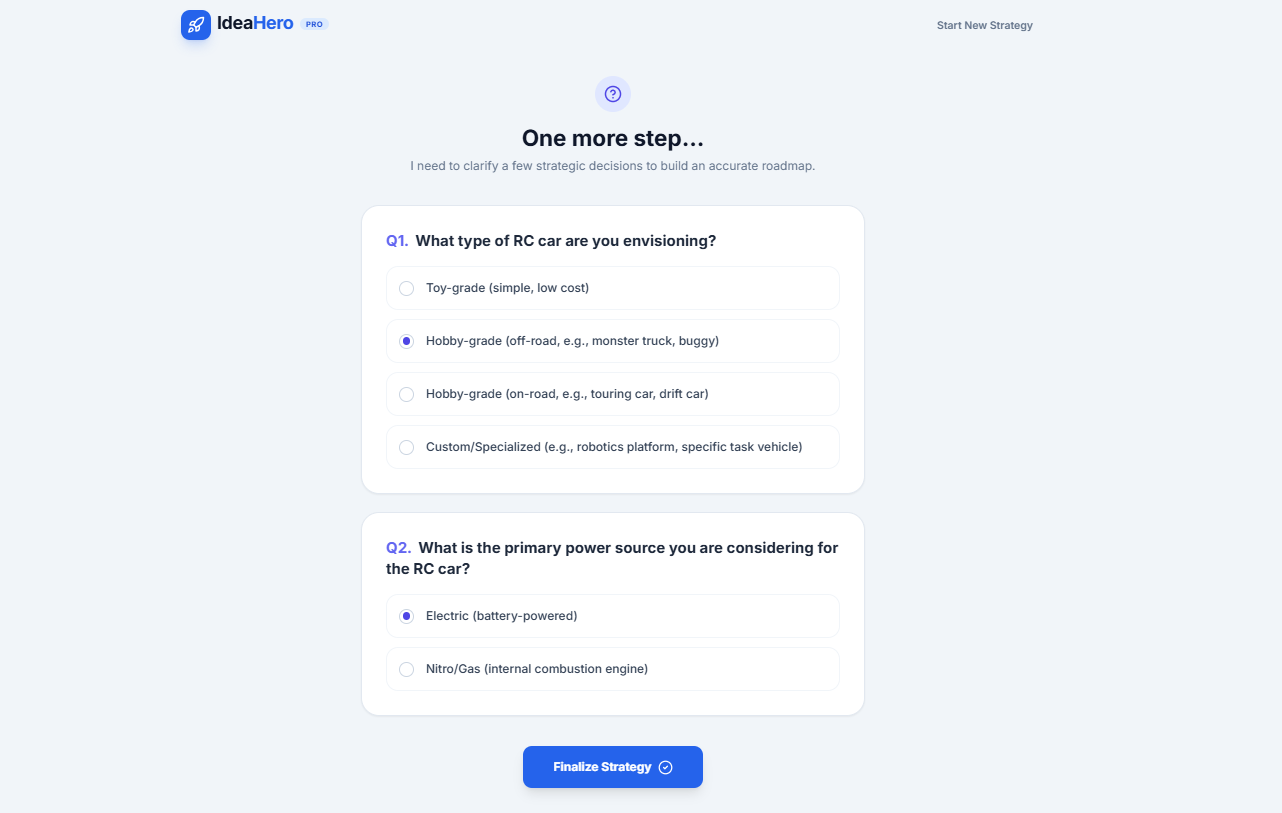
be more specific by selecting the options
-
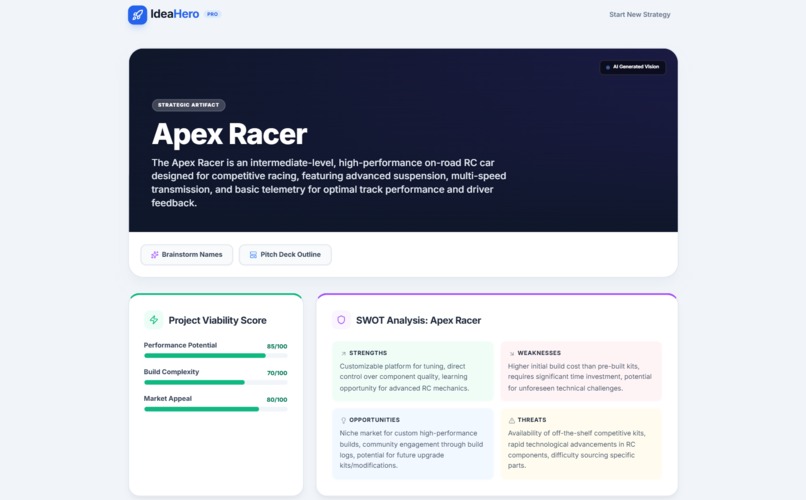
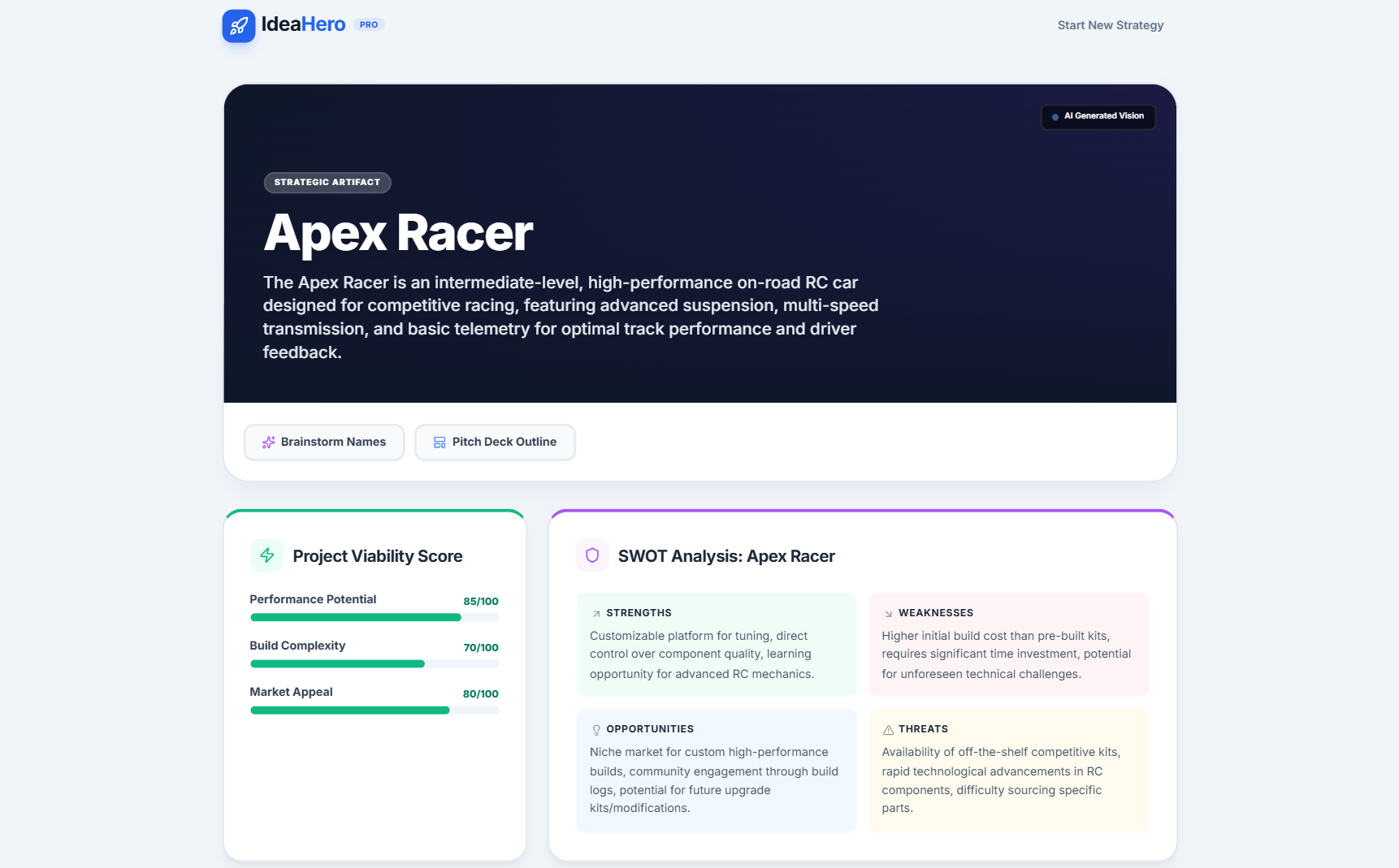
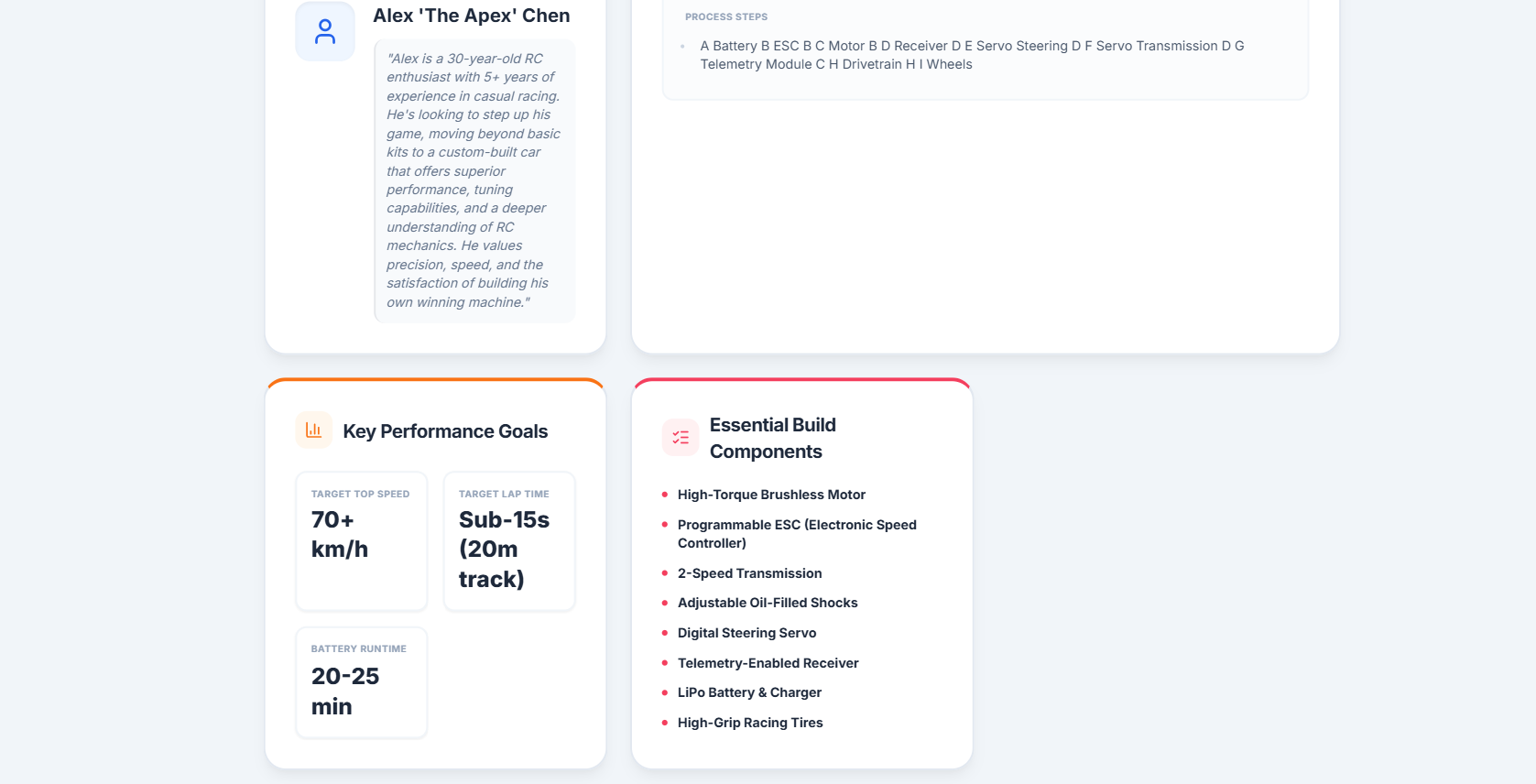
describes the name and also some statistics
-
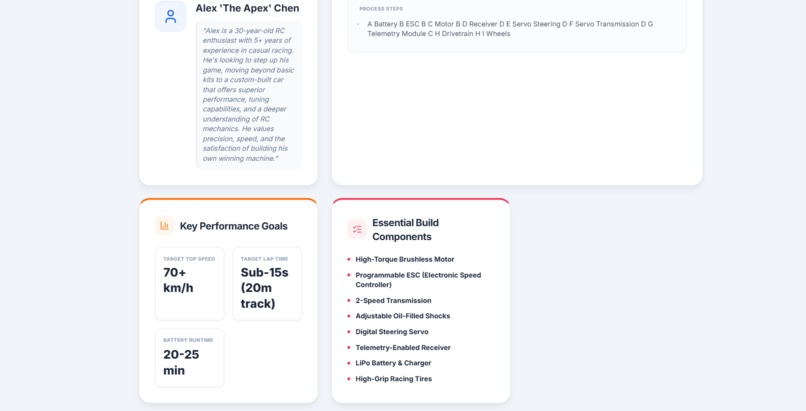
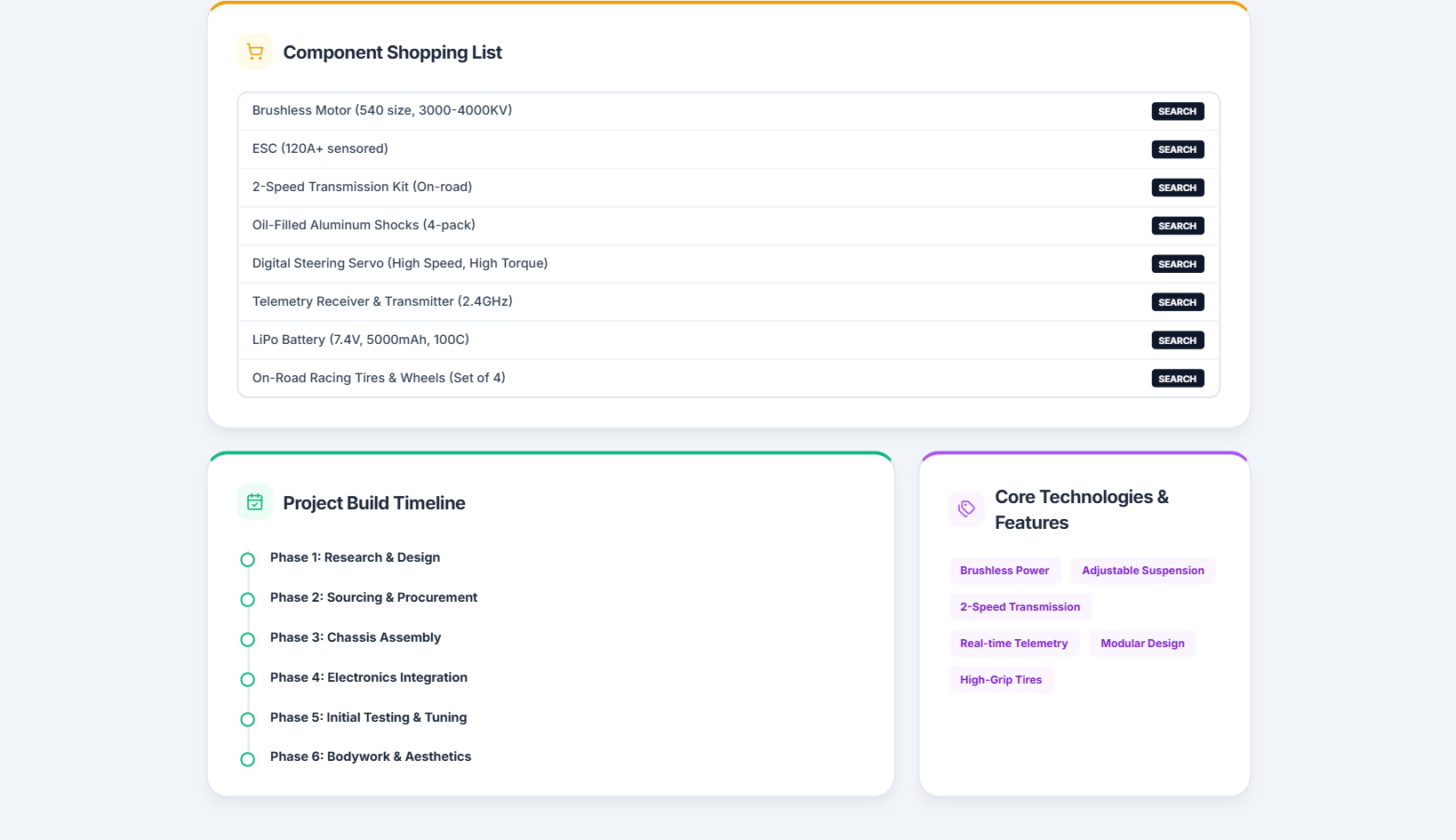
displays more details of roadmap
-
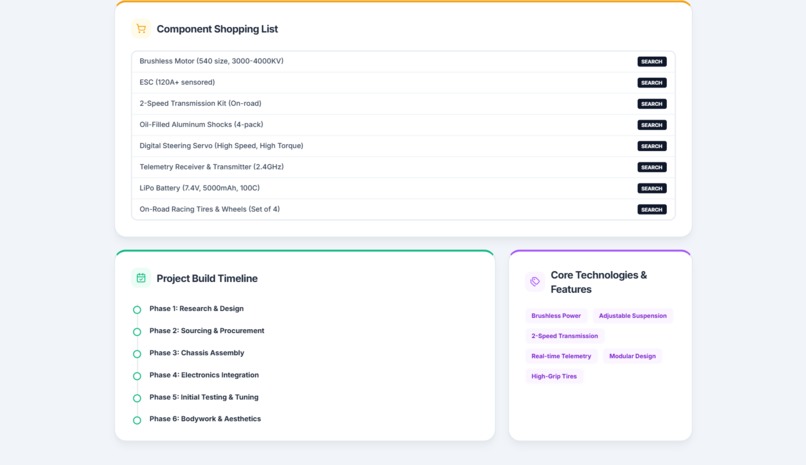
also displays components required and also links to shop them.
Inspiration : The journey of a founder is chaotic. Every day, thousands of brilliant ideas are born, but the vast majority fizzle out because the leap from a cool concept to a structured execution plan is incredibly daunting. We noticed that early-stage founders often lacked access to the high-end strategic frameworks, SWOT analyses, and clear roadmaps that elite venture capitalists and accelerators use.
We wanted to democratize this process. The inspiration for IdeaHero was to build an elite, AI-driven intelligence engine that doesn't just give generic text advice, but acts as a strategic co-founder, transforming raw ideas into actionable, visually stunning launch plans.
What it does : IdeaHero is a strategic intelligence engine that turns your startup idea into a comprehensive, customized dashboard.
When you enter an idea, the AI analyzes it and asks smart, multiple-choice clarifying questions if the concept is too vague. Once it understands your vision, it generates a highly personalized strategic dashboard. Instead of a fixed template, the AI dynamically selects the most relevant widgets for your specific business. This includes Gamified Scorecards to rate feasibility, 2x2 SWOT Analysis grids, Target User Personas, actionable Execution Timelines, and beautifully generated cover art to give your project a premium visual identity.
How we built it : We designed IdeaHero to be incredibly fast and lightweight, eliminating the overhead of heavy JavaScript frameworks.
The frontend is built entirely with vanilla HTML, CSS, and JavaScript, utilizing Tailwind CSS for a beautiful, glassmorphic design system with staggered cascade animations.
The brain of the operation is powered by the Google Gemini 2.5 Flash API. By leveraging strict JSON schema enforcement, we forced the AI to return deeply nested objects, effectively turning the LLM into a dynamic UI layout designer. For visuals, we integrated Google's Imagen 4.0 model to generate 16:9 abstract cover artifacts, and we implemented Mermaid.js to dynamically render complex flowcharts directly from the AI's output.
Challenges we ran into : Building an application that relies entirely on client-side AI integration came with a unique set of hurdles:
First, because the app is a pure front-end static site hosted on Netlify, making direct calls to Google's API triggered Cross-Origin Resource Sharing (CORS) blocks. We had to carefully pivot to stable production endpoints to ensure the browser requests were accepted.
Second, hiding an API key on a client-side application is notoriously difficult. We had to navigate Netlify's automated Secret Scanners, which actively blocked our deployments, ultimately utilizing deployment workarounds to successfully launch the app without leaking keys to public repositories.
Finally, we faced a conflict when asking the AI to simultaneously utilize the Google Search Tool and output strict JSON for the dynamic dashboard. The model struggled to balance live web browsing with complex schema formatting, resulting in bad request errors. We resolved this by strategically toggling the search tool flag off for the final UI-generation step.
Accomplishments that we're proud of : We are incredibly proud of building a fully dynamic, component-driven rendering engine. Instead of forcing every startup into the same generic layout, the AI acts as the art director, deciding exactly which widgets and color themes best represent the user's idea.
We are also proud of the application's resilience. To handle intermittent network failures gracefully, we wrote a custom exponential backoff algorithm that mathematically scales retry attempts, vastly improving the user experience without spamming the API. We achieved a highly polished, production-ready feel using nothing but vanilla web technologies.
What we learned : This project was a masterclass in advanced prompt engineering and client-side architecture. We learned how to push the boundaries of strict JSON schema enforcement, proving that you can use an LLM not just to generate text, but to dictate structural UI rendering. We also gained a deep, practical understanding of network security, CORS policies, and the intricacies of static site deployments.
What's next for IdeaHero (Idea to Startup Ai) : The immediate next step is migrating the API calls to a secure backend architecture, like Netlify Edge Functions, to fully secure our API keys and enable production-scale usage.
From there, we plan to implement user authentication so founders can save multiple project iterations. We also want to re-integrate the live web search tool using a multi-agent approach, allowing IdeaHero to pull real-time competitor analysis, live market trends, and accurate component pricing directly into the strategic dashboard. Finally, we aim to add an export feature so founders can instantly download their dashboards as PDF pitch decks to share with investors.
Built With
- css3
- gemini-api
- html5
- imagen-4.0
- javascript
- lucide-icons
- mermaid.js
- netlify
- tailwind-css

