📡 About IdeaRadar
💡 What inspired me
As builders and hackers, we constantly come up with new app ideas, side projects, and startup concepts. But the hardest part is usually validation—knowing if the market actually needs it, who the competitors are, and if the timing is right. Usually, this means spending hours manually Googl-ing, reading news articles, and hunting for market sizing (TAM/SAM/SOM) data.
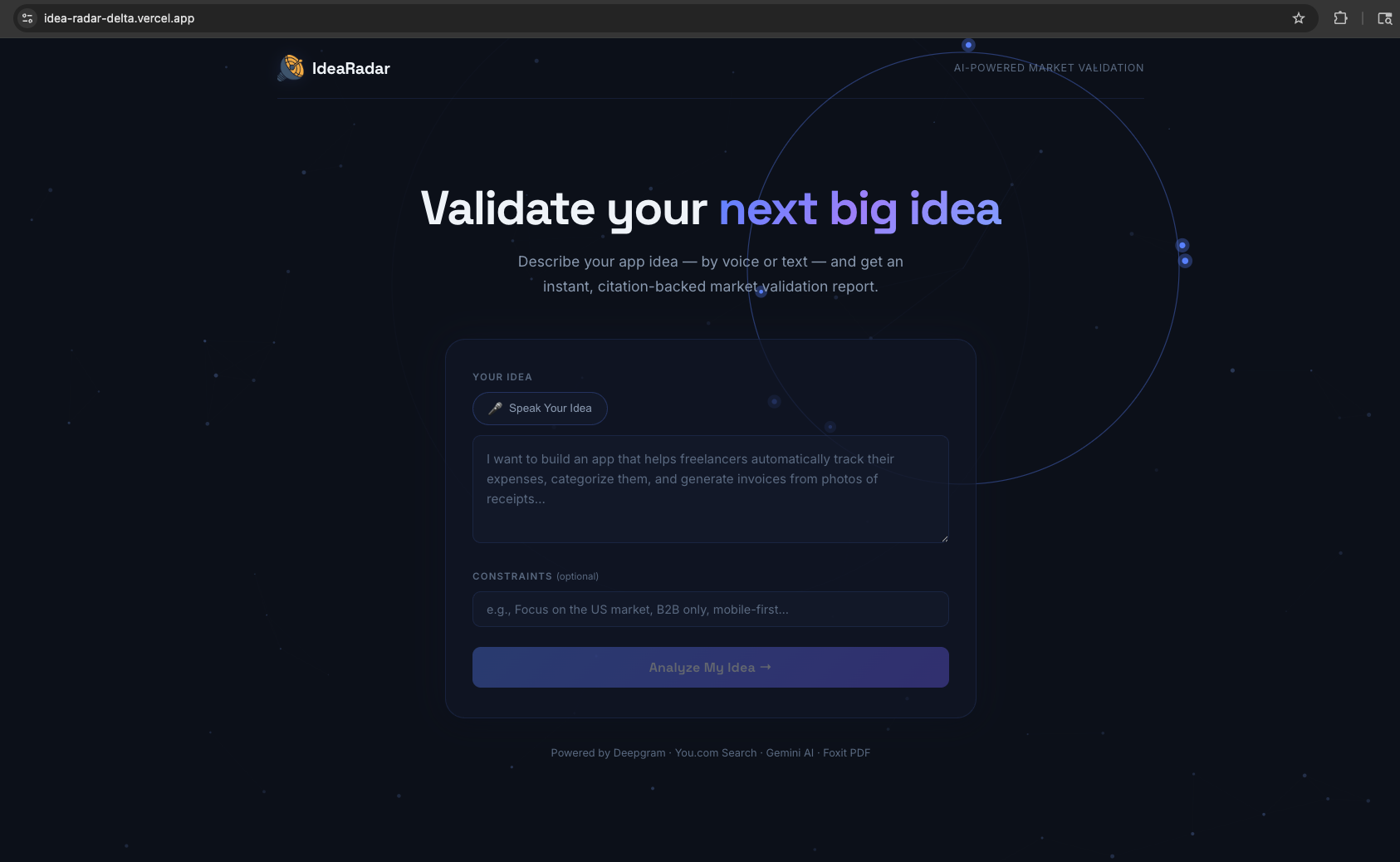
I was inspired to build IdeaRadar to automate this entire painful process. I wanted a tool where I could just speak my raw idea out loud, and instantly get back a comprehensive, citation-backed market research report that tells me if the idea is viable, who I'm up against, and how I should pivot to stand out.
🛠️ How we built it
IdeaRadar is built natively on Next.js 14 using the App Router for a fast, server-rendered experience.
The core pipeline works by orchestrating four powerful APIs in parallel:
- Deepgram: We implemented real-time WebSocket audio streaming using Deepgram's Nova-3 model so users can fluidly dictate their ideas into the app with incredible accuracy.
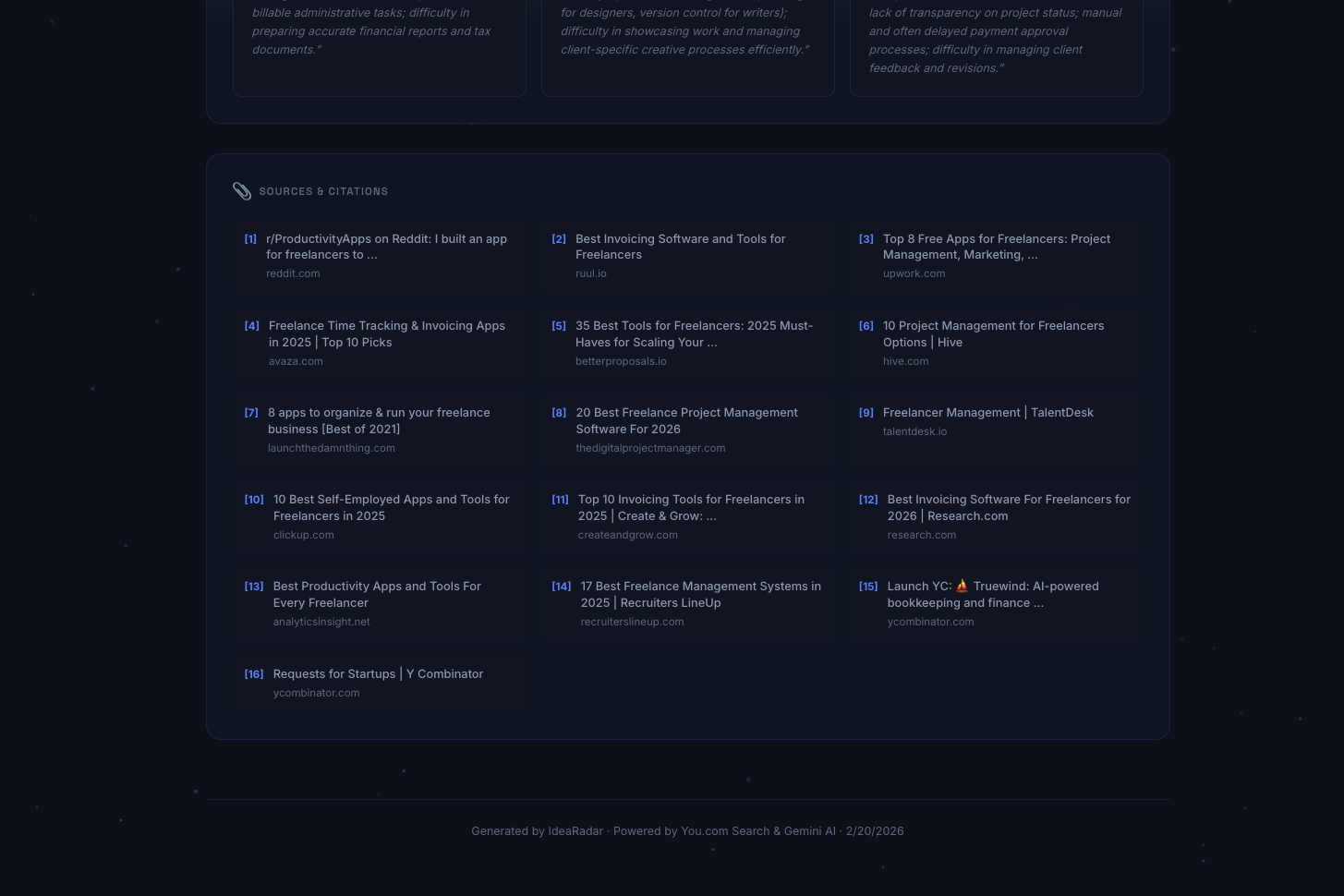
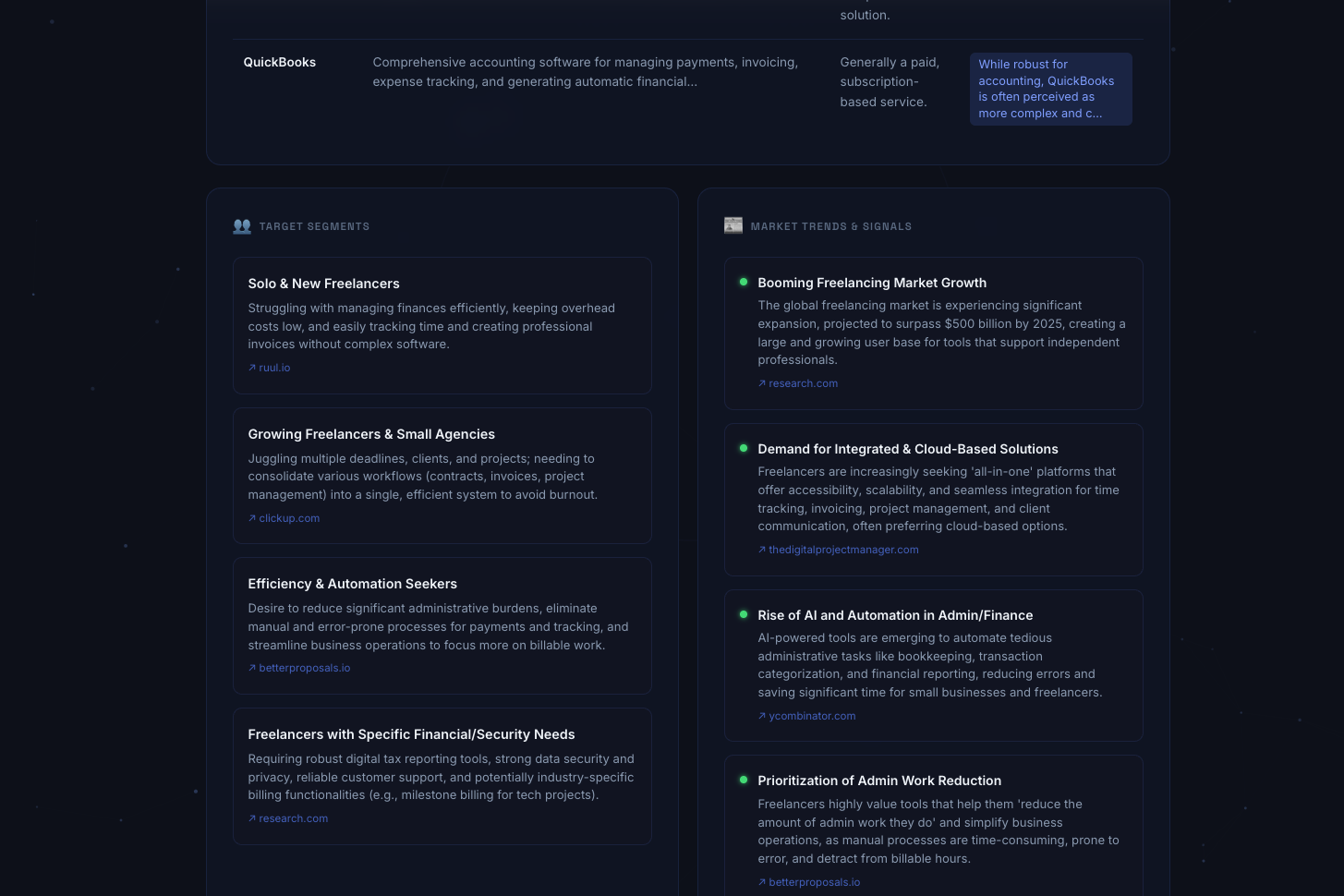
- You.com Search & News APIs: Once the idea is captured, the backend fires off parallel requests to You.com. One query hunts down direct competitors and market sizing metrics, while another scans the web for real-time news, funding signals, and market trends related to the industry.
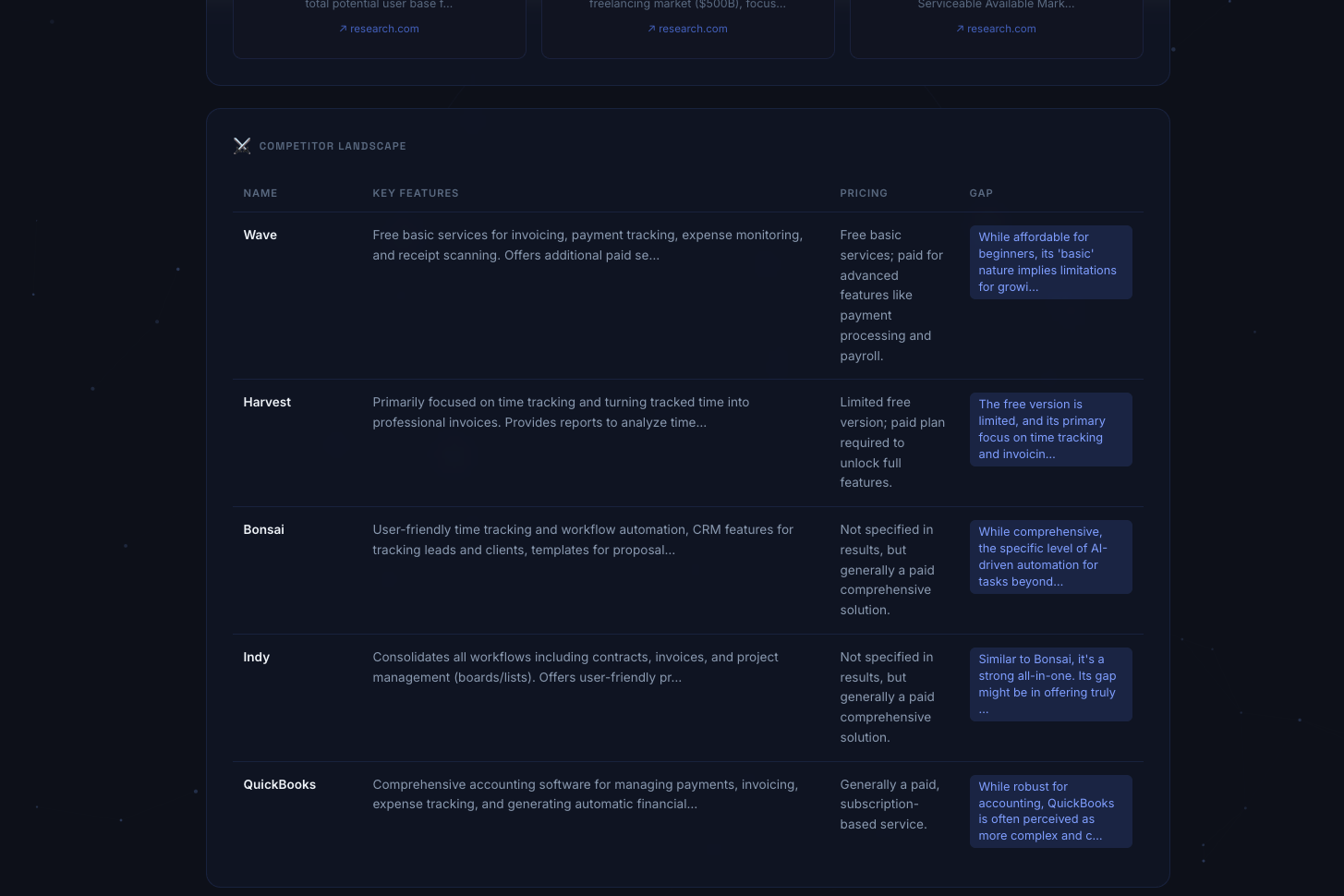
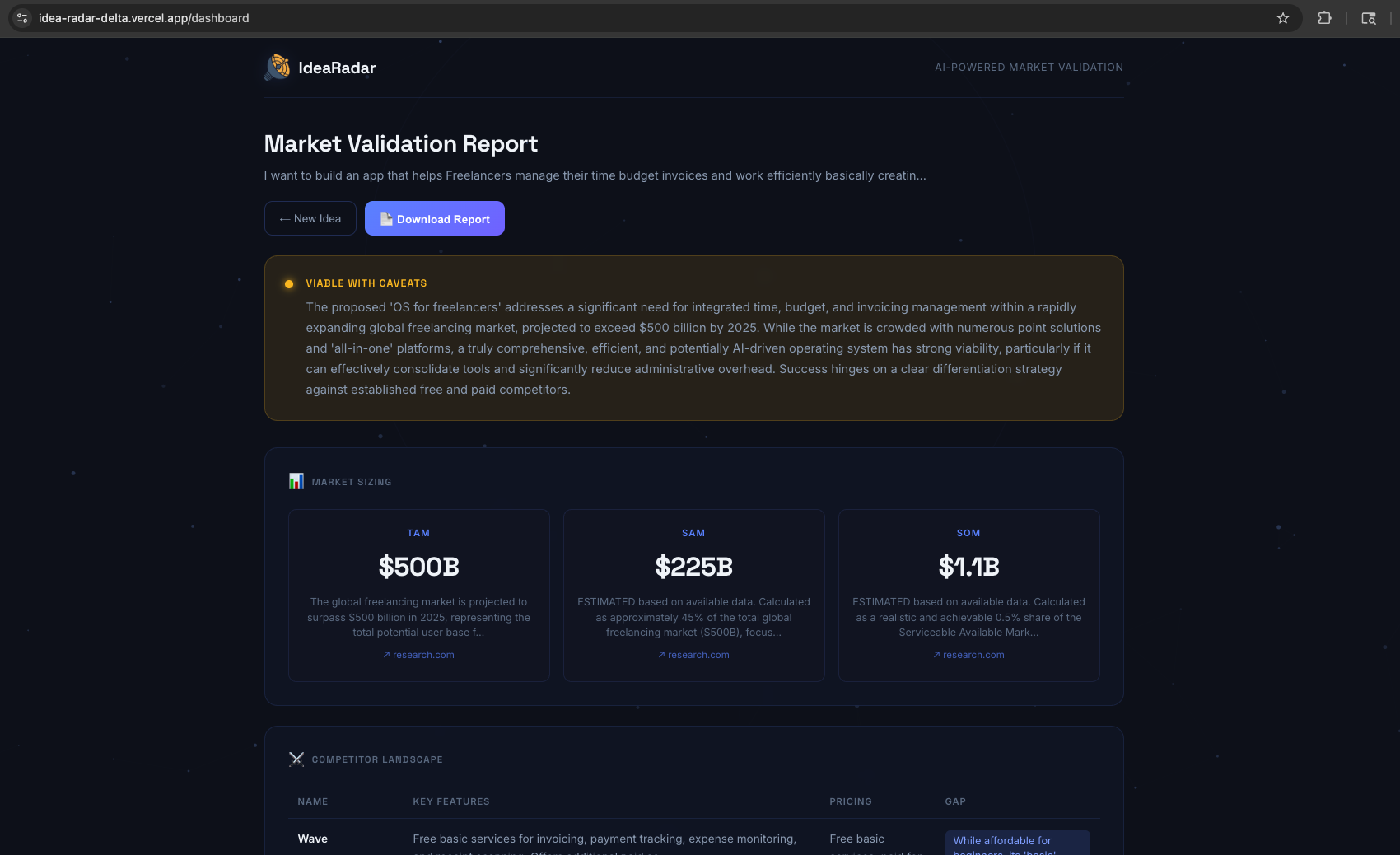
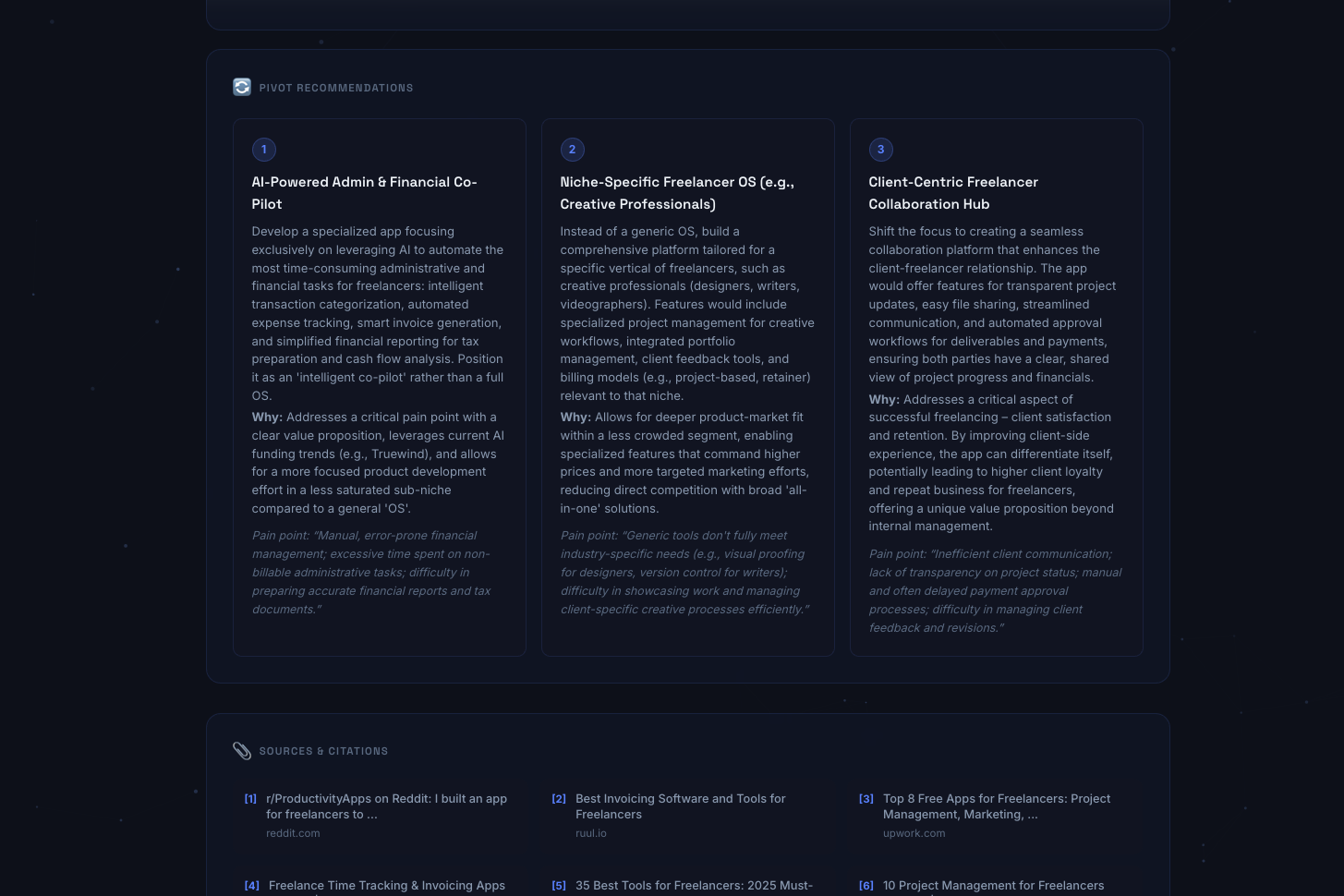
- Gemini 2.0 Flash: All of this raw search data and news is then fed into Gemini 2.0 Flash with a highly engineered, consolidated prompt. Gemini synthesizes the chaotic web data into a beautifully structured JSON report containing a traffic-light viability score, competitor matrix, user segments, and actionable pivot recommendations.
- Foxit PDF Services: Finally, we integrated Foxit's API on the server side to let users instantly download their generated dashboard as a beautifully formatted, polished PDF report that they can share with co-founders or investors.
🧗♀️ Challenges we faced
Hallucinations & Trust: The biggest challenge with AI-generated research is trust. Instead of letting the LLM hallucinate numbers, we strictly rely on the You.com API to retrieve live search results and news articles. Gemini is then instructed to only extract data from those search snippets and to provide the citation URLs alongside every metric and trend. Orchestration Speed: Doing heavy market research requires multiple API hops. We had to optimize the backend /api/analyze route to use Promise.all to fetch the You.com Search and News data concurrently before passing it to Gemini, bringing the total time-to-report down to under 10 seconds. PDF Formatting: Generating a clean PDF from dynamic React content was tricky. We ultimately solved this by constructing a dedicated, styled HTML payload on the server that perfectly mirrored the React dashboard, and securely proxied that through Foxit's conversion API.
🧠 What we learned
Audio Streaming over WebSockets: Integrating Deepgram taught me a lot about managing microphone streams and handling real-time WebSocket chunks smoothly in a React frontend without blocking the UI. LLM Output Structuring: I learned how to effectively use Gemini's native JSON mode and prompt engineering to force the model to return complex, deeply nested JSON arrays (like a competitor matrix and trend analysis) reliably every single time. API Route Security: We learned how to securely proxy credentials. Instead of exposing our Deepgram and Foxit API keys to the client, we built secure Next.js API routes that act as intermediaries.
Built With
- deepgram
- foxit
- gemini
- you.com-api

Log in or sign up for Devpost to join the conversation.