-
-
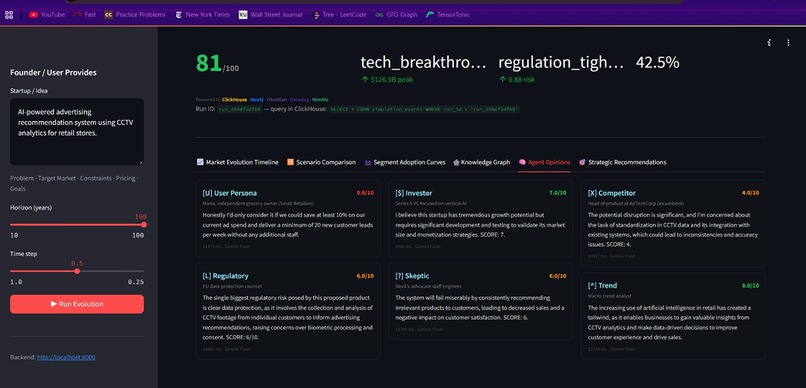
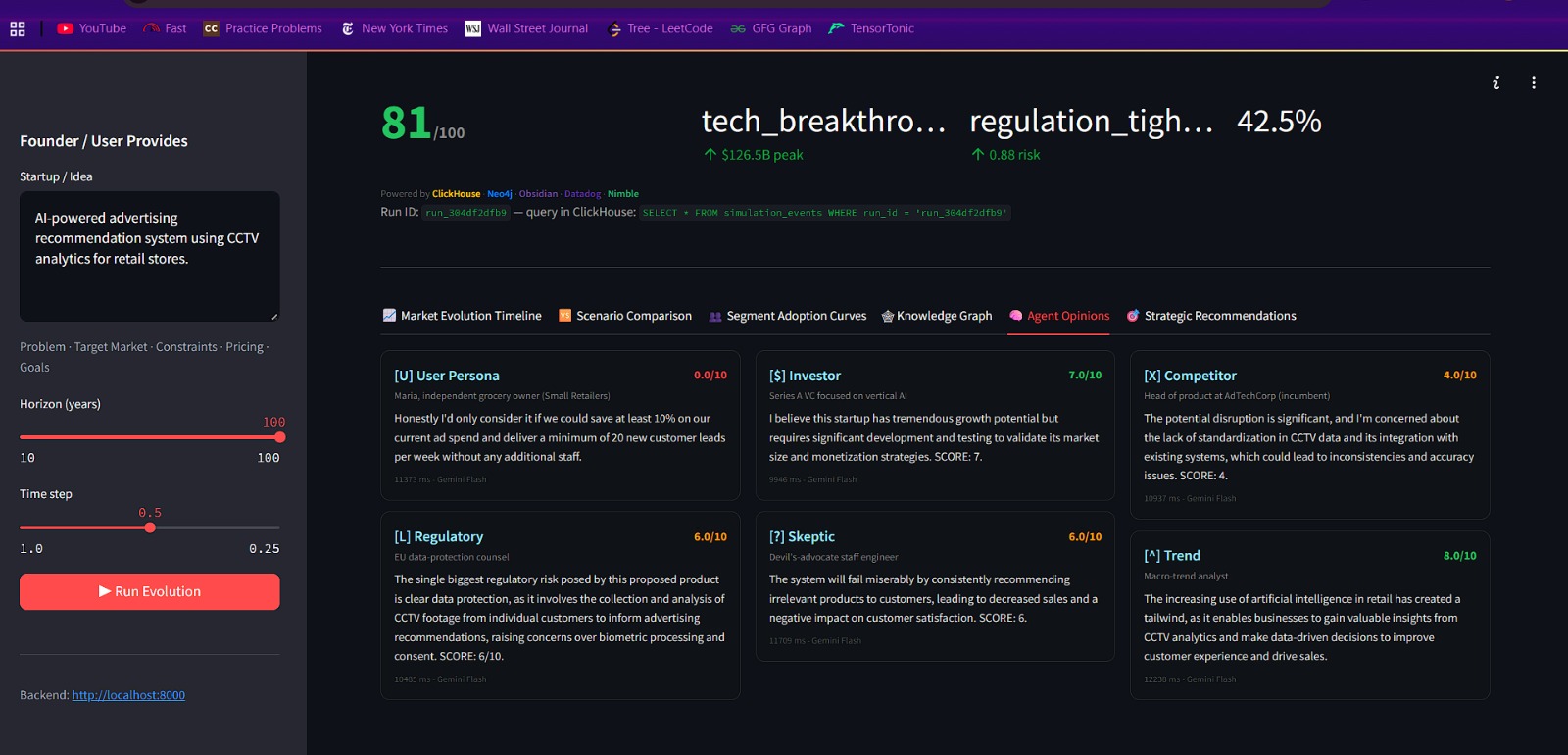
Agent opinion tab
-
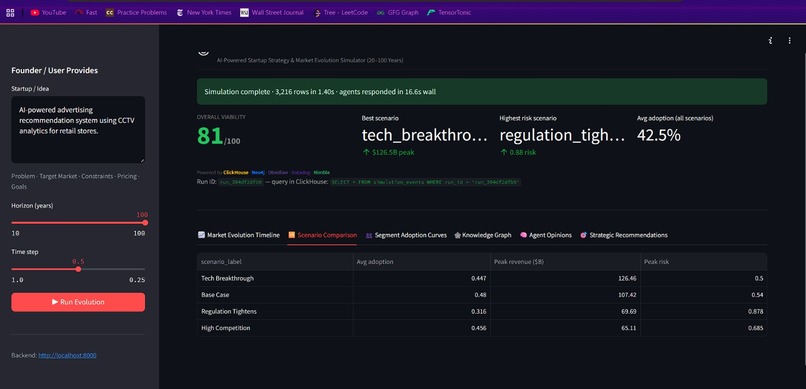
-
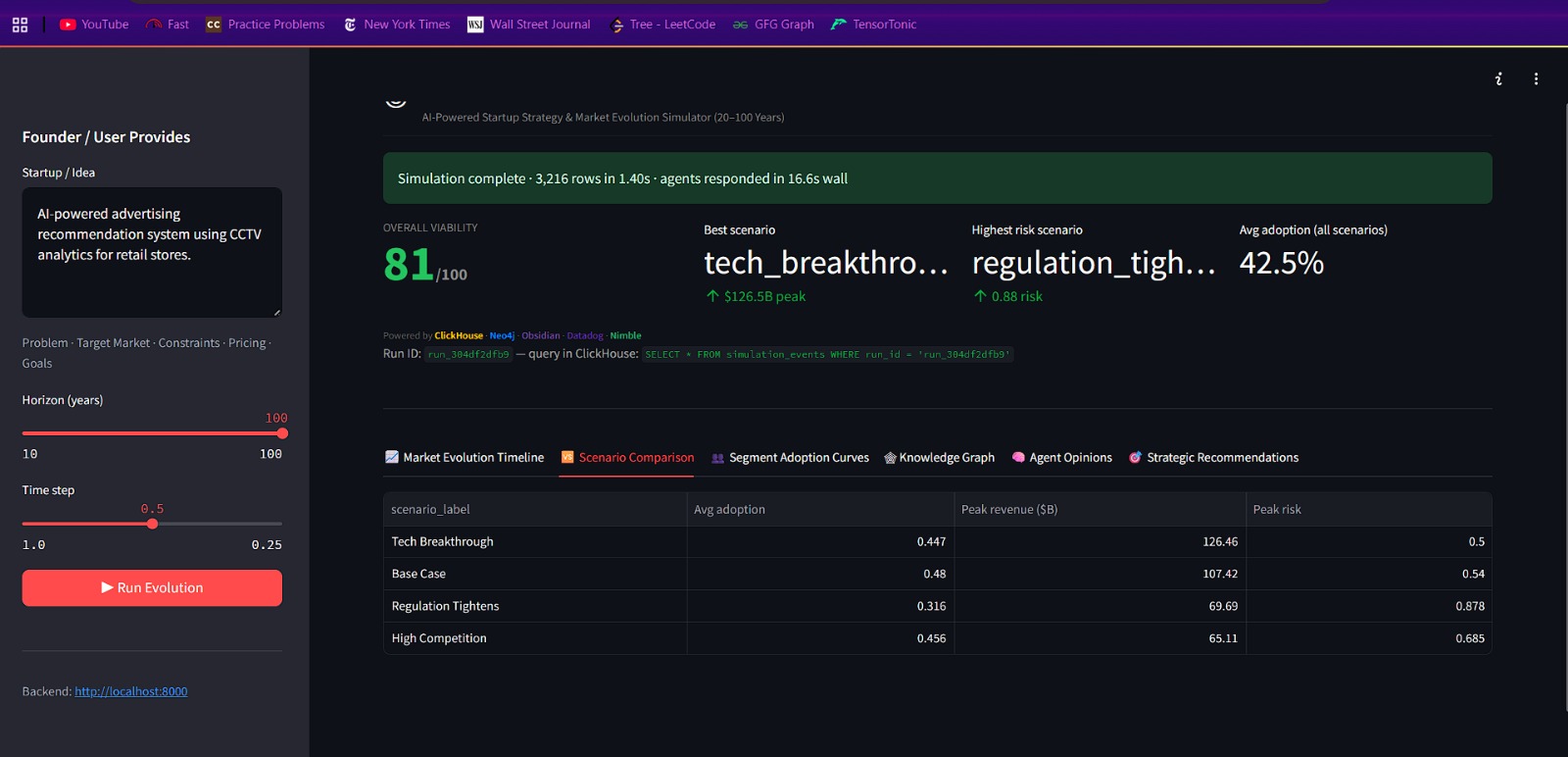
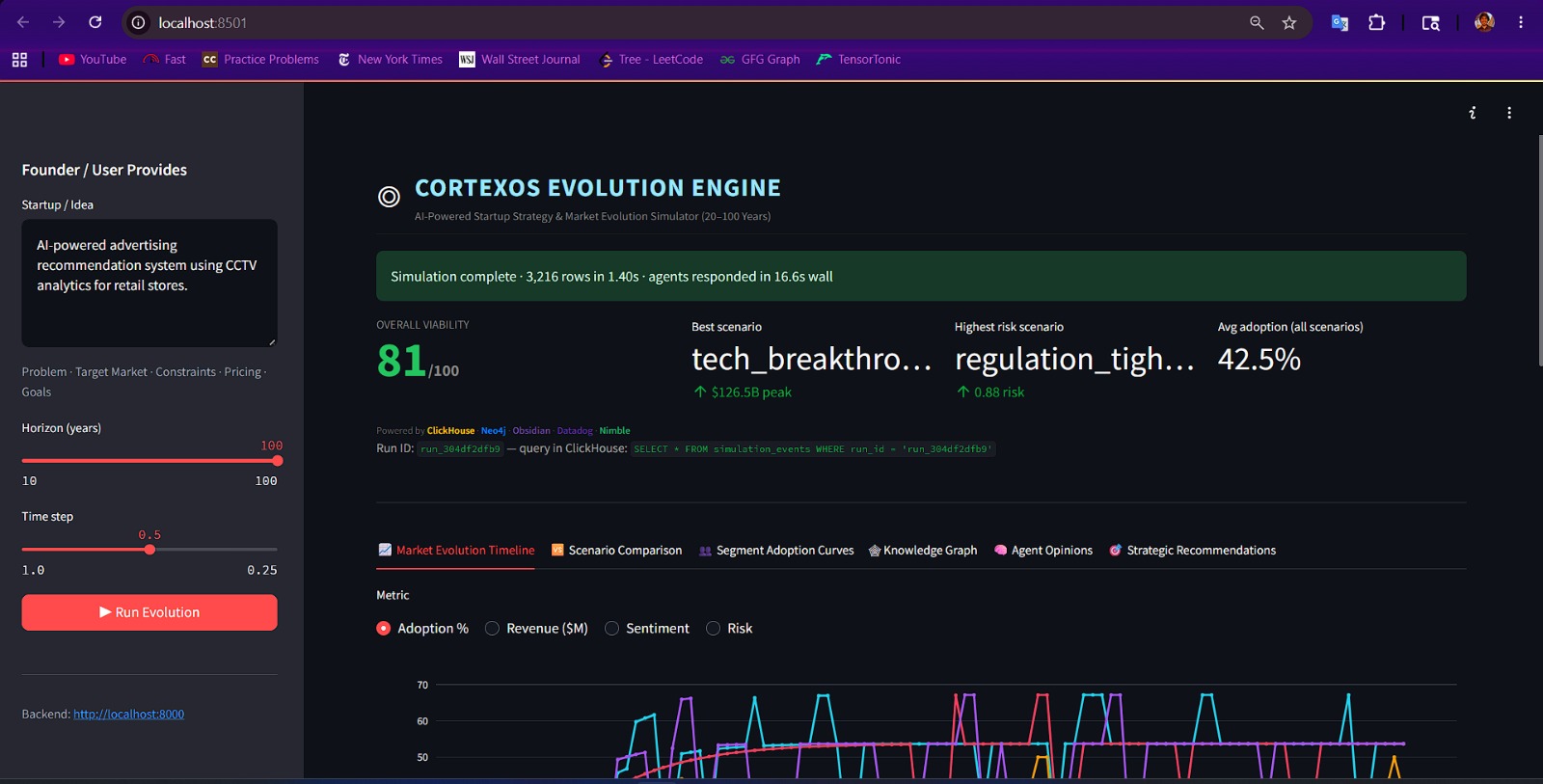
Founders often spend months building products based on intuition, limited feedback, or shallow market research, only to realize later that the core idea was flawed. We wanted to build a system that lets founders test and stress-evaluate their startup ideas before committing time and resources, by simulating how real markets and users might respond.
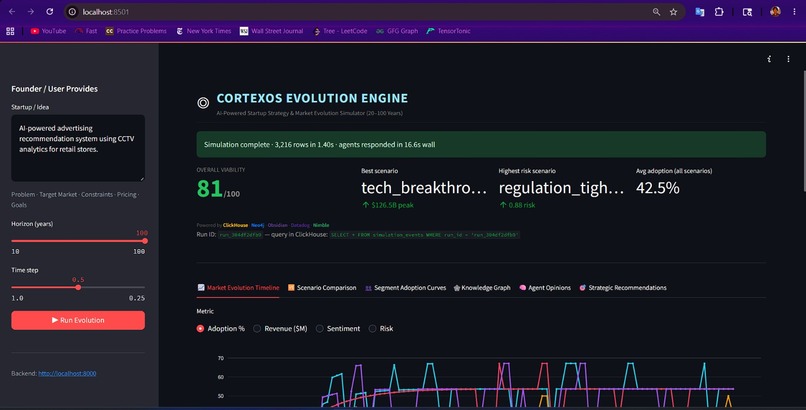
Idea Incubator is an AI-powered startup simulation platform that helps founders validate ideas, features, and business strategies before building. It simulates synthetic users, investors, competitors, and other stakeholders to evaluate how a product performs across different market segments and over time. It identifies assumptions, highlights risks, and estimates adoption patterns and strategic outcomes.
We built a full-stack system with a FastAPI backend and a Streamlit dashboard. The backend runs AI-driven perspective agents that evaluate startup ideas from different stakeholder viewpoints. A simulation engine models market evolution using diffusion-based adoption and scenario transitions. We store structured simulation data in ClickHouse and represent relationships between ideas, assumptions, and market entities in Neo4j. Web data extraction is used to ground insights in real-world information.
A key challenge was preventing all agents from producing similar outputs and ensuring meaningful diversity of perspectives. Another difficulty was balancing system complexity with performance while combining web retrieval, agent reasoning, and simulation. Keeping outputs grounded and not overly speculative was also a major challenge.
We built an end-to-end system that goes beyond idea generation and simulates how a startup might evolve in a real market. The integration of structured agents, market simulation, and a unified data layer enables deeper strategic analysis than typical AI feedback tools. We also successfully grounded simulations using real-world web data.
We learned that the value of multi-agent systems comes more from structured perspectives and disagreement than from increasing the number of agents. We also learned that meaningful simulation requires strong grounding in real data and carefully designed constraints to avoid generic or unrealistic outputs.
Next, we plan to extend the system to feature-level and UX-level simulation, where synthetic users can interact with actual product flows. We also aim to introduce continuous time-based market simulation so founders can track how ideas evolve under changing market conditions, competition, and user behavior over time.

Log in or sign up for Devpost to join the conversation.