Inspiration
One in three adults (32.6%) does not drink enough water. This chronic under-hydration correlates with a $1.59\times$ higher likelihood of obesity, and losing just 1.6% of body weight as water leads to increased mistakes, fatigue, and slower memory. Despite knowing the benefits of hydration, 50% of adults simply forget to drink, 43% report not being thirsty, and 39% feel they have no time to get water. Existing solutions ask for too much: manual tracking apps depend entirely on human memory, while expensive smart bottles lock users into a proprietary ecosystem. We wanted to build a solution that lives perfectly in the middle.
What it does
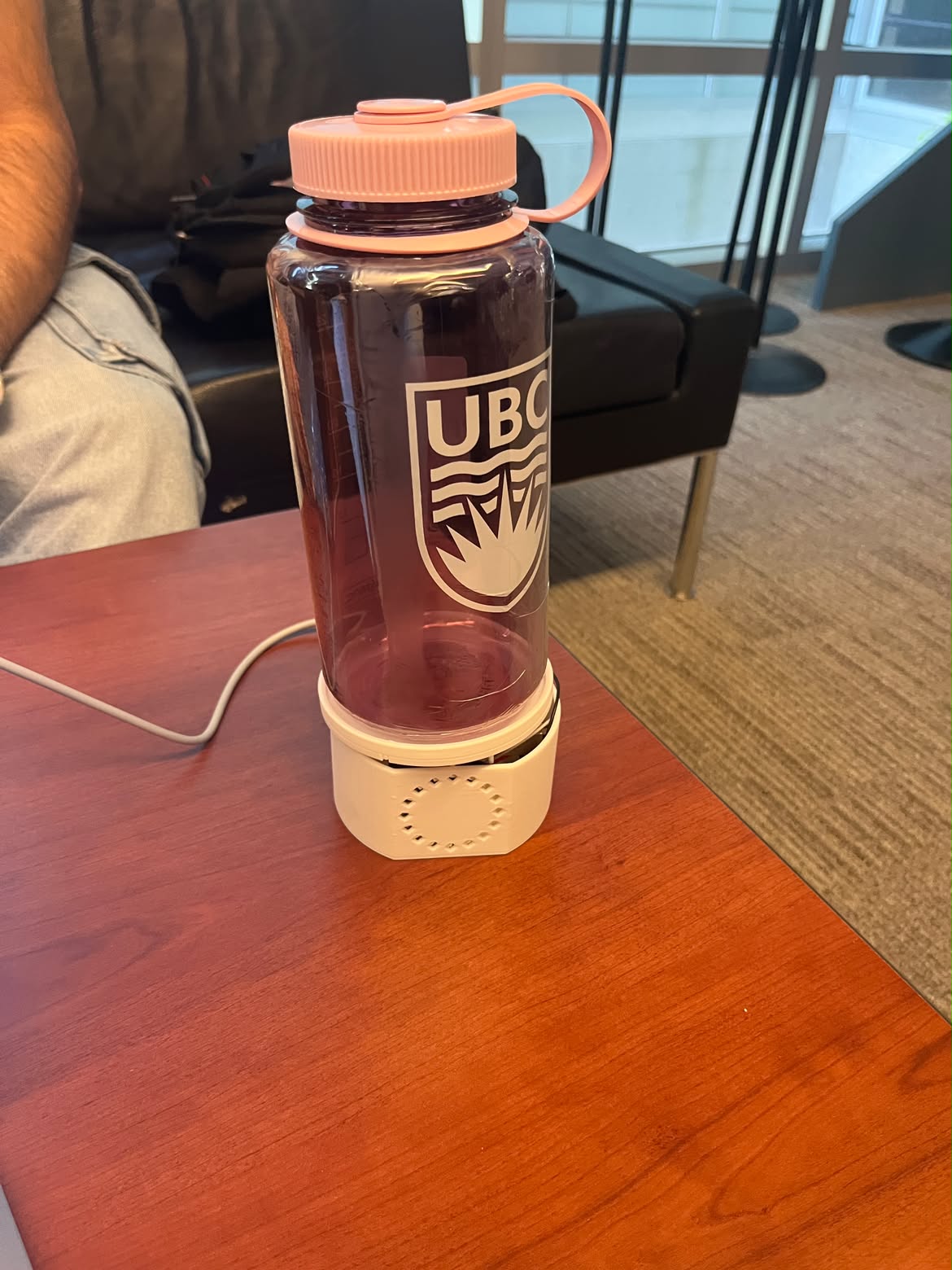
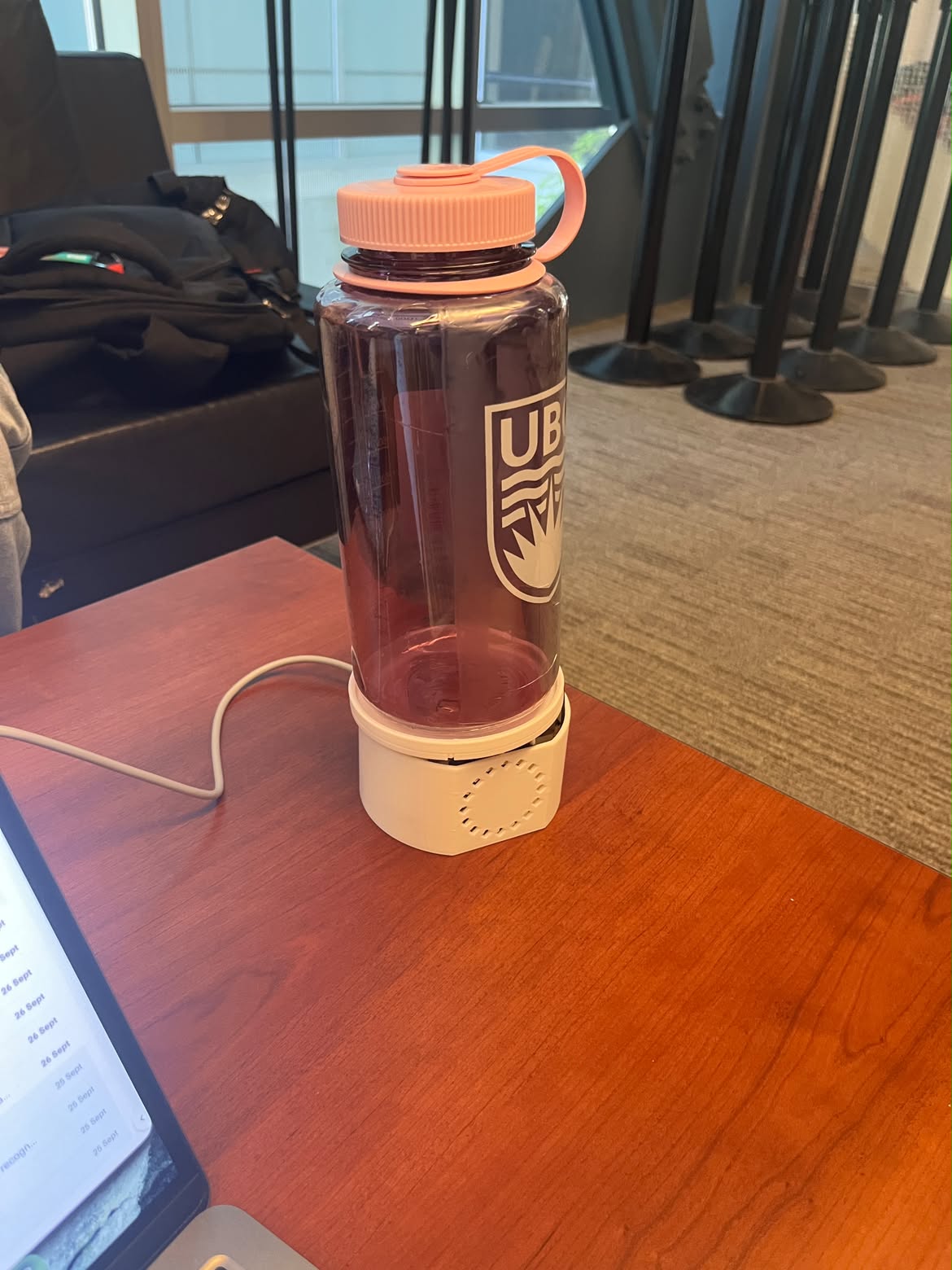
iCup is a smart base device designed to attach directly to the water bottle you already own. It handles hydration tracking seamlessly through a "Sip. Place. Sync." workflow.
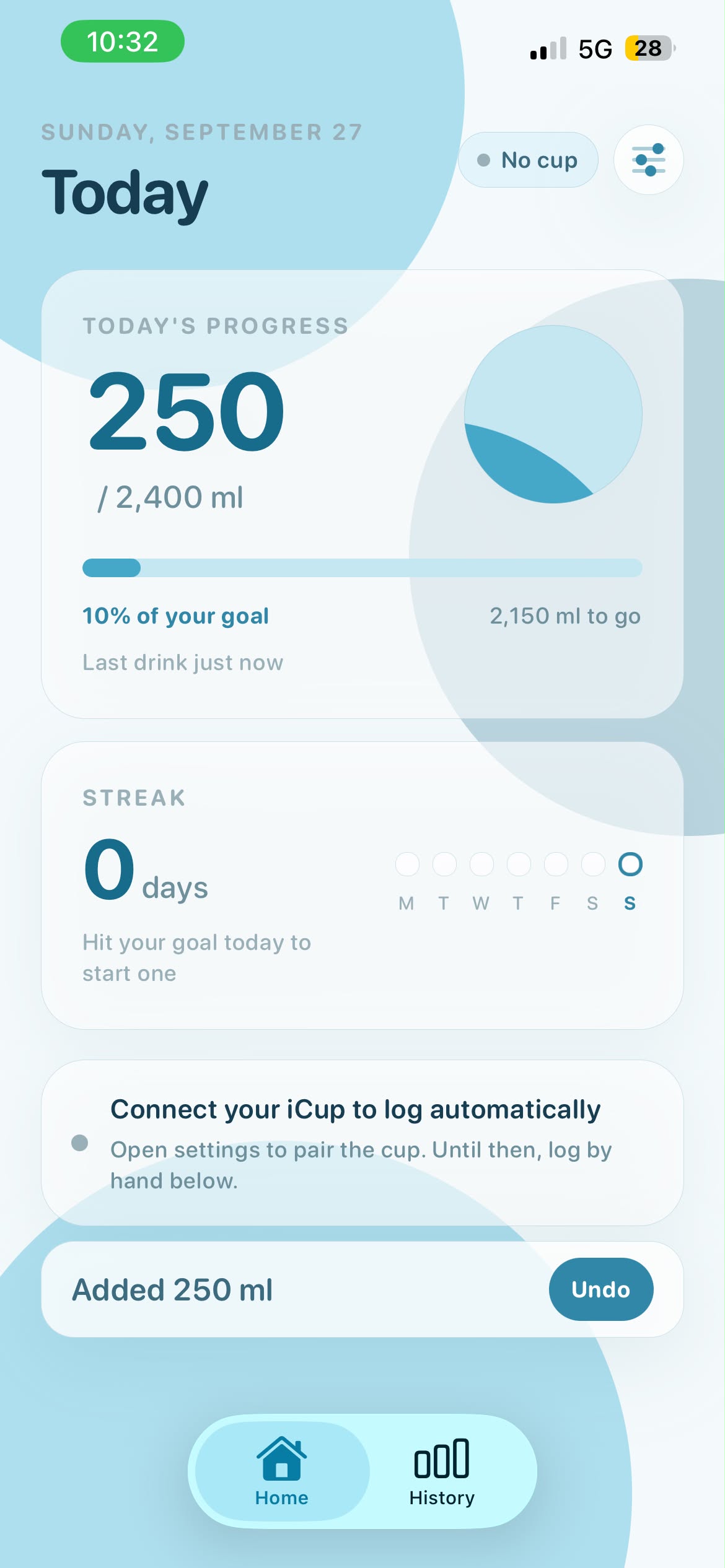
When you set the bottle down, the base weighs what is left and calculates the difference to determine how much you drank.
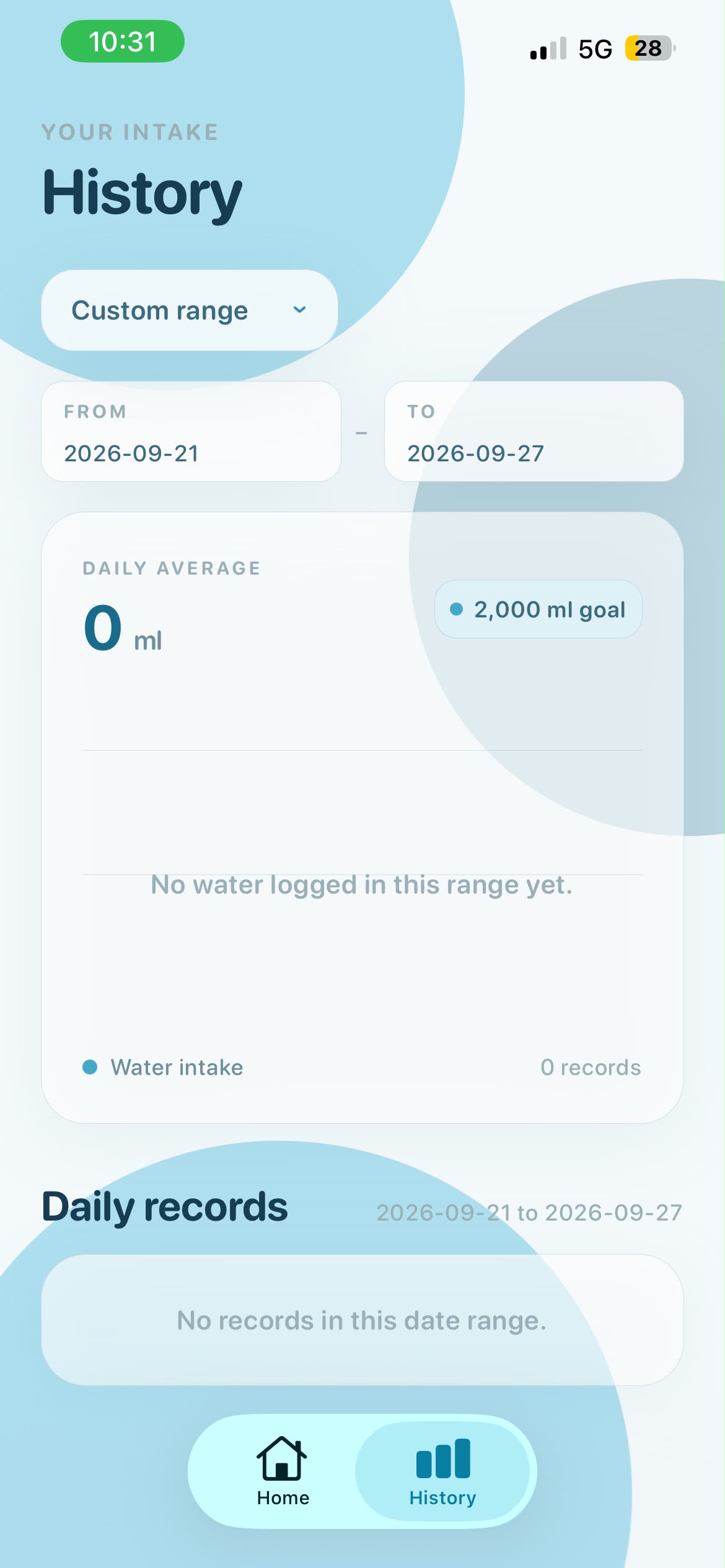
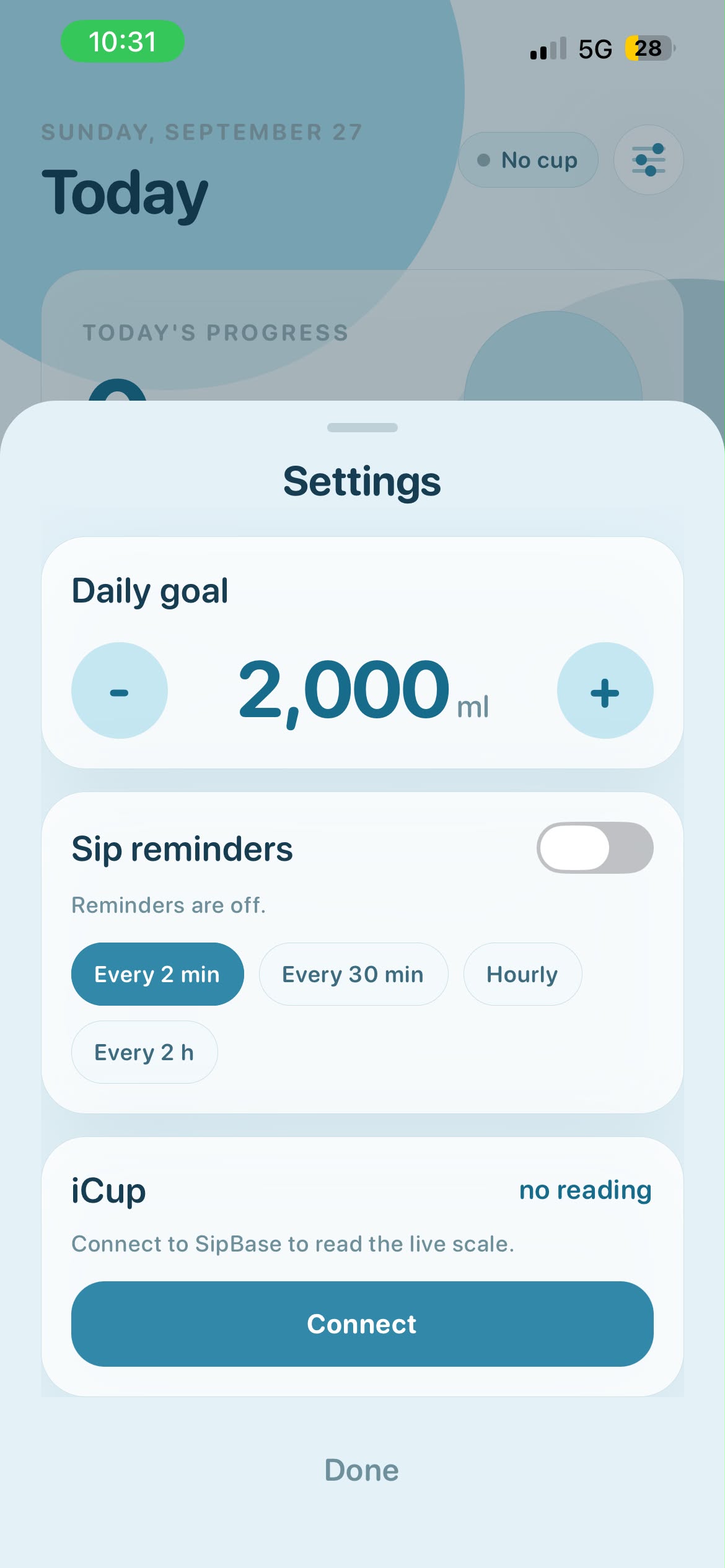
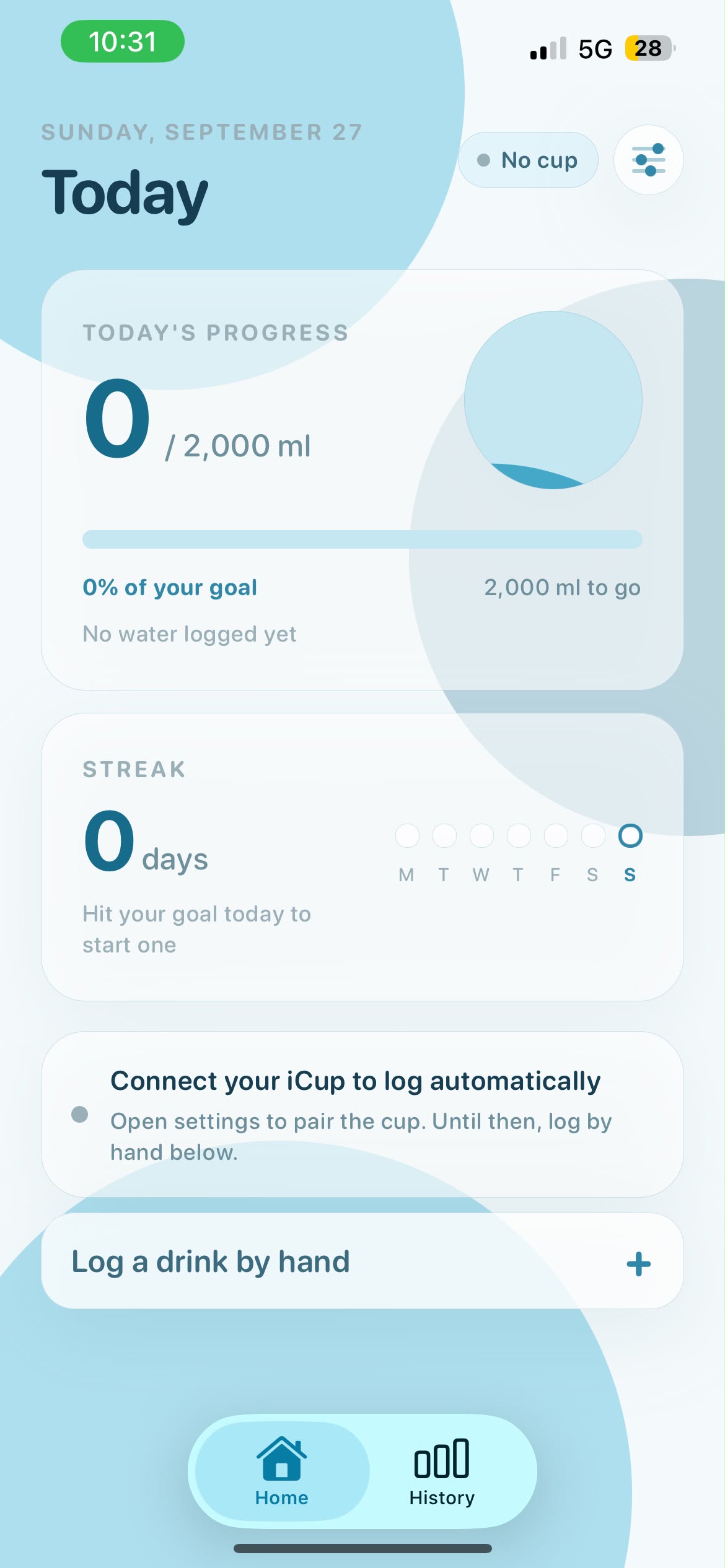
This data syncs automatically to a custom iOS app and logs directly into Apple Health.
To combat forgetfulness, the app features a daily goal ring to show when you are behind, and the physical base includes an LED ring that glows to nudge you to take a sip.
How we built it
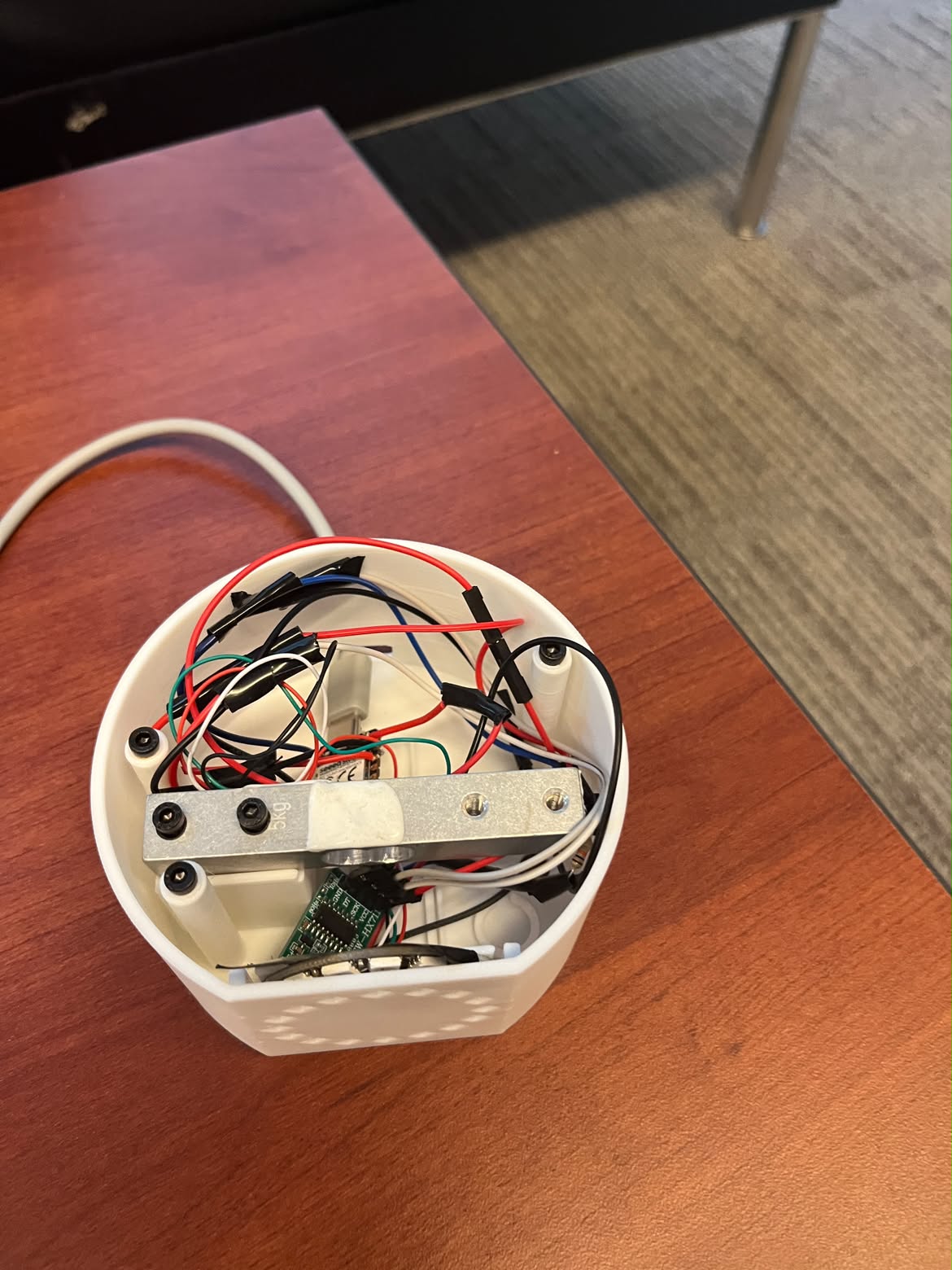
The hardware stack is powered by a ESP32 microcontroller, a pressure sensor, a bottle attachment, an LED ring, and a power bank. We modeled the hardware enclosure using SolidWorks. We then manufactured the housing by 3D printing the custom base using one of our friend's 3D printers
To calculate for water volume stabalizing, we took the median over 4 seconds to see if there was a large spike in weight changes. That determines how much water was drank, by the difference in weight.
Challenges we ran into
Sensor Calibration: We had to spend significant time calibrating the readings on the pressure sensor to ensure highly accurate weight measurements regardless of how the bottle was placed on a surface.
Wireless Transmission: Establishing and maintaining a reliable Bluetooth connection to send data from the microcontroller to the iPhone proved technically demanding.
Hardware Integration: Ensuring the 3D-printed enclosure was structurally sound enough to support the weight of a full water bottle while housing the electronics without interfering with the load cell.
Accomplishments that we're proud of
Frictionless UX: We successfully integrated the hardware and software to create a system where the user does absolutely nothing out of the ordinary—just drink and set the bottle down.
Health Integration: We successfully implemented permissions and data writing to Apple Health, allowing iCup to fit perfectly into a user's existing health-tracking ecosystem.
Universal Design: We proved that automated hydration tracking doesn't require forcing users to abandon their favorite bottles for a pricey smart alternative.
What we learned
We gained deep, hands-on experience building within the iPhone app ecosystem using Expo.
We learned how to properly format and send sensor data via Bluetooth using a microcontroller.
We mastered the physical calibration of a pressure sensor to deliver consistent, real-world weight measurements.
What's next for iCup
- We'd like to expand our horizons to reach Android support as well. We hope there's better bottle calibration so that it can accommodate more variations in bottles. We also wish to make it more social so you can see how your friends are keeping up with their hydration.

Log in or sign up for Devpost to join the conversation.