Inspiration
No patient should survive a complex surgery only to lose their life to a drug-resistant hospital superbug. AMR contributes to nearly 5 million global deaths annually, and infected post-op patients face a 2x–4x higher mortality risk. Traditional culture tests take 48–72 hours, leaving clinicians in a dangerous "blind window." We built ICU-Shield AI to bridge this diagnostic gap with real-time AI risk prediction, ensuring surviving surgery means surviving for life.
What it does
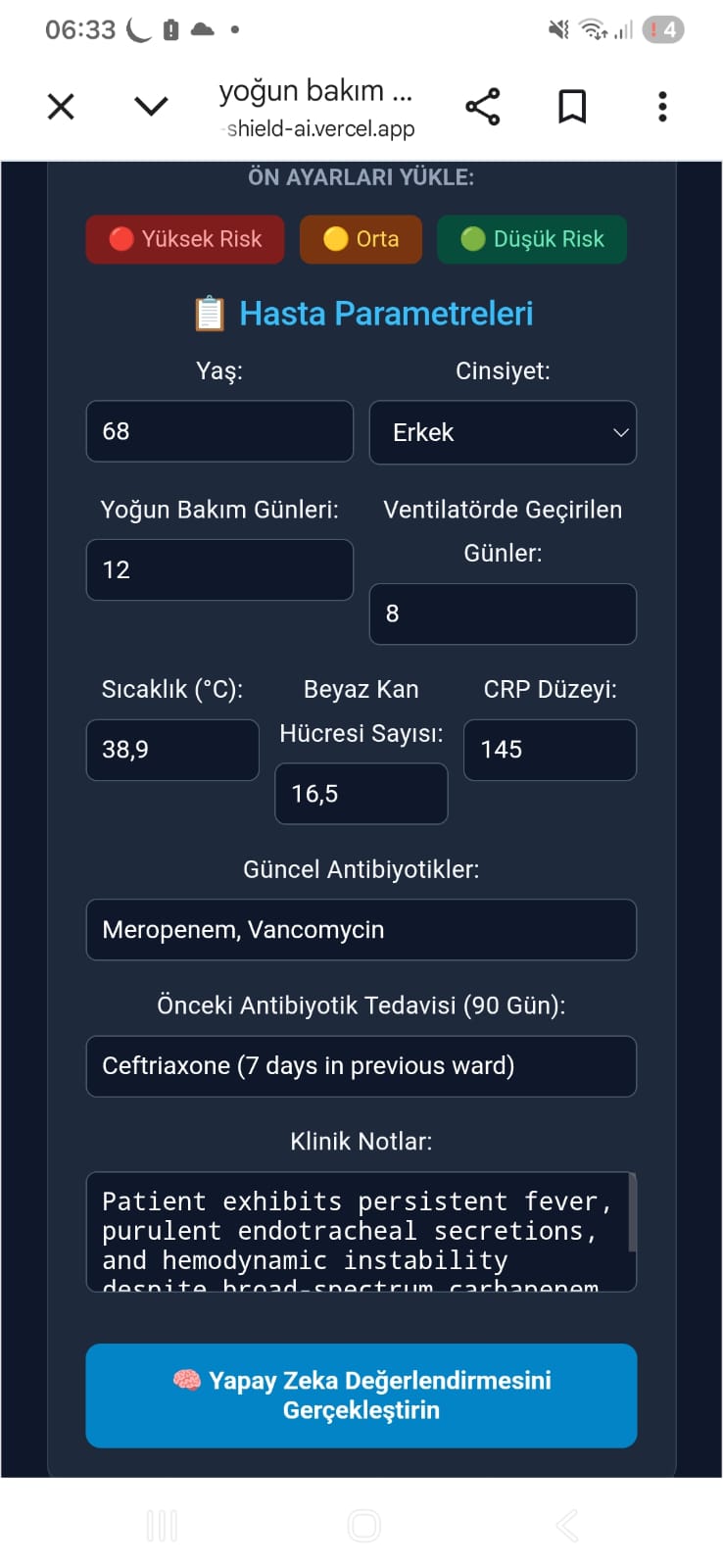
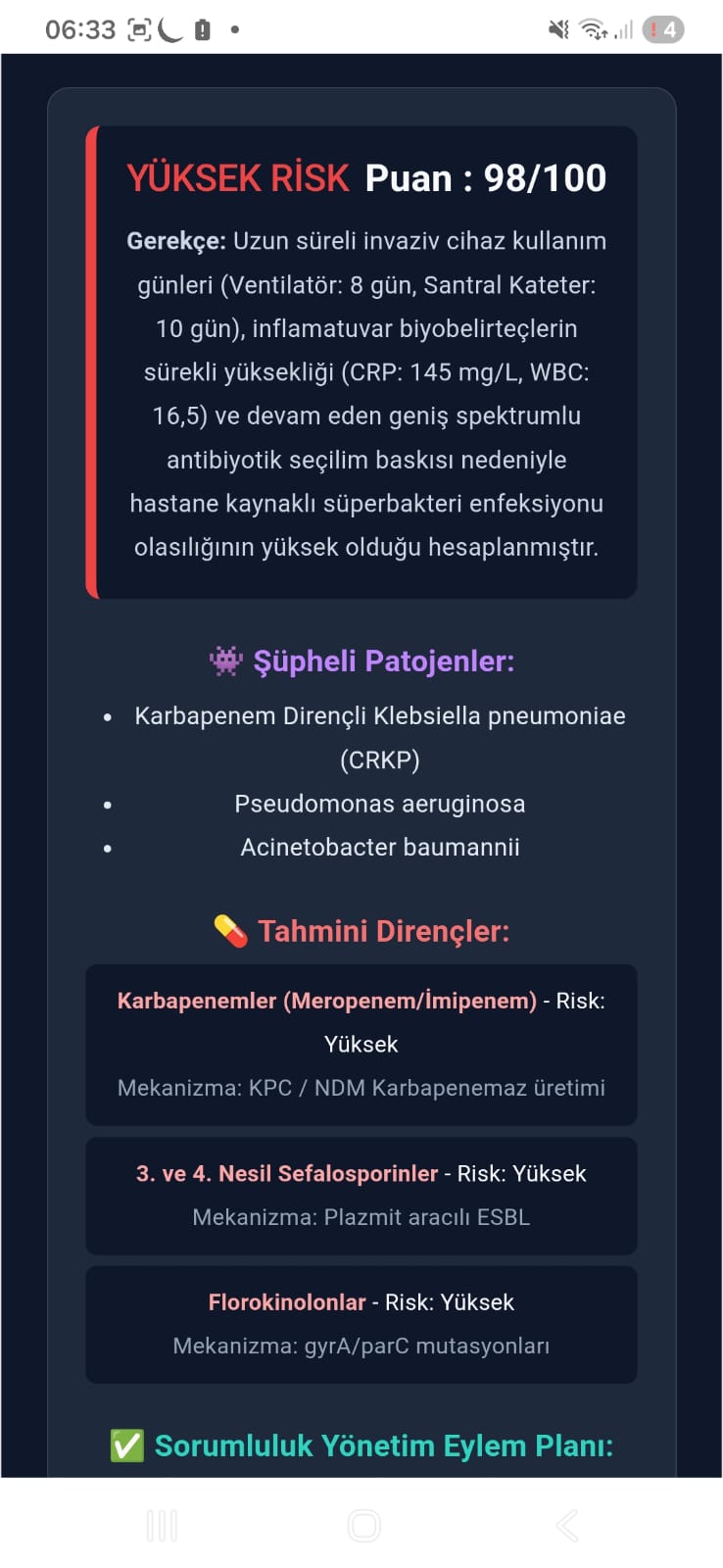
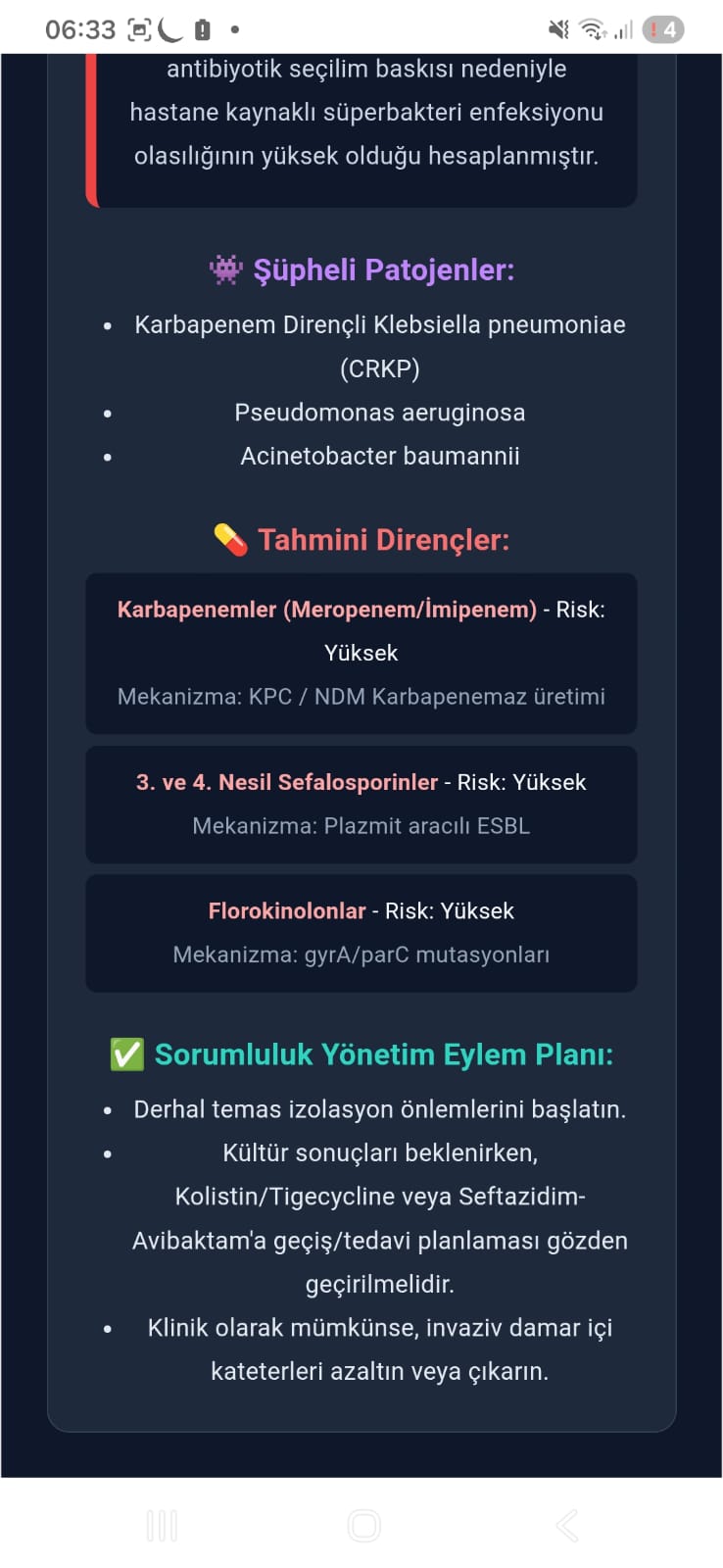
Risk Stratification: Calculates real-time AMR risk scores (0–100%) based on biomarkers, post-op timelines, and invasive device days. Pathogen & Resistance Prediction: Identifies suspected superbugs (CRKP, MRSA, Pseudomonas) and antibiotic resistance profiles. Actionable Stewardship: Recommends immediate isolation steps and targeted diagnostic tests (e.g., multiplex PCR).
How we built it
Frontend: Built with React (Vite) for rapid, high-density medical data visualization. AI Engine: Powered by Google Gemini API (gemini-1.5-pro) using structured prompts enforcing strict JSON schemas. Offline Resilience: Features a custom rule-based scoring simulation engine for 100% demo uptime without API keys .## Challenges we ran into Translating complex clinical indicators (device exposure, post-op days, biomarkers) into a deterministic prompt structure without AI hallucinations, while designing a dark-mode UI that clinicians can interpret in seconds during high-stress workflows.
Accomplishments that we're proud of
Ultra-Fast Clinical Support: Enabled clinicians to evaluate complex AMR risks within seconds during time-critical windows. Zero-Latency Resilience: Seamlessly integrated live LLM reasoning with instant offline fallback simulations. Clinician-Centric UX: Designed an intuitive interface converting complex data into clear infection control pathways.
What we learned
Structured JSON prompt engineering for healthcare applications, hospital-acquired infection epidemiology, and building resilient web apps that balance live AI APIs with offline simulation logic.
What's next for ICU-Shield AI
EHR/EMR Integration: Live streaming patient vitals via HL7 / FHIR standards. Local Antibiogram Fine-Tuning: Training models on localized hospital lab data for precision accuracy. Longitudinal Tracking: Time-series tracking to alert clinicians the moment a post-op patient's AMR score spikes.
Built With
- css
- google-gemini-api
- html
- javascript


Log in or sign up for Devpost to join the conversation.