-
-
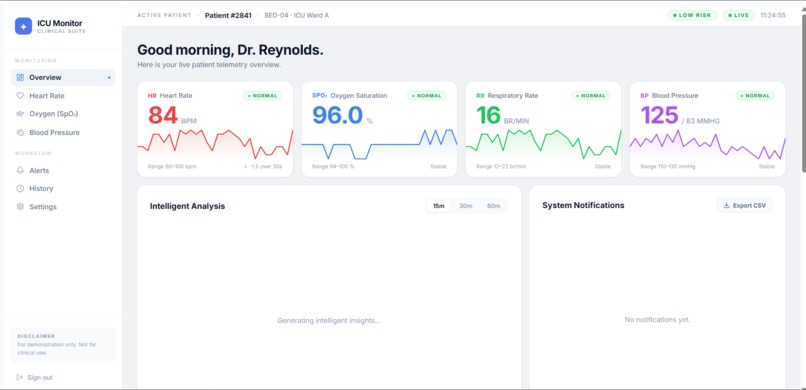
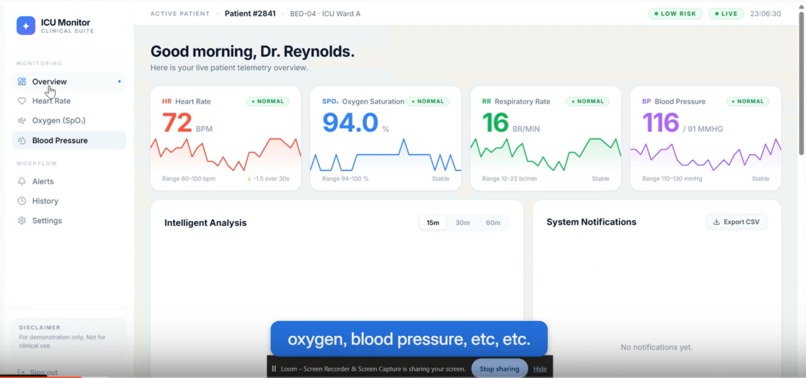
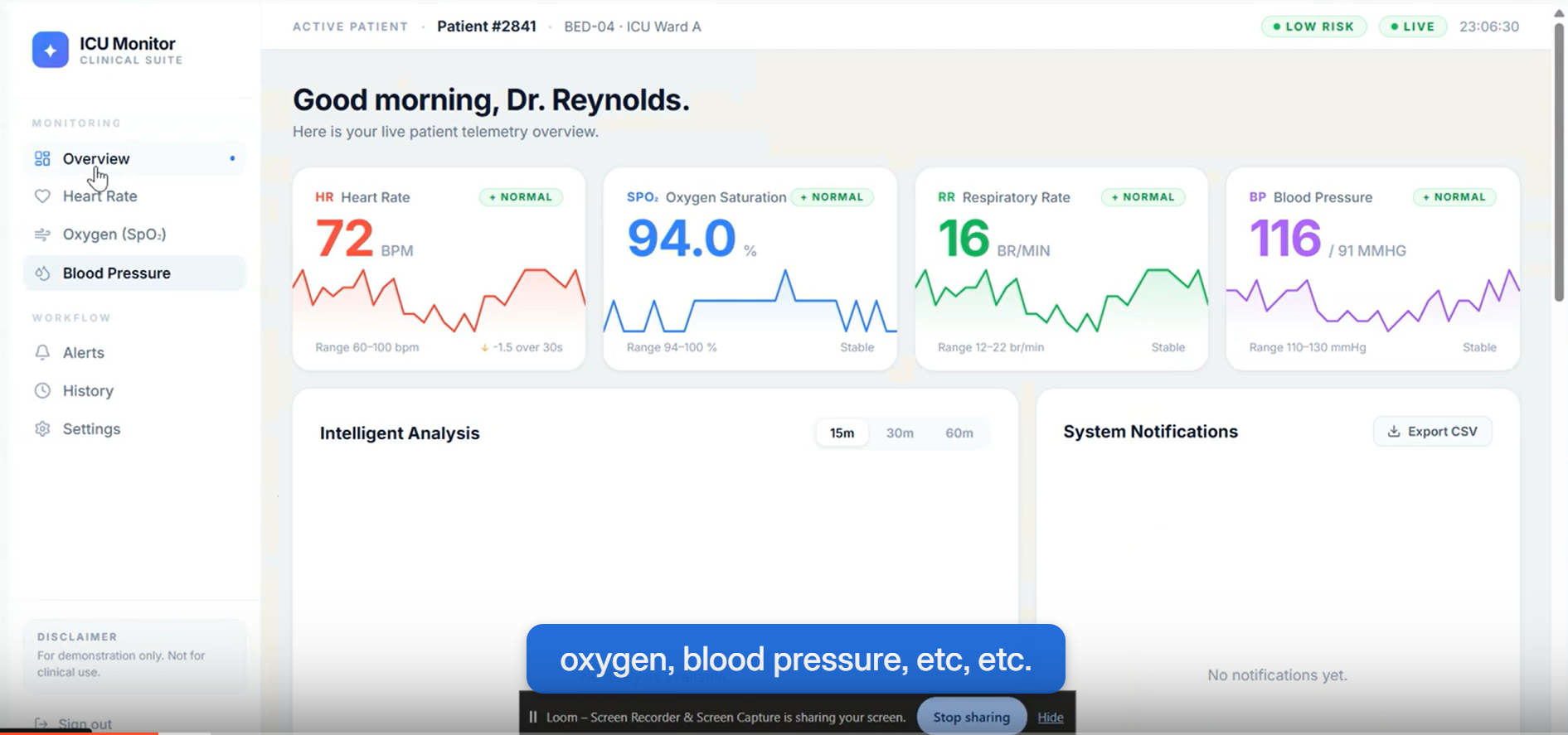
home all in one analysis
-
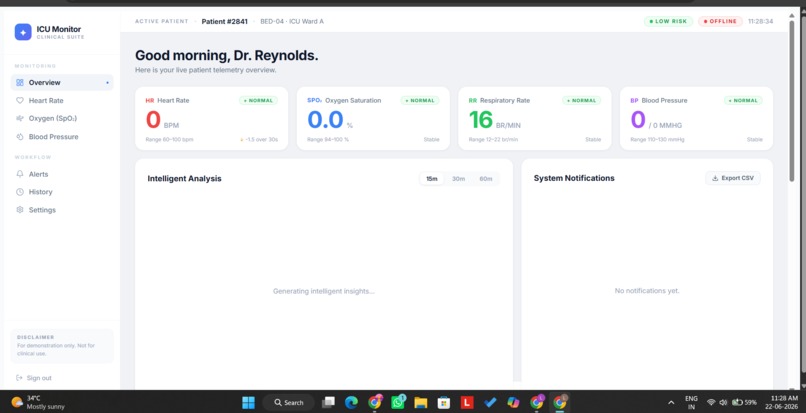
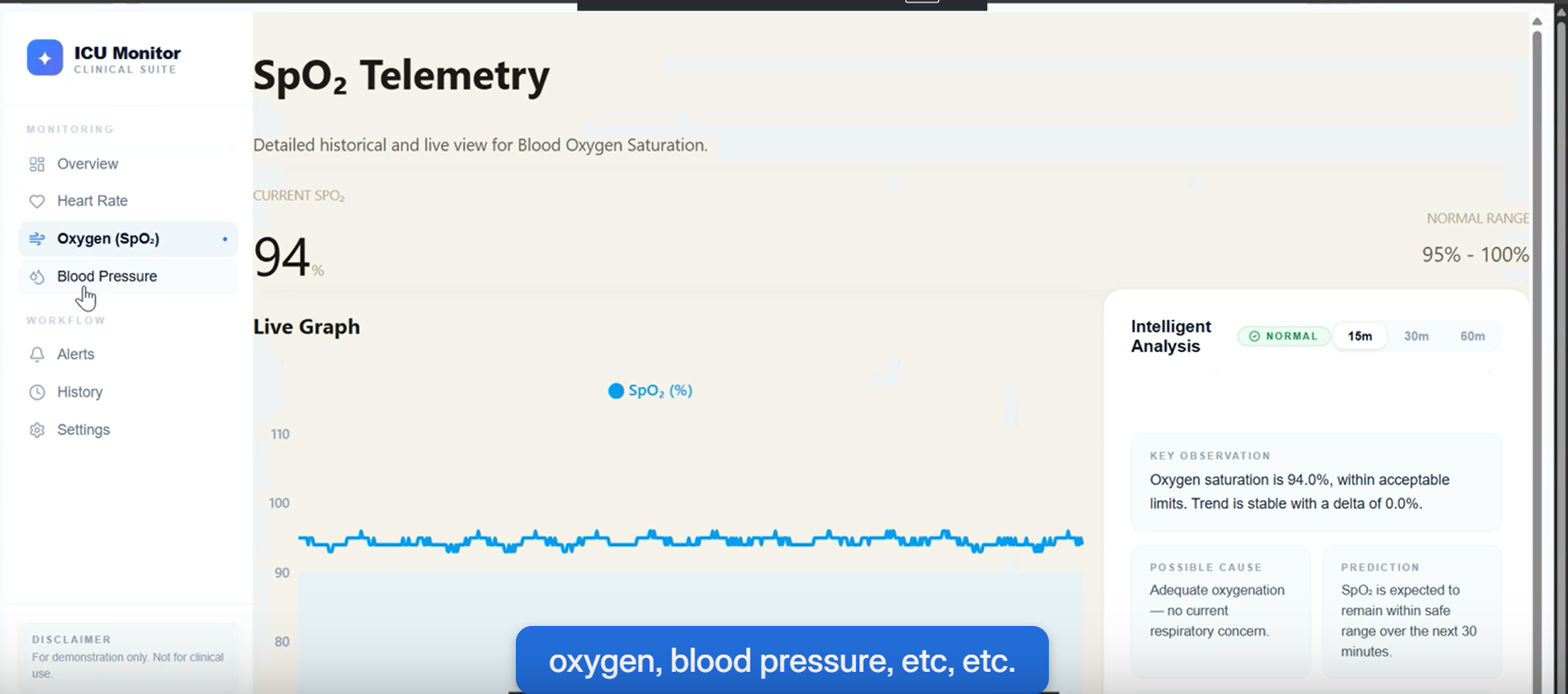
specific vital
-
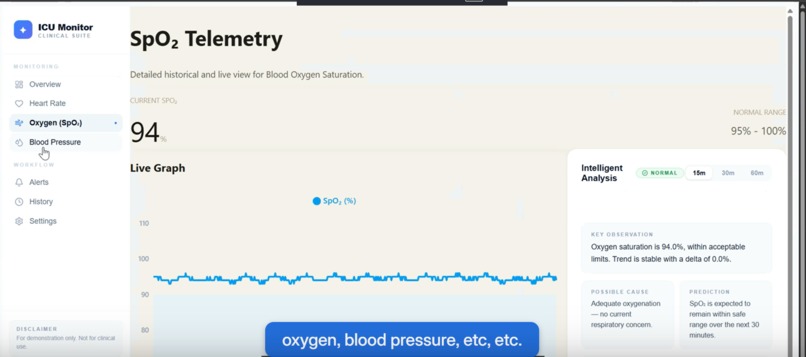
specific vital detailed analysis
-
-
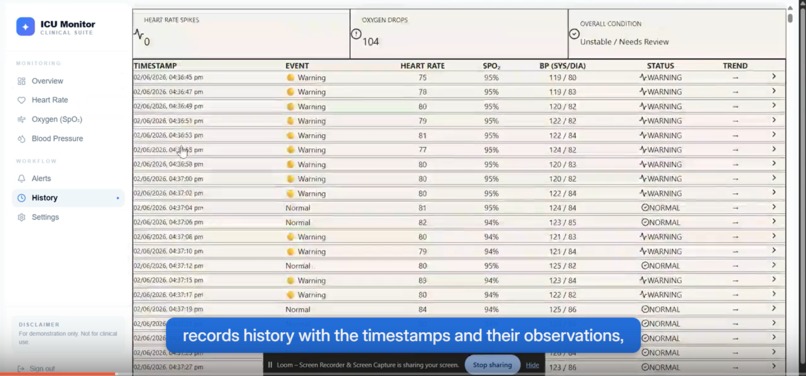
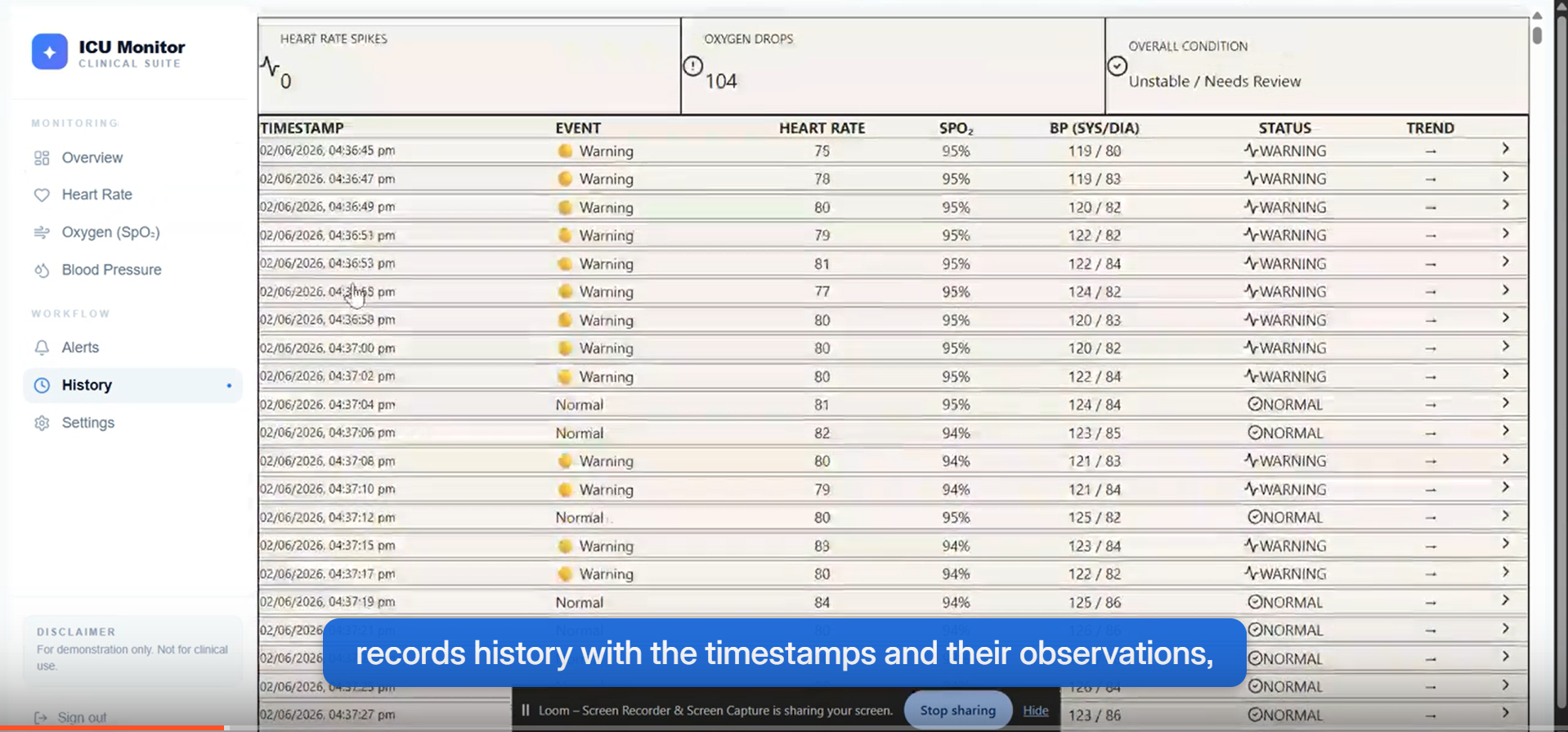
history with detail
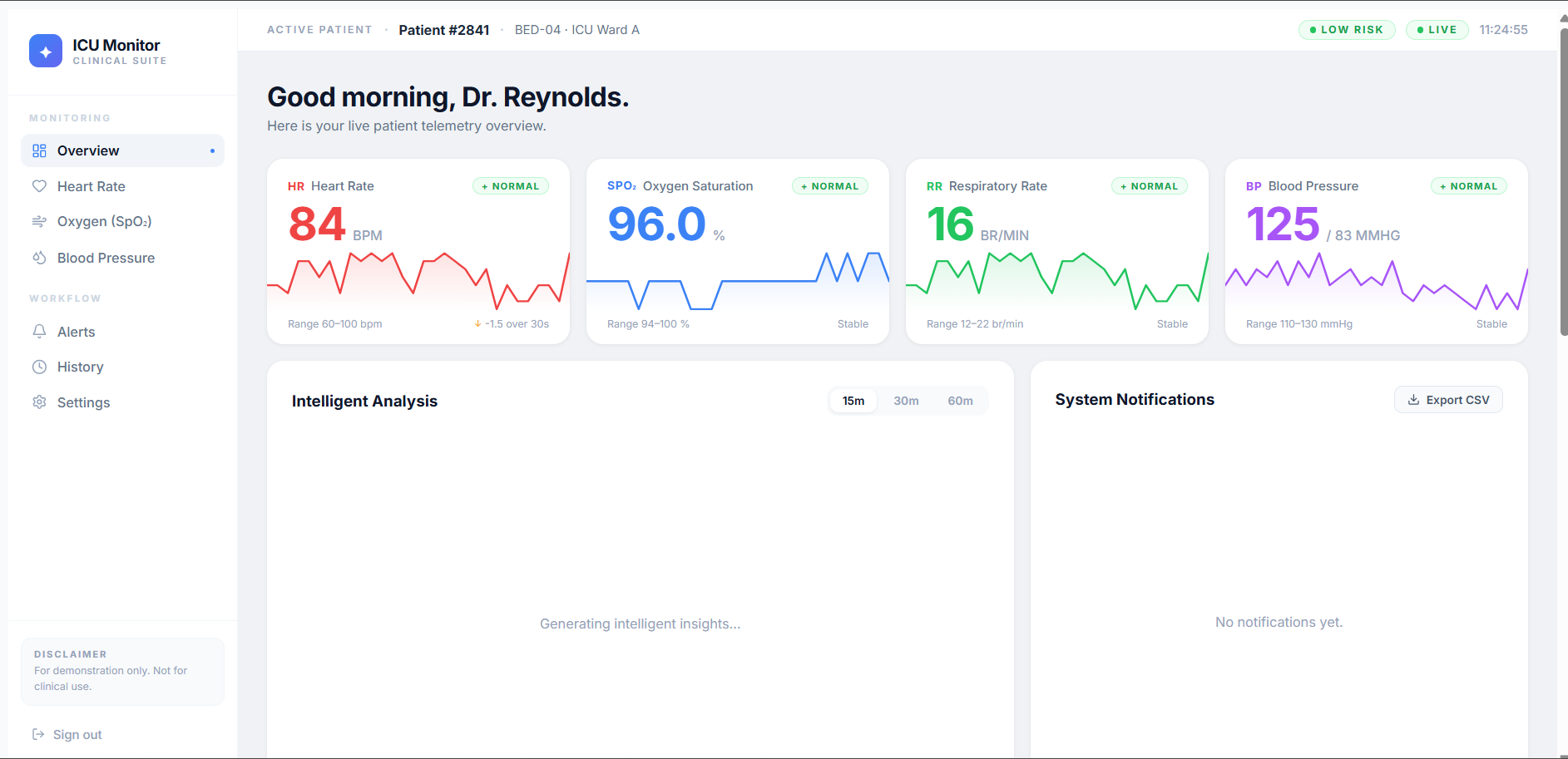
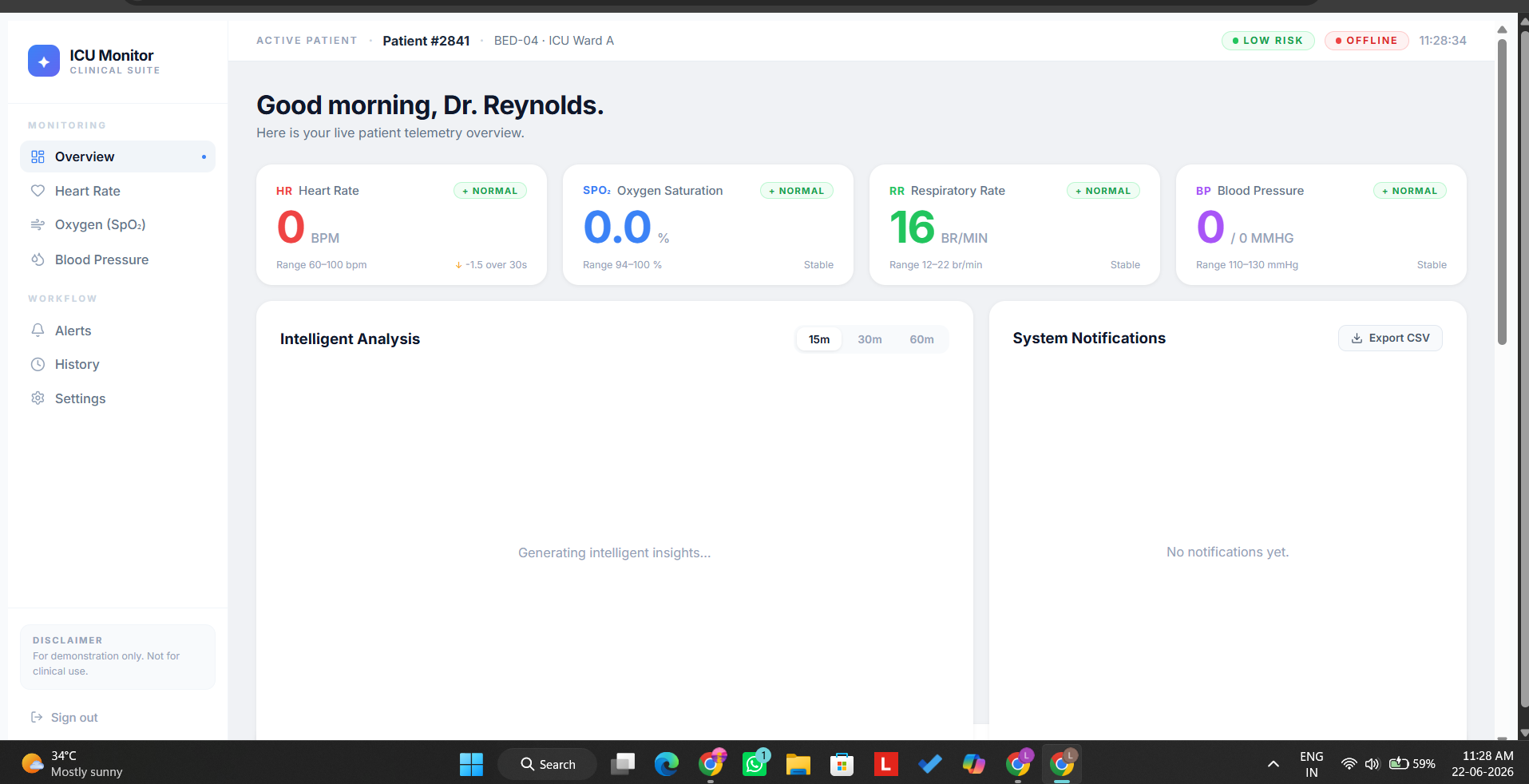
ICU AI Monitor – AI-Powered Early Warning System for Critical Care
Inspiration
Every second matters in an Intensive Care Unit (ICU). Despite advances in medical technology, healthcare professionals are often required to monitor multiple patients simultaneously, making it challenging to detect subtle warning signs before a patient's condition becomes critical.
We were inspired by a simple but powerful question:
"What if AI could help doctors identify life-threatening conditions before they happen?"
Many hospital monitoring systems are reactive—they notify staff only after a dangerous threshold has already been crossed. We wanted to build a system that could move healthcare from reactive care to predictive care.
This vision led us to create ICU AI Monitor, an intelligent monitoring platform that continuously analyzes patient vital signs, detects abnormalities, predicts health deterioration, and provides real-time alerts to healthcare teams.
What It Does
ICU AI Monitor is an AI-powered patient monitoring and risk prediction platform designed for critical care environments.
The platform continuously analyzes:
- Heart Rate (HR)
- Blood Pressure (BP)
- Oxygen Saturation (SpO₂)
- Respiratory Rate (RR)
- Body Temperature
Using machine learning and anomaly detection techniques, the system:
- Monitors patient vitals in real time
- Detects abnormal patterns
- Predicts critical deterioration risks
- Generates intelligent risk scores
- Sends instant emergency alerts
- Creates AI-powered patient summaries for healthcare professionals
Instead of simply displaying data, ICU AI Monitor helps medical teams make faster and more informed decisions.
How We Built It
We designed the system using a modern AI-powered architecture.
Frontend
- React.js
- Tailwind CSS
- Chart.js
Backend
- FastAPI
- Python
Artificial Intelligence Layer
- Scikit-Learn
- Predictive Analytics Models
- Anomaly Detection Algorithms
- AI-generated Clinical Insights
Database & Cloud
- PostgreSQL
- Supabase
Workflow
- Patient vital signs are collected and processed.
- Data is analyzed in real time.
- AI models evaluate risk levels.
- Critical patterns are identified.
- Alerts are generated instantly.
- Doctors receive actionable insights through an intuitive dashboard.
Challenges We Faced
Building a healthcare-focused AI system introduced several challenges.
Data Reliability
Medical data can be noisy, incomplete, and highly dynamic. Designing a system that remains reliable despite fluctuating readings required extensive preprocessing and validation.
Real-Time Analysis
Healthcare environments demand immediate responses. We optimized the system to process incoming data efficiently while maintaining responsiveness.
Alert Fatigue
One of the biggest challenges was avoiding excessive notifications. Too many alerts can reduce effectiveness, so we focused on prioritizing high-risk situations and reducing false positives.
Explainable AI
Healthcare professionals need transparency. Instead of providing only predictions, we developed AI-generated summaries that explain why a risk level increased and what factors contributed to it.
What We Learned
Throughout this project, we gained valuable experience in:
- Healthcare technology systems
- Real-time data processing
- Predictive machine learning
- AI-assisted decision support
- User-centered healthcare design
- Scalable full-stack development
Most importantly, we learned that successful healthcare innovation is not only about technology—it is about creating tools that support and empower medical professionals.
Impact
ICU AI Monitor aims to reduce response times during medical emergencies by identifying warning signs before critical events occur.
Potential benefits include:
- Earlier intervention
- Improved patient outcomes
- Reduced ICU workload
- Better clinical decision-making
- Enhanced patient safety
By helping healthcare teams act faster, the platform has the potential to save lives when every second matters.
Future Scope
Our vision extends beyond the current prototype.
Future enhancements include:
- Integration with real ICU monitoring devices
- Wearable health sensor support
- Advanced cardiac arrest prediction
- Sepsis risk forecasting
- Remote patient monitoring
- Hospital-wide deployment
- Federated learning for privacy-preserving AI
- Integration with Electronic Health Records (EHR)
Ultimately, we envision ICU AI Monitor becoming a comprehensive intelligent healthcare assistant capable of supporting hospitals worldwide.
Conclusion
ICU AI Monitor represents a step toward the future of predictive healthcare.
By combining artificial intelligence, real-time monitoring, and clinical decision support, our platform transforms patient monitoring from simply observing vital signs to actively predicting and preventing medical emergencies.
Because in critical care, saving even a few minutes can save a life.
Built With
- analytics
- anomaly
- api
- artificial
- chart.js
- clinical
- css
- data
- decision
- detection
- fastapi
- git
- github
- healthcare
- intelligence
- javascript
- learning
- machine
- monitoring
- postgresql
- predictive
- python
- react.js
- real-time
- render
- rest
- scikit-learn
- supabase
- support
- tailwind
- technology
- vercel
- visualization

Log in or sign up for Devpost to join the conversation.