Inspiration
We were inspired by a simple gap in ICU care: most bedside scores are snapshots, but critical illness is a moving trajectory. We wanted a system that reads change over time and warns teams earlier.
What it does
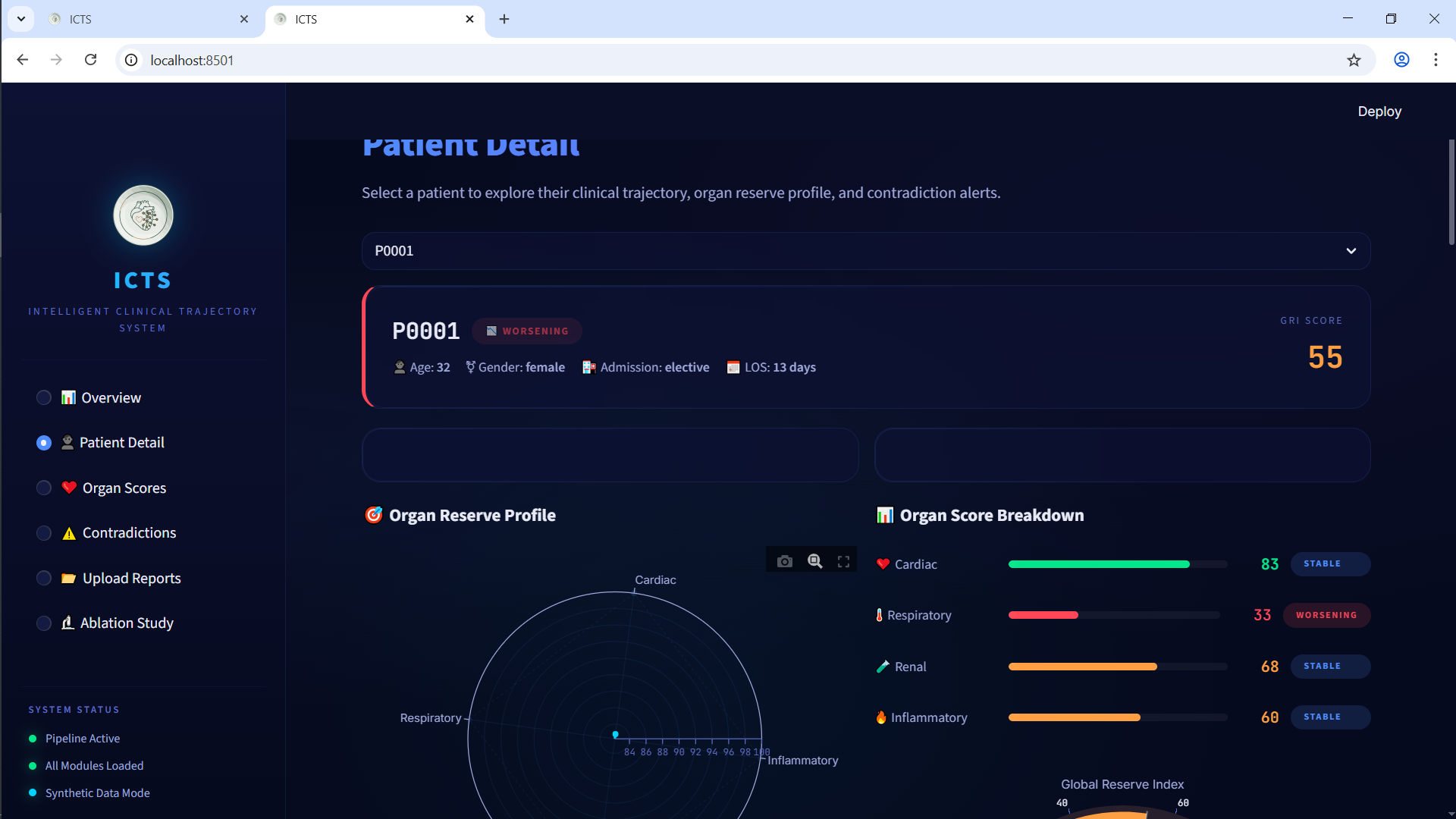
ICTS (Intelligent Clinical Trajectory System) combines vitals, labs, and clinical notes to predict prognosis, expected length of stay, likely procedures, and resource pressure. It also flags note-vs-data contradictions to reduce blind spots.
A compact risk fusion view is:
\[ R = \alpha T + \beta (100 - GRI) + \gamma C \]
where T is trajectory risk, GRI is global reserve, and C is contradiction severity.
How we built it
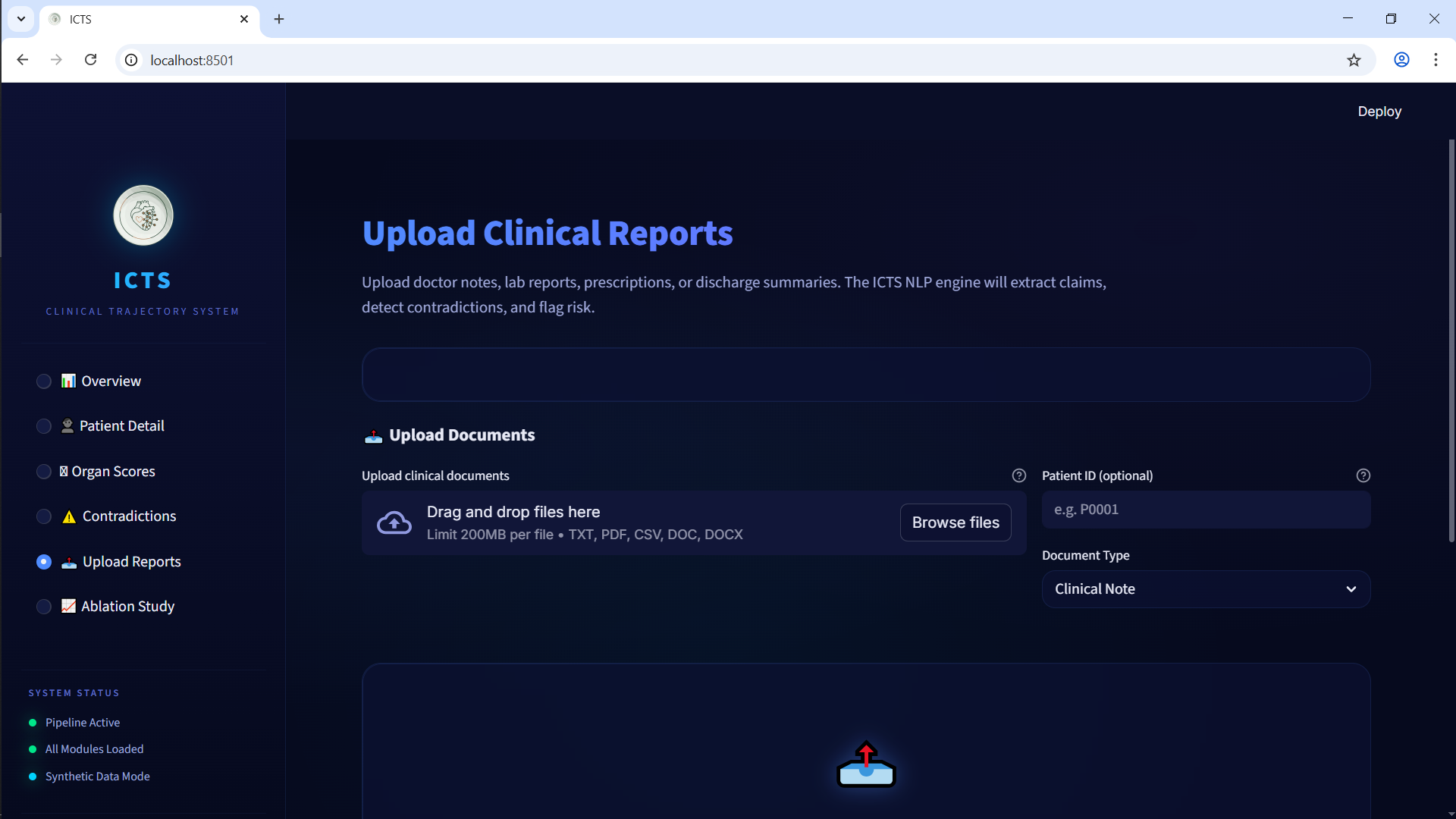
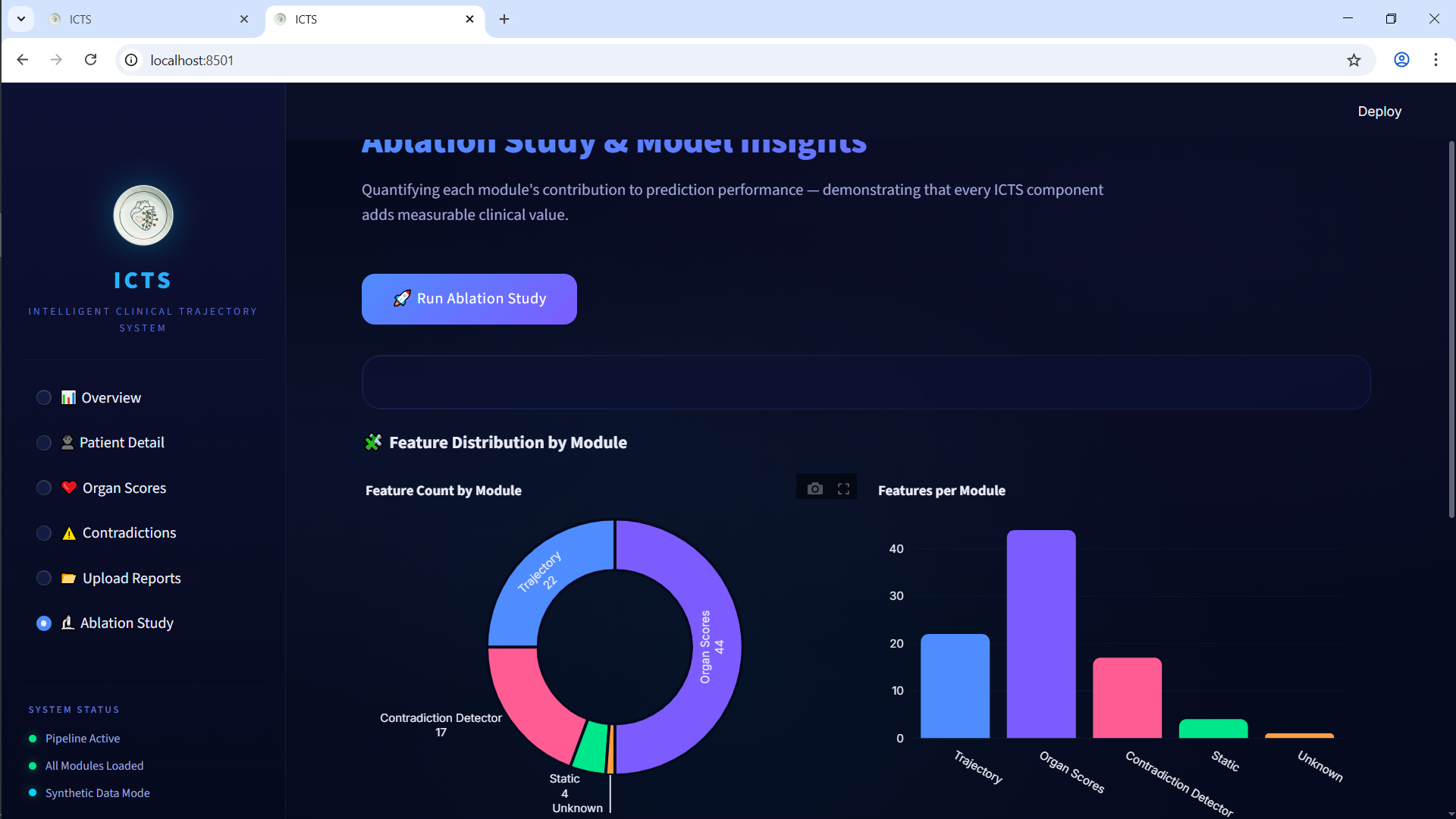
We built a modular Python pipeline with three parts: trajectory features, multi-organ reserve scoring, and contradiction detection from notes. These signals are fused into a LightGBM prediction layer, then exposed through a FastAPI backend and Streamlit dashboard.
Challenges we ran into
The hardest parts were time-aligning irregular clinical events, handling missing/noisy data, and balancing model performance with clinician-friendly interpretability.
Accomplishments that we're proud of
We shipped an end-to-end prototype that runs on synthetic cohorts, produces multi-task forecasts, surfaces contradictions, and visualizes results in an interactive dashboard with explainability hooks.
What we learned
We learned that temporal feature engineering matters more than model complexity in many clinical tasks, and that trust comes from transparent signals, not just high accuracy.
What's next for ICTS: Intelligent Clinical Trajectory System
Next we plan to validate on real hospital datasets, improve calibration/fairness checks, add HL7/FHIR-ready integration, and support near-real-time monitoring for ICU teams.


Log in or sign up for Devpost to join the conversation.