Inspiration
Exams have always been one of the most operationally painful parts of running a school, training program, or certification body — and yet the process itself hasn't changed much in decades. Print papers, distribute them, collect them, grade them by hand, transcribe results into a spreadsheet, and hope nothing gets lost or mixed up along the way. When institutions moved everything else online — enrollment, communication, payments — exams were often the last piece still stuck on paper, or worse, running on a patchwork of generic quiz tools that were never actually built for high-stakes assessment.
We kept hearing the same frustrations from schools, training providers, and businesses running certification programs: existing tools were either too simple to be trusted for anything that mattered — no real security, no proper timing controls, no way to prevent cheating — or they were part of a bloated enterprise LMS that cost far more than a team needed just to run exams.
That gap is what pushed us to build ICTExam. We wanted a platform focused specifically on doing one thing well: taking an exam from creation to secure delivery to graded results, without forcing institutions to buy or learn an entire ecosystem they didn't need.
What it does
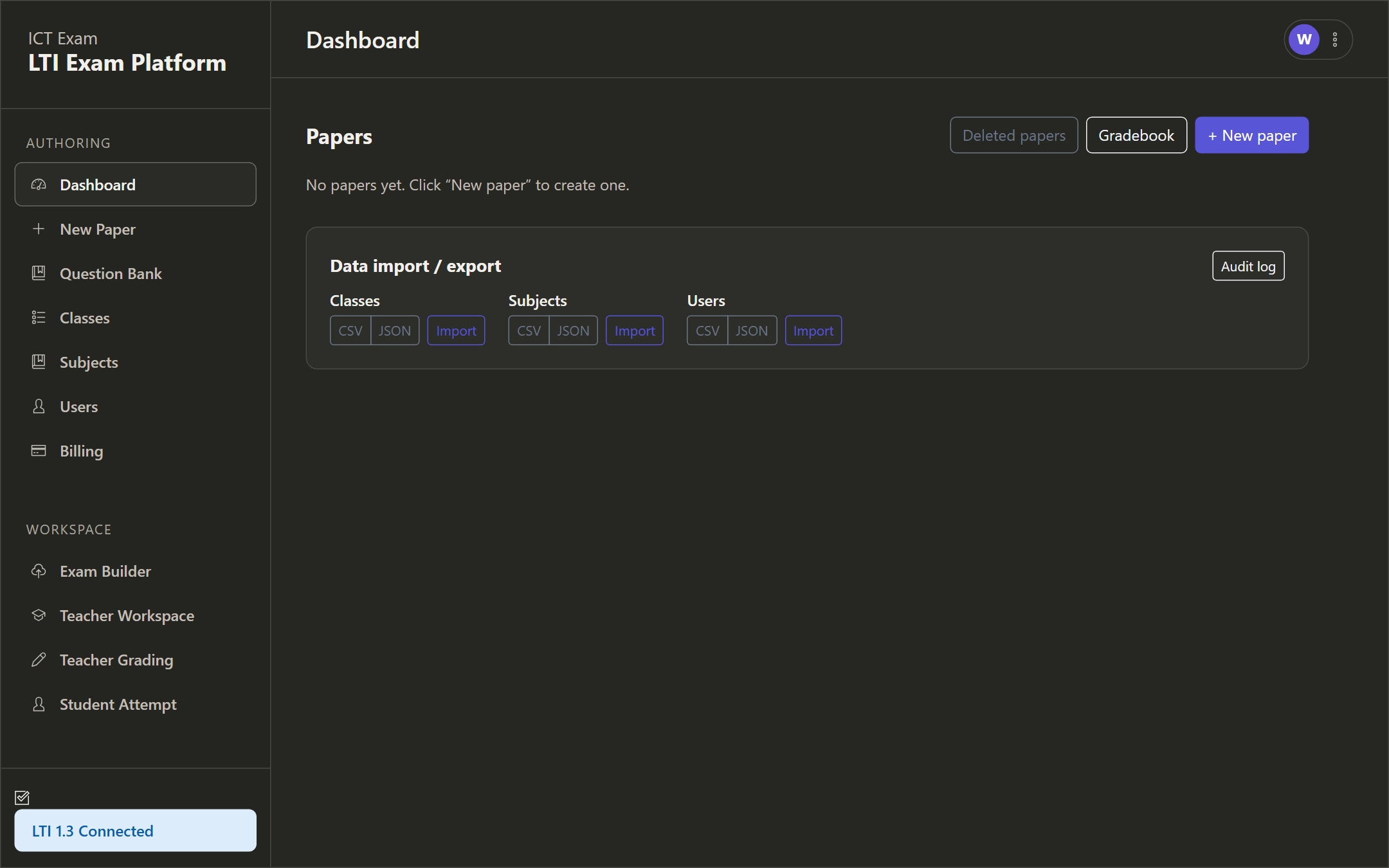
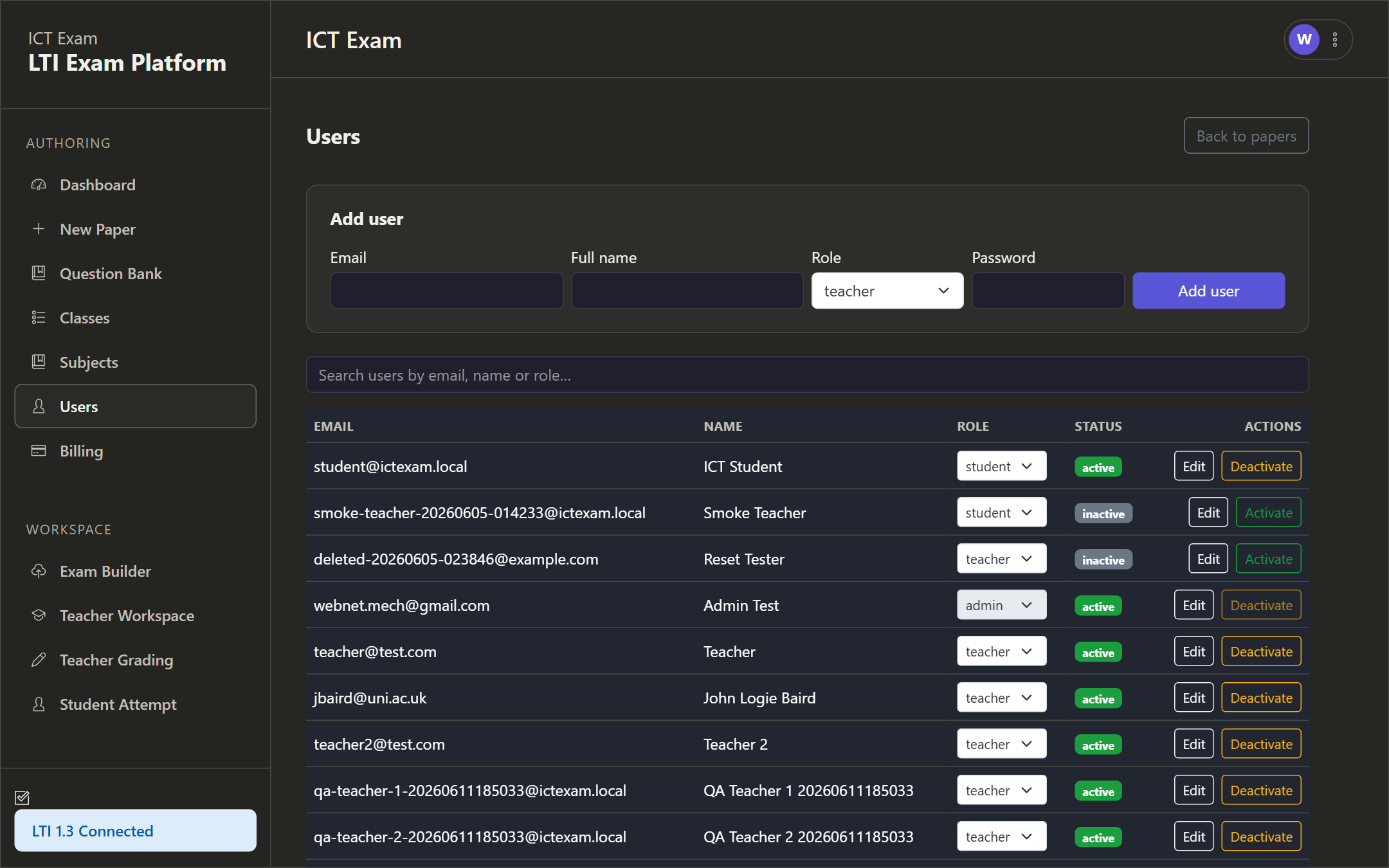
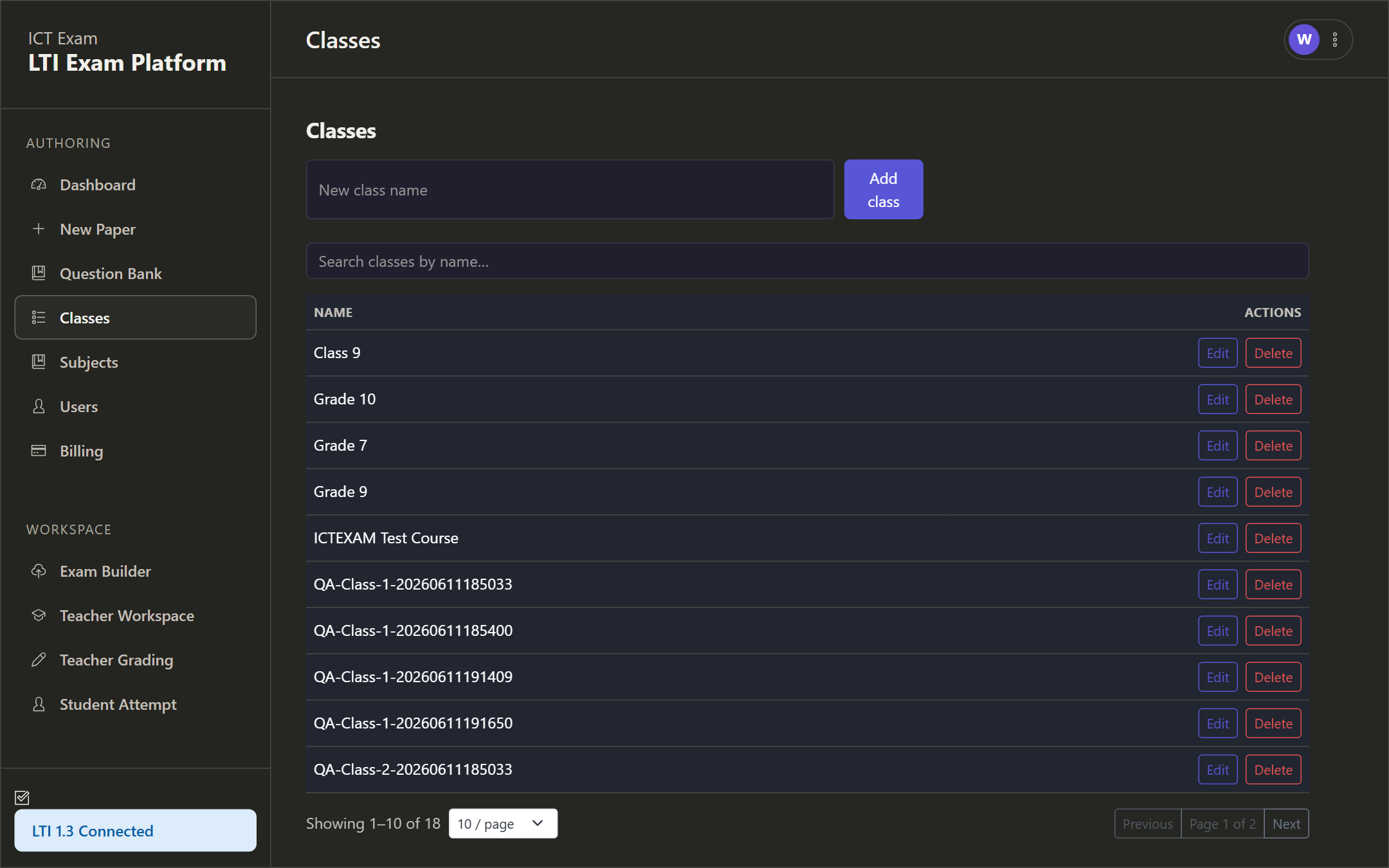
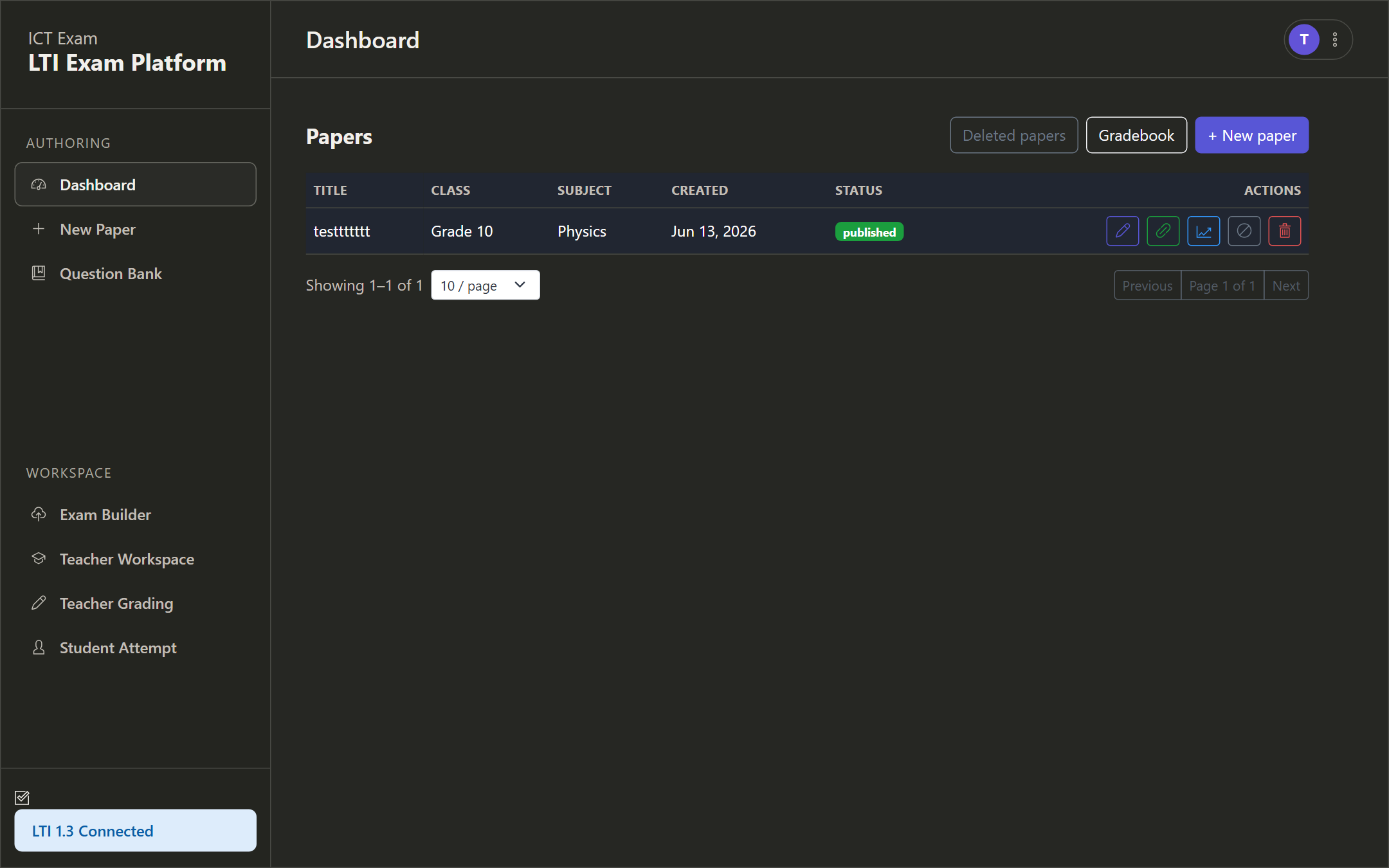
ICTExam is an online examination platform that takes an exam from creation all the way through to graded results, without requiring paper, spreadsheets, or a bloated LMS built for things you don't need.
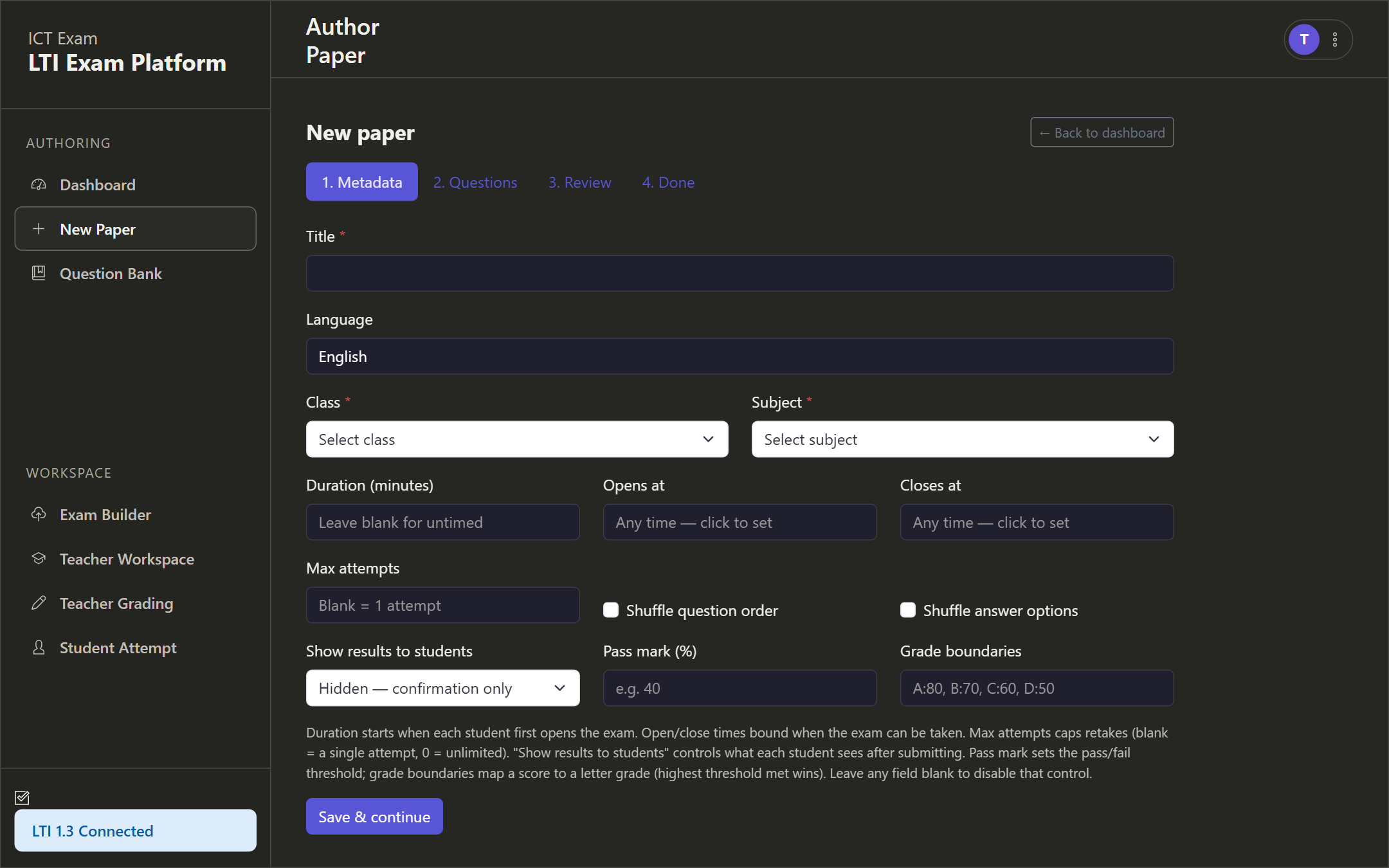
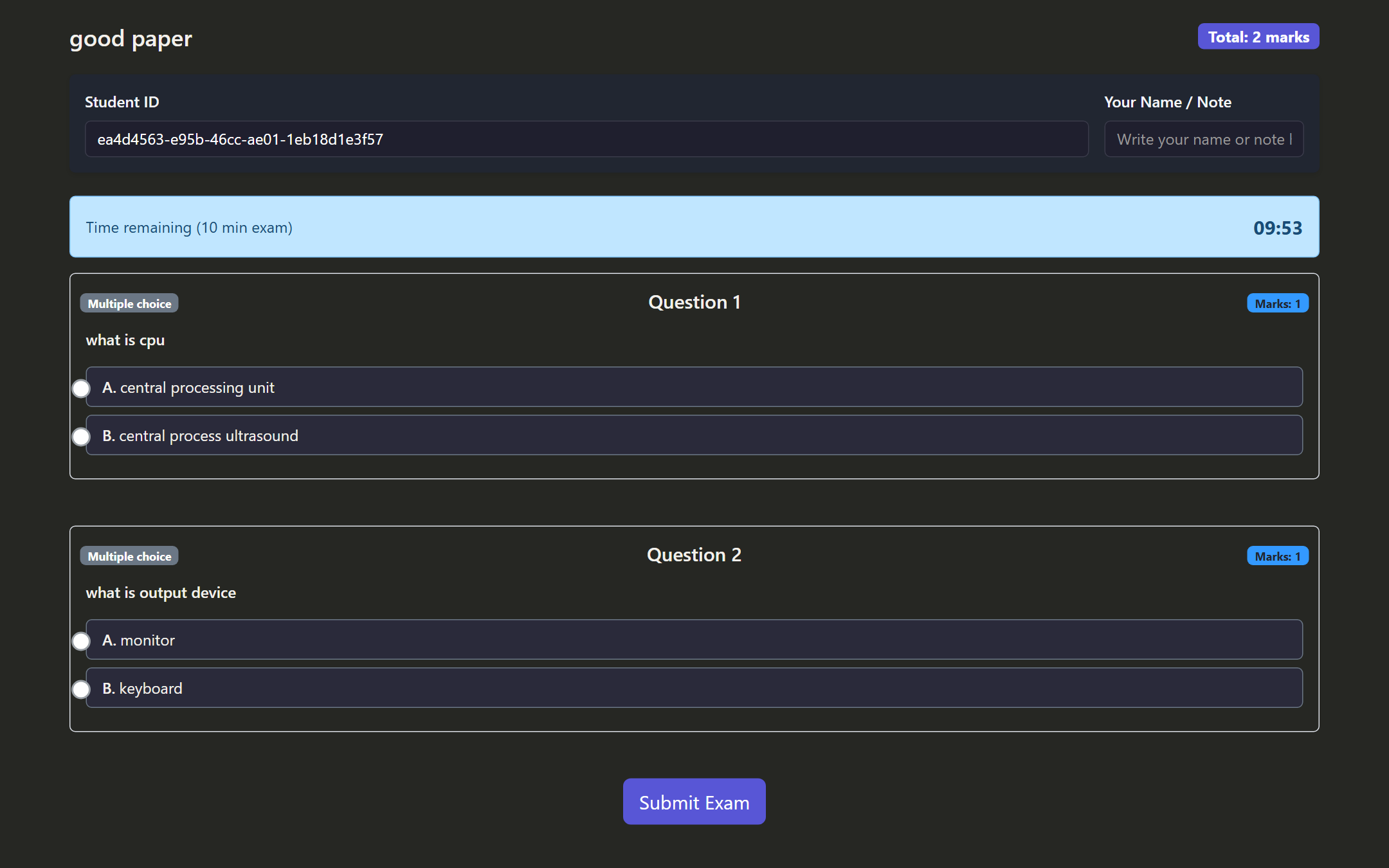
Instructors and administrators build exams directly in the platform — mixing question types like multiple choice, short answer, and long-form written responses into a single paper. Once published, exams are delivered securely to students with enforced timing, so every candidate gets a controlled, consistent testing window rather than an open-ended quiz link.
Grading is where a lot of the manual pain usually lives, and ICTExam automates as much of it as it safely can. Objective questions — multiple choice, true/false, and similar formats — are scored instantly the moment a student submits. Written and short-answer responses are routed to instructors for review, but with results, timing data, and submission history already organized and ready to work through, rather than a stack of loose papers.
How we built it
ICTExam is built as a standalone web platform, designed specifically around the exam lifecycle rather than repurposed from a generic quiz or survey tool. The core exam engine handles question authoring, timed delivery, and submission handling as first-class concerns — timing enforcement, autosave, and submission integrity were built into the foundation rather than added on top later.
On the authoring side, we built a flexible question editor that supports multiple question types within a single exam paper — multiple choice, true/false, short answer, and long-form written responses — so instructors can build a paper that actually mirrors how a real exam is structured, instead of forcing everything into one rigid quiz format.
The delivery layer is built to be resilient under real exam conditions: periodic autosave protects students from losing work if a connection drops mid-exam, and backend-enforced deadlines mean timing can't be manipulated from the client side. That was a deliberate architectural choice — anything that could be tampered with in the browser had to be re-validated on the server before it counted.
Challenges we ran into
Making timing genuinely tamper-proof. Client-side timers are easy to build and easy to manipulate. We had to move all real timing logic to the backend, treating anything happening in the browser as a hint rather than a source of truth — which meant rethinking how the countdown, autosave, and submission cutoff all talked to the server.
Handling dropped connections without losing work. Students losing an internet connection mid-exam was one of our biggest early concerns — a lost connection shouldn't mean a lost exam. Building reliable autosave that could recover a student's progress without creating duplicate or conflicting submissions took several iterations to get right.
Balancing flexibility with structure in the question editor. We wanted instructors to be able to build exams that mirror real printed papers, mixing question types freely. But the more flexible we made the authoring tool, the harder it became to keep grading, timing, and reporting consistent across every possible question combination. Finding the right constraints without making the editor feel rigid took real back-and-forth.
Accomplishments that we're proud of
Timing and submissions that institutions can actually trust. Building a backend-enforced timing system that can't be manipulated from the client side, paired with autosave that protects students from losing work on a dropped connection, means institutions can run real, high-stakes exams on the platform with confidence — not just low-stakes practice quizzes.
A question editor flexible enough to mirror a real exam paper. We're proud that instructors can mix multiple choice, true/false, short answer, and long-form questions in a single exam, the same way a real printed paper would be structured, instead of being boxed into a single rigid question format.
Grading that actually saves time instead of just relocating the work. Instant scoring for objective questions combined with a review workflow that surfaces submission history, timing data, and prior answers in one place turned grading from a cold, manual slog into a genuine review-and-confirm process for instructors.
What we learned
Client-side anything is a suggestion, not a guarantee. We learned early that timing, submission state, and even question order can't be trusted if they only live in the browser. Every piece of exam integrity logic had to be re-validated on the backend, which meant treating the frontend as a display layer rather than a source of truth.
Real exam conditions expose problems that testing at small scale never will. Our early builds worked fine with a handful of test users. It wasn't until we simulated a full cohort submitting at the same scheduled time that we found the actual bottlenecks — connection handling, autosave conflicts, and database contention that simply don't show up until load looks like a real exam day.
Flexibility in authoring has a cost, and it shows up downstream. Every new question type or formatting option we added to the editor made grading, timing, and reporting logic more complex to keep consistent. We learned to weigh new authoring flexibility against what it would cost every other part of the pipeline, not just whether instructors would find it useful.
What's next for ICTExam
AI-assisted grading for written responses. We're extending automated scoring beyond objective questions into short-answer and written responses — using AI to do a first-pass evaluation and flag responses for instructor review, so grading becomes faster without removing the human judgment call on anything that matters.
Question banks and reusable exam templates. We want to make it easy for instructors to build a library of questions they can pull from across multiple exams and terms, instead of authoring each exam from scratch every time.
Deeper anti-cheating and integrity controls. As more institutions run higher-stakes exams on the platform, we're investing in stronger integrity features — things like randomized question ordering, tab-switch detection, and optional proctoring integrations — while staying deliberate about not turning every exam into a locked-down surveillance experience by default.

Log in or sign up for Devpost to join the conversation.