-
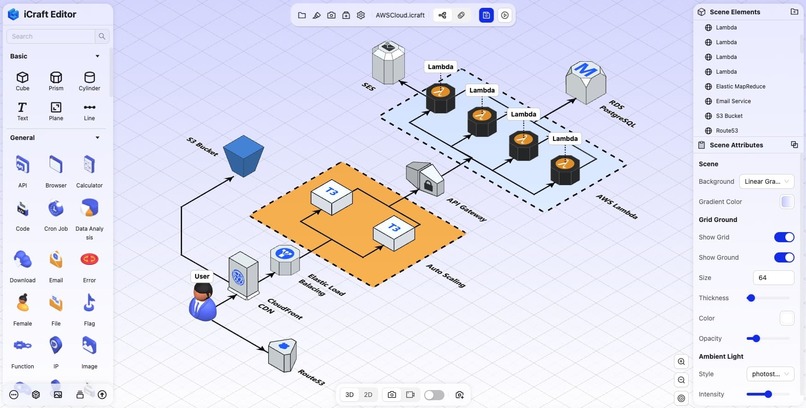
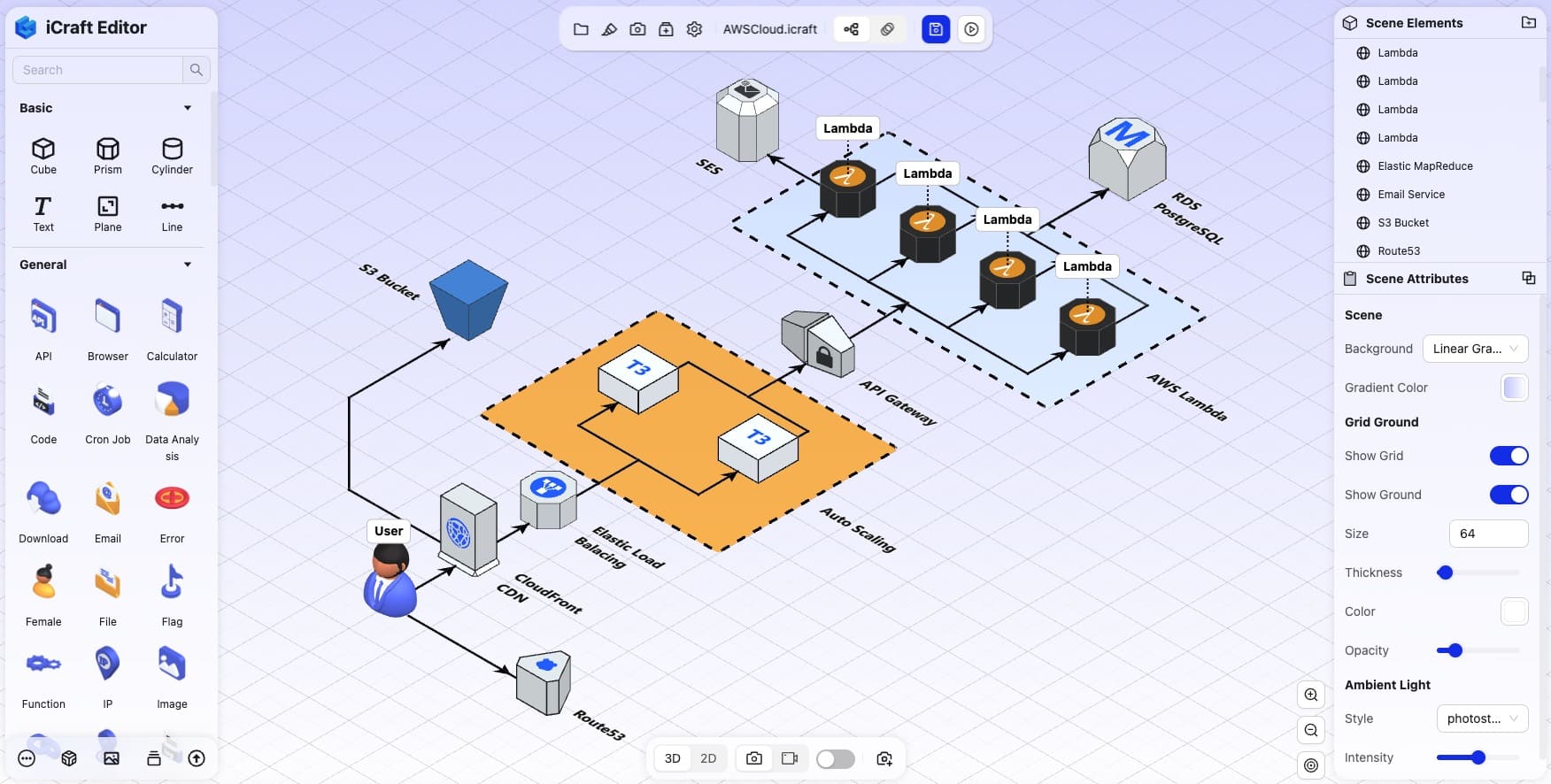
AWS 3D architecture
-
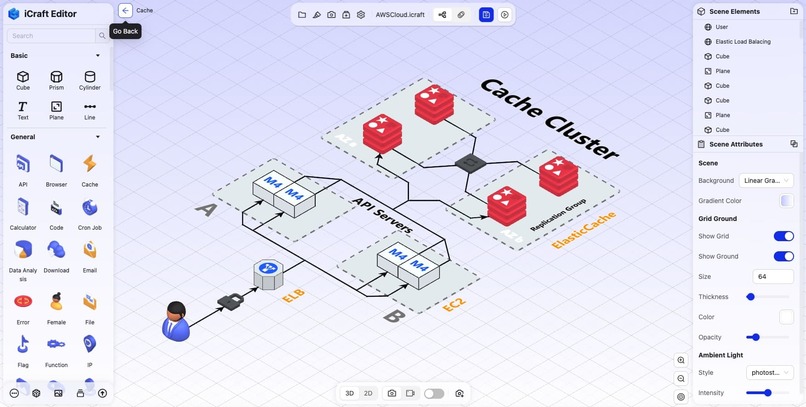
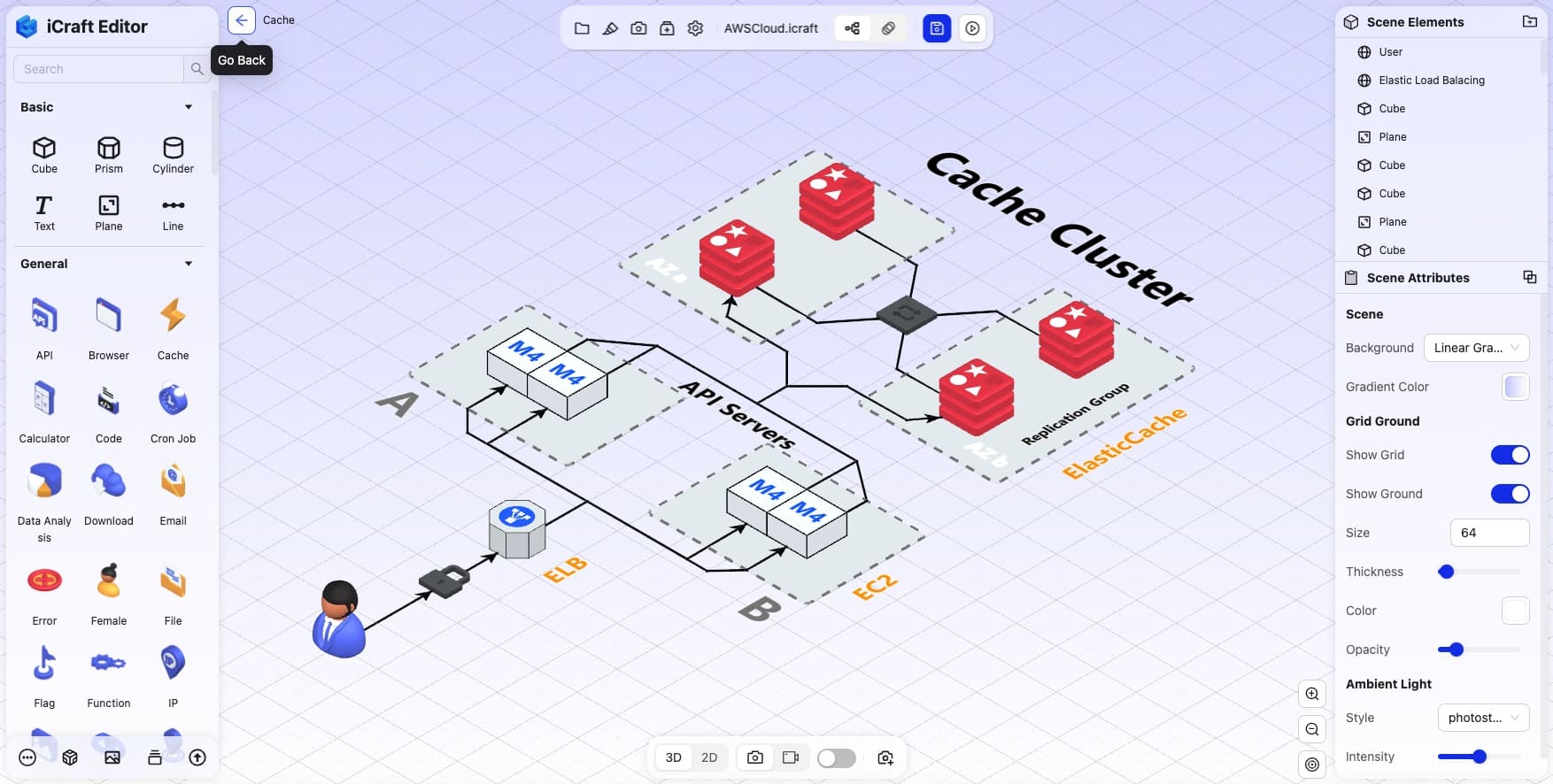
AWS 3D architecture
-
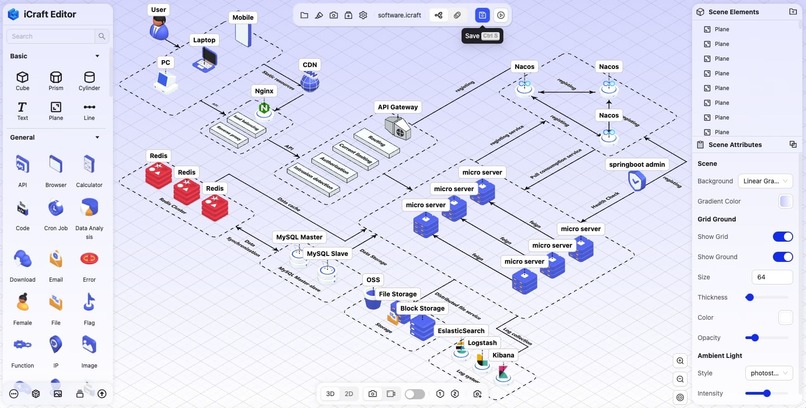
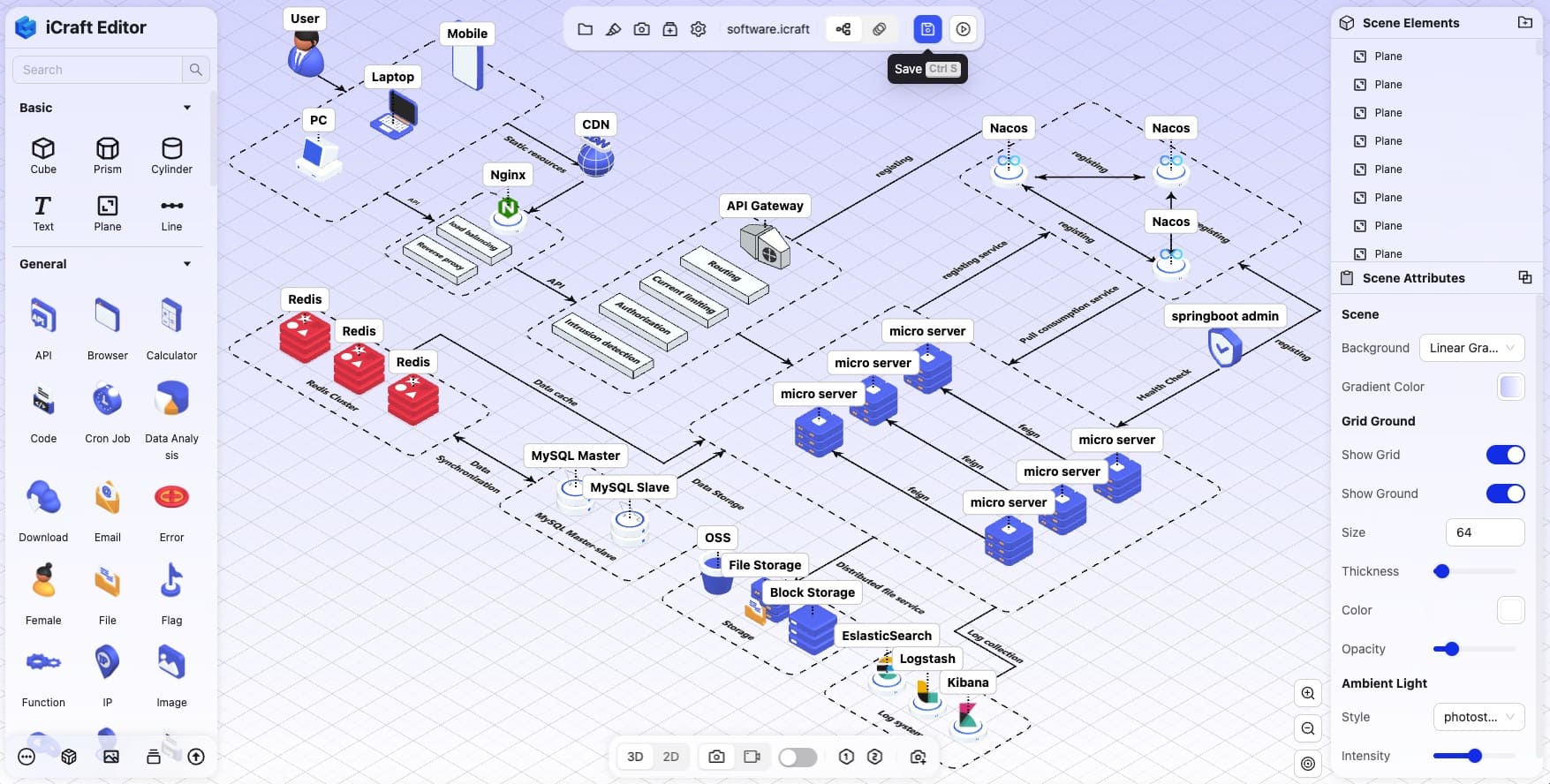
system architecture
-
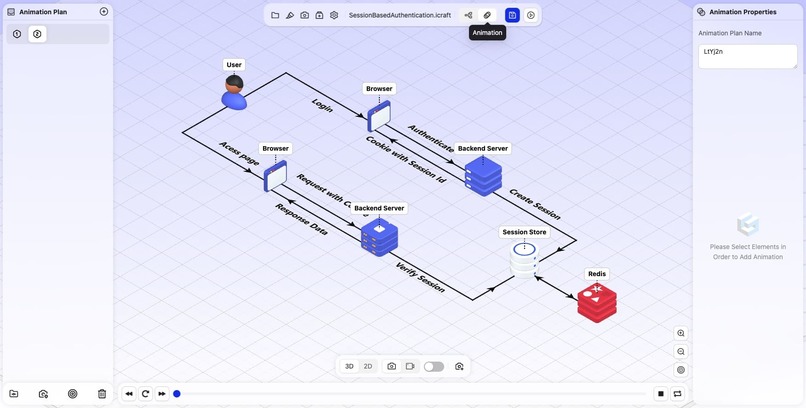
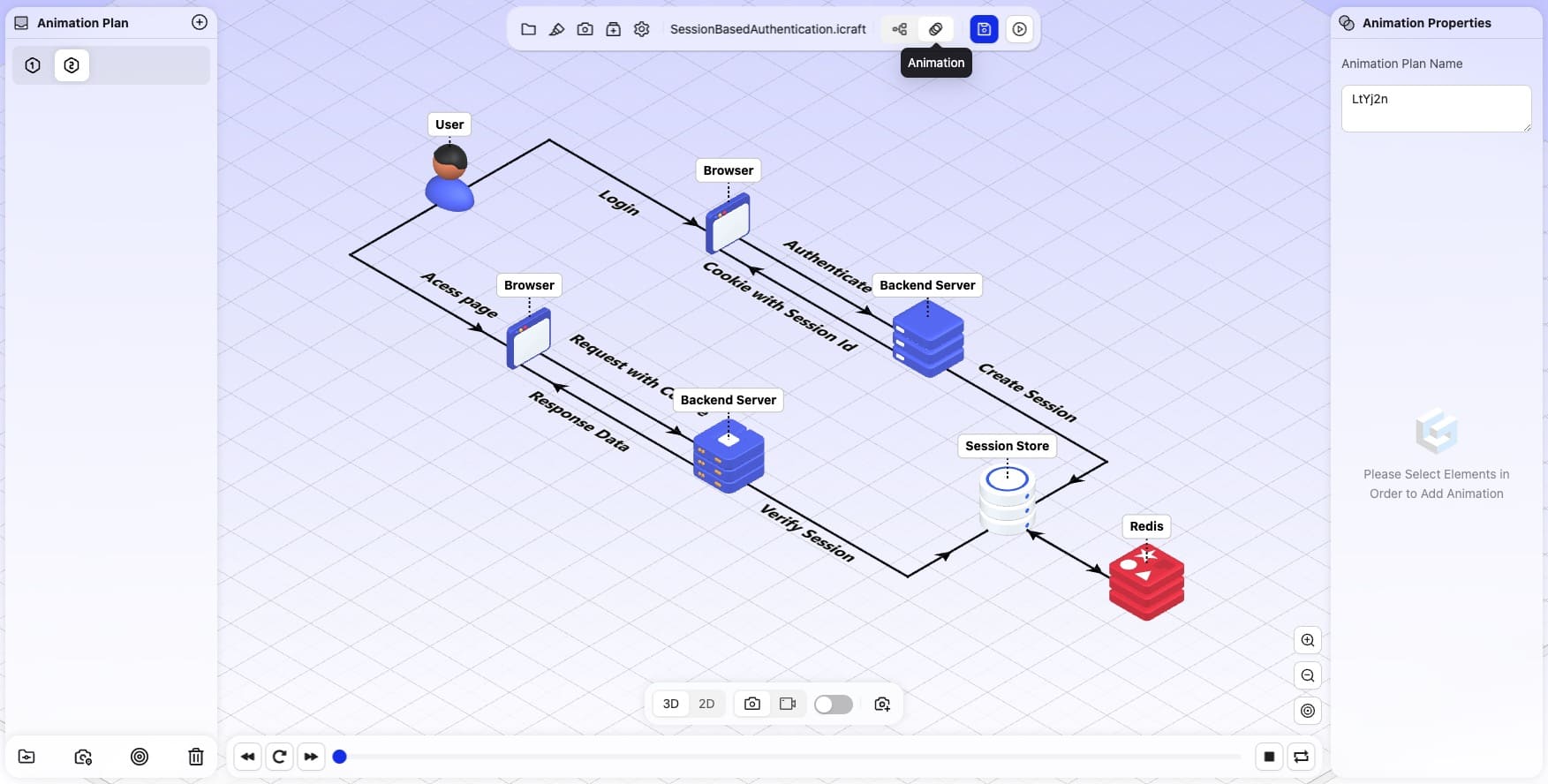
architecture animation
Inspiration
The inspiration for iCraft Editor came from the need for a powerful, user-friendly tool to design and visualize complex software architectures in 3D. Traditional 2D diagrams often lack the depth and clarity needed to fully convey system structures and relationships, especially as software architectures grow in complexity. iCraft Editor aims to bridge this gap, providing an interactive 3D environment that empowers users to create dynamic and detailed representations of their software systems.
What it does
iCraft Editor allows users to design, edit, and visualize software architecture diagrams in 3D. It supports a range of visual elements, including servers, networks, databases, and various IT infrastructure components, making it easy for users to build realistic, multi-layered representations. Users can interact with the 3D models to inspect details, adjust layouts, and gain a better understanding of system relationships. The editor is also designed to be highly customizable, offering various styling, positioning, and interaction options to meet diverse project needs.
How I built it
iCraft Editor was built using a combination of Three.js for 3D rendering and React for building the user interface, with additional backend services integrated for data management. Blender was used to design and optimize 3D models of architecture components. The entire project is structured as a Progressive Web App (PWA) to enhance accessibility and support offline functionality. iCraft Editor also leverages Nextra for documentation and localization, allowing it to support multiple languages, which is essential for international users.
Challenges I ran into
One of the biggest challenges was ensuring smooth performance while rendering complex 3D models and maintaining interactivity, especially on lower-spec devices. Another challenge was integrating 3D interaction with traditional user interface elements to create an intuitive experience. Additionally, designing an efficient data structure to support hierarchical relationships among components and their interdependencies in real-time presented unique technical difficulties.
Accomplishments that I’m proud of
I’m proud of creating an editor that is both visually compelling and highly functional, empowering users to bring their architectural visions to life. Successfully implementing multilingual support with Nextra and optimizing 3D performance were also key accomplishments, as these features make iCraft Editor both accessible and scalable. Additionally, building a PWA version ensures that the tool is not only powerful but also versatile in various usage environments.
What I learned
Developing iCraft Editor taught me a great deal about managing 3D assets and optimizing them for web applications. I also deepened my knowledge of PWA architecture, enabling the tool to offer both online and offline functionalities seamlessly. Moreover, working on localization with Nextra highlighted the complexities of internationalization and taught me valuable skills in designing software for a global audience.
What’s next for iCraft Editor
The next steps for iCraft Editor include expanding the library of 3D components, integrating real-time collaboration features, and enhancing export options for easier sharing across platforms. We also plan to explore AI-driven suggestions that can help users optimize their architectures based on best practices. Furthermore, expanding into more specific industry templates, such as those for automotive or IoT, could make iCraft Editor a versatile tool across various technical fields.
Let me know if you’d like to make any adjustments!


Log in or sign up for Devpost to join the conversation.