🏥 ICONic - India Care Operations Network
Building trust in healthcare infrastructure data
Inspiration
The Problem: If someone needs an ICU bed in rural Maharashtra tonight, how do we know which hospitals actually have one?
Healthcare databases in India suffer from outdated, unverified, and contradictory data. Facilities closed years ago still appear as "operational." Claims lack evidence. Records contradict each other (250 beds in one source, 0 in another). The result: Patients waste critical time reaching closed facilities during emergencies. Coordinators misallocate resources to "ghost" hospitals. We built ICONic to solve this with AI-powered trust verification.
What it does
ICONic is a dual-portal platform serving 10,000+ Indian healthcare facilities with real-time trust scores.
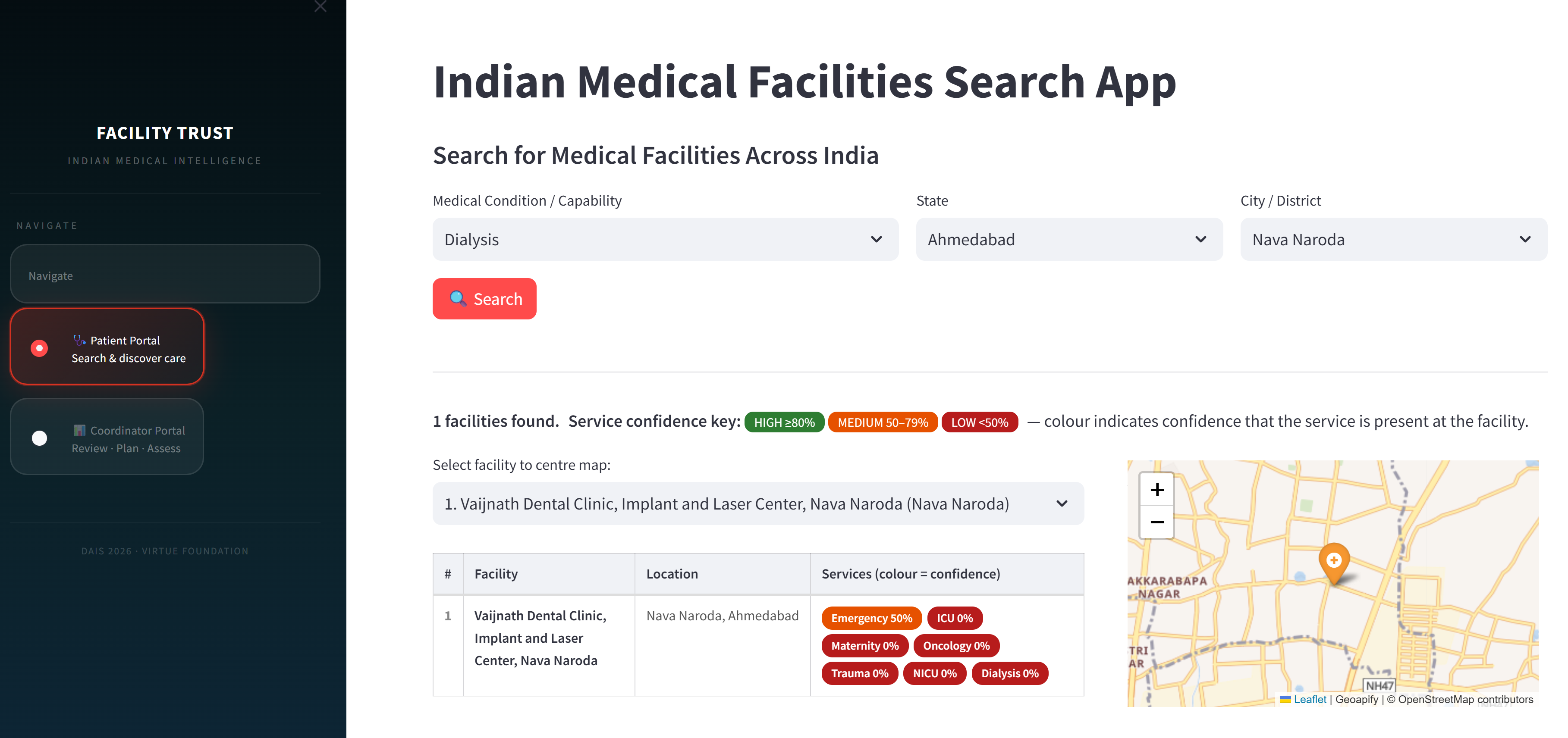
Patient Portal: Search "ICU near Mumbai" → Get trust-scored results with color-coded badges (🟢 ≥80%, 🟡 50-79%, 🔴 <50%) → Interactive map with geolocation → Evidence transparency showing why each facility got its score.
Coordinator Portal (3 Tabs):
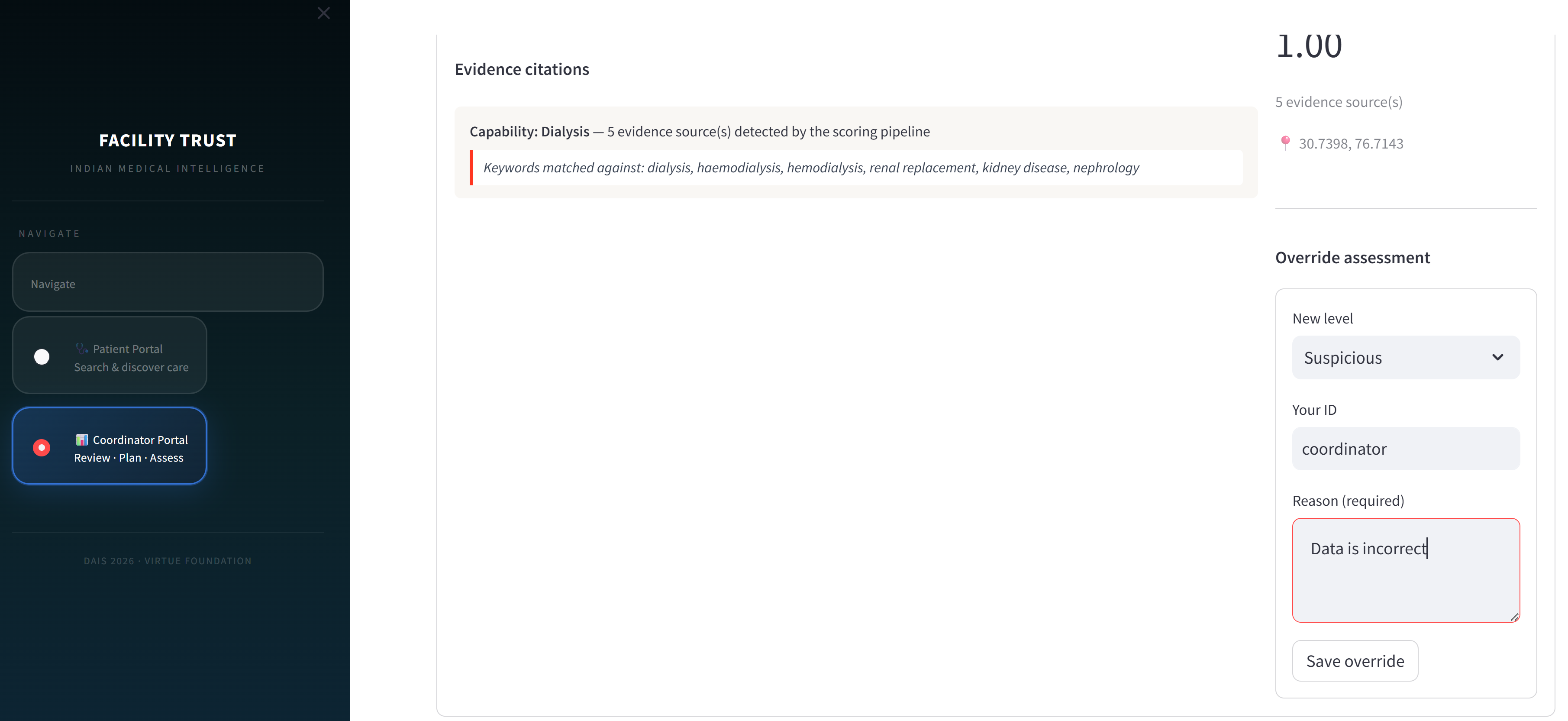
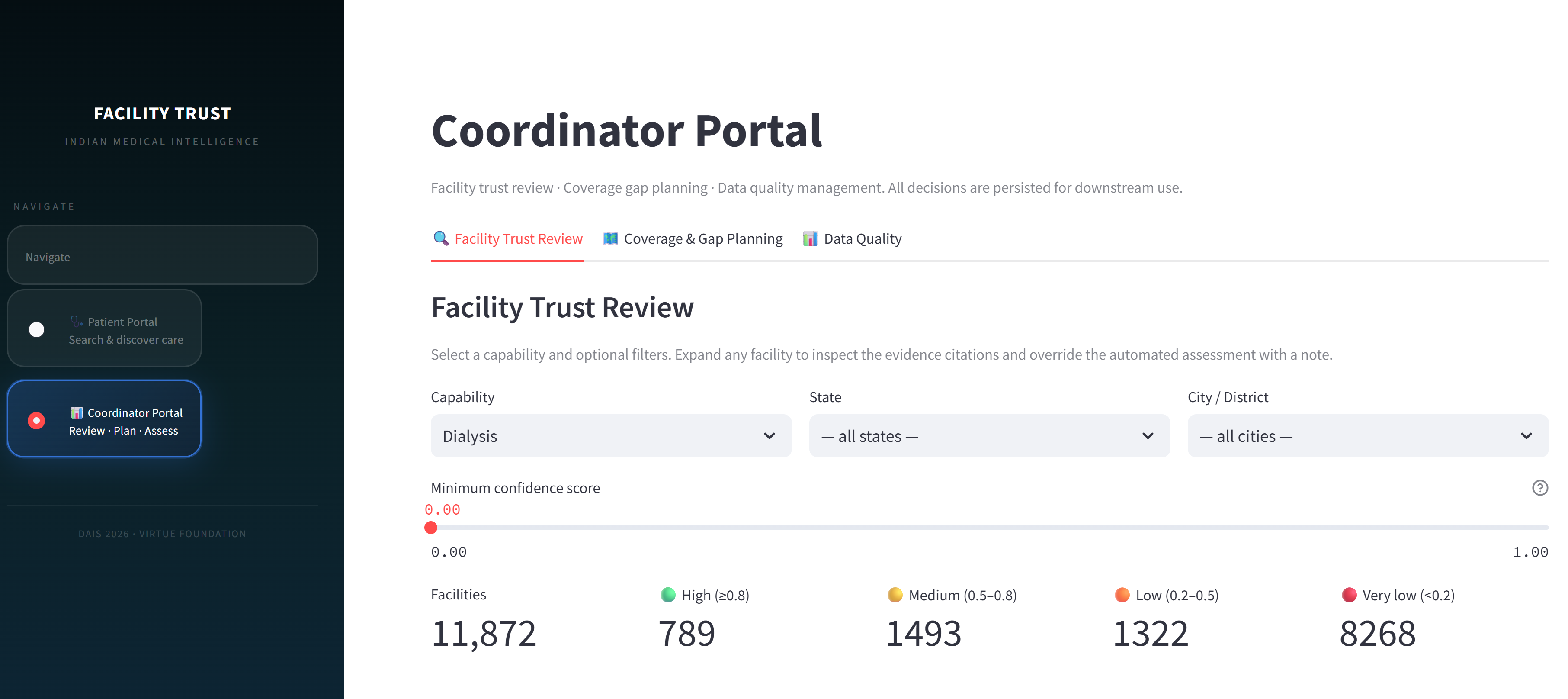
- Facility Trust Review: Filter by capability + region → Inspect evidence citations → Override assessments with field notes → Export decisions
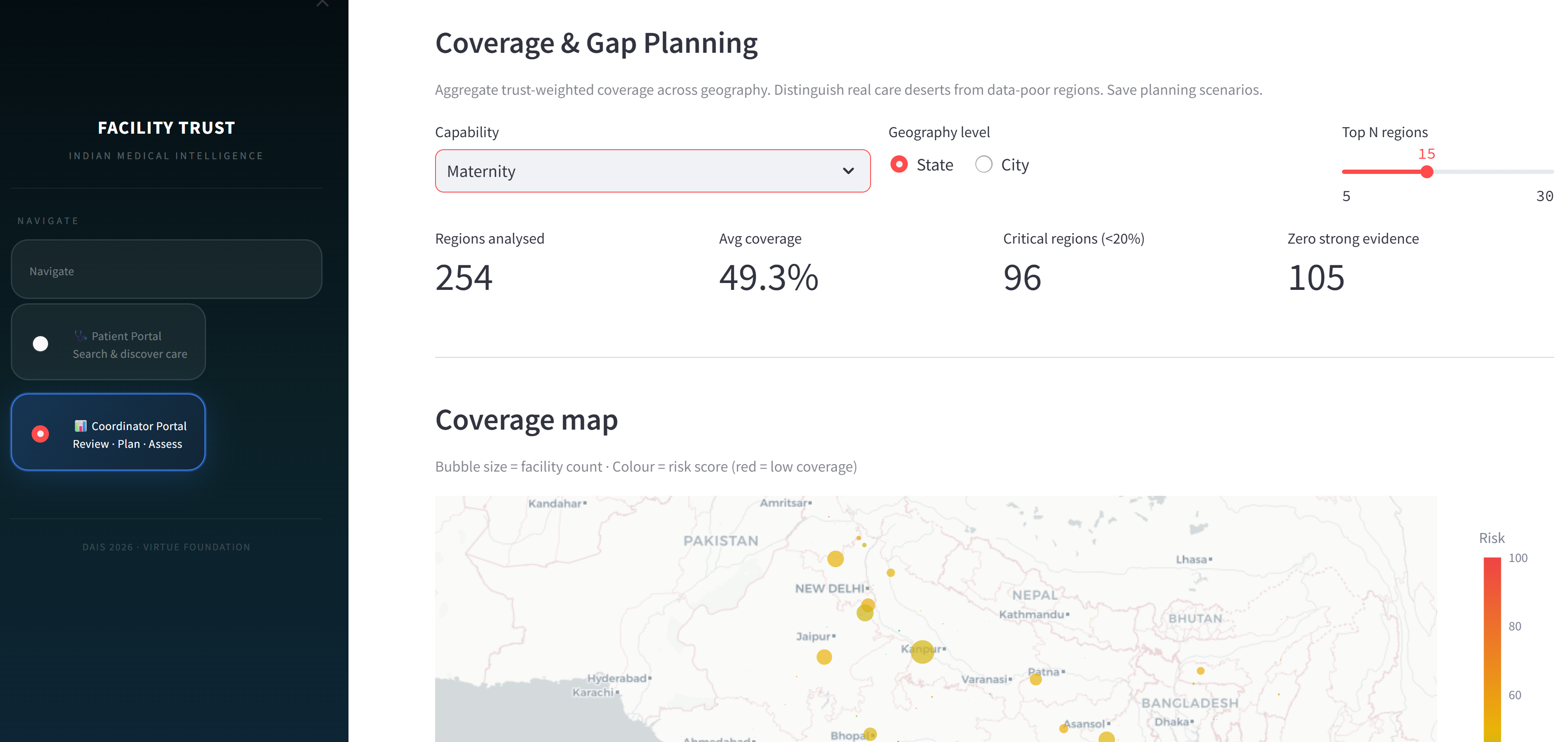
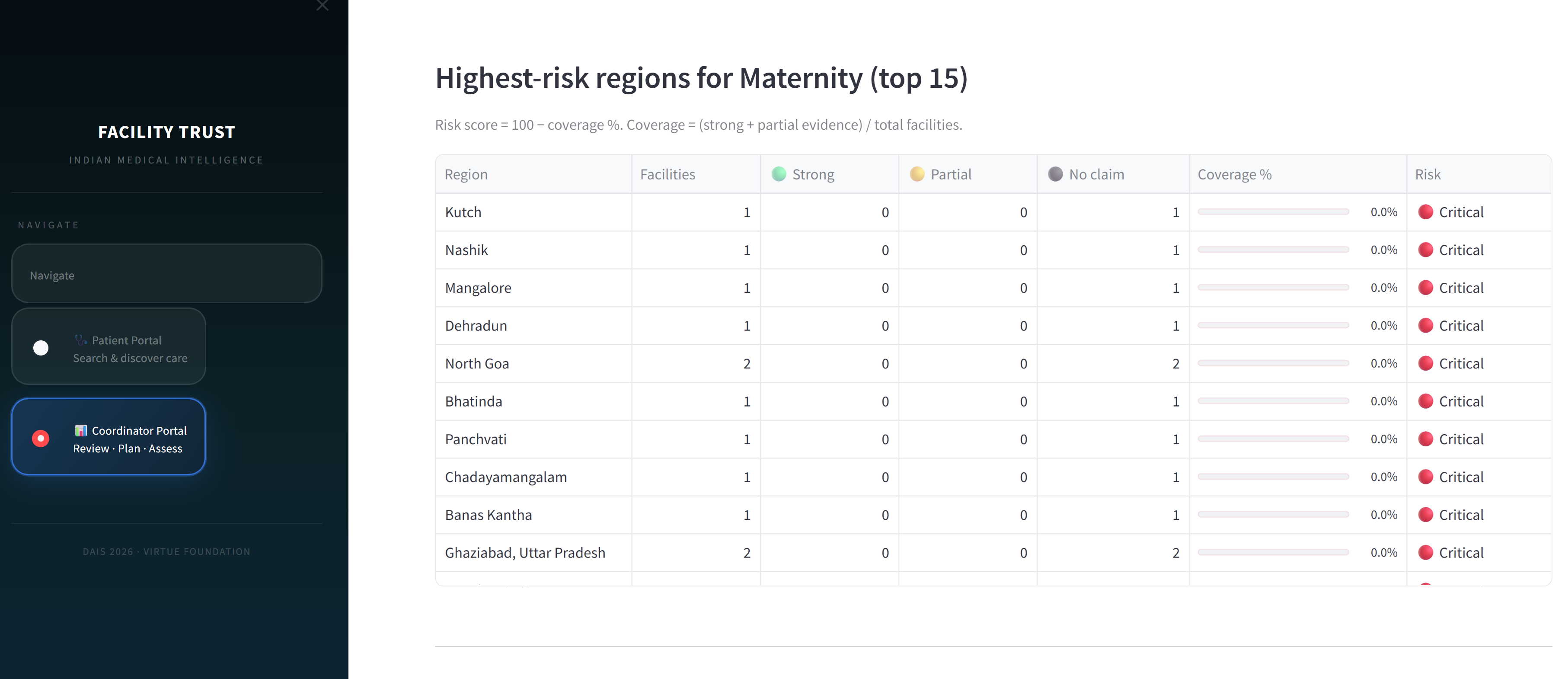
- Coverage Gap Planning: Regional heatmaps → Risk scoring (🔴 Critical <20% coverage) → Drill-down by state/city → Save planning scenarios
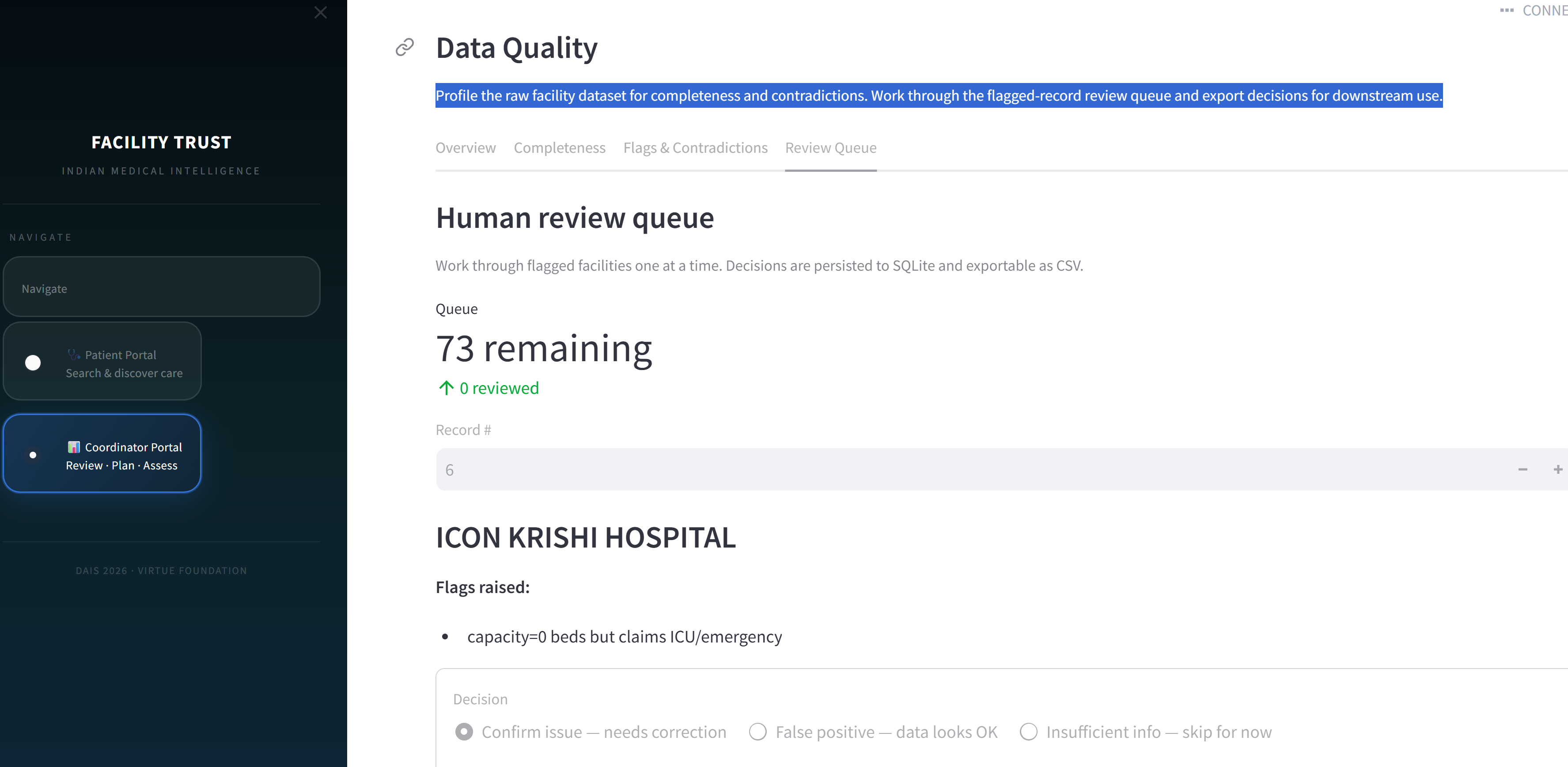
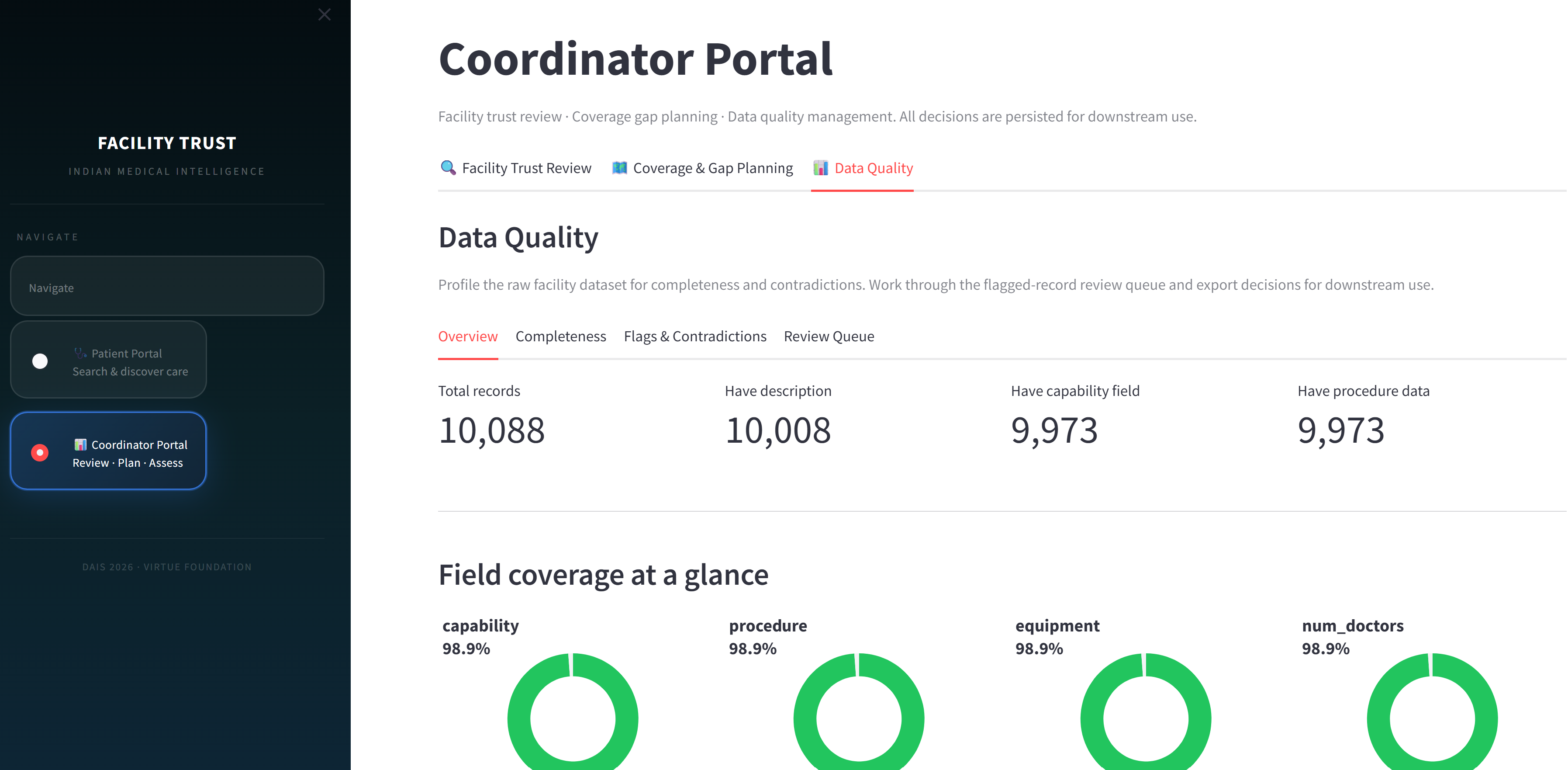
- Data Quality: Completeness dashboard → Flagged-record queue (contradictions, missing data) → Human review workflow → Fill data gaps to improve database
Trust Formula: Evidence accumulation (beds, doctors, GPS, contact, year, pincode) with geographic verification bonus. Red flags (0 beds, 0 doctors) immediately override confidence.
How we built it
Tech Stack: Streamlit frontend → Databricks SQL Warehouse (serverless) → Unity Catalog (trust scores + facility data) → SQLite (coordinator overrides) → Plotly (heatmaps) + Folium (interactive maps) → Geoapify API
Architecture: Trust scoring pipeline (notebook) processes 10,000+ facilities with evidence accumulation + contradiction detection → Outputs confidence scores to Unity Catalog → Patient portal queries by capability + city → Folium renders color-coded map markers → Coordinator portal provides 3-tab workflow with SQL aggregations + override tracking.
Challenges we ran into
1. Poor Data Quality: 23% had zero beds, 18% zero doctors, 35% missing coordinates. Solution: Automated flagging + human review queue.
2. SQL Injection: User input in queries. Solution: Sanitized all inputs (city.replace("'", "''")).
3. Map Performance: 10,000+ markers froze browsers. Solution: Limited to top 50 results + lazy loading + clustering.
4. Write Permissions: Coordinators needed to persist reviews without Unity Catalog access. Solution: SQLite local storage → CSV export → Data engineers merge back.
5. Non-Technical Users: Patients don't understand "confidence intervals." Solution: Simplified to 3 color badges.
Accomplishments
✅ 10,032 facilities scored ✅ 24 medical capabilities detected ✅ 2 specialized portals ✅ Human-in-the-loop workflow ✅ Geographic verification via India Post
What we learned
Trust is multi-dimensional (partial evidence beats no information). Red flags trump positive evidence (0 beds invalidates everything). Two distinct personas need different interfaces (emergency speed vs. planning depth).
What's next
Mobile app for rural access → Real-time updates via Delta Live Tables → Community verification (patient field reports) → ML anomaly detection → API for ambulance/telemedicine platforms
ICONic proves that trust is computable — and better data saves lives.
Built With
- amazon-web-services
- databricks
- folium
- geoapify
- html/css
- plotly
- python
- sql
- streamlit

Log in or sign up for Devpost to join the conversation.