Inspiration
Even a guy like me, with questionable taste and little interest in fashion, often encounters the problems that fashion-lovers do too. We got too many things to worry about (like enjoying the moment with those we love), we shouldn't waste any time wondering about our closet.
What it does
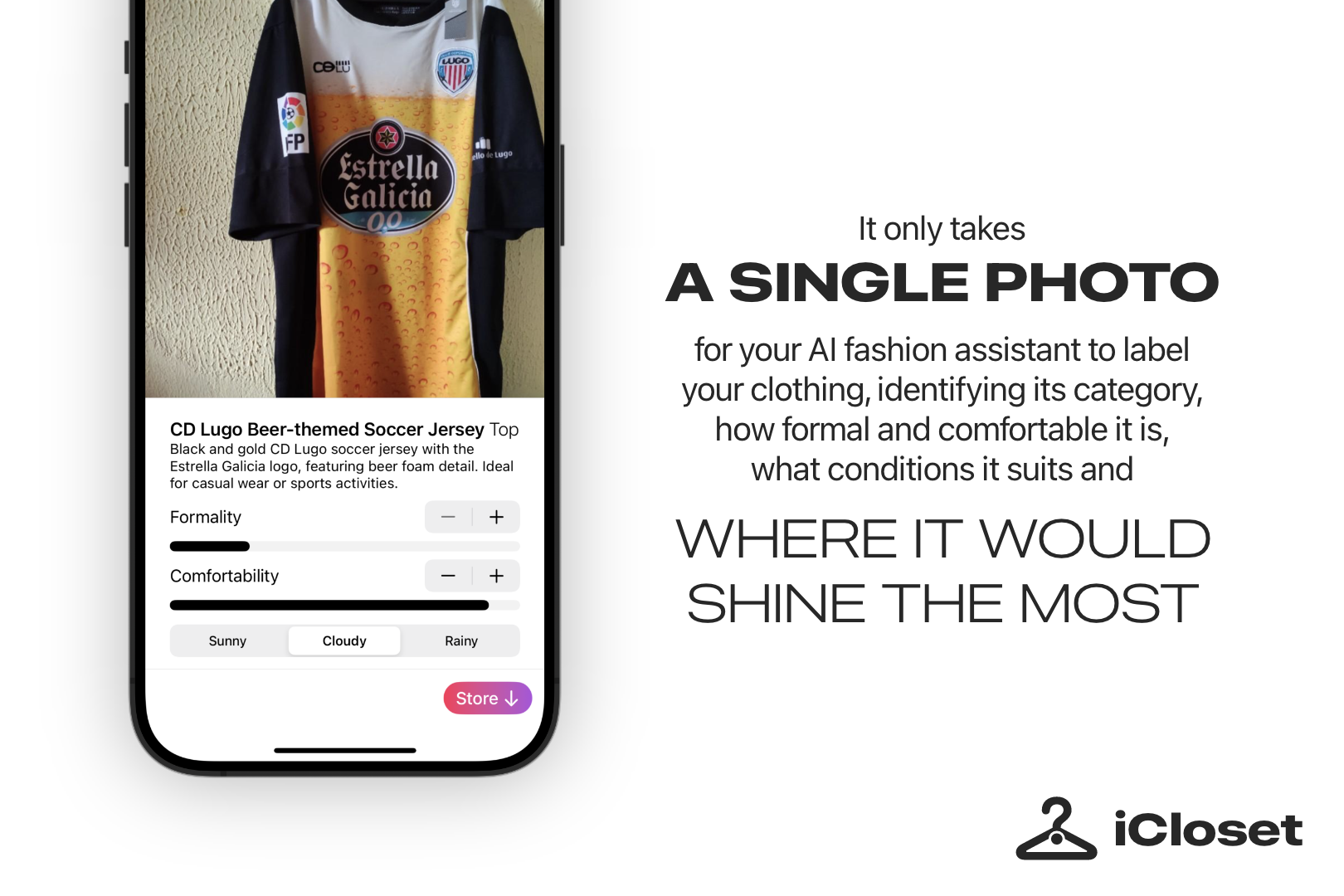
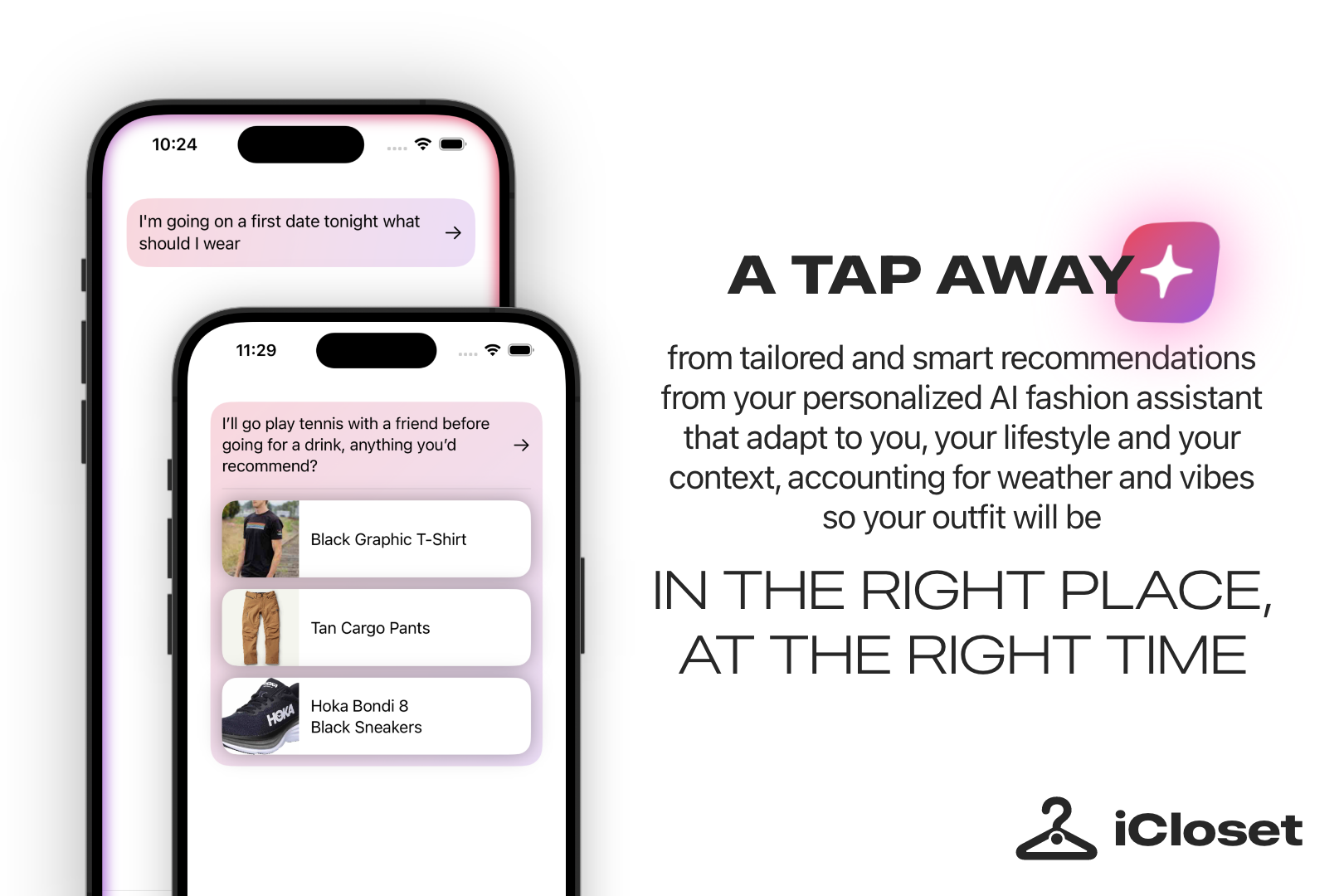
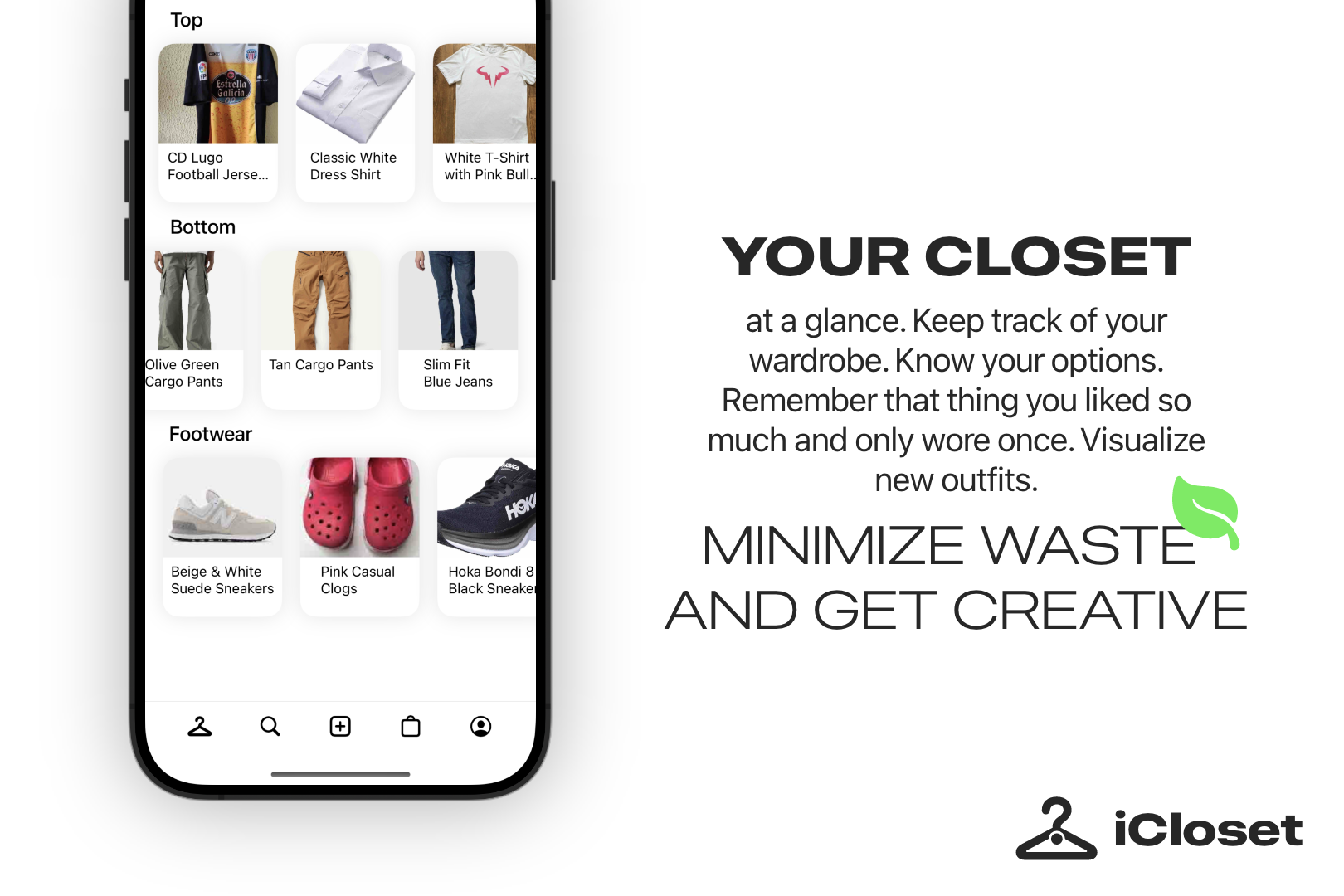
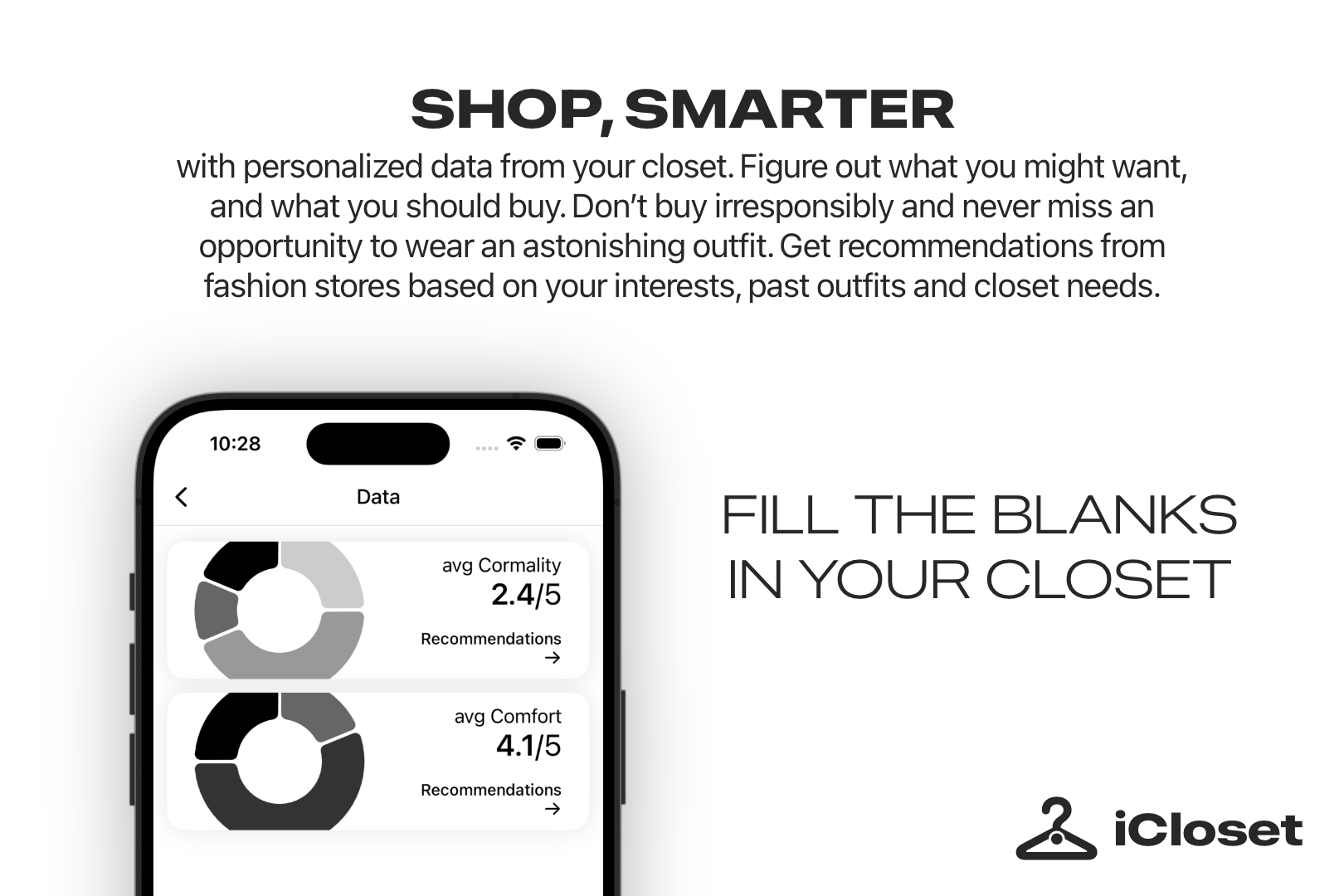
iCloset helps you keep track of your clothing so you can make more informed, smart and fast decisions. Your personalized AI assistant help you choose an outfit based on your preferences, your lifestyle and context, accounting for the vibes, formality, weather and other features of events to dress up for. Your AI fashion assistant helps you identify relevant statistics and patterns from your wardrobe to recommend new purchases, alternative and creative combinations of clothing, so you can have more control over how you dress and how you buy. iCloset isn't a chatbot, but a neatly interfaced program that feel intuitive, fast and enjoyable.
How we built it
OpenAI's API was to create vector embeddings for clothing descriptions for later comparison with events and contexts. Chat completions were utilized too along with careful prompt engineering to label and identify the characteristics of clothing photos. Supabase was used to reliably and securely store data the photos and send them to OpenAI and every
Challenges we ran into
Datasets didn't have an optimal format for training so it had to be re-formated and even then, the labels are not as specific as one would like, and some other labels are straight up missing. LLMs tending to perform worse as the amount of information scales and figuring out how to prompt engineer smartly to reduce ambiguity and maximize satisfactory responses.
What we learned
Training multi-label image recognition ML models with medium-sized datasets and running ML model directly on device for increased efficiency.
What's next for iCloset
Integration with fashion store data to recommend clothes from stores. Introducing new categories of clothing like accessories, and clothing layering, combining garments in complex yet beautiful ways. Transition from using OpenAI to label images to multi-label image classification and recommendation ML models for more privacy, efficiency and reduces expenses (by running everything on device since the LLM might be overpowered). More analysis algorithms of your closet to identify relevant data and patterns of interest to the user to make smarter dressing and purchasing decisions.
