-
-
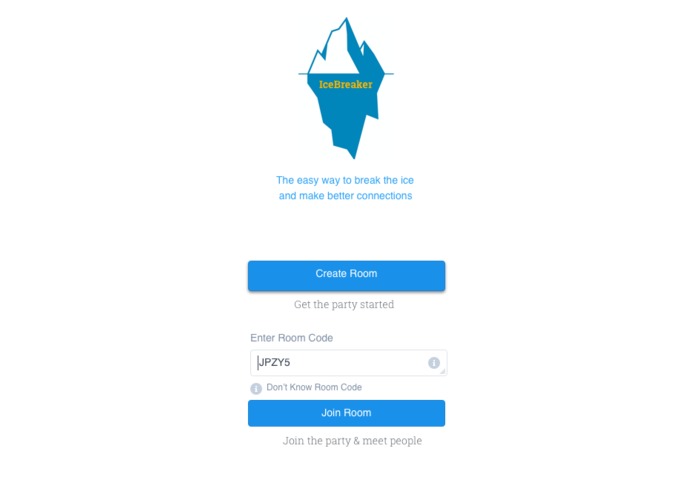
The user would download the app on their preferred app store. Once downloaded, they would arrive here. They can start or join a room.
-
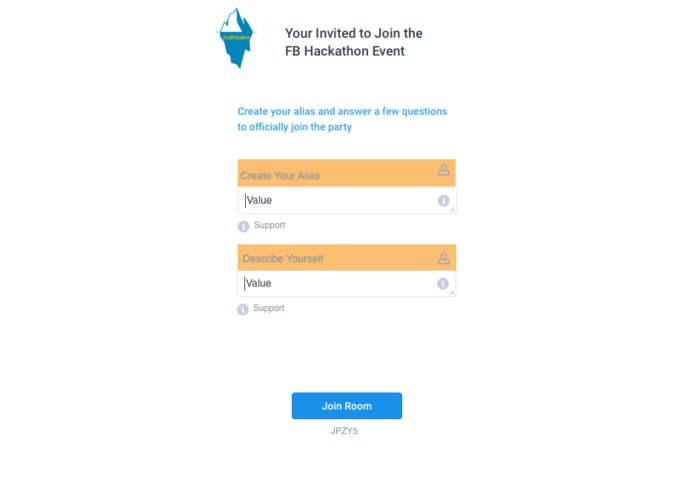
Join the FB hackathon room with the code that was shared from the room organizer. The user would create an 'alias' and enter a description.
-
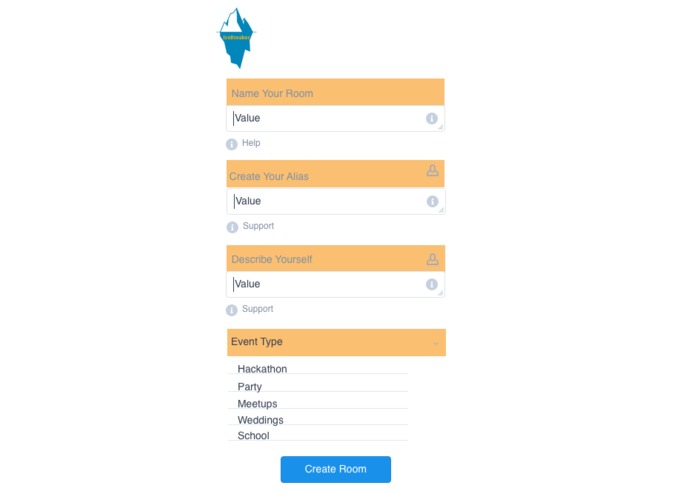
The user can also create a room for an event. They need to enter a name, alias as the organizer, description and what type of event.
-
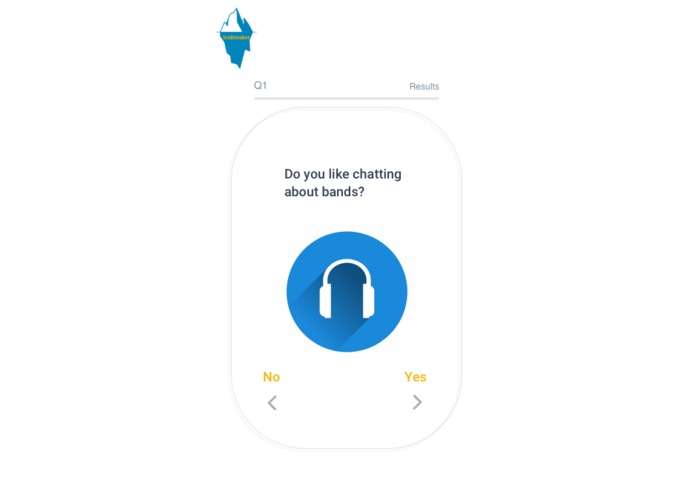
Depending on the type of event, these question will vary. We have mocked up a journey for a hackathon. Q1 asks about interest in music
-
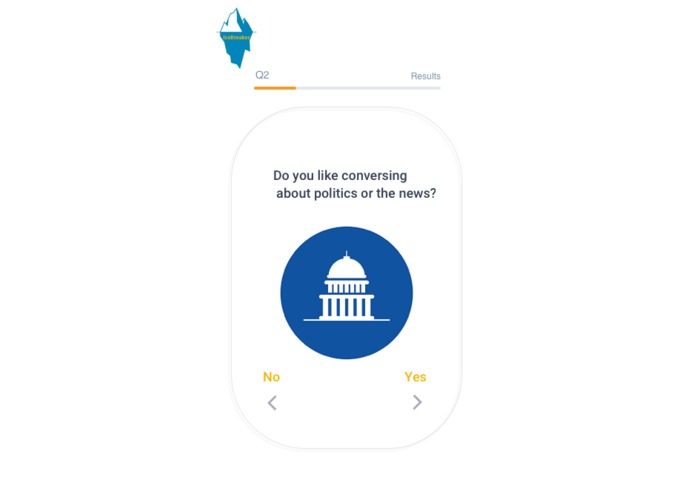
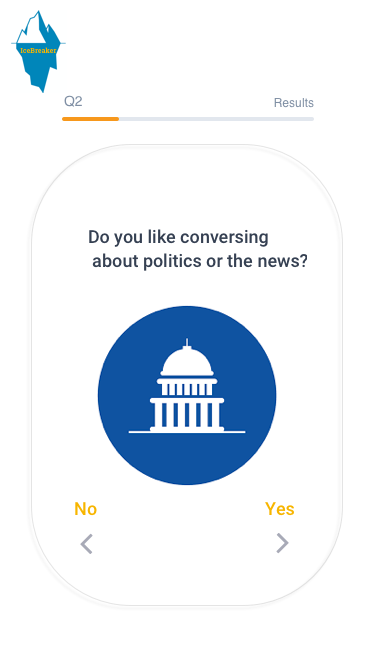
Q2 asks whether the user enjoys debating or discussing politics and the news. It intentionally does not include party affiliations.
-
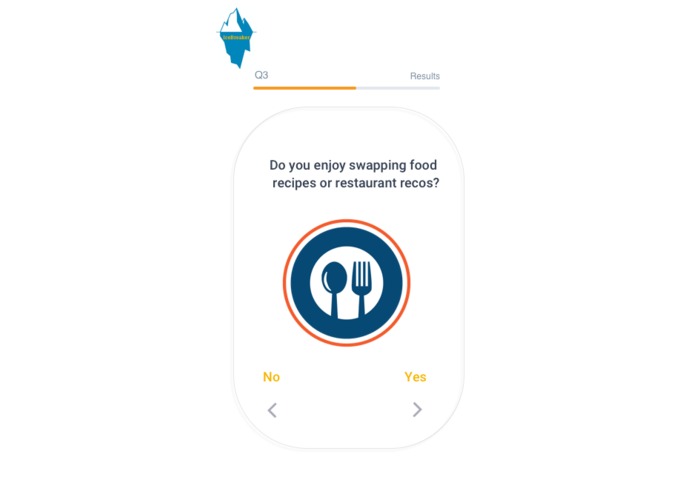
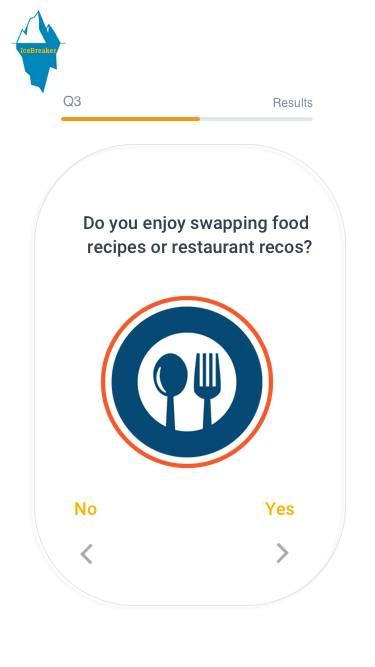
Q3 dives into the user's passion for food. From our research, we have found that foodies and chefs tend to talk about this a lot.
-
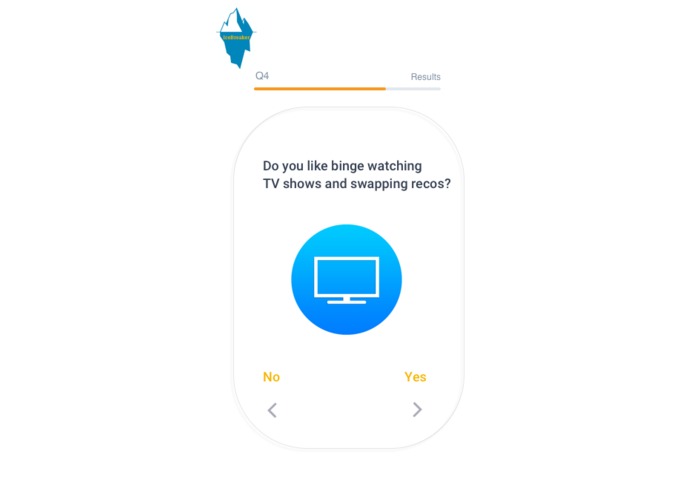
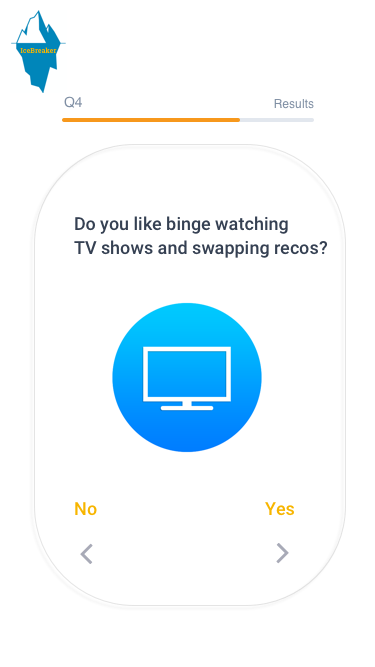
Q4 probes on the culturally relevant TV topic. Game of Thrones, Breaking Bad, Silicon Valley, etc. Debates & conspiracy theories are common
-
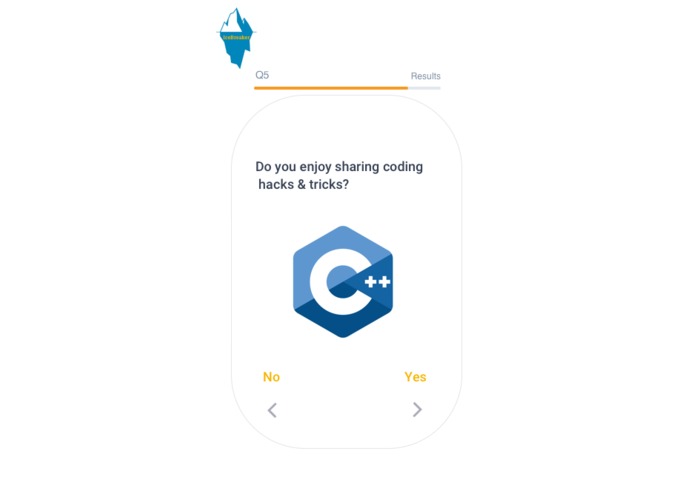
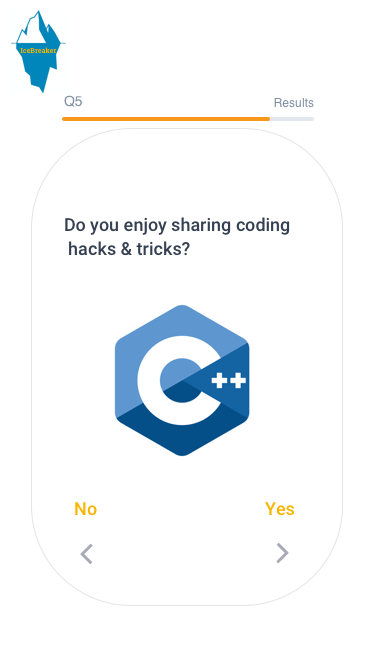
Q5 is event specific to the hackathon category. It helps distinguish what users like talking shop and trading tips.
-
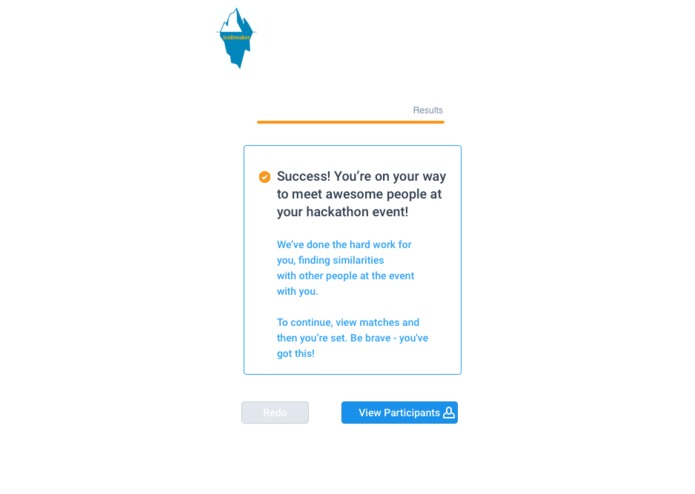
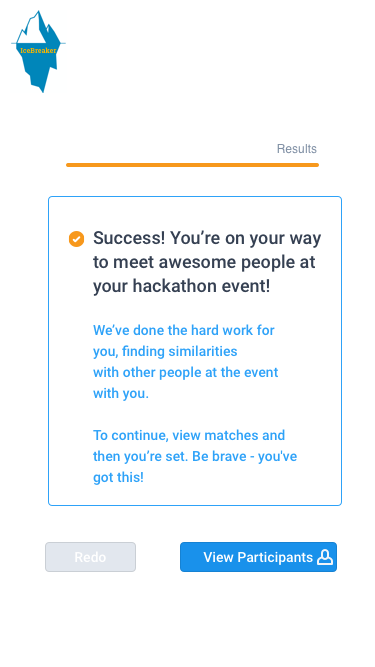
After all the setup questions are complete, this screen emerges to tell what users what to do next & how the algorithm works.
-
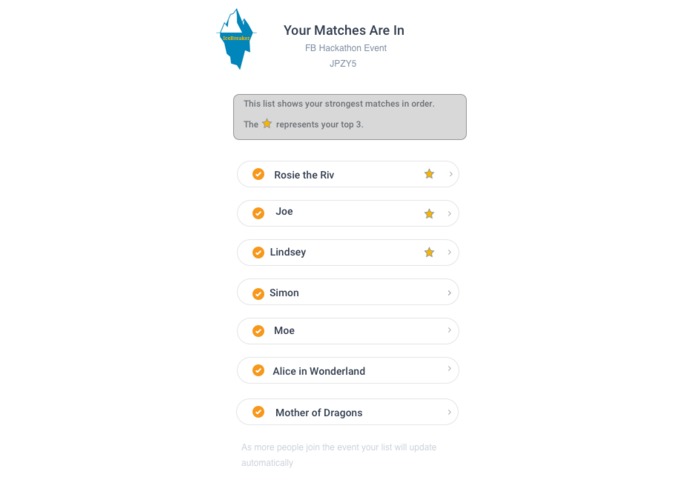
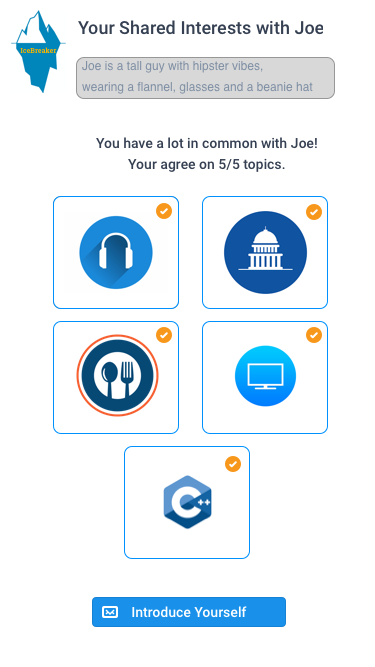
This tells the user who they've been matched with & what they have in common. The top 3 helps prioritizes aliases amongst the group.
-

The match screen helps the user learn what topics & icebreakers they have in common with other attendees at the event, removing stress.
-

The match screen helps the user learn what topics & icebreakers they have in common with other attendees at the event, removing stress.



Inspiration
The emerged from our team member Simon. As a former RA, counselor, and perpetual introvert, Simon experienced firsthand the anxiety-inducing circumstances of meeting new people. Whether it’s your first day of school, a work conference, your friend’s house party, or (gasp) a Facebook hackathon, there’s no shortage of ways to improve the experience of fostering connections.
Icebreakers can be effective, but they’re often in large groups, which can be impersonal and overwhelming. Too much time and stress is spent on making it perfect and finding the right moment and topic to talk about.
With millennials there is also a trend of more hours spent on social media. A study by the guardian found that social media usage is linked to higher rates of depression for young adults. (https://www.theguardian.com/society/2019/jan/04/depression-in-girls-linked-to-higher-use-of-social-media) Our experience, Icebreaker, set out to allow the digital familiarity of social media to reduce the anxiety of meeting new people in person.
We started by identifying who our target user we were building this for was. Our target user is an introverted, sometimes quiet, person between the ages of 18 - 35 years old. For simplicity's sake let's call them Rick. Rick has a lot of interests and has many unique experiences that make him a fascinating person to talk with but struggles to share his interests, likes, and overall personality in social settings. When he finds 1 person he can go deep with at an party, his night is made! But finding that 1 person comes with anxiety, stress, prep, memorization of icebreakers, and sometimes... it doesn't seem worth it so he avoids going all together. We took these insights from Rick and created a solution that gives Rick all of the "good" and none of the "stress." We created this tool because with data, a few questions, and social media we can help people have more and better conversations. Everyone has a story.
What it does
Introducing, Icebreaker - the easy way to break the ice and make better connected. Inspired by the wonderful multiplayer experiences of Jackbox Games (https://jackboxgames.com/) and Spyfall (https://en.wikipedia.org/wiki/Spyfall --> https://spyfall.crabhat.com/), Icebreaker is meant to foster deeper connections between people, based around the topics they’d like to talk about. This can be at the event or before the event.
As a user, the experience begins by asking if you have an event you're looking to join or if you want to create a new event. Once in a room there's a Tinder-like swiping on questions (e.g. music, politics, food, TV, coding, etc) to create a profile. In other words, in a 1:1 conversation with someone, would you want to talk about this? Do you want to dive deep with someone in answering this question? Swipe left for no and right for yes.
Instantly, you see a list of everyone else in the room, sorted by your top match based on the questions you’d both like to answer. In addition to seeing who you are "matched with", our goal would be to integrate this with Facebook messenger for communication with your "matches".
How we built it
React native mobile based application. We built the real time multi-player experience using firebase real time database. We used sketch to mock up the UI.
Challenges we ran into
One of the challenges we ran into was merging the applications. Getting the real time multi-player aspects to work. Figuring out how to structure things for ideal site time.
Accomplishments that we're proud of
Getting a working prototype with no/ minimal bugs. Creating an idea we are proud of and will continue to work on beyond this hackathon.
What we learned
We learned more about how to build real time systems. We also used design thinking as a way to put ourselves in the user's shoes and understand some of the biggest pains & problems they face. We evaluated how severe these problems were and how frequent they occur.
What's next for Icebreaker
If we had more time we would have integrated it with Facebook events at the beginning & allow Facebook as a way to create the account. This would allow us to have data points that we can infer before the user answers the question & can make extend the functionality of Facebook events.
Built With
- appleiosui
- firebase
- javascript
- messenger
- nojs
- react
- reactnative
- sketch
- xpo
- zeplin

Log in or sign up for Devpost to join the conversation.