-
-
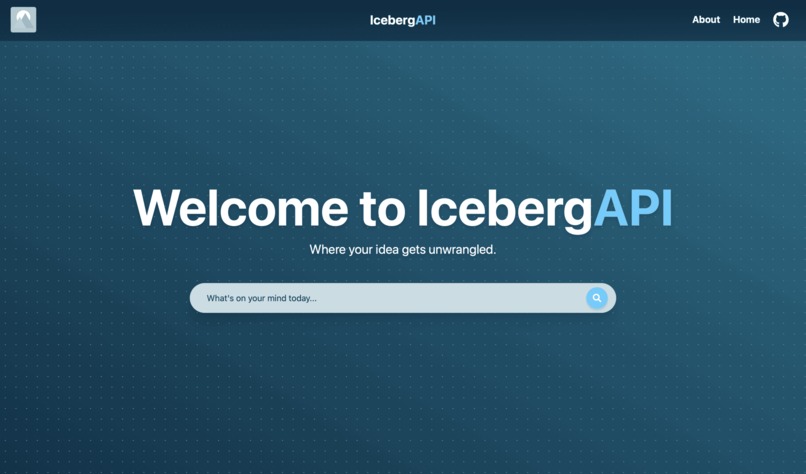
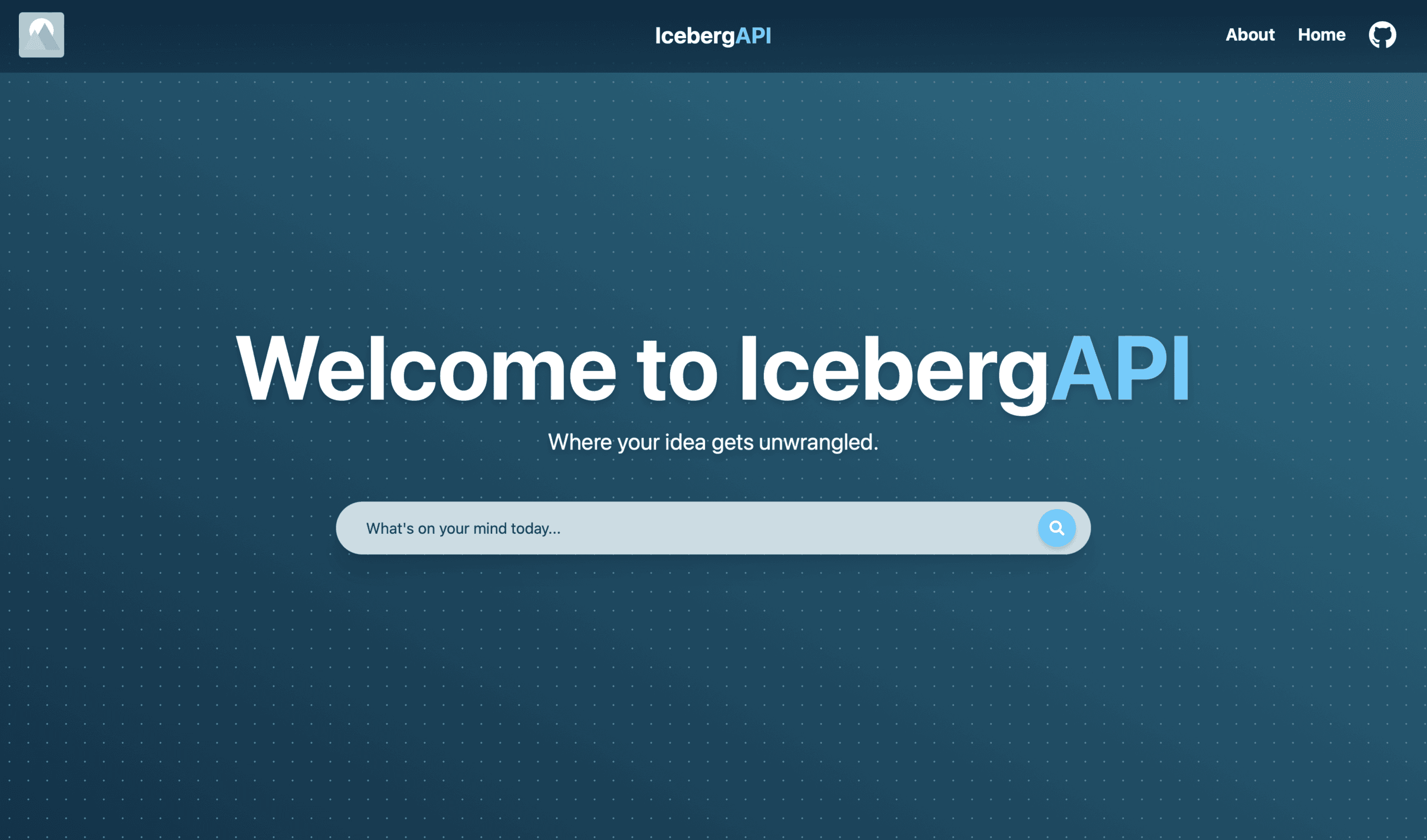
Home Screen
-
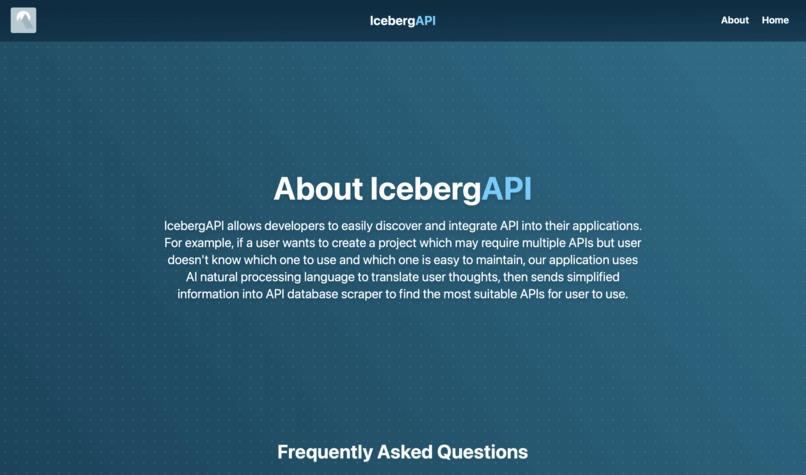
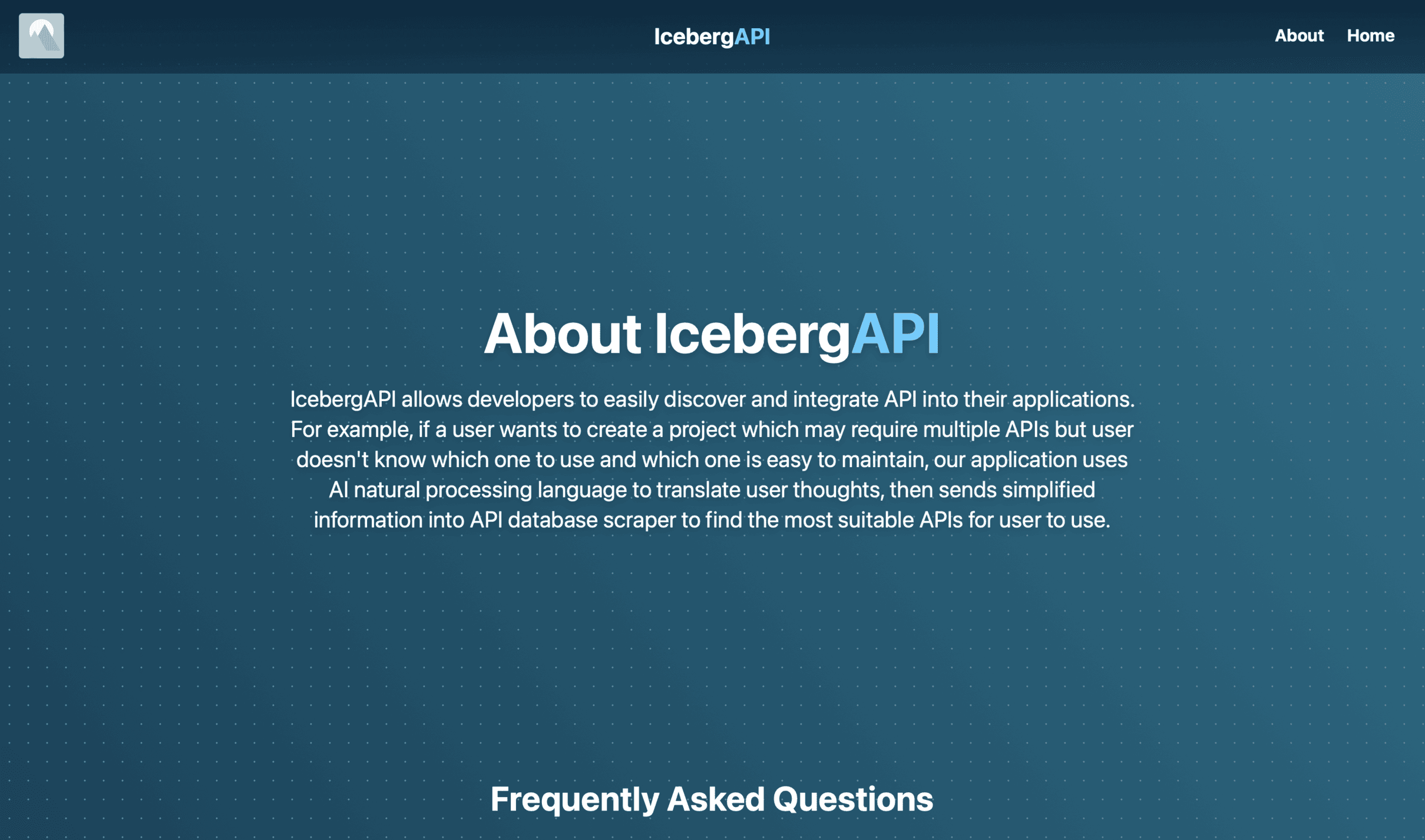
About IcebergAPI
-
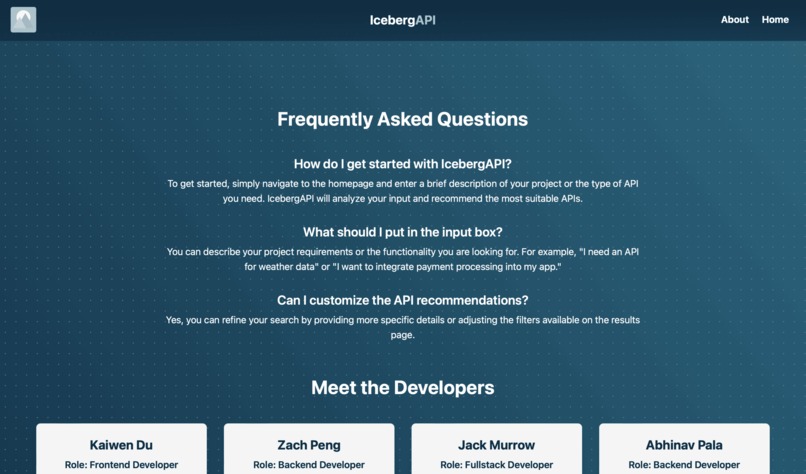
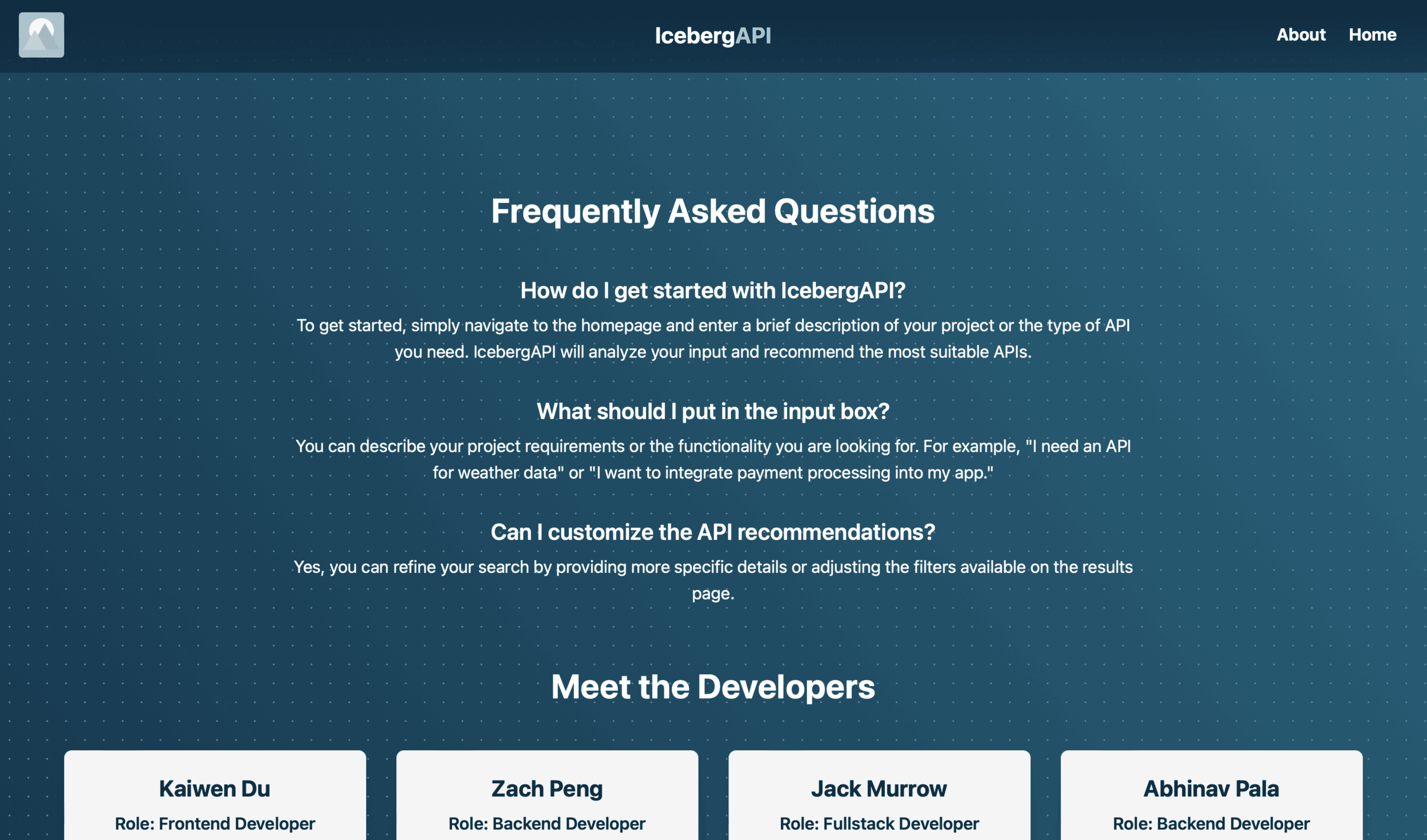
Frequently Asked Questions
-

Meet the Developers

Inspiration
Our idea for IcebergAPI came from the challenges we faced when trying to find the right APIs for our projects. We, as developers, often have great ideas but may not know which APIs to use for specific use cases that are cost-efficient and reliable. Current mainstream AI tools and search engines often prove ineffective in providing the best APIs for use cases. We wanted to create a tool that makes this process simple and stress-free. By using AI to understand what developers need and searching through a database of APIs, IcebergAPI helps users find the perfect APIs for their projects quickly and easily. Our goal is to save time and make building projects more fun and accessible for everyone.
What it does
We wanted to make it easier for developers to find the right tools for their projects. Sometimes, it’s hard to figure out which APIs to use, especially when there are so many options out there. We know how frustrating it can be to spend hours searching for the perfect solution. That’s why we built this website application to help developers save time and focus on their ideas. By using AI to understand what you need and searching through a huge database of APIs, our tool makes it simple to find the best options for your project. Our goal is to make building apps and websites easier and more fun for everyone.
How we built it
We built IcebergAPI using the Intel extension of Pytorch and Intel Tiber Neural Compressor technologies to make it fast, reliable, and easy to use. For the user interface, we used React JavaScript to create a smooth and interactive experience. To handle navigation between pages, we used React Router. For styling, we used Tailwind CSS to make the app look clean, modern, and professional.
On the backend, we integrated Intel Tiber AI Cloud to power our AI-driven recommendations. Intel Tiber helps us process user input quickly and accurately, using advanced natural language processing to understand what developers need. It also allows us to analyze large datasets of APIs, ensuring that our recommendations are always relevant and up-to-date. By combining these tools, we created a platform that’s not only powerful but also easy and fun to use.
Finally, we tested everything to make sure it works well and provides a great experience for developers of all skill levels.
Challenges we ran into
One of the challenges we faced was making sure IcebergAPI could understand what users were looking for and recommend the best APIs. Teaching the AI to process different types of input and still provide accurate results was tricky. Another challenge was integrating GitHub login to make signing in easy while keeping everything secure.
We also spent a lot of time designing the app to look clean and professional while making sure it was simple to use. Balancing functionality with a user-friendly design wasn’t easy, but we wanted to make sure developers of all skill levels could use it without any confusion. Finally, we had to test the app thoroughly to fix bugs and ensure it worked smoothly for everyone.
Accomplishments that we're proud of
We built IcebergAPI to make it easier for developers to find the right tools for their projects. Using React JavaScript, we created a simple and clean design that’s easy to navigate, and we added essential features like a search bar where users can type in their ideas. The app uses AI to understand what users need and matches them with the best APIs from a large database. We also included GitHub login to make signing in quick and secure.
What we learned
We learned a lot while building IcebergAPI, especially about combining different tools and technologies to create a smooth and user-friendly experience. Working with React taught us how to build dynamic interfaces, while using PocketBase helped us understand how to manage data efficiently. We also learned how to integrate GitHub OAuth for secure logins, which was a new challenge for us. Additionally, we gained experience in using AI to process user input and provide meaningful results. Most importantly, we learned how to work as a team, solve problems together, and create something that can help developers save time and bring their ideas to life.
What's next for IcebergAPI: Simplifying API Discovery with AI
We have some exciting plans to make IcebergAPI even more powerful and helpful for developers! Soon, when users choose an API, we’ll generate example code in popular languages like Python, Node.js, or C++—so all they need to do is plug in their API key and get started right away.
We’re also working on introducing “API combos,” where we suggest creative pairings of APIs that unlock unique features, like combining Twilio and OpenWeather to send text-based weather alerts.
Lastly, we’re planning to test API reliability by creating temporary serverless functions that hit the chosen API endpoint five times. Based on the response times, we’ll show a color-coded reliability score—green for great, yellow for okay, and red for poor—so users can make smarter decisions.
Built With
- intel-tiber
- javascript
- python
- react


Log in or sign up for Devpost to join the conversation.