Inspiration
Our team was driven by a desire to tackle real-world problems through the lens of high-impact technology. We wanted to focus on a field where privacy and integrity are paramount: whistleblowing. In an era of rampant misinformation and bot-driven spam, we realized that protecting real sources while ensuring the truth is actionable is a major societal hurdle. This led us to create Iceberg.
What it does
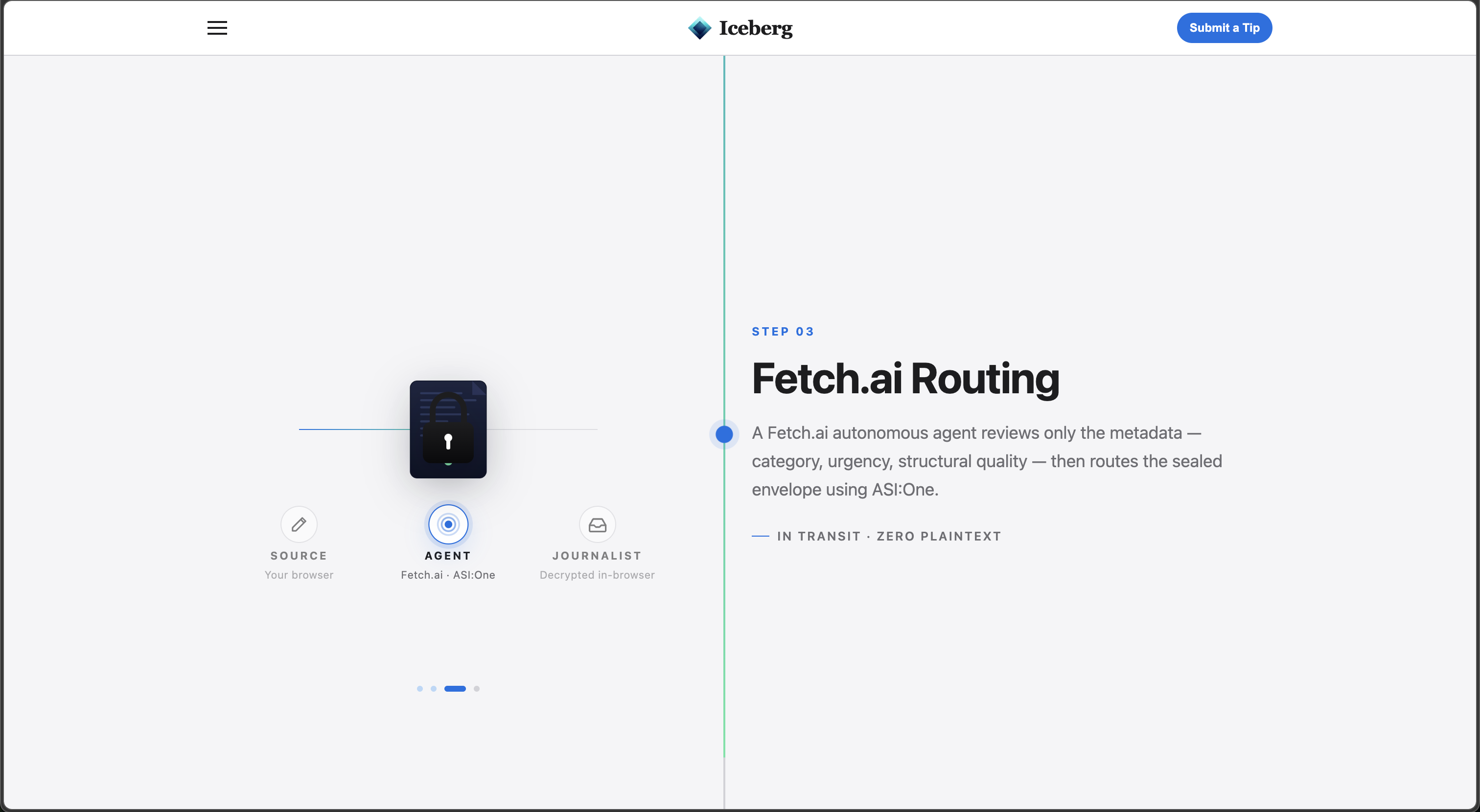
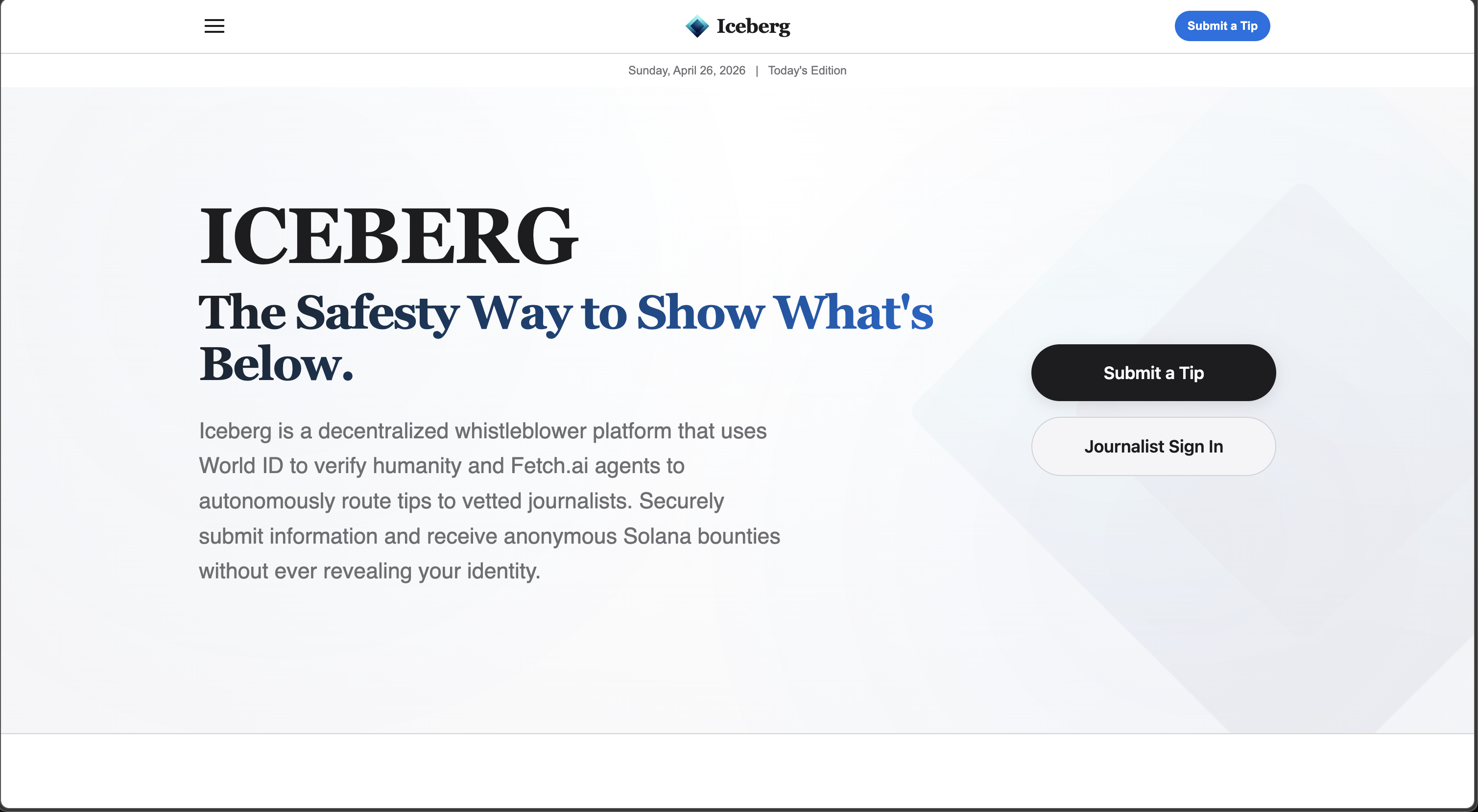
"Iceberg" is an anonymous, proof-of-human tip submission platform. It bridges the gap between secure leak submission and efficient journalistic triage using a three-pillar tech stack:
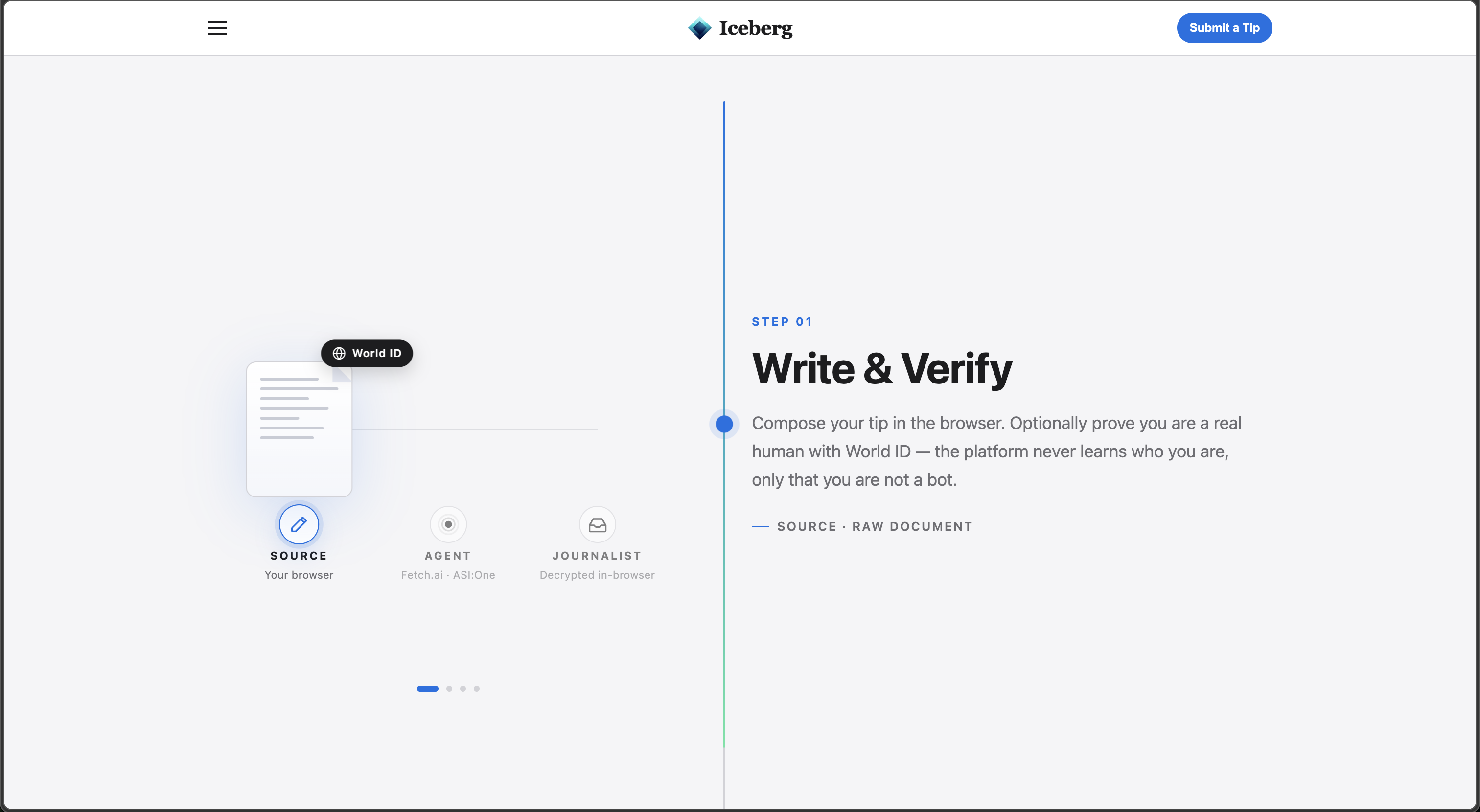
- World ID (Proof of Human): Ensures every tip comes from a unique human rather than a bot-led spam campaign. We use a World ID nullifier to maintain total user anonymity while preventing double-submissions.
- Solana (Incentivization): Handles anonymous micro-bounties. High-quality, verified tips can be rewarded via a secure staking mechanism, ensuring submitters are compensated without exposing their identities.
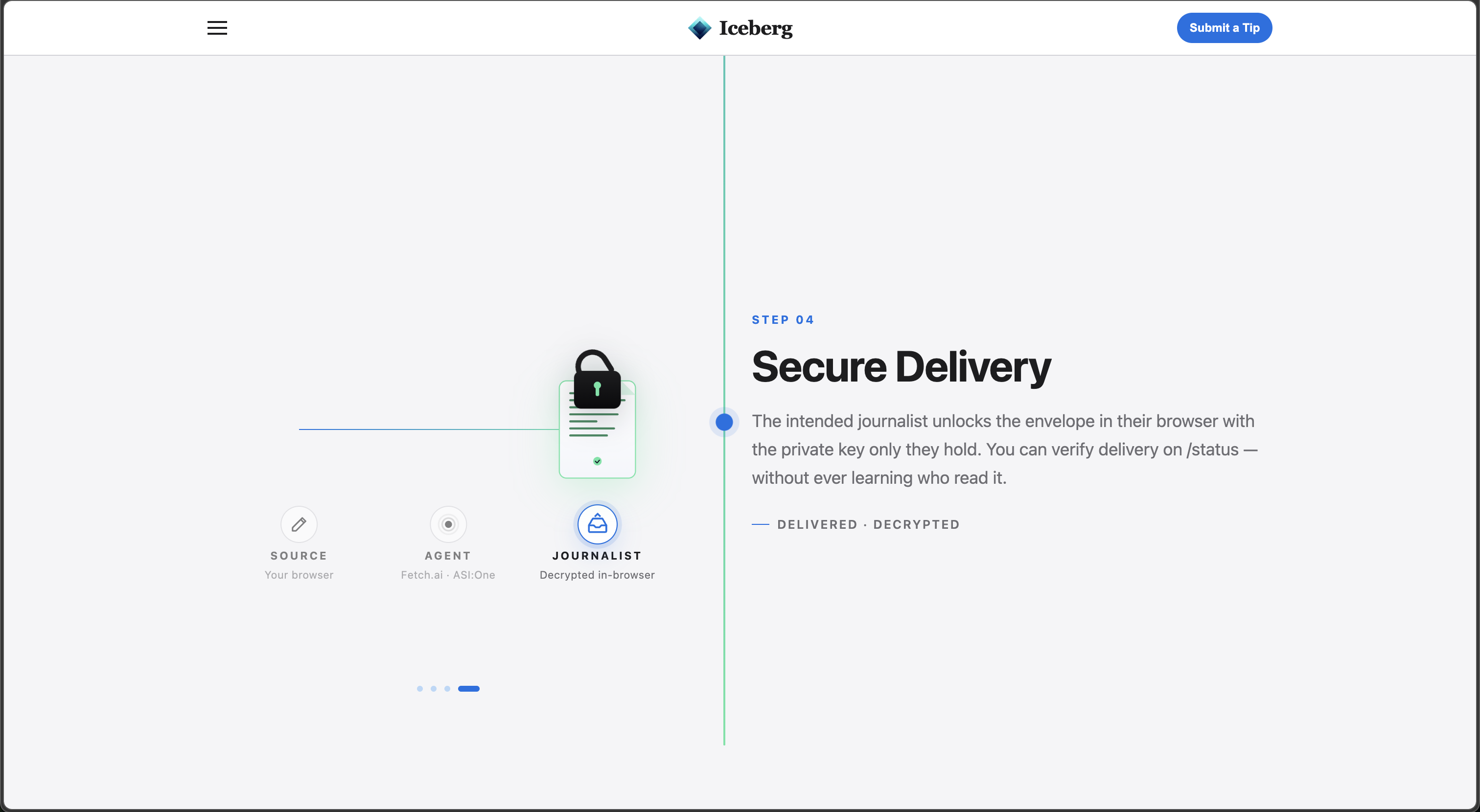
- Fetch.ai (Autonomous Triage): AI agents automatically categorize and route tips to verified journalists or NGOs based on the subject matter.
If a tip is unverified, it remains in the system but is deprioritized in the queue. If an agent identifies a "low-confidence" route, the tip is flagged for human review rather than being lost to an incorrect auto-assignment.
How we built it
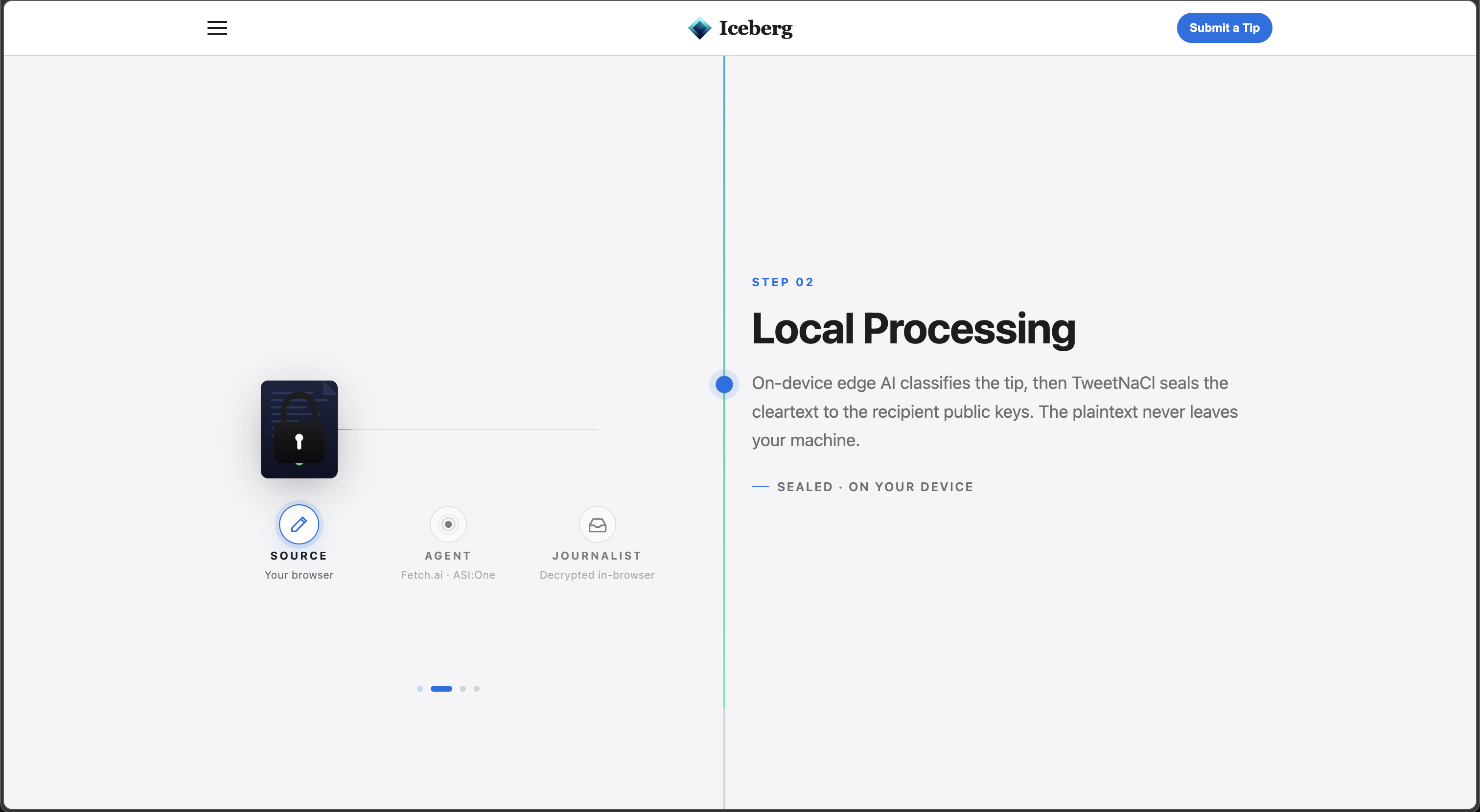
Building this required intensive research into cryptographic methods to ensure security, integrity, and authenticity. We use end-to-end encryption with Curve25519 for asymmetric operations (the same technology used by Signal). We read through documentation on blockchain and Solana development to understand how to securely incorporate it into our bounty program. Then we brought it together with Next.js and Fetch AI agents. For the development process, we used AI coding agents including Claude Code and Cursor.
Challenges we ran into
As this was our first hackathon, our biggest hurdle was the complexity of integration hell. Connecting World ID's identity proofs with Fetch.ai's off-chain agents and Solana's on-chain state was very involved. Furthermore, the security-heavy nature of whistleblowing meant we couldn't take shortcuts. We had to deeply audit our use of nullifiers to ensure that a journalist could never trace a tip back to a specific World ID, ensuring the "Iceberg" remains truly submerged and anonymous. This restricted our choice of tools to only those that supported high-level encryption and privacy-preserving protocols.
Accomplishments that we're proud of
We are incredibly proud to have delivered a functional, end-to-end prototype for such a complex problem. Moving from a blank whiteboard to a working solution that involves ZK-proofs, autonomous agents, and blockchain transactions in a single weekend was a massive win for us. We created something truly novel that prioritizes the safety of individuals speaking truth to power.
What we learned
Beyond the technical skills, we learned the power of collaborative chemistry (friendship). Navigating the stress of a hackathon taught us how to lean on each other's strengths. Technically, we discovered a vast ecosystem of specialized tools that, when combined creatively, can solve problems that were impossible just a few years ago.
What's next for Iceberg
We believe there are ways to refine the agent routing logic to include multi-agent consensus, where multiple Fetch.ai agents must agree on a tip's validity before it reaches a journalist. We also aim to develop a more robust reputation system where a user's "Trust Score" can grow over time without ever revealing their legal identity.
Built With
- fetch.ai
- huggingface
- mongodb
- next.js
- python
- react
- typescript


Log in or sign up for Devpost to join the conversation.