-
Overall Architecture
-
Patient Data Privacy Architecture
iCare Central - AI-Powered Smart Wheelchair & Health Management System
Inspiration
Caring for elderly individuals and those with mobility challenges can be overwhelming for caregivers. We wanted to create a system that not only enhances mobility but also provides real-time health monitoring, ensuring both independence for users and peace of mind for caregivers. The idea was inspired by the need for smarter assistive technology that integrates AI-driven navigation with holistic patient care.
What it does
iCare Central is an AI-powered system that combines smart wheelchair navigation with real-time health monitoring. Using eye-tracking technology, users can control their wheelchairs effortlessly, while integrated sensors track vital signs like heart rate variability. The caregiver dashboard provides real-time alerts, health trends, and emergency notifications, ensuring proactive care and swift intervention when needed.
How we built it
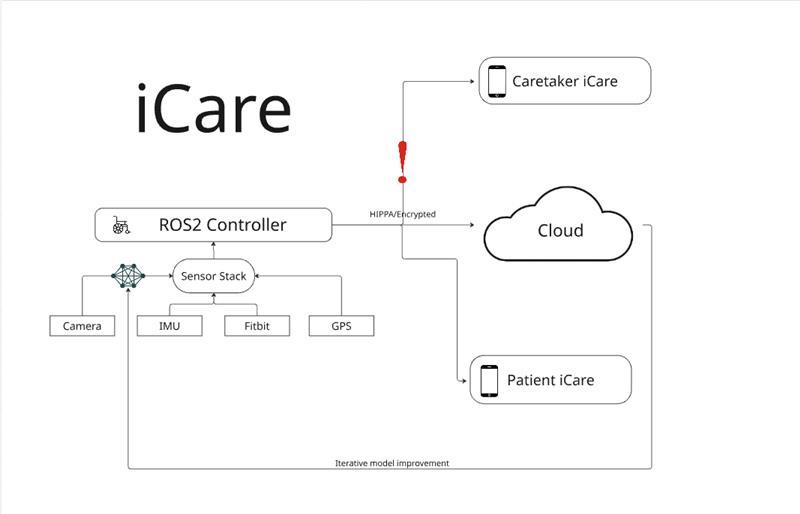
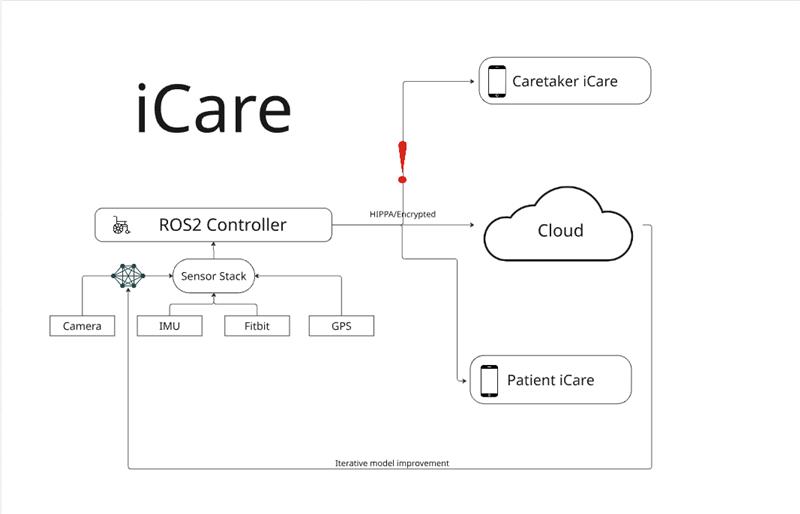
We designed iCare Central with a modular architecture, ensuring scalability and flexibility. The system consists of:
- AI-powered eye-tracking navigation for wheelchair control
- Camera-based health monitoring for real-time vital tracking
- IMU-based movement detection for stability and fall prevention
- A secure database for storing patient health and mobility data
- A responsive web app that enables caregivers to monitor and assist patients remotely
Development involved training AI models for eye tracking, integrating real-time data processing for health monitoring, and optimizing a seamless user interface for both patients and caregivers.
Tech Stack
- Frontend: React.js, Material-UI, Redux, WebSocket
- Backend: Node.js, Express.js, MongoDB, Python
- AI & ML: TensorFlow.js, OpenCV, Deep Learning models for eye tracking
- Infrastructure: Docker, AWS, Prometheus, Grafana for monitoring
Challenges we ran into
- Eye-tracking precision: Ensuring accuracy across different lighting conditions and user variability was a challenge. We fine-tuned the model using diverse datasets.
- Real-time health monitoring: Processing camera-based heart rate variability (HRV) required optimizing algorithms to reduce lag while maintaining accuracy.
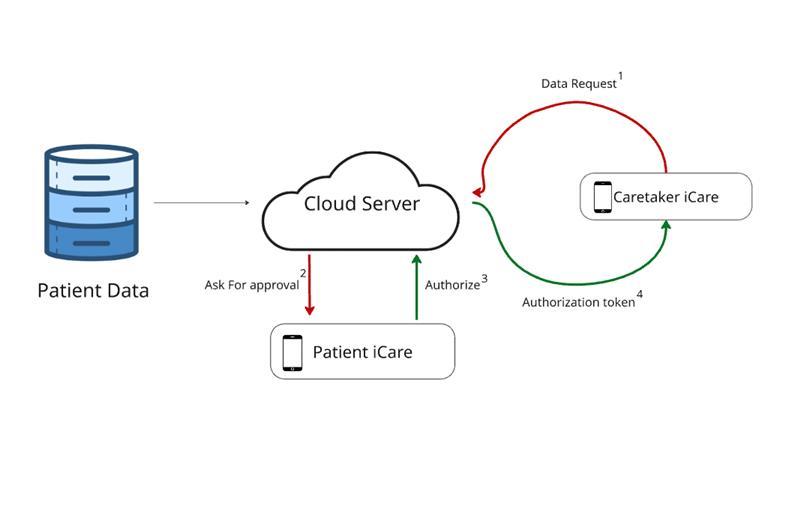
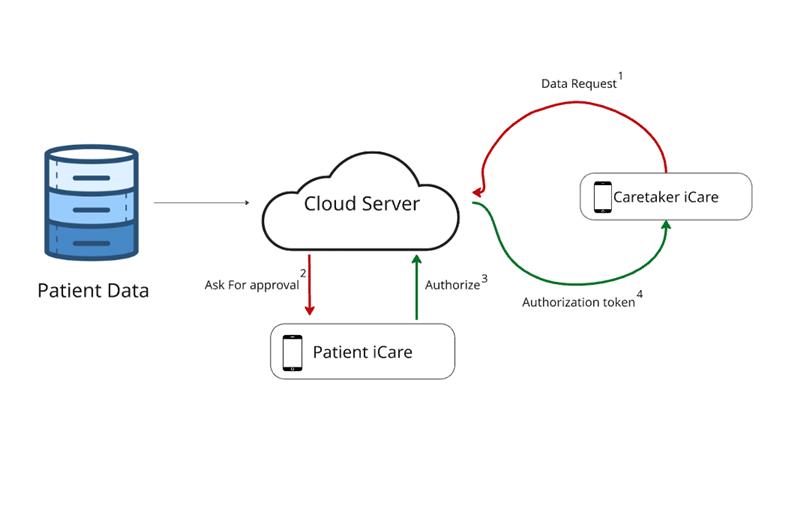
- Data security & compliance: Handling sensitive health data required implementing strong encryption, authentication, and compliance with HIPAA and GDPR standards.
- Hardware integration: Synchronizing multiple sensors and ensuring seamless communication between software and hardware components took rigorous testing and debugging.
Accomplishments that we're proud of
- Successfully integrating AI-driven eye tracking with wheelchair navigation
- Developing real-time health monitoring with minimal latency
- Building a caregiver dashboard with actionable insights and alerts
- Implementing security measures to ensure safe and private data handling
- Creating a scalable, modular system that can be expanded with additional features
What we learned
- The importance of user-centric design for accessibility and ease of use
- How to optimize AI models for real-time applications with constrained hardware
- Effective data processing techniques for continuous health monitoring
- Best practices for security and compliance in healthcare applications
- How to seamlessly integrate software and hardware for a smooth user experience
What's next for iCare
We plan to expand iCare Central with:
- Voice-controlled navigation for hands-free wheelchair operation
- Predictive health analytics using AI to detect early signs of medical conditions
- IoT integration for smart home connectivity, allowing users to control their environment
- Expanded caregiver tools for remote patient management and automated health reports
- More accessibility features such as gesture-based controls and multilingual support
iCare Central is just the beginning of transforming elderly and patient care through AI and smart technology!


Log in or sign up for Devpost to join the conversation.