-
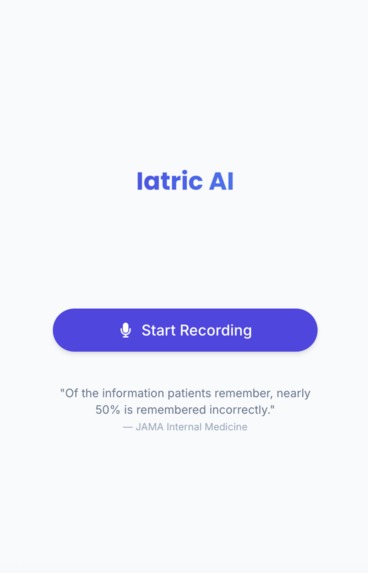
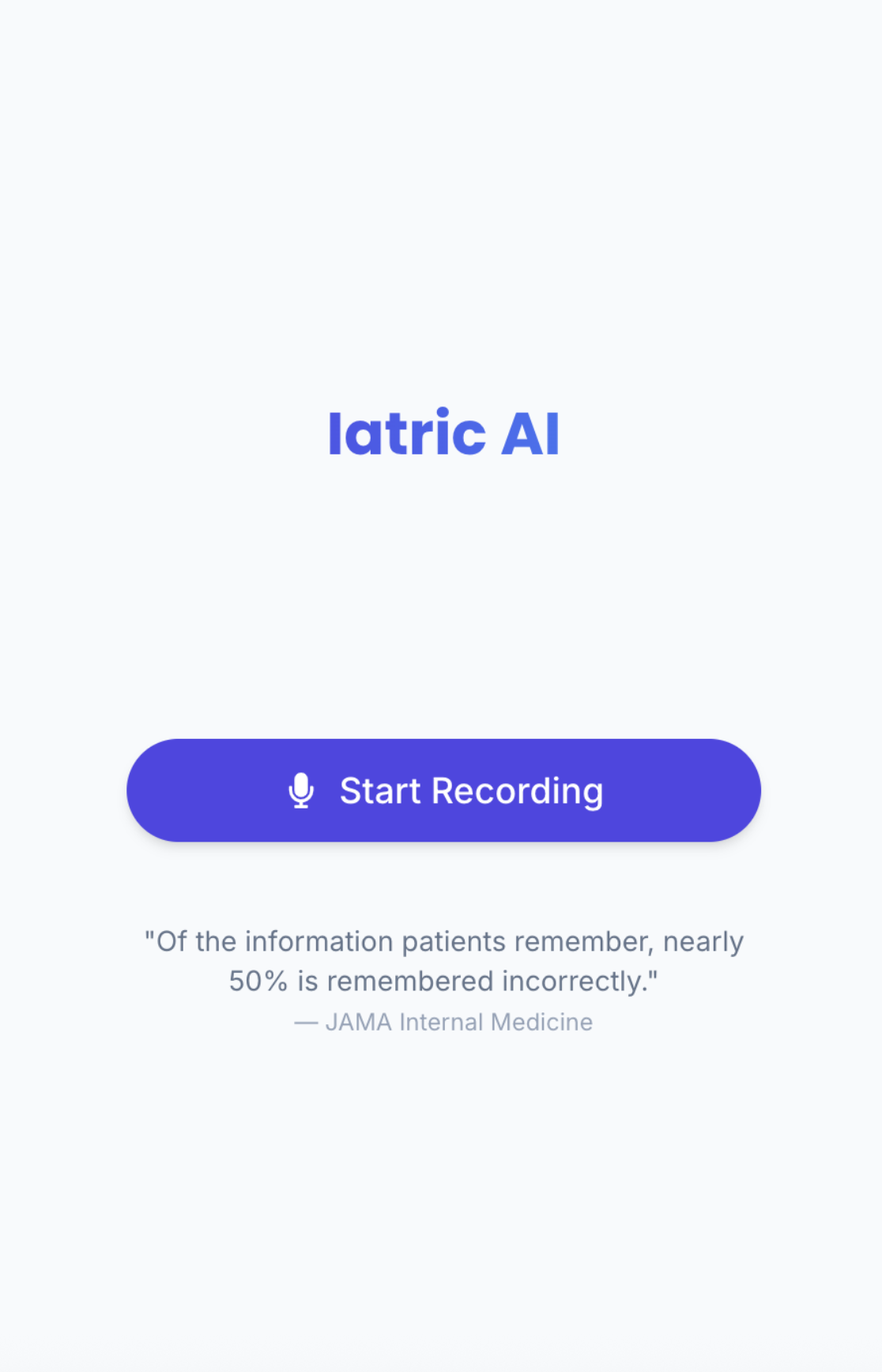
Landing page
-

Recording Page
-
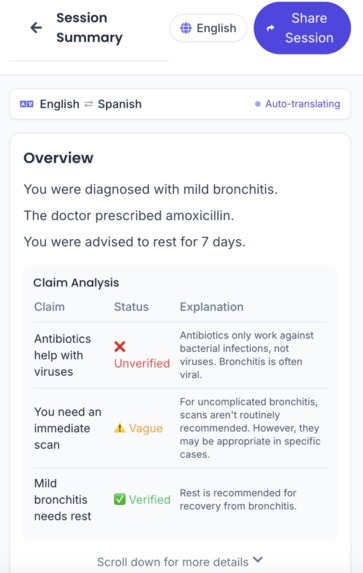
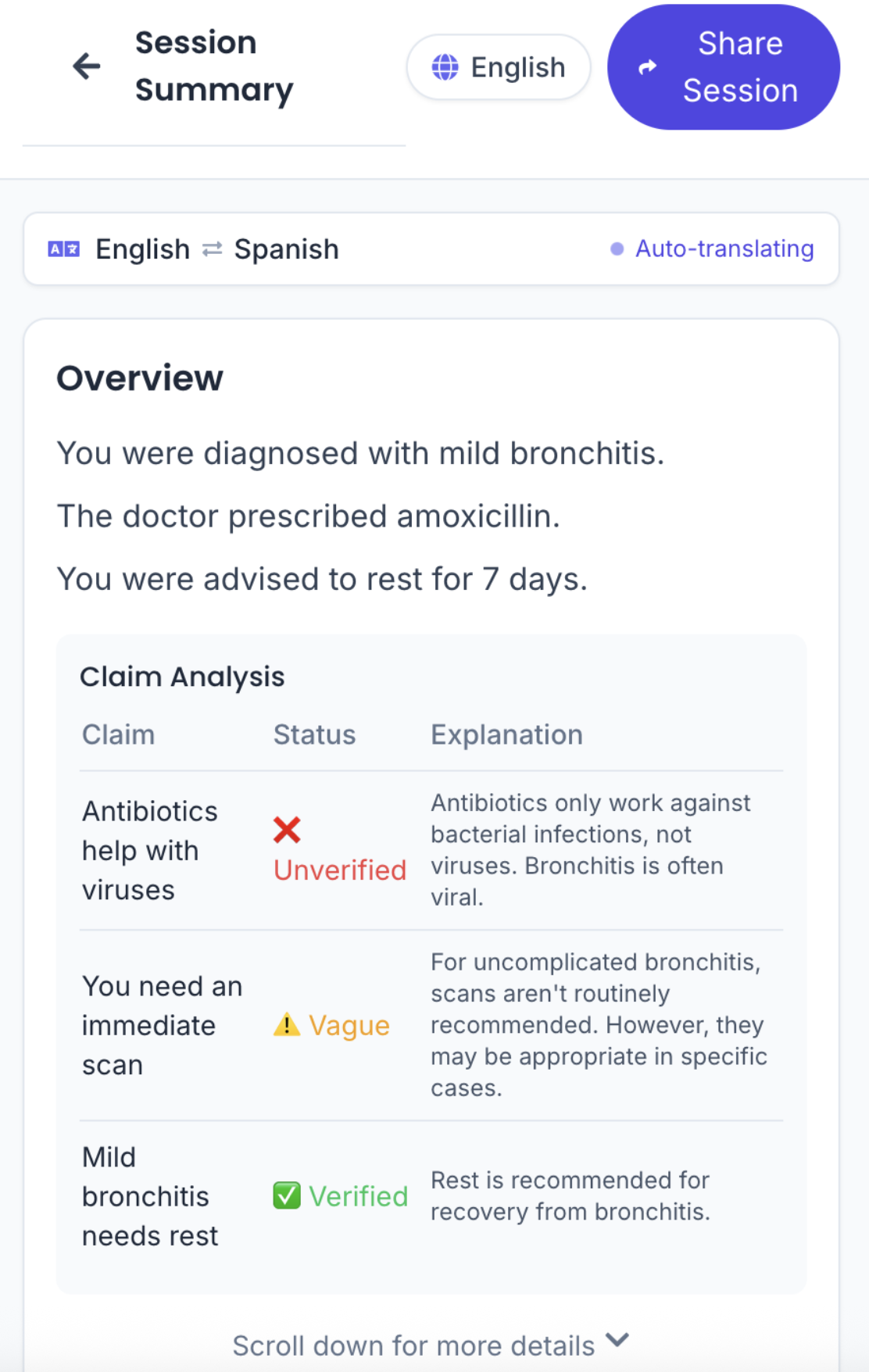
Overview Page - English
-
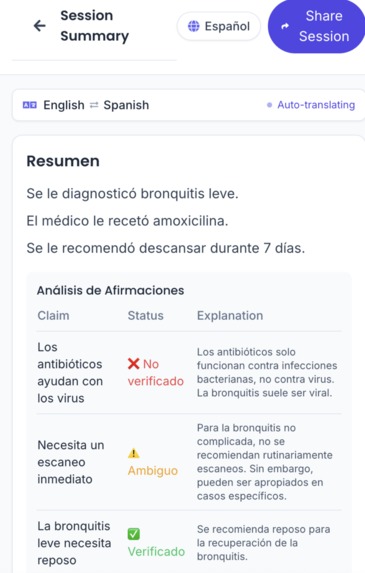
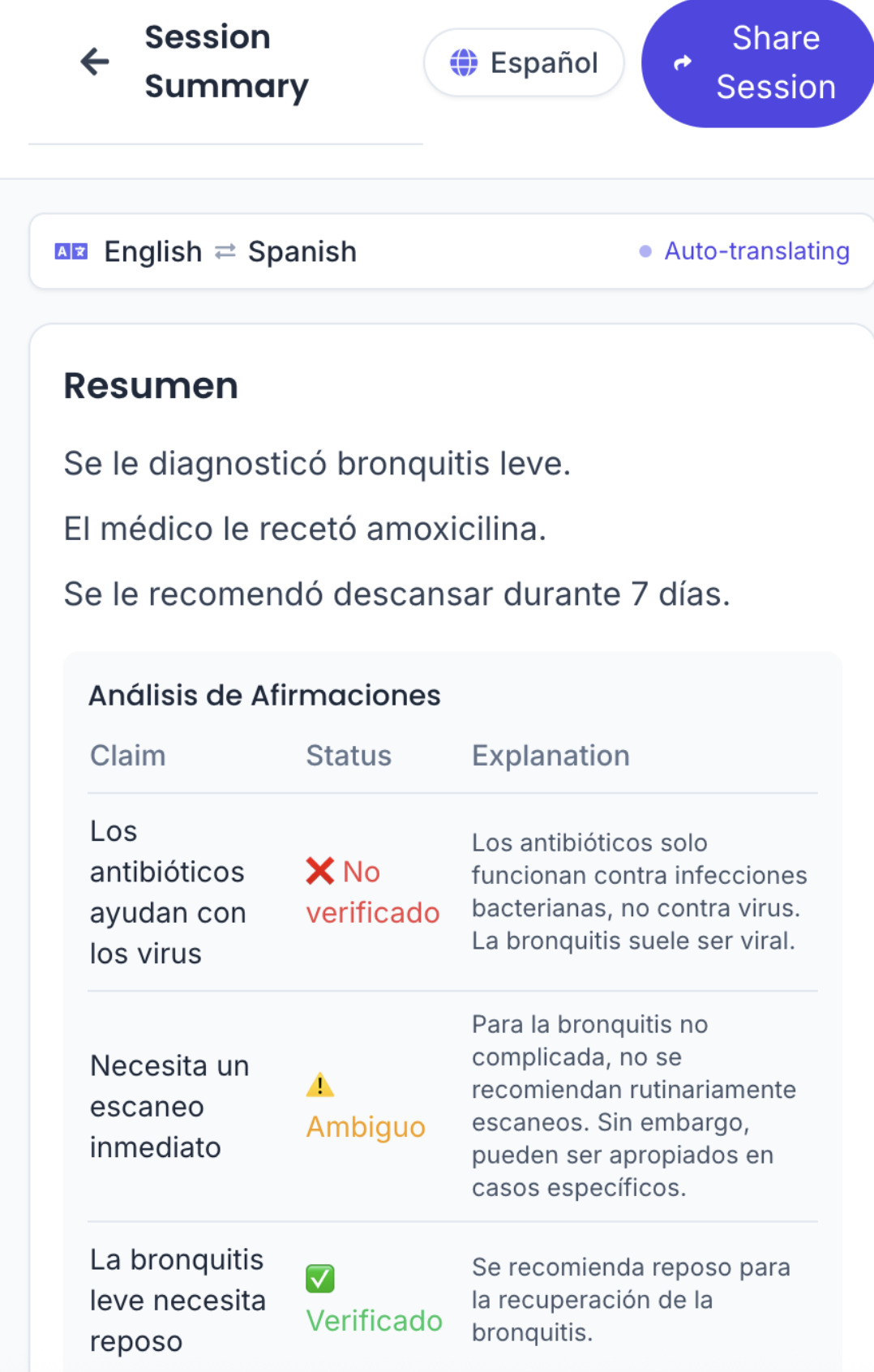
Overview Page - Spanish
-
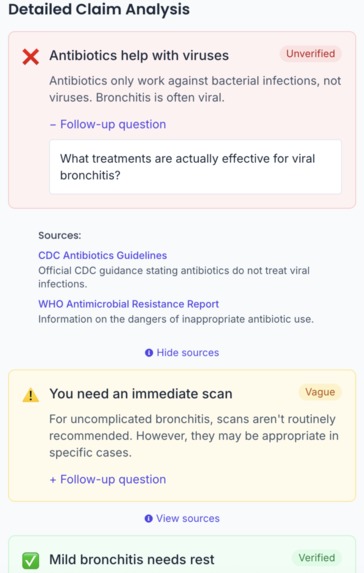
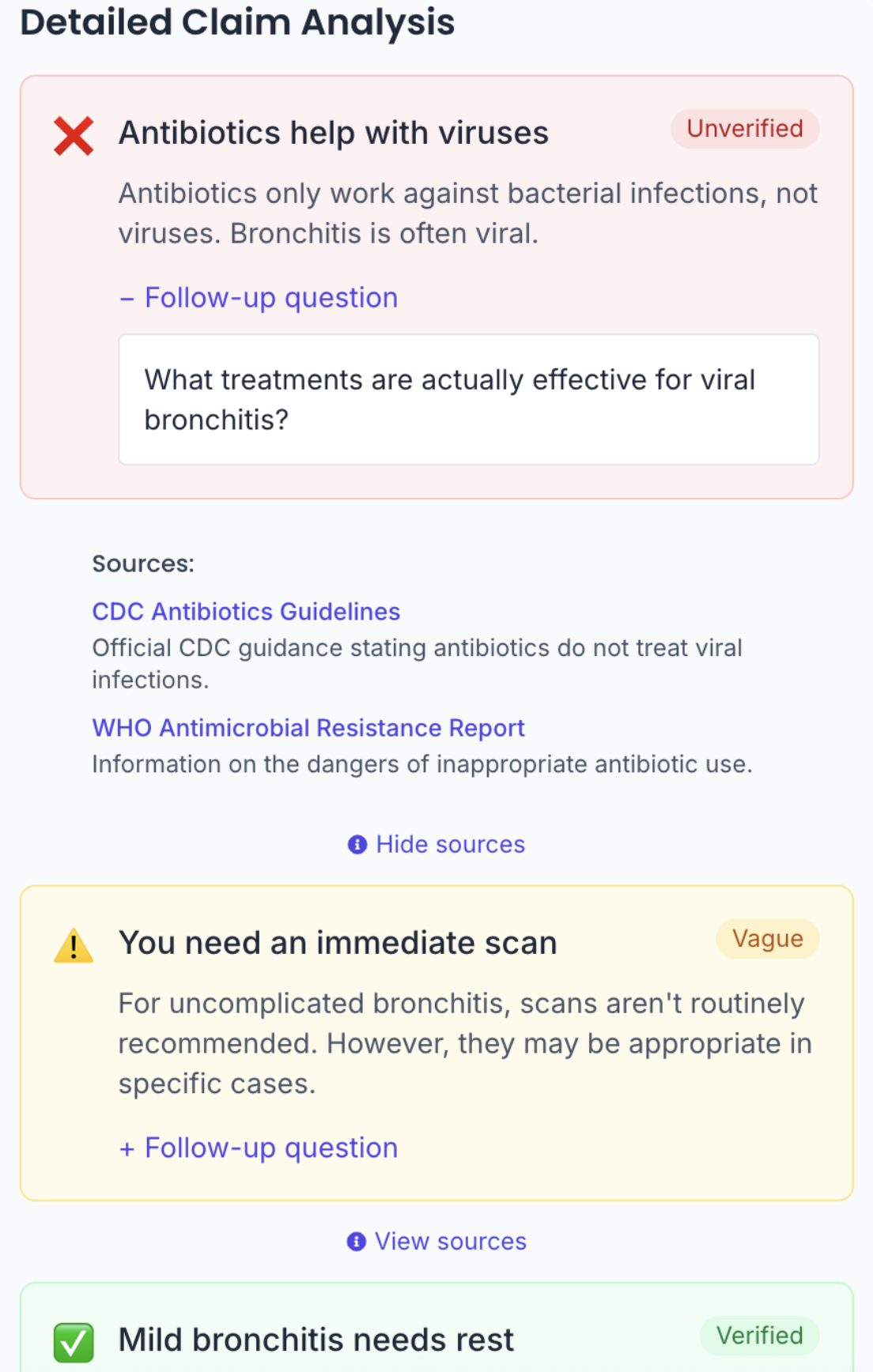
Detailed Claim Analysis - English
-

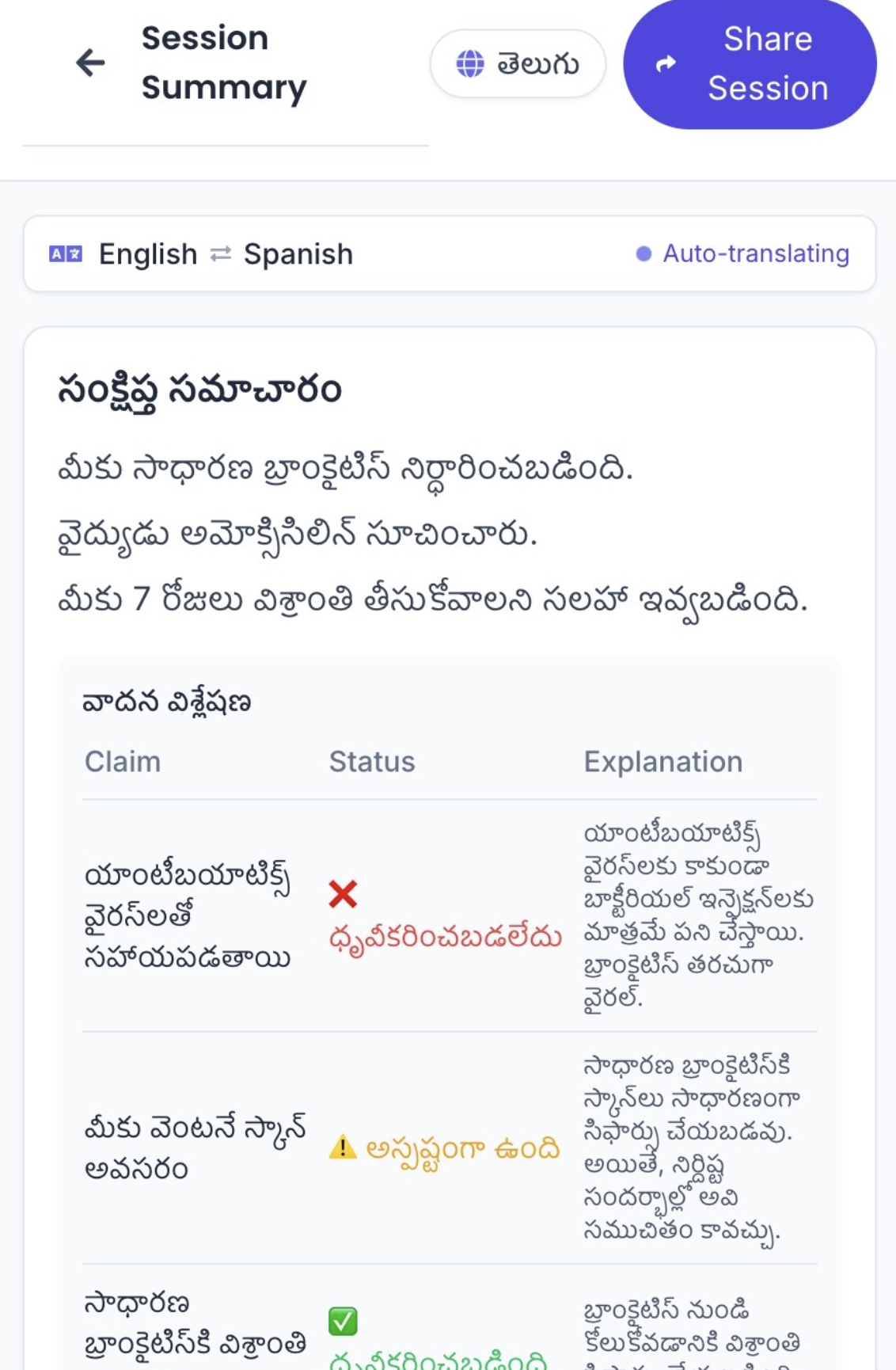
Overview Page - Telugu
-
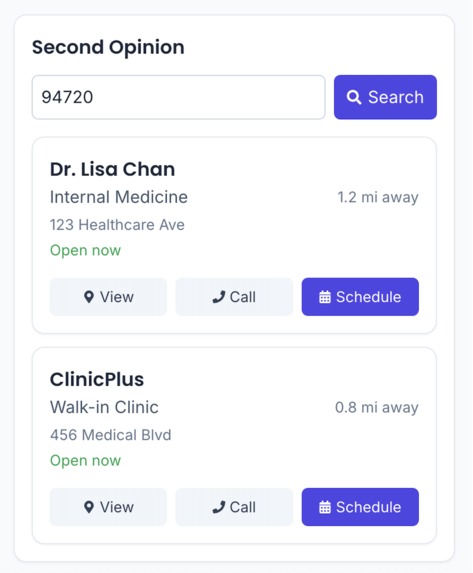
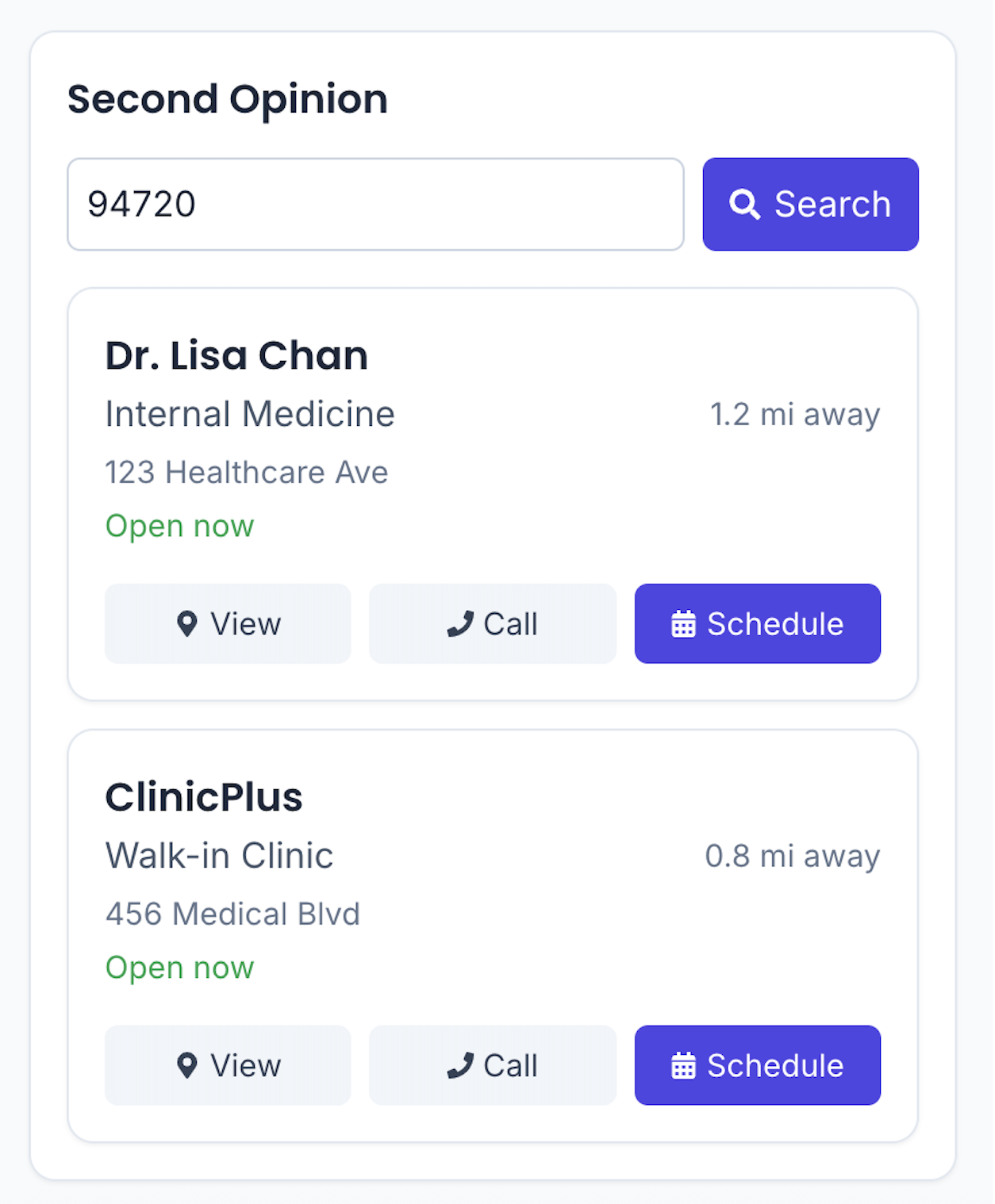
Second Opinion Page

Inspiration
The inspiration for Iatric AI came from one of our teammates' grandfather in India, who, during his final years under Medicare, was subjected to excessive screenings and placed on unnecessary medications. As his health declined, he watched him go through procedures that felt more routine than necessary, often without clear explanations. That experience pushed him to explore the broader issue of medical overreach — specifically how misdiagnosis and vague communication can lead patients to worry about conditions they may not even have. Through his research, he learned that nearly 800,000 people suffer serious harm from diagnostic errors each year, with 50 to 100 million Americans affected, and over 371,000 deaths and 424,000 permanent disabilities tied to misdiagnosis. We built Iatric AI to give patients a way to understand, verify, and reflect on what’s actually said during medical visits — so they’re not just passive listeners, but informed participants in their care. This tool is for anyone, young or old, who deserves clarity in moments that deeply impact their health and peace of mind.
What it does
This app empowers patients to take control of their health by understanding and evaluating the accuracy of medical advice. It analyzes the claims a doctor makes during an appointment, flagging them as Verified, Unverified, or Vague based on trusted medical papers and resources to help prevent misdiagnosis and medical malpractice. The app also records the visit, provides a full transcript, summarizes key information, and translates everything into the patient’s preferred language.
How we built it
Frontend: Typescript, CSS, Tailwind CSS Framer for aniomations Figma for design and. color pallette selection
Backend: Websockets, FastAPI and Python for audio retrieval, processing, and sending claim data. Groq-Whisper transcriber for low-latency Speech to Text Custom NLP pipeline with spaCy to extract medical claims from transcript Groq LLaMA-3 model to identify medical specialty from conversation context PubMed via PyMed to verify claims with relevant scientific research Google Gemini AI SDK & Anthropic SDK for claim verification Presidio Analyzer & Anonymizer for patient confidentiality
Challenges we ran into
The biggest challenge we faced was integrating the backend with the frontend. We developed both sides independently, building out all the components needed for a complete backend and a complete frontend. However, when it came time to connect them into a full-stack application, we ran into issues transferring information between them in real time. Despite our efforts, we couldn’t establish seamless communication, and ultimately had to present the backend and frontend as separate, non-interacting parts of the project.
Accomplishments that we're proud of
We’re proud to have performed thorough sanitization and anonymization of the data to protect sensitive information when using LLM APIs, while also developing a strong algorithm that leverages prompt engineering and voice transcription to accurately verify the validity of a doctor’s claims.
What we learned
We learned that planning the communication between the frontend and backend should come before building them independently. Establishing a clear framework for how data would be transferred between the two would have saved time and prevented integration issues later on. In future projects, we'll prioritize setting up this structure early to ensure a more seamless full-stack development process.
What's next for Iatric AI
We want to continue developing Iatric AI into a complete health assistant that truly advocates for the patient. Our goal is to create a tool that serves only the individual, with no obligations to private insurers, healthcare managers, or anyone whose priorities might conflict with the patient’s best interests. We envision Iatric AI as a trusted companion that empowers people to make informed, confident decisions about their health.
Built With
- css
- figma
- framer
- python
- tailwind
- typescript


Log in or sign up for Devpost to join the conversation.