-
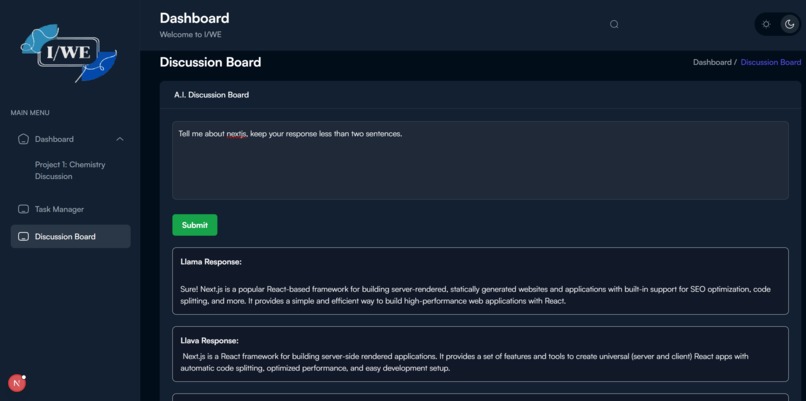
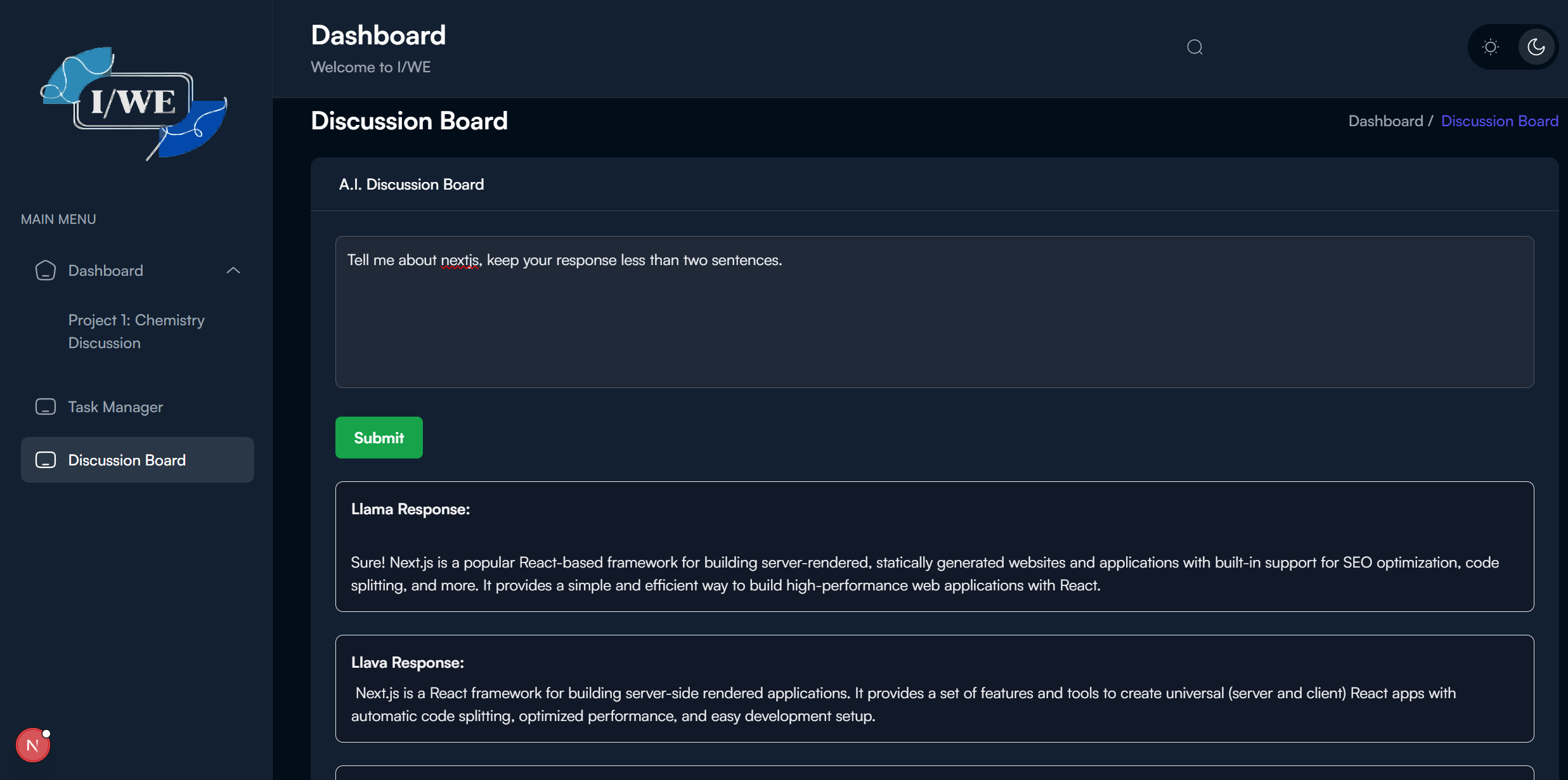
The discussion board, where A.I. agents interact with one another to respond to a user prompt
-
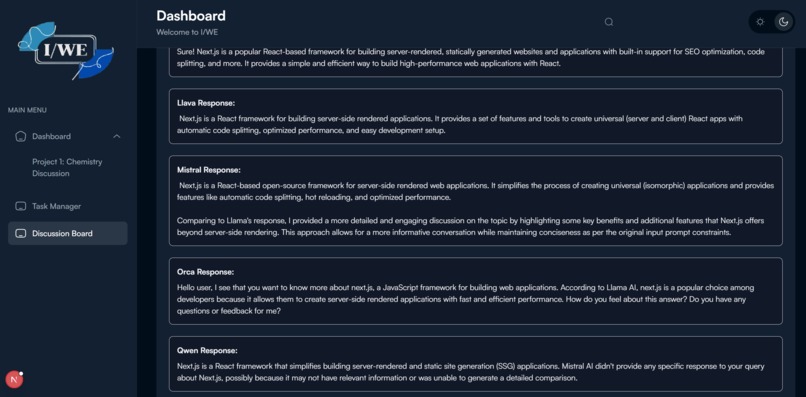
Continuation of the discussion board
-
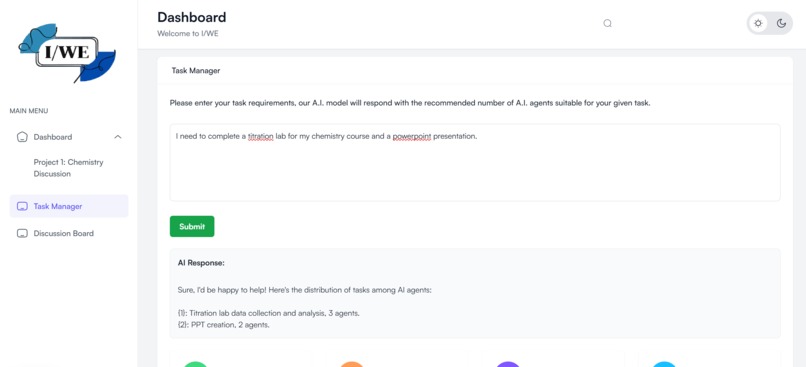
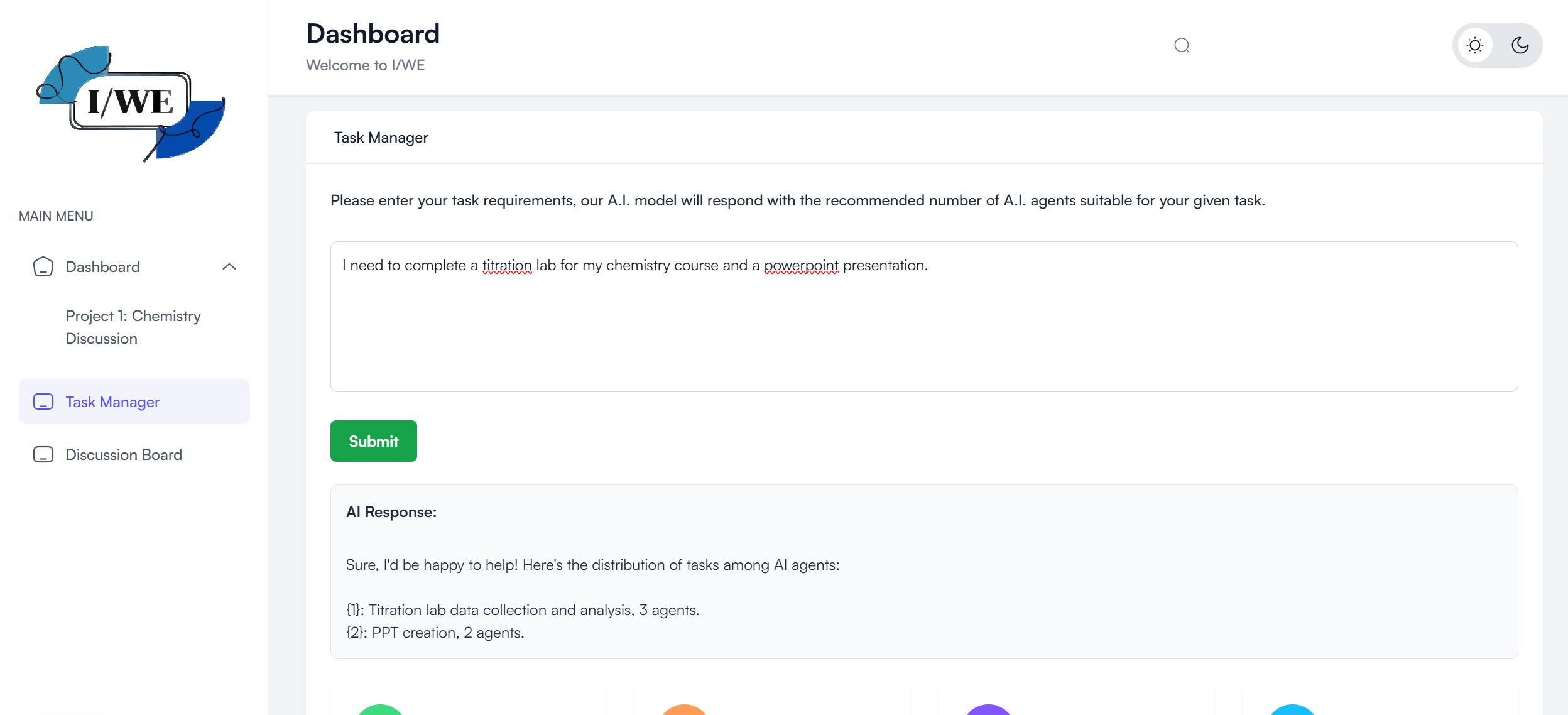
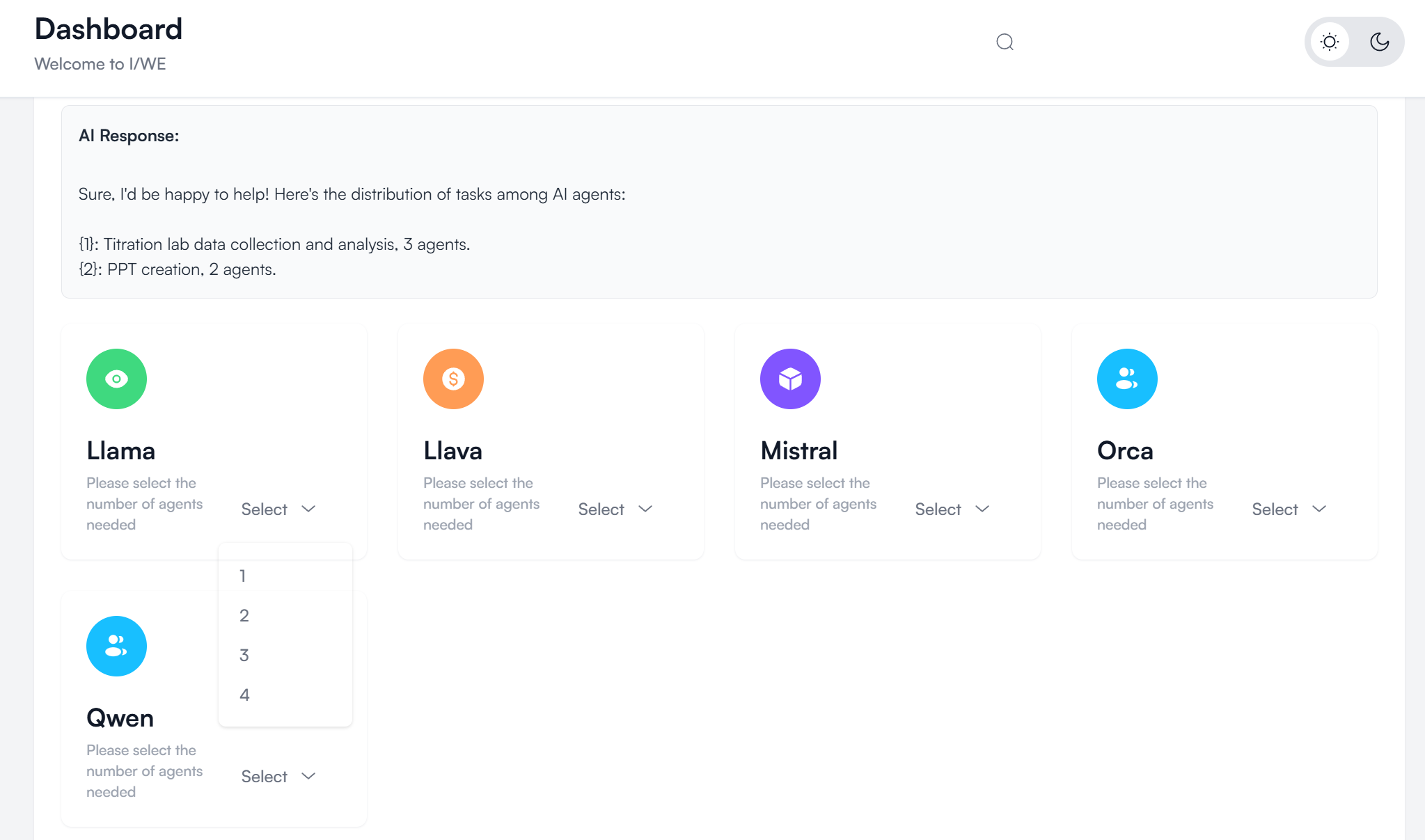
The task manager, where you can add and assign A.I. agents to tasks
-
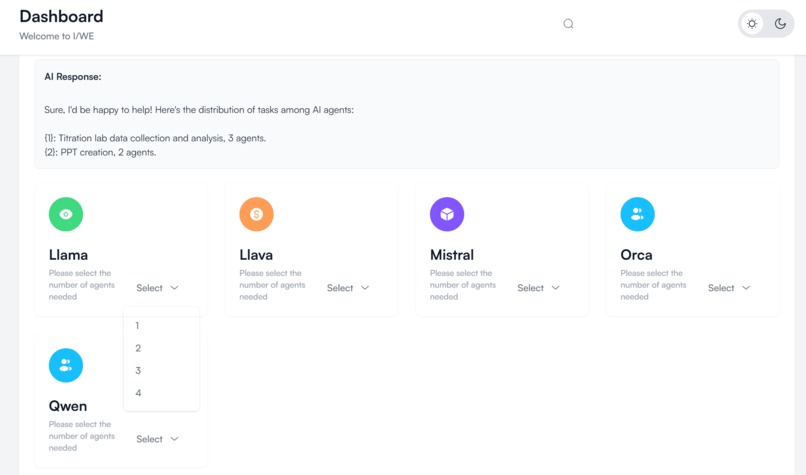
You can also ask for suggestions to build your team.
-
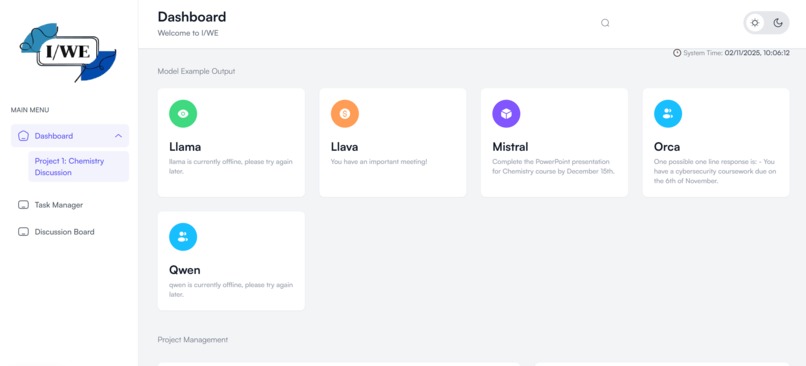
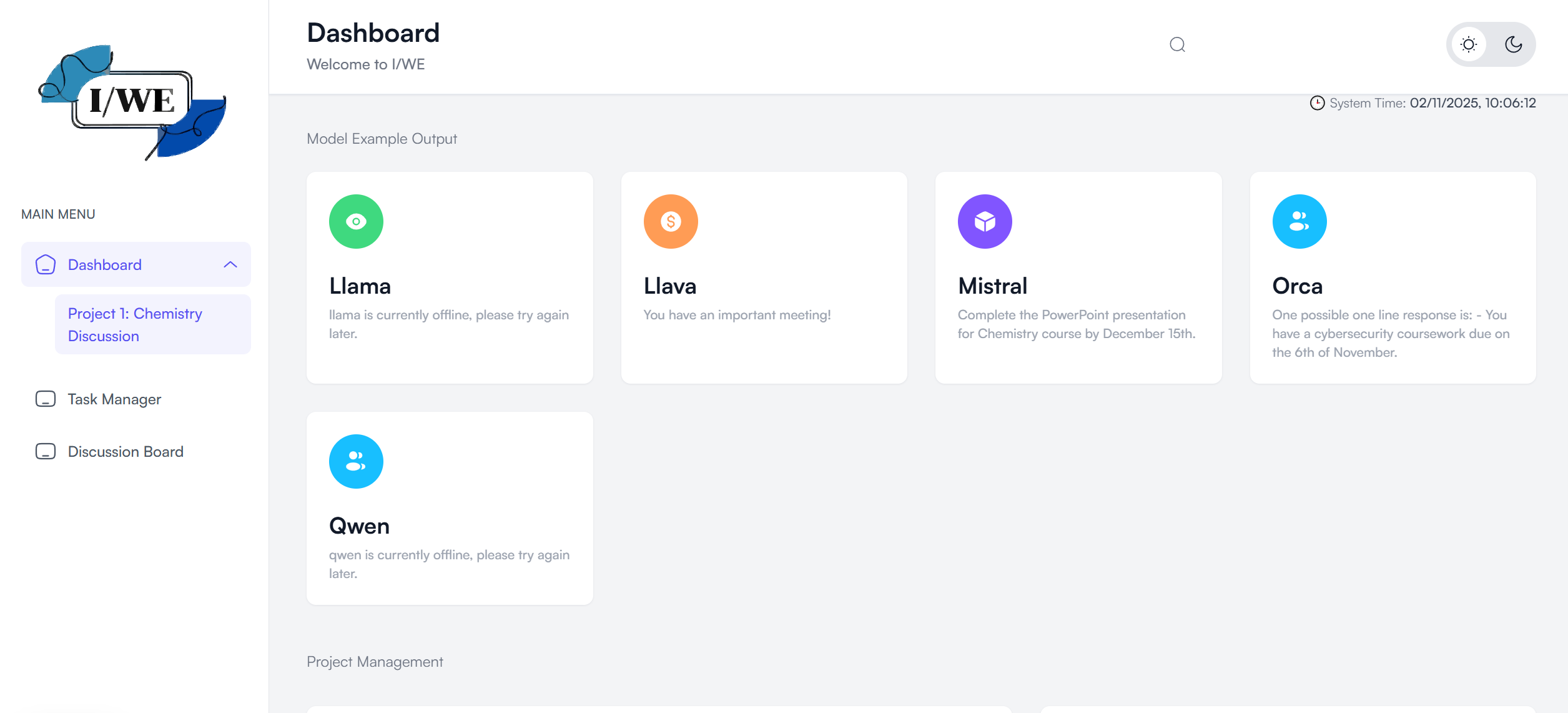
The main dashboard, where you are greeted by each of the A.I. agents
-
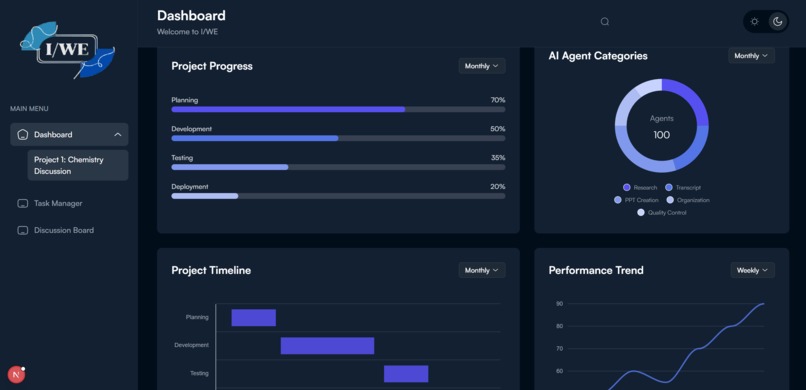
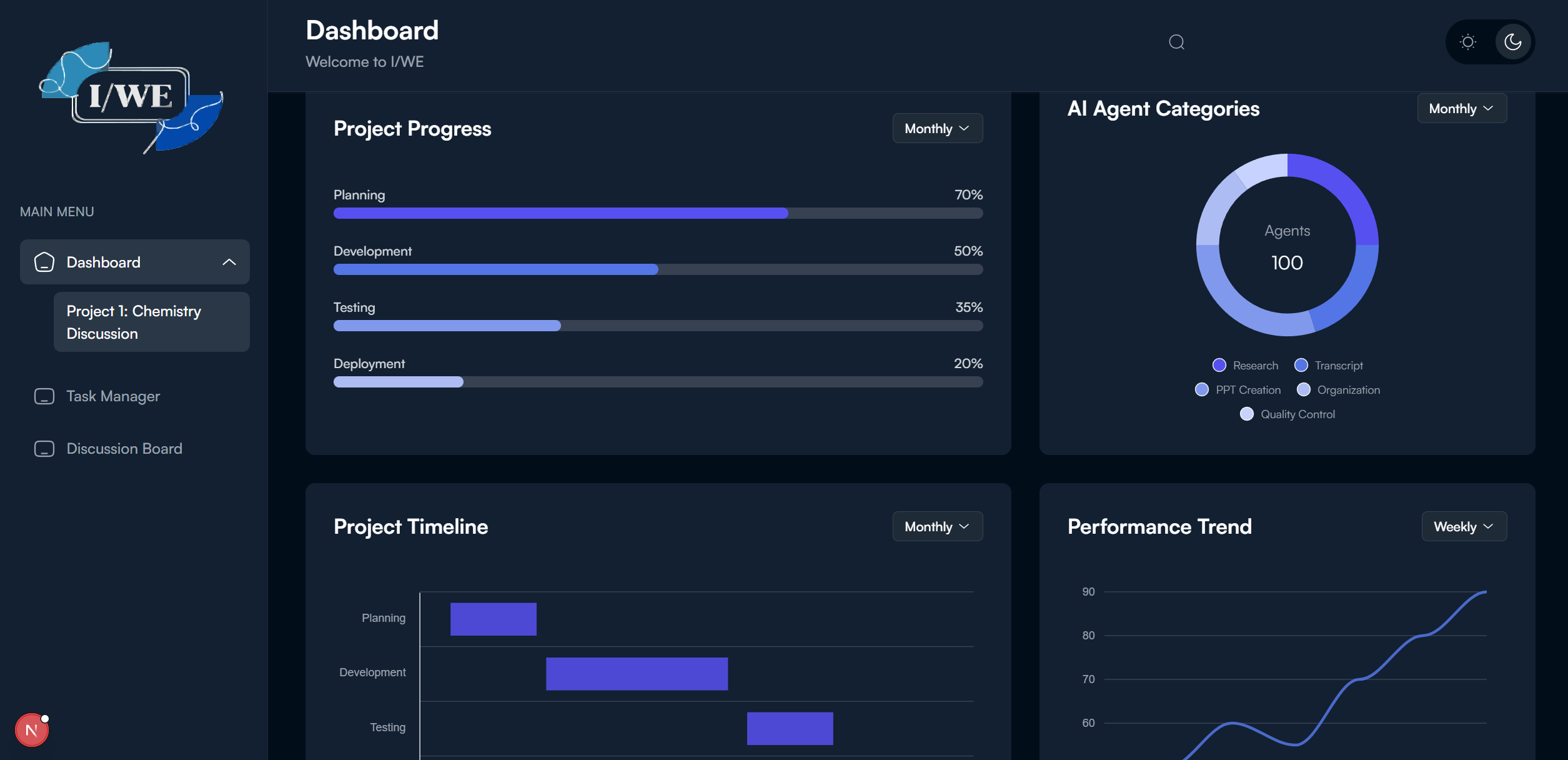
Continuation of the main dashboard, containing information about task progress

Inspiration
Imagine a single person facing a massive 24-hour project — like a hackathon challenge — juggling research, design, writing, and presentation all at once. Human productivity has limits, but teamwork multiplies results. What if one person could still work as efficiently as a team? This idea inspired us to create a platform where users can form a virtual AI team. Each agent brings a different “personality,” dataset, and perspective, mirroring the diversity and debate that make real teams effective. It transforms solo work into collaborative synergy — powered by human-AI communication and multi-agent coordination.
What it does
Our project is a platform where users can easily deploy multiple A.I. agents to work as a team on any given task. Our goal is to make A.I. - Human and A.I. - A.I. interaction as seamless as possible, allowing A.I. agents to work autonomously and interact with one another, interacting with and reporting their progress to the human user, just like a virtual team. Of course, the user has full control over what A.I. models they wish to use, how many agents they wish to deploy, which agents are active, and what tasks are being actively worked on. We wanted to implement integrated AI support when using the platform as well. For example, an A.I. agent would suggest the numbers and types of A.I. agents you would ideally need, given some task or goal you wanted to complete.
How we built it
We combined different AI models locally, prompt-chaining, and inter-agent communication protocols. Each agent is powered by its own sub-prompt tuned for its domain (e.g., research, visualisation, analysis). All agents are connected and share a communication layer inspired by project-management systems. The interface integrates progress boards, a discussion box, and status updates to make the experience feel like leading a real team.
Challenges we ran into
Two of the largest challenges we faced were:
- Getting the A.I. models to behave how we wanted
- Building the front-end framework As an emerging technology, A.I. isn't exactly the most reliable. It is near impossible to ensure that A.I. models behave as expected over a large range of inputs. As such, we were unable to ensure that our solutions were robust. There were always edge cases: inputs that would cause the A.I. to freak out. This was an even bigger nightmare when we had the A.I. interact with one another. Imagine having five four-year-old brothers; that's what it felt like. Because this was our first time working with React, it was rather challenging to fully understand and build the front-end interface that we wanted. Amongst many other challenges, the greatest challenge we faced with React was deciding which elements were meant to be rendered on the server, and which were meant to be client-sided. The limitations of both made it difficult for us to implement some rather essential features (making HTTP requests on user demand). So we had to use some workarounds.
Accomplishments that we're proud of
We built a futuristic platform that redefines human-AI interaction, making work and creativity more efficient, collaborative, and enjoyable. Its potential is limitless — this system can grow in countless directions, evolving with new technologies and user needs. We believe this platform will become a core productivity hub, capable of diverse extensions and intelligent features that continuously expand its power, versatility, and real-world value.
What we learned
Through this team project, we developed stronger time management and communication skills, learning how to collaborate effectively under tight deadlines. Our programming abilities and understanding of artificial intelligence have improved significantly, deepening our technical confidence and problem-solving mindset. These experiences will be invaluable for our future academic and professional journeys, equipping us with both practical and collaborative skills essential for real-world innovation.
What's next for I/We
We planned to add plenty of features in the future to make I/WE a powerful tool. The functionality isn't quite sufficient right now, and the system is vulnerable to cyber attacks. In the future, the latest released version will fix these issues and also add more interesting features. We are eager to make this product more engaging.
Built With
- css
- flask
- javascript
- nextjs
- node.js
- ollama
- python
- react
- typescript


Log in or sign up for Devpost to join the conversation.