PARODY
Last year NASA announced it would be financially unviable within the next 5 years. Now it seems clear the dire prediction was serious. In a joint press announcement with the Pentagon Thursday, NASA Director William Dresher, explained, “space exploration is expensive business. There’s a minimum threshold of funding required to leave the atmosphere, and we no longer receive enough” he remarked ruefully.
The reduction in NASA funding is the result of the congress redirecting funds to combat virtual wars. Secretary of Defense, Ashton Carver, remarked that “capabilities to explore space are no longer a priority for national security. We’re more likely to see bad actors attempt to infiltrate our infrastructure systems through cyberattacks than ETs.”
NASA’s Dresher went on to talk about what he’s doing to keep the program alive, “In the spirit of discovery, we’ve spent the last year exploring every option, but we don’t have many left if the federal government doesn’t allocate more funding.” Over the past year, Dresher and his colleagues piloted a program allowing the public to join missions for a hefty ticket fee. The program geared toward 1-percenters is now under heavy scrutiny. NASA public relations secretary commented, “The team at NASA never liked the idea that the program is only available to a small group of top earners but felt keeping the US going to space outweighed the negative image.”
Critics of the program aren’t typical citizens, but NASA insiders. Astronaut Sasha Porpov recently quit the elite team after the first billionaire joined mission readiness training. “Whenever I helped him out of the simulator restraints, he tried to tip me. But the real issue was the button pushing.” Porpov frustrated, “He refused all procedural instructions, insisting he already knew how to perform them. I didn’t know Harvard business school covered piloting spacecraft. I knew then NASA would never be the same the same place I aspired to when he asked if he could bring his caddie along “to do the buttons.”
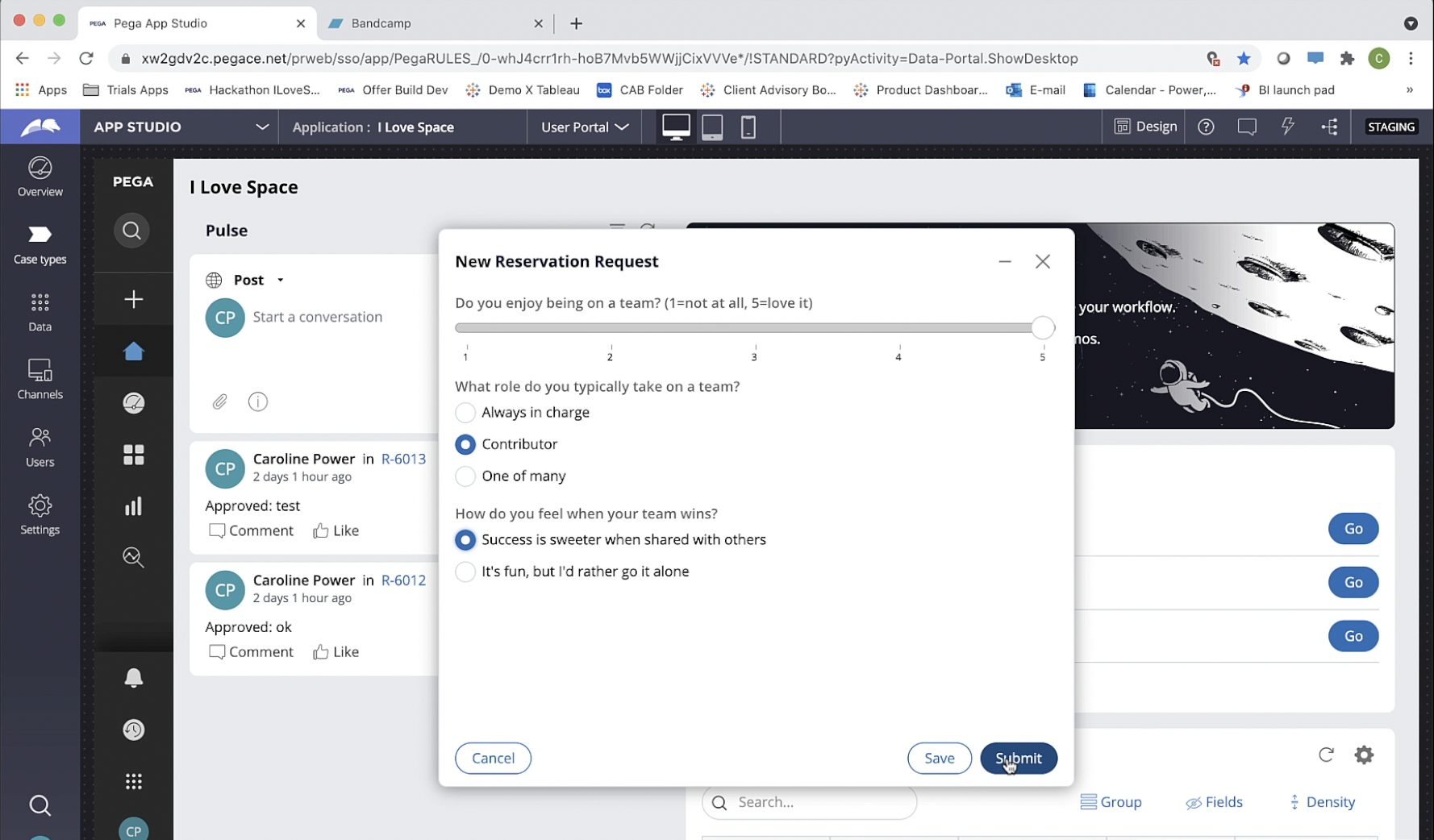
Dresher lamented that losing a trained astronaut is a blow to the program but insists that private funding is the NASA’s only real option. Addressing concerns, he announced they will pilot a new screening program leveraging artificial intelligence. “We’ll asked each applicant a series of questions to gauge what we’re calling ‘behavioral difficulty’. Over the last 6 months, we’ve built a predictive model that should help weed out the real troublemakers.”
The new application faces 1 major hurdle: there aren’t many billionaires from whom sample data can be collected. Dresher responded to the complaint by adding, “preliminary research shows 4–6-year-old respondents answer consistently with the billionaire cohort, regardless of [family] income.”
Dresher plans to “launch” the new online questionnaire this spring on the NASA website.

Log in or sign up for Devpost to join the conversation.