-
-
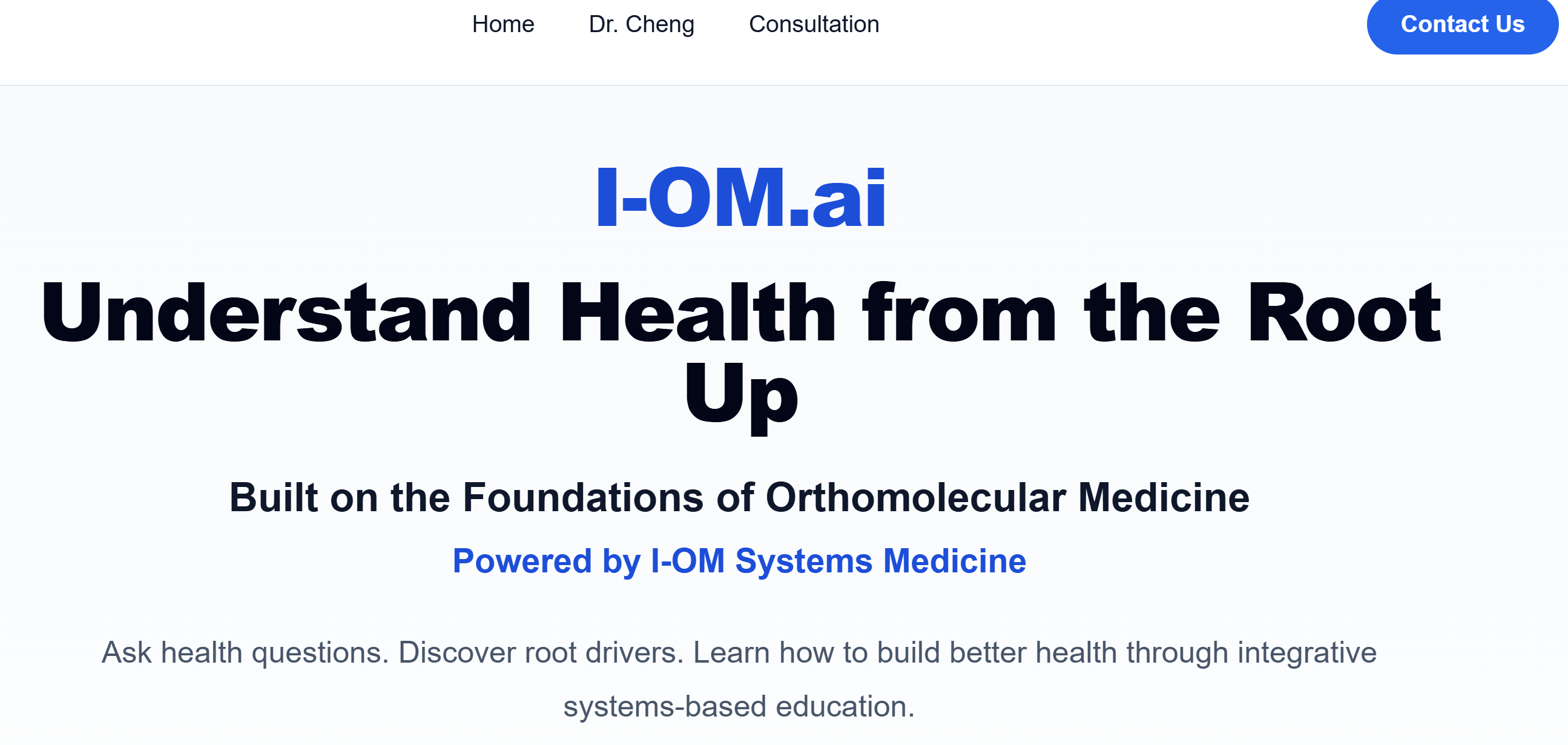
I-OM.ai Homepage
-
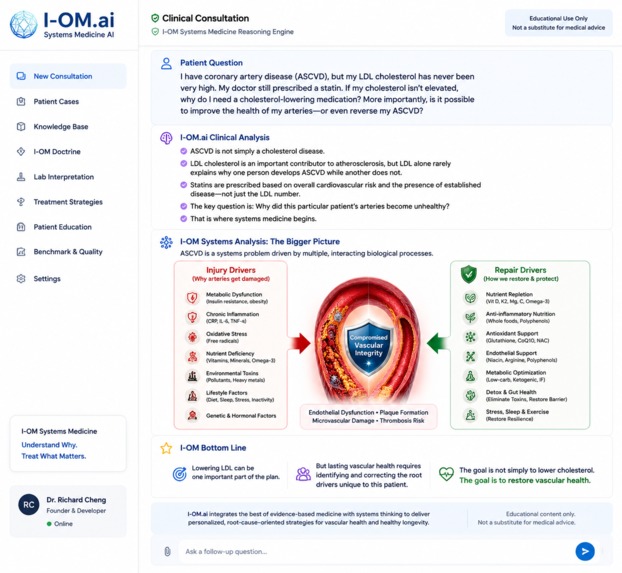
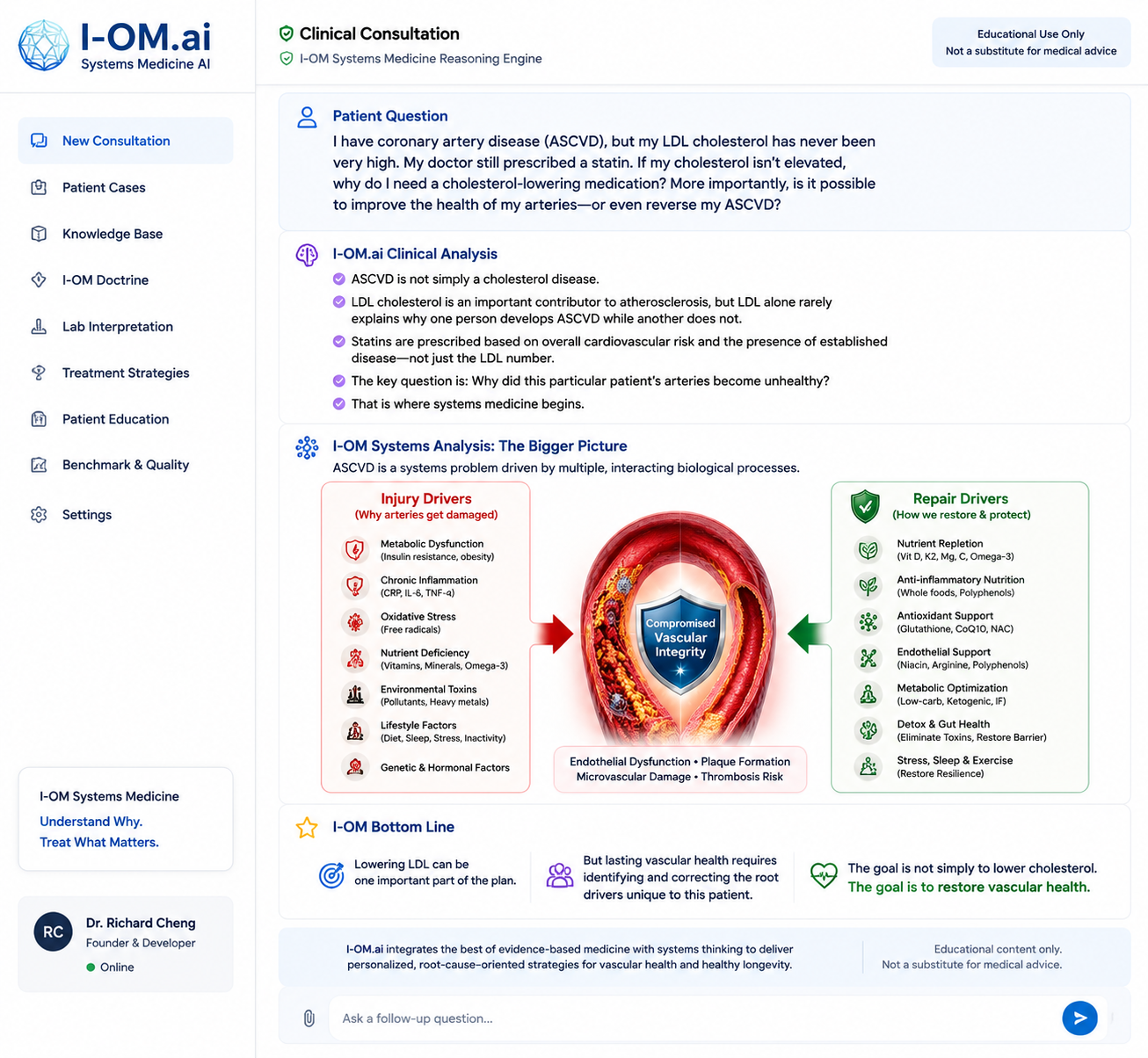
Clinical Reasoning Example: ASCVD
-
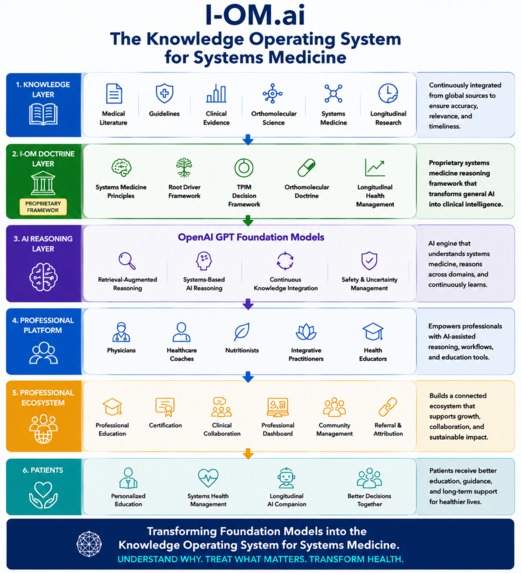
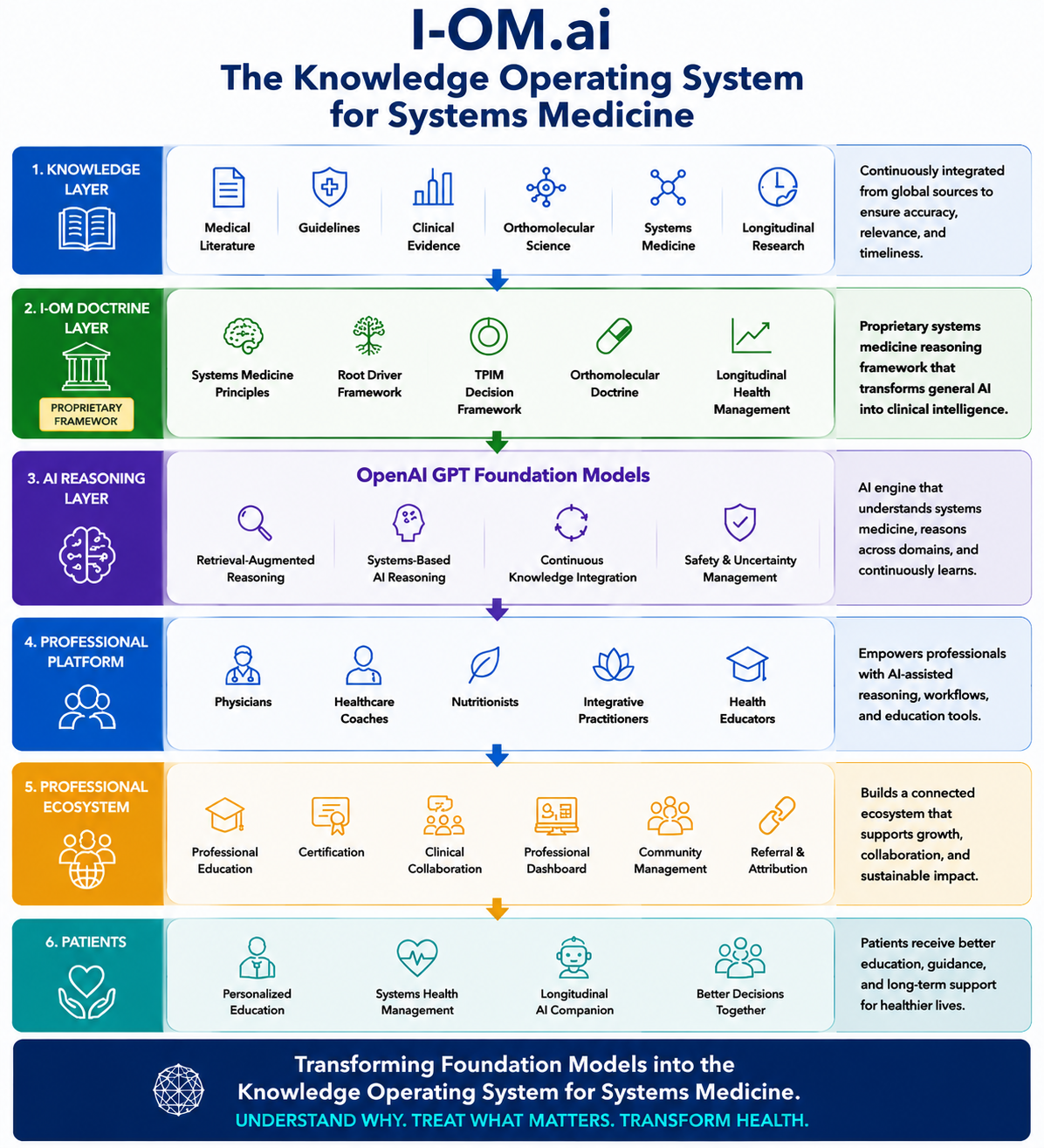
I-OM.ai System Architecture
-
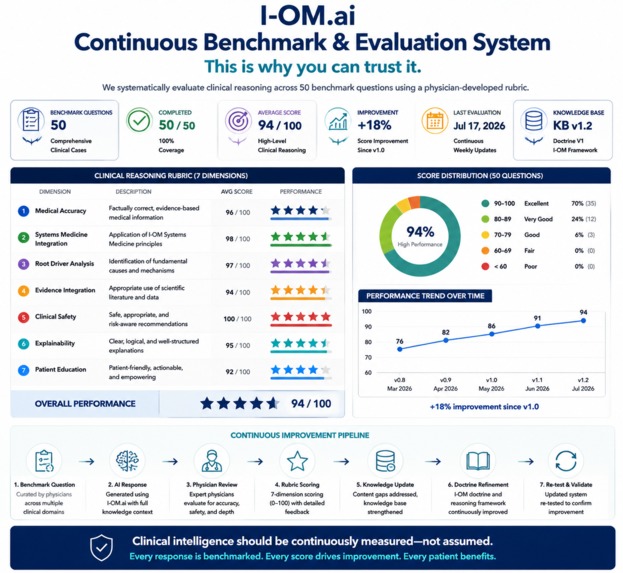
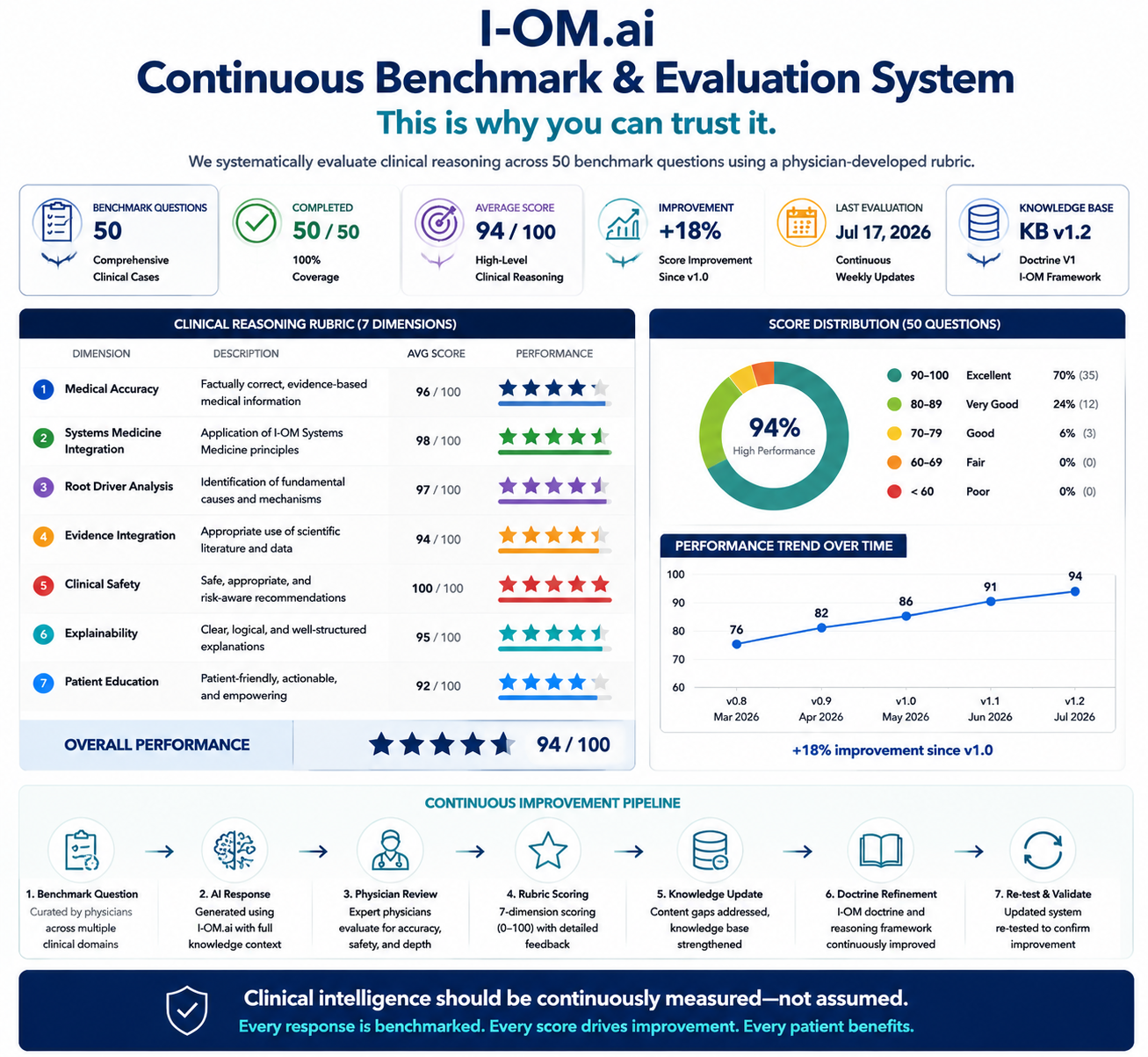
I-OM.ai Continuous Benchmark & Evaluation System
-
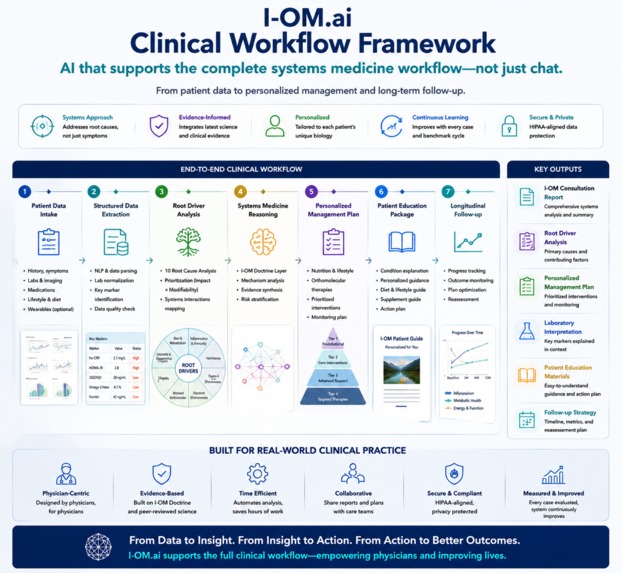
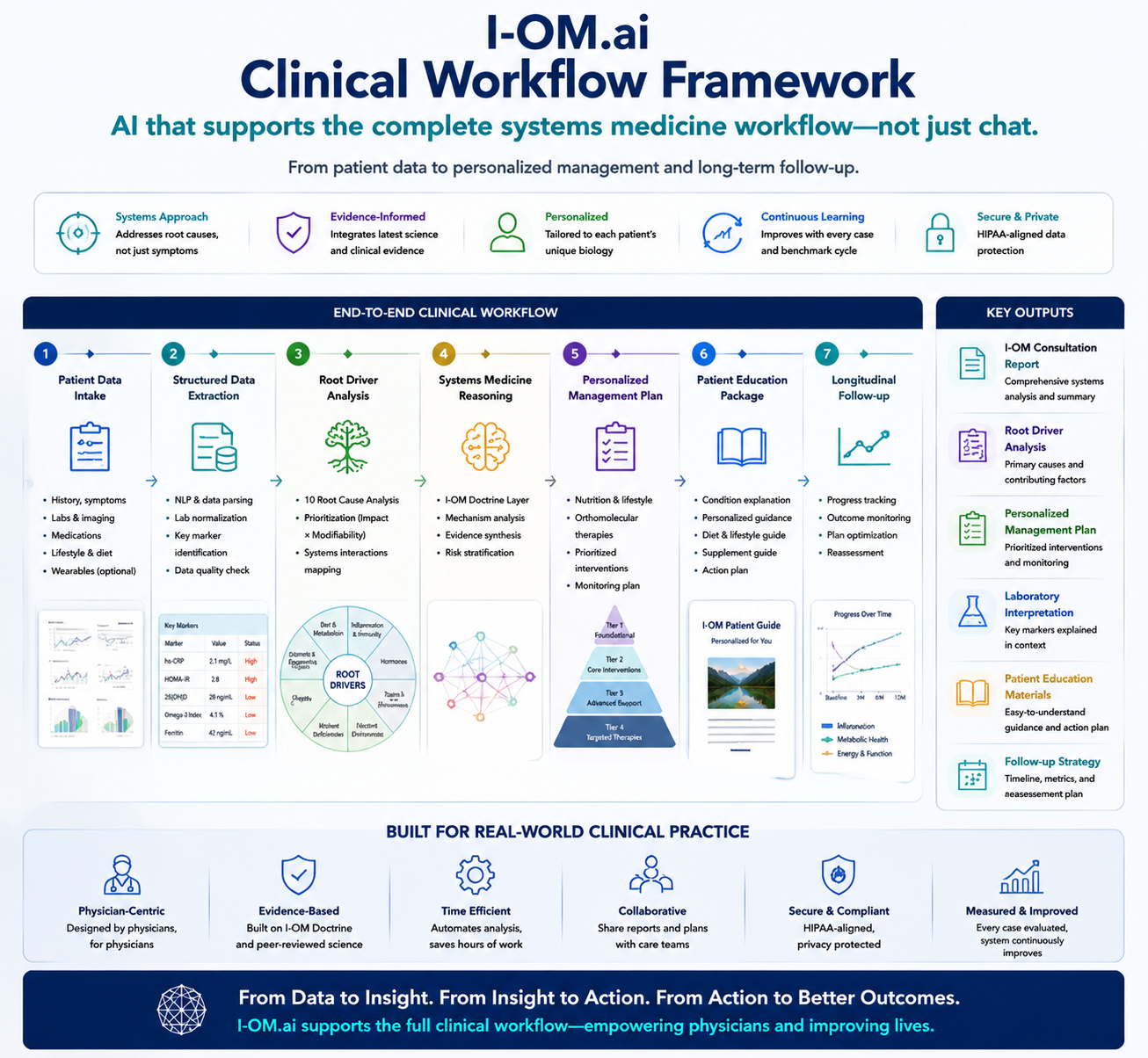
I-OM.ai Clinical Workflow Framework
I-OM.ai
Physician-Guided AI for Integrative Orthomolecular Systems Medicine
Inspiration
Healthcare AI has enormous potential, but its value ultimately depends on the quality of the knowledge behind it. General-purpose large language models can produce impressive responses, yet they may hallucinate, lack domain-specific expertise, or provide reasoning that is difficult to interpret in a clinical context.
As a physician-scientist with decades of experience in Integrative Orthomolecular Systems Medicine, I wanted to build an AI platform that combines the reasoning power of modern LLMs with a physician-guided knowledge architecture that continuously evolves and improves.
Rather than replacing physicians, I-OM.ai is designed to augment physician expertise and make decades of systems medicine knowledge globally accessible.
What We Built
I-OM.ai is a physician-guided AI platform powered by OpenAI GPT-5.6 via Dify and Retrieval-Augmented Generation (RAG).
Instead of relying solely on the foundation model, the platform is built upon a structured medical knowledge architecture that includes:
- Core medical doctrine
- Consultation frameworks
- Educational resources
- Benchmark-driven evaluation
- Continuous knowledge improvement
This architecture enables responses that are more reliable, explainable, transparent, and continuously refined through physician review.
How We Built It
The platform combines:
- OpenAI GPT-5.6 via Dify
- Retrieval-Augmented Generation (RAG)
- GitHub-based knowledge management
- Physician-guided knowledge architecture
- Benchmark-driven continuous evaluation
The knowledge base is organized into reusable modules that support medical education, clinical reasoning, consultation workflows, and continuous quality improvement.
The platform is also designed with a model-agnostic architecture, allowing the same physician-guided knowledge base to support future regional deployments using different LLMs while maintaining a consistent knowledge foundation.
Challenges
Our biggest challenge was not building another chatbot.
The real challenge was designing a knowledge architecture that enables medical expertise to be organized, validated, benchmarked, and continuously improved while leveraging the rapidly advancing capabilities of modern large language models.
Building a system that can evolve alongside future AI models without rebuilding the underlying medical knowledge architecture remains a central design principle of I-OM.ai.
What We Learned
Large language models become significantly more valuable when paired with structured domain knowledge and continuous expert evaluation.
Our experience suggests that physician-guided knowledge architecture is just as important as model capability for building trustworthy medical AI.
Looking Forward
I-OM.ai is only the beginning.
Our long-term vision is to build a continuously improving global knowledge platform for Systems Medicine that empowers physicians, researchers, educators, and patients while remaining adaptable to future AI models and regional deployments.
Our goal is not simply to build another AI chatbot, but to establish a physician-guided knowledge platform that continuously evolves alongside advances in AI while remaining grounded in expert medical knowledge.## Inspiration
What it does
How we built it
Challenges we ran into
Accomplishments that we're proud of
What we learned
What's next for I-OM.ai
Built With
- agents
- ai
- api
- architecture
- dify
- engineering
- evaluation
- generation
- github
- gpt-5.6
- javascript
- json
- knowledge
- llm
- markdown
- medical
- medicine
- openai
- prompt
- python
- rag
- retrieval-augmented
- systems

Log in or sign up for Devpost to join the conversation.