-
-
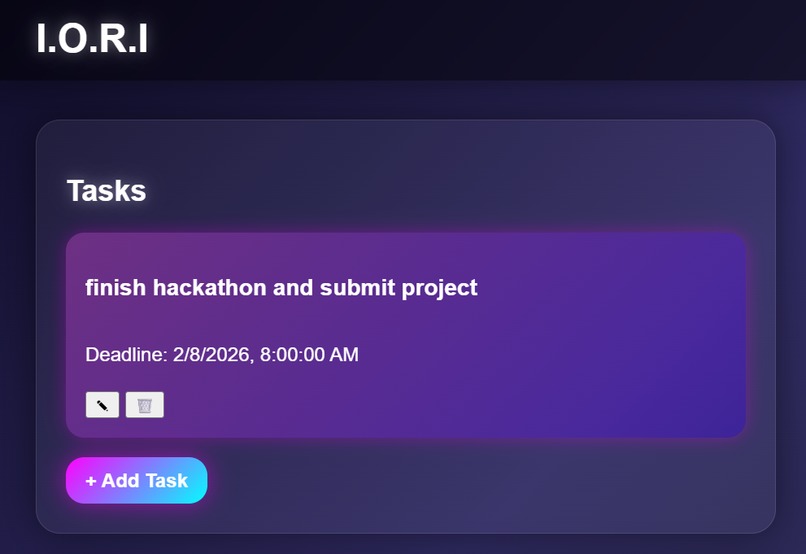
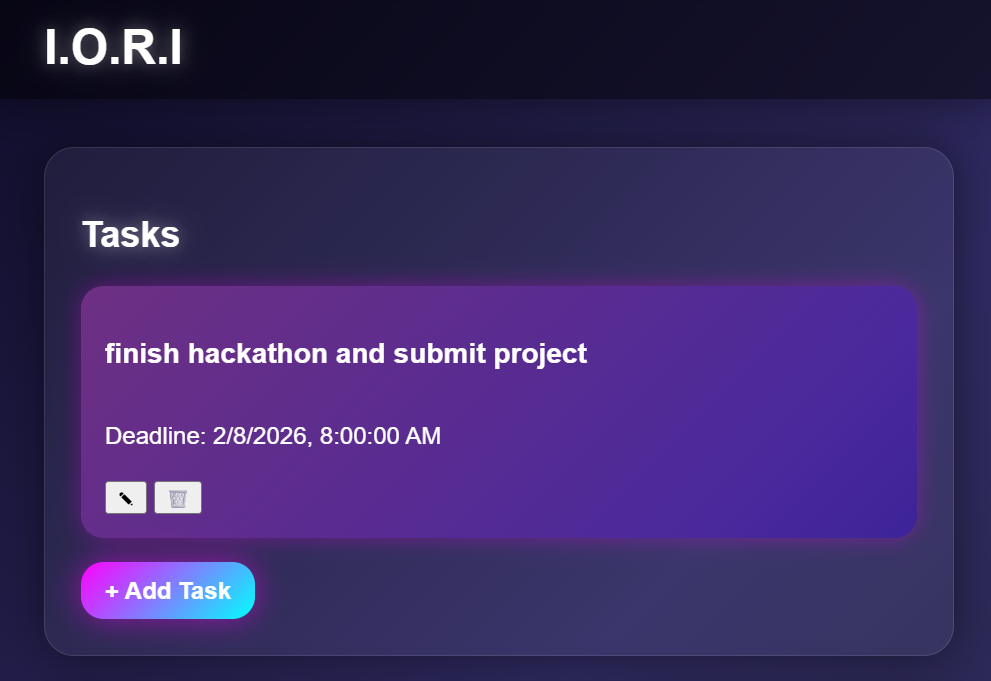
Main Task Page
-
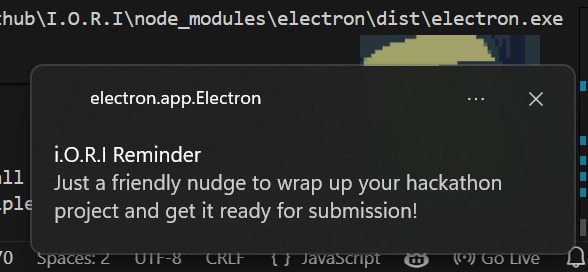
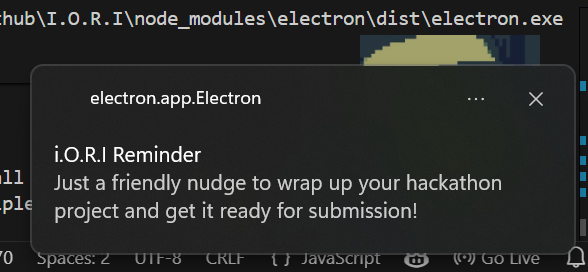
How a Notification Looks On Your PC
-
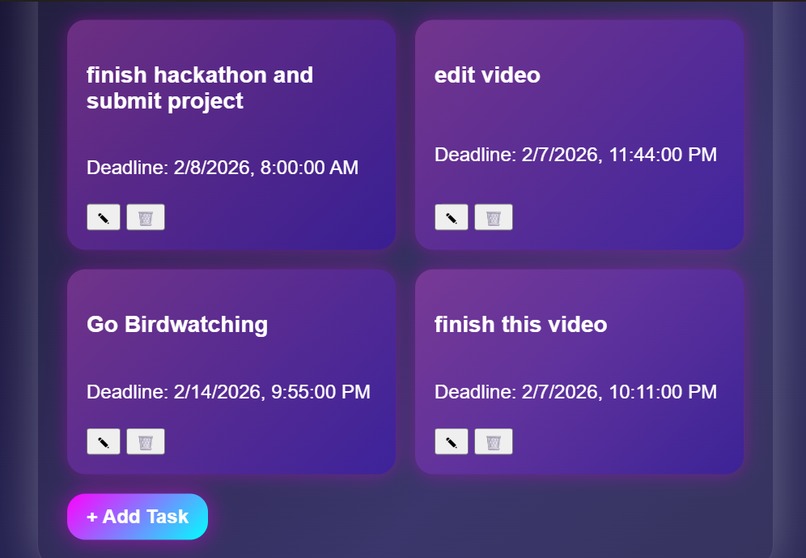
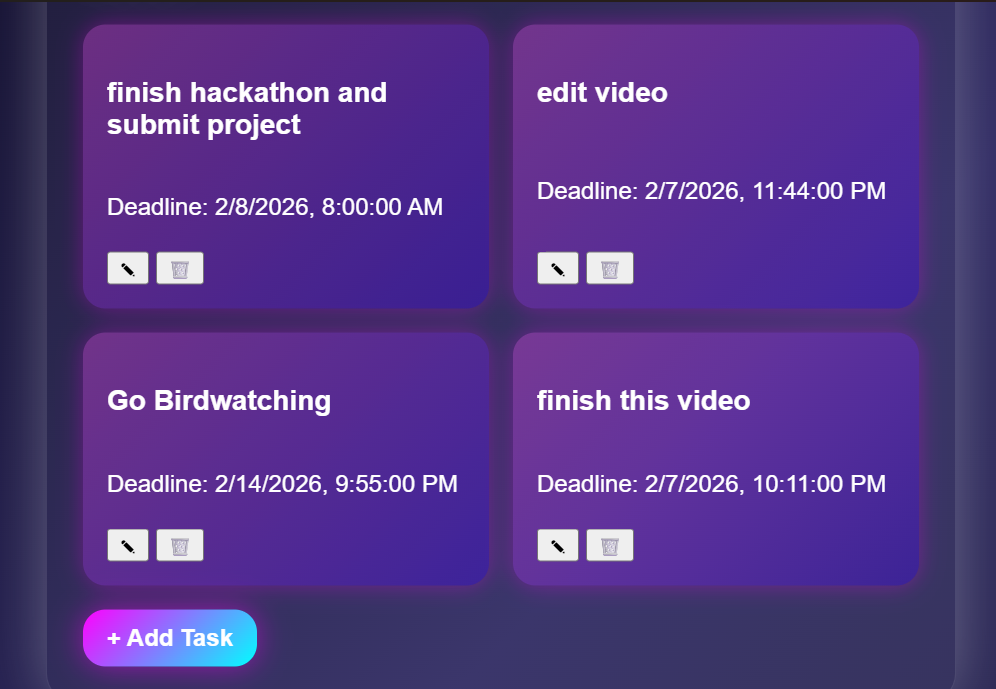
More Tasks
-
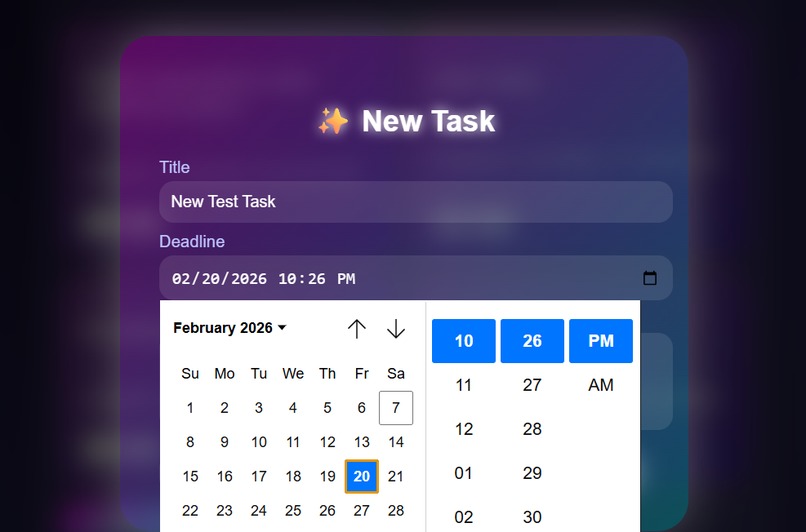
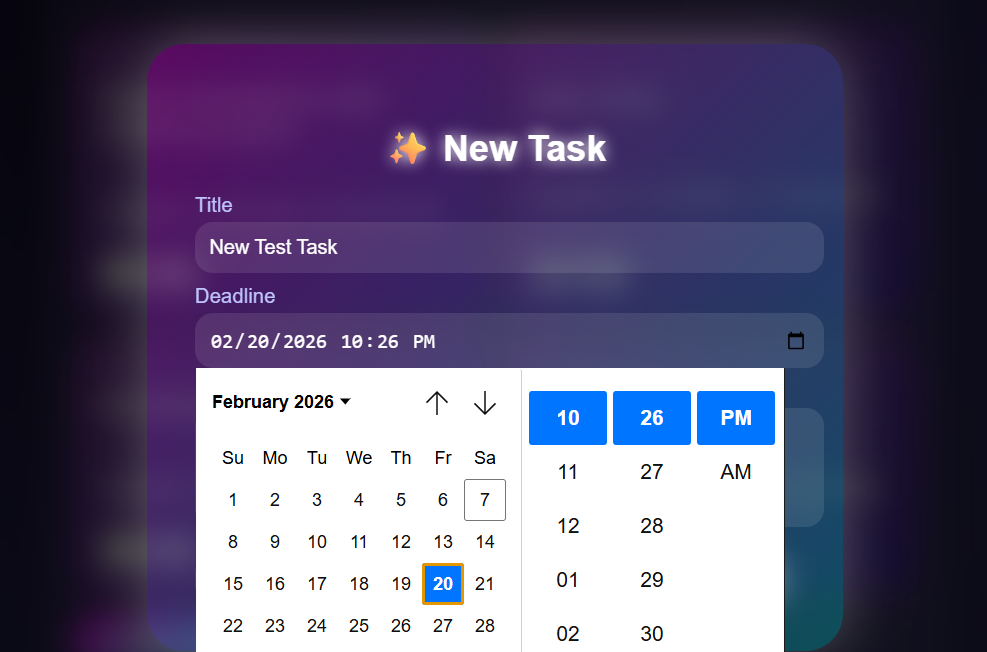
Adding a New Task
Inspiration
As a senior hacker with ADHD, I know just how easy it is to forget things when you're immersed in development. Last year, during UGAHacks X, I nearly forgot to submit my demo video because I was trying to add some final touches to my project way to late into the night. This year, I challenged myself to make something that I think would be helpful for both Hackers and Slacker alike.
What it does
I.O.R.I, also known as the Intention-Oriented Reminder Interface, is an application specifically designed to ensure that the user does not forget their designated tasks. The way that it goes about that, however, is quite unique. It starts off with gentle reminders spread out over long periods of time, but as the deadline approaches, those earlier reminders morph into constant nagging that disallows any type of procrastination.
How I built it
I.O.R.I was built with simplicity and reliability as the top priorities, mainly because reminder systems are useless if they’re fragile or annoying to set up. I started by designing the core logic around intent rather than time alone. Instead of just asking “when is this due?”, I.O.R.I tracks how close the user is to failing their intention and adapts its behavior accordingly.
On the technical side, I built the backend to manage task states, escalation levels, and reminder frequency. The frontend focuses on being lightweight and fast to interact with. I tried to make sure that there was no clutter nor any overthinking. The system gradually increases notification intensity allowing reminders to shift from passive nudges to unavoidable interruptions.
A lot of time went into tuning the balance: annoying enough to be effective, but not so annoying that users uninstall it out of spite.
Challenges I ran into
One of the biggest challenges was figuring out how to nag without completely overwhelming the user. As someone with ADHD, I know firsthand that too many notifications can cause you to shut down instead of act. Finding the proper difficulty curve, where reminders feel helpful early and urgent later, took a lot of time and patience.
Another challenge was fighting scope creep. I kept coming up with “cool” ideas that didn’t actually help the core problem. It was tempting to turn I.O.R.I into a full productivity suite, but I had to constantly pull myself back and ask: does this actually help someone remember and act on their intentions?
Time management during the hackathon was also rough, ironically proving exactly why I.O.R.I needed to exist.
Accomplishments that I'm proud of
I’m really proud that I built something grounded in a personal pain point rather than a generic hackathon idea. I.O.R.I isn’t just a reminder app, it's a reflection of how procrastination actually feels and how urgency builds over time.
I’m also proud of how focused the final product is. Even with limited time, I managed to ship a functional, coherent system that does exactly what it promises. And honestly, the fact that I didn’t forget to submit this project feels like a small but poetic victory.
What I learned
This project reinforced how important user psychology is in software design. A technically perfect system is useless if it doesn’t align with how people actually behave. I learned a lot about designing systems that adapt to humans, not the other way around.
I also learned to trust constraints. Limiting features made the core idea stronger, not weaker. And on a personal level, I learned that building tools for yourself can be one of the best ways to stay motivated and push through burnout.
What's next for I.O.R.I
Next, I want to explore smarter escalation using context—like time of day, user responsiveness, or even integration with agentic ai. I’d also love to experiment with different “personalities” for reminders, letting users choose how aggressive or supportive I.O.R.I feels.
Long-term, I see I.O.R.I becoming a customizable accountability companion for students, developers, and anyone who’s ever said “I’ll do it later” and meant it… at the time.
Built With
- css3
- electron
- elevenlabs
- html5
- javascript
- node.js
- openai


Log in or sign up for Devpost to join the conversation.