-
-
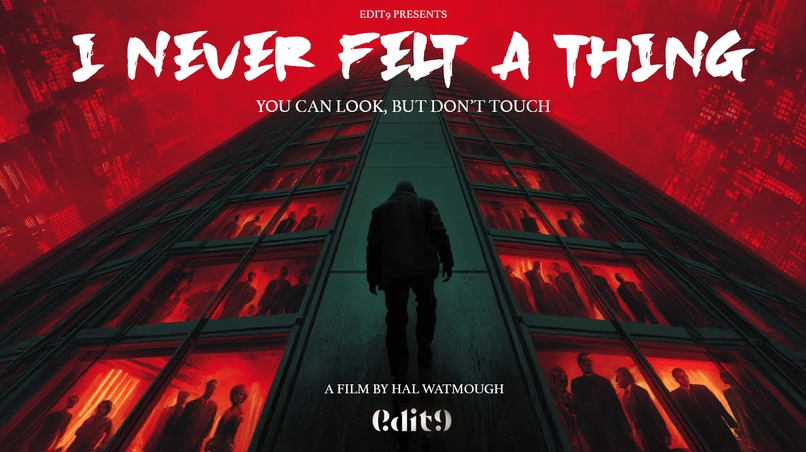
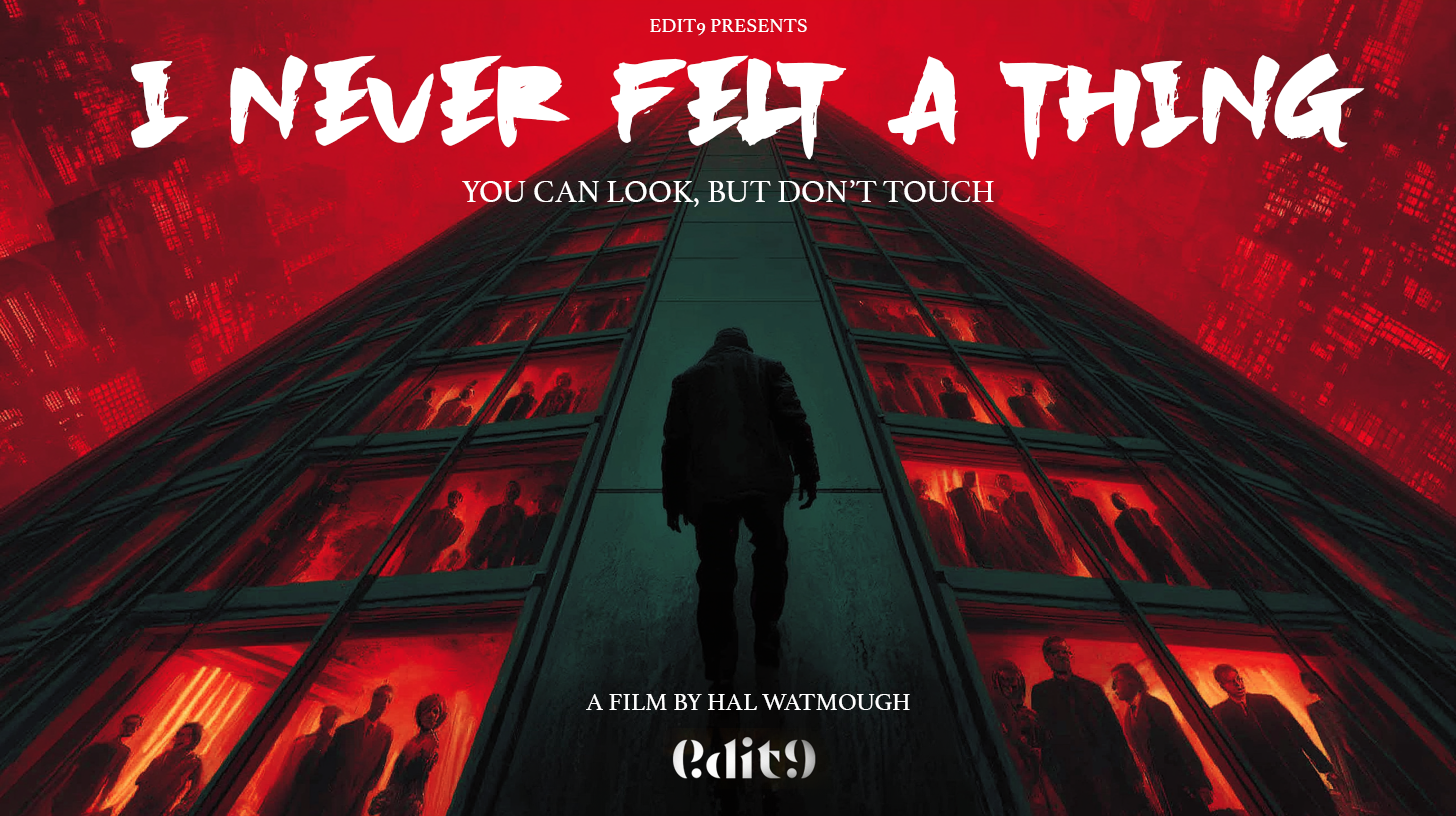
You can look, but don't touch
What the Film Explores
It follows two petty criminals, Leon and his cousin Jay, in a dystopian corporate city split into fractured sectors. Jay wants a legacy. Leon just wants to stay invisible.
Their journey into the darker sectors shows both sides of society: the neglected poor, the insulated rich, and a system designed so that even “opportunities” are just traps. But you can’t have the rich without the poor.
Leon is hiding something and powerful people want to use his secret. But Leon doesn’t fit the world he lives in, physically or emotionally, and he is haunted by that. That quiet detail lays the foundation for the themes of the whole project: intimacy, vulnerability, isolation, and survival.
They hold-up a shop that sells everything nobody wants: cheap plastic emptiness, but there’s always the promise of something better just behind the locked door that Jay can’t resist.
As the trap springs shut, Leon finally transforms from the touch of his cousin, his only option is to destroy everything, wipe the slate clean, and try and build something real from the ashes.
You’ve got to break it, to rebuild it.
With this film I wanted to ask the question: If something isn’t working, do you have to break everything to build something better?
Inspiration & Premise
This started with something I’ve felt for a while: With modern content we can see everything now, people living incredible lives, travelling, loving, succeeding, it’s all right there on our screens.
But even though it looks close, it never feels reachable. There’s this strange tension between access and exclusion. You can watch the dream in 4K, but you can’t touch it.
And I feel like underneath that is a deeper fear: What if finally touching the thing you desire most, destroys it?
That feeling became the seed of this film.
Why I Chose AI (and Why Long-Form Still Matters)
I wanted to push AI beyond my usual short films and quick experiments. It feels like everything is getting shorter, faster and more immediate. And I worry there's a danger we’re losing character, tension, world-building, and emotional depth.
I wanted to see if I could still build atmosphere and narrative over time but keep it engaging.
So when I started in July, I knew it would be hard, but I didn’t realise how much it would take: Most evenings. Most weekends. Over three months. Nearly £2,000. Well over 5,000 generated clips. It was trial and error, again and again.
And honestly, I wanted that. I didn’t want something effortless. I wanted something substantial. Something with weight. Something that cost me time and care. Something that felt like craft, not just technology, that I could hold up and say “I put everything into this”.
Why Animation
Although it’s not as visually arresting as cinematic live-action, animation gave me space to be more ambitious without constantly having to yield to as many AI constraints. It let me finesse frames, solve more problems, construct a coherent world and soften the rough edges of AI without pulling the audience out too much.
Is it perfect? Of course not. But animation let me build something bigger than my budget and push things just a bit further.
Why Bother With Long Form
AI is moving so fast it feels like the ground is always shifting. This project was me planting my flag. I wanted to prove to myself (and hopefully others) that longer narrative-driven work is still worth making, even while the tools evolve underneath us.
We can’t keep avoiding bigger stories just because a new model might drop tomorrow and make it obsolete. I wanted the story to take the lead, not the tools. I feel like a good story should be untethered from the tools used to make it.
The Challenges
The tools kept changing mid-project. Pipelines evolved constantly. Every new model meant asking: “Do I redo this scene?” Doing it alone made it even harder.
But it forced me to grow as a filmmaker, storyteller, editor, and problem-solver. It reminded me: technology doesn’t remove the need for craft. It demands more of it.
I feel so strongly that people need to engage creatively with these tools. If we don’t help shape them, they’ll become something we don’t recognise.
What I Learned
Long-form storytelling is still worth fighting for. AI can help, but it won’t do the hard parts for you. World-building and character matter more than visuals. Iteration is everything. Sometimes you have to build something bigger than you think you can, just to prove yourself wrong.
Most of all, I learned that even in a future city where everything feels artificial, emotion will always be the most powerful tool we have.
Looking Ahead
The film stands on its own, but I also wanted to open the door on a much larger world, and if people connect with it, it has the potential to grow into something much bigger. And I would love to build a team around it to do it justice.
But even if this film is all it ever becomes, I’m proud of it. It explores something that matters to me. It pushed me way past my comfort zone. And it proved to me that even with the frenzied progress of AI, story still comes first. For now, this is just the first step. But hopefully, it’s a step in a good direction.


Log in or sign up for Devpost to join the conversation.