-
view
-
-
-
Inspiration
What it does
How we built it
Challenges we ran into
Accomplishments that we're proud of
What we learned
What's next for I'm thirsty
The inspiration for I’m Thirsty came from a simple everyday problem: plants cannot tell us when they need water. People may forget to water their plants or water them more often than necessary. We wanted to create a simple system that could “understand” the condition of a plant and respond automatically. This idea led us to combine sensors, Arduino, and an automatic watering mechanism into one smart plant-care system.
What it does
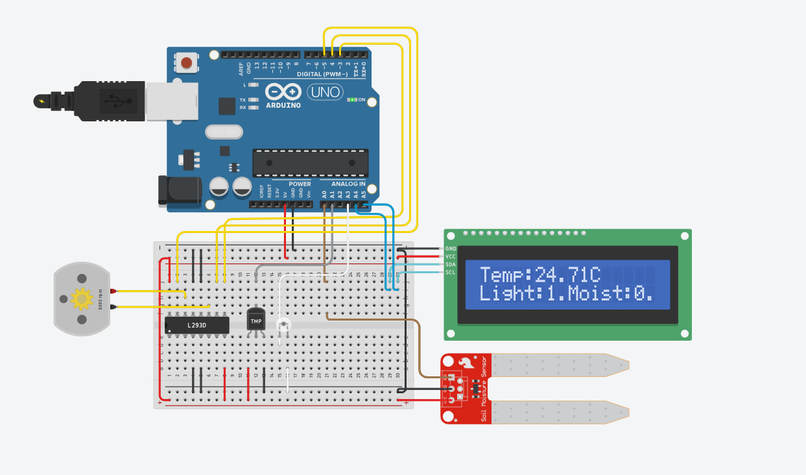
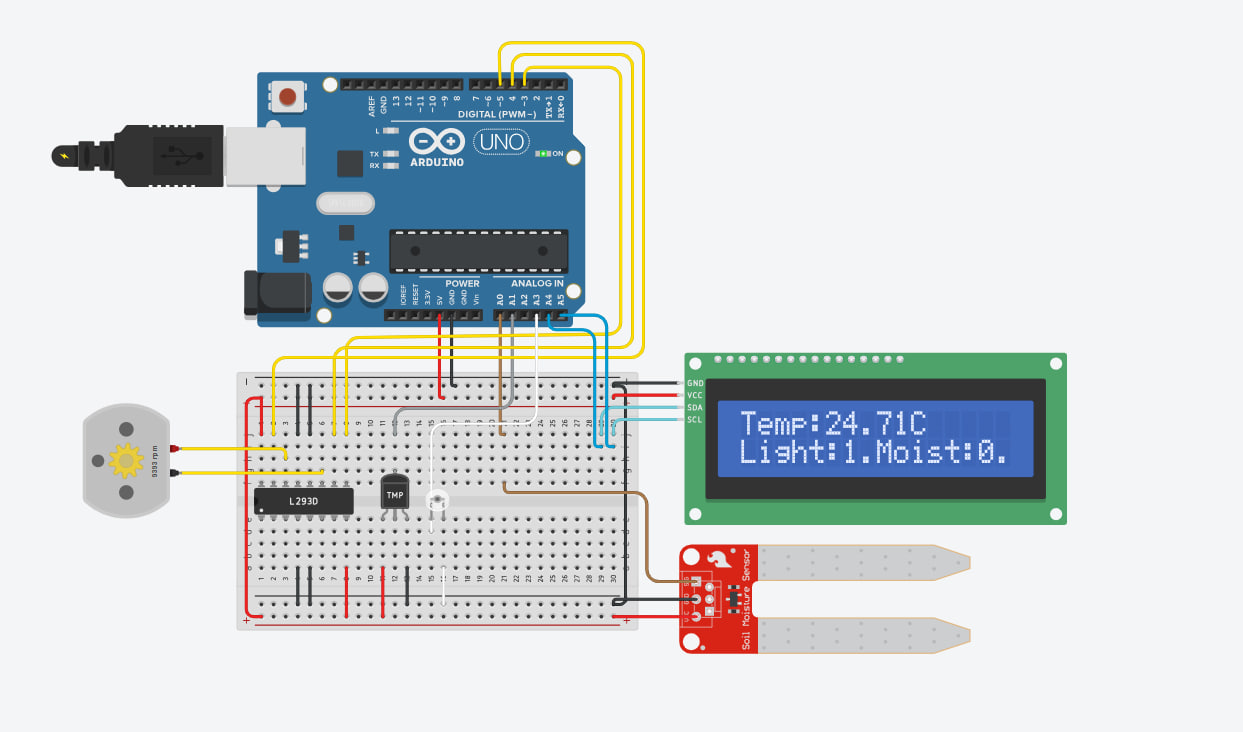
I’m Thirsty monitors several conditions around a plant, including soil moisture, temperature, and light intensity. A soil moisture sensor detects how wet or dry the soil is, while temperature and light sensors provide additional information about the plant’s environment.
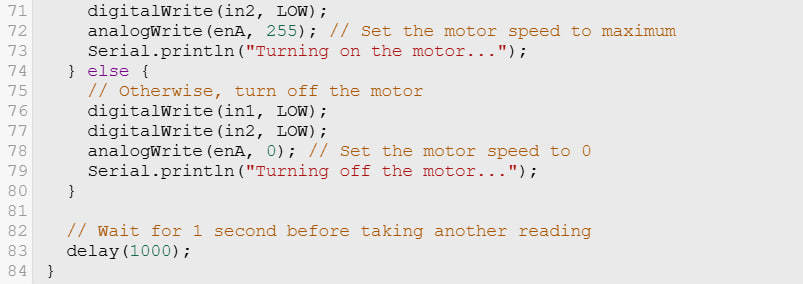
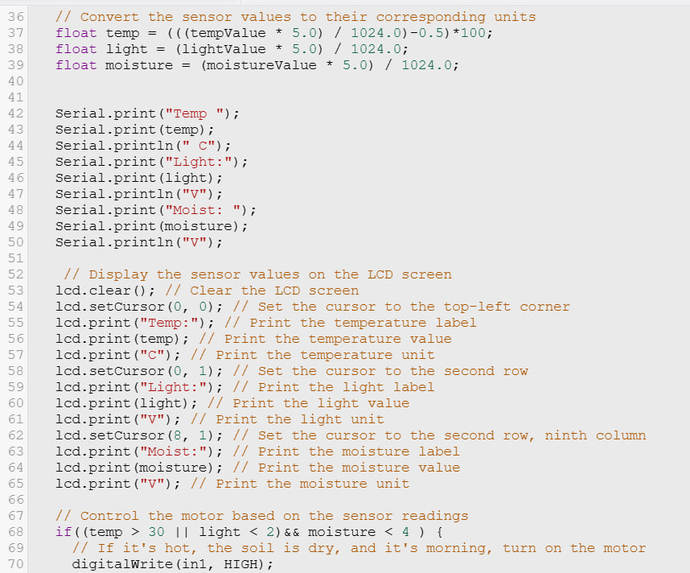
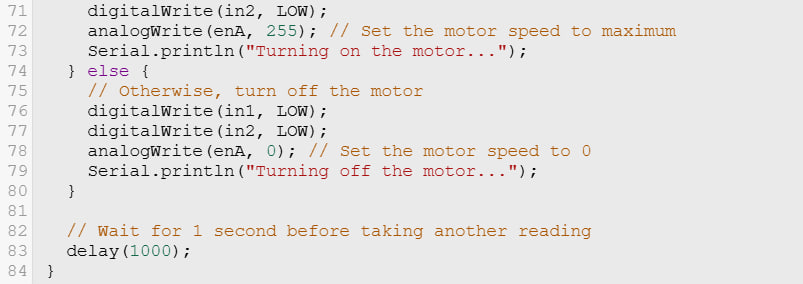
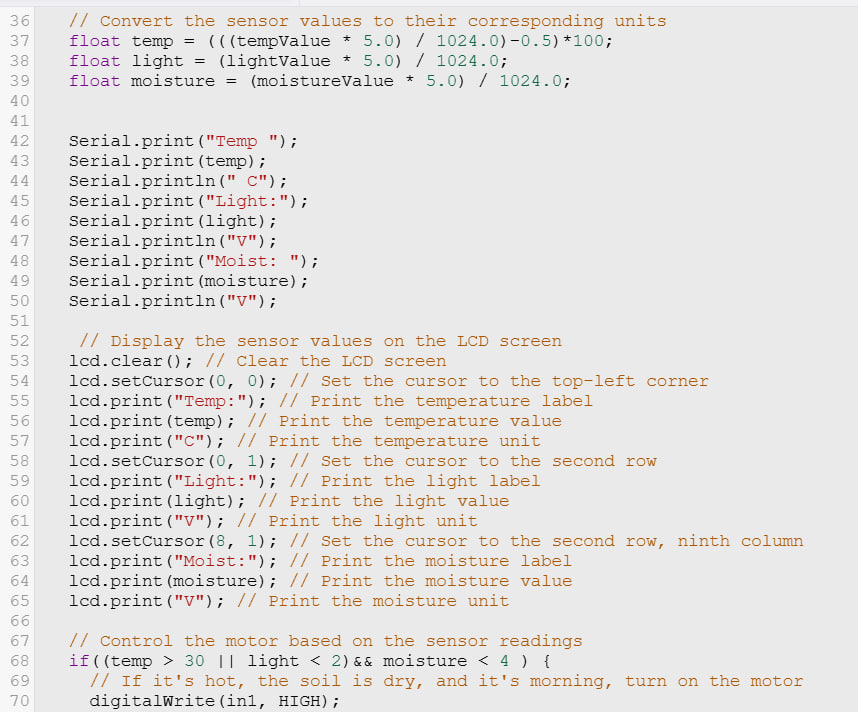
The readings are processed by an Arduino Uno and displayed on a 16×2 I2C LCD. When the soil is too dry, the Arduino activates a DC motor/water pump through an L293D motor driver, allowing the plant to be watered automatically. When watering is not needed, the motor is switched off.
How we built it
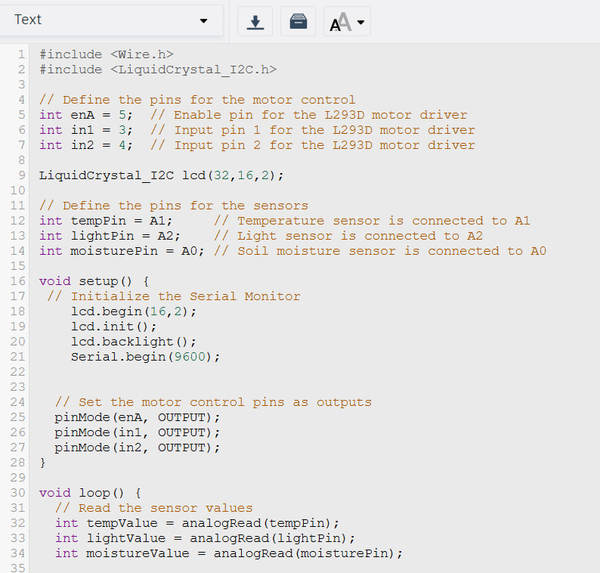
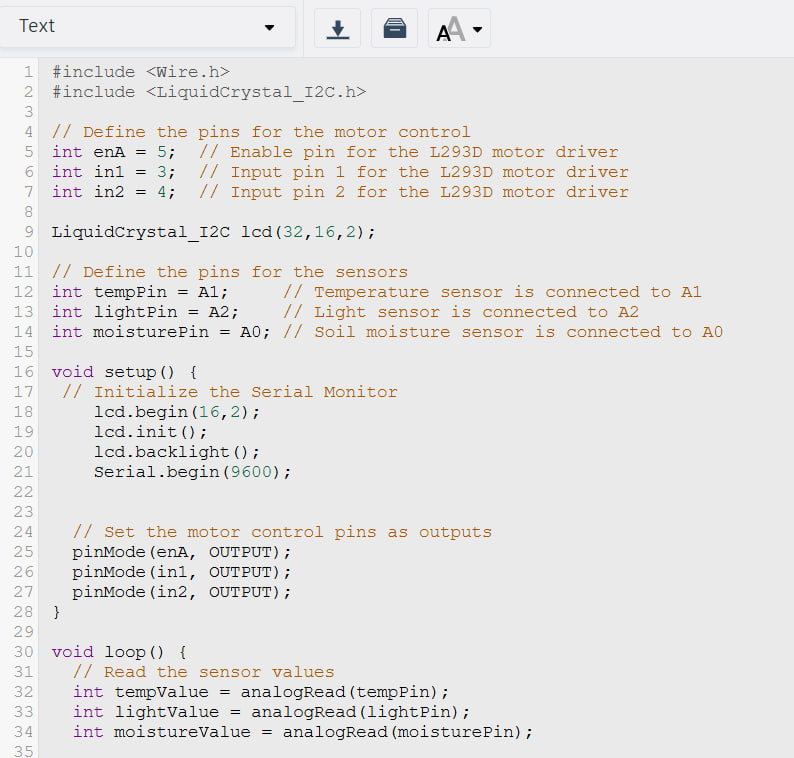
We built the project using an Arduino Uno as the main controller. We connected the soil moisture sensor to A0, the temperature sensor to A1, and the light sensor to A2.
For displaying the sensor readings, we used a 16×2 I2C LCD, which communicates with the Arduino through the I2C interface. The watering mechanism consists of a DC motor/pump controlled by an L293D motor driver. The motor driver is connected to Arduino pins 3, 4, and 5 for direction and speed control.
We programmed the Arduino in C/C++ using the Arduino IDE. The program continuously reads the sensors, displays the collected data, and controls the motor according to the soil moisture condition. We also used the Serial Monitor to track the system's operation.
Challenges we ran into
One of the main challenges was making sure that all the different components worked together correctly. We had to connect several sensors, an LCD, and a motor driver while making sure that the Arduino could read and control everything properly.
Another challenge was working with sensor readings. Environmental sensors can produce changing values, so understanding the readings and using them to make a reliable watering decision required testing and adjustment.
We also had to make sure that the motor was controlled safely through the L293D motor driver instead of connecting it directly to the Arduino.
Accomplishments that we're proud of
We are proud that we turned a simple idea into a functioning automated plant-care system. The project successfully combines multiple technologies in one system: sensor-based monitoring, LCD data visualization, Arduino programming, and automatic motor control.
We are especially proud of creating a system that does not only collect information but can also take action based on the plant's condition. This makes the project more practical than a simple monitoring device.
What we learned
Through this project, we learned how to work with different types of sensors and read their values using Arduino. We also learned how to control a DC motor using an L293D motor driver and how to display sensor data on an I2C LCD.
Most importantly, we learned how hardware and software have to work together. A small change in the circuit or code can affect the entire system, so testing, debugging, and troubleshooting became an important part of the development process.
What's next for I'm Thirsty
In the future, we want to make I’m Thirsty more advanced and reliable. We could add a water-level sensor to notify the user when the water tank is empty and improve the watering system with more precise control.
We also want to add remote monitoring, allowing users to check their plant's condition from a smartphone. Another possible improvement would be adding data storage and graphs to track changes in soil moisture, temperature, and light over time.
Our long-term goal is to develop I’m Thirsty from a basic Arduino prototype into a more complete IoT-based smart plant-care system that can be used for multiple plants and different growing environments.


Log in or sign up for Devpost to join the conversation.