Inspiration
My inspiration stemmed from the philosophical inquiries of transhumanism and posthumanism. I was fascinated by questions of identity, consciousness, and humanity's evolving relationship with technology. Works such as Donna Haraway's "A Cyborg Manifesto," the films of Mamoru Oshii, and the performance art of Marina Abramović inspired us to explore what happens when the boundaries between biological and technological beings blur. I wanted to create a contemplative piece that wasn't dystopian or utopian, but instead asked: in a future where we can be anything, what do we choose to become?
What it does
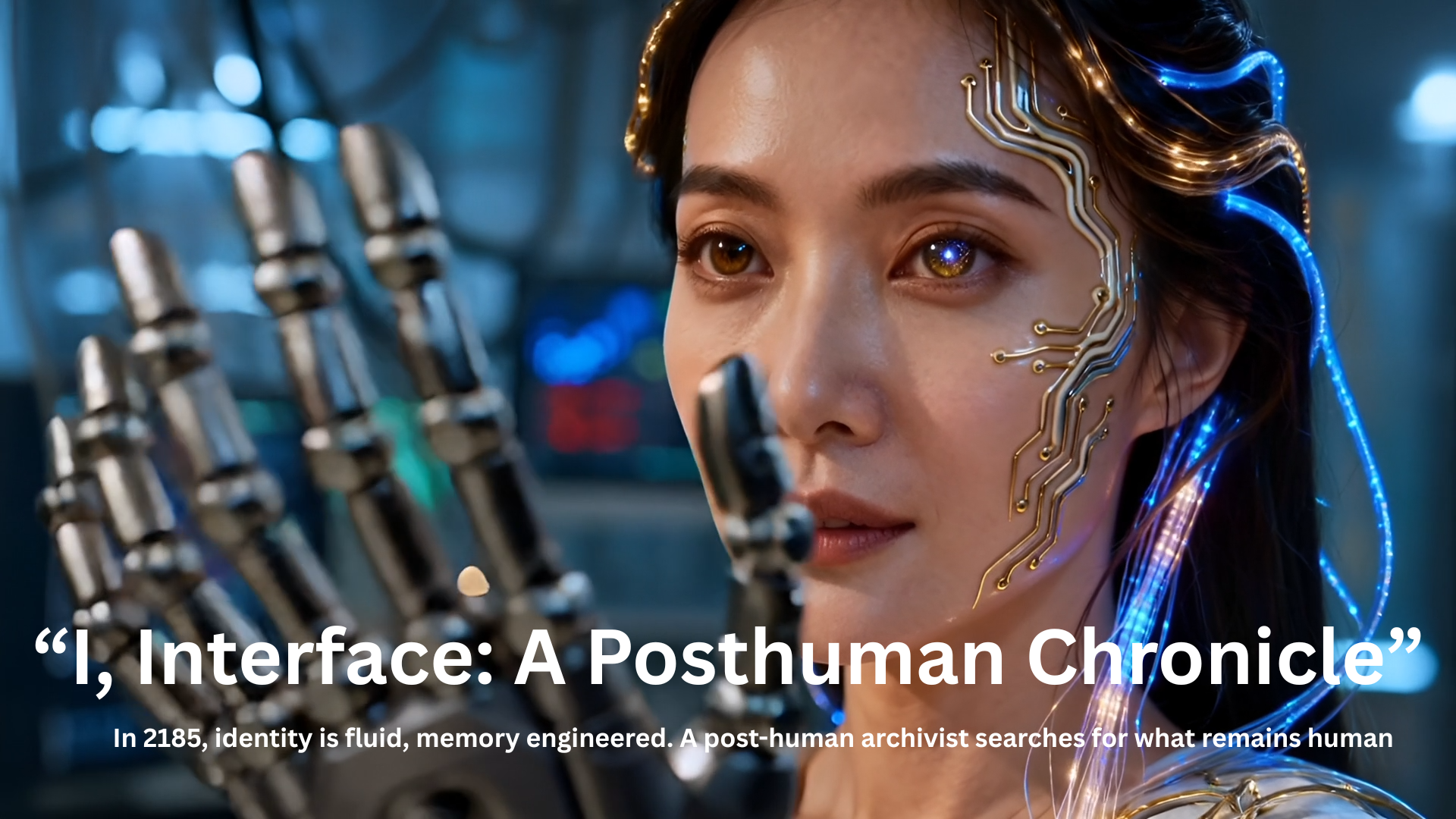
"I, Interface: A Posthuman Chronicle" is an 8-minute experimental pseudo-documentary set in 2185. It follows Aria, a posthuman memory archivist, as she navigates a world where human enhancement is the norm. The film explores her daily experiences with neural interfaces, sensory curation, and digital memory preservation while questioning where her humanity resides amidst these technological integrations. Through intimate interviews, abstract visual sequences, and a powerful cybernetic dance performance, the work invites viewers to reconsider fundamental assumptions about consciousness, identity, and the nature of being.
How we built it
"I, Interface: A Posthuman Chronicle" was built through a fully AI-integrated pipeline, leveraging the strengths of specialized tools for each component of the filmmaking process:
• Character & Visual Concept: The protagonist, Aria, and her distinctive cybernetic aesthetics were visualized and generated using DreaminaAI, which provided the foundational character design and key visual frames that defined the film's look.
• Script & Narrative: The entire pseudo-documentary script, including the philosophical voice-overs, interview dialogue, and detailed shot-by-shot breakdown, was crafted and refined using DeepSeek.
• Music & Sound Design: The film's original score—from the ambient soundscapes to the cybernetic ballet—was composed using Suno AI, based on detailed descriptive prompts to create an emotionally resonant and futuristic audio landscape.
• Voice & Performance: All voice-acting, including Aria's reflective interviews and the calm, authoritative narration, was generated by Hailuo MINIMAX, bringing a human-like and emotionally nuanced quality to the AI-generated script.
• Cinematography & Motion: The final video sequences were brought to life using Vidu AI, which transformed our detailed shot descriptions and static concepts into dynamic, moving scenes with consistent character and environment rendering.
• Final Assembly & Editing: All generated components—video clips from Vidu, audio tracks from Suno, and voiceovers from Hailuo MINIMAX—were seamlessly synchronized, sequenced, and color-graded within CapCut to produce the final experimental short film.
Challenges we ran into
The primary challenge was balancing the experimental nature with narrative coherence. Creating a protagonist who was both technologically enhanced and emotionally relatable required careful characterization. Technically, integrating AI-generated elements with live-action footage while maintaining visual consistency proved difficult, particularly in matching lighting and color grading. The cybernetic dance sequence required extensive pre-visualization to ensure the motion-capture data aligned with the CGI enhancements. Additionally, crafting dialogue that sounded both futuristic and authentically human presented significant writing challenges.
Accomplishments that we're proud of
I'm particularly proud of:
• Creating a visually distinctive aesthetic that feels both futuristic and emotionally resonant
• Developing Aria as a character who transcends the "cyborg" trope to become a nuanced exploration of posthuman identity
• Successfully integrating multiple production techniques (AI, practical effects, traditional cinematography) into a cohesive visual language.
• The emotional impact of the cybernetic dance sequence, which physically manifests the film's central themes
What we learned
This project taught us that experimental film can be a powerful medium for philosophical inquiry. I discovered that AI tools, when used thoughtfully, can enhance rather than replace human creativity. The process deepened our understanding of transhumanist philosophy and the ethical dimensions of human enhancement. Most importantly, I learned that stories about technology are ultimately stories about humanity - our fears, our aspirations, and our endless capacity for transformation.
What's next for I, Interface: A Posthuman Chronicle
This short is the first chapter in a larger exploration of posthuman experience. Plans include:
• Developing an interactive VR experience that allows viewers to "inhabit" Aria's enhanced sensory perception
• Creating a series of short films exploring other characters in this universe
• Exhibiting the work in gallery settings as an immersive installation with responsive visual elements
• Exploring potential collaborations with ethicists and futurists to deepen the conceptual foundations of this fictional universe
This project represents just the beginning of our exploration into the artistic and narrative possibilities of posthuman storytelling.
Built With
- english


Log in or sign up for Devpost to join the conversation.